Fashion Technology Startups: The 2026 Industry Guide

Fashion used to treat technology like backstage equipment. Today, it's part of the outfit, the store, the supply chain, and the shopping decision.
That shift is bigger than many new founders realize. The global fashion tech market was valued at USD 274.76 billion in 2025 and is projected to reach USD 485.8 billion by 2035, with 5.8% CAGR, according to Business Research Insights on the fashion tech market. For anyone building or testing products in this space, that number changes the conversation. Fashion technology startups aren't a side category anymore. They're becoming part of how fashion works.
The interesting part isn't just the scale. It's the direction. The smartest companies aren't only making fashion more digital. They're making it easier to discover style, preview appearance before buying, reduce waste, and remove friction from online shopping.
The Dawn of a New Fashion Era
USD 274.76 billion. That was the size of the fashion tech market in 2025, as noted earlier in this article. For a founder or curious early adopter, that number matters because it reframes fashion technology startups as operating tools, not side-show experiments.
The category covers a simple business truth. Fashion still loses money and customer trust in familiar places. People hesitate because they cannot tell how something will look on them. Brands absorb returns that could have been avoided. Design teams guess too long before they get usable feedback. Retailers add digital features that look impressive in a demo but slow down the buying decision in real life.
Fashion tech exists to fix those moments.
A useful comparison is the map app on a phone. It did not invent driving. It removed uncertainty from the trip. Fashion technology does something similar for shopping, design, sourcing, and resale. It adds clearer information at the exact point where someone is about to make a decision.
That matters because "fashion tech" is not one product category. It is a working stack of tools across the industry, including:
- Shopping tools that help people preview fit, styling, or appearance before checkout
- Design software that lets teams test garments digitally before making samples
- Forecasting systems that spot demand patterns earlier
- Traceability tools that show where materials and products came from
- Resale platforms that make existing inventory easier to find, evaluate, and buy
For early adopters, the benefit is practical. Shopping becomes less of a guessing game. For founders, the opportunity is also practical. You do not need to rebuild the entire fashion system. Solving one expensive point of friction can be enough to earn attention, users, and revenue.
That is why this shift feels different from earlier retail software cycles. Older tools were often bought by enterprise teams and felt distant from the shopper. The new wave appears inside the decision itself. It lives on the product page, inside search, in a phone camera, in resale listings, and in tools such as virtual dressing room experiences that help users test an idea before they commit to a purchase.
Founders should pay attention to that placement. A product that saves a merchant time is helpful. A product that helps a shopper feel confident at the exact moment of hesitation is usually easier to explain, easier to test, and easier to adopt.
If you want a grounded example of how commerce teams measure what changes buyer behavior, Full Circle Agency e-commerce reporting shows the kind of performance lens operators use when they evaluate digital shopping experiences. That operator mindset is useful in fashion tech. Cool features are not enough. The feature has to reduce uncertainty, improve conversion, lower returns, or increase repeat use.
That marks the true start of this new era. Fashion is becoming more measurable, more interactive, and more responsive to the person on the other side of the screen. For founders and early adopters, that opens a rare middle ground between trend and tool. You can see where the industry is going, and you can try parts of it right now.
Key Technologies Redefining the Wardrobe
Some fashion technology startups sound complicated until you map them to a familiar problem. Start there.
A shopper sees a dress online but can't tell how the style will look on them. A brand struggles to explain authenticity. A designer wants to avoid making too much of the wrong product. Each problem points to a different technology layer.
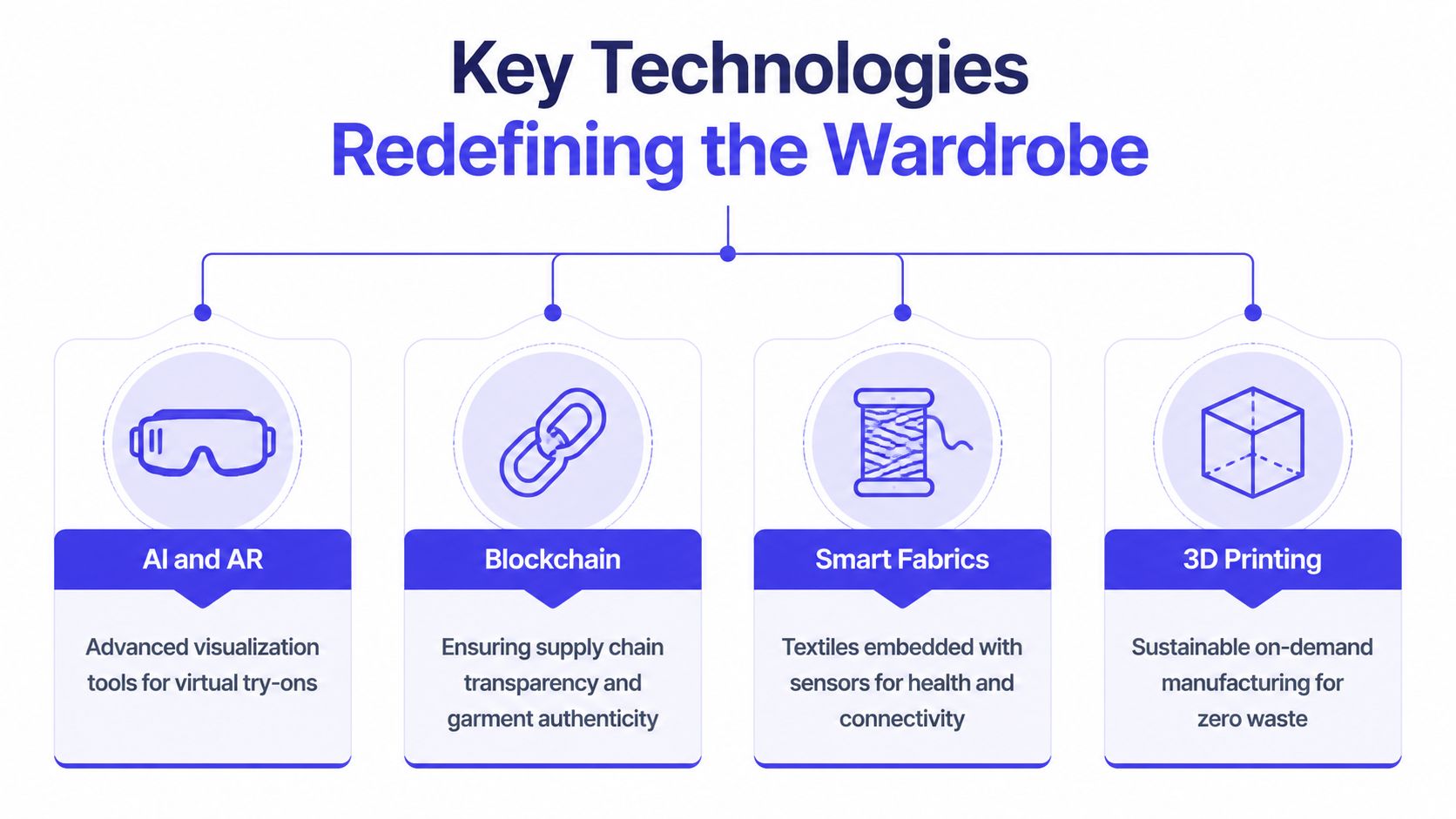
AI and AR for visual style preview
This is the category most consumers notice first. Virtual try-on tools combine computer vision, image generation, and rendering to help people see how a garment looks, not just stare at a flat product image and guess.
According to TECH:NYC coverage of fashion tech companies, virtual try-on systems usually work through a multi-stage pipeline. First, 2D image segmentation extracts the garment from a flat-lay photo. Then 3D deformation simulates drape. Finally, neural rendering adapts the result to the user image, and this can happen in under 5 seconds on consumer devices. The same source notes that poor style visualization contributes to 30% to 40% of fashion returns.
That sounds technical, but the user experience is simple. Upload a photo. Pick a clothing image. Get an instant preview of the appearance.
Flat-lay images matter here because they give the system a cleaner view of the garment shape. If you're new to this category, that's one of the first details worth remembering.
<iframe width="100%" style="aspect-ratio: 16 / 9;" src="https://www.youtube.com/embed/dCPtSQFhJYY" frameborder="0" allow="autoplay; encrypted-media" allowfullscreen></iframe>Personalization engines and recommendation systems
The next layer is less visible but just as important. Recommendation startups don't change the garment image itself. They change what gets shown, in what order, and with what styling context.
A simple analogy helps. Virtual try-on is the mirror. Personalization is the stylist standing beside it, pulling options that match your taste.
Some retailers use this kind of logic to improve assortment presentation and outfit discovery. If you want a grounded look at how operators measure merchandising and site behavior, Full Circle Agency e-commerce reporting is a useful reference point for the kinds of performance questions brands ask once technology enters the shopping flow.
Supply chain tools and authenticity layers
Not every startup is consumer-facing. Some of the most durable ideas sit behind the scenes.
Blockchain and traceability systems help brands track materials, verify sourcing, and communicate authenticity more clearly. For shoppers, that can mean more confidence. For brands, it can mean cleaner compliance and fewer blind spots.
Smart materials and on-demand production
This category gets more media attention than direct consumer adoption, but it still matters. Smart fabrics and 3D production tools point toward a future where garments are more responsive and manufacturing is less wasteful.
Here's a quick way to separate the four pillars:
| Technology area | Main job | Why people care |
|---|---|---|
| AI and AR | Visualize style on a person | Helps shoppers preview appearance before buying |
| Personalization | Recommend better options | Makes discovery feel less random |
| Traceability tech | Show source and authenticity | Builds trust |
| Smart production tools | Improve how garments are made | Supports flexibility and sustainability |
If you're exploring tools in this space, AI for fashion applications is a useful lens because it connects the technical layer to the practical question every shopper asks. "Can I understand this item better before I buy it?"
Analyzing Market Size and Funding Momentum
The money flowing into fashion technology startups tells you something important. Investors no longer see this sector as a novelty attached to retail. They see multiple categories with enough traction to support specialized companies.

What funding examples reveal
Some startup names show how broad the category has become. According to Waveup's review of top fashion startups and VC trends, DressX has secured over $17 million since its 2020 founding, Heuritech has raised over $30 million, and Haelixa has garnered $7.2 million.
Those three companies are useful because they represent different bets:
- DressX points to digital fashion, AR, and virtual identity
- Heuritech represents AI-driven forecasting and design intelligence
- Haelixa focuses on textile tracing and supply chain transparency
This isn't one narrow market. It's a cluster of adjacent markets joined by a single theme. Fashion is becoming more software-mediated.
Founder lens: Investors usually fund a sharp wedge before they fund a platform. A startup that solves one painful fashion workflow often has a clearer story than a startup trying to digitize everything at once.
Why this matters to founders
Funding news can distort reality if you read it as validation for every idea. It isn't. Capital tends to chase categories that already have a clear buyer, visible urgency, and some defensible edge.
For founders, the practical takeaway is simpler. Pick a problem with obvious economic pain. Returns, overproduction, weak product visualization, poor discovery, and opaque sourcing all qualify.
Many first-time founders ask where to find active backers in this niche. A curated US-based fashion venture capital list can help you understand who invests in fashion-related software, commerce infrastructure, and consumer tools.
What early adopters should watch
If you're not building a company and just love trying new products, funding still matters. It often signals which ideas have enough support to improve over time.
But don't confuse venture backing with inevitability. The better question is whether the product removes friction from a real shopping moment. If it does, users stick. If it doesn't, even a well-funded startup can feel ornamental.
Choosing Your Path Business Models and Go-to-Market Strategies
A strong product idea is only half the job. In fashion tech, the harder question is simpler: who gets enough value to pay for it, and how do they discover it at the right moment?
Founders often get distracted by the demo. Users care about the habit. Revenue follows the habit.
Fashion tech usually falls into three business model buckets. Each one behaves differently, almost like choosing between opening a software company, running a marketplace, or building a consumer utility.
| Model | Best for | Core strength | Main risk |
|---|---|---|---|
| SaaS for brands | B2B tools like analytics or traceability | Predictable recurring revenue | Longer sales cycles and slower onboarding |
| Marketplace or commission model | Resale and C2C platforms | Revenue grows with transactions | Hard to maintain enough buyers and sellers at the same time |
| Direct-to-consumer app or extension | Shopping assistants and visual tools | Fast feedback from real users | Retention drops fast if the tool is only mildly useful |
The right choice depends on where the pain shows up first. If merchandising teams, sourcing managers, or retail operators lose money from the problem, B2B software often makes sense. If the pain hits the shopper in the middle of browsing, a consumer product can spread faster because the value is immediate.
That distinction matters for go-to-market. A founder selling software to brands needs proof, case studies, and patience. A founder building for shoppers needs speed, clear utility, and a distribution channel that fits existing behavior.
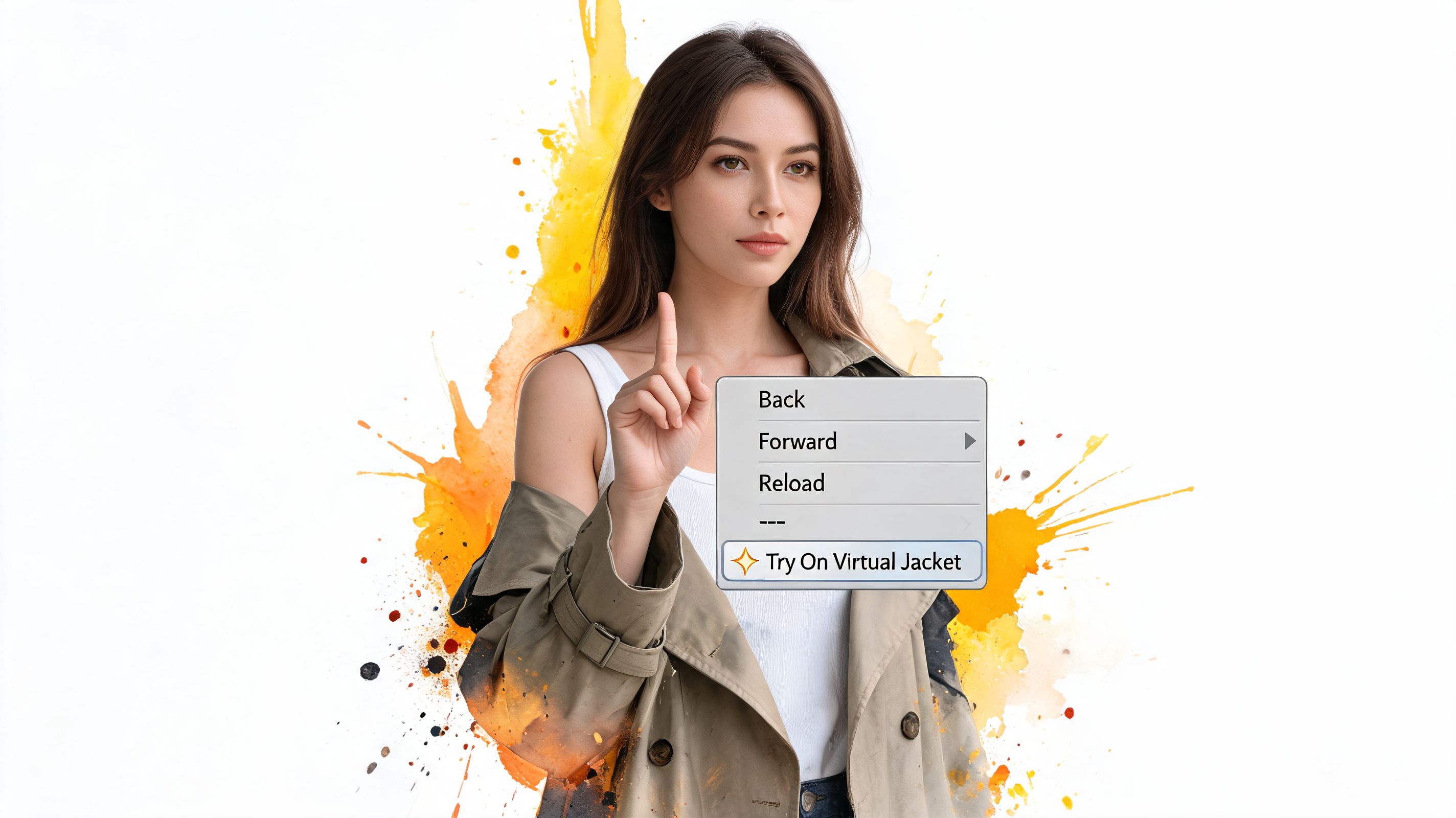
Browser extensions are a good example. They work like a fitting-room assistant that appears inside the stores people already visit, instead of asking them to download a full new shopping destination and remember to come back. For early adopters, that means less setup. For founders, it means the product can prove itself in seconds.
That is why lightweight entry points often beat feature-heavy launches. A right-click action, image upload, or one-step recommendation flow lowers the effort required to try the product. If the first interaction helps a shopper answer a real question, such as "Will this style suit me?" or "What else matches this item?", the product has a better shot at earning repeat use.
If you want a practical reference point, AI-powered shopping assistants show how utility-first consumer tools can fit into real browsing behavior. The strongest products feel less like a separate app and more like an extra layer of intelligence on top of shopping.
What aspiring founders should test first
Start with one small loop that delivers value fast.
- Pick one friction point. Fit uncertainty, styling confusion, poor product discovery, and decision fatigue are all specific enough to test.
- Choose the fastest surface. A browser extension, simple mobile flow, or embedded widget usually gets better early signals than a complex platform.
- Ask for minimal input. If a user has to upload perfect photos or complete a long onboarding flow, many will leave before they see the benefit.
- Make success visible right away. The first result should answer a concrete question, not just show off the technology.
Founder goals and early adopter behavior converge at this intersection. A founder wants a repeatable business. An early adopter wants a tool that saves time, reduces hesitation, or makes shopping more fun. Products that do both have a clearer path to retention, partnerships, and eventually monetization through subscriptions, referrals, premium features, or brand relationships.
A good launch rarely starts with broad brand awareness. It starts with one useful action that feels worth repeating.
Navigating Industry Hurdles and Common Challenges
Fashion technology startups get praised for innovation, but they usually struggle with the same three things. Operational complexity, trust, and proving they solve a real problem instead of adding another layer to the stack.
Building a prototype is straightforward. The true difficulty lies in enduring the challenges of distorted product photos, fragmented retailer information, data security issues, and the complex demands of seasonal fashion cycles.
Overproduction is still a core business problem
A lot of fashion waste starts before a shopper ever sees a product. Teams make too much of the wrong thing because demand signals arrive late or get interpreted badly.
According to All Things Fashion Tech on leading companies and forecasting systems, AI trend forecasting systems process over 10 million daily images and can reach 92% accuracy in demand prediction. The same source says these systems can help cut overproduction waste by 20% to 30%, which matters in an industry where 15% of inventory becomes deadstock.
That's a good reminder that not all valuable fashion tech is shopper-facing. Some of the strongest businesses help brands avoid making expensive mistakes upstream.
Privacy and adoption friction can kill momentum
Consumers like personalization until it feels invasive. Founders love onboarding until it creates drop-off.
This tension shows up everywhere in fashion tech. The more data a tool asks for, the more carefully the user evaluates whether the payoff is worth it. Tools that ask for less, especially early, often have an easier time building trust.
A practical checklist helps:
- Keep the first session light. If a user can get value without creating an account, adoption gets easier.
- Be clear about image handling. People care what happens to personal photos.
- Design for imperfect retail inputs. Product images vary wildly across stores, especially on secondhand sites.
- Avoid oversized promises. Showing style visually is already useful. You don't need to promise everything.
Scaling isn't just a technical issue
Founders often talk about scaling as a compute problem. It's also a support problem, a UX problem, and a product discipline problem.
A tool that works beautifully on five sample garments can break when it meets resale photos, crowded backgrounds, or inconsistent photography. The startups that last usually pick constraints on purpose. They know which image types they support best, which user behavior they optimize for, and which promises they won't make.
The strongest products in this category don't chase every fashion use case. They choose a lane and make it feel effortless.
Future Opportunities and Untapped Markets
The biggest opportunities in fashion technology startups probably won't come from the loudest demos. They'll come from the most ignored daily frustrations.

The underserved user is often the better opportunity
Enterprise tools get the headlines because budgets are bigger and logos look impressive. But there's a large gap below that layer.
According to Vocal's discussion of fashion tech disruption and startup gaps, over 70% of indie fashion startups cite a lack of affordable AI/AR tools as a top barrier. The same source points to an underserved need for plug-and-play tools optimized for e-commerce and secondhand platforms like Vinted.
That single point opens several white-space opportunities:
- Independent designers need affordable tools, not enterprise contracts
- Secondhand shoppers need better ways to visualize style from inconsistent listings
- Occasion buyers need fast previews for one-off purchases like costumes or event outfits
- Browser-first shoppers want tools that work wherever they already browse
Why secondhand and cross-site shopping matter
Secondhand commerce is a perfect stress test for useful fashion tech. Product photography is inconsistent. Inventory changes quickly. There usually isn't a polished brand presentation to guide the decision.
That makes visual assistance more valuable, not less. A shopper looking at Vinted, Depop, or a marketplace listing isn't usually asking for a cinematic experience. They want help deciding whether a piece matches their style.
The same goes for Halloween costumes. This is a category many startups ignore because it looks seasonal. But from a user perspective, it's a high-intent moment with lots of uncertainty and lots of visual comparison.
Where practical tools can win
The next strong wave of products may look less like immersive fantasy and more like tactical convenience.
Consider what users often want:
| User type | Real question | Useful startup response |
|---|---|---|
| Indie founder | Can I use this without a big setup? | Lightweight, plug-and-play workflow |
| Secondhand buyer | Can I preview the style from a messy listing? | Tools that handle flat-lay and resale images |
| Frequent online shopper | Can this work across stores? | Cross-site browser support |
| Occasion shopper | Can I decide quickly? | Fast visual preview |
This is why low-friction tools feel promising. They meet users where they are, especially on sites that were never built to offer polished visualization in the first place.
Your Guide to Getting Started in Fashion Tech
The easiest mistake in fashion tech is to think you need a grand vision before you can build anything meaningful. You don't.
You need a narrow problem, a believable user, and a first interaction that feels useful right away.
If you're an aspiring founder
Start with behavior, not branding. Watch how people shop online. Notice where they pause, open extra tabs, save screenshots, or abandon the cart.
Those hesitation points are product clues.
A strong early roadmap usually looks like this:
- Define one user tightly. Secondhand shoppers, costume planners, or Zara browsers are better starting points than "everyone who buys clothes."
- Choose one job to be done. Help users preview appearance, compare styles, or organize shopping history.
- Build the smallest version that proves the behavior. If you're thinking like a product team, this guide to building a Minimum Viable Product is a useful reminder that launch-worthy doesn't mean feature-heavy.
- Use realistic product inputs. In visual fashion tools, flat-lay photos often produce the clearest results.
- Listen for repeat usage. One delightful try-on is interesting. Repeat use is the business.
Working rule: If a shopper can't understand the benefit in seconds, the product is still too complicated.
If you're an early adopter or style enthusiast
You don't need to wait for fashion tech to become mainstream. A lot of the value is already available if you know what to try.
Focus on tools that help you:
- Preview how something looks before you commit
- Compare styles quickly without bouncing between tabs
- Shop secondhand with more confidence
- Plan occasion outfits without guesswork
- Track what you've already tried so you don't lose good ideas
If you shop across multiple retailers, the most useful tools will be the ones that travel with you instead of locking you into a single store.
A practical standard for judging products
Good fashion tech should feel like removing friction, not adding ceremony.
Ask three questions:
- Is it fast? The result should arrive quickly.
- Is it easy? You shouldn't need a long setup.
- Is it honest? It should help you preview appearance clearly without overpromising.
If a product clears those bars, it has a real shot. If it also works across everyday shopping environments, it becomes much more than a novelty. It becomes part of how people decide what to wear and what to buy.
The future of fashion won't be defined only by luxury experiments or giant enterprise platforms. It will also be shaped by small, practical tools that make digital shopping easier, smarter, and more visual for ordinary people.
If you want to experience that shift directly, try TryThisFit and preview how clothes look on you in seconds. You can start on the main app with no account, install the free Chrome extension in a couple of seconds to right-click clothing images on stores like Zara, H&M, Shein, Vinted, Depop, and Amazon, or revisit saved looks in your try-on history.
Try Virtual Try-On Now
See how clothes look on you before you buy - works with any online store
Get Started Free