Traditional Javanese Clothing: Origins, Symbolism & Care
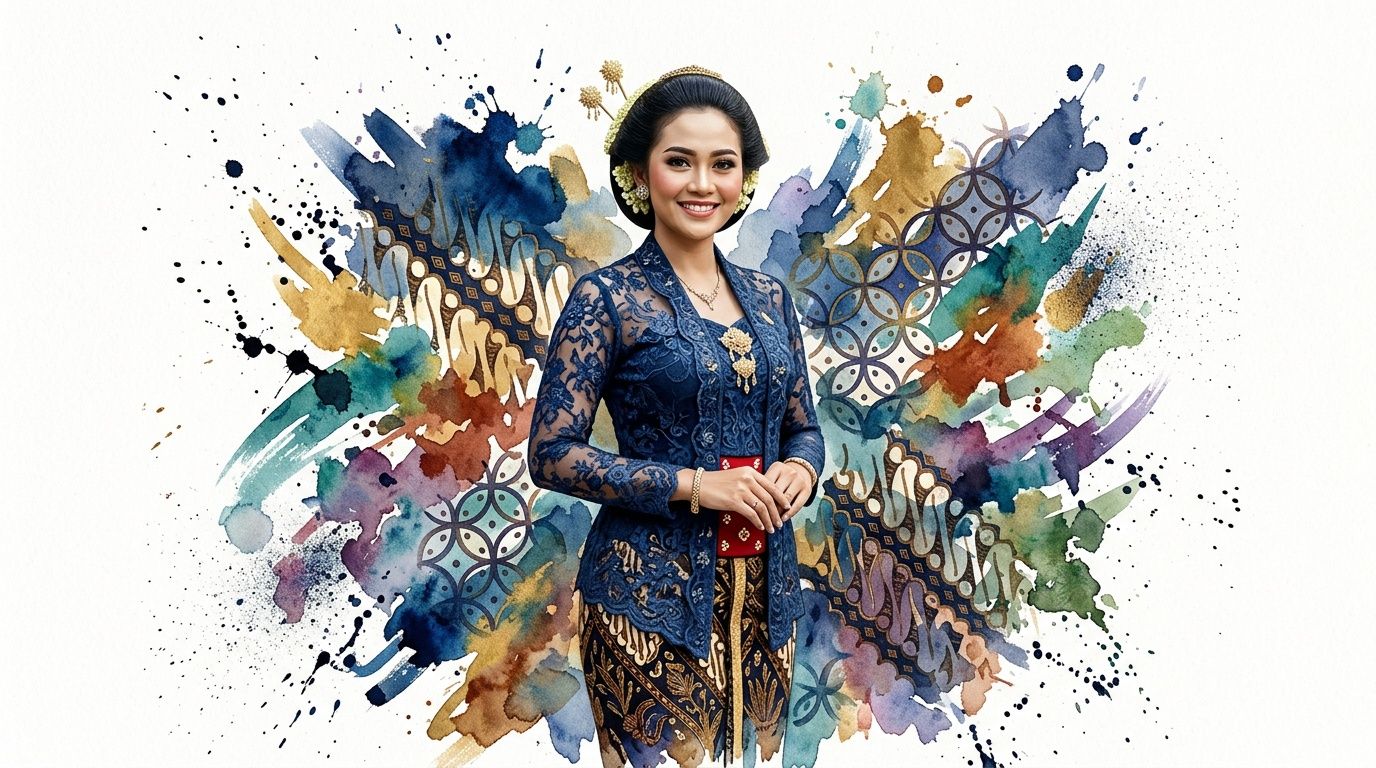
You're getting ready for a wedding, a temple visit, a cultural performance, or a family photo where the clothing has to feel respectful, not costume-like. That's where traditional Javanese clothing becomes more than a beautiful outfit, it becomes a language of heritage, identity, and care.
For many people, the first confusion is simple. Is it the kebaya, the batik wrap, the headpiece, or the whole layered look? The answer is all of them, because traditional Javanese clothing is a system of garments that work together, and each piece changes the silhouette, the meaning, and the occasion.
That layered logic matters today because Javanese dress isn't frozen in the past. It's still worn in ceremonies, still interpreted through style, and still searched online by people who want to understand how to wear it correctly, not just what it's called. A clear guide helps you read the clothing the way a local wearer would, then preview how it looks before you choose it.
Introduction to Javanese Clothing Heritage
A wedding invitation arrives, a school event asks for cultural dress, or a family asks for clothing that honors Javanese roots without feeling like a costume. In moments like that, traditional Javanese clothing becomes practical as well as meaningful.
The first question is usually simple. Which part matters most, the kebaya, the batik wrap, the headpiece, or the full layered look? The answer is the full system, because the garments work together, much like instruments in a small ensemble, each one shaping the final appearance and the message it sends.
That is why Javanese attire carries more than visual appeal. It reflects courtly dress systems, everyday wear, and regional identity, with the kebaya, kemben, and batik-based wraps forming the visual core of the style. Its history also runs from elite settings into wider social life, including the late-18th-century spread of the kebaya among Javanese peasant women under Dutch influence Expat.or.id.
A longer view helps explain why the clothing still feels so layered. The artistic world of the Golden Age of Majapahit art gives a clear sense of how Java's visual culture developed around status, ritual, and textile refinement.
A helpful way to read the clothing is to see it as a composed sentence. The kebaya gives one part of the meaning, the batik wrap gives another, and the sash, headwear, and accessories complete the grammar.
Practical rule: if you can identify the layers, you can usually read the occasion.
For online shopping or a virtual try-on, that same rule saves time. Check how the kebaya sits at the shoulders, where the wrap falls at the waist, and whether the accessories suit the setting. A good preview does not replace cultural knowledge, but it helps you compare options with a clearer eye.
Origins of Traditional Javanese Clothing
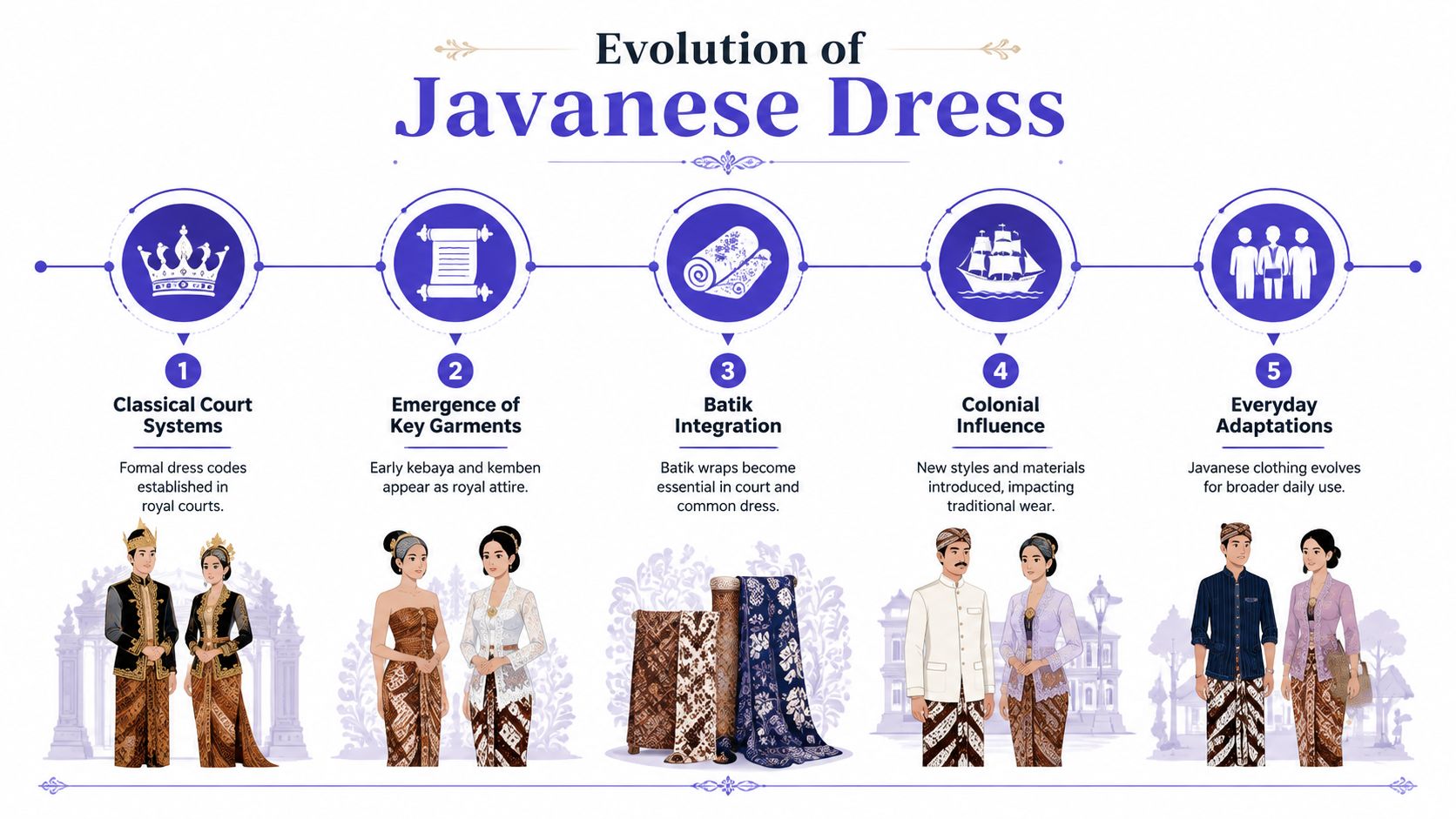
Traditional Javanese clothing grew out of layered social life rather than from a single fixed design. Its roots lie in courtly dress systems and everyday wear, so the forms seen today condense a long textile history into familiar pieces such as the kebaya, kemben, and batik wraps.
A clearer view comes from watching how the clothing moved across social settings. The kebaya was first worn in Indonesia in the 15th or 16th centuries, then later spread much more widely among Javanese peasant women under Dutch influence in the late 18th century. That shift shows a garment changing roles, from a more elite or regional form into something used more broadly in daily life.
Court dress, climate, and social change
Older Javanese women's dress relied heavily on the kemben, a torso wrap used through the Majapahit era and the Mataram Sultanate. Women typically wore two cloths, a torso wrap and a lower hip wrap, and the system matched Java's hot, humid climate. The kemben was valued for ventilation and perspiration control, which made it practical as well as visually refined Expat.or.id.
That detail makes the silhouette easier to understand. The design serves both decorative and functional purposes, built around drape, airflow, and modest coverage, so the shape depends more on wrapping than on cutting.
The batik layer adds another historical thread. Batik was traded in Surakarta as early as 1586, and historical records place batik in Javanese society from at least the 12th century, which makes it one of the oldest textile foundations in the style repository.petra.ac.id PDF.
By the time Thomas Stamford Raffles recorded a canting and Javanese aristocrats wearing batik in 1811, batik had already become a strong marker of identity and status repository.petra.ac.id PDF. The later UNESCO 2009 inscription of Indonesian batik as a Masterpiece of Oral and Intangible Heritage of Humanity extended that local authority into global recognition repository.petra.ac.id PDF.
The history becomes easier to read when the clothing is treated as a system rather than a costume. The Golden Age of Majapahit art helps show how Javanese visual culture developed around status, ritual, and textile refinement, and why those ideas still shape the way the clothing is understood today.
Key Components of Traditional Javanese Clothing
A Javanese outfit becomes easy to read once you follow the order in which it is built. Start at the body, then move outward. The lower cloth sets the base, the support layer keeps everything in place, the blouse or torso wrap shapes the upper body, and the accessories tell you whether the look is everyday, ceremonial, or courtly.
The women's layered base
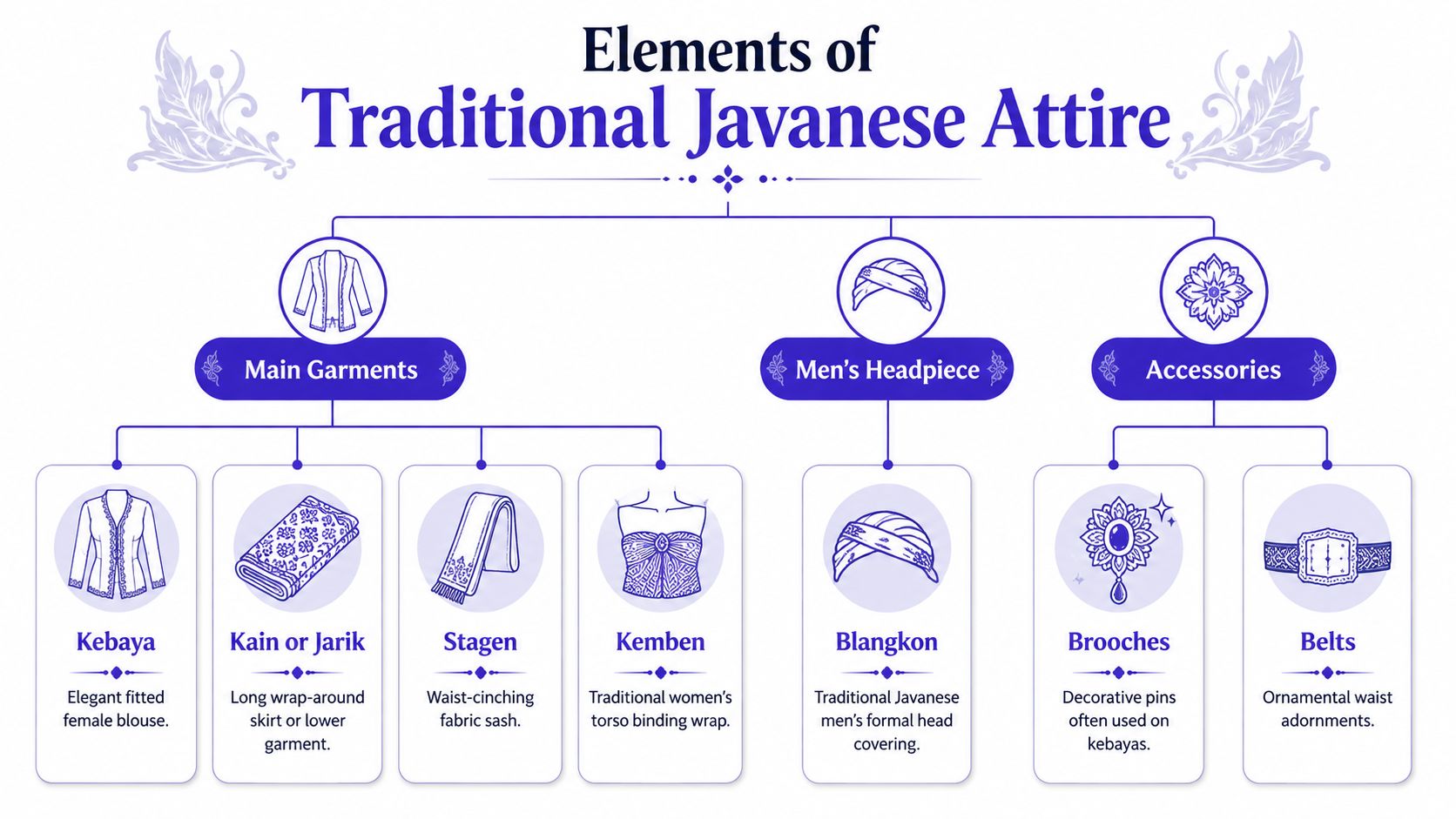
The women's core outfit usually begins with a kebaya top worn over a wrapped kain/jarik and held with a stagen sash, a structure described in detail by Encyclopedia.com. The kain is an unstitched cloth about 220 cm long and 100 cm high, while the stagen is roughly 12 m long and 12.5 cm wide. Those measurements show how the clothing works less like a custom-fitted suit and more like a carefully balanced wrapping system that shapes the body through tension and placement.
The kebaya itself is a front-opening blouse with a collar-lapel running from neck to hem, usually fastened with brooches or small closures Encyclopedia.com. In many descriptions, it is paired with lighter materials such as lace, cotton, brocade, voile, or silk, which gives the upper body a softer line Listingal.com. For readers who want to see how these pieces come together in a practical outfit view, TryThisFit's guide to traditional Indonesian costume is a useful reference.
Each layer has a different job. The lower cloth shapes the body, the sash steadies the waist, and the kebaya softens the silhouette the eye sees first.
The torso wrap and male headwear
The kemben is another important women's garment in traditional Javanese dress. A Javanologi UNS source describes it as a torso wrap measuring 250 cm long and 50 cm wide, which makes clear that it is structured cloth meant to be arranged with care, not a loose scarf thrown on at random Javanologi UNS.
For men, the most familiar piece is the blangkon, a traditional headdress made from batik fabric. WorldAtlas identifies four regional types, Banyumasan, Kedu, Surakarta, and Ngayogyakarta, each distinguished by origin and shape WorldAtlas.
If you are assembling a look for the first time, the sequence helps. Put on the wrap first, secure it with the sash, add the kebaya or torso covering, then finish with the headwear and small accessories that set the tone. If you are trying to understand how the layers stay neat and balanced, the guide on essential sewing techniques for beginners offers a simple way to see how garment construction supports fit, folding, and fastening.
Regional Styles and Variations
A Javanese outfit can change meaning with only a few details. The cloth may follow the same basic logic, yet the shape of the blangkon, the weight of the batik, and the level of formality tell you whether the look leans toward one region or another.
The blangkon is the clearest example of that regional shift. It is a batik-fabric headdress, and regional references often distinguish styles such as Banyumasan, Kedu, Surakarta, and Ngayogyakarta by shape and place of origin rather than by one fixed model. For a side-by-side visual guide, the Javanese traditional costume ideas reference is helpful when you want to compare how those differences appear in full outfits.
Central Java and Yogyakarta
Central Java styles usually feel composed and formal, especially in ceremonial settings. The look often relies on a smooth drape, careful layering, and batik that communicates order more than decoration. That makes the outfit read like a well-arranged sentence, where every piece has a clear place.
Yogyakarta dress, especially in formal contexts, carries a stronger courtly presence. The difference is not about one style being more correct. It reflects a different local court tradition and a distinct aesthetic preference.
Banyumasan and Kedu
Banyumasan and Kedu styles are often easiest to spot in the headdress, though the regional identity runs through the whole outfit. Once someone understands the blangkon shape, the region can become visible before the rest of the clothing is even examined.
If you are comparing styles for your own look, start with three checkpoints. Look at the headwear shape, the density of the batik pattern, and how formal the overall silhouette feels. Those three cues work together like the frame, fabric, and finish of the outfit.
The goal is not to chase a generic “traditional” label. It is to choose a version that suits the setting and respects the local style language. A wedding, a heritage event, and a casual cultural display may all call for different levels of structure, and online shopping becomes easier once you know which regional details matter most.
When and How to Wear Traditional Javanese Clothing
A lot of confusion around traditional Javanese clothing comes from the occasion, not from the garments themselves. People may know the names, yet still feel unsure about when to choose a full formal look, when a simpler version fits the setting, or how to layer each piece so the outfit keeps its shape.
The practical gap is often that step-by-step guidance is missing for modern settings such as weddings and ceremonies, as noted earlier Traveloka. Once you understand the order of the pieces, the outfit becomes easier to read, much like following the parts of a well-made recipe in the right sequence.
Occasion first, then silhouette
For ceremonial wear, start with the most structured version of the outfit. That usually means the lower wrap, the sash, the kebaya, and, if the event calls for it, the correct regional headwear or accessories.
For more relaxed historical or cultural events, the outfit can feel lighter while still staying respectful. The aim is to maintain intentional layering so the look still reads as complete and respectful.
A simple wearing order
- Anchor the lower cloth so the batik or jarik sits cleanly and doesn't twist.
- Wrap the stagen to stabilize the torso line and smooth the waist.
- Place the kebaya so the front opening sits neatly and the lapels fall evenly.
- Add closures and accessories only after the main silhouette looks balanced.
Brooch placement matters because it controls the kebaya's front line. If the closures sit too high or too low, the blouse can look unbalanced even when the rest of the outfit is correct.
Sleeve length and blouse shape also change the mood. A long-sleeved kebaya reads more formal and traditional, while a shorter or lighter version feels less ceremonial. The same garment family can shift from daily life to special events depending on fabric choice and finishing, and a guide to understanding fabric types can help you compare how each material changes the overall impression.
If you're shopping online, TryThisFit's browser-based try-on can help you see how it looks on your own photo before you decide. The Chrome extension installs in a couple of seconds, works on any site, and lets you right-click a product image on stores like Zara, H&M, Amazon, Shein, Vinted, or Depop for an instant preview at trythisfit.com/go/extension/chrome.
Fabrics Motifs and Symbolism
A Javanese outfit often starts to feel meaningful the moment the fabric is chosen. Batik does that work clearly, because the pattern is not just placed on the cloth. It is created through wax-resist dyeing, where wax blocks dye penetration and repeated dyeing shapes the motif boundaries.
That method gives batik its depth and its calm visual rhythm. The cloth carries the story of how it was made, so it reads less like a surface print and more like a textile language. For readers trying to connect fabric knowledge with outfit choices, a look at understanding fabric types helps explain how different materials change drape, texture, and the final impression.
Motifs and authority
Batik also carries cultural weight because of its long history. It was traded in Surakarta as early as 1586, and UNESCO later recognized Indonesian batik in 2009 as a Masterpiece of Oral and Intangible Heritage of Humanity.
The familiar motif families linked with Javanese dress, such as parang, kawung, and lereng, are usually read as cultural signs tied to rank, ceremony, and visual discipline. The safest way to approach them is through that broader social meaning rather than through fixed, one-size-fits-all labels for every pattern. A motif in Javanese clothing works a little like a formal greeting, the shape of the message matters as much as the message itself.
Upper fabric and lower wrap
Javanese women's clothing also depends on contrast between surfaces. The lower wrap often carries the denser pattern, while the kebaya uses lighter materials like lace, cotton, brocade, voile, or silk.
That balance changes the whole silhouette. The lower garment gives the outfit structure and visual density, while the upper blouse keeps the line close to the body, breathable, and graceful. If you are comparing pieces online, the right tool can help you inspect how that contrast will read on your own photo. You can find helpful wardrobe apps alongside ClothME while checking whether a cut or fabric keeps the look balanced before you buy.
Visual cue: if the lower cloth feels rich and patterned, the kebaya usually stays lighter so the outfit does not compete with itself.
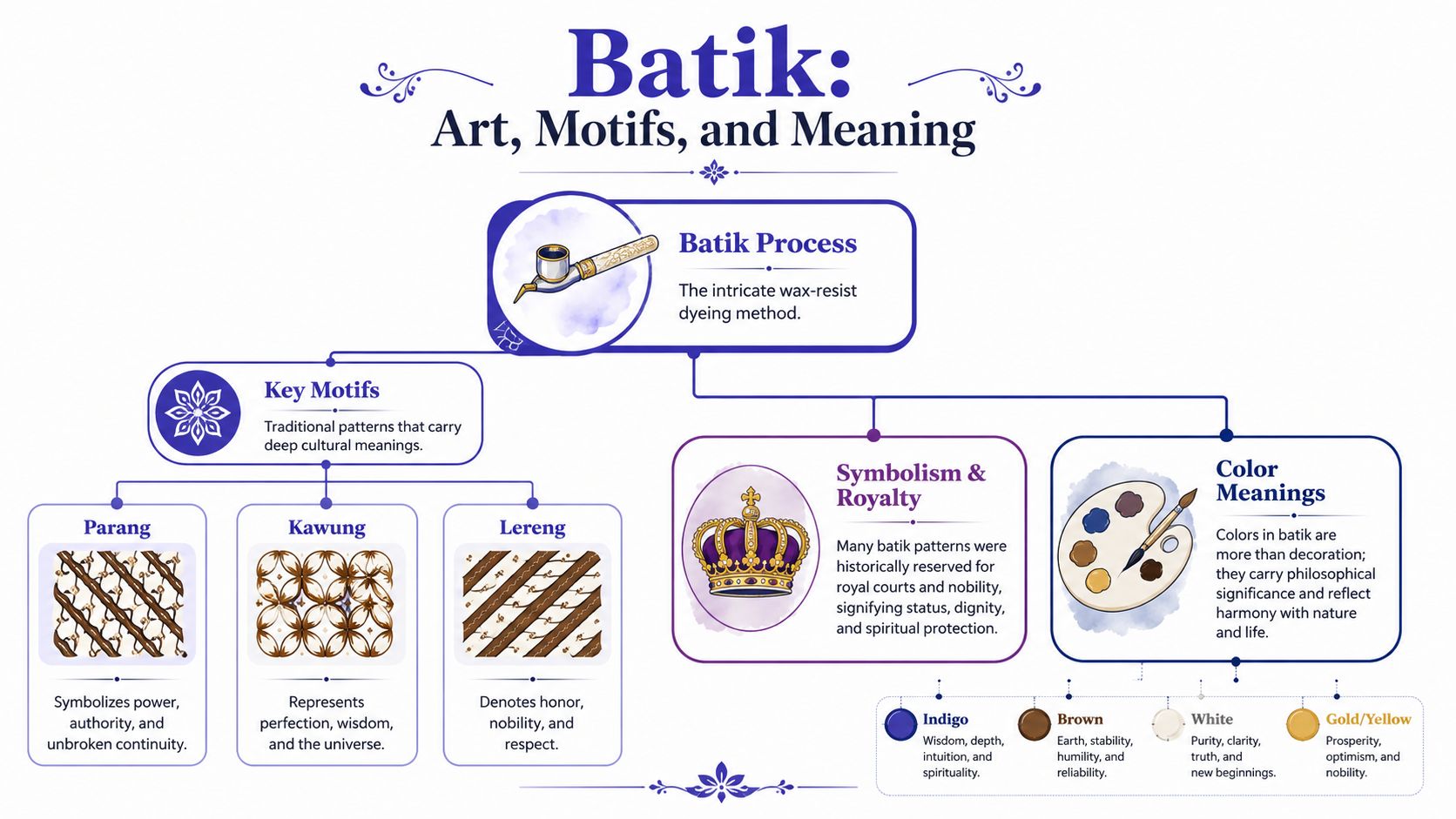
Traditional batik is useful to study because it shows how Javanese clothing links pattern, status, and restraint in one visual system. The cloth is doing more than decorating the body, it is helping the wearer present the right tone for the setting.
Care Preservation and Virtual Try-On Tips
A Javanese outfit stays convincing only when its materials still move and hold their shape the way they should. Lace, batik, and structured wraps can lose their line quickly if they are handled like everyday casual clothes, so the first step is to treat the fabric as part of the design, not just as covering.
Start with the fabric itself. Lightweight kebaya materials such as lace, brocade, voile, silk, and cotton need gentle handling because the look depends on clean drape and visible surface detail, while batik-based wraps need careful preservation so the pattern stays clear and the cloth keeps its character.
Care habits that protect the look
Store the kebaya flat or on a hanger that will not distort the shoulders. Fold batik with the pattern aligned instead of crumpling it, so the cloth keeps a more graceful fall the next time you wear it. For broader fabric care guidance, wardrobe storage tips can help you keep ceremonial pieces, secondhand finds, and event outfits in good shape.
If you are ironing, use a low, careful approach and protect the surface when the fabric is delicate. Smoothness matters, but harsh pressing can flatten the detail that gives the garment its presence.
Practical rule: preserve the fabric's movement first. A Javanese outfit looks wrong long before it looks worn out.
The visual side matters just as much online. Flat-lay clothing photos usually work best for accurate virtual previews because the garment shape is easier to read before the app maps it onto a photo.
A good shopping workflow is simple. Open the product image, preview the appearance, then compare it with a second color or cut before buying. TryThisFit's Chrome extension lets you right-click product photos on shopping sites and see how the item looks without leaving the page, without accounts, and in seconds through the Chrome extension page.
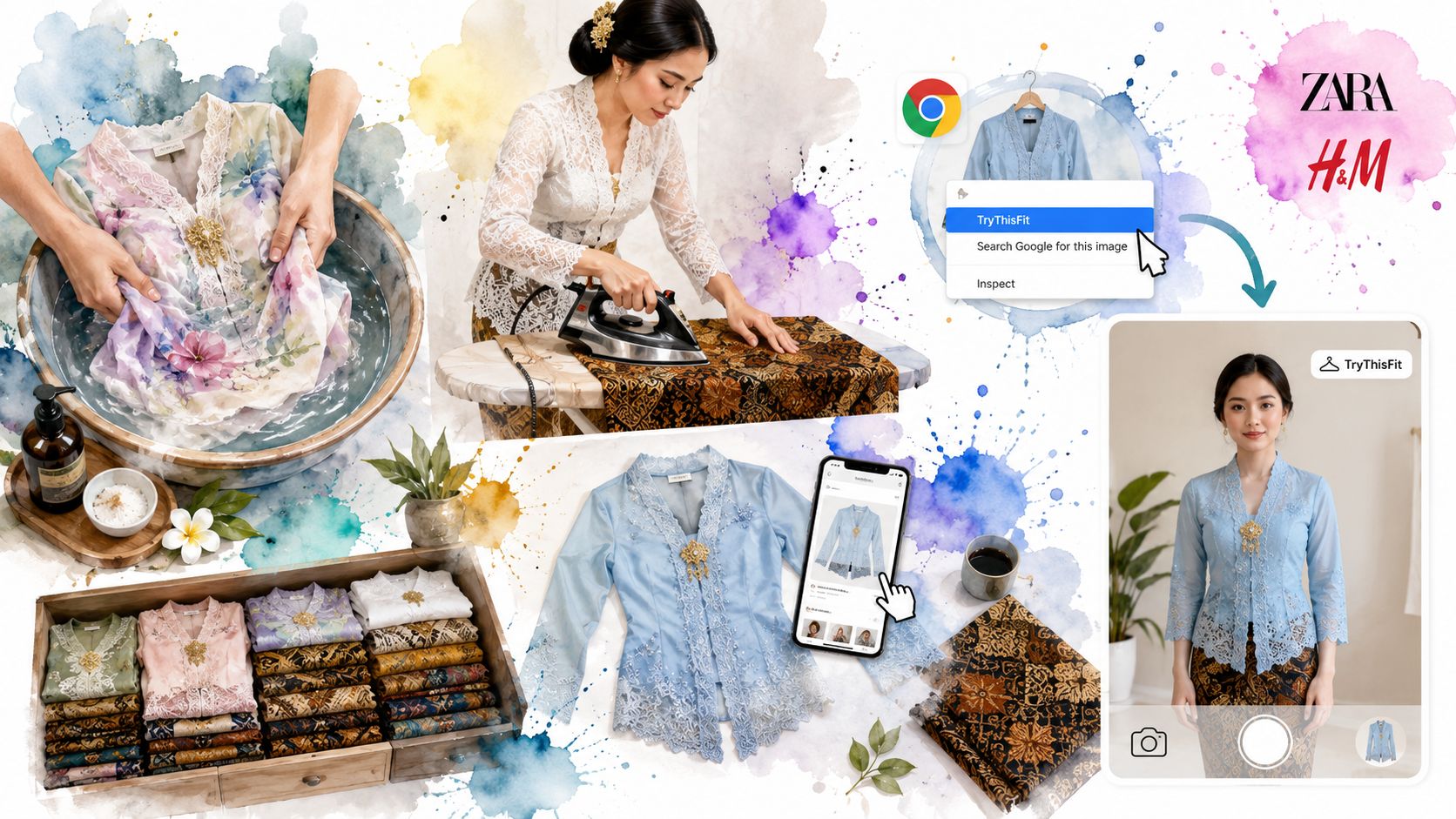
That matters when you are shopping across Zara, H&M, Amazon, Shein, Vinted, or Depop, because the extension works on any site and turns the product page into a quick visual decision space. Amazon shoppers can use the same workflow through TryThisFit's Amazon shopping link, which keeps the preview process on familiar product pages.
If you like comparing clothing tools more broadly, the roundup from ClothME on wardrobe apps is a practical way to see how different digital outfit tools fit into everyday shopping.
The nicest part is that you do not need to commit before you are ready. You can upload a photo, preview the style, save time, and avoid the disappointment of ordering a look that does not match the image in your head.
Conclusion and Next Steps
Traditional Javanese clothing works because it combines meaning and construction. The kebaya, kain or jarik, stagen, kemben, and blangkon each carry a specific role, and the whole look changes with region, occasion, and fabric choice.
That's why the best way to approach it is with both respect and curiosity. Learn the pieces, understand the layers, and then judge the outfit by how the full silhouette reads, not by one garment alone.
The modern challenge is practical, not cultural. You want to honor the tradition, but you also want confidence before you buy, especially when you're shopping online and can't touch the fabric or try the full look on in person.
TryThisFit gives you a way to preview that appearance instantly. The Chrome extension lets you right-click product images, works on any site, and shows you how the style looks on your own photo in seconds, so you can decide faster and avoid returns.
If you want to keep exploring, save your try-ons at /history, browse the main app at TryThisFit, and keep comparing outfits until the style feels right. When you're ready, install the free extension and discover your perfect Javanese look in seconds.
TryThisFit helps you preview traditional Javanese clothing on your own photo before you buy, so you can compare kebaya styles, batik wraps, and formal looks with less guesswork. Visit TryThisFit to try it now, or install the Chrome extension and see how your next outfit looks in seconds.
Try Virtual Try-On Now
See how clothes look on you before you buy - works with any online store
Get Started Free