How to Look Good Men's Fashion: A 2026 Style Guide
You're probably staring at a shopping cart right now with three shirts in it, one blazer you like on the model, and a nagging feeling that one of these will look great and the others will look off the second they land on your body. That's the problem with men's style. It's rarely lack of taste, it's uncertainty.
If your face is part of what's throwing off the whole look, a resource like sharper look with facial hair removal can be useful because grooming changes how clean an outfit reads without changing the clothes themselves. Clothes matter, but they're only half the picture. The other half is knowing what works on you before you buy it.
Why Most Men Never Feel Properly Dressed
Most guys do not need more outfit inspiration. They need fewer blind guesses.
The usual pattern is easy to spot. A man sees a shirt he likes, saves it, buys it, and then finds out at home that the shoulders sit wrong, the color clashes with his skin, or the whole piece looks better on the product page than on his body. That is why closets fill up with decent clothes while the owner still feels underdressed.
The real problem is uncertainty
Style advice often stops at broad rules like “wear clothes that fit” or “stick to basics.” Those rules are fine, but they do not answer the harder question, which is how a garment will read on your own frame before you spend money on it. That is the gap this guide closes.
Start with fit, then check proportion and color, then use a visual preview before checkout. That order matters because the hard-to-fix details come first. If the shoulder line is off, the rest of the outfit starts from a weak position.
You see the same logic in practical style guidance. One beginner guide puts fit at the center of dressing well, and another workflow says to handle the hardest-to-alter areas before chasing trends or extras. That is not theory, it is the cheapest way to avoid buying clothes that never had a chance.
Grooming matters too, but the point is not to repeat the same advice you have already heard. Clean necklines, trimmed sideburns, and a neat beard line change how polished your clothes look, which is why something like sharper look with facial hair removal fits into the same decision process as jackets and shirts. If your grooming looks unfinished, even a good outfit reads as less intentional.
Practical rule: stop asking, “Do I like this?” Ask, “Will this read well on me from ten feet away?”
That question is the whole game. Once you start judging clothes by how they look on your body, not just on a hanger or model, men's fashion gets much easier to control. For a fit check before you buy, use TryThisFit's male model fit preview so you can spot obvious problems before checkout.
Dial In Fit Before You Worry About Style
Fit is the first thing to check because it changes everything else. A $50 shirt that fits perfectly will beat a $200 shirt that doesn't, and the biggest style errors usually come from clothes that are too baggy or too tight. That's not a taste issue, it's a silhouette issue. Unfinished Man says fit is the dominant variable, and that's exactly how I'd treat it.
Run the mirror check before you buy anything
Start with the shoulders. The seam should end at the natural shoulder bone, not hang off it and not squeeze inward. If the shoulders are wrong, the rest of the garment is already fighting you.
Then check the sleeves. Shirt sleeves should hit the wrist bone, jacket sleeves should show about half an inch of shirt cuff, trouser hems should make only a slight break, and jacket length should cover the seat. These are the points that tell you whether an outfit looks clean or careless. The Elle Diaries lays out that order clearly, and it's the order I'd use every time.
Use this order: shoulders, sleeves, jacket length, trouser break. Fix those before you argue about color or pattern.
| Garment Area | Target | Common Mistake |
|---|---|---|
| Shoulder seam | Ends at the natural shoulder bone | Seam droops past the shoulder |
| Shirt sleeves | Hit the wrist bone | Sleeves stop too high or bunch over the hand |
| Jacket sleeves | Show about half an inch of shirt cuff | Cuffs disappear completely |
| Trouser hems | Create only a slight break | Hems puddle or look cropped by accident |
| Jacket length | Covers the seat | Jacket looks too short or swallows the body |
There's also a useful shortcut from beginner style guidance. Try the same item in three sizes when you're unsure, one size up, one size down, and your expected size. That's a practical way to compare how different cuts read on your frame without overthinking it. The Essential Man recommends that kind of comparison because size labels lie more often than people admit.
For the modern shopper, visual preview tools earn their keep. If a jacket looks right in a photo but you're not sure about your frame, preview the appearance before you commit. See the male model fit page if you want a quicker sense of how a garment reads on a real body.
Use Color and Proportion as Decision Systems
Once fit is under control, color and proportion decide whether the outfit feels intentional or random. I like systems because they stop you from making emotional decisions in a fitting room or at checkout. Men don't need more options. They need a cleaner way to choose.
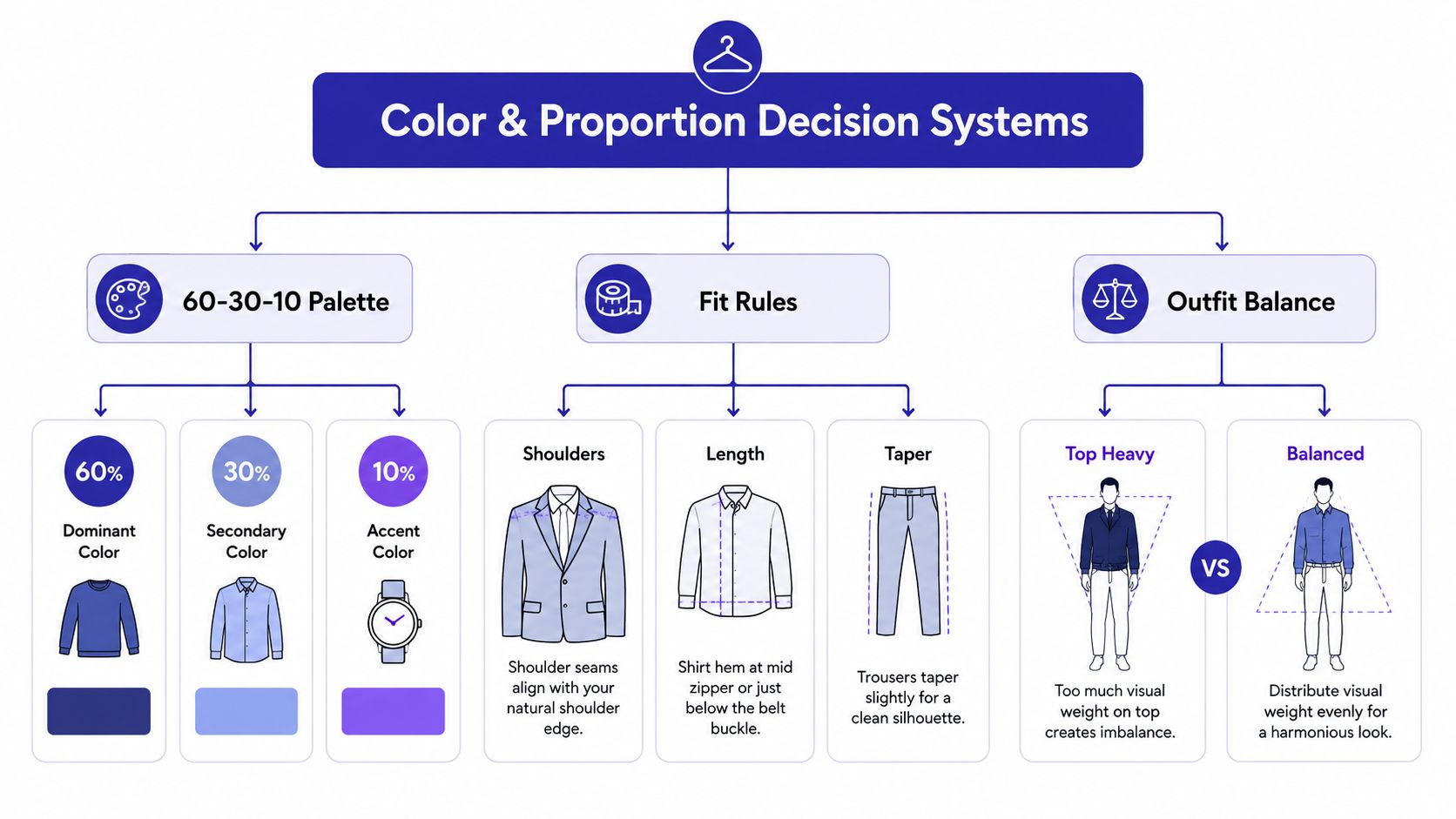
Three rules that make outfits look deliberate
The 60-30-10 palette is the easiest place to start. Use 60% neutral base, 30% secondary color, and 10% accent. That keeps the outfit calm while still giving it a point of interest. If you try to use too many loud colors at once, the outfit starts shouting.
The rule of thirds is about visual proportion. Aim for roughly 1/3 upper body and 2/3 lower body so you don't visually shorten your height. That's especially useful with tucked shirts, high-rise trousers, or layered looks where your torso can suddenly feel too long or too short.
Then there's the sandwich method, which matches the top and bottom colors to create balance. Think dark top, dark shoes, lighter middle, or the reverse if that suits the outfit. It's simple, but simple is the point. A clean repeat of color on the top and bottom helps the look feel anchored.
What colors look good on me is a useful next stop if you want to preview how specific shades read before you buy.
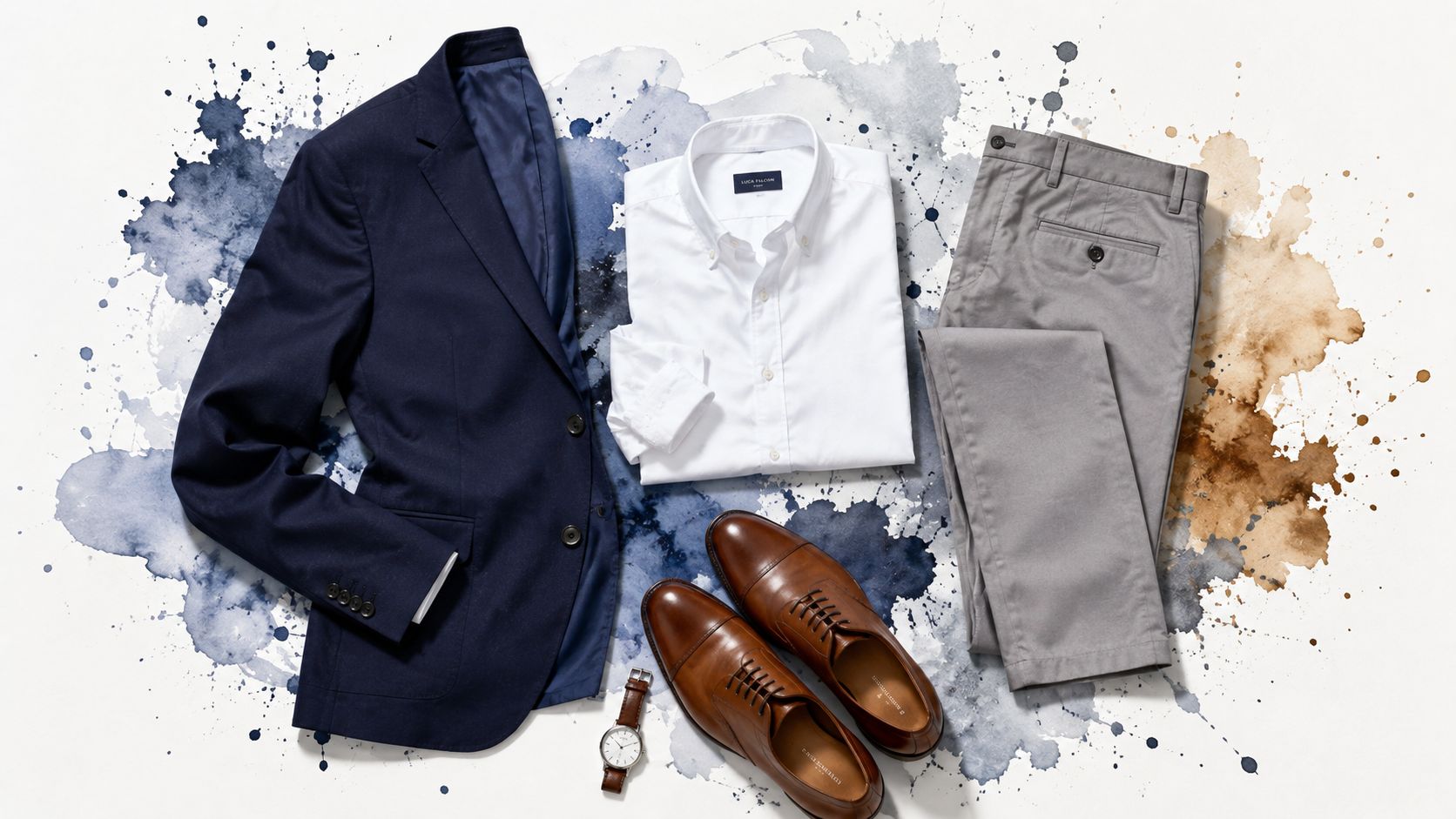
Here's a quick example. A navy blazer, white tee, grey trousers, and brown shoes already work because the blazer and trousers give you structure, the tee brightens the center, and the shoes close the loop. If you add a watch or belt, keep the rest quiet. The outfit should look composed, not overloaded.
The Rule of Seven is a good final check. Only seven points of interest should be on your body at one time, whether that's a watch, pocket square, bright tie, facial hair, or another standout detail. That rule keeps the outfit from getting crowded, and it gives you a hard ceiling instead of a vague feeling. Real Men Real Style frames it as a concrete styling constraint, and that's the right way to use it.
Build a Small Wardrobe That Mixes Easily
A huge wardrobe doesn't make you look better. A wardrobe where the pieces work together does. That's why a compact capsule beats a messy pile of impulse buys.
The pieces that do real work
Start with a crisp white shirt because it works under jackets, with jeans, with chinos, and under knitwear. Add dark indigo jeans because they're the safest casual anchor you can own. A neutral tee gives you the simplest base for layering, and a unstructured blazer makes the same tee look sharper without making you look overdressed.
Then add chinos, because they sit between jeans and trousers better than almost anything else. Finish with one pair of clean sneakers or boots, depending on your lifestyle. That's enough to cover smarter days, relaxed weekends, and most in-between situations without panic shopping.
Think in pairings, not purchases: if a new piece doesn't work with at least three things you already own, leave it on the rack.
The same logic applies to a few other staples that keep showing up in good wardrobes. How to build a capsule wardrobe is worth a look if you want a tighter framework for building from basics. Even in niche style spaces, the pattern holds. A guide on bold essentials for golfers makes the same point in a different language, the best pieces earn their place by mixing, not by bragging.
Here's how the mix works in practice. For a smart-casual outfit, use the white shirt, chinos, and an unstructured blazer with clean shoes. For a weekend outfit, swap the shirt for the neutral tee and the chinos for dark jeans. Same core wardrobe, different read.
If you want to see how a wardrobe formula translates into an actual outfit build, this video is a helpful visual reference.
<iframe width="100%" style="aspect-ratio: 16 / 9;" src="https://www.youtube.com/embed/DGS78LfSTjM" frameborder="0" allow="autoplay; encrypted-media" allowfullscreen></iframe>The point isn't owning more. The point is owning pieces that make choice easy. That's how men stop standing in front of a closet full of clothes and still feeling like they've got nothing to wear.
Preview the Look Before You Hit Buy
Modern style finally catches up with common sense. Style rules can tell you what should work, but a visual preview tells you what reads well on your body. That's a huge difference when you're shopping Zara, H&M, Amazon, Shein, Vinted, or Depop and you can't try things on in person.
Use previews instead of guessing
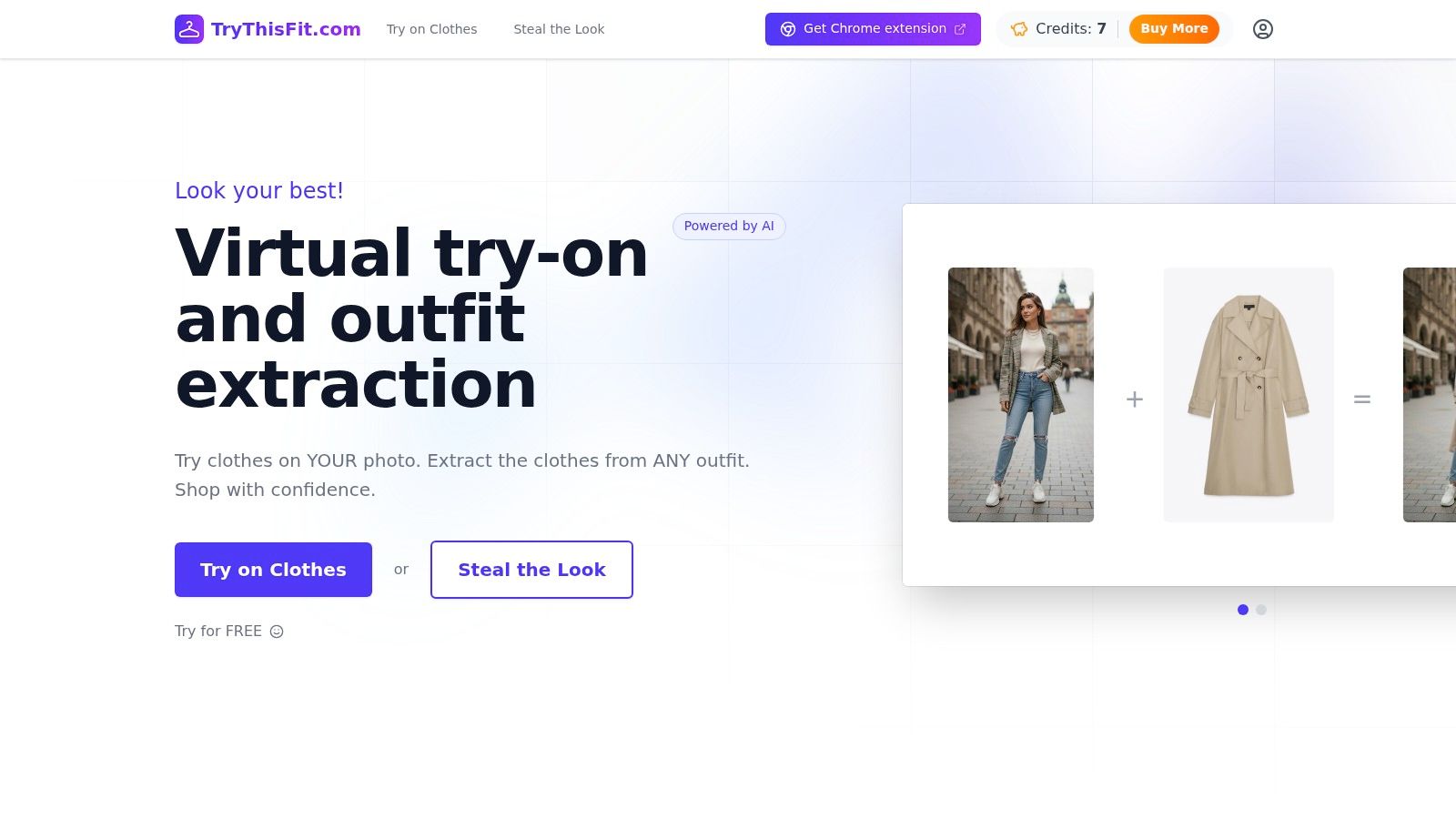
TryThisFit lets you upload a photo and see how it looks on you in seconds, with no accounts needed. It's also built to work with flat-lay clothing photos, which gives the most accurate style preview for most products. That matters because the cleaner the product image, the better the visual read.
The Chrome extension is the shortcut I'd use when the item is sitting on a shopping page already. You can right-click a product image on Zara, H&M, Amazon, Shein, Vinted, Depop, or almost any other site, then preview the appearance instantly. It installs in a couple of seconds, works on any site, and keeps you on the page instead of sending you off to download images or juggle tabs. Install the Chrome extension if you want the fast version of that workflow.
Here's the practical use case. You find a Zara blazer that looks clean in the listing, but you're not sure if it's too long for your frame. Right-click, preview the style, and you can decide if the jacket reads sharp or if it overwhelms you. The same move works for a secondhand leather jacket on Vinted, which is exactly where visual preview saves the most time because returns are often more annoying than the buy itself.
If you're shopping Amazon fashion and comparing a few similar items, use the affiliate link that keeps the process simple: Amazon fashion options through TryThisFit. The point is speed, not friction. See the look, compare the look, and move on.
Best use case: flat-lay product photos first, then quick previews for secondhand finds, Halloween costumes, and any purchase you're unsure about.
If you want to keep a record of what you tried, view your try-on history and compare past looks before making the next decision. That turns shopping from guesswork into a visual habit.
Put It All Together in a Repeatable Routine
Good style isn't a personality trait. It's a repeatable shopping routine. Once you know the sequence, the decisions get much easier and the mistakes get smaller.
The routine that keeps purchases clean
Start with fit. Check the shoulders, sleeves, jacket length, and trouser break before you get distracted by branding or trend language. If the shape fails those checks, move on.
Next, apply the 60-30-10 palette and the rule of thirds so the outfit has balance before it has personality. Then build from a small capsule of pieces that already mix well together. That keeps the wardrobe tight and lowers the chance of buying another item that just sits there.
After that, preview anything uncertain before paying. A jacket that looks great on a model but might drown your shoulders gets caught early. It's also where you spot a jacket length that breaks the seat line or a color that looks too harsh once you see it on yourself.
A watch can help finish a look, and if you're comparing accessories, ECI Jewelers' men's Rolex and Patek Philippe collection is the kind of place people browse when they want the wrist detail to match the rest of the outfit. But the watch only works when the outfit already looks solid. Accessories should finish the look, not rescue it.
The workflow is simple. Build with fit, balance with color, keep the wardrobe lean, and preview the appearance before checkout. That's how you stop shopping blind and start dressing like you know exactly what you're doing.
TryThisFit shows you how clothing looks on you before you buy, so you can stop guessing and start choosing with your eyes open. If you want faster decisions, fewer bad purchases, and a cleaner way to see outfits on your own body, visit TryThisFit and try it on your next shopping tab.
Try Virtual Try-On Now
See how clothes look on you before you buy - works with any online store
Get Started Free