Indonesia Traditional Costume: Kebaya, Batik & More
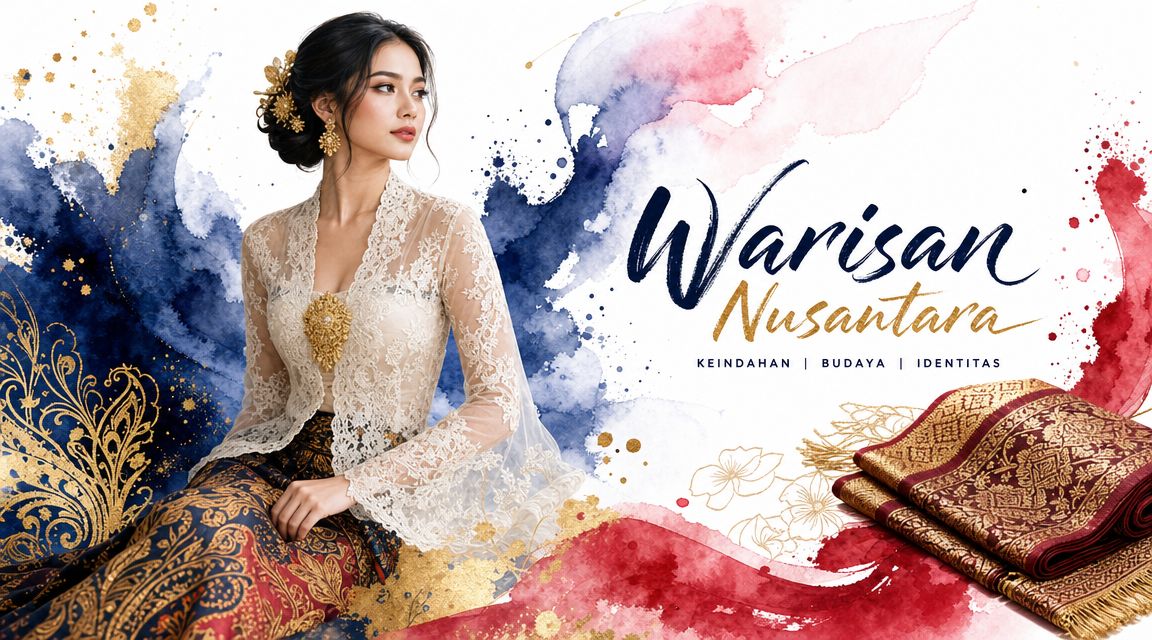
A lot of people meet Indonesian dress the same way. You see one striking photo online, maybe a bride in richly layered cloth, maybe a woman in a delicate kebaya, maybe a ceremonial look with dramatic headwear, and your first thought is simple: what am I looking at, and why does it feel so different from anything else?
That reaction makes sense. Indonesian traditional clothing has a visual depth that pulls you in fast. The colors, the texture, the structure, the way fabric shapes the body and the occasion, all of it feels alive with meaning.
What makes it even more fascinating is that there isn't one single answer. Indonesia traditional costume is a whole world of regional dress, textile craft, ceremony, and style logic. If you've only seen quick summaries online, you've probably gotten a flattened version of something much richer.
Your Guide to Indonesian Traditional Costume
A photo can spark curiosity, but clothing like this rewards slower looking. A wedding outfit from Java won't communicate the same thing as a ceremonial look from Bali, and a fabric used for ritual dress won't necessarily behave like something chosen for portraits or modern styling.
That's where people often get confused. They search for “Indonesia traditional costume” and expect one national outfit, one standard silhouette, one short explanation. Instead, they run into terms like kebaya, batik, songket, ikat, beskap, and baju kurung, all pointing to different layers of style, technique, and regional identity.
Why this topic feels complicated
Some garments are defined by shape. Others are defined by textile technique. Others are inseparable from the event where they're worn.
Here's a simple way to approach it:
- Start with the region: Javanese, Balinese, Sumatran, and other traditions don't look the same.
- Then identify the garment: A kebaya is not the same as a baju kurung or a court ensemble.
- Then look at the cloth: Batik, songket, ikat, and tenun can completely change the final impression.
- Finally, ask about the occasion: Wedding, ritual, court ceremony, portrait session, and formal gathering all shape what's appropriate.
Indonesian attire makes more sense when you stop asking “What is the national costume?” and start asking “Which region, which fabric, and which occasion?”
What makes it so rewarding to explore
Indonesian dress isn't only beautiful because of ornament. It's beautiful because every choice feels intentional. A blouse can signal refinement. A woven cloth can carry ceremonial weight. A headdress can alter posture and presence before you even notice the details.
That's why this subject is so exciting for anyone who loves fashion history or personal style. You're not just looking at clothes. You're looking at a visual language.
The Soul of the Archipelago in Fabric
A traveler steps into a wedding hall in Java, opens a photo album from Sumatra later that week, then watches a Balinese ceremony online that night. The colors, silhouettes, headpieces, and textiles all feel unmistakably Indonesian, yet they do not look interchangeable. That is the first key to understanding indonesia traditional costume.
Indonesia stretches across thousands of islands, and the country's own Geospatial Information Agency reflects that geographic scale through its national mapping work. Clothing developed across that broad spread of communities, ports, courts, and ritual traditions. As a result, traditional dress in Indonesia is best understood as a family of related visual languages rather than one fixed outfit.
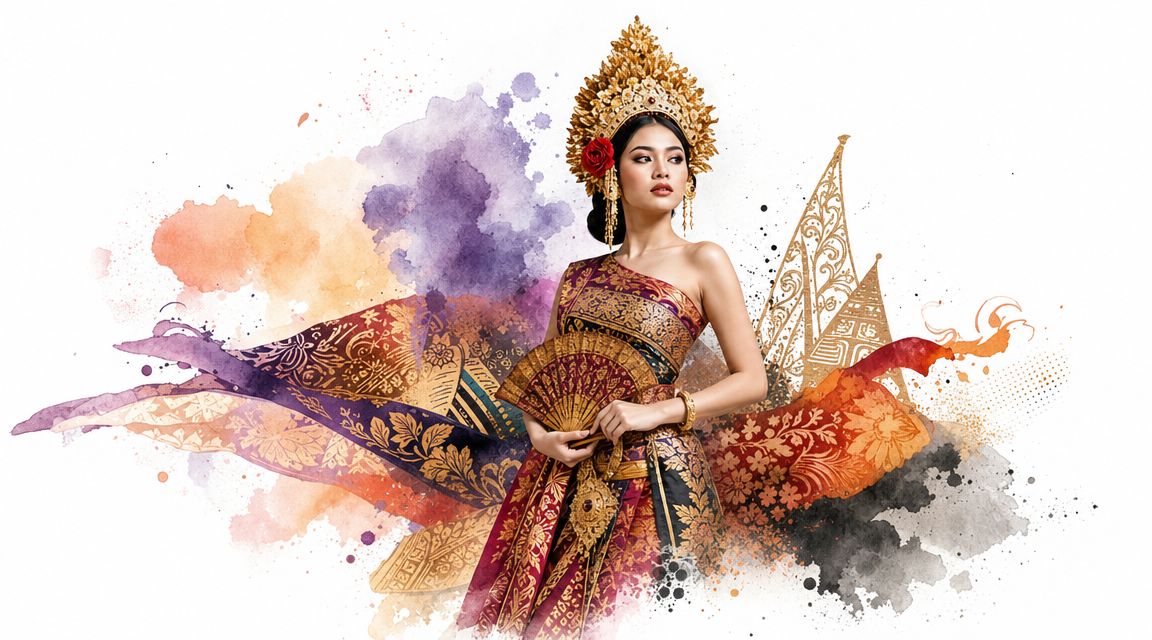
One country, many visual identities
New readers often expect a single national costume with one standard silhouette. Indonesia asks you to use a wider lens.
A garment can tell you where a person is from, what event they are attending, how formal the moment is, and sometimes which textile tradition carries the most weight in that setting. Daily clothing across Indonesia is often modern and global in style. Traditional attire appears most strongly in ceremonies, weddings, performances, courtly contexts, and formal cultural events.
That living use matters. These clothes are not museum pieces separated from real life. They still mark belonging, celebration, memory, and status.
Why kebaya and batik appear so often
Kebaya and batik show up again and again because they are among the most visible reference points in Indonesian dress culture. They are familiar entry doors, not the whole house.
Kebaya is widely recognized in formal and ceremonial settings, especially as a refined women's garment category with regional variation in cut, fabric, and styling. Batik refers to a wax-resist dyeing method as well as the patterned cloth produced through that process. Once you separate garment from textile, the topic becomes much easier to read. A kebaya can be paired with different fabrics. Batik can appear across multiple forms of dress.
A few anchors help:
- Kebaya: A fitted or semi-fitted blouse form associated with elegance, ceremony, and regional styling traditions.
- Blangkon: A Javanese-style men's headdress often worn in formal or ceremonial dress.
- Batik: A textile technique and design tradition used across clothing, ritual items, and formal wear.
- UNESCO recognition: UNESCO's Intangible Cultural Heritage lists include Indonesian traditions such as batik and the multinational inscription for kebaya.
That last point helps explain why these items appear so often in public discussions. They are culturally prominent, visually memorable, and still worn.
Clothing as living history you can actually picture
Traditional Indonesian attire carries history in a very direct way. A woven surface can signal ceremonial importance. A headdress can change posture and presence. The cut of a blouse or jacket can reflect court influence, local modesty norms, trade connections, or regional taste.
This is also where personal style exploration becomes exciting. Reading about a songket-woven look or a kebaya silhouette is one thing. Seeing how that neckline, sleeve shape, wrapped cloth, or headpiece might look on your own body is something else entirely. Virtual try-on tools help close that gap between cultural learning and personal visualization.
For many readers, that is the missing step. They do not only want to know what Indonesian costume means. They want to know what it would look like on them, and that question can lead to a deeper respect for the craft behind every textile choice.
A Journey Through Major Regional Styles
One of the biggest frustrations for curious shoppers and fashion lovers is this: many guides flatten Indonesian dress into a single explanation. That leaves out the details people need when they want to understand what they're seeing or choose a look for a specific occasion.
A useful overview of that content gap points out that many guides collapse Indonesian formal wear into a generic kebaya-or-beskap summary, even though styles vary sharply by province, ethnicity, and event type.
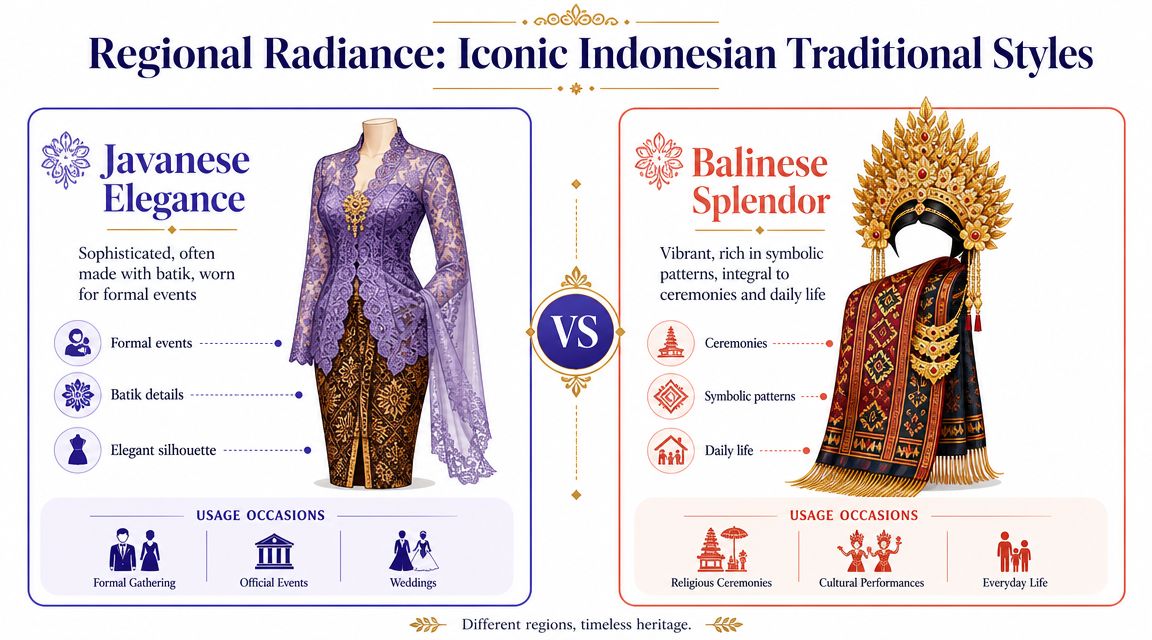
Major Indonesian regional costumes at a glance
| Outfit | Origin | Key Features | Typical Occasion |
|---|---|---|---|
| Kebaya | Commonly associated with Java and also seen in other regions | Fitted blouse paired with a skirt or wrapped cloth, refined and formal appearance | Ceremonies, weddings, formal events |
| Beskap with blangkon | Javanese formal menswear | Structured jacket with ceremonial headwear | Courtly events, weddings, formal portraits |
| Baju Kurung | Malay and Sumatran cultural sphere | Looser tunic silhouette, modest and flowing | Formal gatherings, cultural celebrations |
| Songket-based dress | Strongly associated with parts of Sumatra and other regions | Rich woven surface with decorative shimmer and ceremonial weight | Weddings, celebration wear, portraits |
| Basahan bridal ensemble | Central Javanese bridal tradition | Exposed upper torso, heavy dodot cloth, keris, layered jewelry | Bridal ceremony |
Javanese elegance and ceremonial control
Javanese dress is often what people picture first. The kebaya creates a graceful line close to the body, and when paired with patterned cloth, it can feel both soft and highly composed.
Men's formal looks often use the beskap and blangkon, which create an equally deliberate silhouette. The overall impression is polished, upright, and ceremonial.
Sumatran richness and layered presence
In Sumatran traditions, you'll often see stronger emphasis on woven luxury, especially in styles built around songket or looser garments such as baju kurung. The silhouette can feel less body-hugging than a kebaya, but visually richer through layering, surface ornament, and textile weight.
Shoppers often make a mistake, assuming “traditional” means a single look category, when in reality one regional style may feel sleek and close-fitted while another feels architectural, draped, or more expansive.
Occasion changes everything
The same person may wear very different clothing depending on the event. A wedding look can be far more elaborate than attire for a formal gathering or portrait session.
That's why visual comparison matters so much with Indonesian dress. The question usually isn't just “Do I like this?” It's “What kind of event does this belong to, and what kind of presence does it create?”
The Language of Indonesian Textiles
If garment shape gives Indonesian attire its outline, textiles give it voice, and the subject becomes even more exciting because the fabric itself often carries the visual drama people notice first.
A concise guide to Indonesian traditional clothing materials explains that the most technically important systems are textile structure and surface decoration. It identifies tenun as a woven textile category, ikat as a tie-dye or resist-dye weaving technique, songket as a fabric with supplementary weft decoration, and batik as a wax-resist process. These methods directly change drape, stiffness, and visual texture.
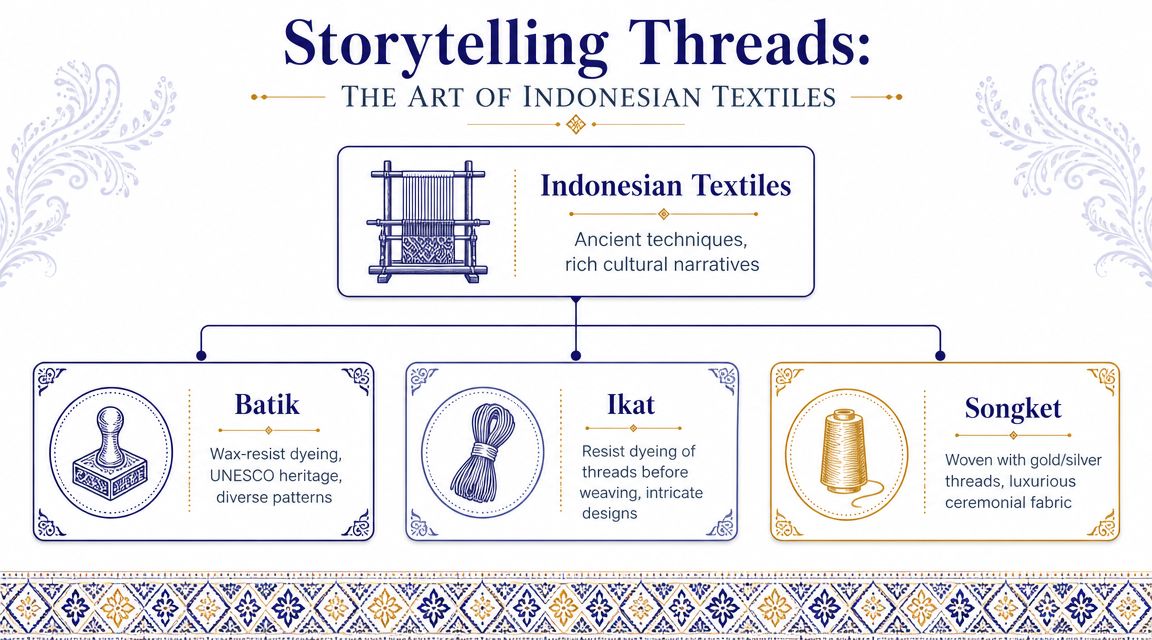
Why technique changes the whole outfit
People sometimes treat textile words like they're just pattern labels. They aren't. They describe how the cloth is made, and that changes how a finished garment behaves.
A stiffer or more structured fabric can create a more formal silhouette. A softer woven cloth can move very differently on the body. Decorative surface work can also make a garment read as ceremonial even before you know anything about its background.
Here's a simple breakdown:
- Batik: Wax is applied before dyeing, creating complex surface pattern.
- Ikat: Threads are resist-dyed before weaving, which gives the pattern a distinct visual character.
- Songket: Supplementary weft decoration produces a richly embellished surface.
- Tenun: A broad woven textile category that includes many regionally significant cloth traditions.
For readers who enjoy looking closely at repeated motifs and structure, this piece on mastering fabric geometric patterns is a helpful companion because it sharpens your eye for how pattern organization changes the way cloth feels visually.
What to notice when you're studying a piece
Don't only ask whether a textile is “beautiful.” Ask what kind of beauty it's creating.
Look for these clues:
- Surface shine: This often affects whether the cloth feels festive or reserved.
- Visual density: Tight, intricate decoration can intensify formality.
- Drape and stiffness: These shape posture, layering, and silhouette.
- Pattern rhythm: Repetition can make a garment feel calm, ceremonial, or dynamic.
This video gives a useful visual sense of Indonesian textile artistry in motion.
<iframe width="100%" style="aspect-ratio: 16 / 9;" src="https://www.youtube.com/embed/PLTmu5m5bFU" frameborder="0" allow="autoplay; encrypted-media" allowfullscreen></iframe>Color matters too
Once you start paying attention to cloth structure, color becomes easier to read as part of the design rather than decoration added on top. If you're building your own eye for combinations, this guide on colors that complement each other helps when you want to understand why certain pairings feel balanced, regal, or ceremonial.
Some Indonesian garments look impressive because of silhouette. Others do it through textile authority. The strongest looks often do both at once.
Visualize Your Indonesian Style Online
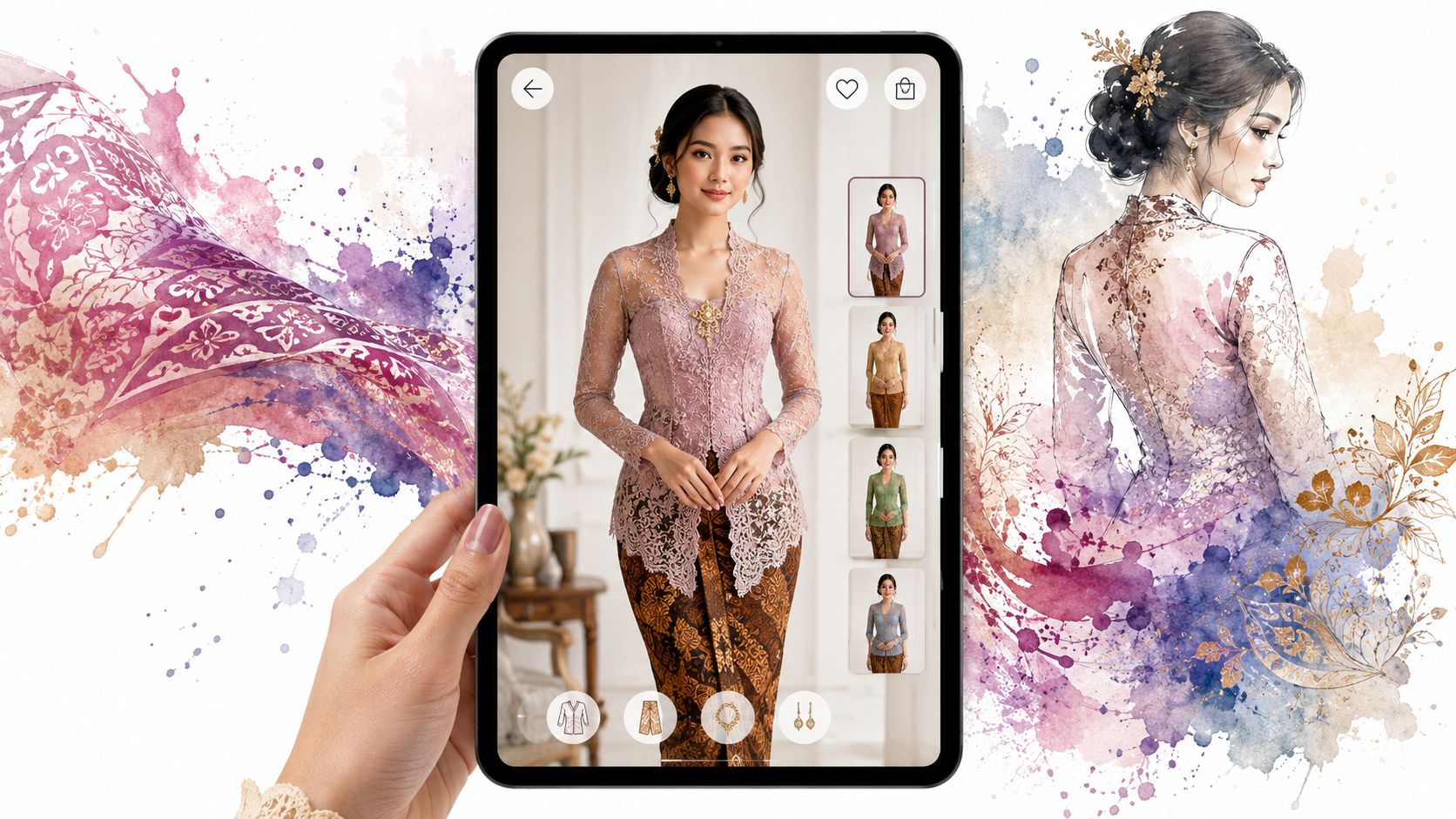
Learning the names is one thing. Seeing how a kebaya-inspired silhouette, a wrapped cloth, or a more ornate ceremonial look appears on you is something else entirely.
That jump from admiration to visualization often presents a challenge. A museum photo, marketplace listing, or social post can tell you that a garment is beautiful, but it doesn't answer the personal question many individuals ponder: what would this style look like on me?
Why visual preview matters with ceremonial dress
Traditional clothing from Indonesia often includes layers, wraps, headpieces, and textile surfaces that are hard to interpret from product photos alone. A folded flat image may show the fabric. It may not help you imagine the mood or silhouette.
That's especially true when you're exploring unfamiliar styles respectfully. You may not be ready to buy anything. You may want to compare visual direction. Does a softer kebaya-inspired line feel right for you? Are you more drawn to strong woven texture and ceremonial layering?
A realistic style preview can help with that kind of decision-making because it shifts the question from abstract admiration to personal styling.
Good references make the result clearer
If you're collecting inspiration before sourcing a piece, image quality matters. Clean front-facing photos and flat garment images tend to make style visualization easier, because they show shape and surface more clearly.
For people experimenting with moodboards or reference images, tools related to a realistic AI photo generator can also be useful for creative exploration. They won't replace garment knowledge, but they can help you think more visually about styling direction, composition, and presentation.
A smart way to explore before you commit
A lot of style regret starts with buying before understanding. That's even more likely when the clothing tradition is new to you and the outfit includes unfamiliar structure or ceremonial detail.
A better approach looks like this:
- Collect a few reference looks from reputable shops, museum imagery, or cultural inspiration sources.
- Compare silhouettes rather than chasing the first dramatic image.
- Focus on appearance, not sizing assumptions.
- Test styling ideas digitally before deciding what belongs in your wardrobe or event plan.
If you want to preview appearance digitally, a tool for virtual try-on clothing visualization can help you see how an outfit style reads on your image before you commit to a purchase or costume plan.
The best use of virtual try-on for traditional fashion isn't guessing measurements. It's understanding shape, mood, and presence.
Finding and Styling Traditional Wear Today
A striking Indonesian outfit can look clear and graceful on a mannequin, then feel very different once you picture it on your own body, at your own event, in your own setting. That gap matters. It is the difference between admiring a tradition from a distance and understanding how to wear it with care.
Finding the right piece starts with knowing what kind of relationship you want with the clothing. You may need a formal ensemble for a wedding or cultural program. You may want one modern item that carries the spirit of batik, songket, or kebaya styling into everyday dress. You may merely be trying to answer a practical question that many guides skip. What would this truly look like on me?
Why shopping can feel complicated
Many Indonesian regional outfits were designed for ceremony, status, and symbolism first. Daily ease was not always the main goal. A traditional clothing guide focused on regional wearability describes examples such as Baju Adat shaped by Brunei and Malay influence, with velvet, dense gold embroidery, and men's headgear reinforced to hold a defined upright form. It also explains the Basahan bridal ensemble, with an uncovered upper torso, a heavy dodot cloth, a keris, and layered jewelry.
That helps explain why modern shoppers sometimes misread these garments online.
A photographed piece may seem dramatic but wearable, yet an actual garment can carry weight, stiffness, ritual meaning, or a level of formality that changes how it should be styled. Even adapted versions often keep that visual authority. The silhouette still speaks.
Smart ways to source pieces
Your best shopping route depends on the role the garment will play in your wardrobe.
- Formal cultural wear: Look for specialty boutiques, ceremonial dressmakers, or sellers who explain regional background and occasion clearly.
- Modern-inspired styling: Explore contemporary brands that use batik, woven textiles, or kebaya-influenced tailoring in more flexible formats.
- Secondhand discovery: Browse resale platforms for unusual pieces, but expect limited context about fabric structure, drape, or cultural use.
- Marketplace browsing: Large retail sites can be useful for comparison, especially if you are studying shapes, color stories, and styling possibilities before buying.
Styling without flattening the tradition
You do not need the most ornate version of an outfit to dress with respect. In fact, starting smaller often creates a more thoughtful result.
A batik piece can carry an entire look the way a strong melody carries a song. If the textile is visually rich, let the surrounding pieces stay quieter. A kebaya-inspired top can also work beautifully in a modern outfit, especially if you pay attention to line and balance rather than piling on decorative elements.
Here are a few grounded ways to begin:
- Let batik lead: Pair a batik skirt or wrapped-cloth-inspired piece with a simple top so the textile stays the focal point.
- Use kebaya shapes carefully: A structured, semi-fitted layer can add elegance over a slip dress, camisole, or simple separates.
- Keep accessories in support: If one woven or embroidered piece already carries strong visual meaning, choose restrained shoes and jewelry.
- Match the occasion: Save heavily ceremonial interpretations for weddings, stage performances, or settings where that level of dress makes sense.
If you like building a look piece by piece, this guide to building outfits as ensembles can help you turn one standout garment into a balanced final outfit.
A practical habit that prevents regret
While browsing online, especially across mixed platforms such as Zara, H&M, Amazon, Shein, Vinted, or Depop, ask two questions before you buy. What is this garment meant to do culturally? What kind of visual presence will it create on my body?
That second question is where digital styling becomes valuable. Traditional Indonesian dress often depends on proportion, layering, and surface detail. Those qualities are hard to judge from a product listing alone. A simple visualization step can help you compare options, test styling ideas, and decide whether a piece feels refined, overdressed, understated, or beautifully right for the moment.
The goal is not perfect prediction. The goal is clearer judgment before you spend money, build an event look, or wear a tradition you are still learning to understand.
Frequently Asked Questions About Indonesian Attire
Can I wear Indonesian traditional clothing if I'm not Indonesian
Usually, yes, if your approach is respectful and the setting makes sense.
A good way to judge it is to treat Indonesian attire the way you would treat formal clothing with a strong family story. You can admire it, wear it, and learn from it, but you should also ask what the garment means, who typically wears it, and whether the occasion fits. Batik pieces and contemporary kebaya-inspired outfits are often easier starting points than highly ceremonial dress. For weddings, cultural events, or styled photoshoots, ask the host or organizer how formal the clothing should be.
What's the main difference between a kebaya and a baju kurung
The clearest difference is the silhouette.
A kebaya usually follows the body more closely and creates a shaped, refined line. A baju kurung tends to fall more loosely, with a softer and more relaxed outline. Clothing works a bit like architecture here. One style traces structure. The other creates space.
If two garments seem visually similar, look at the outer shape first. A fitted, body-skimming form often points toward kebaya. A looser, tunic-like profile often points toward baju kurung.
Is batik a garment or a fabric
Batik is primarily a wax-resist dyeing technique, rather than one single garment.
That distinction matters because people often say they are “wearing batik” when they mean they are wearing a shirt, skirt, sarong, dress cloth, or another item made with batik decoration. The method is the identity. The final garment can take many forms.
What should I look at first when choosing a style
Start with the occasion. Then study the silhouette. Then look closely at the textile.
That order helps you avoid choosing only by surface beauty. A pattern can look stunning in a product photo but feel much stronger, more formal, or more ceremonial once it is worn. The better question is not only “Do I like this?” but also “What kind of presence will this create on me?”
How can I explore these looks before buying anything
Collect a few garment images and compare how each look communicates shape, coverage, and detail. Focus first on visual presence, not on guessing size from a single model photo.
This is especially helpful with Indonesian attire because proportion changes everything. A kebaya neckline, sleeve length, or layered textile can look delicate on one person and highly formal on another. Virtual try-on tools help answer the practical question many style guides skip: what would this look like on me? That makes cultural learning more concrete. You are not only reading about regional dress. You are testing how color, line, and ornament interact with your own image before you buy, rent, or style anything.
Try Virtual Try-On Now
See how clothes look on you before you buy - works with any online store
Get Started Free