Understanding Fabric Types a Shopper's Visual Guide
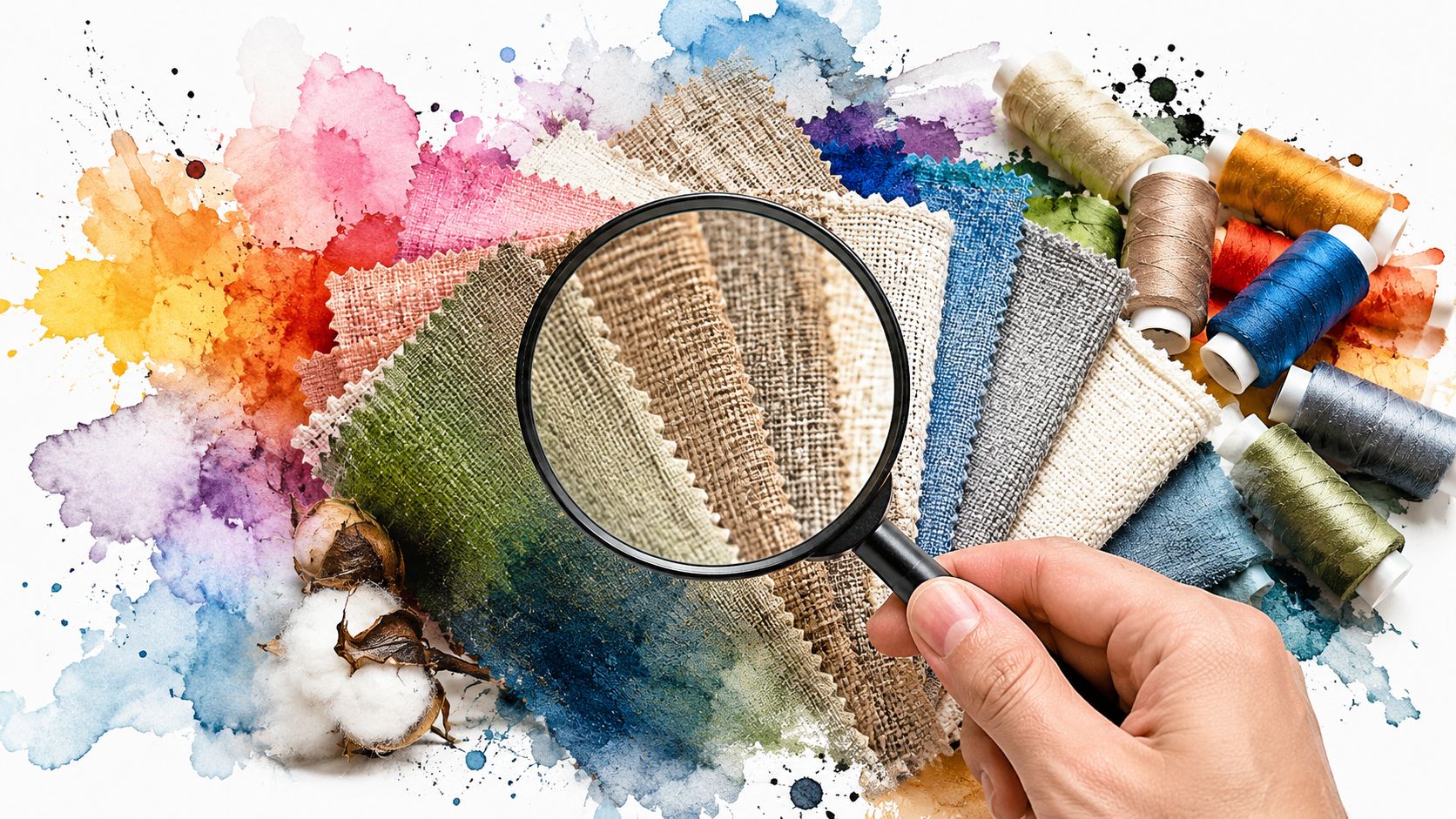
You find a dress online that looks perfect. The color works, the silhouette looks easy, and the price is decent, but one question keeps nagging at you, what will the fabric look like on a real body, in real light, on you?
That uncertainty is the whole fabric problem in online shopping. A fabric tag can tell you a lot, but only if you know how to read it. Understanding fabric types turns a vague listing into something you can picture, especially when you want to see how a piece will look before you buy it.
The Online Shopping Guessing Game
Online shopping makes fabric feel like a mystery because the photo usually shows the shape, not the material behavior. A shirt can look crisp in one image, then turn out soft and slouchy in real life. That gap is why understanding fabric types matters so much, it helps you predict visual behavior before the package arrives.
The easiest starting point is the basic split between natural fibres and synthetic fibres. Educational textile sources consistently use that division, and it explains a lot of what you see on product pages, cotton tends to read as breathable and comfortable, while polyester is usually associated with durability, wrinkle resistance, and easier care (thefashiondesigninstitute.com).
Practical rule: if you can't identify the fabric from a listing, treat the photo like evidence. Texture, sheen, drape, and structure usually tell you more than the product title does.
That mindset helps whether you're browsing a boutique, a resale app, or a huge retailer. It's also why a visual tool can be useful, because once you understand the material, you can preview the style instead of guessing at it.
Natural Fibers The Classics Explained
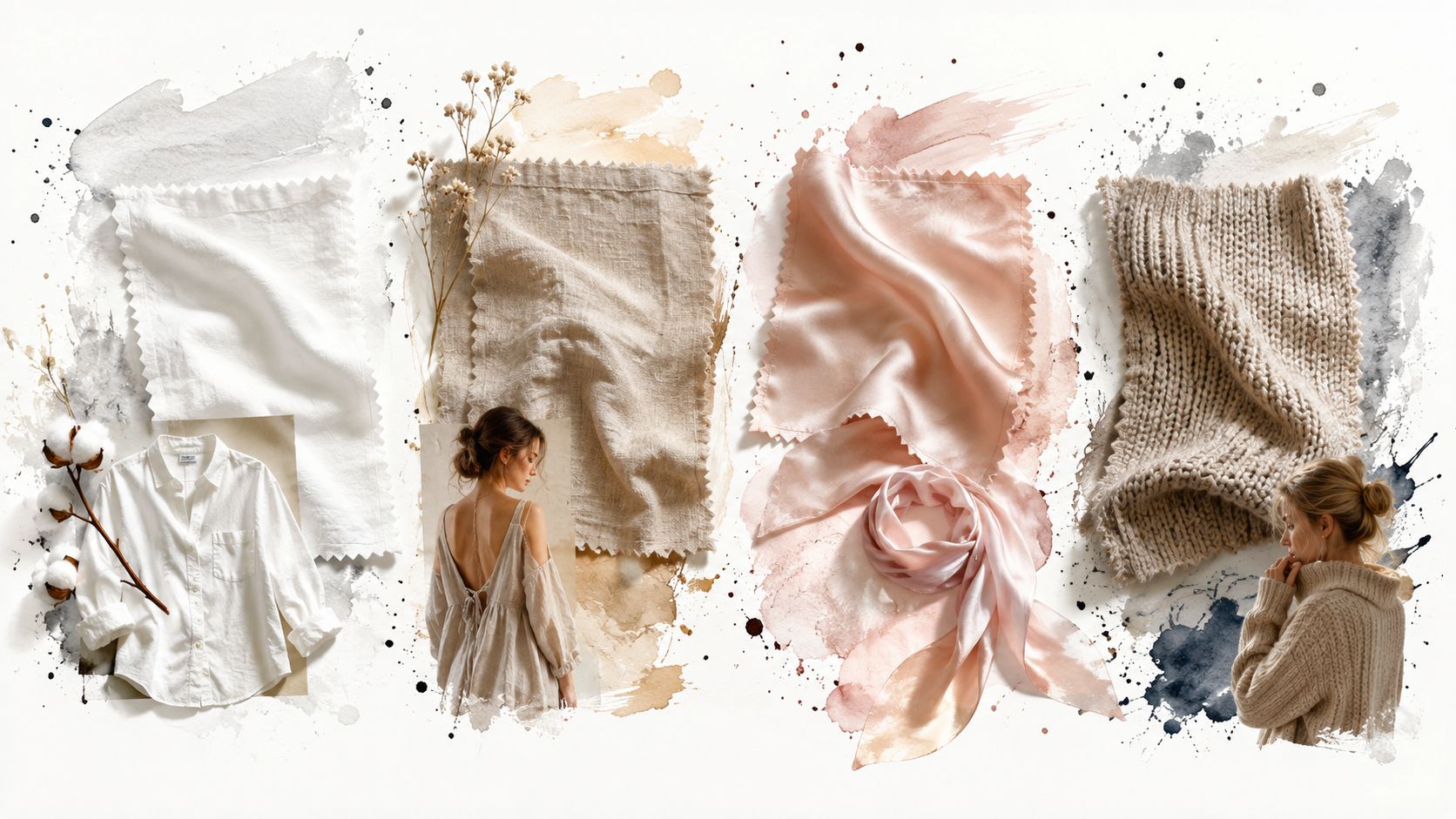
Natural fibres are the fabrics people often think of first because they're familiar, easy to describe, and tied to specific sensations. Among the major natural fibres, cotton, wool, silk, and linen are the names that come up again and again, with cotton described as the most widely used, wool as the warmest, silk as the most luxurious, and linen as the most breathable (clothingdigest.com).
Cotton linen wool and silk in plain language
Cotton is the everyday staple. It usually reads as soft, approachable, and easy to wear, which is why it shows up in basics, tees, shirts, and casual dresses. When you see cotton in a listing, think comfort first, then decide whether the garment also needs structure or stretch.
Linen feels different immediately. It has a crisp, airy personality, so it works beautifully for warm-weather pieces where you want movement and visible texture.
Wool does the opposite job. It holds warmth, brings a cozier visual weight, and often looks most at home in sweaters, coats, and cold-weather layers.
Silk sits at the polished end of the spectrum. It usually has a smooth surface and a luminous finish, so it's a natural match for eveningwear, scarves, and anything that's meant to feel elegant.
A good outside resource on this idea is The Fabric Company's guide to durable apparel fabric, because it shows how fabric choice changes the way a garment performs and looks in daily use.
TryThisFit's sustainable fashion guide also fits naturally here, because fabric literacy and shopping habits are linked. Once you know what a fibre does, you can start making style decisions that feel more intentional.
<iframe width="100%" style="aspect-ratio: 16 / 9;" src="https://www.youtube.com/embed/K7undJ-H140" frameborder="0" allow="autoplay; encrypted-media" allowfullscreen></iframe>Natural fibres often create the first “aha” moment because they're easy to recognize in real clothing. You can see that especially when you compare a crisp linen shirt, a smooth silk blouse, and a thick wool knit, each one sends a different visual signal before you even touch it.
A fabric's name is only half the story. The way it's woven or knitted changes how that fibre behaves on the body.
Synthetic Fibers The Modern Performers
Synthetic fibres aren't just budget substitutes. They're engineered for specific jobs, and that's why they show up everywhere from workout clothes to everyday wardrobe basics.
One source reports that polyester accounted for 57% of global fibre production in 2023, and synthetics overall made up roughly 64% of all fibres (transition-pathways.europa.eu). That scale helps explain why polyester blends are so common in modern apparel, from sportswear to fast-fashion pieces.
Why polyester nylon and spandex matter
Polyester is popular because it's durable and tends to resist wrinkling. In clothing, that usually means cleaner-looking folds, better shape retention, and less fuss in care.
Nylon is another workhorse. It's often chosen when a garment needs toughness and a smoother technical feel, which is why it appears in activewear and outerwear details.
Spandex is the stretch specialist. It doesn't usually dominate a garment on its own, but it can change the way a piece moves, hugs, and recovers after wear.
Best way to read a blend: look at what each fibre contributes, then ask what the garment needs visually. Shape retention, stretch, and easy care all point in different directions.
Blends are where synthetics become especially useful. A cotton-polyester mix can keep a garment looking neater, while a fabric with elastane can add flexibility without making the piece look obviously sporty. That's why a tag like “polyester-spandex blend” isn't just technical jargon, it's a quick clue about appearance and behavior.
If you're browsing activewear, fitted denim, or travel clothes, the synthetic side of fabric literacy matters a lot. It tells you why some pieces keep their shape and others fall softly, even when the surface looks similar in photos.
Woven vs Knit The Secret to Drape and Stretch
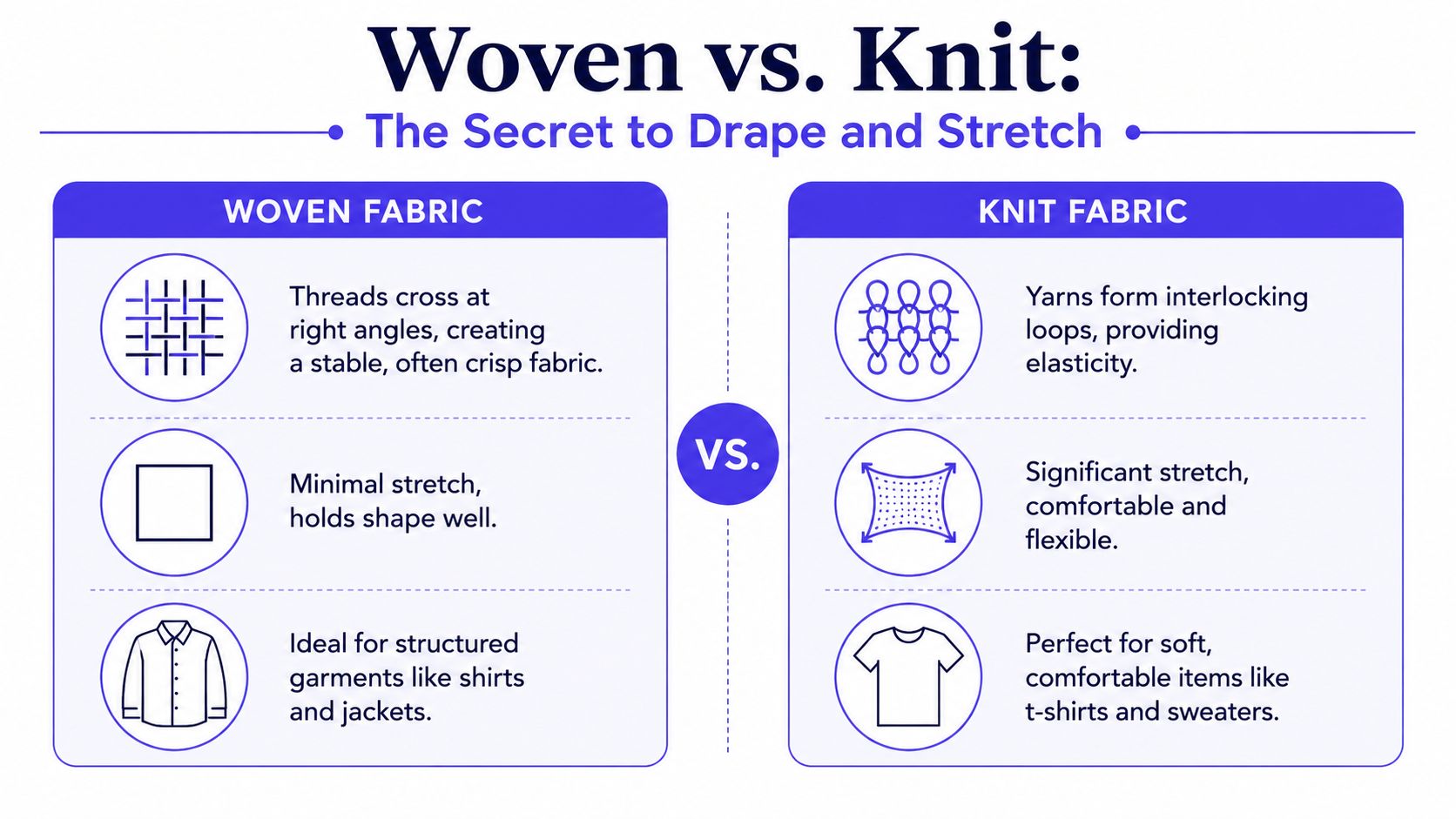
Understanding fabric types helps many shoppers finally decode why two cotton garments can look and feel nothing alike. A woven fabric is built like a tight grid, while a knit fabric is built from loops, almost like a sweater structure scaled up into clothing.
Structure changes everything
Technical textile sources describe fabric types as woven, knit, and nonwoven, with woven fabrics made from interlaced warp and weft yarns and knit fabrics built from looped structures (acl.digimat.in). That construction affects drape, stability, air permeability, and durability, even when the fibre content stays the same.
A woven fabric usually holds shape better. It often feels more crisp, more structured, less stretchy, which is why shirts, jackets, and trousers often use woven construction.
A knit fabric usually feels more flexible. It moves with the body, hangs with more softness, and often reads as casual or body-following in photos.
That difference is easy to picture if you think in visual terms. A woven fabric is like a tidy lattice, while a knit is like a series of linked loops that can expand and relax.
Visual shortcut: if a garment looks crisp and architectural in a product photo, check for woven construction. If it looks soft, rounded, and easy to drape, knit construction is a likely reason.
This is also why fabric labels alone can be misleading. A 100% cotton woven chambray and a 100% cotton jersey knit can both be cotton, but they will look and behave very differently. One will usually read cleaner and more structured, the other softer and more fluid.
Once you learn this, product pages become easier to scan. Instead of asking “What fibre is it?”, you start asking “What structure is it, and how will that show up visually?”
How to Identify Fabrics from Online Photos
Online photos give you clues if you know what to inspect. I like to read them the same way I'd read a close-up of a building material, texture, edge behavior, and how the surface catches light all reveal something.
Natural fibres such as cotton and linen are generally associated with higher breathability, while synthetics such as polyester and nylon are engineered for durability and wrinkle resistance (study.com). That means the photo often hints at which side of the tradeoff you're seeing, especially if the garment is pinned, folded, or hanging in a flat-lay image.
What to look for in the image
- Surface texture: A woven linen often shows a fine, visible grain. A jersey knit usually looks smoother and a little softer at the edges.
- Sheen: Satin, silk, and some synthetics catch light differently from matte cotton or linen.
- Drape: If the hem falls in gentle folds, the fabric is probably more fluid. If it stands away from the body, it likely has more structure.
- Blends and finishes: A blended fabric can improve shape retention, and finishes can change how shiny, smooth, or crisp a piece looks.
Flat-lay clothing photos work especially well for this kind of reading because the garment lies still and lets the surface behavior show through. If you're listing items for resale or photographing your own closet, this guide to clothing product photography helps you understand why lighting and layout matter so much.
Practical rule: if you're shopping secondhand, zoom in before you trust the label. Missing tags happen, and the photo often gives you the best clue to whether a piece is woven, knit, or something else.
This is also where shopper confidence starts to change. You stop treating the listing as a mystery box and start making a grounded visual judgment about the fabric's likely feel and appearance.
Stop Guessing and Start Visualizing Your Style
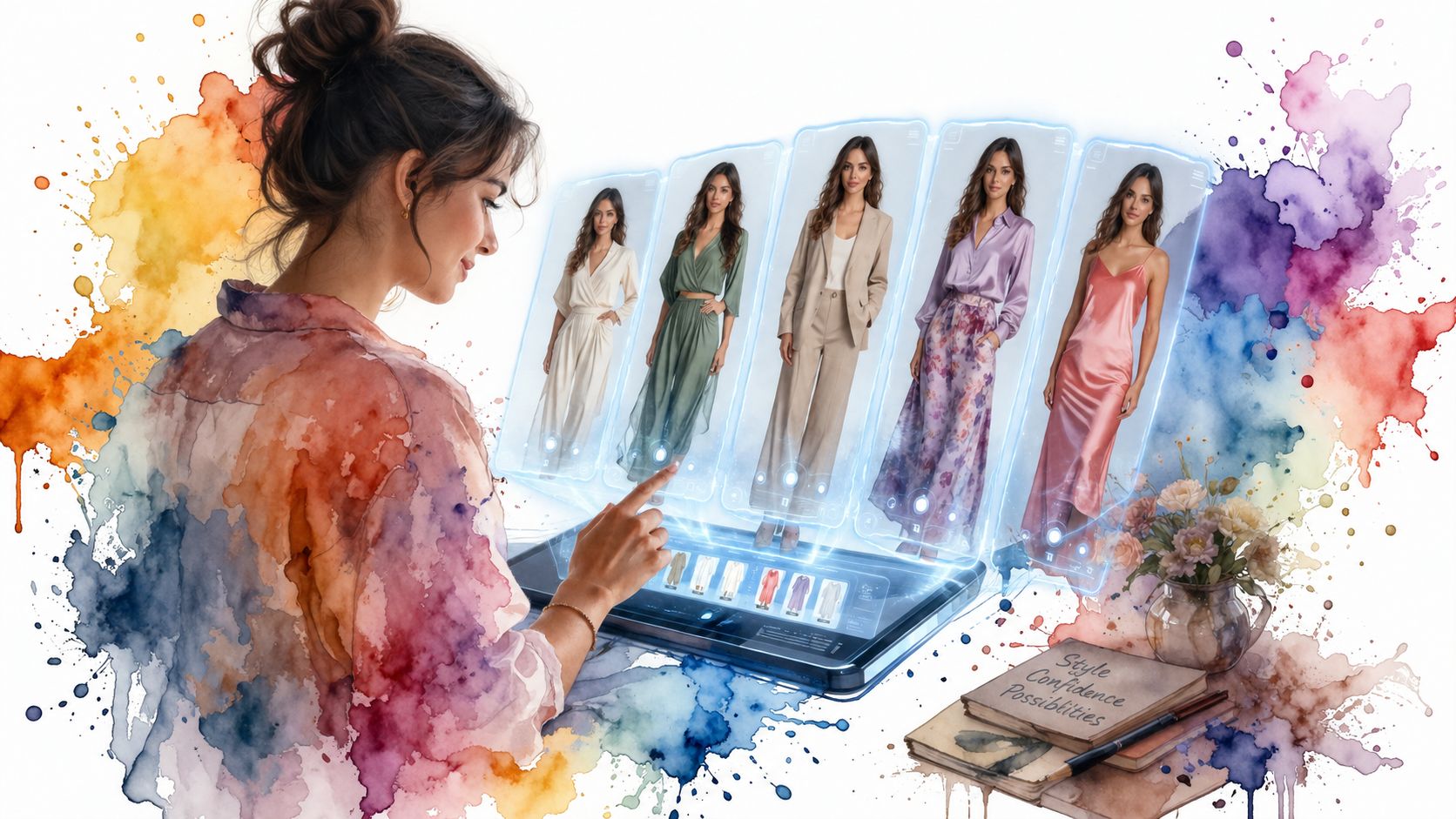
Once you know how fibres and construction work, the next step is obvious, see how it looks before you buy it. That's where a virtual try-on tool can turn fabric knowledge into something immediately useful, because the problem isn't just “what is this made of?”, it's “what will it look like on me?”
TryThisFit is one option that does exactly that. You upload a photo and preview the appearance of clothing in seconds, and the free Chrome extension lets you right-click product images on any site, including Zara, H&M, Amazon, Shein, Vinted, and Depop, to generate an instant try-on preview without leaving the page. It installs in a couple of seconds at trythisfit.com/go/extension/chrome, and it works on any site through that right-click flow.
Why this changes shopping behavior
If you already know the difference between a structured woven shirt and a drapey knit top, then the preview becomes much more meaningful. You're not just seeing a random outfit mockup, you're checking whether the style reads crisp, soft, fitted, relaxed, or fluid.
That matters on mainstream retail sites, and it matters even more on resale platforms. A secondhand listing on Vinted or Depop can have a missing tag, a blurry close-up, or a vague description, so the visual preview helps you decide faster. The same goes for Halloween costumes, where you often care more about the silhouette and mood than the exact technical specs.
Flat-lay clothing photos work best for the most accurate results. A clean front-facing garment image gives the app the clearest starting point, so if you're browsing, save the product shots that show the item plainly and skip the heavily styled editorial images when you can.
Fast shopping rule: use the photo to judge fabric behavior, then use the try-on preview to judge style. That combination saves time and helps you avoid returns caused by visual mismatch.
You can also compare saved looks later in your try-on history, which makes it easier to revisit outfits you liked instead of starting from scratch each time. If you want a more direct preview workflow, the main app is at trythisfit.com, and the virtual try-on page is here: https://trythisfit.com/virtual-try-on.
Speed is the advantage. In seconds, you can decide whether a silhouette feels right, whether a color works with your style, and whether the garment gives off the look you want before you spend money on it.
If you want to test the approach right away, install the free Chrome extension in 5 seconds, right-click a product image on your favorite store, and preview the style before you buy. Try it now at trythisfit.com and start shopping with a lot less guesswork.
A CTA for TryThisFit.
Try Virtual Try-On Now
See how clothes look on you before you buy - works with any online store
Get Started Free