Upscale Casual Outfits: Your Complete 2026 Style Guide
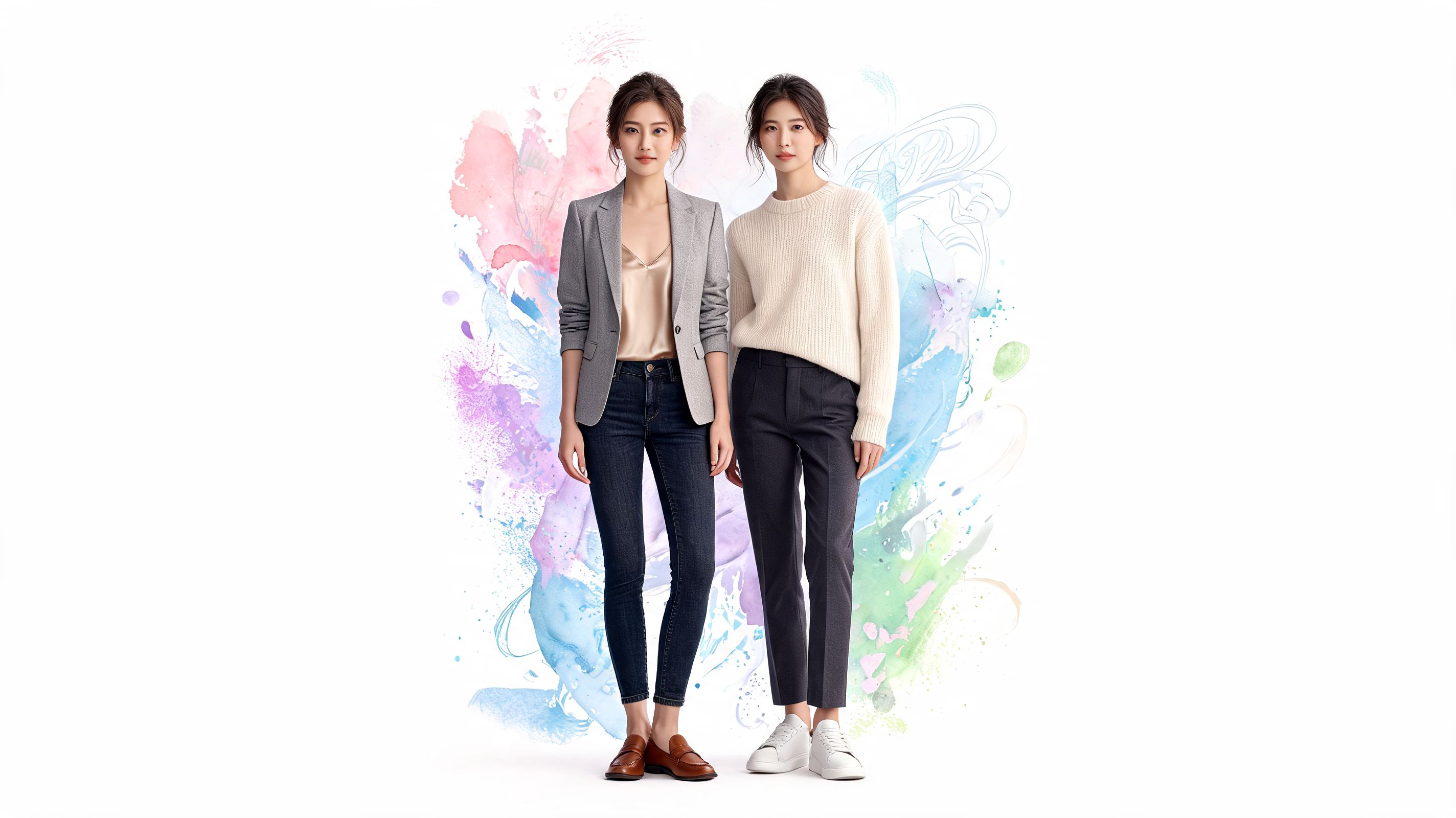
You know that moment when an invite says “smart casual,” and your brain immediately turns that into ten outfit changes? A blazer feels too formal. Jeans feel too relaxed. Sneakers might work, but only the right ones.
That’s exactly where upscale casual outfits come in. They solve the gap between comfort and polish, so you can look intentional without feeling overdressed.
The fun part is that this style isn’t about owning a closet full of designer pieces. It’s about learning a few simple principles, then using them to build outfits that look expensive, relaxed, and very you.
Decoding the Upscale Casual Dress Code
Upscale casual sits right between everyday basics and dressier outfits. It keeps the ease of casual clothes, but adds shape, texture, and finish so the whole look feels considered.
A soft knit with well-fitted trousers is upscale casual. A crisp tee with dark denim, loafers, and a structured coat is too. The difference isn’t the price tag. It’s the polish.
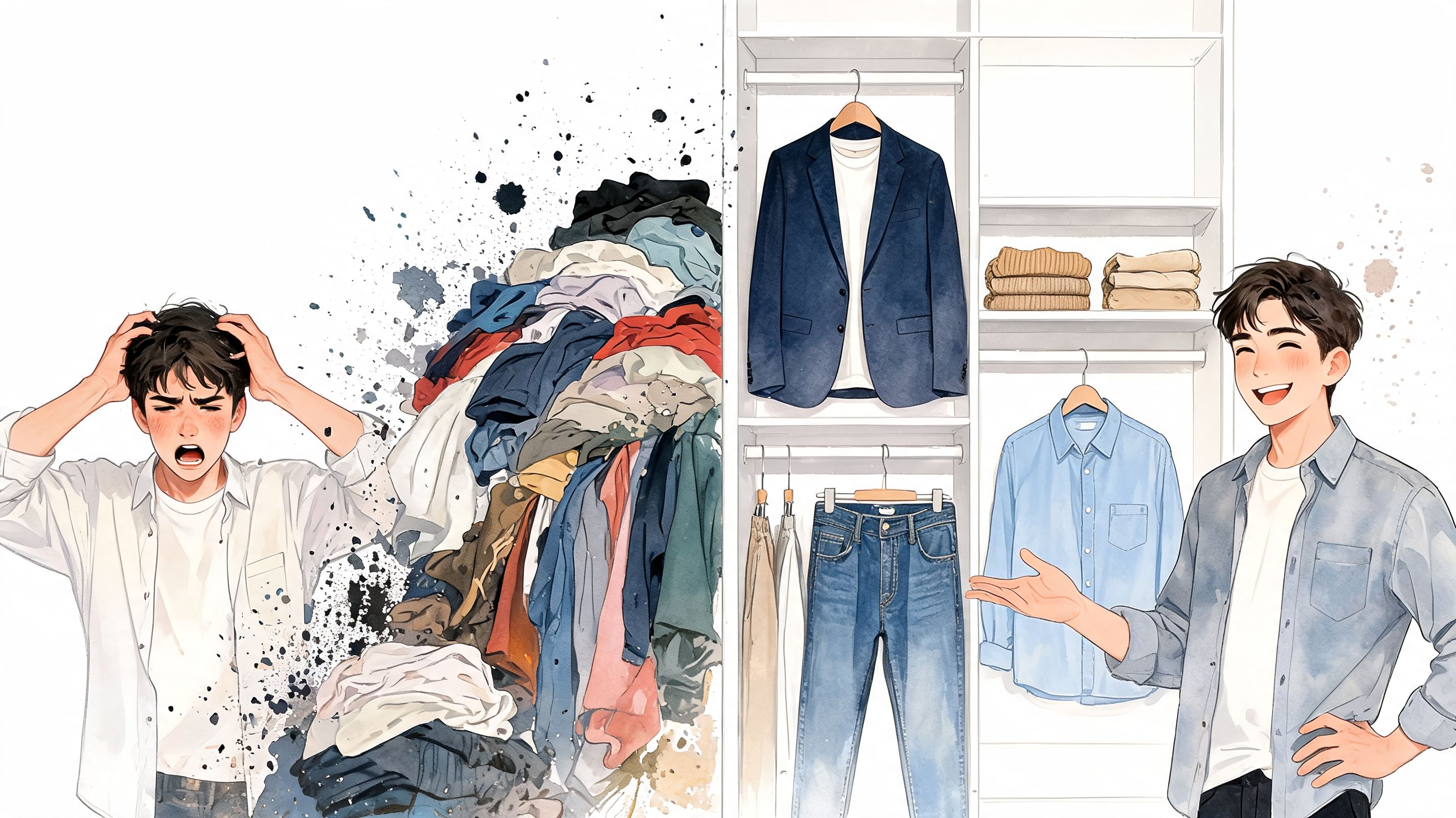
What makes an outfit feel upscale
Three things usually create the effect:
- Better fabric choices. Think linen, silk blends, merino, polished cotton, suede, leather, or denim with a clean finish.
- A bit of structure. A blazer, trench, pleated trouser, neat collar, or shoe with a refined shape changes the mood fast.
- Clean finishing. Wrinkle-free fabric, balanced proportions, and simple accessories make casual pieces look intentional.
A hoodie and joggers can read sporty. Swap in a premium knit hoodie, tapered joggers, and sleek leather sneakers, and the same comfort starts reading upscale.
Why this style feels so current
The look lines up with a broader shift toward clothes that are both practical and chic. In a McKinsey fashion trends discussion, the personal luxury goods market is described as being shaped by price-driven expansion, and over 35% of private client spending focused on “utilitarian elegance”, including pieces like wide-shouldered blazers and oversized coats.
That phrase is useful because it explains the whole vibe. You want clothes that work hard and still look refined.
Upscale casual works best when one part of the outfit feels relaxed and another part adds definition.
If you’ve ever liked the idea of casual elegant attire, you’re already very close to this style space. The difference is mostly in styling. Upscale casual often leans a little more modern, a little more effortless, and a little less formal.
A simple way to judge your look
Ask yourself these quick questions before you leave:
- Does one piece add structure such as a blazer, trouser, loafer, or coat?
- Do the fabrics look intentional, not flimsy or overly worn?
- Would this outfit still look good in a candid photo?
If the answer is yes, you’re probably in upscale casual territory.
The 5 Building Blocks of an Enduring Wardrobe
A strong wardrobe is easier to build when you stop shopping for random outfits and start shopping by category. That way, every new piece has a job.
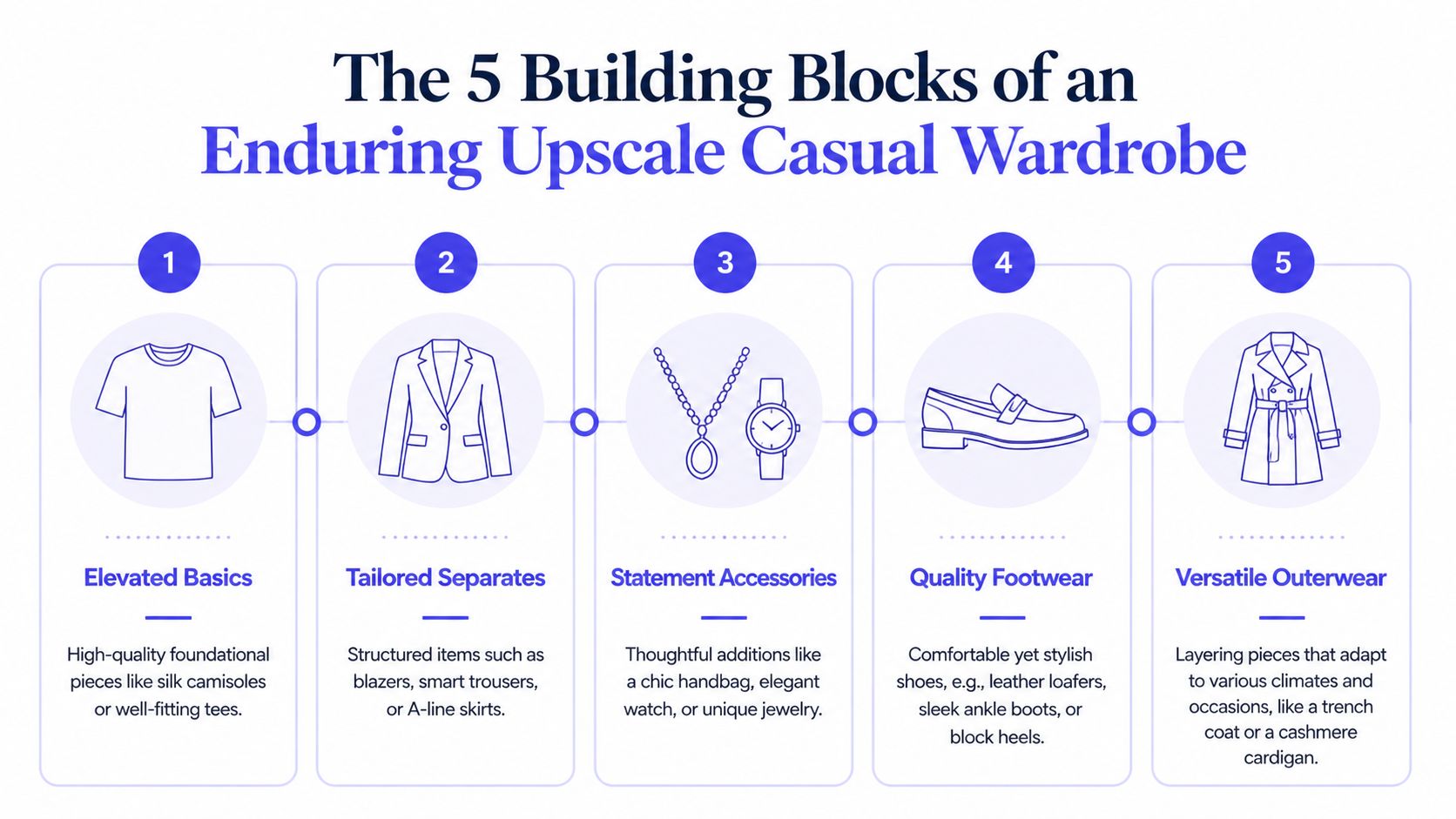
Elevated basics
These are the quiet pieces that make everything else work. A ribbed knit tee, a silk-blend camisole, a smooth fine-gauge sweater, or a crisp white shirt can carry an outfit without shouting for attention.
The upgrade is usually in the drape. A basic top that skims the body and holds its shape looks much more polished than one that twists, clings, or goes sheer in bright light.
Tailored separates
The outfit begins to appear intentional. Well-fitting trousers, a relaxed blazer, an A-line midi skirt, or clean dark denim give your basics something strong to sit next to.
A blazer is especially useful because it acts like an instant finishing layer. Throw it over a tank and jeans, and the whole look changes in seconds.
Practical rule: If an outfit feels flat, add a third piece. A blazer, trench, vest, or cardigan usually fixes it.
Statement accessories
You don’t need many. You just need the right ones.
Try one or two pieces that create contrast with simple clothing:
- A structured bag that sharpens soft knits or denim
- A metal watch or sculptural earrings that catch light without overwhelming the outfit
- A leather belt that gives shape to looser silhouettes
- A silk scarf for color and texture
The key is restraint. Upscale casual usually looks better with fewer, better-chosen accessories.
Quality footwear
Shoes often decide whether an outfit lands as casual or polished. That’s why this category matters so much.
According to trend data on casual fashion demand, “casual shoes” peaked at 98 in May 2025, outpacing related searches like casual pants and casual shirts. The same data notes strong momentum in women’s trendy going-out tops, which reached a search peak of 173 in February 2025 with +34% month-over-month growth and sales of 2,376 units, while men’s casual joggers hit 102.5 search volume in December 2024, with +6.3% month-over-month growth and sales of 11,297 units.
That tells you something simple. People want pieces that feel easy to wear but still look pulled together.
For shoes, start with:
- Loafers for smart outfits
- Minimal leather sneakers for relaxed looks
- Ankle boots for cooler weather
- Slingbacks or low heels when you want extra polish
Versatile outerwear
Outerwear is often the first thing people notice. A trench coat, wool coat, cropped jacket, or cashmere cardigan can make even a plain outfit feel complete.
The best outer layers do two jobs. They add structure, and they help repeat the style message of the outfit underneath.
If you're building slowly, a thoughtful capsule wardrobe guide can help you choose pieces that mix well instead of competing for attention.
Effortless Outfit Formulas for Any Occasion
Outfit formulas make getting dressed much easier. You’re not copying a uniform. You’re using a reliable shape, then swapping in colors, fabrics, and accessories that feel like you.
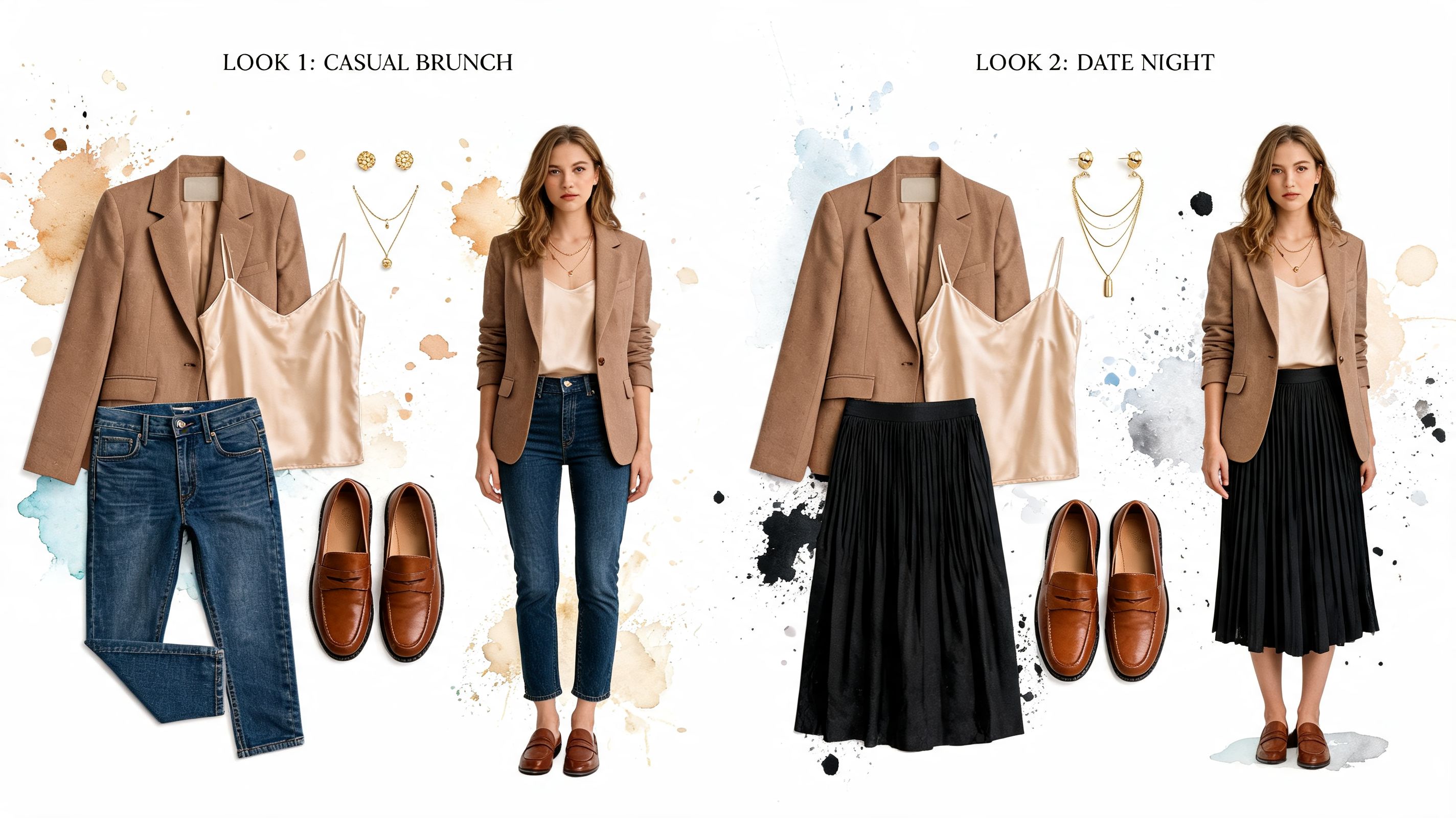
For a quick visual, this kind of layered look works beautifully:

For brunch or daytime plans
Start with this: straight-leg jeans + fine knit + loafer + trench.
This formula works because every piece feels familiar, but one or two of them carry polish. Dark or medium denim usually looks sharper than heavily distressed washes, and a trench adds movement without feeling stiff.
For creative office days
Try: polished trouser + tucked tee or knit top + blazer + sleek sneaker or loafer.
This is one of my favorite upscale casual outfits because it’s comfortable enough for a full day, but still reads capable and put-together. If the blazer feels too formal, choose one with a softer shoulder or a slightly oversized cut.
For dinner or drinks
Go with: silky top or fitted knit + dark denim or wide-leg trouser + heeled boot or slingback + small bag.
This mix creates contrast in the right places. The top brings elegance, while the denim or relaxed trouser keeps the outfit from trying too hard.
A short styling video can help if you want more visual inspiration for balancing polish and ease.
<iframe width="100%" style="aspect-ratio: 16 / 9;" src="https://www.youtube.com/embed/uXPHG3hce7o" frameborder="0" allow="autoplay; encrypted-media" allowfullscreen></iframe>For weekend errands that still look chic
Use: premium jogger or pull-on trouser + fitted tank or tee + long coat or cardigan + clean sneaker.
This one proves that comfort and style don’t have to compete. The secret is choosing joggers or pull-on pants with cleaner lines, better fabric, and a more tapered or fluid shape.
The most flattering formula is the one that gives your body shape room to look like itself.
That matters because standard style advice often skips real body variation. A 2025 report summarized in this fashion inclusivity discussion notes that 68% of shoppers in petite and plus-size segments abandon carts due to poor visualization of how clothes will look on their bodies.
So treat formulas like a starting point, not a rulebook. A petite frame might prefer a cropped blazer over a long one. A curvier shape might like a softer trouser with a defined waist. An athletic build might use draped fabrics to add movement.
Preview Your Style Instantly with Virtual Try-On
You find a sharp blazer on Zara during lunch, save a knit from H&M on your phone, then spot the perfect trousers on Vinted that night. Each piece looks promising on its own. The hard part starts when you try to answer the core question: will these items work together on you, with your proportions and your wardrobe?
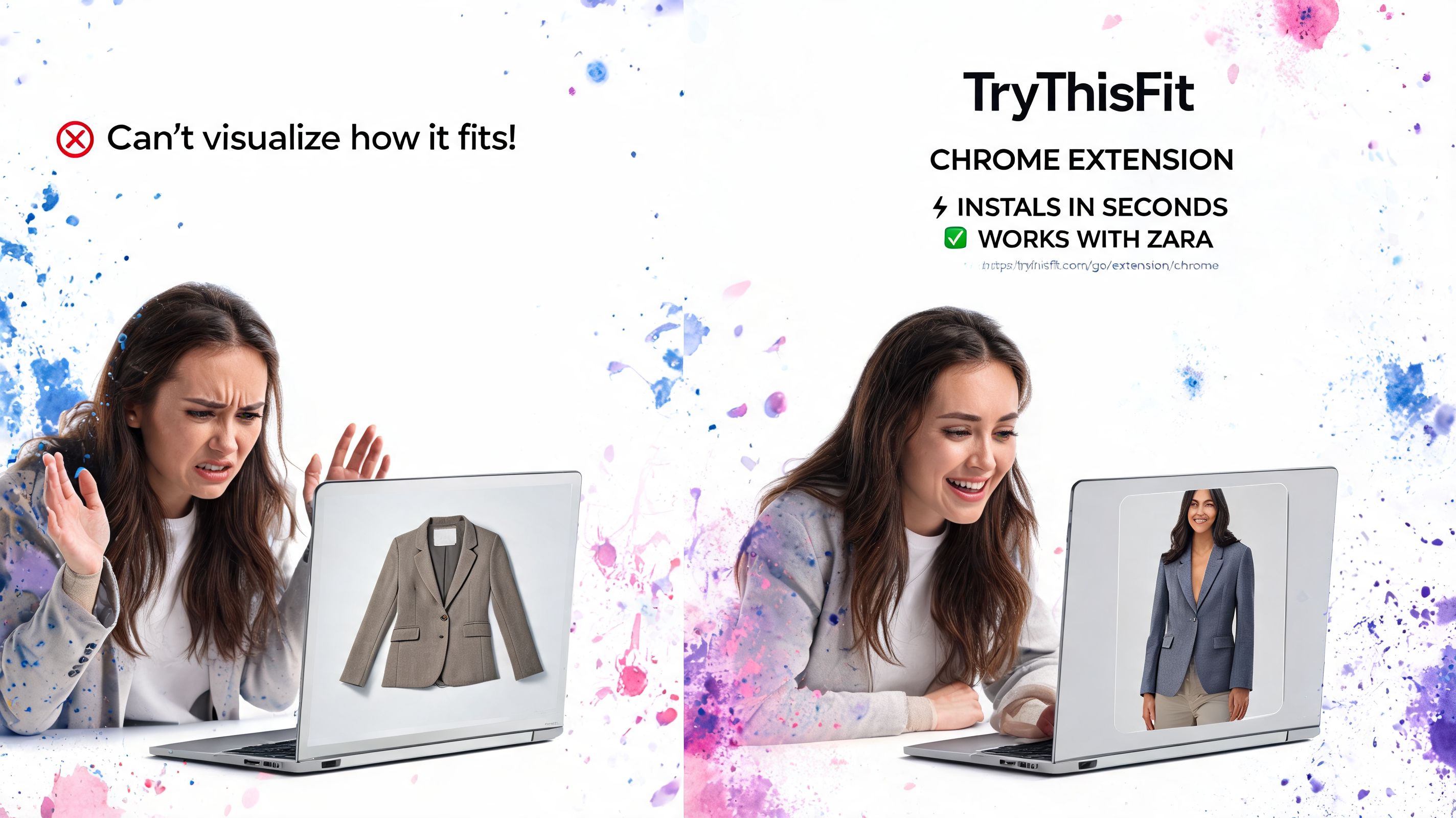
Product pages rarely solve that problem. They show one item, styled one way, on one model. Upscale casual depends on balance, so a small shift in length, shape, or texture can change the whole outfit. A blazer that looks polished in a studio photo might feel too stiff with your jeans. A knit that seems soft online might flatten the look once paired with wide-leg trousers.
Virtual try-on helps because it turns isolated pieces into a real outfit test. With TryThisFit’s virtual try-on tool, you can preview how a piece looks on your photo before you buy it. It works like a fitting-room sketch brought to life. You are not guessing from a model’s styling choices. You are checking whether your idea has the right silhouette, mood, and proportion.
Why this works better than saving screenshots
Screenshots collect options. A preview helps you compare them.
That difference matters. If you are building an upscale casual outfit, you usually are not deciding whether one item is “nice.” You are deciding whether a specific combination feels relaxed but polished. For example, a soft cardigan may suit your existing trousers better than a cropped blazer, even if both look good alone. Seeing the item on your image makes that easier to judge fast.
Flat-lay photos are especially useful here because they show shape and detail clearly. They give cleaner inputs for a style preview than heavily posed campaign images with dramatic lighting or layered styling.
A practical workflow for smarter shopping
Use this routine when you shop across multiple stores:
- Collect a few candidate pieces from Zara, H&M, Vinted, Depop, or anywhere else you browse.
- Choose clear product images, especially flat-lays or straightforward front views.
- Preview one piece at a time on your photo so you can test the outfit formula you already have in mind.
- Compare versions of the same role in the outfit, such as two blazers, three knits, or different trouser shapes.
- Keep the option that supports the whole look, not just the item that looks best on its own.
This is the part many shoppers skip. They shop item-first when upscale casual works outfit-first. The blazer is only one building block. What matters is whether it creates the clean line you want with your denim, shoes, and bag.
A preview will not confirm size. It will show whether the outfit idea makes visual sense.
Where virtual try-on is most useful
A few situations make this especially handy:
- Secondhand shopping, where listings often give you limited angles and inconsistent styling
- Cross-store outfit building, when one look pulls from Zara, H&M, and Vinted instead of a single retailer
- Closet planning, when you want to test whether a new purchase fills a real gap
- Accessory decisions, especially if you want a watch strap, bag, or shoe to sharpen the outfit rather than distract from it
Accessories are a good example of how small details can change the read of an outfit. If you wear a smartwatch, a refined band can push the look from sporty to polished. Options like these luxury Apple Watch straps UK can help you picture that final effect before you commit to the rest of the styling.
Used well, virtual try-on becomes your quiet style assistant. It helps you test outfit formulas, spot proportion issues early, and buy with more confidence instead of crossing your fingers at checkout.
The Finishing Touches Fabric Fit and Accessories
An upscale casual outfit often succeeds or fails in the last 10 percent. The formula gets you close. Fabric, fit, and accessories decide whether the result looks intentional or slightly off.
Fabric that carries the look
Fabric is the lighting of an outfit. The cut may be the same, but the finish changes how everything reads. A crisp cotton shirt looks sharper than a limp one. Dense knitwear holds shape better than thin jersey that twists or clings. Denim with structure usually looks more polished than denim that bags out by midday.
Look for materials that have some body, a clean surface, or a graceful drape. Linen, silk blends, merino wool, suede, polished cotton, and good denim often do this well.
You do not need delicate, high-maintenance clothes.
A basic tank, tee, or knit top can still look refined if it is opaque, smooth, and keeps its shape after a few hours of wear. If a fabric pills quickly, turns shiny in odd places, or goes sheer in daylight, it will usually pull the whole outfit down no matter how good the color is.
Fit means line and balance
Size labels help you get dressed. Silhouette is what people see.
That is why an oversized blazer can look polished, while a blazer in your usual size can still feel wrong if the shoulders drop too far or the fabric collapses. The same goes for trousers. Relaxed does not mean sloppy. It means the shape is deliberate.
Use a quick three-part mirror check:
- Shoulder line. The garment should start cleanly on your frame.
- Drape. Fabric should fall, not strain or bunch.
- Proportion. One fuller piece usually looks better with one cleaner, more defined piece.
A simple way to remember it: if one item takes up more visual space, the rest of the outfit should create order around it. Wide-leg trousers often look better with a neater top. A long, loose blazer usually benefits from a slimmer pant, a tucked top, or a shoe with a sleek shape.
Accessories should connect, not compete
Good accessories work like punctuation. They finish the sentence instead of starting a new one.
Choose pieces that repeat something already happening in the outfit. A leather belt can echo loafers. Earrings can pick up the hardware on a bag. A watch can add structure to a soft knit and jeans combination. That is how casual clothes start to look considered.
If you wear a smartwatch every day, the strap matters more than many people expect. Swapping a sporty band for a more refined one can help the watch sit comfortably beside loafers, tailoring, or a structured coat. This guide to luxury Apple Watch straps UK shows how that small change can make modern accessories feel more aligned with polished outfits.
For low-risk finishing pieces, I also like using Amazon fashion accessories as a testing ground. A belt, bag, or shoe can shift the whole mood of a look. As noted earlier, TryThisFit helps you check whether those final details work with the clothes you already own before you buy.
Quick Guide Upscale Casual Dos and Don'ts
When you’re in a rush, a short checklist helps more than a long theory lesson. Use this cheat sheet to edit your outfit fast.
| Do | Don't |
|---|---|
| Choose one structured piece like a blazer, trouser, loafer, or coat | Wear soft, shapeless pieces from head to toe |
| Focus on clean shoes with a polished shape | Let worn-out sneakers drag the whole outfit down |
| Mix relaxed and refined items in the same look | Make everything equally formal or equally sloppy |
| Check for wrinkles, pilling, and transparency in daylight | Assume a good color automatically means a polished outfit |
| Keep accessories intentional and limited | Pile on jewelry, bags, scarves, and statement shoes all at once |
| Use texture like denim, knit, leather, silk blend, or linen | Build the whole outfit from flat-looking fabrics with no contrast |
| Repeat a color or finish at least once for cohesion | Throw in unrelated colors and metals with no connection |
| Dress for the setting while keeping your personality | Copy a look exactly even if it doesn’t feel like you |
If you’re deciding between two options, the one with clearer lines and better shoes usually wins.
A final shortcut. If an outfit feels almost right, don’t start over. Change one element first. Swap the shoe, add the blazer, tuck the top, or remove one accessory.
Your Style, Refined and Uniquely You
You are standing in front of the mirror before dinner after work. The jeans fit cleanly, the knit has enough structure, and the loafers bring the look together. Nothing feels overdone. It just looks right.
That is the sweet spot of upscale casual. You still look like yourself, but the outfit has clearer lines, better balance, and a sense of purpose. Getting there is less about chasing a perfect wardrobe and more about learning your repeatable formulas, the combinations that reliably work for your shape, your lifestyle, and the settings you dress for.
Personal style works like editing a photo. A small shift in contrast can make the whole image sharper. In an outfit, that shift might be a cleaner shoe, a more structured layer, or a better fabric mix.
Online shopping makes this harder than it should be. A blazer can look great on Zara, a knit can feel promising on H&M, and a vintage bag on Vinted can seem like a smart find, but the core question remains the same: will these pieces work with what you already own? TryThisFit helps you answer that before you buy by letting you preview combinations on yourself instead of guessing from product photos.
That is what makes the process more fun. You stop collecting random pieces and start building outfits with intention.
If you enjoy saving inspiration, use it like a mood board rather than a costume. Pull a color idea from one look, a shoe choice from another, and a layering trick from a third. Then test your version with your own wardrobe. That is where style starts to feel personal instead of copied.
The goal is simple. You want to get dressed, catch your reflection, and recognize your taste in the outfit right away. When that happens, upscale casual stops feeling vague and starts feeling easy.
Try Virtual Try-On Now
See how clothes look on you before you buy - works with any online store
Get Started Free