Stay Chic: Ultimate Winter Cruise Wear Guide
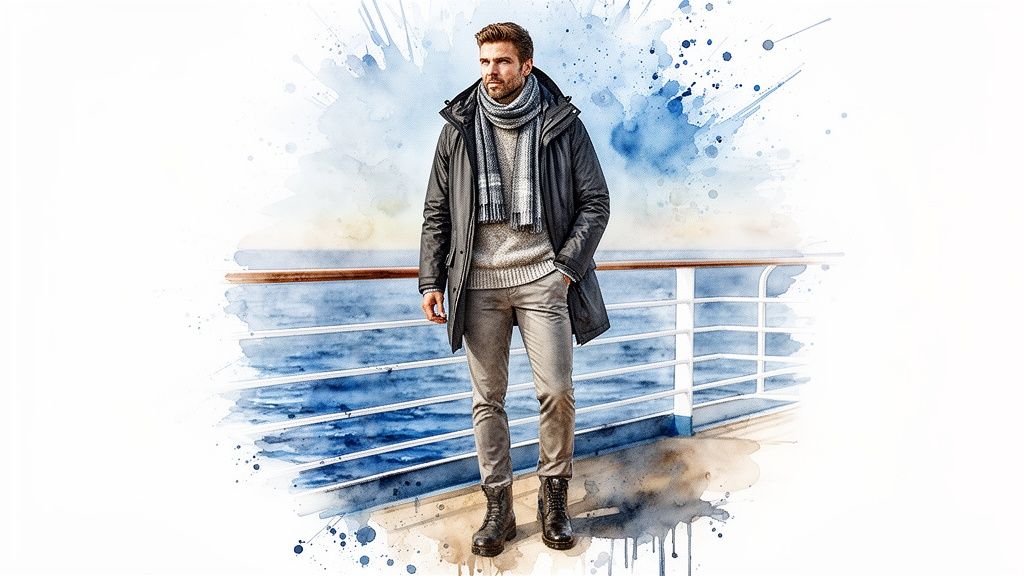
You’re probably staring at an open suitcase, a weather app, three tabs full of “what to wear on a cruise,” and one very real fear of packing all the wrong things.
That fear is justified. Winter cruise wear is tricky because you are never dressing for one mood, one temperature, or one setting. You need clothes for sun, wind, dinner, deck breezes, indoor air conditioning, and that one night when suddenly everybody looks polished and you’re wondering why you packed five random tops and no complete outfits.
The fix is not packing more. The fix is packing smarter, with pieces that layer, mix well, and earn their place in your bag.
Your Guide to Stress-Free Winter Cruise Packing
The biggest winter cruise packing mistake is treating the trip like a beach vacation with one sweater tossed in at the last minute.
That never works. A winter cruise asks more from your wardrobe than a standard getaway. You might spend the morning in sunshine, sit through a chilly indoor lunch, walk a windy deck in the afternoon, and dress up for dinner that night.
The good news is that the fashion world has been responding to this exact travel pattern for years. Cruise collections arrive in stores between November and February, created for travelers heading somewhere warm during winter. That timing is part of the reason shops suddenly start showing resort dresses, polished sandals, and light layers while it’s still cold outside, as explained in this overview of cruise collections in fashion retail.
I like to build a winter cruise wardrobe the same way I plan any trip with changing conditions. Start with a few reliable basics, add one strong outer layer, and then make sure every single piece can work in at least two different settings.
Tip: If an item only works for one moment, like one dinner or one excursion, it usually does not deserve suitcase space.
That approach keeps your bag lighter and your outfits sharper. It also makes getting dressed easy, which matters more on a cruise than people admit.
If you like travel wardrobes that balance practicality and style, this guide on what to wear at Niagara Falls is a smart parallel. Same idea. You need pieces that can handle changing conditions without making you look bundled and bulky.
Decoding Cruise Dress Codes and Climates
Many travelers overpack because they misunderstand two things. First, they overestimate how formal cruise dress codes really are. Second, they underestimate how often they’ll feel cold.

What cruise dress codes usually mean
Cruise lines love labels like “Cruise Casual,” “Smart Casual,” and “Formal Night.” They sound dramatic, but the situation is much simpler.
Cruise Casual usually means polished daytime clothes. Think relaxed trousers, a knit top, a shirt dress, a breezy blouse, or dark jeans if the line allows them.
Smart Casual is where you step it up a bit. This is the territory of well-fitting pants, a chic midi dress, loafers, elegant flats, or a blouse with jewelry that makes it feel intentional.
Formal Night does not mean you need a red carpet gown unless you want one. It means this is the night for your dressier dress, jumpsuit, or well-fitting suit.
Here’s the rule I follow:
- For daytime: wear pieces you can walk in, sit in, and layer easily.
- For dinner: upgrade the fabric, the shoe, or the accessories.
- For formal night: bring one outfit that feels special, not a whole second personality.
The ship versus shore problem
Here, winter cruise wear presents its unique challenges. You are not packing for one climate. You are packing for movement between climates.
Even in the Caribbean, winter temperatures can range from 60°F to 80°F, and Baja can sit in the mid-70s by day before dropping to 50°F at night, which is exactly why layered dressing matters on both ship and shore, according to this practical breakdown of what to wear on a winter cruise.
That range changes everything. A sleeveless dress that feels perfect onshore can feel freezing in an air-conditioned dining room. A cute daytime shirt can stop working the second the wind picks up on deck.
How seasoned cruisers pack
They don’t build outfits around single pieces. They build around transitions.
A good winter cruise capsule usually includes these roles:
| Situation | What works best | Why |
|---|---|---|
| Warm port day | Breathable top, easy trousers or skirt, light layer | Keeps you comfortable without overdoing beachwear |
| Windy deck time | Long sleeves, mid-layer, light jacket | Handles chill without bulk |
| Indoor dining | Dress or separates plus a wrap or cardigan | Solves the air-conditioning issue |
| Formal evening | One elevated outfit and evening shoes | Covers the dress code without wasting space |
Key takeaway: If an outfit cannot survive a temperature shift, it is not a strong cruise outfit.
The smartest packers treat every day like a mix of indoors and outdoors. That mindset instantly cuts down bad choices.
The Art of Layering With Performance Fabrics
If you remember one thing from this guide, make it this: fabric matters more than outfit category.
A pretty sweater made of the wrong material can leave you cold and damp. A simple layer in the right fabric can carry you through wind, mist, rain, and over-air-conditioned interiors without drama.
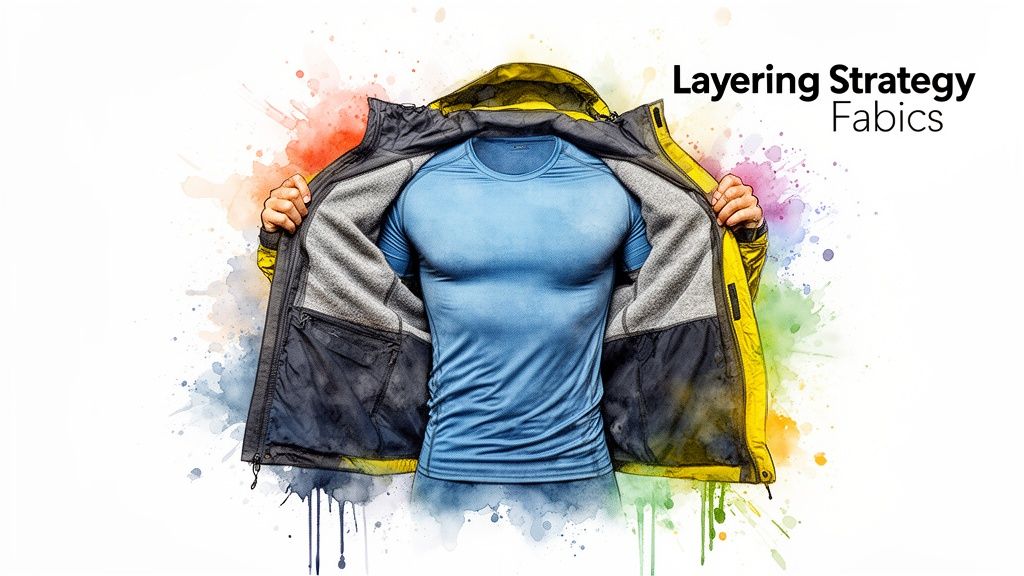
Build every outfit in three layers
I pack winter cruise wear using a clean three-part system.
Base layer. This sits closest to your skin. It should feel light, comfortable, and easy to wear under everything else.
Mid-layer. This is your warmth layer. Sweaters, fine knits, fleece, and wool all live here.
Outer layer. This protects you from wind and moisture. It should be easy to throw on and not look overly technical unless you’re cruising somewhere very cold.
That system works because you can remove or add one layer instead of changing your entire outfit.
Skip cotton when conditions are unpredictable
This is the part people get wrong all the time. They pack cotton because it feels familiar and soft. On a dry afternoon, fine. On a damp deck or breezy evening, not fine.
In wet conditions, cotton loses nearly all its insulating value, performing only slightly better than bare skin. Wool can retain up to 80% of its insulating ability when saturated, which makes it the stronger mid-layer choice for maritime weather, based on this analysis of cold-weather sailing fabrics.
So yes, I am opinionated about this. For winter cruise wear, cotton hoodies and cotton-heavy sweaters are weak packing choices if there’s any chance of damp, wind, or temperature swings.
Choose these instead:
- Merino or wool-blend knits: polished, warm, and much more dependable
- Light thermal tops: easy under dresses, shirts, and jackets
- Performance long-sleeves: ideal for excursions and active days
Tip: The best mid-layer is the one you can wear with jeans at breakfast and under a dressier jacket at dinner.
Outerwear should be light but capable
A giant puffer rarely earns its suitcase space on a winter cruise unless your itinerary is very cold. What you need most often is a jacket that cuts wind, handles light moisture, and layers neatly over a knit.
Thin synthetic insulators are excellent for this category because they give warmth without the bulky silhouette that eats luggage space and ruins outfit proportions.
Later in your planning, it helps to watch how experienced travelers layer pieces visually and practically:
<iframe width="100%" style="aspect-ratio: 16 / 9;" src="https://www.youtube.com/embed/MsZa9rw8cW0" frameborder="0" allow="autoplay; encrypted-media" allowfullscreen></iframe>What to look for on the label
You do not need to become a textile nerd. You just need to stop buying based on appearance alone.
Look for:
- Base layers in synthetic performance fabric or lightweight wool
- Mid-layers in wool or wool blends
- Outerwear with wind resistance and water protection
- Lining or insulation notes that mention technical synthetics
Avoid pieces that are bulky, stiff, or too precious to repeat. Cruise wardrobes work best when they can be worn hard and restyled fast.
My winter cruise fabric ranking
- Wool and wool blends for sweaters and mid-layers
- Synthetic performance fabrics for base layers and practical outerwear
- Soft structured blends for dinner outfits that need polish
- Cotton, only in limited, low-risk pieces like a dry-weather tee or sleepwear
That order saves space and keeps you comfortable. It also stops the common packing mistake of bringing clothes that look right on the hanger but fail the second the weather shifts.
Outfit Formulas for Every Cruise Occasion
You do not need more options. You need better formulas.
The easiest way to master winter cruise wear is to stop building random outfits and start using repeatable combinations. Once you have a few formulas, you can get dressed fast and still look like you planned everything beautifully.
Daytime and shore excursions
Your daytime outfit should handle walking, casual photos, lunch, and changing weather. I like one polished base, one practical shoe, and one layer that can come on and off without wrecking the outfit.
A strong formula looks like this:
- relaxed trousers or dark straight-leg jeans
- breathable knit or long-sleeve top
- lightweight wool sweater or cardigan
- walking sneakers or supportive loafers
- crossbody bag and sunglasses
If your port day leans warmer, swap the sweater for a button-down or fine cardigan. If it turns breezy, add the outer layer and keep going.
For more dressed-up port towns, I love this version:
| Formula | Why it works |
|---|---|
| Midi dress + cardigan + flat sandals or sleek sneakers | Comfortable but still polished |
| Linen-blend trousers + tucked knit top + loafers | Clean, chic, and easy to repeat |
| Knit top + ankle pants + scarf + walking shoes | Handles sightseeing without looking sporty |
Relaxed sea days
Sea days are where comfort matters, but sloppy is still a choice. You will probably be walking from breakfast to the deck, back to your cabin, then to a lounge or casual lunch. That outfit needs to feel easy but presentable.
My favorite sea-day combination is simple: soft knit pants or easy trousers, a striped top or fine sweater, and a layer you can drape over your shoulders when the indoor temperature drops.
This is also where texture helps. Ribbed knits, brushed jersey, and soft wool blends make even basic outfits feel intentional.
Key takeaway: Sea-day outfits should feel like elevated loungewear, not airport leftovers.
Evenings onboard
Dinner is where people either overdo it or give up completely. Neither is necessary.
The smartest dinner wardrobe starts with one neutral base and a few switch-ups.
Try these formulas:
Smart casual dinner
- black or navy trousers
- silky blouse or elevated knit shell
- loafers, low heels, or elegant flats
- earrings and a compact bag
Dress dinner
- midi dress
- lightweight wrap or cropped cardigan
- sandals, heels, or polished flats
Formal night
- one standout dress, jumpsuit, or well-fitting suit
- evening shoe
- jewelry that lifts the whole look
That’s enough. You do not need three “maybe formal” outfits.
If you want a stronger sense of what feels appropriate for different evening settings, this guide on what to wear to dinner is a useful reference point. The main idea applies perfectly on a cruise. Fabric, polish, and styling matter more than being overly fancy.
The capsule mindset that works
A winter cruise wardrobe gets easier when every item plays at least two roles.
A cardigan should work over a daytime tank and a dinner dress. Neutral trousers should handle lunch in port and an evening drink. A scarf should add warmth and also make a simple outfit feel complete.
Here’s a practical mix-and-match example:
- One dark trouser works with a striped knit, a silk camisole, or a white shirt.
- One midi dress works with sandals by day or earrings and a wrap at night.
- One wool sweater works over jeans, layered over a dress, or worn under a jacket on deck.
That’s how you pack stylishly without dragging your whole closet onboard.
What I would leave out
Not everything deserves a place in your suitcase.
I would skip:
- stiff blazers that only work at dinner
- giant chunky sweaters that eat half your bag
- sky-high heels you will regret by night two
- flimsy beachwear that only works in direct sun
- single-use statement pieces with no layering value
Cruise style looks best when it feels effortless. The secret is not having endless options. It’s knowing that every piece you brought can pull its weight.
Visualize Your Outfits Before You Pack
You’re two days from sailing. Your suitcase is half full, your tabs are overflowing, and you still have no clue whether that knit dress works with your trench, ankle boots, and dinner earrings. That is the point where winter cruise packing usually goes wrong.
Packing lists help you buy categories. They do not help you build outfits.
A winter cruise wardrobe needs to work as a set. Layers change proportions. Shoes shift the tone. A scarf can either pull everything together or make the whole look feel heavy. If you only judge pieces one by one on product pages, you end up packing hopeful guesses instead of outfits you already know look right.
The fix is simple. Preview full looks before you buy or pack.
Check the outfit as a whole
A coat, sweater dress, crossbody bag, and boots can all look great on their own and still feel off together. The problem is usually shape, color balance, or bulk. Winter cruise wear has more moving parts, so you need to see the combination, not just the item.

I use virtual outfit creation for layered travel looks to test combinations before I commit. It solves the exact problem most cruise articles ignore. You can finally see whether your deck outfit looks polished, whether your dinner layer ruins the line of the dress, and whether your “versatile” extras earn space in the suitcase.
Use the cleanest product photos
Flat-lay images usually give the most honest preview. You can see the silhouette clearly, spot extra volume fast, and judge whether a piece will play nicely with the rest of your wardrobe.
That matters with winter packing. A sweater that looks trim on a model can read boxy once you pair it with wide-leg trousers and a longer coat. A midi dress can look elegant alone and awkward under the cardigan you planned to throw over it at dinner.
Shop with a packing filter
Do not browse with a “that’s cute” mindset. Browse with a “can I build three outfits around this” filter.
That approach makes online shopping far more useful on sites with mixed styling quality. Zara might give you a great dinner option. H&M is good for basics. Secondhand marketplaces are excellent for cruise pieces if you can visualize them properly. And our guide to Amazon fashion finds for travel outfits is worth checking when you need easy extras like wraps, sandals, or simple daywear.
One more rule. Save only the looks that work head to toe. If a piece needs too much explaining, too much adjusting, or too many backup options, it does not belong in your cruise wardrobe.
Tip: If an item fails in two or three outfit previews, stop trying to rescue it. Leave it out and pack the piece that works effortlessly.
Choosing Essential Footwear and Accessories
Shoes and accessories can make your suitcase better or much worse. They are small, but they decide whether your outfits feel complete or chaotic.
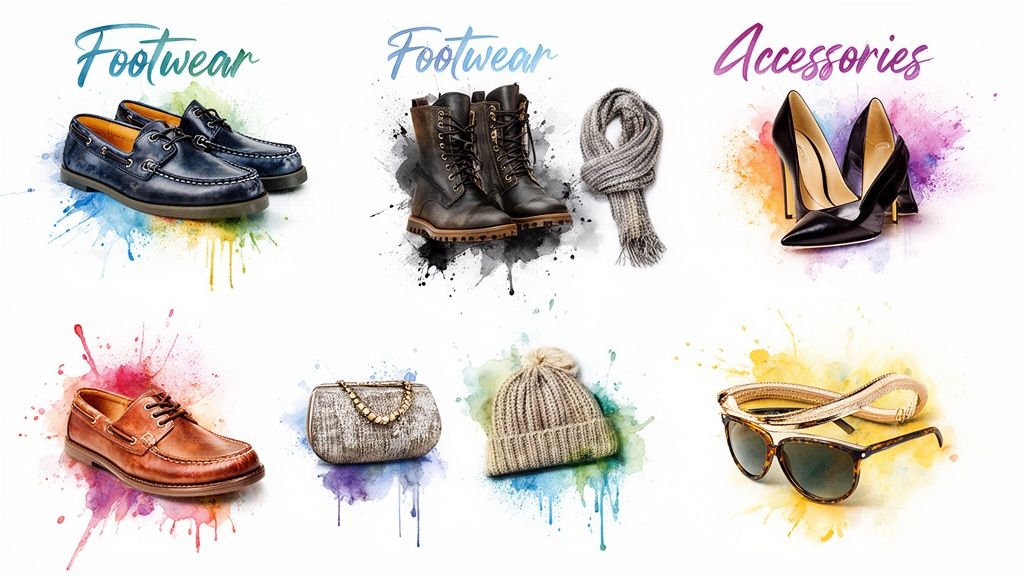
The only shoes I’d pack
For most winter cruise wear, three categories are enough.
Walking shoes come first. These need to handle ports, long corridors, and uneven streets without making you miserable.
A versatile daytime-to-dinner shoe comes second. Think sleek flats, loafers, or refined sandals if your itinerary is warm enough.
One evening option finishes the job. Low heels, dressy flats, or elegant sandals are usually enough.
Here’s the key. Every pair should coordinate with multiple outfits. If a shoe only works with one dress, it is not a smart cruise shoe.
Accessories should multitask
The best cruise accessories are not decorative extras. They solve problems.
A scarf or pashmina gives warmth in cold dining rooms, works as a soft layer on deck, and instantly upgrades a simple dress. Sunglasses matter even in cooler weather because glare at sea is real. A day-to-night bag keeps you from packing separate purses for every mood.
Try this short edit:
- Scarf or wrap: warmth plus polish
- Packable hat: useful for sun and wind
- Sunglasses: practical and stylish
- Simple jewelry: enough to elevate dinner outfits
- Crossbody or small structured bag: easy for excursions and evenings
What deserves priority
If luggage space gets tight, keep the items with the biggest styling payoff.
| Accessory | Best use |
|---|---|
| Large scarf or wrap | Evening warmth, outfit upgrade, travel layer |
| Neutral bag | Port days and dinner |
| Statement earrings | Turns basics into dinner outfits |
| Sunglasses | Deck time and shore days |
| Hat | Weather protection with style |
Tip: Accessories should help the same clothing look different, not create more packing clutter.
That’s the whole strategy. Choose fewer things, but make every one of them useful.
Your Ultimate Winter Cruise Packing Checklist
This is the practical part. Screenshot it, copy it, or use it while your suitcase is open on the bed.
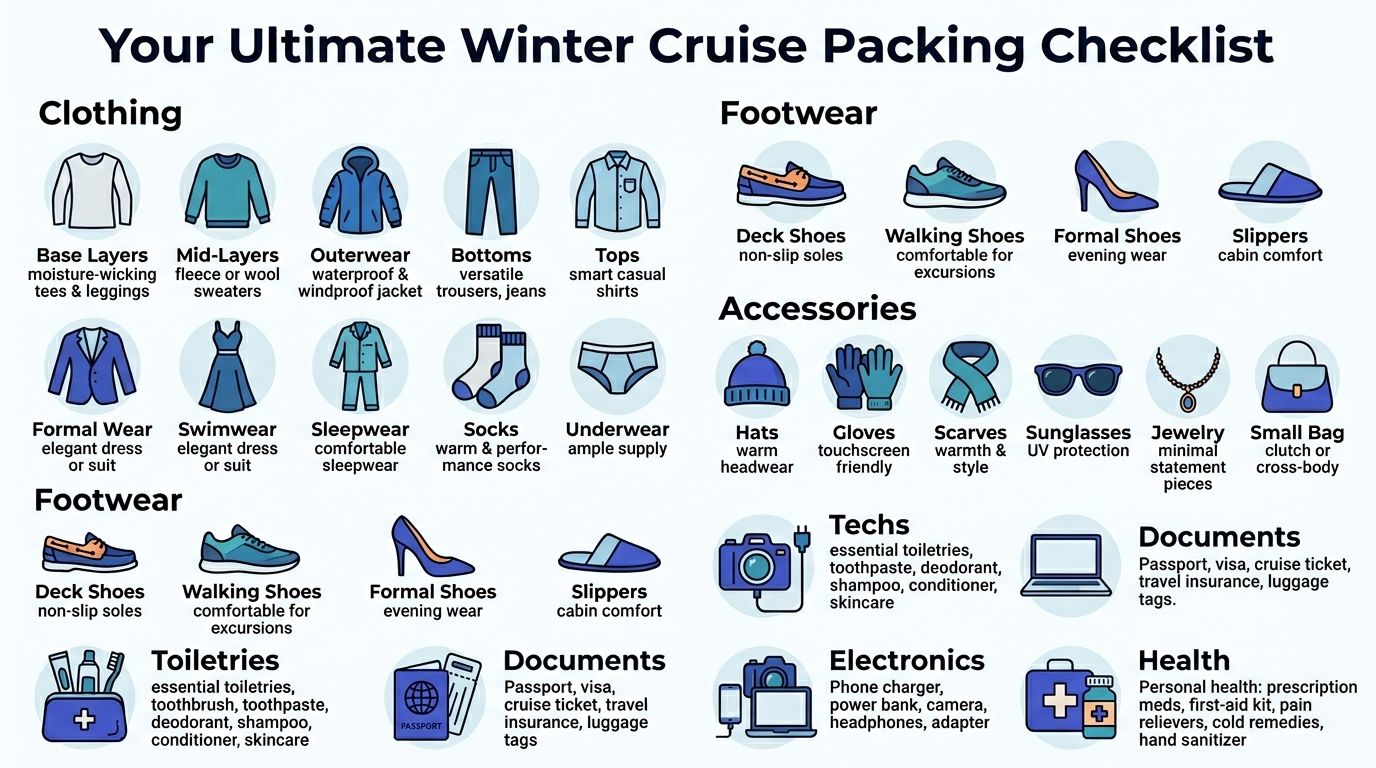
Core checklist
The smartest winter cruise wear list is built around categories, not panic.
| Category | Item | Quantity | Notes |
|---|---|---|---|
| Clothing | Base layers | 2 to 4 | Moisture-wicking tops or leggings |
| Clothing | Mid-layers | 2 to 3 | Wool or fleece pieces |
| Clothing | Outerwear | 1 | Windproof, water-resistant jacket |
| Clothing | Bottoms | 2 to 4 | Trousers, jeans, or easy skirts |
| Clothing | Tops | 4 to 6 | Mix of casual and elevated |
| Clothing | Formal wear | 1 to 2 | Depends on itinerary and preference |
| Clothing | Swimwear | 1 to 2 | For pool, spa, or warm ports |
| Clothing | Sleepwear | 1 to 2 | Keep it compact |
| Clothing | Socks | several pairs | Prioritize comfort and warmth |
| Clothing | Underwear | ample supply | Bring enough for the full trip |
| Footwear | Walking shoes | 1 pair | Most important pair |
| Footwear | Casual or versatile shoes | 1 pair | Day-to-evening use |
| Footwear | Formal shoes | 1 pair | Only if you’ll use them |
| Footwear | Slippers | optional | Cabin comfort |
| Accessories | Scarf or wrap | 1 to 2 | Warmth and polish |
| Accessories | Hat | 1 | Packable and useful |
| Accessories | Gloves | optional | Best for colder itineraries |
| Accessories | Sunglasses | 1 | Always worth bringing |
| Accessories | Jewelry | small selection | Enough for dinner styling |
| Accessories | Small bag | 1 | Crossbody or clutch |
| Toiletries | Daily essentials | as needed | Keep them travel-size |
| Documents | Passport and cruise docs | required | Keep them organized |
| Electronics | Chargers and adapters | as needed | Pack in one pouch |
| Health | Medications and basics | as needed | Keep easy to reach |
The MVP pieces
Some items do more work than others. Those are your suitcase heroes.
A neutral cardigan or wool sweater earns constant use. It handles breakfast, dinner, and chilly interiors.
Dark trousers are another star. They can go casual with sneakers or more polished with earrings and flats.
One excellent outer layer makes every outfit more reliable. This is not where you want to gamble.
Packing tricks that help
You do not need complicated hacks. You need a cleaner system.
- Use packing cubes: Keep categories separated so you can find things fast.
- Pre-build outfits: Stack pieces by look, not by clothing type.
- Repeat your color palette: Neutrals plus one or two accent colors work best.
- Wear your bulkiest layer in transit: Save suitcase space immediately.
- Leave room: Cruises almost always tempt you into bringing something back.
Key takeaway: A smaller, coordinated wardrobe beats a larger, random one every time.
One more thing. Before you zip the bag, look at every item and ask one hard question: would I be annoyed to wear this twice? If the answer is yes, remove it.
That little test saves a surprising amount of space.
Pack Smart and Sail in Style
You are on day three, the sea breeze turns sharp, dinner is in an hour, and getting dressed still feels easy. That is what good winter cruise packing looks like.
A strong cruise wardrobe is edited, coordinated, and realistic. Every piece should earn its spot by working across chilly embarkation days, windy decks, over-cooled interiors, and at least one nicer evening plan. If it needs babysitting, constant steaming, or a very specific shoe, leave it home.
Confidence is the payoff. You get dressed fast, your photos look more polished, and your suitcase stops fighting you.
Do one last pass before you zip the bag. Cut anything that only works once. Cut anything uncomfortable after an hour. Cut anything you packed for a fantasy version of yourself instead of the trip you are taking.
The smartest addition to this process is visual prep. TryThisFit helps you see how your layers and outfit combinations look together before you buy or pack them. That matters more than cruise packing guides admit. Plenty of items sound versatile in a checklist and still fall flat once you put them next to each other.
Use it to test the cardigan with the dinner trousers, the striped knit with the coat, or the casual daytime look with the shoes you plan to rewear. If the outfit looks off on screen, it will not magically improve in your cabin mirror.
Pack less. Pack better. Then board knowing every outfit already works.
Try Virtual Try-On Now
See how clothes look on you before you buy - works with any online store
Get Started Free