Ancient Egypt Fashion: A Guide to Timeless Style
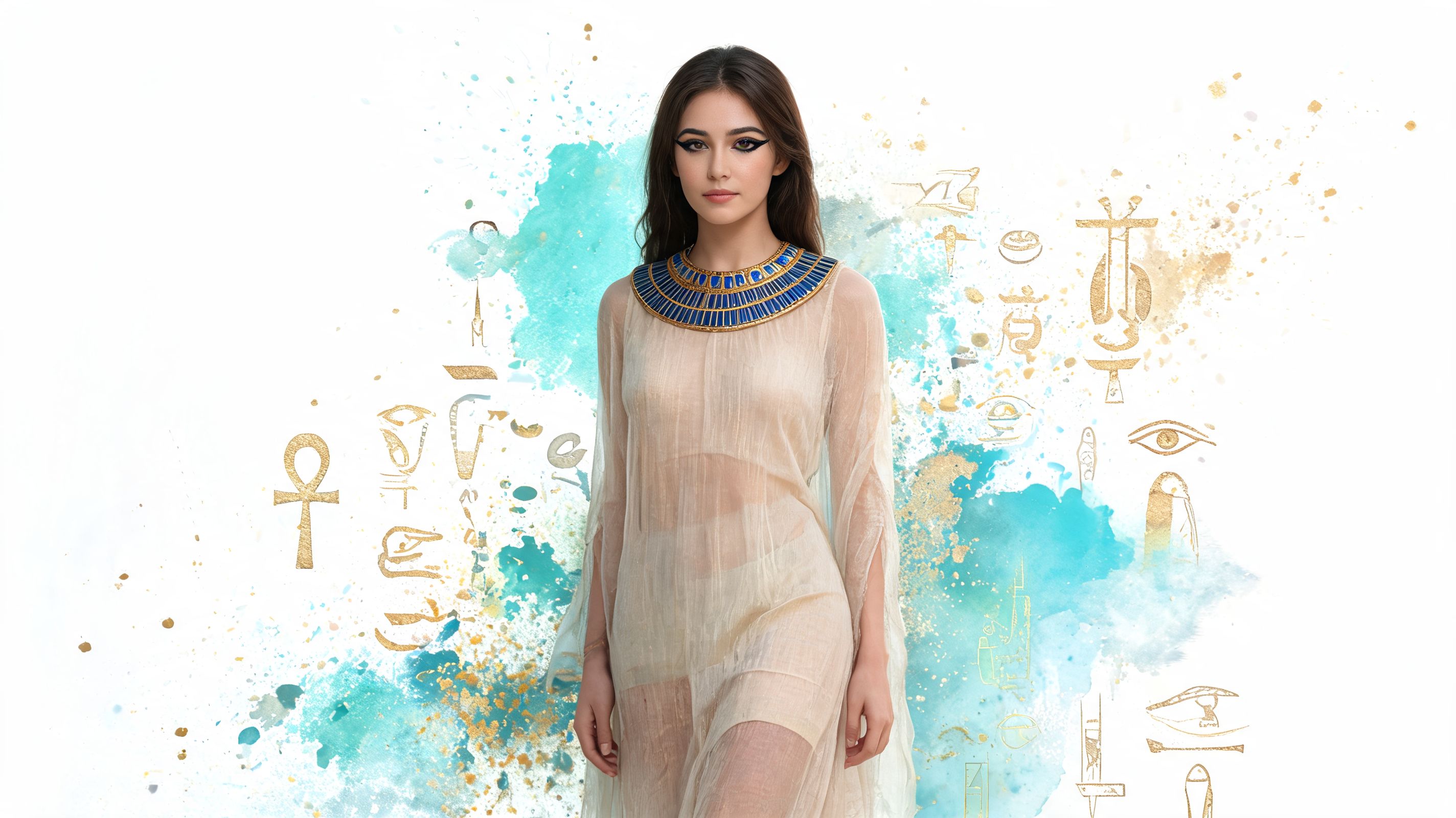
You're probably here for one of two reasons. You've seen a gold collar necklace, a draped white dress, or a dramatic kohl-lined eye and thought, “Why does this still look so modern?” Or you're trying to pull together a costume, mood board, or outfit idea that feels Egyptian without sliding into movie cliché.
That instinct makes sense. Ancient egypt fashion has one of the clearest visual identities in history. Clean linen. Sharp pleats. Bare shoulders. Broad collars. Sandals. Wigs. Gold. It feels both minimal and theatrical, which is why it keeps returning in museums, editorials, and contemporary shopping searches.
What fascinates me most is that these clothes weren't random decoration. They formed a visual language. Fabric choice signaled climate and practicality. Jewelry signaled status and belief. Makeup shaped beauty, protection, and ritual all at once.
The Enduring Allure of Ancient Egyptian Style
Stand on the imagined edge of the Nile for a moment and the silhouette appears almost immediately. White linen catching light. A fitted dress or wrapped kilt. A broad collar flashing color at the neck. A shaved head under a wig or headdress. The look is ancient, but it doesn't feel distant.
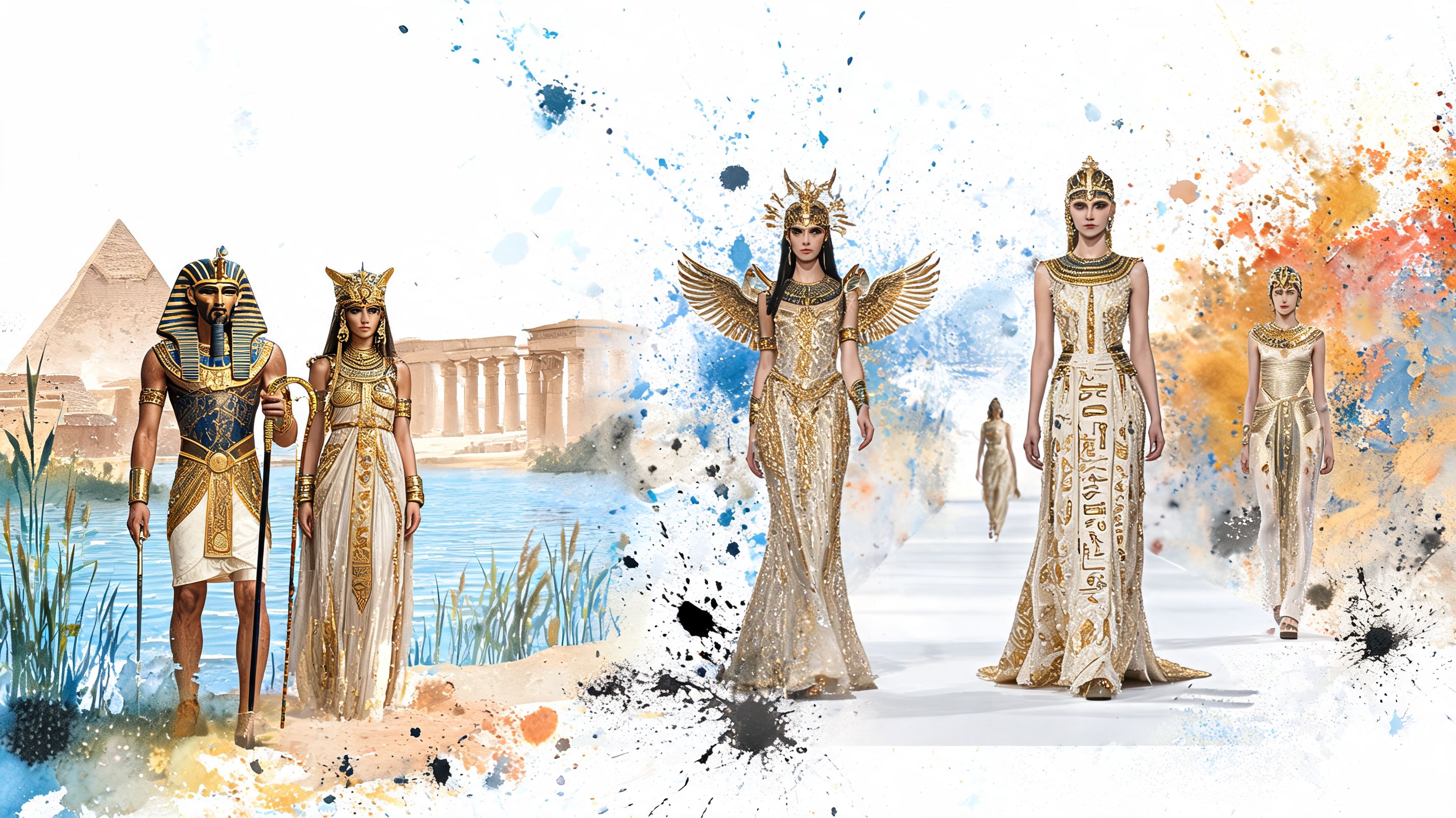
What gives ancient egypt fashion its hold on us is clarity. The forms are simple enough to recognize instantly, yet rich enough to keep rewarding attention. A straight dress can be elegant or sensual depending on how it's wrapped. A sandal can be ordinary or ceremonial. A necklace can read as adornment, status marker, and protective object at the same time.
Why it still feels current
Modern fashion often swings between two poles. One is stripped-back minimalism. The other is spectacle. Egyptian dress managed both. A plain linen garment could look severe and refined, while a look completed with pleats, jewels, wig, and makeup became unforgettable.
That's why the style keeps resurfacing. Designers return to drape, shine, symmetry, and graphic contrast because those ideas still work.
Ancient Egyptian dress doesn't survive as inspiration by accident. It survives because the silhouettes are clean, the accessories are bold, and the symbolism is easy to feel even when you don't know the full history.
More than costume
Readers often get stuck on one misconception. They assume Egyptian clothing was either plain everyday cloth or exaggerated “queen and pharaoh” fantasy. Reality sits between those extremes.
A museum object, a painted tomb wall, and a modern runway all show different versions of the same visual system. Once you learn the basics, the whole world of Egyptian-inspired style becomes easier to read, whether you're looking at historical reconstructions, jewelry displays, or a metallic evening dress on a shopping page.
The Fabric of a Civilization Linen and Core Garments
Step into an Egyptian workshop on a hot afternoon, and the logic of the wardrobe becomes clear fast. Before you notice jewelry or status symbols, you notice fabric. Ancient Egyptian clothing began with linen because linen handled heat well, let air move, and produced the crisp, luminous surface we still associate with Egyptian style.
That starting point matters. If you picture thick wool or heavily structured garments, the whole silhouette makes less sense. Linen hangs lightly, creases sharply, and responds to movement, so even simple clothing can look refined.
Linen came from flax, and making it took time. Workers had to harvest the plant, separate and prepare the fibers, spin them into thread, and weave the cloth. In other words, the clean look of Egyptian dress rested on a long chain of skilled labor.
For a modern fabric comparison, this guide on understanding the gold standard fabric is useful. It gives modern readers a practical way to compare softness, breathability, and drape, which helps when you want to recreate an Egyptian-inspired look for a costume, photoshoot, or everyday outfit.
The biggest mental shift is this: many Egyptian garments began as rectangles of cloth. Tailoring existed, but the visual system depended heavily on wrapping, folding, tying, pleating, and arranging fabric on the body. A modern blazer gets its shape from cutting. Egyptian dress often got its shape from drape.
The core shapes
A few basic forms carried most of the wardrobe:
- Shenti: A wrapped kilt for men, practical and cool in the heat.
- Kalasiris: A close-fitting dress for women, usually long and column-like.
- Belts, sashes, and ties: Simple additions that changed fit and emphasis.
- Pleated linen garments: Cloth worked into texture, movement, and visual rhythm.
These garments can sound plain on paper. They were not visually empty. Linen catches light like a design feature, so folds and pleats did part of the styling work that stitching does in many modern clothes.
That also explains why ancient images can confuse modern readers. We expect darts, zippers, collars, and fixed seams. Egyptian clothing often relied on how the wearer wrapped the cloth, how tightly it was secured, and how the fabric fell once it was on the body.
Here is a quick translation into modern fashion language:
| Garment | What it did visually | Modern comparison |
|---|---|---|
| Shenti | Clean lower-body wrap with airflow | Wrap skirt or sarong-style base |
| Kalasiris | Long, narrow vertical line | Column dress |
| Pleated linen dress | Texture plus movement without bulk | Airy pleated gown |
If you want to bring this history into the present, start with fabric before accessories. That is the curator's trick and the fashion-tech trick. In TryThisFit, choosing a light, draped material and a column silhouette will get you much closer to an Egyptian-inspired result than adding a random gold collar to the wrong base garment.
Fashion of Pharaohs versus Peasants
Step into an Egyptian street at midday. The sun is hard, the air is dry, and two people in linen can still look worlds apart. In ancient Egypt, fashion often worked this way. The base clothing might be similar, but status showed up in finish, labor, and display.
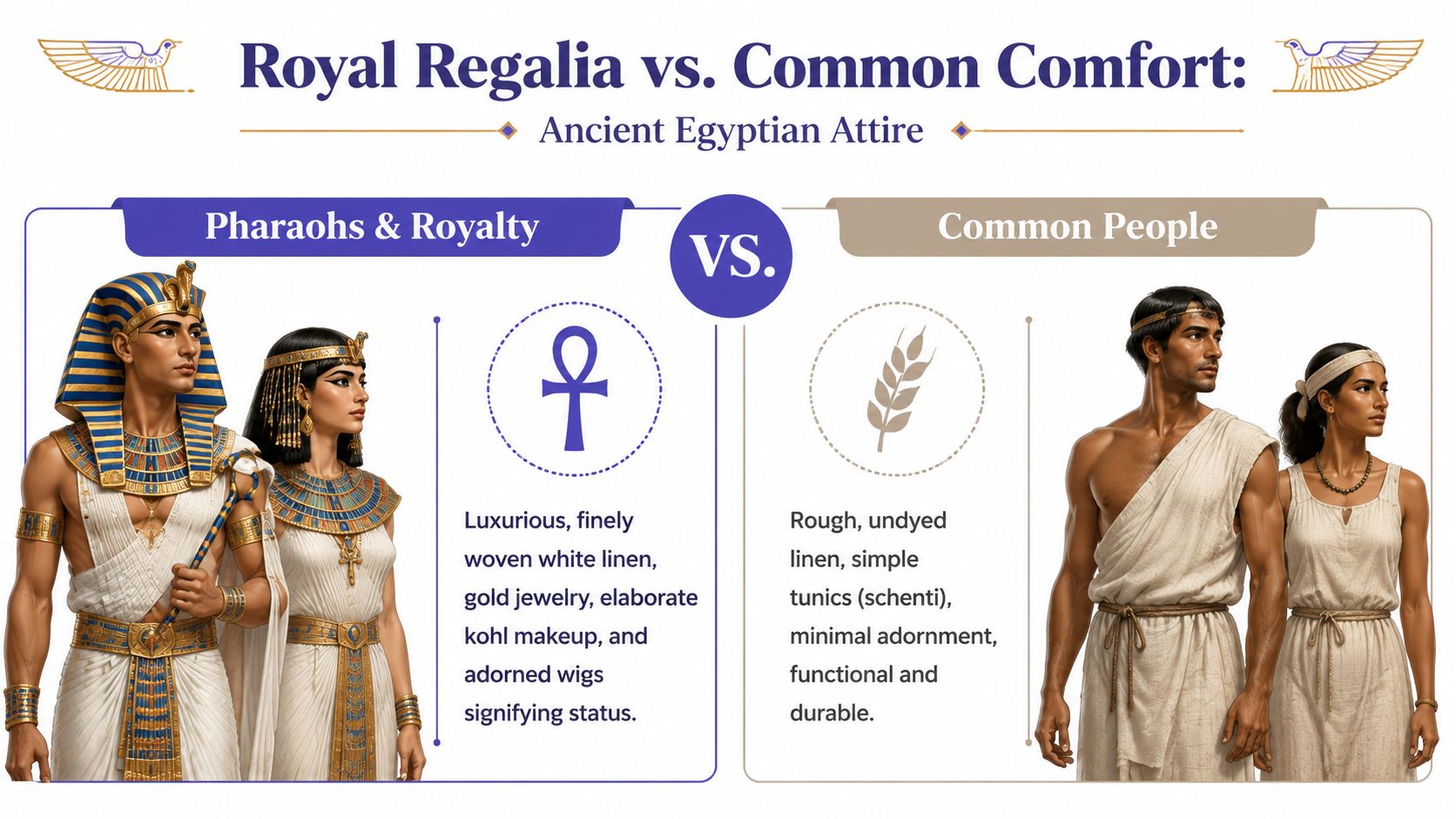
That difference can confuse modern readers because we often look first for totally different garments. Egyptian style did not always separate classes through completely separate silhouettes. It often separated them the way modern fashion does with a white shirt. One version is crisp, precisely cut, and carefully finished. Another is plain, practical, and made for daily wear.
What common people wore
For laborers, farmers, and other working people, clothing had to survive heat and movement. Simple linen wraps and straightforward dresses did that job well. The goal was comfort, airflow, and ease of work.
That does not mean ordinary dress lacked identity. It communicated something clear. This wearer belonged to the world of daily labor, not court ceremony.
What elites changed
Wealthy Egyptians used the same broad clothing language, then pushed it further with finer linen, sharper pleating, decorative edges, and more visual polish. The effect was not just richer fabric. It was time made visible. Pleats, delicate finishing, and carefully arranged drape all suggest skilled work behind the scenes.
Royal dress took this even further. Clothing became part of performance, almost like stage costume fused with political branding. A ruler did not merely get dressed. A ruler appeared.
Here is the clearest way to read the contrast:
- Common dress: practical linen, simpler finish, made for work and heat
- Elite dress: finer cloth, more texture, more labor in the construction and styling
- Royal appearance: dress used alongside symbols of authority, ceremony, and divine status
Why pleats mattered so much
Pleats are one of the best clues to rank because they turn plain cloth into spectacle. A length of linen can sit quietly on the body, or it can catch light in ridges and shadows, almost like engineered fabric in modern runway design.
Scholars still debate exactly how Egyptians kept some pleats so defined. The Houston Museum of Natural Science blog on ancient Egyptian fashion points out that the method is still uncertain. That small mystery makes the clothes more impressive, not less. We are looking at textile skill strong enough to survive in art, even when the workshop recipe is gone.
A peasant and a noble could both wear linen. The social signal came from how that linen was prepared, presented, and read by everyone around them.
That distinction is useful if you want to recreate the look now. Do not start by asking only, “pharaoh or peasant?” Start by asking what level of refinement you want the outfit to communicate. In modern styling terms, that choice affects fabric finish, amount of pleating, jewelry weight, and even color warmth. If you are choosing metallics or makeup tones for an Egyptian-inspired costume, a quick undertone identification can help you pick golds, bronzes, and linen shades that look convincing on you. And if you test the idea in TryThisFit, prompt for the social tier as well as the silhouette. “Simple worker's linen wrap” and “pleated royal linen look” will give you very different results, even before you add accessories.
Adornments of the Nile Jewelry Makeup and Wigs
Clothing alone didn't complete the Egyptian look. Accessories, cosmetics, and hair transformed dress into identity.
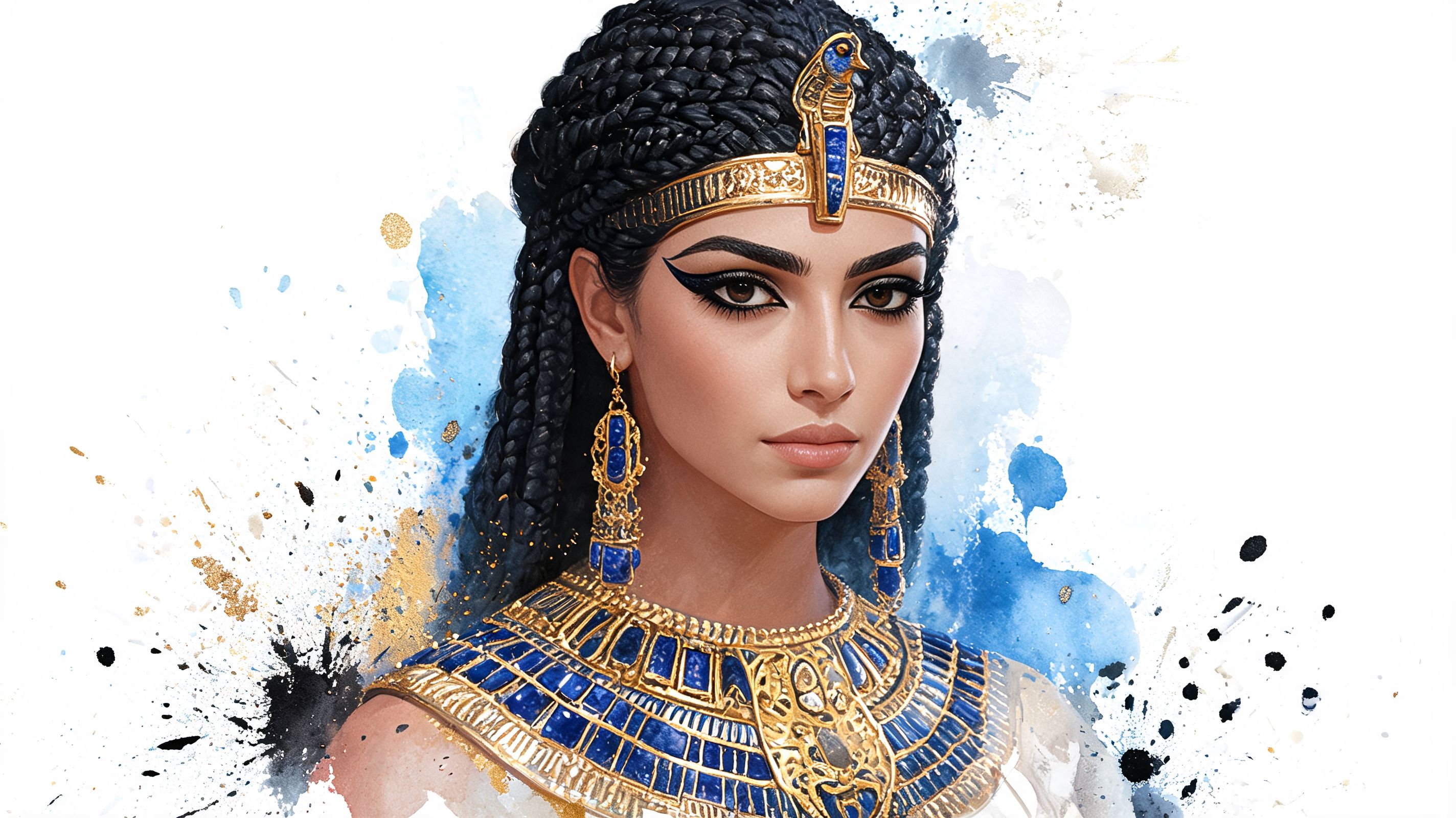
Many readers realize they've been picturing only half the outfit. The famous silhouette works because it's finished with shine, line, and contrast. A broad collar changes the whole upper body. Dark eye makeup gives the face graphic structure. A wig or headdress turns grooming into architecture.
Jewelry as status and protection
The wealthy wore a remarkable range of accessories. According to TheTorah's discussion of ancient Egyptian clothing, they could wear up to 16 distinct types of jewelry pieces, often made from colored glass, gemstones, and precious metals.
That same source gives one unforgettable example. Tutankhamun's leather sandals had gold caricatures of enemies on the insoles, turning each step into a symbol of conquest.
A few pieces did a lot of visual work:
- Broad collars: These framed the neckline and made even simple garments feel ceremonial.
- Bracelets and anklets: They added movement and gleam.
- Amulets: Ornament and belief met in the same object.
- Headwear: Crowns and symbolic headdresses announced rank immediately.
Makeup was not just decoration
Both sexes used makeup. That can surprise readers who think of cosmetics as a separate, modern category.
Kohl around the eyes sharpened expression and also related to skin and sun protection in Egyptian daily life, as noted in the same TheTorah article. The effect is one reason Egyptian imagery still feels so graphic and contemporary. Dark liner against bare linen and glowing jewelry is a combination fashion keeps rediscovering.
If you're translating that look into modern styling, color matters as much as shape. Gold, cream, white, blue-green, and black can look very different depending on skin tone. A practical modern companion piece is this guide to quick undertone identification, which helps when choosing metallics, makeup warmth, and stone colors.
Here's a short visual map:
| Element | Ancient effect | Modern style echo |
|---|---|---|
| Gold jewelry | Status, radiance, symbolism | Statement collars, cuffs, layered metals |
| Kohl-lined eyes | Definition and protection | Graphic eyeliner, smoky eye looks |
| Wigs and headdresses | Controlled, elevated silhouette | Sleek bob wigs, sculptural headpieces |
A good visual overview helps here too:
<iframe width="100%" style="aspect-ratio: 16 / 9;" src="https://www.youtube.com/embed/ROttom53ybk" frameborder="0" allow="autoplay; encrypted-media" allowfullscreen></iframe>Wigs changed the silhouette
The wealthy often shaved their heads and wore elaborate wigs made of human hair mixed with plant fiber, according to the same TheTorah source. That practice combined hygiene, status, and style.
This detail is easy to underestimate. Hair changes proportion. A close-fitting dress with a heavy collar reads one way on a bare head and another way with a structured wig. Egyptian fashion was acutely aware of that balance.
Jewelry, makeup, and wigs weren't extras. They were part of the outfit's grammar.
Recreating Ancient Egyptian Looks Today
Egyptian style never stayed buried in the ancient world. It keeps returning in cycles of fascination often described as Egyptomania.
A recent example appears in the Cleveland Museum of Art exhibition “Egyptomania: Fashion's Conflicted Obsession,” highlighted by Smithsonian Magazine's coverage of Egypt's lasting influence on fashion. The exhibition featured modern designer pieces inspired by motifs such as the nemes headcloth and beaded gowns.
What to look for while shopping
You don't need a literal costume to borrow from ancient egypt fashion. The influence often shows up in fragments.
Look for details like these:
- A column silhouette: long, straight dresses with controlled drape
- Bib or collar necklaces: especially pieces that sit wide across the chest
- Metallic gold accents: sandals, cuffs, belts, or trims
- Pleated fabric: especially crisp pleats that create movement without bulk
- Wrapped construction: dresses and tops that look arranged rather than heavily structured
These clues appear across modern shopping categories, from occasionwear to resortwear to costume styling.
Where the inspiration shows up now
You can spot Egyptian echoes on mainstream sites and secondhand marketplaces alike. Zara and H&M often carry draped dresses, gold-toned accessories, and pleated pieces that nod to the look without naming it directly. Vinted and Depop are especially useful if you want something that feels less mass-market, like a metallic collar necklace or a cream wrap dress with a theatrical neckline.
For costume planning, the best modern results usually come from restraint. One draped dress, one statement collar, one cuff, one bold eye look. That often feels stronger than piling on every “Egyptian” reference at once.
If you want to build a themed look for a party, performance, or Halloween outfit, a virtual costume maker for testing ideas can help you sort through silhouettes before you commit to accessories.
The most convincing Egyptian-inspired outfits usually borrow the logic of the style, not just the symbols.
That means line, drape, and finish first. Cobras and pyramids second.
Visualize Your Own Egyptian-Inspired Style with AI
You find a cream wrap dress online, add a gold cuff in your head, and suddenly you are not just shopping. You are testing whether an idea from a museum wall can live in your own closet.
That is why this step matters. Ancient Egyptian style depends on relationship. Neckline to collar. Column to body line. Fabric fall to movement. A product photo can show the item, but it rarely shows the full effect. On your frame, the same dress can read calm, ceremonial, dramatic, or costume-like.
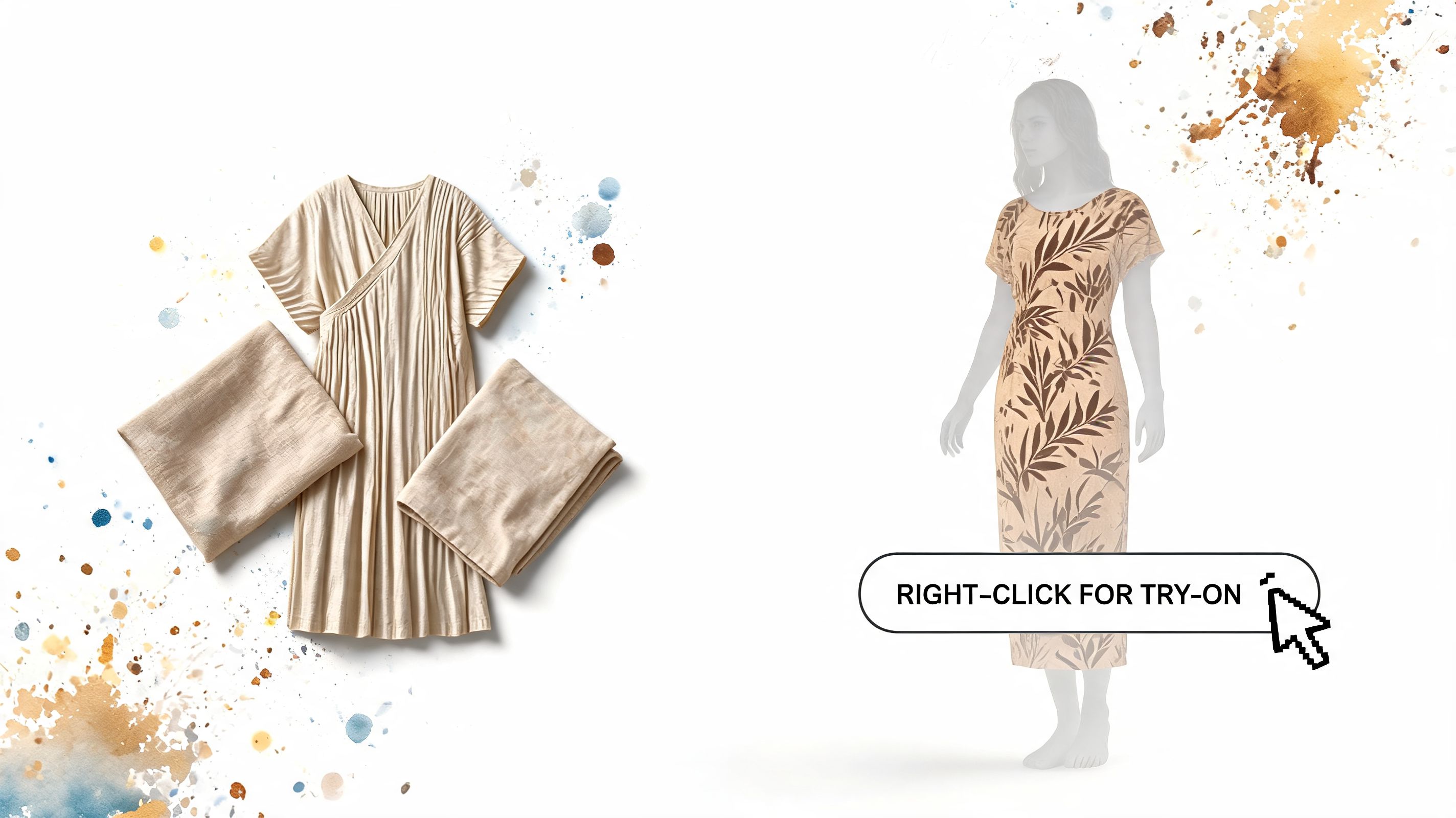
There is a useful historical reason AI previews work well here. Many ancient Egyptian garments began with simple lengths of linen, wrapped, folded, or pleated into shape, as described in this explanation of Egyptian textile production. Modern photos of draped dresses, sheath dresses, and wide collars often translate clearly in digital previews for the same reason. The structure is legible. You can read the silhouette quickly, almost the way a curator reads a fragment and reconstructs the whole garment.
A practical test makes this easier to understand. Compare three options: a plain beige sheath, a pleated white dress, and a Cleopatra-style costume piece. On a shopping grid, they may seem unrelated. In a preview, the common thread becomes obvious. Long vertical line, controlled drape, and a strong frame around the neck or shoulders. That is the grammar of the look.
If you want to experiment directly, AI dress-up previews for Egyptian-inspired outfits let you check the visual effect before you commit to buying or styling.
Use a simple process:
- Start with the base shape. Search wrap, column, sheath, draped, pleated, or belted.
- Choose clear product photos. Flat or front-facing images usually show the line best.
- Judge the outfit in layers. First the dress shape, then the collar, cuff, sandal, or eye makeup.
- Compare mood, not just accuracy. Ask whether the look feels modern eveningwear, resort-inspired, theatrical costume, or full historical fantasy.
This kind of preview is especially helpful for themed events. A broad collar that looks perfect on one neckline can swallow another. A metallic trim can sharpen a simple dress or push it too far. AI helps you sort out those small but important differences early.
If you are curious about the image-making side of the process, this guide on create your own AI art gives helpful background on how visual experimentation works.
You can also build a smarter shopping flow with the tools already mentioned earlier in the article. Use the main app for quick tests, save strong contenders in your history, check Amazon finds if you are comparison shopping, or use the Chrome extension when you want to preview items directly on retailer pages.
The real value of a style preview is clarity. It helps you see whether a look captures the spirit of ancient Egypt or just borrows a few props.
From History to Your Wardrobe
Ancient Egypt left behind one of the most recognizable fashion languages ever created. Linen gave it lightness. Draping gave it elegance. Pleats added mystery. Jewelry, makeup, and wigs turned clothing into presence.
That's why the style still works. It isn't frozen in the past. It keeps reappearing in eveningwear, resort dressing, costume design, beauty looks, and statement accessories because the core ideas remain visually strong.
If you want a modern bridge between museum history and real-life shopping, start with the elements that endure. Clean lines. Sandal shapes. Gold at the neck or wrist. A column dress. A bold eye. Even a simple search through modern-day Egyptian-inspired clothes can spark combinations that feel surprisingly wearable.
You don't need to dress like a pharaoh to borrow the magic. You only need to recognize the grammar of the look and make it your own.
Try it for yourself at TryThisFit. Upload a look in seconds, preview how the style appears on you, or install the free Chrome extension to right-click clothing images on any site and instantly explore your Egyptian-inspired outfit ideas.
Try Virtual Try-On Now
See how clothes look on you before you buy - works with any online store
Get Started Free