Buy with Confidence: AI-Powered Shopping Guide
Your cart is full, the tab count is getting out of hand, and you've already imagined at least three versions of your life in that new jacket, dress, or pair of boots. Then checkout appears, and the mood shifts. You start wondering if the seller is trustworthy, if the fabric will look cheap in daylight, and whether the item will feel exciting when it arrives or instantly become a return.
That pause is normal. It's also useful.
The people who buy with confidence online usually aren't gambling on better luck. They've built a quick mental checklist that helps them separate a great find from a pretty product page. I use the same approach every time I shop, especially when I'm browsing fast-moving trend pieces, secondhand gems, or those late-night impulse looks from Zara, H&M, Amazon, Shein, Vinted, and Depop.
The Thrill of the Cart and the Fear of the Click
There's a specific kind of shopping tension that only happens online. You've done the fun part already. You found the pieces, compared colors, opened ten tabs, closed six, reopened three, and now the cart feels promising enough to imagine outfits around it.
Then the questions arrive all at once. Will the fabric drape the way it does in the photo? Is this marketplace seller careful or chaotic? Am I buying something I'll wear, or just something that looked good for a moment on a glowing screen?
Why hesitation isn't the problem
That little burst of doubt isn't a sign that you're bad at shopping. It's a sign that you're trying to protect your time, your money, and your closet from clutter.
The mistake isn't hesitating. The mistake is clicking anyway without checking the few things that count. A polished storefront can still hide a messy return policy. A gorgeous campaign image can still tell you almost nothing about how a style will look in real life.
Practical rule: If a product page makes you feel rushed, slow down. Good purchases can survive a few extra minutes of scrutiny.
What confident shoppers actually do
I think of online shopping as two separate decisions. First, decide whether the seller deserves your trust. Second, decide whether the item deserves space in your wardrobe.
Those are different questions, and mixing them causes most regrets. People fall in love with the item first, then rationalize the sketchy store, the vague listing, or the awkward material details. That's how carts turn into return labels.
A better rhythm looks like this:
- Check the seller first. Find out whether the store or marketplace profile feels transparent.
- Interrogate the product page. Read details, inspect photos, and look for real-world evidence.
- Preview the appearance. Don't stop at product photography if you can see how the style looks on you.
- Treat checkout as a decision point. Payment method and return terms matter as much as the item itself.
Buying with confidence isn't about removing all uncertainty. It's about removing the uncertainty that actually changes the outcome.
Online shopping becomes fun again. Once you have a repeatable system, you stop doom-scrolling through doubts and start making cleaner decisions. You keep the thrill of discovery, but lose a lot of the chaos.
Start With the Source Assess Sellers and Stores
Trust starts before the product page. If the store or seller feels vague, defensive, or hard to verify, nothing in the cart gets better from there.
That applies to big retailers and tiny resale profiles alike. The clues are different, but the principle is the same. Clear information usually signals a seller who expects to be held accountable.
What to inspect before you fall in love with the item
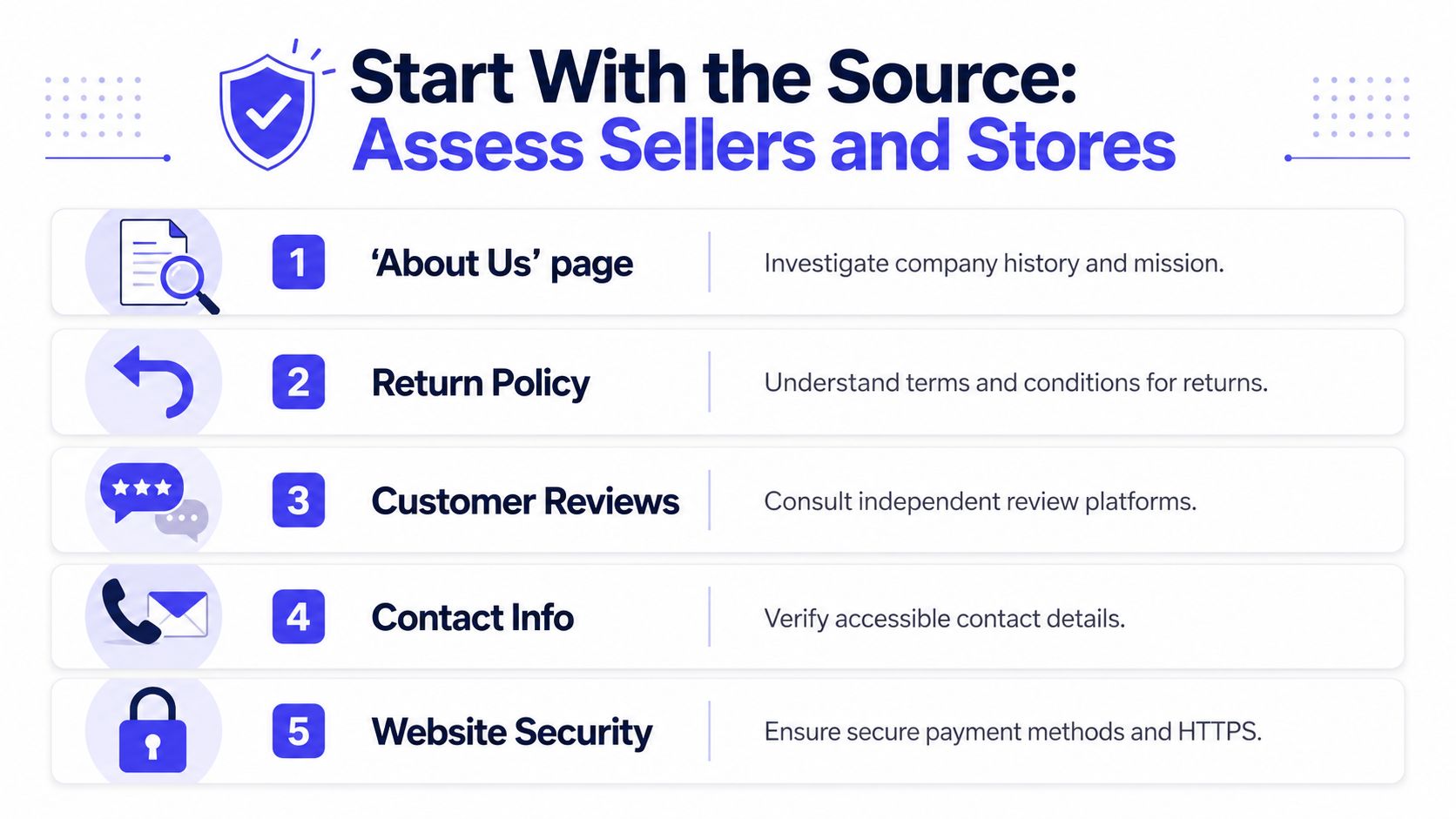
On a standard ecommerce store, I look for pages that show the business isn't hiding in the shadows. An easy-to-find return page, real contact information, and plain language matter more than polished branding.
On platforms like Vinted, Depop, or eBay, the seller profile does most of that work. You're not judging whether the page looks fancy. You're judging whether the person behaves predictably.
A simple way to buy with confidence is to scan for these signals:
- Clear return terms. You should understand how returns work without hunting through the footer.
- Recent review patterns. One glowing review from ages ago means less than a steady stream of recent buyer feedback.
- Specific item descriptions. Strong sellers mention wear, flaws, fabric, and condition without forcing you to ask.
- Responsive communication. If you send a polite question and get a strange or evasive answer, trust that signal.
- Secure checkout cues. The site should look stable and professional, with straightforward payment options.
If you want another practical perspective on evaluating stores before you spend, this guide to smart online shopping tips is worth a read.
Red flags I never talk myself out of
Some problems aren't “maybe.” They're exits.
If the return policy is buried, confusing, or written like it's trying to trap you, close the tab. If the seller avoids close-up photos on a secondhand item, assume there's something they don't want highlighted. If every review sounds either oddly generic or overly emotional, I get cautious fast.
A trustworthy seller makes buying feel calm. A questionable seller creates friction before you've even paid.
One of the easiest traps in fashion shopping is letting your taste override your judgment. The dress may be perfect. The store may still be a no.
That distinction saves money, but it also protects your energy. Returns, disputes, and long waits all have a hidden cost. I'd rather miss one tempting item than spend days chasing a refund from a seller who never looked solid in the first place.
Verify the Product Beyond the Perfect Photo
Once the seller passes the trust test, the listing itself deserves a closer read, as polished styling can blur the truth.
Studio images are built to flatter. That's their job. Your job is to figure out what the product looks like when lighting is average, movement is real, and no one is pinning the back of the garment for the camera.
Read the boring parts first
The product description usually reveals more than the hero image. Fabric composition changes how an item hangs, wrinkles, stretches, and reflects light. Care instructions tell you whether a low-maintenance staple is secretly a high-maintenance project.
I also pay attention to what the listing avoids. If a page talks endlessly about “premium feel” but says almost nothing concrete about material, lining, texture, or finish, that's useful information.
For accessories and wearable add-ons, the same principle applies. If you're comparing something like comfortable Fitbit Luxe bands, the photos matter, but so do details about material feel, clasp style, and how the band looks in everyday wear rather than a perfectly lit promo shot.
Look for reality, not just styling
User-generated photos are often more valuable than the official gallery. They show what the item looks like in normal mirrors, under indoor light, and on different people with different styling instincts.
That kind of evidence is especially helpful when you're trying to judge shape, sheen, or whether a color reads cooler or warmer than the product page suggests. A few real-world images can completely change how an item feels.
Here's what I actively look for:
- Texture clues. Does the fabric look crisp, limp, glossy, fuzzy, or thin once it leaves the studio?
- Construction details. Zoom in on seams, hems, straps, closures, and lining if photos allow it.
- Color behavior. Some shades look rich in campaign lighting and flat in customer uploads.
- Repeat wear potential. Can you picture at least a few outfits, or is the item surviving on styling tricks?
If you want a useful breakdown of how visual presentation affects shopping decisions, this piece on product presentation is a strong companion read.
The prettiest product photo isn't the most useful one. The most useful photo is the one that shows you what the listing would rather soften.
On resale platforms, ask for more photos when needed. Seams, tags, underarms, soles, cuffs, and close-ups of any flaw are fair game. A good seller usually expects those questions.
Visualize the Style Before You Buy
You know the moment. The tab is open, the item is in your cart, the photos look convincing, and one question still hangs there. Will this actually feel like me once it's on?
That question has less to do with fraud or product quality and more to do with personal style. A jacket can be well made and still feel wrong. A dress can match the measurements and still miss your mood, your proportions, or the way you like to get dressed on a normal Tuesday.
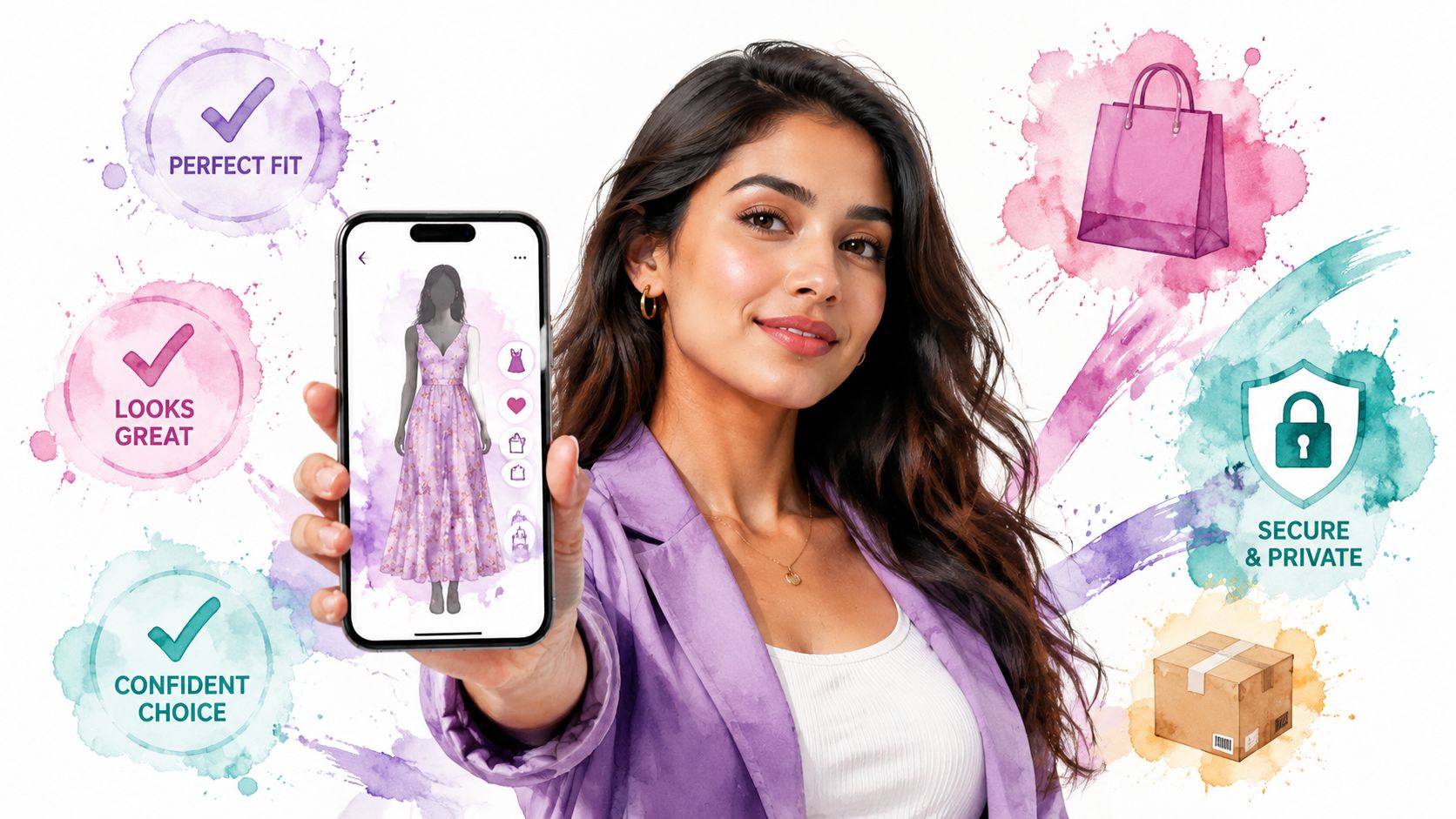
I built TryThisFit virtual try-on for that exact gap in online shopping. I wanted a fast way to test the visual side of a purchase before committing. Not just size. Style. The app lets you upload a photo and preview clothing on yourself in seconds, with no account required.
I use it most when a piece is interesting but uncertain. Maybe the cut looks dramatic on the model. Maybe the color is outside my usual range. Maybe it is one of those trend pieces that feels brilliant for five minutes and expensive by the time the package arrives.
Flat-lay clothing photos usually give the cleanest previews. They make it easier to judge whether a silhouette feels sharp, soft, playful, polished, or is off. That matters more than people admit. A lot of returns happen because the item looked exciting on the page but not convincing in the mirror.
Where it fits into a real shopping routine
I use visual preview after the basic checks are done. If the store looks credible and the listing gives enough detail to trust the garment itself, then I want help with the creative decision. I'm asking whether this piece works with my face, posture, closet, and habits.
That changes the shopping flow in a useful way. You stop relying on aspiration alone and start editing with better taste.
Here are a few moments where that extra preview earns its place:
| Shopping moment | What helps |
|---|---|
| Browsing trend pieces on Zara or H&M | Check whether the trend looks current on you or just looks good in styling photos |
| Comparing marketplace finds on Vinted or Depop | Test secondhand pieces that you cannot try in person |
| Shopping Amazon fashion | Narrow down options before checkout using Amazon listings |
| Planning costumes | See whether a costume idea reads fun, theatrical, or overdone before you order |
| Building outfits from mixed stores | Compare pieces from different sites without losing the thread of your outfit |

I also like having past experiments saved in try-on history. It helps when two options are close, or when a style that felt strange at first starts to make sense after a second look.
Sometimes the clearest answer is simple. The item is good, but it is not good on me.
That kind of clarity keeps online shopping fun. It cuts down on impulse buys, but it also makes room for more adventurous ones, because you can test an idea before spending money on it.
Master the Checkout and Return Process
You can love the piece, feel great about the styling, and still end up with a frustrating order if checkout gets sloppy. I treat the last few minutes as part of the fit decision, not admin.
The goal is simple. Keep the purchase protected, and keep your exit options clear.
Protect the transaction
I use payment methods that give the buyer real recourse if something goes wrong. That matters most on marketplaces, resale apps, and stores I have not used before. A direct bank transfer or debit payment can leave you doing all the chasing yourself.
Then I read the return policy like I expect to use it. Not because I plan to send everything back, but because vague wording usually predicts a bad customer experience. Clear stores explain the return window, item condition, refund method, and who pays for shipping in plain language.
The checkout questions that matter most
A fast scan before payment saves a surprising amount of regret:
- Payment protection. Choose a method that keeps your bank details separate from the seller when possible.
- Return window. Check the actual deadline, not just whether returns are allowed.
- Refund format. A refund to your original payment method is very different from store credit.
- Return cost. Free returns, deducted shipping labels, and restocking fees create very different outcomes.
- Condition rules. Tags, original packaging, and signs of wear can decide whether a return gets accepted.
- Final sale language. Discounted, intimate, beauty, or special occasion items often have tighter rules.
This is also where the earlier TryThisFit preview pays off in a less obvious way. If you have already checked how the piece reads on you, checkout becomes calmer. You are not trying to solve style doubts while entering card details. You are making a cleaner decision with fewer last-minute impulse add-ons.
Buy with confidence means knowing how you would return the order before you place it.
That habit keeps the fun part intact. The cart still feels exciting. It just feels edited, protected, and much more intentional.
Your Confident Shopping Journey Starts Now
A great cart should feel exciting, not slightly haunted by the question of whether you are about to make an expensive mistake.
Confidence comes from having a repeatable filter. You know how to spot a store that deserves your money, how to read past polished photos, how to check whether a piece fits your style, and how to protect yourself if the order falls flat. That shift changes online shopping from guesswork into selection.
It also makes fashion more fun. A clear process gives you room to try the dramatic coat, the unusual vintage find, the cleaner silhouette, or the color you usually leave sitting in the cart. You are not buying more cautiously. You are choosing with better instincts.
I built and use TryThisFit for that reason. Size matters, but style confidence matters too. Seeing how a piece reads on your own photo can settle the question that size charts and model shots often leave open.
My rule is simple. If a listing clears each check, I buy with much less hesitation. If it fails one or two, I keep scrolling.
Start there on your next order. Trust your eyes, use your process, and let the fun part stay fun.
Try Virtual Try-On Now
See how clothes look on you before you buy - works with any online store
Get Started Free