A Guide to Customer Retention in Ecommerce

Stop the frantic, expensive chase for new customers. Seriously. The real engine for explosive ecommerce growth isn't out there somewhere—it's already in your database. Customer retention in ecommerce is all about the smart, deliberate things you do to keep your current customers wildly happy and coming back for more.
This turns them from one-time buyers into your biggest fans.
Why Customer Retention Is Your Ecommerce Superpower

So many ecommerce brands fall into the acquisition trap. They just keep pouring money into ads, desperately trying to attract new eyeballs. While bringing in new shoppers is obviously part of the game, focusing only on that is like trying to fill a bucket with a massive hole in the bottom. You can pour all you want, but it's never going to fill up.
Real, lasting growth happens when you plug that hole. It comes from building genuine relationships with the people who have already voted for you with their wallets.
Think of it like this: getting a new customer is a bit like a first date—it can be expensive, awkward, and you're not sure if it'll lead anywhere. Keeping an existing customer? That's nurturing a great friendship. It’s built on trust, shared value, and a history of good times.
The numbers don't lie. A tiny 5% increase in customer retention can skyrocket profitability by a whopping 25% to 95%. Why? Because your loyal customers trust you, buy more often, and spend more each time they do.
The Real Cost of Neglecting Retention
Putting your existing customers on the back burner isn't just a missed opportunity; it’s a direct punch to your profits. It can cost five times more to attract a new customer than to keep a current one. That’s a huge chunk of your marketing budget that could be going toward making your products or your customer experience even better.
Plus, get this: the probability of selling to an existing customer is a staggering 60-70%. For a new prospect? It's a measly 5-20%. Your loyal fans are your most valuable players, and a killer retention strategy makes them feel seen, appreciated, and pumped to come back.
The big idea is simple: stop thinking in one-off transactions and start building a community. An incredible experience is what turns a casual buyer into a passionate brand advocate.
Creating Experiences Worth Coming Back For
So, what does a winning retention strategy actually look like today? It’s all about creating amazing moments at every single touchpoint. I'm talking personalized emails that feel like they were written just for them, loyalty programs with perks they actually want, and customer service that leaves them smiling.
It also means removing every possible point of friction from the shopping journey itself.
For instance, a huge pain point in fashion ecommerce is returns—specifically, when an item just doesn't look the way a shopper imagined. This is where tools that help customers visualize the style before they buy become absolute game-changers, building confidence and slashing disappointment. When shoppers have a smooth, positive experience, they feel great about their purchase and are way more likely to return.
To really unlock retention as your superpower, you'll want to explore these proven strategies to boost customer loyalty in ecommerce. You can also see how to completely transform the buying journey by reading my guide on AI-powered shopping assistants.
Decoding The Language Of Customer Loyalty
To really get a handle on customer retention in ecommerce, you have to speak the language. It's a language of numbers, sure, but I'm not about to bore you with dry, academic formulas. Instead, let's break down the handful of metrics that truly matter—the ones that tell you the real story about your customer relationships.
Think of these metrics as the vital signs for your business. A doctor doesn't just guess if a patient is healthy; they check their heart rate, blood pressure, and temperature. In the same way, these key performance indicators (KPIs) give you a data-backed snapshot of your brand's health, showing you exactly where you're thriving and where you might need a little TLC.
Customer Lifetime Value (LTV): The Friendship Metric
First up is Customer Lifetime Value (LTV). This is the total amount of money you can expect a customer to spend with your brand over the entire course of your relationship. It’s not about a single purchase; it’s about the whole journey.
Imagine LTV as the value of a great friendship. A single conversation is nice, but the real worth comes from all the shared experiences and trust built over years. A high LTV means you’re not just a one-time stop; you're a trusted friend customers love coming back to. That's the holy grail of retention.
Churn Rate: The Leaky Bucket Problem
On the flip side, I have the Churn Rate. This is the percentage of customers who stop buying from you over a specific period. It’s the direct opposite of retention and a metric every ecommerce store owner should watch like a hawk.
Picture your business as a bucket you're desperately trying to fill with water (your revenue). Churn is a hole in that bucket. It doesn't matter how much water you pour in (new customers) if you've got a massive hole at the bottom—you'll never get ahead. A high churn rate is a flashing red light telling you something in your customer experience is broken and needs fixing, fast.
A low churn rate is a powerful sign that your products and the overall shopping experience are meeting—or exceeding—customer expectations. It means you've successfully built a relationship, not just processed a transaction.
Repeat Purchase Rate: The Loyalty Signal
The Repeat Purchase Rate (RPR) is exactly what it sounds like: the percentage of your customers who have come back to buy again. It's one of the purest, most direct indicators of customer satisfaction and genuine loyalty.
Think of this metric as a vote of confidence. When someone buys from you a second, third, or fourth time, they're shouting from the rooftops, "I loved my first experience, I trust this brand, and I want more!" A rising RPR is undeniable proof that your retention efforts are paying off and customers see real, lasting value in what you offer.
Here’s a quick cheat sheet to keep these straight.
| Essential Ecommerce Retention Metrics At A Glance | ||
|---|---|---|
| Metric | What It Measures | Why It's Important |
| Customer Lifetime Value (LTV) | The total revenue a single customer will generate over time. | Predicts future revenue and shows the long-term value of your customer relationships. |
| Churn Rate | The percentage of customers who leave during a given period. | Identifies customer dissatisfaction and highlights areas for improving the experience. |
| Repeat Purchase Rate (RPR) | The percentage of customers who have bought more than once. | Directly measures customer loyalty and the effectiveness of your retention strategies. |
These metrics give you the "what," but it's crucial to understand the "why" behind them.
Why Visualizing Style Impacts These Metrics
So, how does all this connect to a customer's actual shopping experience? In fashion ecommerce, a huge driver of churn—and a major roadblock to repeat purchases—is post-purchase disappointment. The item arrives, and it just doesn't look how they imagined.
This is where visual tools completely change the game. I actually created TryThisFit to solve this exact problem. The app lets shoppers see what an item looks like on their own photo before they ever click "buy." Whether they're using the app or the free Chrome extension on sites like Zara, H&M, or even secondhand platforms like Vinted, they can instantly visualize the style.
This simple step builds a ton of confidence, slashes returns, and creates a positive experience they'll remember. A happy, confident customer is far more likely to come back, which directly boosts your Repeat Purchase Rate and, in the long run, your LTV. You’re no longer just selling a product; you’re selling a feeling of certainty.
Mapping The Customer Journey For Maximum Impact
Alright, let's move from theory to action. This is where the real magic happens in building customer retention in ecommerce. A killer retention strategy isn't about tossing out random discounts and hoping they stick; it's a meticulously designed experience that gets inside your customer's head at every single touchpoint. The key? You have to map their entire journey.
Think of this journey map as your loyalty blueprint. By breaking down the customer's experience into clear stages, you can zero in on what's working and, more importantly, where the friction points are that make people leave. It’s all about understanding what they're thinking and feeling, from that very first curious click all the way to them becoming your biggest fan.
The Five Core Stages Of The Customer Journey
The best way to think about the customer journey is like any relationship—it grows over time. It's not just about the sale. It has a beginning, a middle, and hopefully, a long and happy future.
I can break it all down into five essential stages:
- Awareness: This is the first "hello." A potential customer stumbles upon your brand, maybe from an Instagram ad, a blog post, or a friend's rave review. Right now, they're just exploring.
- Consideration: Okay, now you've got their attention. They’re browsing your products, sizing you up against the competition, and digging into reviews. They're asking themselves, "Is this brand really for me?"
- Purchase: The moment of truth! They’ve added something to their cart and are ready to check out. The goal here is to make this step as smooth and painless as possible.
- Post-Purchase: This is a huge one, and so many brands drop the ball here. This stage covers everything after the purchase—the confirmation email, the shipping updates, and even the unboxing experience.
- Advocacy: The ultimate win. Your customer is so thrilled with their purchase and the entire experience that they not only buy from you again but start telling everyone they know about your brand.
Identifying Friction And Opportunity
At every single one of these stages, you've got golden opportunities to build loyalty—and dangerous friction points that can completely kill it.
Take the Consideration phase, for example. A massive source of friction for fashion shoppers is just plain uncertainty. They see a great-looking dress on a model, but they have absolutely no clue how it will look on their body.
This is where a simple, visual tool can be a total game-changer. Imagine someone is shopping on a site like H&M or Zara. With the TryThisFit Chrome extension, which installs in literally seconds, they can right-click a product photo and instantly see a preview of how that item looks on their own picture. Bam! A huge piece of doubt is just gone. It makes the experience fun and memorable, pushing them toward the purchase stage with confidence.
The most successful ecommerce brands don't just sell products; they solve problems. By proactively addressing customer uncertainty at every stage, you build the kind of trust that leads to lasting loyalty.
The flowchart below shows how the key metrics of a great retention strategy all flow together.
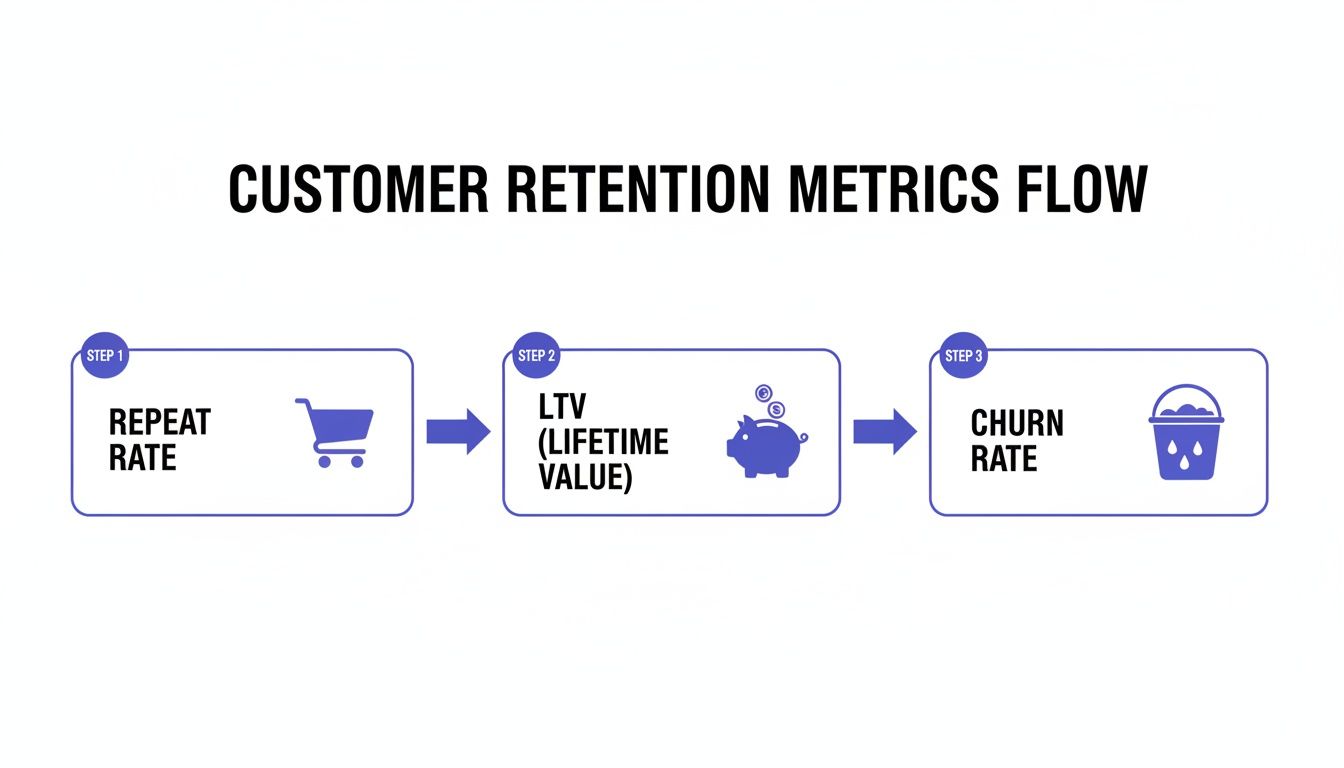
This flow really drives home how a high repeat purchase rate pumps up customer lifetime value, while a low churn rate protects it. It’s a powerful cycle of growth.
You absolutely cannot overstate how important it is to focus on these existing customers. It can cost five times more to snag a new ecommerce customer than it does to keep an existing one happy. Brands that focus on retention are often 60% more profitable, and loyal customers end up spending 67% more by their third year with you.
These aren't just abstract numbers; they represent a massive financial win waiting for you when you map and improve your customer journey. You can read more about these loyalty statistics to get the full picture. By nailing each stage, you can turn a one-and-done buyer into a high-value, long-term champion for your brand.
Alright, let's inject some real-world energy and expertise into this. Here’s a fresh take on those retention strategies, written as if it's coming from someone who's actually been in the ecommerce trenches.
5 Powerful Retention Strategies You Can Implement Today
<iframe width="100%" style="aspect-ratio: 16 / 9;" src="https://www.youtube.com/embed/_Lh1IvwveC0" frameborder="0" allow="autoplay; encrypted-media" allowfullscreen></iframe>Now that I’ve got a handle on the customer lifecycle, let's get to the fun part: the actual playbook for boosting customer retention in ecommerce. These are the tried-and-true strategies that transform one-time buyers into genuine brand evangelists who come back again and again.
This isn't about some dry marketing plan. Think of it as your blueprint for building real relationships. It’s about making your customers feel seen and appreciated at every single touchpoint.
1. Personalization That Goes Beyond the First Name
Let’s be honest—seeing your first name in an email subject line isn't impressive anymore. True personalization runs much, much deeper. It’s about using the data you have to create a shopping experience that feels like it was built just for them.
This means showing customers products they’ll actually love based on their browsing habits, past purchases, and even what they’ve left in their cart. If someone consistently buys black t-shirts, you should be the first to tell them when a new style drops. That's not just marketing; it's being a helpful, personal stylist. That's how you turn a massive catalog into a curated boutique experience.
You can dig into more ways to sharpen your sales funnel in my guide on how to improve ecommerce conversion rates.
2. Loyalty Programs That Create True Fans
A loyalty program is one of the most direct routes to encouraging repeat business. But the best programs offer so much more than just points. They cultivate a sense of community and exclusivity that makes customers feel like they're part of an inner circle.
Here are a few ways to make your program something special:
- Tiered Rewards: Create levels (think Bronze, Silver, Gold) that customers can climb by spending more. The higher tiers should unlock seriously cool perks like early access to new collections, permanent free shipping, or a special birthday gift.
- Experiential Perks: Go beyond discounts! Offer access to members-only events (even virtual ones), exclusive content, or a dedicated support line. These non-monetary rewards build a much stronger emotional bond.
- Surprise and Delight: Don't underestimate the power of the unexpected. A random gift card or a free product sent to a loyal customer can create an unforgettable moment of joy they’ll want to shout about from the rooftops.
3. The Art of Proactive Communication
Staying in touch is absolutely critical, but it has to be meaningful. Blasting your customers with generic "BUY NOW!" emails is a one-way ticket to the unsubscribe list. Instead, your communication should add real value to their lives and strengthen their connection to your brand.
Think about it: a simple post-purchase email asking for feedback shows you genuinely care about their experience. Sending them a guide on how to style the item they just bought positions you as a trusted expert, not just another retailer. The goal is to be a welcome guest in their inbox, not a persistent pest.
The impact of getting this right is staggering. Boosting customer retention by just 5% can send your profits soaring by 25% to 95%. This is because repeat buyers are the engine of your business—they drive 65% of a company's revenue and spend a whopping 67% more than new customers.
Comparing Customer Retention Channels
Choosing the right channel is key to delivering the right message at the right time. Here’s a quick breakdown of where each channel shines.
| Channel | Best For | Potential Impact |
|---|---|---|
| Email Marketing | Nurturing existing customers with personalized content, offers, and brand stories. | High |
| SMS/Text Messaging | Time-sensitive alerts like flash sales, order updates, and exclusive drops. | High |
| Loyalty Programs | Incentivizing repeat purchases and building a community of brand advocates. | Very High |
| Customer Experience (CX) | Creating positive interactions through support, proactive help, and a frictionless site. | Very High |
| Product-Fit Improvements | Reducing returns and building purchase confidence with tools that help customers buy right. | High |
As you can see, a great strategy uses a mix of these channels to create a seamless and rewarding experience that keeps customers engaged and happy.
4. Building a Confident Shopping Experience
One of the biggest—and most overlooked—retention drivers is simply making the shopping experience itself amazing. It’s about removing friction and replacing doubt with excitement. In fashion, the single biggest point of friction is the universal question: "But how will it look on me?"
Answering that question is an absolute game-changer.
This is exactly why I built TryThisFit. I was tired of the guessing game and wanted to give shoppers a way to instantly see how an outfit would look on their own photo. Whether they're browsing Zara, H&M, Shein, or even scrolling through secondhand gems on Vinted and Depop, they can get a preview in seconds. For the most accurate results, flat-lay clothing photos work best.

5. Leveraging Tools That Create 'Wow' Moments
The free TryThisFit Chrome extension makes this dead simple. It installs in a couple of seconds, and from then on, a shopper can just right-click any flat-lay clothing photo online to see a virtual try-on. It works on any site, requires no account, and gives them an instant preview.
This simple act of visualization does two critical things for retention:
- It crushes the chance of a return. A customer who buys with confidence is a happy customer. And happy customers are the ones who come back.
- It creates a memorable 'wow' moment. This unique, genuinely helpful experience builds a powerful positive feeling about your brand, making them eager to shop with you again.
When you're looking for tools to automate and scale your efforts, dedicated customer retention management software can be a fantastic way to manage many of the strategies I've discussed today.
At the end of the day, a winning retention strategy is a perfect blend of smart tech and real human connection. By personalizing the journey, rewarding loyalty, communicating with purpose, and building unstoppable purchase confidence, you create a cycle of positive experiences that keeps your best customers right where you want them.
Let's Tackle the Hidden Retention Killer: Ecommerce Returns
Let's get real about a silent assassin of customer retention in ecommerce: returns. Think about it. A single bad return experience—a confusing process, a painfully slow refund, or just the sheer hassle of it all—can completely sour a customer on your brand forever. It leaves a bitter taste that makes them second-guess ever clicking "buy" with you again.
The knee-jerk reaction for many brands is just to make returns easier. And while that's a decent start, it's like mopping the floor while the sink is still overflowing. The real win isn't just managing returns better; it's stopping them from ever happening in the first place. That proactive mindset is where true, rock-solid loyalty is built.
The Real Reason People Return Clothes
Here’s a little secret from inside the fashion industry: the number one reason for returns isn't that the size was wrong. It's because the "look" just didn't hit. The item arrives, and the style, the drape, or the overall vibe just doesn't match the picture the customer had in their head. This chasm between expectation and reality is the root cause of buyer's remorse.
When a customer has to do the whole return-repackage-reship dance, it feels like a failure—on their part and on your brand's. That negative feeling gets directly wired to your store, tanking the odds they'll ever become a repeat buyer. You can see how to bridge this gap by exploring the power of a great virtual try-on experience.
From Uncertainty to "Yes, I Need This!"
I actually built the TryThisFit app to solve this exact problem head-on. It's designed to close that expectation gap and give shoppers a massive dose of confidence before they even think about the "buy" button.
Imagine a customer browsing on Zara, H&M, or even hunting for a gem on Vinted or Depop. Instead of just guessing, they can use the app or the free Chrome extension to instantly see how a style looks on their own photo. This isn't about boring technical measurements; it's about nailing the aesthetic and feeling 100% certain about their choice.
This one simple step crushes buyer's remorse. It swaps doubt for excitement and ensures the entire experience, from discovery to unboxing, is a total win.
A confident purchase is the foundation of a happy customer. A happy customer is the foundation of high retention. When you eliminate the guesswork, you create a positive feedback loop that keeps them coming back for more.
Making it Effortless for Shoppers
The best tools are the ones you don't even notice you're using. That’s why the TryThisFit Chrome extension is so powerful—it installs in seconds and weaves itself right into how people already shop online.
No accounts to create, no complicated steps. A shopper just right-clicks on a flat-lay clothing photo on literally any site, from Amazon to Shein, and gets an instant preview. That immediate, genuinely helpful interaction creates a memorable "wow" moment, building a strong, positive connection to their shopping trip.
Focusing on slashing returns isn't just about saving money; it's one of the most potent retention strategies you can possibly use. In a world where customer retention rates often hover around a measly 30% on average, every single positive experience counts. By making sure customers absolutely love what they buy, you dramatically boost the chances they'll become part of that prized 60-70% of returning customers who buy again. To see the full impact, you can dive deeper into these customer retention statistics.
Ready to help your customers buy with total confidence? Try it now at trythisfit.com.
Your Ecommerce Retention Questions, Answered
Alright, I've dug deep into the world of customer retention in ecommerce. Now, let's get down to brass tacks and answer the questions I hear most often from brands ready to get serious about loyalty. This is your playbook for turning theory into action.
What Is A Good Customer Retention Rate For An Ecommerce Business?
This is the big one, isn't it? The honest-to-goodness answer is: it really, truly depends. While you might see an industry average floating around 30%, a "good" rate is all about your specific business.
If you're running a subscription box, where the whole model is built on repeat purchases, you should be shooting for 80% or higher. But for a store selling something like high-end furniture, a customer might only buy every few years, so that number will naturally be much lower.
Forget the magic number. The most important benchmark is your own history. Setting a goal to improve your current rate by just 5-10% is a massive win and will have a real, tangible impact on your bottom line.
How Can Small Ecommerce Stores Compete With Giants Like Amazon?
Let's be real: you can't beat them on next-day delivery or rock-bottom prices. So don't even try to play that game. Instead, you win on personality and experience.
Your secret weapon as a smaller store is your humanity—something the giants can never truly replicate. A handwritten thank you note? A personal styling tip? Building an actual community around your products? That's your home turf.
You can also be more nimble. Integrating a unique, high-value tool that creates a "wow" moment sets you apart instantly. When a customer can visualize an outfit on their own photo with a tool like TryThisFit, they get a memorable, delightful experience they can’t get everywhere else. That gives them a powerful reason to come back to you, not just default to the big players like Amazon.
What Is The First Step To Improve My Customer Retention?
Hold off on that splashy new loyalty program. Before you do anything else, you need to listen. You can't fix a problem if you don't know what's actually broken.
First, get your bearings. Calculate your baseline metrics—LTV, churn rate, the whole nine yards—to see where you stand. But even more crucial? Talk to your customers. Send a simple survey. Ask about their experience. Find out what could have been better.
You’ll quickly spot the friction points. Maybe it’s the shipping costs. Maybe your product photos are confusing. Maybe they just weren't sure how that dress would actually look on them. This feedback is pure gold.
This customer data will tell you exactly where to focus your energy and resources for the biggest and fastest wins in your retention strategy.
How Does Visualizing An Outfit Help With Customer Retention?
This is where things get really exciting. Visualizing an outfit helps in two incredibly powerful ways.
First and foremost, it skyrockets a shopper's confidence and dramatically cuts down on returns. Think about it: a customer who gets exactly what they expected and absolutely loves their purchase is perfectly primed to buy from you again. That positive feeling sticks.
Second, it creates a unique and genuinely fun shopping moment that builds a powerful connection to your brand. When a shopper can instantly see how a style looks on their own picture using the app or the Chrome extension—which works with retailers like Zara or H&M via its right-click feature—it’s a game-changer. It’s no longer just a transaction; it's an experience. That helpful interaction makes them far more likely to remember you and come back next time.
It turns a simple purchase into a moment of discovery. And that’s how you build fans, not just customers.
Ready to slash returns and create a shopping experience your customers will rave about? With TryThisFit, you can help shoppers see how styles look before they buy, building the confidence that turns one-time buyers into loyal fans. Install the free Chrome extension in 5 seconds and see the difference it makes.
Try Virtual Try-On Now
See how clothes look on you before you buy - works with any online store
Get Started Free