Egyptian Men's Clothing: A Style Guide for 2026
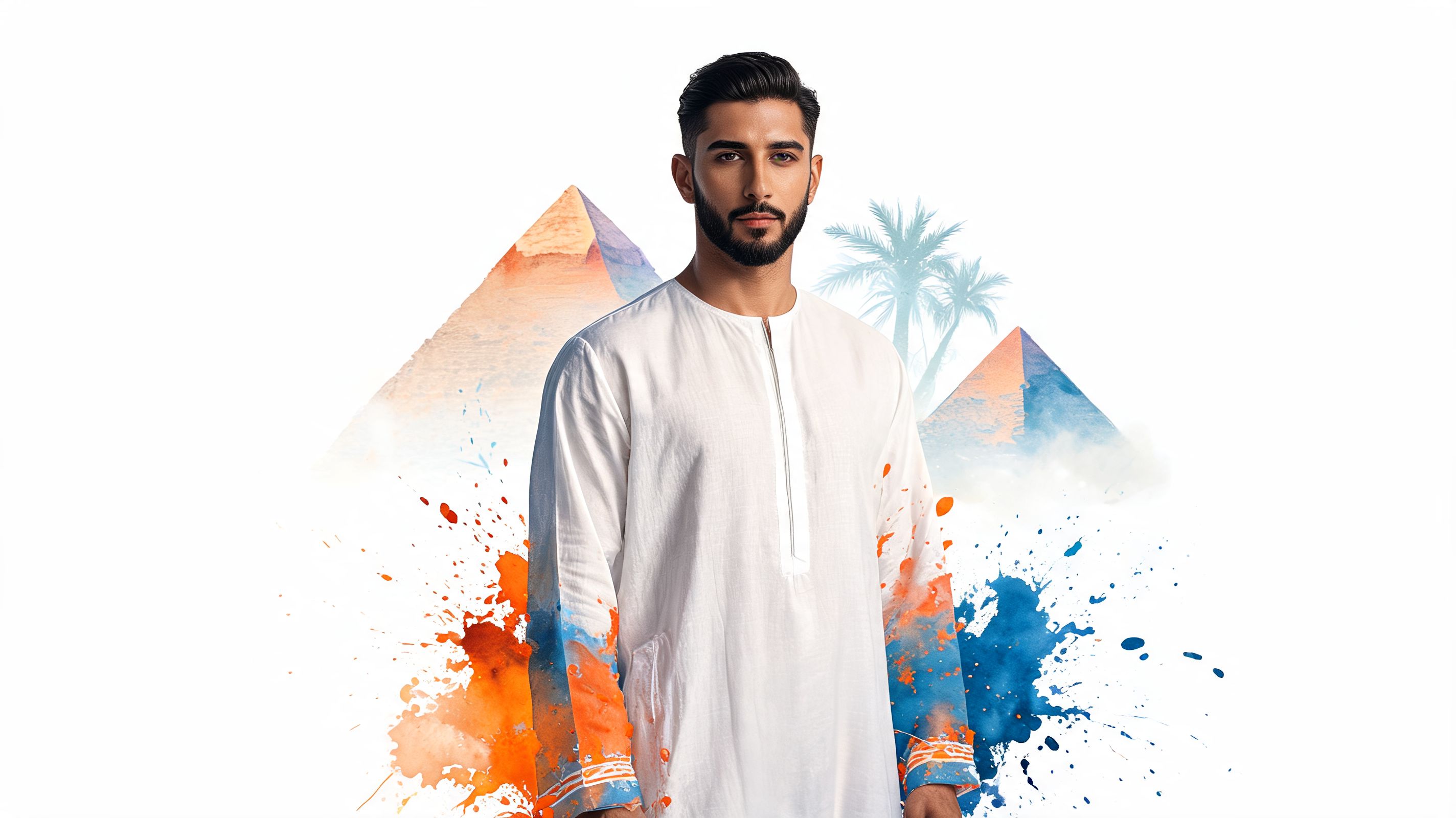
You're probably here because you saw a photo of a man in a flowing galabeya, a sharply pleated ancient kilt, or a formal bisht and thought, that looks incredible, but what exactly am I looking at?
That confusion is common. Most guides separate ancient Egyptian dress from modern Egyptian menswear, so you end up learning history in one place and current style in another. The result is a blurry picture of egyptian men's clothing as a whole.
Your Guide to Egyptian Men's Fashion
A lot of readers start with one simple question. Is egyptian men's clothing mostly about pharaoh-era linen, or is it about the long robes men wear in Egypt today?
The honest answer is both. Ancient clothing tells you where the visual language came from. Modern clothing shows how loose silhouettes, breathable fabrics, modesty, and occasion still shape men's style in Egypt today. One reason this topic feels hard to pin down is that existing content often fails to connect historical dress with modern fashion, with too little clear guidance on garments like the galabiya, bisht, or kaftan and how climate or occasion shape what men wear, as noted in this overview of Egyptian clothing.
That gap matters if you're a traveler, a costume shopper, a fashion student, or just someone who likes clothes with character. You don't just want names. You want to know what each piece looks like, when it's worn, and why one version feels casual while another feels ceremonial.
A useful way to think about it is this:
- Ancient dress gives you the roots. Linen, drape, pleating, and status details.
- Modern dress gives you daily wear. Long robes, regional styles, and occasion-based layers.
- Styling today is about context. A simple garment can look relaxed, refined, or highly formal depending on fabric, trim, and accessories.
If you enjoy comparing traditional garments to modern tailoring, it can also help to study broader tips to elevate your formal look. Some of the same style instincts apply, especially when you're thinking about silhouette, proportion, and dressing for the setting.
Egyptian menswear makes more sense once you stop looking for one “national costume” and start noticing a wardrobe of related garments.
The Ancient Roots of Egyptian Menswear
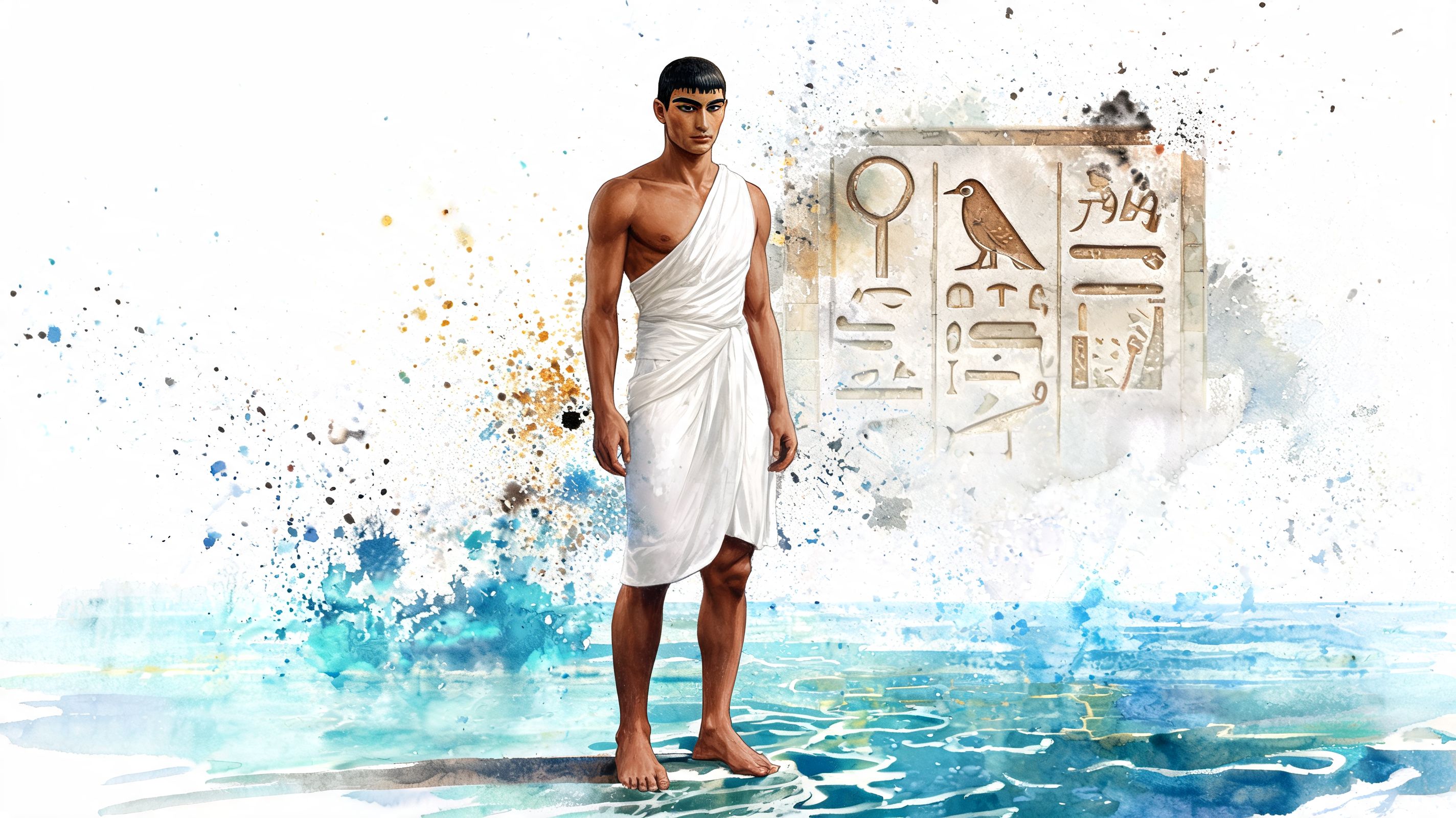
The story starts with one remarkably durable garment. For most of pharaonic history, ancient Egyptian men wore the schenti, a wrapped loincloth or kilt that sat around the hips.
According to this historical overview of clothing in ancient Egypt, the Old Kingdom (c. 2700–c. 2000 BCE) featured a basic wraparound kilt as the standard male garment. By the New Kingdom (c. 1550–c. 1070 BCE), elite men appear in art with more elaborate pleating and even sheer overskirts, showing that the same core garment evolved to signal rank across roughly 1,500 years.
Why the schenti mattered
The schenti was simple in construction, but it wasn't visually plain. It was a rectangular garment wrapped around the hips, secured by tucking, tying, or a belt. That means the look depended less on tailoring and more on how the fabric hung, folded, and held its shape.
That point is easy to miss if you only glance at museum images. Ancient Egyptian menswear wasn't built around seams, lapels, or closures in the way many modern garments are. It was built around drape.
Linen changed the look
The fabric choice shaped everything. The schenti was initially described as being made from leather or hides, then largely shifted to linen once flax weaving matured, as explained in FIT's overview of the schenti.
Linen mattered for practical and visual reasons:
- Heat comfort helped make it suitable for the Nile climate.
- Pleating potential let elites create sharper folds and more sculpted fronts.
- Status signaling came from finer linen and more refined finishing, even when the garment shape stayed familiar.
So while all classes could wear the same basic form, elite versions looked different because the cloth itself behaved differently.
Practical rule: When you study ancient Egyptian clothing, look at the fabric behavior first. The silhouette often tells you more than the cut.
For anyone exploring reconstructions, costume design, or visual references, ancient Egypt fashion examples can help you compare the iconic shapes that made these garments so recognizable.
Understanding the Modern Galabeya
If the schenti defines the ancient image of Egyptian menswear, the galabeya defines the modern one for many people. It's the long, loose robe that readers often picture first when they think of egyptian men's clothing today.
The key point is that a galabeya isn't just “a robe.” It's an everyday garment with regional variety, practical purpose, and a very different social role from highly formal outerwear.
What the galabeya is
A galabeya, sometimes spelled galabiya or jellabiya in English, is generally understood as a loose, full-body everyday garment, an idea reflected in the earlier-cited discussion of Egyptian clothing traditions. That loose shape is part of the appeal. It allows airflow, easy movement, and a modest silhouette that works across many settings.
Readers often get confused because they assume all long robes are interchangeable. They aren't. A daily galabeya, a dressier kaftan, and a ceremonial bisht may share a flowing shape, but they don't communicate the same thing.
Regional differences readers notice first
One of the most useful ways to understand the galabeya is to compare broad regional styles. These aren't rigid rules, but they help you see what people mean when they talk about different looks.
Common Galabeya Styles at a Glance
| Feature | Sa'idi (Upper Egypt) | Bahari (Lower Egypt/Coastal) |
|---|---|---|
| Overall shape | More voluminous | Often more fitted |
| Sleeves | Commonly wider | Typically less dramatic |
| Visual impression | Relaxed, roomy, traditional | Cleaner, neater, slightly slimmer |
| Everyday feel | Strongly practical and airy | Practical with a tidier outline |
The Sa'idi style is usually associated with Upper Egypt and tends to have more fullness. It can look broad and generous in motion, which makes it visually striking even when the fabric is simple.
The Bahari style, associated with northern or coastal areas, often reads a bit closer to the body. Not tight, just more controlled in its line.
Fabric changes the whole mood
The fabric often matters more than decoration. A heavier cotton galabeya feels grounded and sturdy. A lighter cotton or linen blend feels breezier and more fluid.
That's why two garments in the same basic shape can give off very different energy:
- Heavier cloth can look more structured and work well in cooler weather.
- Lighter cloth tends to move more easily and feels better suited to heat.
- Smooth, crisp finishes often look dressier than soft, everyday textures.
A galabeya is one of those garments where fabric and movement do most of the talking.
What people usually get wrong
The most common mistake is treating the galabeya like a costume piece. In real life, it's a lived-in garment. Men wear versions of it because it's practical, comfortable, modest, and culturally familiar.
The second mistake is assuming “traditional” means static. It doesn't. Modern Egyptian menswear shifts with region, occasion, and personal taste. Some men keep things classic. Others combine a traditional robe with contemporary sandals, a watch, or cleaner finishing that makes the whole look feel current.
If you're trying to understand egyptian men's clothing visually, start by asking three questions. Is this garment for everyday wear or a special event? Does the fabric look soft or crisp? Does the silhouette look roomy or controlled?
Those clues usually tell you far more than the label alone.
Visualize the Look Before You Browse
Reading about drape is useful. Seeing drape is better.
Egyptian garments, especially robes and wrapped silhouettes, can be hard to judge from product thumbnails alone. A folded listing image might make a galabeya look stiff, oversized, or costume-like, even when the actual style is elegant once worn.
What to look for in garment images
Before you even start comparing shops, focus on the image quality. For flowing clothes, flat-lay photos usually give the clearest sense of shape because you can see the garment outline without body pose, hand placement, or camera angle getting in the way.
That matters with egyptian men's clothing because so much of the style lives in the silhouette:
- Neck opening changes the feel from plain to formal.
- Sleeve width affects whether the garment reads roomy or neat.
- Length and side shape influence whether it feels ceremonial, casual, or everyday.
- Surface details like embroidery or trim can quickly shift the mood.
A simple way to preview the appearance
If you want to explore these looks on shopping sites without guessing, virtual try-on tools make the process much easier. The goal isn't to determine fit or sizing. It's to preview the appearance, compare silhouettes, and see how a style reads on you.
That's especially useful for:
- Online shopping when a robe-style garment looks very different on a model than it might in your own style context.
- Secondhand browsing when you find a great piece on resale sites but only get limited photos.
- Costume planning when you want something inspired by ancient or modern Egyptian dress without buying blind.
The best preview starts with the clearest garment photo. Flat-lay images usually make style comparisons much easier.
Why this matters with Egyptian-inspired style
Some clothes are easy to judge from the hanger. A standard T-shirt is one. A flowing robe isn't.
A galabeya can look understated, scholarly, festive, or relaxed depending on the neckline, cuff treatment, and fabric surface. An ancient-inspired costume can lean theatrical or tasteful based on proportion alone. Previewing the look helps you decide whether the garment feels right for your wardrobe, your event, or your travel plans.
If you like browsing across multiple stores, this becomes even more practical. You can compare a marketplace listing, a costume piece, and a more refined robe style without relying only on imagination.
A Guide to Modern Egyptian Men's Style
Modern Egyptian menswear isn't one outfit. It's a set of garments that become more or less formal depending on context.
The easiest way to understand it is to build from the everyday level upward. Start with the simple galabeya. Then add refinement through fabric, ornament, layering, and headwear.
Everyday wear
For daily life, a plain galabeya often does the job. Here, comfort leads. The garment should feel easy, breathable, and unforced.
A simple everyday look often works best with restrained styling:
- Keep the fabric practical so the garment feels natural rather than performative.
- Choose clean footwear like leather sandals if you want a polished finish.
- Add only one modern accessory such as a watch, instead of over-styling the outfit.
The result should look lived in, not staged.
Dressier options
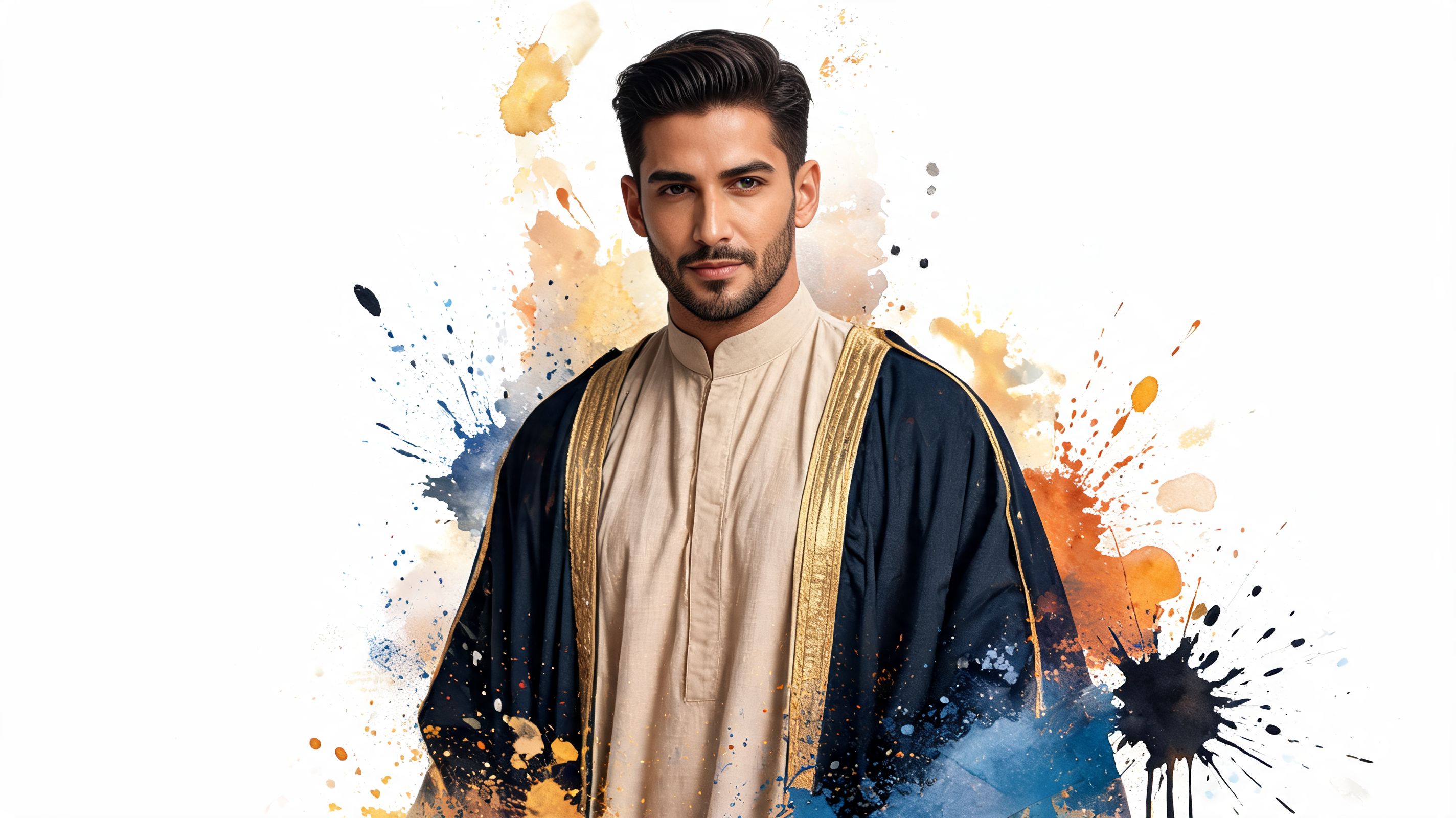
When the occasion becomes more formal, readers often hear about the kaftan and the bisht. These aren't just “fancier robes.” They serve different visual roles.
A kaftan is commonly treated as a more ornate robe. It may appear more refined in fabric or finishing, and it can suit gatherings where everyday simplicity feels too plain.
The bisht is the outer layer that changes the message most dramatically. One source notes that the bisht functions as a status marker and sign of respect, which helps explain why it appears in more ceremonial settings rather than ordinary day-to-day wear, as discussed in the earlier-cited Egyptian clothing overview.
Some garments say “I'm dressed.” A bisht says “this occasion matters.”
Headwear and setting
Headwear can add another layer of meaning. A turban or wrapped head covering may reflect tradition, religion, region, or personal preference. The key is context.
If you're traveling and trying to dress respectfully, practical preparation helps as much as style knowledge. These packing tips for Egypt are useful for thinking through climate, comfort, and modest choices before you go.
A quick occasion guide
Here's a straightforward way to think about modern Egyptian men's clothing in use:
-
For everyday errands or relaxed settings
A simple galabeya in a practical fabric usually feels appropriate. -
For social visits or a more polished daytime look
Choose a cleaner fabric, neater shape, and subtle details. -
For weddings, celebrations, or highly formal moments
A more ornate robe or a bisht communicates respect and ceremony.
For readers who want visual examples of these contemporary styles, modern-day Egyptian clothes offer a useful starting point.
How to Shop for Authentic Egyptian Menswear
The smartest way to shop for egyptian men's clothing is to stop chasing the most “exotic” version and start checking the basics. Fabric, cut, finish, and context tell you much more than flashy product wording.
A good galabeya or robe-style garment should feel intentional. Even a simple piece can look excellent if the cloth hangs well and the details are clean.
What to examine first
Touch matters if you're shopping in person. A soft, breathable fabric usually tells a better story than heavy shine or stiff synthetic feel.
If you're buying online, slow down and inspect the listing closely:
- Read the fabric description and look for cotton or linen blends if comfort matters to you.
- Study the neckline and cuffs because those small details often reveal whether the piece is casual or dressy.
- Check the silhouette in full-length photos so you can judge whether it's roomy, straight, or overly costume-like.
- Prefer flat-lay images when available because they usually show the garment shape more clearly.
Where online shoppers usually browse
Many people start on broad marketplaces because selection is easy to compare. If you're looking through Amazon listings for robe-style menswear, pay close attention to whether the garment is presented as everyday clothing, occasionwear, or costume.
That distinction matters. A theatrical costume can still be fun, especially for themed events or Halloween, but it won't necessarily give you the same look as a real modern galabeya.
You can also search secondhand platforms and mainstream fashion sites. Shoppers often browse Zara, H&M, Vinted, Depop, Shein, and similar stores when they want adjacent styles such as long tunics, loose robes, or linen pieces with a North African or Middle Eastern feel.
How to judge authenticity without overcomplicating it
Authenticity isn't just about where the item ships from. It's about whether the garment makes sense as clothing someone would wear.
Use this mental checklist:
- Does the shape look wearable, not theatrical?
- Does the fabric seem appropriate for heat and movement?
- Do the details look restrained or overloaded?
- Does the listing show the whole garment clearly?
If the answer to most of those is yes, you're probably looking at something far more useful than a vague “traditional costume” listing.
Frequently Asked Questions About Egyptian Menswear
A lot of readers reach this point with practical questions. They can picture the garment, but they still want to know how the full outfit works in real life and how to judge whether a version will feel natural on their own body.
What shoes are usually worn with a galabeya
Footwear is usually simple. Leather sandals, plain slip-on shoes, and low-profile loafers make the silhouette feel balanced because they do not compete with the long, relaxed line of the garment.
That balance matters.
A heavy sneaker can visually stop the drape at the ankle, while a lighter shoe lets the fabric fall the way it is meant to. If you are using a virtual try-on tool, check the look from head to toe rather than focusing only on the robe itself. The right shoe often decides whether the outfit reads as everyday dress, occasionwear, or costume.
Do colors in Egyptian menswear carry meaning
Sometimes, but context matters more than fixed symbolism. In daily wear, many men choose practical shades such as white, cream, grey, blue, brown, or black because they are easy to wear, easy to repeat, and suited to heat, dust, and regular use.
For celebrations, you may see richer color, contrast trim, or embroidery.
The easiest way to read color is to ask what mood it creates. Light shades feel airy and sun-ready. Darker shades feel more formal and grounded. If you are deciding what might suit you, previewing several colors on your own frame can be surprisingly useful. The same cut can look relaxed in beige and much dressier in black.
How does Egyptian menswear differ from similar styles in nearby countries
The broad family resemblance can be confusing at first. Across North Africa and the Middle East, men wear long garments built for heat, movement, and modesty, but the details shift from place to place.
Egyptian styles often read as straightforward and wearable, with an emphasis on ease rather than dramatic structure. In neighboring countries, you may notice different necklines, sleeve shapes, lengths, fabrics, or levels of decoration. It works a bit like regional tailoring in Europe. The category looks familiar from a distance, but the local cut tells you where it belongs.
Can shorter or broader men wear Egyptian-style garments well
Yes. The key is proportion.
A shorter man may want a cleaner, less oversized cut so the fabric does not swallow his frame. A broader man may prefer a garment with enough width through the chest and shoulders to let the fabric fall straight instead of pulling. This is one of the best reasons to preview the look digitally before buying. You are not just checking whether you like Egyptian menswear in theory. You are checking how length, sleeve volume, and drape behave on your body.
Is embroidered menswear harder to style
Usually, yes, because decoration changes the role of the garment. A plain galabeya works like a daily uniform piece. An embroidered one becomes the focal point, so everything around it should stay quieter.
If you want a first purchase, start simple. If you want a festive look, choose embroidery that frames the neckline or cuffs rather than covering the whole garment. That tends to look more believable and easier to wear.
If you want to move from reading about egyptian men's clothing to seeing how the style looks on you, try TryThisFit. You can preview the appearance of robe-style garments, costumes, and secondhand finds in seconds, no account needed. If you shop across Amazon, Zara, H&M, Vinted, Depop, or other sites, install the free Chrome extension and right-click clothing photos for an instant style preview. For the clearest results, use flat-lay images when possible, then compare your saved looks in try-on history.
Try Virtual Try-On Now
See how clothes look on you before you buy - works with any online store
Get Started Free