The Hidden Fast Fashion Environmental impact
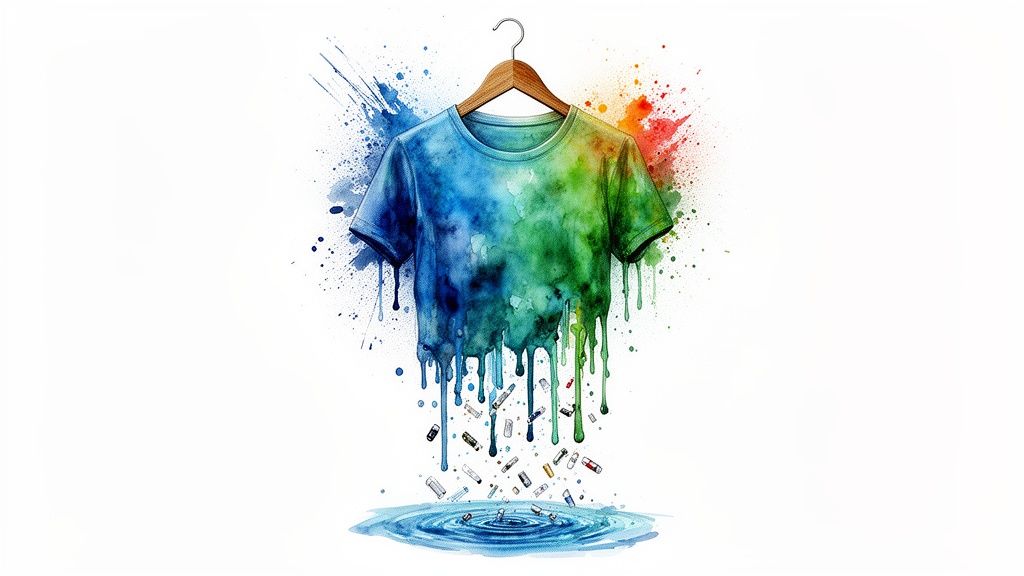
The massive environmental damage from fast fashion is a direct result of its core business model: churn out trendy, cheap clothes at breakneck speed. This frantic pace leads to staggering water consumption, carbon emissions, and mountains of textile waste.
At its heart, this system is built for disposability, prioritizing rapid turnover above all else. This creates a destructive cycle of overproduction that our planet simply can't sustain.
What Is Fast Fashion and Why Does It Matter?
First, let's throw the old fashion calendar out the window. Forget the traditional spring/summer and fall/winter seasons. The world of fast fashion runs on a completely different clock, cranking out up to 52 "micro-seasons" every single year.
This is the entire game for retail giants like Zara, H&M, and Shein. Their goal is brutally effective: take a design from the runway to the sales rack in just a few weeks. This creates a relentless "fear of missing out," pushing us to constantly buy the next hot item—clothes that are often so poorly made they're only worn a handful of times before ending up in the trash.
The True Price of a Trendy Top
That shockingly low price tag on a cute top? It’s hiding the real cost—a cost our planet is forced to pay. The industry's insatiable appetite for speed and cheap materials has absolutely devastating consequences.
The fast fashion industry is the second-largest consumer of water on the entire planet. It's also responsible for about 10% of global carbon emissions—that’s more than all international flights and maritime shipping combined.
This isn't a minor issue; it's a full-blown global crisis woven into the very fabric hanging in our closets. The constant pressure to chase fleeting trends fuels a system that is fundamentally broken.
If this sounds unsustainable, that's because it is. To see a better way forward, it's worth exploring the opposite approach. Learning about What Is Slow Fashion really puts into perspective how a more mindful system—one built on quality, longevity, and respect—can work.
Fast Fashion vs Traditional Fashion At a Glance
To truly grasp the problem, it helps to see the two models side-by-side. The contrast couldn't be more dramatic, and it's here we can see exactly where the environmental strain comes from.
| Characteristic | Fast Fashion | Traditional Fashion |
|---|---|---|
| Production Speed | Extremely rapid (2-4 weeks) | Slower, season-based (6-12 months) |
| Number of Collections | 50+ "micro-seasons" per year | 2-4 collections per year |
| Price Point | Very low, encouraging impulse buys | Higher, reflecting quality and labor |
| Material Quality | Often low-quality synthetic blends | Higher-quality, more durable materials |
| Garment Lifespan | Designed to be disposable | Made to last for years |
| Environmental Focus | Minimal, prioritizes speed and cost | Growing emphasis on sustainability |
Looking at them this way, it's clear that one system is built for the long haul, while the other is designed to self-destruct—taking a huge chunk of our planet's resources with it.
The Carbon Footprint of Our Closets
Ever stop to think about the journey that cheap, trendy t-shirt took before landing in your closet? It’s a surprisingly dirty one. The entire process is incredibly energy-hungry and leaves behind a massive carbon footprint.
It all kicks off with making synthetic fibers like polyester—which are literally made from the same fossil fuels we put in our cars. From there, it’s off to factories, often powered by coal, for manufacturing, dyeing, and finishing.
The scale of this is just mind-blowing. Fast fashion is a monster polluter, responsible for a whopping 10% of the world's annual carbon footprint. Let that sink in. That's more than all international flights and maritime shipping combined. I found some fast fashion statistics that really paint a startling picture.
And the relentless demand for new styles from online giants like Amazon and Shein just keeps feeding this destructive machine, from the factory floor all the way to your front door.
From Oil Rigs to Online Carts
So, how can one t-shirt be so bad? It’s all baked into the supply chain. Most of our clothes are now made from synthetic fibers, which are basically just plastics derived from petroleum.
It takes an average of 23 kilograms of greenhouse gases to produce just one kilogram of fabric. Now, multiply that by the billions of garments churned out by brands like Zara and H&M each year, and you start to see the problem. If we keep this up, emissions from textile manufacturing alone are predicted to skyrocket by 60% by 2030.
This chart really drives the point home, showing just how different the production cycles are.
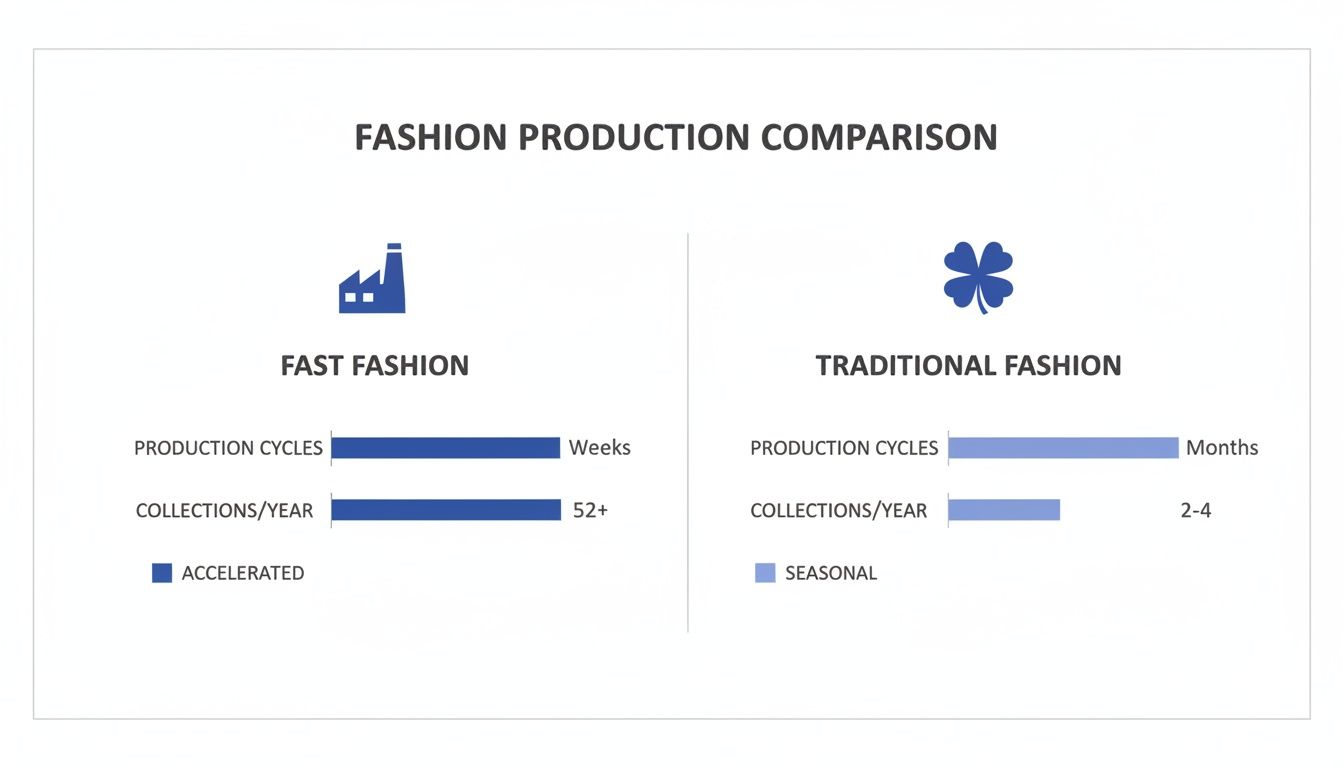
You can see it right there—fast fashion's hyper-speed, year-round model just steamrolls the traditional seasonal approach, guzzling resources and creating mountains of waste in the process.
The Hidden Impact of Online Shopping Returns
Production is only half the story. The carbon footprint gets even bigger when we factor in the logistics of online shopping. Every package shipped, returned, and re-processed spews more emissions. And we've all done it: ordering multiple styles knowing most of it is going straight back.
But what if you could visualize the right style before ever hitting "buy"? This is exactly where a little bit of tech can make a huge difference. It’s why I built the TryThisFit Chrome extension.
It’s pretty simple: you can right-click any product image on sites like Shein, Zara, or even secondhand spots like Vinted, and instantly see how it looks on you. Seeing the style virtually first helps you dodge those purchases you’d end up returning anyway, which directly cuts down on the carbon emissions from all that back-and-forth shipping. The whole debate has its own complexities, as you can see in my breakdown of online vs in-store shopping statistics.
By making a smarter decision upfront, you’re not just saving yourself a trip to the post office. You’re reducing the carbon load from wasteful returns. Every return you prevent is a small but real win for the planet.
Ready to shop with more confidence and less environmental guilt? Install the free Chrome extension in 5 seconds and start making better choices today.
How Our Clothes Are Poisoning Waterways
Beyond the carbon haze, fast fashion is creating a silent crisis in our planet's water systems. The industry's thirst is just incredible, starting with water-guzzling crops like conventional cotton.
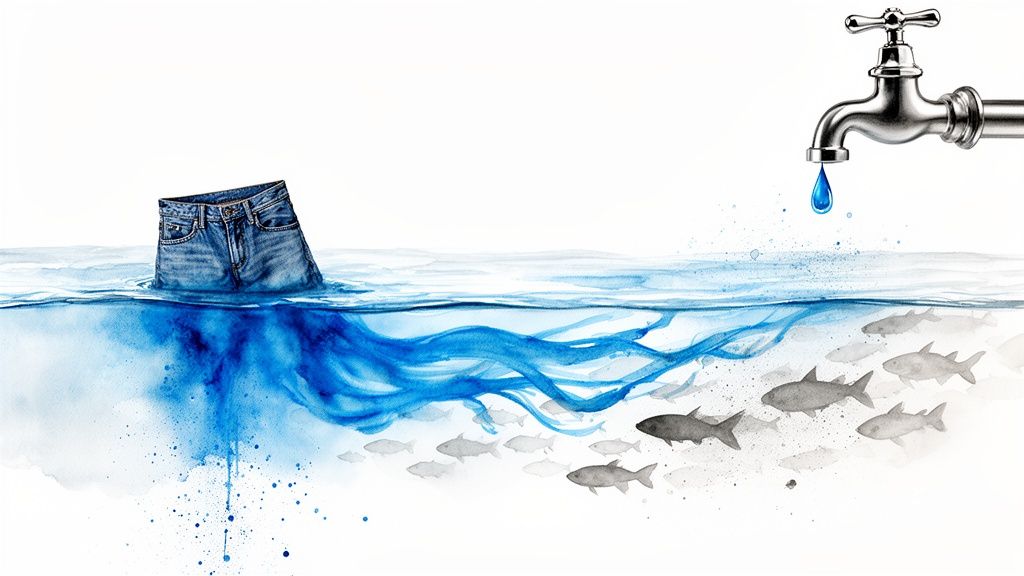
Think about this: it takes around 2,000 gallons of water to produce a single pair of jeans. That's more water than one person would drink in several years!
And that staggering consumption is just the beginning. Once the cotton is harvested, it enters a production cycle swimming in chemicals. The real damage happens when factories dump untreated wastewater—a toxic cocktail of dyes, heavy metals, and finishing chemicals—directly into local rivers.
The Invisible Plastic Problem
The danger doesn't stop at the factory gates. It follows us right into our homes and laundry rooms. An unseen threat is lurking inside our washing machines, and it’s a direct result of our love for cheap, synthetic fabrics like polyester, nylon, and acrylic.
Every time you wash clothes made from these materials, they shed thousands of microscopic plastic fibers. These microplastics are so tiny they slip right through wastewater treatment plants and flow directly into our oceans. A single load of laundry can release hundreds of thousands of these fibers, contributing to a massive, invisible plastic soup that’s choking marine life.
It's estimated that 35% of all microplastics found in the ocean come from laundering synthetic textiles. That’s the equivalent of dumping 50 billion plastic bottles into the sea every year.
This plastic pollution works its way up the food chain. Fish and other sea creatures ingest these fibers, and eventually, they can end up on our plates. The very clothes we wear are, quite literally, contaminating our food supply from the inside out.
Making a Smarter Splash with Smarter Shopping
So, how can we possibly fight back against something so pervasive? The solution lies in fundamentally changing how we buy clothes, focusing on intention rather than impulse.
When you make a confident purchase, you naturally buy fewer things. I created the TryThisFit app to help you visualize an outfit's style perfectly before you spend a dime. It gives you an instant preview of how something will actually look on you.
Whether you're browsing new arrivals on Zara or H&M, you can completely avoid the guesswork. With the free TryThisFit Chrome extension, which installs in a couple of seconds, you just right-click on any product photo to see a preview. Pro-tip: I've found that flat-lay clothing photos work best for the most accurate look.
By seeing how an item looks first, you can make a smarter, more conscious choice. You’ll be much more likely to buy something you truly love and will wear for a long time, reducing your closet's water footprint.
Ready to make a more confident—and sustainable—choice? You can try it for yourself right now at trythisfit.com and see how easy it is to shop smarter.
The Growing Mountain of Textile Waste
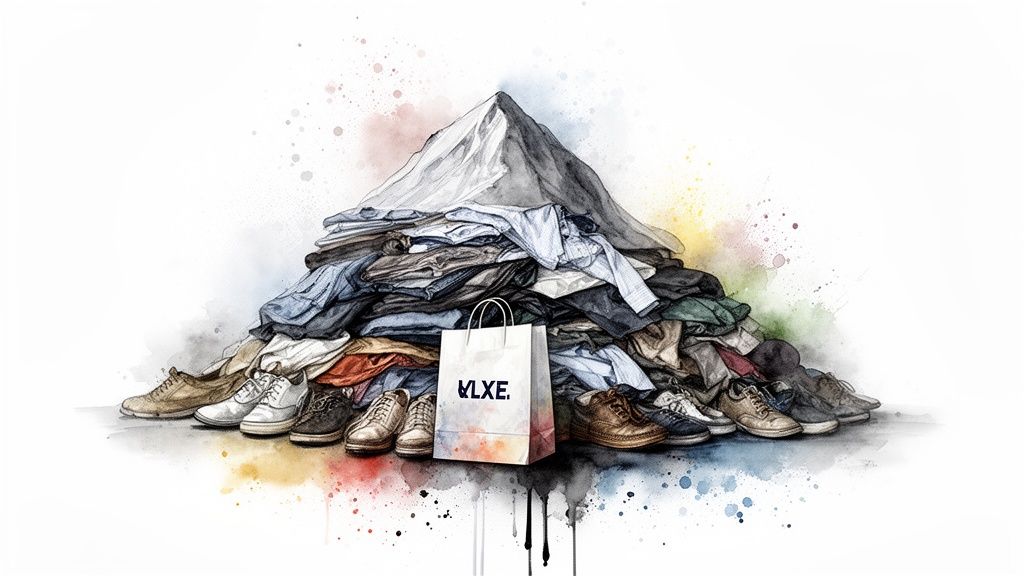
So, what happens to a fast fashion outfit after its very short and not-so-sweet life? The answer isn't pretty. I want you to picture a literal mountain of discarded clothes, and it's getting bigger by the second.
This isn't an exaggeration. We're talking about the equivalent of one entire garbage truck full of textiles being landfilled or incinerated every single second. This overwhelming volume is the direct result of the "disposable" mindset that fast fashion drills into us.
Why Can't We Just Recycle It All?
I know what you're thinking: "Can't we just recycle all these clothes?" If only it were that simple. The truth is, recycling modern clothing is incredibly difficult—and often, completely impossible.
Here’s why it’s such a headache:
- Blended Fibers: Most fast fashion pieces are a jumble of mixed materials, like cotton-polyester blends. Trying to separate those intertwined fibers is a complex and costly process that most recycling facilities just aren't equipped to handle.
- Chemical Treatments: All those dyes, finishes, and special coatings that create vibrant colors and textures? They make recycling even harder. These chemicals can easily contaminate the whole recycling stream, making the materials totally unusable.
- The Sheer Volume: Honestly, the amount of clothing we're tossing out is just staggering. It completely overwhelms our current recycling infrastructure. There's way more waste coming in than the system can ever hope to process.
This has exploded into a global crisis. A huge amount of textile waste from Western countries gets shipped off to developing nations, where it’s dumped in massive landfills. It’s a classic case of “out of sight, out of mind,” creating environmental and social disasters for communities that are drowning in our cast-offs.
The numbers are mind-boggling: globally, a staggering 85% of all textiles end up in the dump each year. Think about that. The vast majority of clothes we buy are designed to be landfilled after just a handful of wears.
Breaking the Buy-Wear-Toss Cycle
The only real way to shrink this mountain of waste is to fundamentally change our relationship with clothing. We have to ditch the ingrained "buy-wear-toss" cycle and start being more intentional.
This gets particularly tricky on secondhand sites like Vinted or Depop. While buying used is an amazing sustainable choice, you're stuck with the item if you don't like how it looks once it arrives. But this is where a little bit of smart tech can be a total game-changer.
The TryThisFit app was born out of this exact frustration. I created it so you can see how an item looks before you commit, helping you pick pieces you'll genuinely love and wear for years, not just for a season. By making a more informed choice, you reduce the demand for new production and keep perfectly good clothes out of the landfill.
With the free Chrome extension, which installs in seconds, this process is seamless. Whether you're browsing Zara, H&M, or even Vinted, you just right-click on any clothing photo to instantly see what it might look like on. I've found that flat-lay photos tend to give the most accurate preview! You can learn more about how a virtual try-on can completely transform your shopping habits.
Instead of making risky purchases that might just end up in a donation bin (or worse), you can shop with confidence. Try it now at trythisfit.com and take the first step toward building a wardrobe you truly love.
How to Reduce Your Fashion Footprint Today
Feeling a bit overwhelmed by the sheer scale of fast fashion's impact? I get it. But this is the moment where you get to take back control. Shifting your habits, even in small ways, is the most powerful tool you have to fight back. It’s not about achieving perfection overnight; it's about making small, conscious choices that add up to a massive, positive change.
Let's dive into some simple, incredibly effective steps you can take right now. The journey starts with a simple but powerful philosophy: buy less, choose well, and make it last.
<iframe width="100%" style="aspect-ratio: 16 / 9;" src="https://www.youtube.com/embed/PpBtfG6z6kY" frameborder="0" allow="autoplay; encrypted-media" allowfullscreen></iframe>Embrace Mindful Consumption
Before you click "add to cart," just pause for a second. Ask yourself this one crucial question: "Will I wear this at least 30 times?" This simple rule is a game-changer. It helps you dodge those impulse buys and start building a wardrobe filled with pieces you genuinely love.
Another fantastic way to get intentional is by exploring what a capsule wardrobe is. The whole idea is to curate a small, versatile collection of high-quality items that you can mix and match endlessly.
Champion Secondhand Shopping
Get ready to dive headfirst into the exciting world of secondhand! Platforms like Depop and Vinted are absolute treasure troves of unique, pre-loved gems. Shopping secondhand isn't just a trend; it's one of the most sustainable things you can do.
The only real hang-up with secondhand has always been the risk of buying something you can't try on or return. It's a major hesitation for a lot of people. But what if you could completely eliminate that risk?
Leverage Technology to Shop Smarter
This is where a little bit of smart technology becomes your secret weapon for conscious shopping. One of the biggest game-changers for shrinking your personal fashion footprint is using tools that help you make better decisions online—which is exactly why I created the TryThisFit app and its free Chrome extension.
Instead of ordering multiple items from H&M or Amazon just to see how they look, you can now get an instant preview. Just right-click on any product photo—it works great with those flat-lay images—and see how the style looks on you in seconds. The extension installs in a snap and you don't even need an account.
Every single online return you avoid is a significant win for the planet. You’re saving on shipping emissions, reducing packaging waste, and preventing a perfectly good item from potentially being sent to a landfill.
This simple action directly chips away at the fast fashion environmental impact, one smart purchase at a time. The extension works on any site, from retailers like Zara and Shein to secondhand marketplaces like Vinted, so you can shop with confidence everywhere.

Extend the Life of Your Wardrobe
Guess what? The most sustainable outfit is the one you already own. Extending the life of your current wardrobe is a powerful act of defiance against disposable fashion.
Here are a few ways to get started:
- Learn Basic Repairs: Sewing on a button or patching a small hole are surprisingly simple skills that can save a beloved garment from the trash pile. There are thousands of free tutorials online to guide you.
- Care for Your Clothes Properly: That little care label is your friend! Washing clothes in cold water and letting them line-dry not only saves energy but also helps preserve the fabric, making them last so much longer.
- Get Creative with Upcycling: Turn an old pair of jeans into shorts or a t-shirt into a tote bag. Upcycling is a fun, creative way to transform old items into something new and exciting.
By combining mindful shopping habits with smart technology, you can dramatically shrink your fashion footprint. When you see how a style looks on you before you buy, you’re far more likely to choose pieces that you’ll keep and cherish—a key principle you can explore in my guide to fast fashion alternatives.
Ready to make a real change? Install the free Chrome extension now and see for yourself how easy it is to shop smarter and more sustainably.
Your Questions About Fast Fashion, Answered
Let's cut through the noise. When you start digging into the environmental impact of fast fashion, it's easy to get lost in a sea of confusing claims and marketing jargon. This section is all about getting you clear, honest answers to the tough questions.
Are "Sustainable Collections" from Fast Fashion Brands a Real Solution?
Ah, the classic "conscious collection" from brands like H&M or Zara. It's a tempting idea, but this is a textbook case of greenwashing.
Sure, using some recycled materials is better than nothing, but it’s a tiny band-aid on a gaping wound. It completely sidesteps the real issue: their entire business model is built on churning out massive quantities of disposable clothes. A tool that helps you make one thoughtful purchase is infinitely more powerful than buying a "green" t-shirt from a fast fashion giant.
Can My Personal Shopping Habits Actually Make a Difference?
It’s so easy to feel like one person's choices are just a drop in the ocean. I get it. But every massive movement in history started with individual people deciding to do things differently.
Think of it like this: every single time you choose a secondhand gem, mend a favorite pair of jeans, or resist that impulse buy, you're casting a vote for the kind of fashion industry you want to see. When you use an app like TryThisFit to visualize an outfit and avoid a return, that one small action might not seem like a big deal. You can even check out your own positive impact in your try-on history at trythisfit.com/history.
Isn't Sustainable Fashion Just for People with a Lot of Money?
This is one of the biggest myths holding people back, and it's time to bust it for good! While it's true that a brand-new, ethically-made garment often costs more, sustainability isn't about buying expensive new things. It's a mindset shift.
The real secret is to buy less and make the most of what already exists.
The most affordable and earth-friendly closet is waiting for you on secondhand platforms like Vinted and Depop. The biggest hurdle—the risk of buying something you can't return—disappears when you can see how it might look first. A virtual try-on tool makes secondhand shopping a no-brainer.
What's the Single Most Powerful Thing I Can Do Right Now?
If you want to make the biggest possible impact, it boils down to one simple, powerful change: shift from mindless consumption to mindful intention. In other words: buy less, and wear what you own more often.
Before you click "add to cart," especially online, just pause. That moment of hesitation is your superpower. Instead of ordering a haul from Shein or Zara just to try things on, use the TryThisFit Chrome extension.
A quick right-click on a flat-lay photo to see how that style actually looks on you can instantly stop a wasteful purchase and a harmful return in its tracks. That simple, intentional pause is the most effective step you can take toward a healthier closet and a healthier planet.
Ready to shop smarter and shrink your fashion footprint? With TryThisFit, you can see how any outfit looks on you in seconds, helping you make amazing choices for your style and the planet. Install the free Chrome extension in 5 seconds.
Try Virtual Try-On Now
See how clothes look on you before you buy - works with any online store
Get Started Free