Online Shopping Vs In Store Statistics: The Ultimate Data Showdown

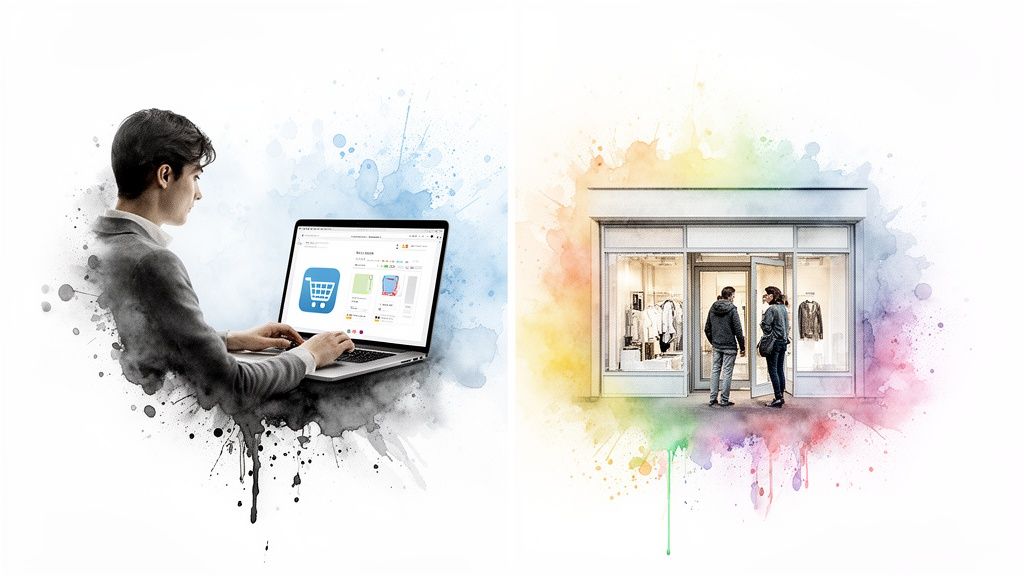
When you look at the raw numbers, the big picture of online vs. in-store shopping snaps into focus. It’s pretty simple, really: e-commerce is growing like a weed, while brick-and-mortar retail still commands the lion's share of the market, even if its growth has slowed.
It's a classic tradeoff. Online gives you endless aisles and the comfort of your couch, but physical stores offer that can't-beat feeling of walking out with your purchase in hand.
The Great Retail Debate: A Statistical Overview
Alright, let's jump right into the retail showdown everyone's talking about. I'm going to cut through the noise and look at the hard data that defines the modern shopping landscape.
The core question is simple: Who's bigger, and who's growing faster? The answer tells us everything about where retail is headed.
Think about this for a second: in 2025, online shopping is projected to account for a massive 20.5% of all retail sales worldwide. That's a noticeable leap from around 18.5% in 2022 and it’s on a rocket ship trajectory toward 22.5% by 2028. More than $20 out of every $100 spent globally is happening online, driven by an incredible 2.77 billion people clicking the "buy" button this year. You can explore more of these global trade insights.
But this incredible growth comes with a built-in problem for shoppers, especially in fashion: how can you be sure something will actually look good on you without seeing it first?
A Quick Comparison
To really see how these two worlds stack up, it helps to put them side-by-side. Each has its own strengths that appeal to different shoppers at different times.
Here’s a quick rundown of the fundamentals.
Online vs In-Store Shopping at a Glance
| Metric | Online Shopping | In-Store Shopping |
|---|---|---|
| Market Share | ~20.5% of Global Retail | ~79.5% of Global Retail |
| Growth Rate | High (Double-Digit Growth) | Low (Single-Digit Growth) |
| Key Advantage | Convenience & Selection | Immediacy & Experience |
| Primary Challenge | Inability to See Items | Limited Hours & Inventory |
See that "inability to see items" challenge for online shopping? That's where things get interesting.
I created an exciting tool called TryThisFit that brilliantly merges the best of both worlds. It lets you upload a photo of yourself and instantly see how clothes will look on you before you even think about buying. It's designed to close that nagging gap between the ease of online browsing and the confidence of an in-store fitting room. Want to see the future of shopping? Try it now at trythisfit.com!
By giving you a realistic preview of the style and appearance, the app helps you make smarter choices and dodge the return pile. It’s all about finding your look with absolute confidence, straight from your screen.
Analyzing Sales Share and Explosive Growth Trends
Let's talk numbers, because this is where the story gets really interesting. While brick-and-mortar stores still command the lion's share of total retail sales, the real action—the electrifying, game-changing momentum—is all happening online.
The contrast is impossible to ignore. In-store shopping is chugging along with predictable, single-digit growth. E-commerce, on the other hand, is a rocket ship posting explosive gains that consistently leave physical retail in the dust.
The Unstoppable Rise of E-commerce
The data paints a crystal-clear picture of digital's relentless march forward. Projections show that between 2025 and 2029, online sales are set to grow at a compound annual growth rate (CAGR) of 6.9%. That figure nearly doubles the pace of physical stores, which are forecast to grow at less than 4%.
This acceleration gets even more dramatic when you zoom in. In 2026, e-commerce growth is expected to hit a staggering peak of 9.3% year-over-year. By 2025, global online retail is on track to snag 20.5% of all sales, a noticeable jump from 19.9% in 2024. Here in the U.S., e-commerce in the third quarter claimed 15.8% of the colossal $1.897 trillion total spend. That's $304.2 billion in just one quarter, up 1.4% from the previous one. You can dig deeper into these figures in this in-depth shopping statistics report.
This explosive growth is fueling an ever-expanding digital closet, packed with amazing finds from giants like Zara, H&M, and Shein. But with infinite choice comes the age-old problem: how do you know what will actually look good on you?
That’s a challenge I became obsessed with solving. What if you could see how that Zara dress or H&M jacket looks on your own photo before you click "add to cart"? With the TryThisFit free Chrome extension, you can do exactly that on any site. It installs in a couple of seconds and lets you right-click any clothing photo to get an instant style preview.
Drivers Behind the Digital Gold Rush
So, what’s fueling this incredible expansion? It's not just one thing, but a powerful combination of factors all pointing toward a future where digital convenience reigns supreme.
First up is the sheer force of mobile commerce, or m-commerce. The numbers are stunning: more than half of all online Black Friday shoppers (53%) used their smartphone to browse and buy. This "store in your pocket" phenomenon means shopping is no longer a planned event; it's something you can do anytime, anywhere.
The ability to browse, compare, and purchase from a handheld device has fundamentally changed the shopping journey, making it more spontaneous and integrated into daily life than ever before.
Next, we have the incredible influence of social commerce. Platforms like Instagram, TikTok, and Pinterest have evolved from social networks into massive discovery engines, seamlessly blending inspiration with instant purchasing. For more on this, check out our guide on how to improve e-commerce conversion rates.
Finally, there’s the "endless aisle." Online stores aren't constrained by four walls, allowing them to offer a ridiculously vast selection of styles, sizes, and niche products that you'd be lucky to find in a dozen physical stores combined.
What Today’s Shoppers Really Want
To truly understand what’s happening in retail, you have to get inside the mind of the modern shopper. And what you'll find is a fascinating blend of someone who craves convenience, hunts for great experiences, and almost always starts their journey online.
A whopping 60% of consumers now say they prefer the sheer ease of shopping online over trekking to a physical store. In just the last five years, the world gained 40% more online shoppers, and that number is set to hit a staggering 2.77 billion by 2025.
It's also clear that different generations are driving this shift. Millennials, for example, are 14.3% more likely to do most of their shopping online compared to everyone else. Their comfort with digital commerce is now the norm, with 37% of all U.S. adults making at least one online purchase every single week.
This tells us that e-commerce isn't just for big, occasional buys anymore—it's woven into our daily lives. People are jumping online for everything, from their weekly groceries to unique niche products, like buying Japanese milky candy online.
The chart below paints a crystal-clear picture of this momentum.
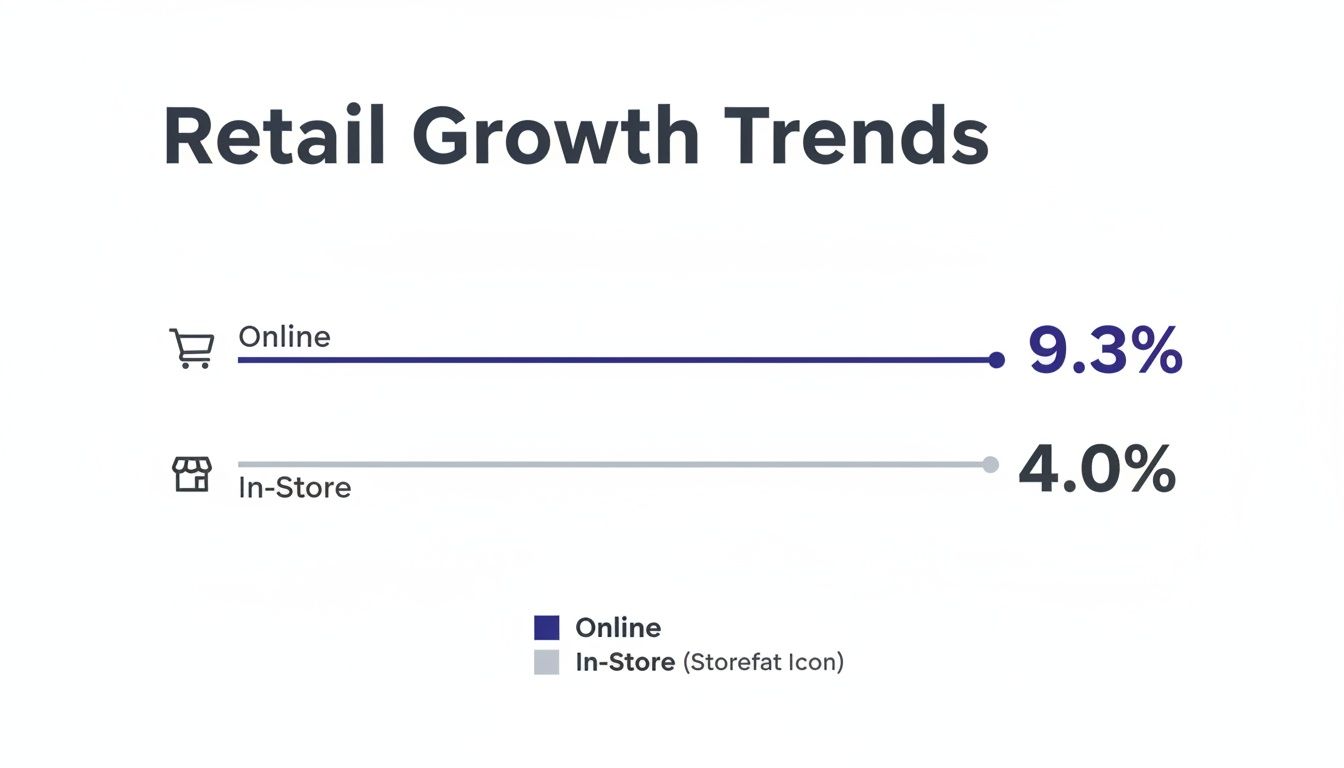
As you can see, online retail's growth is more than double that of brick-and-mortar stores. It’s a powerful visual confirmation of where consumer dollars—and attention—are heading.
Diving Deeper: AOV, Returns, and the Real Cost of a Click
Sure, the big-picture sales numbers tell a story, but the real drama unfolds in the nitty-gritty operational metrics. Let's pull back the curtain on the numbers that really matter: conversion rates, average order value (AOV), and the one metric that keeps every e-commerce manager up at night—returns.
These KPIs reveal the fundamental strengths and weaknesses of each channel. They show us precisely where the online experience is winning and where it desperately needs a helping hand.
Conversion Rates: The Digital Hurdle
One of the most glaring differences you'll find is in conversion rates. It’s no surprise that physical stores have a massive advantage here, with conversion rates often hitting anywhere from 20% to 40%. When someone takes the time to drive to a store, they’re usually there to buy.
Online is a totally different ballgame. The average e-commerce conversion rate worldwide languishes at a much lower 2.5% to 3%. This isn’t a sign of failure; it's simply the nature of the beast. Online, we're all guilty of "digital window shopping"—filling carts for fun and getting sidetracked.
Average Order Value: Winning the Basket Size Battle
Here’s where things get interesting. While it's tougher to get an online shopper to hit "buy," they often spend more when they finally do. The Average Order Value (AOV) online consistently outpaces that of physical retail.
What’s driving this? A few brilliant tactics like the magic of free shipping thresholds, effortless upselling suggestions, and the pure convenience of adding more items to a digital cart.
The Elephant in the Room: Online Return Rates
And now we arrive at the biggest headache for e-commerce, especially in the world of fashion. In-store return rates are a totally manageable 8-10%. But online? We're talking about a staggering 20-30%. For clothing, that number can skyrocket even higher, sometimes approaching an eye-watering 40%.
The reason for this chasm is painfully simple: the "expectation gap." The item that shows up at your door just doesn't match the picture you had in your head. It’s not about the size chart; it’s about the style, the way it hangs, the overall vibe.
Analyzing the specific product return reasons gives us the unfiltered truth. The number one reason for fashion returns is almost always, "It just didn't look right on me." This single, frustrating issue costs retailers billions and leaves shoppers stuck in a cycle of repackaging boxes.
This is exactly where TryThisFit goes from being a cool gadget to an indispensable shopping tool. I designed it to directly combat the #1 cause of returns. By letting you instantly see how an item looks on your own photo, the app helps you visualize the final result before you click "buy."
Imagine browsing H&M or Zara and spotting a jacket you love. Instead of rolling the dice, you can use the free Chrome extension to right-click the image and get a style preview in seconds. That simple step closes the "expectation gap," saving you the time and headache of a return.
You can dive deeper into how it all works in our guide to the virtual try on app. See it first, buy smarter, and start building a wardrobe you truly love. Install the Chrome extension in 5 seconds and see for yourself.
How Virtual Try-On Is Bridging the Gap in Online Shopping
If all these stats on online vs. in-store shopping tell us one thing, it's this: the biggest monster lurking in the closet of online fashion is uncertainty. That crazy-high return rate? It all boils down to one simple, frustrating question: "But how will this actually look on me?"
This is exactly where the data gets interesting, and it’s the problem I set out to solve when I created TryThisFit. I wanted to build a tool that was fast, easy, and worked everywhere, directly addressing the core headache of buying clothes online.
See the Style in Seconds
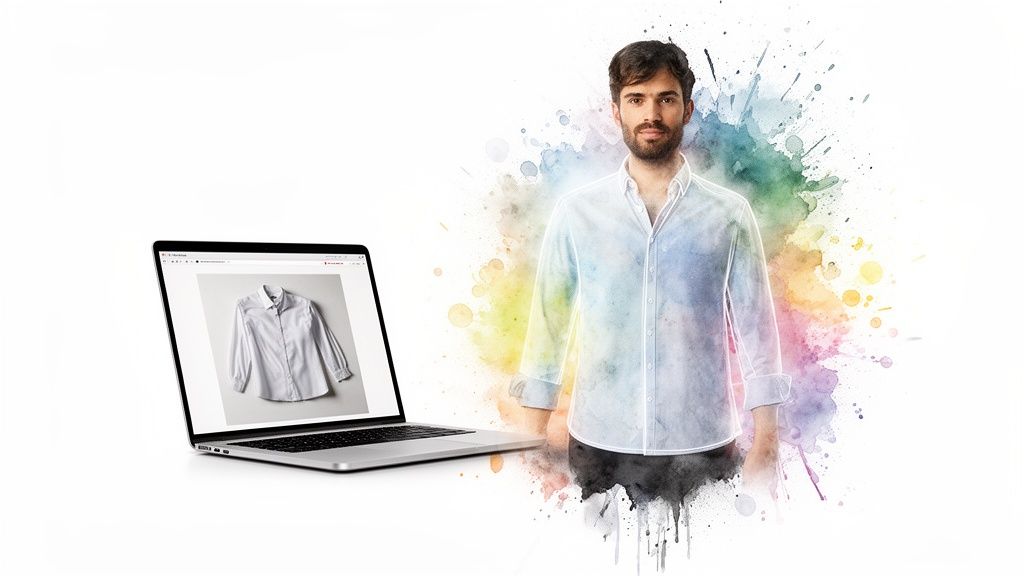
The whole point is to give you a quick visual preview, no strings attached. There are no accounts needed to get started. You just upload a picture of yourself, grab an image of a piece of clothing, and instantly see how the style vibes with your body.
It’s all about making it simple and immediate. In just a few seconds, you get a preview of how an item looks, which helps you make a much more confident call before it ever lands in your cart.
Shop Any Store, Any Time
What really makes this a game-changer is the free Chrome extension. I was determined to create something that wasn’t locked down to a single retailer. This tool works wherever you already love to shop.
Once installed, you can browse any of your go-to stores—think Zara, H&M, Shein, or even secondhand sites like Vinted or Depop. Find something you like, right-click the product photo, and boom! The extension instantly shows you what that piece looks like on your own photo. For the most accurate style preview, flat-lay clothing photos work best.
That simple right-click is the bridge between the convenience of online shopping and the confidence of an in-store fitting room. It takes you beyond generic model photos into a world where fashion becomes truly personal.
This immediate visual feedback lets you play with different styles and find new looks with absolutely zero risk. If you're curious about the tech making it all happen, you can dive deeper into virtual fitting room technology.
It's More Than Just Avoiding Returns
Sure, cutting down on the hassle of returns is a massive win, but the real fun is in the discovery. This is about empowering you to explore and define your personal style with more confidence than ever. Go ahead and experiment with that bold pattern or find the perfect Halloween costume without all the guesswork.
Every time you visualize a new outfit, the try-on automatically saves to your personal /history page, building a virtual closet of all the styles you've considered. It’s time to stop guessing and start seeing.
The Future of Retail Isn't a Battle, It's a Partnership
So, after digging through all the data, who's the champion in the great retail showdown? You might be expecting a clear winner, but the truth is, it’s a tie. The future isn’t about online versus in-store; it’s about creating a seamless experience where both worlds work together.
The online shopping vs in store statistics we've looked at make it crystal clear: shoppers are already living in this hybrid world. A massive number of us research products online before ever setting foot in a physical store to make the final decision. This isn't just a fleeting trend; it’s the new normal.
Welcome to the Phygital Shopping Era
This new model is all about playing to the strengths of each channel. Online shopping gives us endless aisles and the ultimate convenience for discovery. Physical stores, on the other hand, offer that instant gratification and tangible experience that a screen just can't match.
Imagine this: you're at home, curating your perfect style and seeing exactly how different outfits will look on your own photo. This is where digital tools completely change the game, turning casual browsing into a powerful, confident decision-making engine before you even think about your wallet.
The future of retail isn't a competition between channels, but a collaboration. Success will be defined by how well brands merge digital convenience with physical experience to serve a customer who shops everywhere.
This is exactly the vision behind TryThisFit. The app is designed to be a core part of this hybrid approach. It empowers you to explore, experiment, and make style choices with total confidence from your phone, making both your online and in-store trips better.
Your Next Move
So, what's the final word? It's time to dive into the future of shopping. Stop guessing and start seeing. Find out for yourself how visualizing fashion can completely transform the way you build your wardrobe, save you precious time, and eliminate the headache of returns for good.
Ready to see it in action? Try the app now at trythisfit.com and discover a much smarter way to shop.
Got Questions? I’ve Got Answers.
Still pondering the ins and outs of online vs. in-store shopping? Let's tackle some of the most common questions that come up when we dig into the data.
What's Really Fueling the E-Commerce Boom?
It really boils down to a potent mix of convenience and choice. Online stores offer an almost infinite aisle of products that brick-and-mortar shops just can't physically hold. It's a shopper's paradise.
Then you have the massive shift to mobile. Our phones are now personal, pocket-sized malls, making it ridiculously easy to shop from anywhere. Throw in exciting developments like social commerce, and it's easy to see why digital shopping is on such a tear.
Why Do We Return So Many Online Purchases?
The culprit here, especially in the world of fashion, is what I like to call the "expectation gap." It’s that sinking feeling when the dress that looked amazing on the model looks completely different when you pull it out of the box.
When you can't touch the fabric or see how an item hangs in person, you're essentially making an educated guess. This often leads to mismatches in style and overall appearance, which is why online return rates are so much higher.
How Can I Actually See How Clothes Will Look on Me Before I Buy Online?
That’s the exact challenge I created TryThisFit to fix! The app and free Chrome extension close that "expectation gap" by letting you see how a style will look on your own photo in seconds.
You can be browsing any of your favorite sites—from Zara and Shein to secondhand gems on Vinted—and use the extension's right-click feature. Just find a flat-lay photo of an item you're curious about, and the app works its magic. You get a virtual try-on that gives you a genuine feel for the style, helping you shop smarter.
You can install the Chrome extension in a couple of seconds and start seeing styles on yourself right away!
Ready to change the way you shop for good? See how different styles look on you before you add them to your cart with TryThisFit. Try it now for free at trythisfit.com
Try Virtual Try-On Now
See how clothes look on you before you buy - works with any online store
Get Started Free