Mastering Your Style: How to Build Wardrobe in 2026

Your closet probably looks busy right now. Hangers are packed, shelves are crowded, and you still keep reaching for the same few outfits because the rest of it doesn't feel right.
That's the actual problem. You don't need more clothes. You need a wardrobe with a point of view, a filter, and enough versatility that getting dressed feels easy instead of annoying.
The End of Nothing to Wear Days
A full closet and a useful wardrobe are not the same thing. This lesson often comes at a high price.
The average woman spends between $1,800 and $4,800 annually on clothing, yet wears less than 50% of the items she owns, according to this wardrobe-building discussion. That's not a shopping problem. It's a selection problem.
You don't fix that by buying another “fun top.” You fix it by deciding what your wardrobe needs to do for your actual life.
What a good wardrobe actually does
A strong wardrobe should make three things happen:
- Getting dressed gets faster because most pieces work together.
- Your outfits feel more like you because the clothes match your taste instead of random impulses.
- You waste less money because each new purchase fills a gap.
That's how to build wardrobe the smart way. Start with purpose, not product.
Practical rule: If an item only works with one specific mood, one specific shoe, or one imaginary future event, it's probably not a foundation piece.
Stop treating shopping like entertainment
Shopping is fun. A wardrobe is infrastructure.
When you separate those two ideas, everything gets clearer. You stop buying duplicates, stop collecting almost-right pieces, and stop keeping clothes that looked good on a product page but never earned a place in your weekly rotation.
Use this guide like a reset. You're going to define your style, clean out what's not serving you, build a tight core wardrobe, and keep it useful long after the excitement of a closet refresh wears off.
Discover Your Personal Style Signature
Most wardrobes fail before the first hanger moves. People rush into buying pieces without deciding what they want to look like.
That matters because 78% of individuals fail to build a functional wardrobe due to rushing the process without defining personal style, as noted in this wardrobe guide. If your style is fuzzy, your shopping will be sloppy.
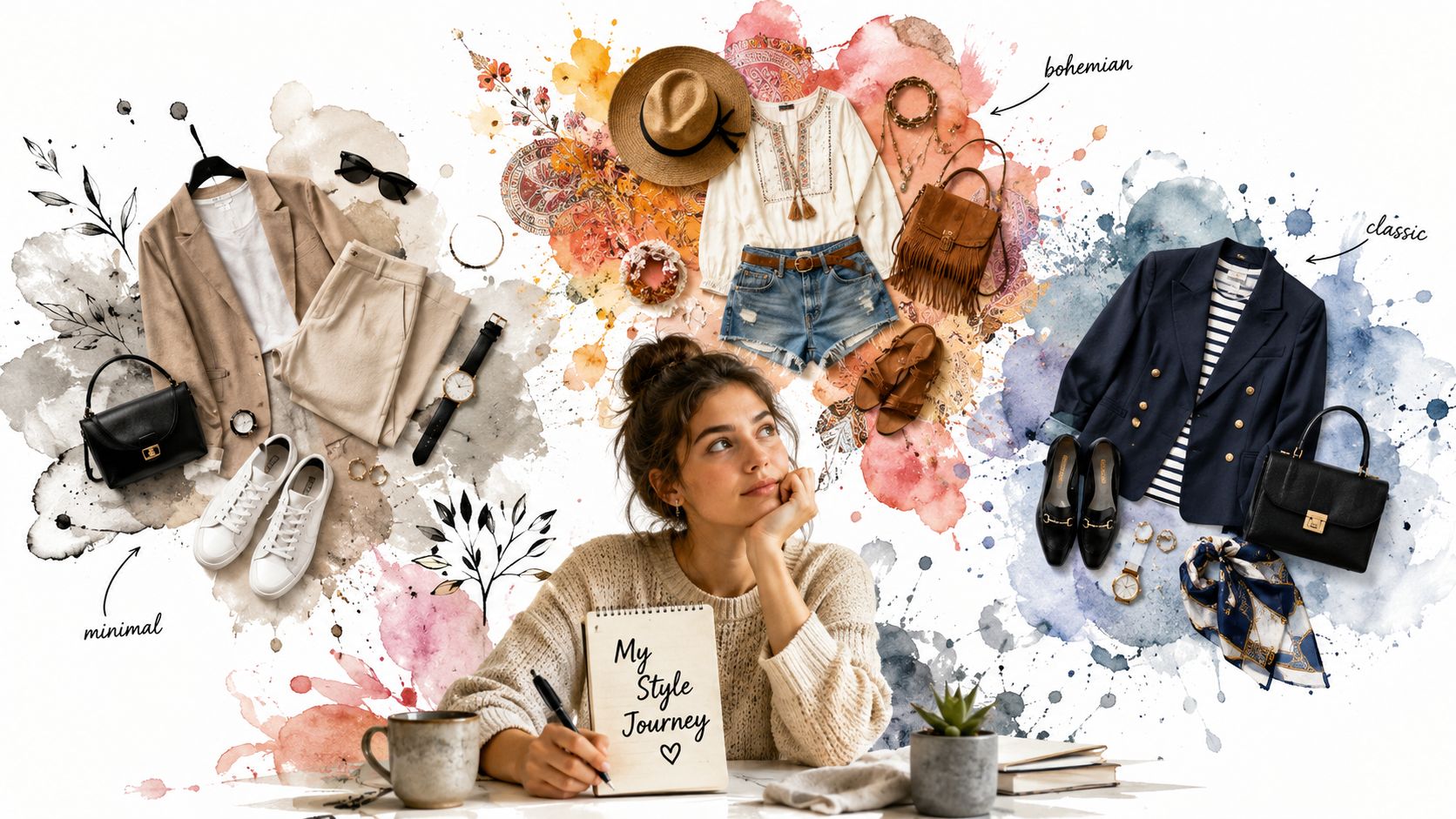
Build a visual reference first
Don't start with a shopping cart. Start with images.
Save outfits that make immediate sense to you. Not outfits you admire on someone else. Outfits you'd wear to work, lunch, travel, errands, dinners, and low-effort days. If you need a helpful starting point, this whimsical personal style guide is a good reminder that style gets easier when you collect visual clues instead of chasing labels.
Then look for patterns:
- Repeated silhouettes like straight-leg trousers, oversized shirts, fitted knits, midi skirts
- Repeated mood like polished, relaxed, artsy, classic, sporty
- Repeated details like gold jewelry, clean lines, denim layers, soft drape
If you want extra guidance, the TryThisFit guide to finding your fashion style is useful for narrowing your look into something practical.
Choose a tight color direction
This is often overcomplicated. You don't need a rainbow. You need coordination.
Pick a few neutrals you'll wear constantly, then a small number of accent colors you enjoy seeing on yourself. A wardrobe works better when your tops, bottoms, layers, and shoes don't fight each other.
A simple color direction might look like this:
| Role | Good examples |
|---|---|
| Core neutrals | black, white, camel, gray |
| Secondary base | denim, olive, navy |
| Accent colors | burgundy, soft blue, forest green |
Dress for your real calendar
Your wardrobe should match your weekly life, not your fantasy life.
If you work from home, you probably need polished comfort. If you commute, you need layers and shoes that can survive movement. If your weekends are active, build around that instead of forcing yourself into clothes that only work for a version of you that rarely appears.
Save one folder called “my real outfits.” Put only realistic looks in it. That folder is more valuable than a hundred trend posts.
The Great Closet Audit and Detox
You can't build a better wardrobe on top of clutter. The mess has to go first.
Recent data shows people own an average of 144 pieces of clothing, and a curated wardrobe works better when every item gets used, according to Capsule Wardrobe Data. If your closet feels chaotic, the volume is probably part of the problem.
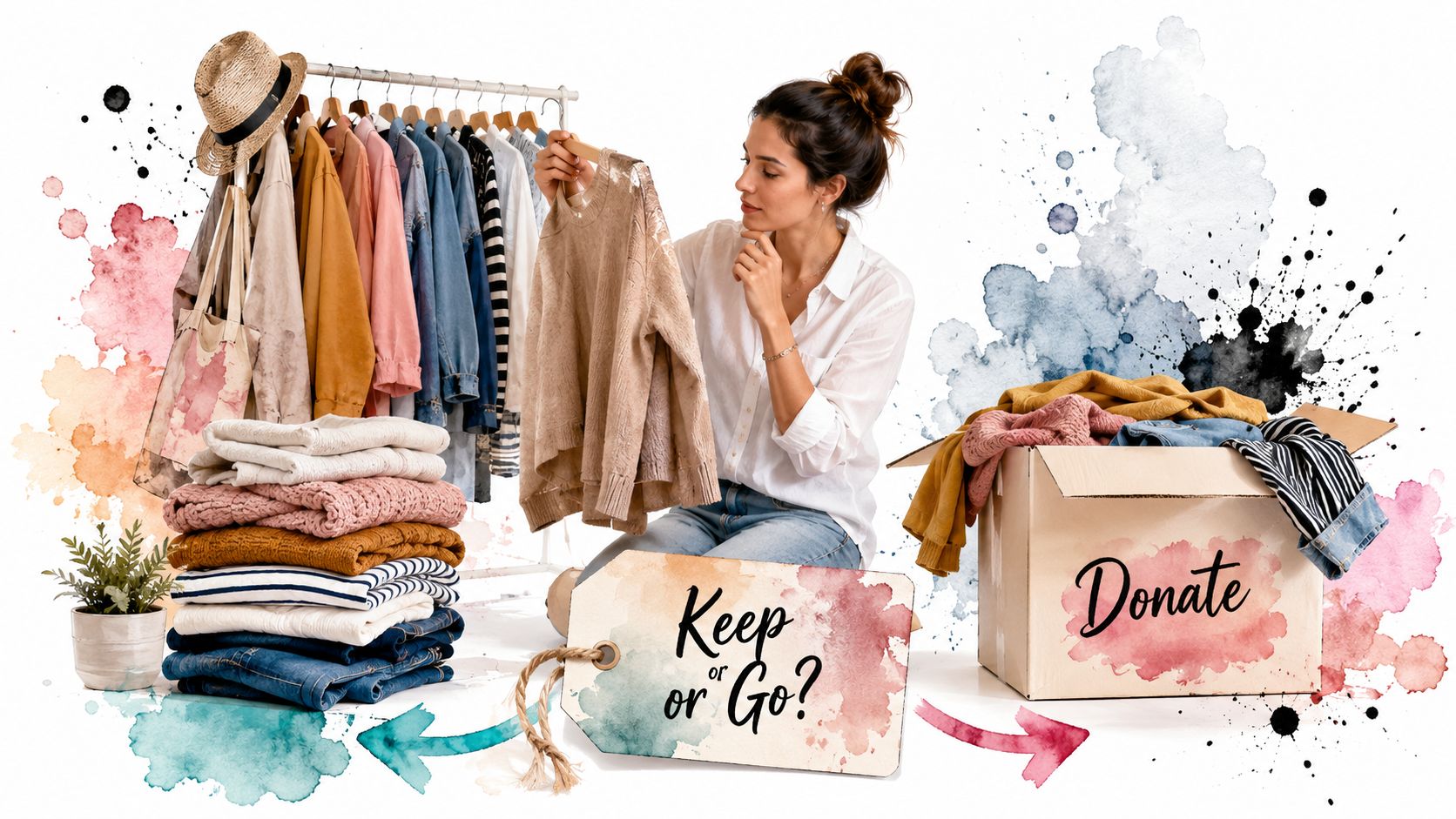
Take everything out
Yes, everything.
Leaving items in the closet makes it too easy to avoid decisions. Put every category where you can see it. Tops, jeans, skirts, dresses, outerwear, shoes, bags. Once it's all visible, you'll notice duplicates, awkward impulse buys, and pieces you forgot existed.
If you want a practical reset process, the shop your closet approach helps you look at what you already own before adding anything new.
Use four piles, not endless maybes
Keep this simple. Four piles are enough.
- Keep. Pieces that fit your style, feel good on, and earn regular wear.
- Alter. Good items that need a hem, button, tailoring, or small repair.
- Store. Off-season items or sentimental pieces that don't need daily closet space.
- Donate or sell. Clothes that no longer suit your body, life, taste, or standards.
The key question is brutally effective: would you buy this again today?
If the answer is no, stop negotiating with it.
Audit by performance, not guilt
Clothes don't deserve a place in your wardrobe because they were expensive, trendy, gifted, or once useful. They earn space by performing now.
Check each item against these criteria:
- Fit in your life. Does it suit your routine?
- Fit in your style. Does it look like the person you want to present?
- Fit in your combinations. Can you wear it with multiple things you already own?
Closet test: If you have to invent a scenario to justify an item, it should leave.
A clean closet gives you something surprisingly valuable. It shows your gaps clearly. Once the noise is gone, the next purchases become obvious instead of random.
Build Your Core Capsule Wardrobe
A capsule wardrobe isn't about deprivation. It's about versatility.
The best pieces do heavy lifting. They combine easily, survive trend shifts, and keep you from buying panic outfits for ordinary days. A structured system helps, and the 5-4-3-2-1 model has been linked to 65% higher outfit satisfaction and reduced overconsumption in this capsule wardrobe framework.
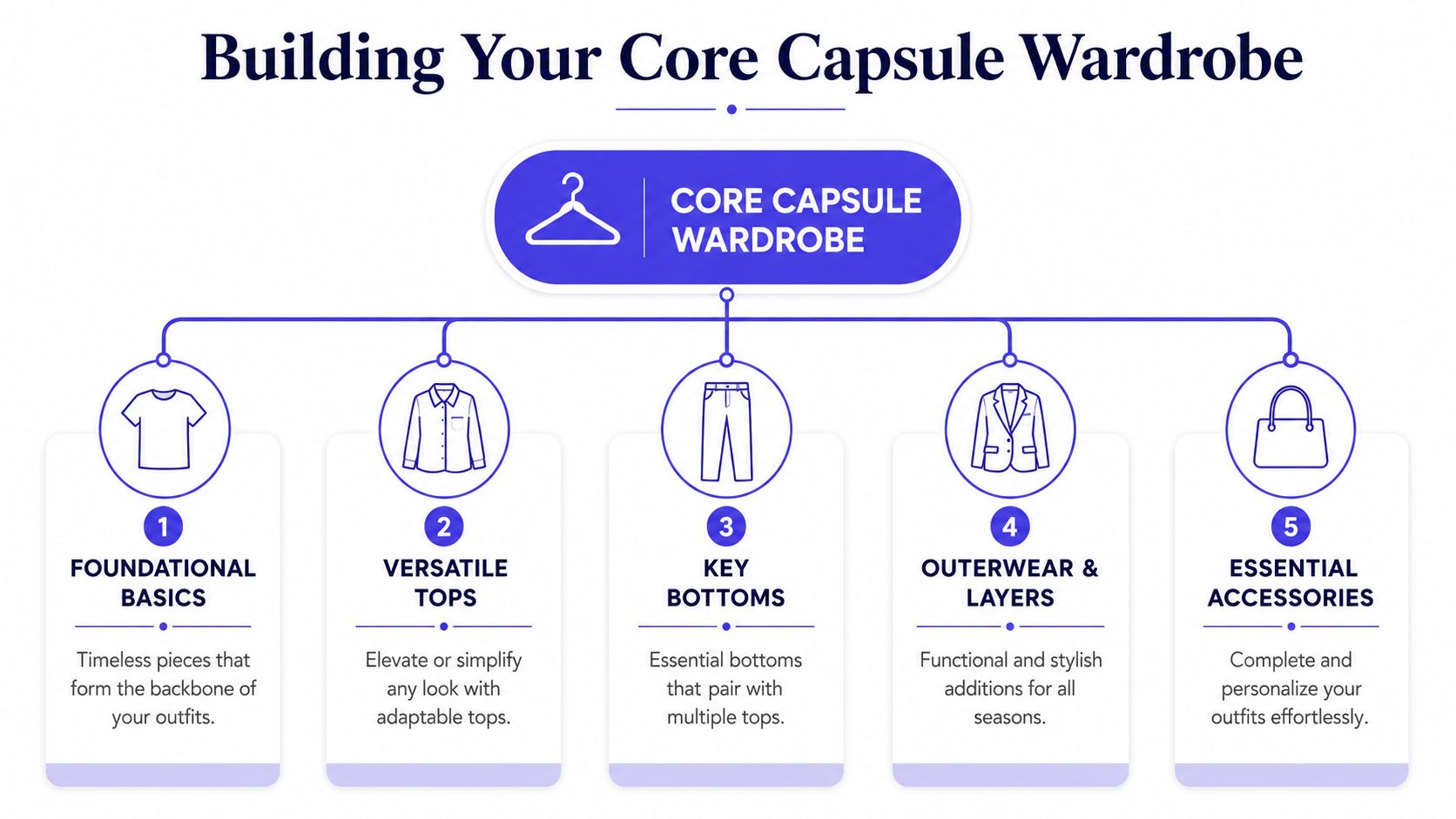
Use the 5-4-3-2-1 model as your base
This is one of the cleanest ways to answer the question of how to build wardrobe without spiraling into overbuying.
-
5 tops
Think balance, not repetition. A tee, a knit, a button-down, a dressier top, and one easy everyday favorite is a strong mix. -
4 bottoms
Build around your actual habits. That might mean two jeans, one trouser, one skirt. Or one jean, two trousers, one relaxed pant if you dress more polished than casual. -
3 layers
Layers make outfits look finished. A blazer, cardigan, denim jacket, trench, or lightweight coat can transform basic pieces. -
2 pairs of shoes One casual, one polished. If both work with almost everything, the rest of your wardrobe gets easier.
-
1 special item
This is the personality piece. A great coat, statement dress, patterned jacket, or standout bag.
What each category should do
Don't buy categories just to complete a checklist. Buy pieces that serve a function.
| Category | What to prioritize |
|---|---|
| Tops | easy layering, flattering neckline, repeat wear |
| Bottoms | clean fit, comfort while moving, multiple outfit pairings |
| Layers | structure, warmth, polish |
| Shoes | comfort and versatility |
| Special item | personality without limiting styling options |
Spend where repetition happens
You don't need luxury. You do need quality in the pieces you wear hardest.
If you wear a jacket constantly, pay attention to fabric, shape, and finishing. The same logic applies to trousers, denim, and shoes. Daily-wear items deserve more scrutiny than novelty pieces because they set the tone for your whole wardrobe.
Here's the simplest buying filter I use:
- If it's basic, it must be excellent
- If it's trendy, it must still work with your basics
- If it's special, it must still feel like you
A wardrobe gets stronger when the basics are reliable and the personality pieces are selective.
Keep your capsule personal
A polished wardrobe for a corporate office won't look like one built for remote work, parenting, creative freelancing, or frequent travel.
That's why rigid “must-have” lists often fail. Use the structure, then customize the content. The right capsule is the one you'll wear, not the one that looks smartest on paper.
Shop Smarter with Virtual Try-Ons
Online shopping gets expensive when you confuse product photos with certainty. Clothes can look fantastic on a retailer's page and still feel wrong for your style once they arrive.
That's one reason returns are such a mess. Approximately 20-30% of all online clothing purchases are returned, with appearance being a primary reason, according to this discussion of virtual try-on use cases. If you shop online often, you need a better decision process before checkout.
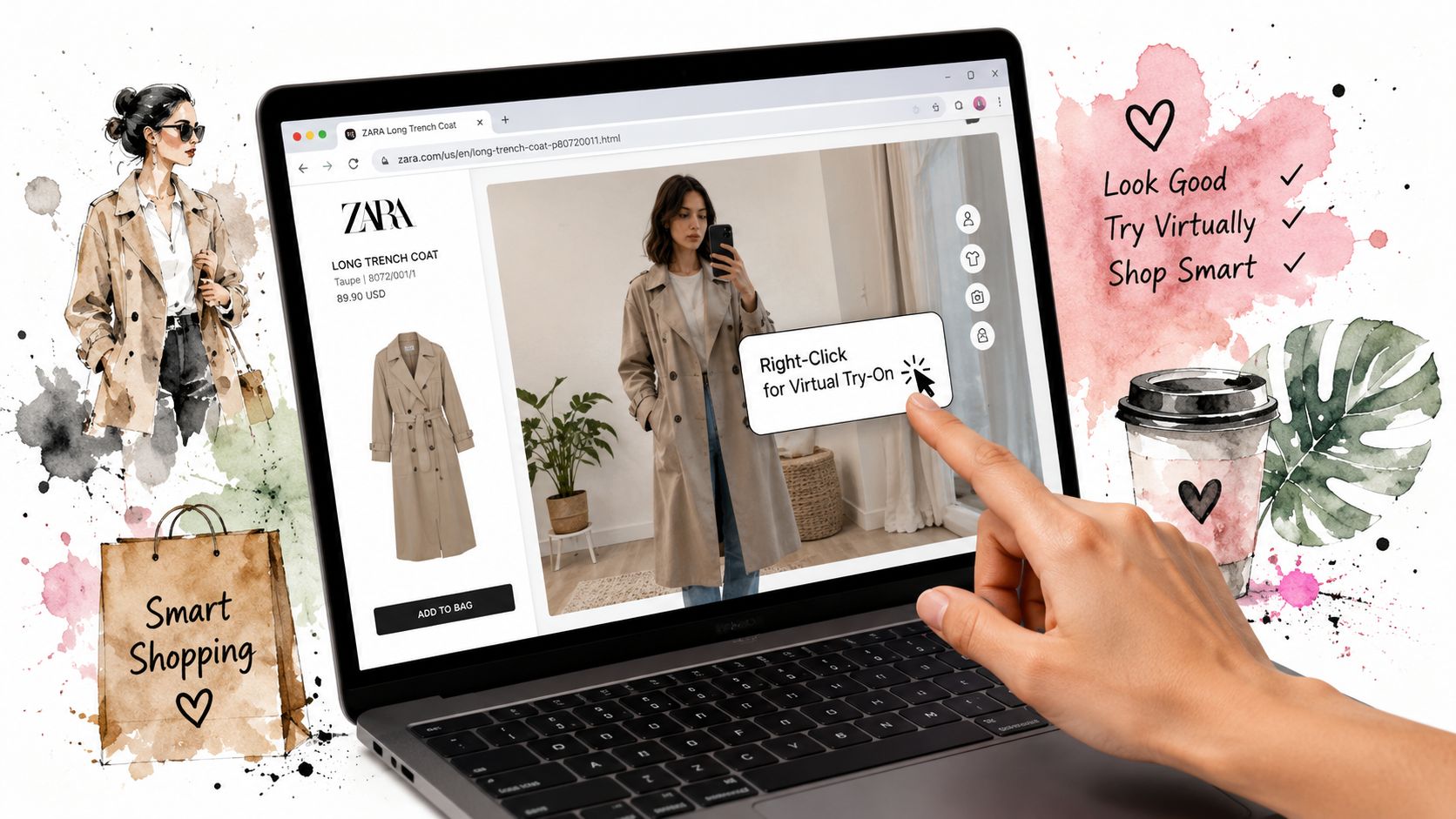
Use visual previewing before you buy
I prefer using a virtual styling tool instead of guessing. The purpose isn't to determine exact sizing. Instead, it allows you to see how it looks, visualize the style, and preview the appearance before you commit.
That's especially useful when you're comparing silhouettes, colors, necklines, lengths, or statement pieces. A product page rarely tells you whether a trench feels chic on you or just bulky.
The virtual try-on tool makes that process much easier because you can preview appearance instead of relying on imagination.

Flat-lay images usually give the cleanest preview
This matters more than is often realized. Flat-lay clothing photos tend to work best for the most accurate visual result.
That's convenient because many big retailers use exactly those image styles. If you browse Zara, H&M, Amazon, Shein, Vinted, or Depop, you'll often find product shots that are ideal for quick visual previews.
For Amazon fashion browsing, use the Amazon shopping link when you want to compare pieces in one session.
The fast way to use it while shopping
The best setup is the Chrome extension. It installs in a couple of seconds, needs no account to get started, and works on any site through a right-click action.
That means you can browse normally, right-click a product image, and get an instant preview without downloading images or opening a maze of extra tabs. It's a much better workflow for building a wardrobe because you can check style consistency while you shop.
If you want the quickest route, install the free Chrome extension and use it directly on Zara, H&M, Amazon, Shein, Vinted, and Depop.
Here's a quick visual walkthrough:
<iframe width="100%" style="aspect-ratio: 16 / 9;" src="https://www.youtube.com/embed/QGVXY6V_dCs" frameborder="0" allow="autoplay; encrypted-media" allowfullscreen></iframe>Where it's most useful
Virtual try-ons are most helpful when the item is visually specific.
- Secondhand shopping because you can't try things on before buying.
- Statement pieces like coats, dresses, blouses, or shoes that change the whole outfit.
- Costume shopping including Halloween looks where appearance matters more than basics.
- Retailer comparison when you're choosing between similar items across sites.
If you want to keep your strongest previews organized, save the ones you like and review them later in your try-on history.
Try it now at TryThisFit. If you shop online often, this is the easiest way I know to see how a piece looks before it turns into another return.
Maintain and Enjoy Your Curated Wardrobe
A great wardrobe falls apart when you treat it carelessly. Maintenance is what keeps the closet feeling sharp instead of slowly drifting back into chaos.
The fix isn't complicated. Protect the clothes, rotate them properly, and stop letting new purchases pile on top of old habits.
Care for the pieces you count on
Start with the obvious basics that people ignore.
- Use decent hangers so jackets, shirts, and knits keep their shape.
- Read care labels instead of throwing everything into one aggressive wash cycle.
- Handle repairs quickly because a loose hem or missing button becomes a reason not to wear something.
If you own tailoring or formalwear, don't over-clean it. This practical guide on how to avoid over-cleaning fine suits is worth bookmarking.
Good style often looks expensive because the clothes are maintained, not because they cost the most.
Rotate by season and visibility
Your closet should show what you can wear now. Everything else should move out of the way.
Store off-season pieces separately so your daily wardrobe stays clear and relevant. Under-bed bins, garment bags, and labeled storage boxes are enough. You don't need a perfect system. You need a visible one.
A useful closet has these qualities:
| Area | Best use |
|---|---|
| Eye-level rail | current season favorites |
| Shelves | knits, denim, bags |
| Storage bins | off-season items |
| Small tray or box | belts, jewelry, daily accessories |
Use one in, one out
This rule works because it stops excuses.
When something new comes in, something old should leave or move to storage. That keeps your wardrobe edited and forces each purchase to compete for space. If the new item isn't better than what you already own, don't buy it.
Best habit: Review your wardrobe in small doses. Ten minutes every month is better than one giant cleanup every two years.
A wardrobe you love shouldn't feel precious or stressful. It should feel usable. That's the whole point.
If you want a faster, more visual way to build a wardrobe you'll actually wear, try TryThisFit. You can preview how clothes look on you in seconds, test styles before you buy, use the main app without an account, and install the free Chrome extension for instant right-click try-ons on any shopping site.
Try Virtual Try-On Now
See how clothes look on you before you buy - works with any online store
Get Started Free