Shop Your Closet: A Visual Guide to A Wardrobe You Love

Your closet is probably fuller than it feels.
You open the doors, scan the hangers, touch the same few pieces, and somehow still land on the same thought: I have nothing to wear. Then later, while looking for one black tank or that one pair of trousers, you find three forgotten tops, a jacket you loved last year, and a dress you never even gave a real chance.
That’s why I love the idea of shop your closet. It isn’t about restricting yourself or pretending you’ll never want anything new again. It’s about seeing what you already own with fresh eyes, styling it in ways you haven’t tried yet, and making your wardrobe feel exciting again.
Why Your Perfect Outfit Is Already in Your Closet
A packed closet can be weirdly deceptive.
It looks like abundance, but it often behaves like a tiny wardrobe because only a small slice of it is visible in your daily routine. You reach for what’s easy, what’s familiar, what’s hanging at eye level, and the rest fades into the background.
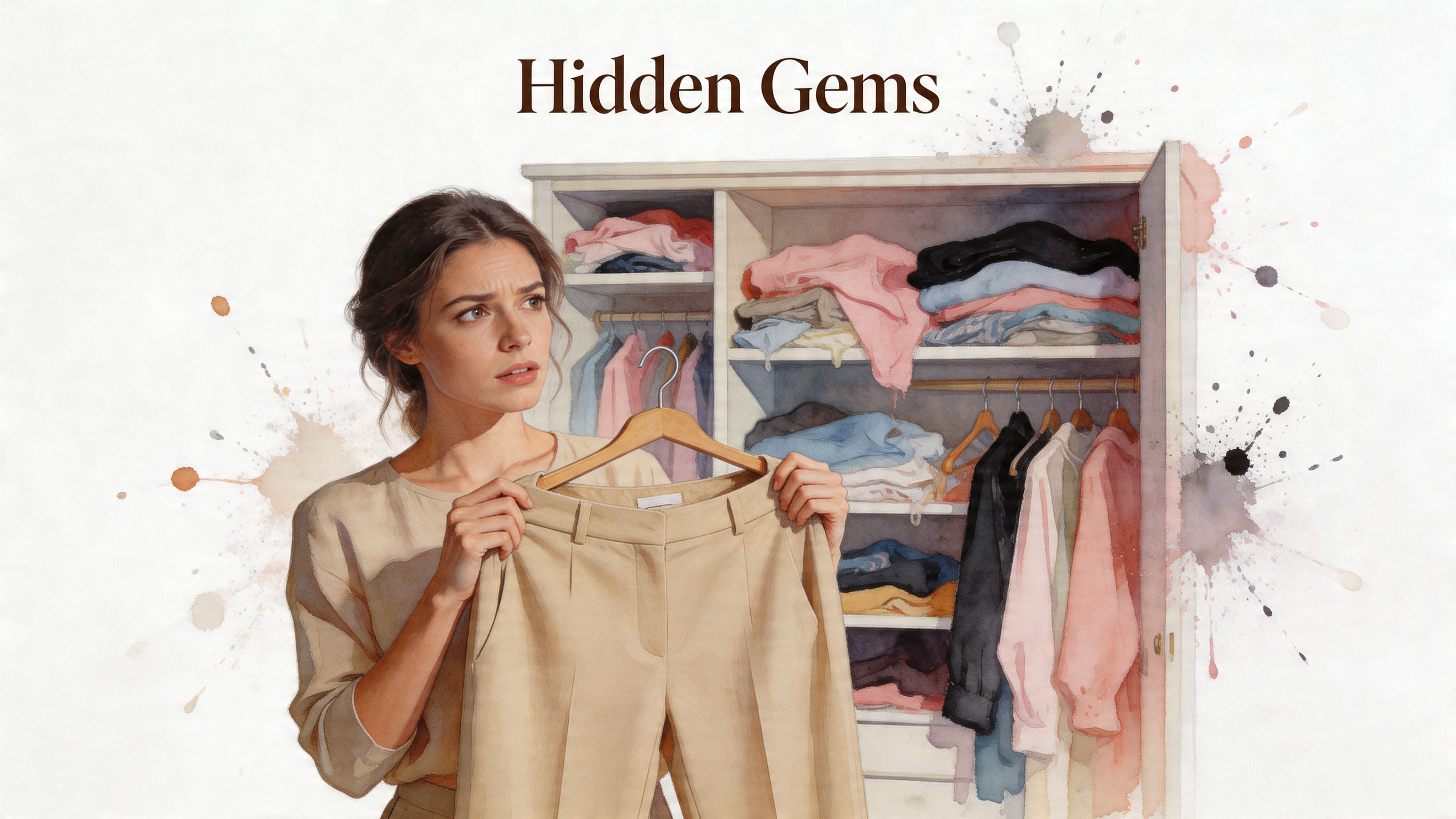
That’s more common than generally understood. The average wardrobe contains around 148 to 166 clothing items, yet global wardrobe utilization rates hover at just 20-30%, meaning people regularly wear only about 30-50 items from their collection (capsulewardrobedata.com). In plain English, most of your closet may be sitting there as untapped potential.
Why clothes disappear in plain sight
Some pieces get ignored because they need styling effort.
A satin skirt might feel “too much” on a random Tuesday until you pair it with a sweatshirt and sneakers. A crisp button-down might seem boring until you half-tuck it over relaxed jeans and add a belt. Even a basic tee can feel new when you try one of these ideas for style t-shirts with knots.
Other clothes disappear because they belong to a version of you that’s slightly outdated. Not wrong. Just old.
That blazer from a previous office dress code. Those heels you bought for a specific phase. The printed top you liked in the store but never quite knew how to wear. Shopping your closet helps you sort out what’s still you, what needs a new pairing, and what can leave without guilt.
Shopping your closet works best when you treat it like creative play, not a punishment for buying too much.
The hidden value of what you already own
Many of us don’t need more outfit options. We need more outfit visibility.
That shift matters. When you stop asking “What should I buy?” and start asking “What else can this piece do?”, your wardrobe opens up fast.
A cardigan becomes a top when buttoned and tucked. A dress becomes a layering piece under a sweater. Trousers you only wore to work suddenly make sense with a tank and flat sandals.
That’s the fun of this whole process. You’re not starting from zero. You’re rediscovering a room full of raw material that can become something much better than a random shopping haul.
The Ultimate Wardrobe Audit to Rediscover Your Style
A good closet audit feels less like cleaning and more like excavation.
You’re pulling your style back into view. And the goal isn’t perfection. The goal is to figure out what you love wearing, what confuses you, and what keeps getting in the way.
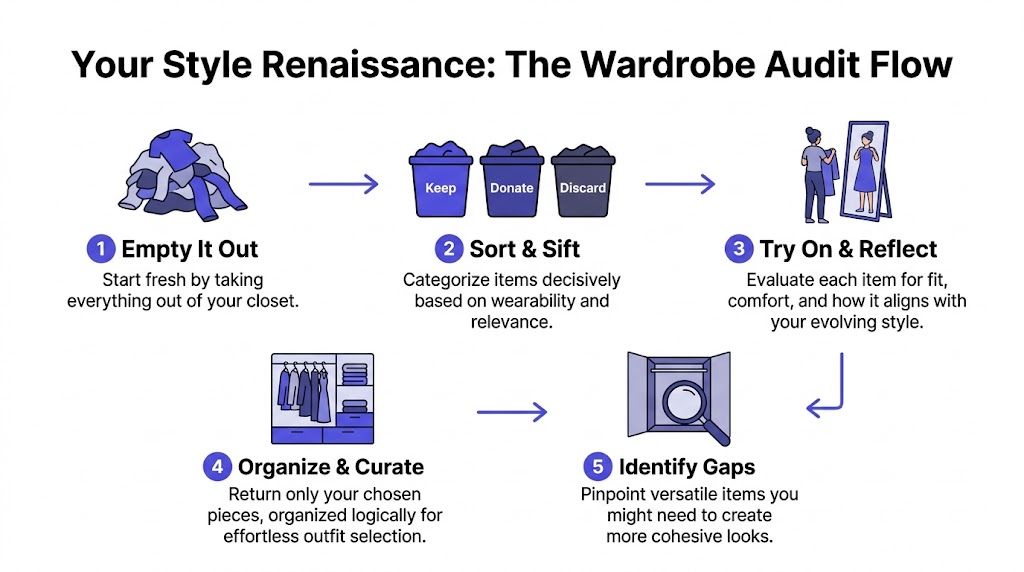
There’s a reason this works so well. The 20/80 rule in wardrobe utilization, where individuals wear 20% of their closet 80% of the time, is the key principle behind a successful closet audit (goodonyou.eco). Once you identify that core 20%, the rest of your decisions get easier.
Start with three piles
Pull everything out where you can see it.
Bed, chair, floor, clothing rack, whatever works. Visual overwhelm is part of the point. It helps you notice duplicates, random one-off purchases, and categories that have steadily taken over your wardrobe.
Make three piles:
- Love and wear: Pieces you reach for often, or always feel good in.
- Maybe: Items you want to like, but don’t wear consistently.
- No longer me: Pieces that no longer match your life, taste, or comfort.
Don’t overthink the first round. Fast instincts are useful here.
Try on the maybe pile
Readers commonly get stuck at this point.
They assume every maybe item deserves a complicated debate. It doesn’t. Put it on and ask simpler questions.
- Do I like the style on me: Not “Should I like this?” but “Do I enjoy the look?”
- Can I build outfits from it: Could it work with several pieces you already kept?
- Would I choose it this month: If not, it may be a fantasy item, not a real wardrobe item.
Practical rule: If a piece only works with one exact shoe, one exact bra, or one exact mood, it probably isn’t pulling its weight.
Look for patterns, not guilt
Your audit gets useful when you stop judging and start spotting patterns.
Maybe you own lots of statement tops but not enough easy bottoms. Maybe your color palette is all over the place. Maybe you keep buying special-occasion pieces when what you need is everyday layers.
A simple way to capture what you learn is a mini chart like this:
| What you notice | What it usually means |
|---|---|
| Too many similar tops | You shop for novelty, not outfit building |
| Great basics, no finishing pieces | Outfits feel flat or unfinished |
| Several “someday” items | Your closet is holding fantasy purchases |
| Hardly any layers or shoes | Outfits stall before they feel complete |
If you want help narrowing your keep pile into something more flexible, this guide on building a capsule wardrobe is useful: https://trythisfit.com/how-to-build-a-capsule-wardrobe
You can also get ideas from practical closet organization systems that make your wardrobe easier to see and use after the audit is done.
Keep what supports your real life
A curated closet should match your actual week.
If you mostly live in denim, flats, knitwear, and casual jackets, your wardrobe should support that. If you go to events often, your closet should still include those pieces, but not at the expense of your daily life.
The best closet edits feel lighter almost immediately. You can see more. You can think more clearly. You stop getting distracted by clothes that aren’t helping you get dressed.
Digitize Your Wardrobe for Endless Outfit Ideas
Once you’ve decided what stays, the next move is simple. Turn your keep pile into something you can browse.
That means taking photos of your clothes and building a visual closet on your phone. This is the point where shop your closet stops being a nice idea and starts becoming practical.

Flat-lay photos make this easier
You do not need a studio setup.
A phone camera, daylight, and a little floor space are enough. Lay each item flat on a bed, rug, or clean section of floor. Smooth it out so the shape is visible. Those flat-lay clothing photos work best when you want a clean style preview later.
A few quick tips help a lot:
- Use even light: Window light is usually enough.
- Keep the background plain: Less visual noise makes the clothing clearer.
- Photograph categories together: Tops first, then pants, then dresses, then layers.
- Skip perfection: Clear and usable beats artistic and slow.
Why a digital closet changes everything
Physical closets hide things.
Digital closets reveal them. When your clothes become little visual cards on a screen, it’s easier to notice what pairs well, what repeats, and what’s missing.
You’ll also stop forgetting your own stuff. That floral blouse tucked behind winter coats. The white jeans in the bottom drawer. The cropped jacket that only makes sense when you see it next to high-waisted pants.
For a deeper look at this setup, the digital closet app page is a helpful starting point: https://trythisfit.com/digital-closet-app
Your digital closet doesn’t need to include every sock and workout tee. Start with the pieces you actually style.
Make your wardrobe feel browseable
The best part of digitizing your closet is psychological.
Your clothes stop feeling like clutter and start feeling like options. You can scroll through tops while sitting on the couch. You can compare jackets without digging through a packed rail. You can build combinations when you’re calm, instead of rushing five minutes before leaving.
That changes how people shop their closet. It becomes visual.
You’re no longer trying to remember what you own. You can see it.
A simple way to organize the photos
If you want this to stay manageable, group pieces by function rather than by strict fashion category.
Try buckets like:
- Easy everyday tops
- Statement pieces
- Reliable bottoms
- Layers that finish a look
- Event pieces
- Shoes and accessories
That structure mirrors how people get dressed. It also makes outfit planning feel much faster because you can move from base piece to finishing layer without scrolling forever.
Plan Seasonal Looks and Event Outfits in Seconds
The magic starts to feel real now.
Once your wardrobe is visible on your phone, outfit planning stops being a last-minute scramble. You can build looks ahead of time for work, travel, dinners, weekends, holidays, or one oddly specific event that used to send you straight into panic-buy mode.
Build around one anchor piece
Most strong outfits start with one clear anchor.
That could be wide-leg trousers, a slip skirt, a striped knit, or a jacket you love but don’t wear enough. Choose one item, then test different partners around it.
A few examples:
- For a work week: One pair of trousers can become polished, relaxed, or creative depending on the top and shoes.
- For a trip: A single jacket can tie together jeans, dresses, and lightweight layers.
- For an event: A dress you’ve already worn can feel different with a new shoe, bag, layer, or hair accessory.
This is why digital outfit planning saves so much mental energy. You don’t have to physically pull six versions of the same look out of the closet to compare them.
Seasonal planning gets calmer
Many don’t need a brand-new wardrobe each season. They need a cleaner transition.
When weather shifts, pull a small group of pieces into a temporary visual set. Think linen pants, cardigans, denim jackets, ankle boots, tanks, or whatever makes sense for your climate. Then experiment with combinations before the season gets busy.
That also helps with event dressing. Wedding guest outfit. Weekend away. Family photos. Halloween costume. Instead of buying first and hoping later, you can see what style direction feels right before committing.
The fastest way to get more from your wardrobe is to pre-plan a few looks when you’re relaxed, not when you’re late.
Keep a record of what you tried
One sneaky problem with style experiments is memory.
You try an outfit, think “that’s interesting,” and then completely forget it existed. According to the assigned source, users who log their looks wear up to 42% more of their items compared to those who rely on memory alone (youtube.com/watch?v=E2dLGNJKvLI).
That’s why saving outfit experiments matters. A visual history helps you notice what you keep returning to, what combinations surprised you, and which pieces deserve more airtime.
If you want a simple place to review saved try-ons and style experiments, the history page is here: https://trythisfit.com/history
Create mini lookbooks for real life
You don’t need a giant fashion archive.
A tiny lookbook works. Five office outfits. Three travel outfits. Two dinner looks. One backup plan for a rainy day. That’s enough to make daily dressing easier and make your wardrobe feel much more cooperative.
A useful habit is naming your outfit groups by situation, not season. “Coffee meeting.” “Museum day.” “Date night but comfortable.” “Plane outfit.” “Holiday party option.” Those labels are easier to use when you’re getting dressed in everyday life.
Shop Smarter and End Returns with Virtual Try-Ons
Shopping your closet gets much stronger when it includes the clothes you’re thinking about buying.
That’s the gap most advice misses. You edit your wardrobe, organize it, maybe even photograph it, and then the minute you open Zara, H&M, Amazon, Shein, Vinted, or Depop, you’re back to guessing whether a piece will work with what you own.
See the style before you buy
Visual preview tools are useful here.
The point isn’t to promise sizing or tell you whether something will physically fit. The benefit is being able to see how it looks, preview the style, and decide whether that item belongs in your wardrobe story at all.
That matters even more in resale shopping. With the secondhand market growing 15% year-over-year, “fit uncertainty” is the top barrier for 68% of buyers on sites like Vinted and Depop (youtube playlist reference). When listings only give you a couple of photos, visualizing the appearance of the item with your own wardrobe becomes much more useful.
The right-click shortcut changes the process
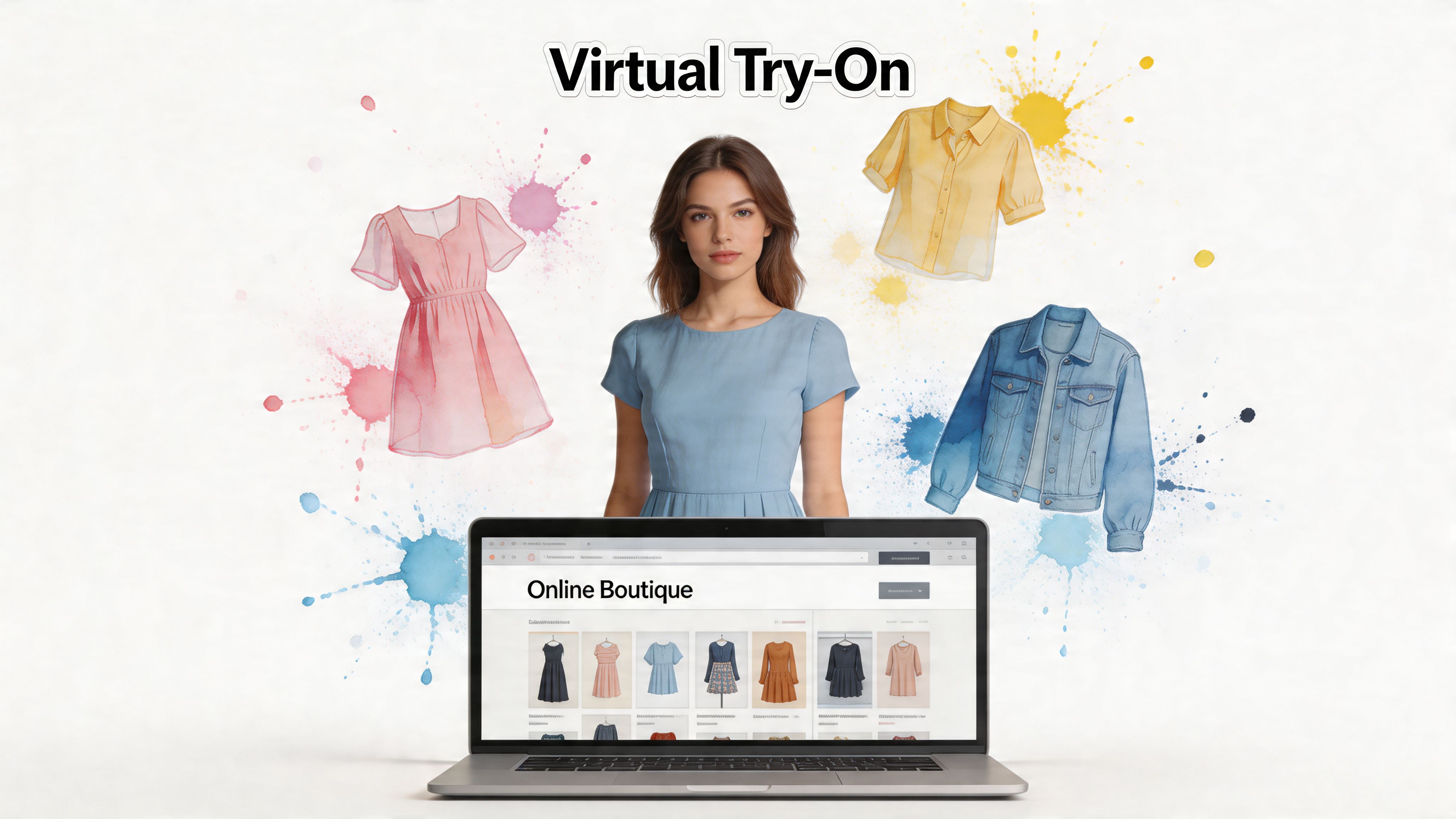
One practical option is TryThisFit, which lets you upload photos and preview how clothing looks on a person without creating an account. Flat-lay photos usually give the cleanest result, and the free Chrome extension adds a right-click feature so you can browse a store and preview an item in seconds.
That right-click flow is the part I find especially interesting for shop-your-closet planning. You can be on Zara or H&M, spot a coat, and quickly see the style next to your own trousers or knitwear. The same idea works on resale sites and on Amazon fashion listings.
If you want that browser setup, the Chrome extension is here: https://trythisfit.com/go/extension/chrome
Use new purchases as puzzle pieces, not random additions
A good online purchase should snap into your current wardrobe.
Before buying, ask:
- Can I picture three outfits with items I already own
- Does this add a shape or mood I’m missing
- Am I excited about the look, or just the product photo
- Would this still make sense if I weren’t shopping for one event
Those questions are much easier to answer when you can preview appearance instead of relying on imagination.
Here’s a quick demo view:
<iframe width="100%" style="aspect-ratio: 16 / 9;" src="https://www.youtube.com/embed/1LQ2345lANM" frameborder="0" allow="autoplay; encrypted-media" allowfullscreen></iframe>Why this helps reduce return regret
A lot of returns happen before the package even arrives, mentally speaking.
You buy the fantasy. Then the item shows up and you realize the color fights your wardrobe, the shape isn’t your style, or it doesn’t create the vibe you had in mind. A visual preview won’t answer every shopping question, but it can catch plenty of style mismatches early.
If you’re comparing different garment silhouettes online and want extra context, this page may also be useful: https://trythisfit.com/ai-body-measurements
The broader habit is what matters most. Shop your closet first. Then, if you buy something new, make sure it has a visible job to do.
Your Questions Answered About Shopping Your Closet
Do I need a fancy camera
No. Your phone is enough.
Good light and clear photos matter much more than expensive equipment. If you’re uploading your own clothes for visual previews, flat-lay photos usually work best because they show the shape of the garment cleanly.
Is this only for people with minimalist wardrobes
Not at all.
This works whether your closet is tiny, packed, colorful, neutral, trend-heavy, or very classic. Shopping your closet is really about visibility and decision-making. It helps you use what you have more intentionally.
What if I’m not tech-savvy
Keep it simple.
Start with a handful of items you wear often. Photograph them. Save them in categories. If you want to preview online items too, browser tools that work without account setup are usually less intimidating than apps with lots of menus.
If a tool saves you from guessing, digging, and re-buying similar pieces, it’s doing its job.
Can I use this for secondhand shopping
Yes, and that’s one of the most useful cases.
Secondhand shopping is fun, but the photos can be limited and styling can be hard to imagine. If you can preview the appearance of a resale piece with clothes you already own, you make calmer decisions.
Does this work for different body types
Yes.
Visual styling tools can help you see how a look appears on different shapes, especially when you upload your own photo or choose from different model options. The goal is style visualization, not guaranteeing sizing.
Is my data private
If privacy matters to you, check the product’s policy before uploading anything.
In this case, the project is built by a solo founder and the stated approach is that user data is private and never sold. That’s worth looking for in any style tool you use.
What if I only want to use it occasionally
That’s completely fine.
Some people use shop-your-closet methods every week. Others only do a reset before a season change, a trip, or a shopping binge they’d rather avoid. Even occasional use can make your wardrobe feel more coherent and easier to enjoy.
If your closet feels crowded but uninspiring, try a visual reset at TryThisFit. You can preview how clothes look, experiment with outfits, save ideas, and use the Chrome extension for quick right-click try-ons on shopping sites, all without creating an account.
Try Virtual Try-On Now
See how clothes look on you before you buy - works with any online store
Get Started Free