10 Jewelry Styling Tips to Elevate Every Outfit
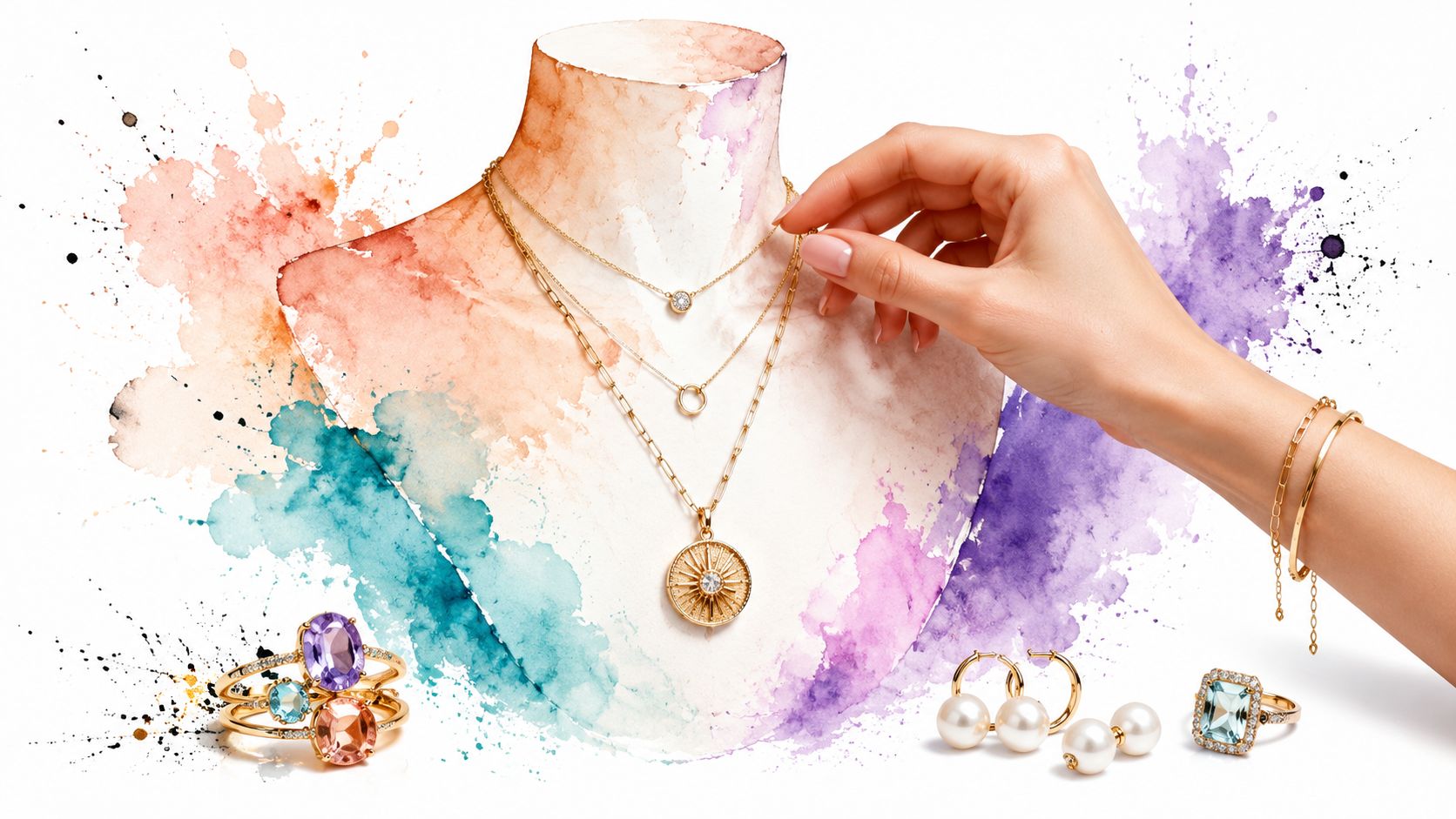
You put on a simple black top, reach for your jewelry, and suddenly every option feels wrong together. The hoops look too casual, the layered chains fight the neckline, and the ring stack that looked great in the box feels busy once it's on. That styling gap is the core issue.
Good jewelry styling starts before you get dressed. You need to see the full look, not guess from individual pieces in isolation. The strongest outfits usually come from three decisions: choose a clear focal point, keep the proportions in check, and use contrast on purpose. A sculptural cuff can sharpen a plain tee. Small studs can clean up a dramatic neckline. A layered chain set can make a button-down feel styled instead of plain.
The smart move is to test the combination first. I use TryThisFit to compare jewelry with different outfits fast, especially when I'm choosing between delicate layers and one stronger piece. Flat-lay clothing photos give the clearest preview. If you shop online, the free Chrome extension lets you right-click product images on sites like Zara, H&M, Amazon, Shein, Vinted, and Depop and see the styling direction instantly. No account needed.
If you love fine pieces, browsing collections like Fountainhead's fine jewelry can help you spot the shapes, scale, and finishes you consistently prefer. That matters. Personal style gets much easier once you can recognize your own patterns.
Use this guide to stop second-guessing and start building combinations you can see before you wear them.
1. The Rule of Balance
You put on a statement necklace, add chandelier earrings, slip on a bold cuff, and the outfit suddenly looks noisy. The fix is simple. Pick one lead piece, then let everything else support it.
Balance is what makes jewelry look styled instead of piled on. If your earrings are dramatic, keep your necklace quiet. If your cuff is thick and sculptural, skip a stack of bracelets on the same arm. Give the eye one clear place to land.
Choose the hero first
Decide what deserves attention before you add anything else. Start there, then edit hard.
- Bold necklace: wear studs or slim hoops, plus one simple ring.
- Bold ring: keep the ears clean and leave your wrists bare.
- Bold cuff: add tiny earrings and a fine chain, or no necklace at all.
Practical rule: If two pieces demand equal attention, remove one.
This works best when you judge the full outfit, not the jewelry alone. A black crew-neck knit with a hammered cuff and small gold huggies looks crisp and controlled. A silk camisole with a gemstone ring and a delicate chain looks modern because the contrast is clear.
Test that contrast before you get dressed. Pull up your outfit in a virtual try-on tool and compare two versions side by side: statement earrings with no necklace, then a bold necklace with studs. The better look will be obvious fast. You are not guessing. You are editing with your eyes.
2. Neckline Coordination
You are dressed, the jewelry tray is open, and two good pieces suddenly look wrong with the top you picked. The problem is usually the neckline. Fix that first, and the rest gets easy.
A neckline creates the frame. Your jewelry should follow that shape or cleanly contrast it with intention. If the line at the collar feels crowded, lengthen it. If the chest is open, fill that space with a piece that belongs there.
Match the shape, not just the vibe
Use these pairings as your starting point.
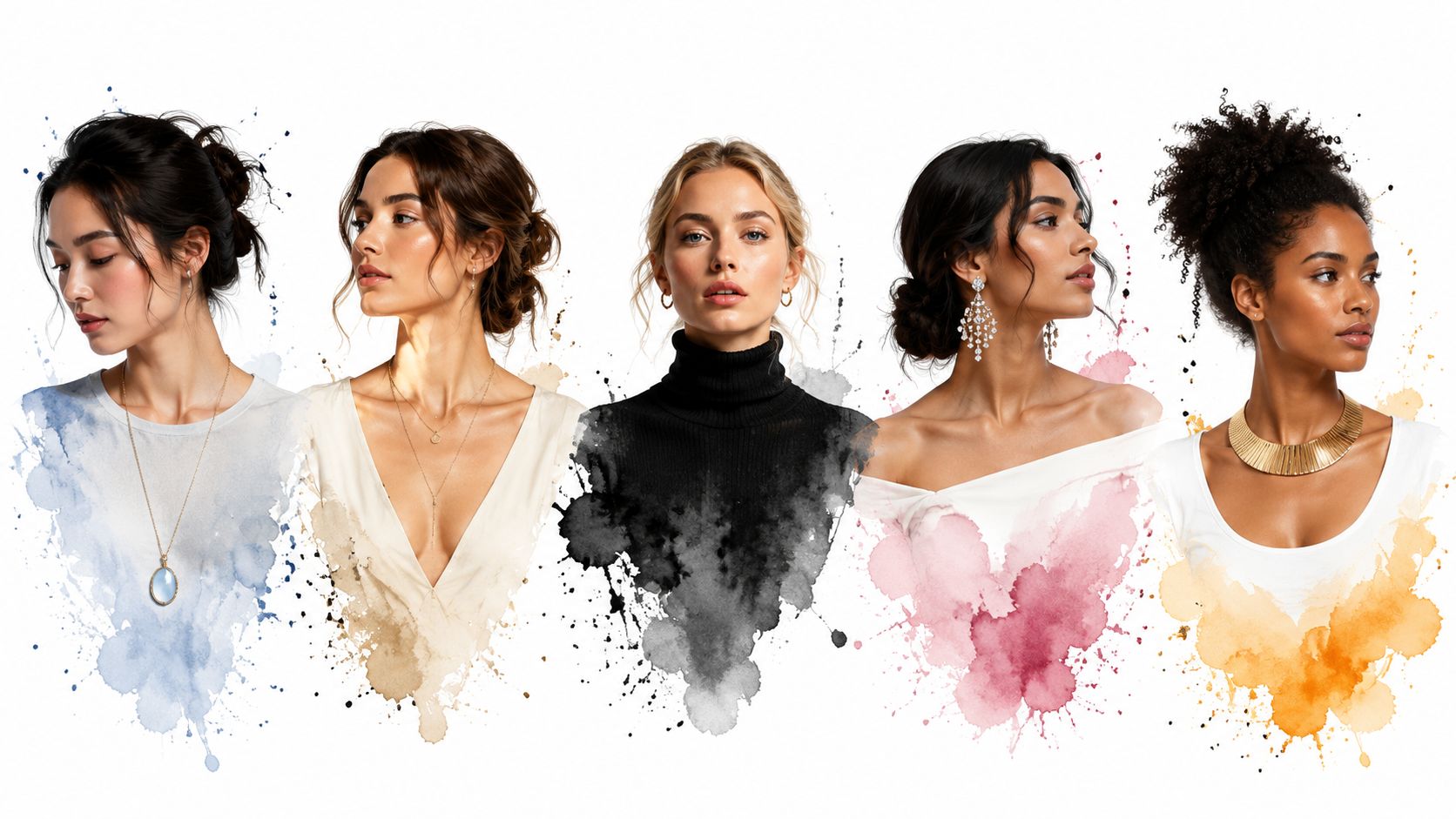
- Crew neck: choose drop earrings or a longer pendant that breaks up the closed line
- V-neck: mirror the opening with a pendant or layered chains that sit inside the V
- Turtleneck: wear statement earrings or a necklace long enough to sit over the fabric
- Off-shoulder top: keep the neckline clean with medium hoops, studs, or one delicate pendant
- Scoop neck: add a collar necklace or rounded layers that follow the curve
The best test is visual, not theoretical. Put the same earrings on two different tops in a virtual try-on and compare the neckline first. A pendant that looks flat on a crew neck can look sharp and intentional on a V-neck. A bold earring that disappears next to loose hair and a high collar can come alive with an off-shoulder top.
If you want help building the full look around that neckline, use the ensemble building guide for styling complete outfits.
Flat-lay photos work well for this, but side-by-side previews work even better. You will spot crowding, dead space, and awkward necklace lengths in seconds. That is how you stop guessing and start choosing pieces that finish the outfit.
3. The 3-Piece Rule
If your jewelry often feels chaotic, set a hard limit. Wear three pieces.
That could mean earrings, necklace, ring. Or earrings, bracelet, ring. The cap forces you to edit, and editing is what makes a look feel expensive.
Build the combination with contrast
Choose one piece with the most visual weight. Then add two quieter pieces that support it.
Try combinations like these:
- Chandelier earrings + slim bracelet + one ring
- Statement necklace + studs + one cuff
- Pendant necklace + hoops + cocktail ring
This is especially useful when you're building an outfit for work, dinner, or an event and don't want to second-guess yourself. If you want help organizing complete outfits around a jewelry focal point, the TryThisFit ensemble building guide is a smart place to start.
When a look feels “off,” it's often because the jewelry count is too high, not because the pieces are wrong.
Use the app to compare a three-piece version against the version where you added “just one more thing.” In most cases, the simpler styling wins.
4. Metal Mixing
You don't need to choose one metal forever. You do need to mix them on purpose.
Gold with silver looks fresh. Rose gold with yellow gold can look soft and elegant. Silver with copper can feel artsy and sharp. The mistake isn't mixing. The mistake is making it look accidental.
The costume jewelry segment is large and growing, with one forecast valuing it at USD 45.2 billion in 2023 and projecting USD 86.8 billion by 2033 at a 6.8% CAGR, according to Allied Market Research's costume jewelry outlook. That scale helps explain why styling advice often focuses on practical ways to make trend pieces feel cohesive, especially by keeping a dominant metal or silhouette consistent and using the second metal as an accent.
Make one metal lead
Use one tone as the base. Let the second tone show up in smaller doses.
A few clean formulas:
- Gold lead: gold chain, gold hoops, silver ring accent
- Silver lead: silver cuff, silver studs, rose gold pendant accent
- Rose gold lead: rose gold rings, soft gold necklace, one silver ear cuff
A two-tone piece makes this much easier. Something like this tanzanite and spectrolite ring can bridge the whole look.
Preview mixed metals against your skin and outfit before you buy. That matters even more with online shopping, because polished silver and warm gold can shift the entire mood of a black blazer, white shirt, or knit dress.
5. Layering Necklaces
You put on a plain tee, add one chain, and the outfit still feels unfinished. Add a second and third at the right lengths, and the whole look gets shape, movement, and a clear focal point.
Layered necklaces stay popular for a reason. They let you restyle simple pieces instead of buying a completely new set for every outfit. Analysts at GWI found that 16% of the global internet population are fashion and jewelry buyers, which helps explain why repeatable combinations keep showing up in styling advice.
Space each layer on purpose
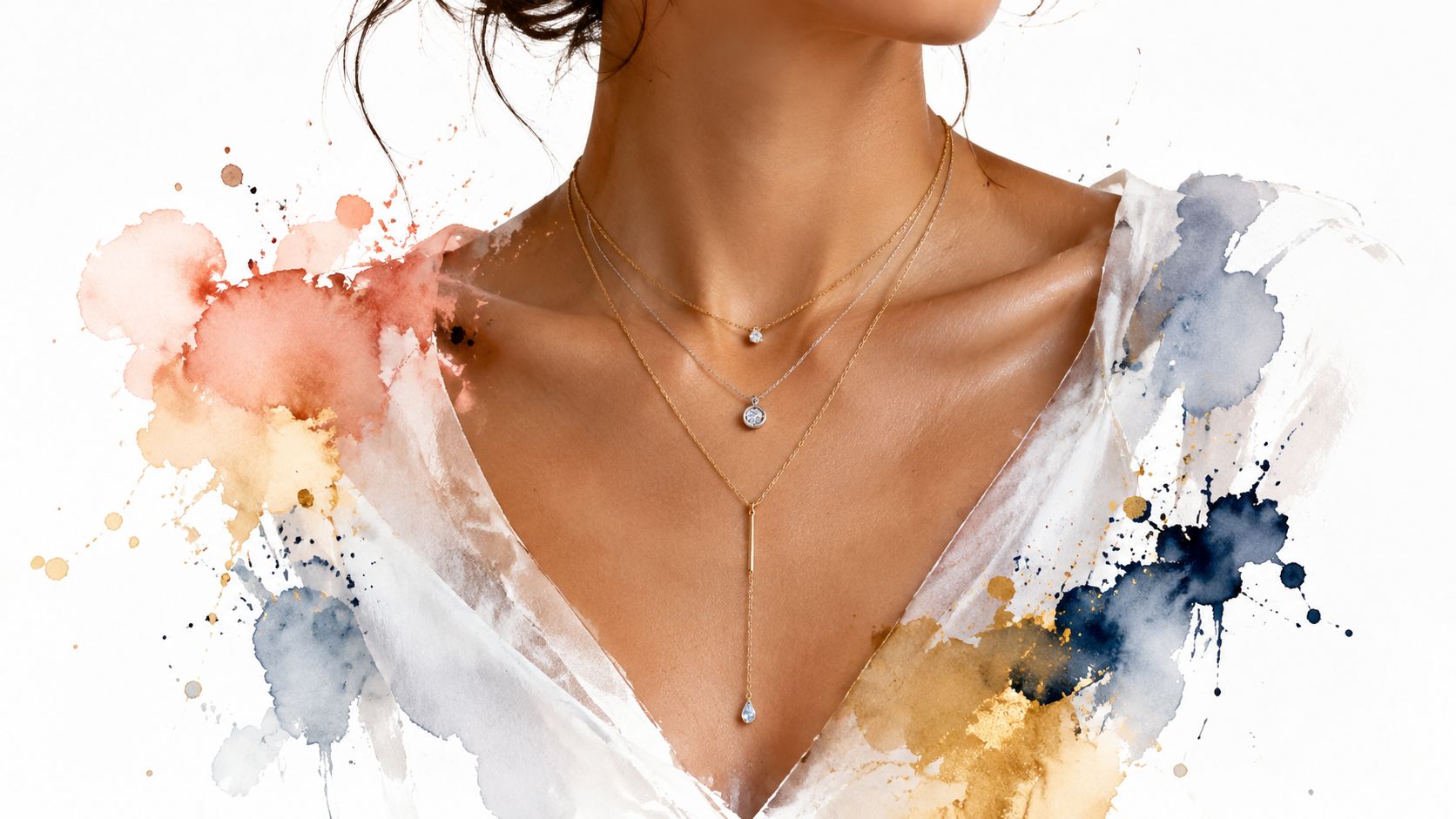
The fastest way to ruin a stack is letting every chain land in the same spot. Separate the lengths enough that each piece stays visible.
Use this formula:
- Top layer: choker or 14 to 16 inch chain
- Middle layer: small pendant
- Bottom layer: longer fine chain or lariat
Keep one piece as the anchor. Usually that is the pendant or the shortest chain. The other layers should support it, not compete with it.
This works best on tops that leave the necklace area clean. Solid tees, tanks, open collars, and knit dresses give the stack room to show. Heavy prints and crowded necklines make layered chains look messy fast.
Use a virtual try-on preview before you commit. Check whether the spacing looks intentional on your neck and chest, and whether the pendant sits where you want once it is paired with the other two chains. A stack can look balanced on a product page and awkward on your frame. Previewing the full combination helps you catch that before you buy.
Here's a quick visual reference for necklace styling in motion:
<iframe width="100%" style="aspect-ratio: 16 / 9;" src="https://www.youtube.com/embed/yDSlikCRtoI" frameborder="0" allow="autoplay; encrypted-media" allowfullscreen></iframe>6. Statement Earrings with Minimalist Outfits
You throw on a black knit top, pull your hair back, add bold earrings, and the whole outfit clicks. That is the power of statement earrings. They finish a simple look faster than any necklace stack.
Keep the outfit quiet so the earrings can lead. Solid tops, clean necklines, and simple fabrics give oversized hoops, sculptural metals, and gemstone drops the contrast they need. A white tee with dramatic gold earrings looks sharp. A crisp button-down with heavy chandelier earrings looks styled on purpose.
Clear space around the face
Your face should be the focal point. Build around that idea.
Use this formula:
- Hair: slick bun, low ponytail, clipped back layers, or one side tucked behind the ear
- Top: crew neck, mock neck, strapless, square neck, or open collar in a solid color
- Other jewelry: one ring or a slim cuff
- Makeup: defined lip or clean skin with strong brows, not every feature competing at once
Skip a necklace if the earrings are large. Skip busy prints if the earrings have color or movement. If you want a softer version of this look, pearls are a smart choice. This guide on selecting beautiful pearl earrings is a useful reference.
Use a virtual try-on preview to test the balance before you buy. Check whether the earrings still stand out once your hair, neckline, and makeup are in the frame. This matters even more with colored stones. If you need help choosing shades that work with your clothes, review these complementary color pairing ideas for fashion.
A good preview answers the question fast. Do the earrings complete the outfit, or do they start a fight with everything around them?
7. The Pop of Color
Colorful jewelry is the easiest way to wake up a neutral outfit. One turquoise ring, one green stone pendant, one coral enamel cuff, and suddenly beige, black, gray, or white feels styled instead of basic.
You don't need a rainbow. You need one color placed on purpose.
Pick one color zone
Choose whether the color belongs near your face, on your hand, or at the wrist. Keep the rest of the jewelry neutral.
That gives you much cleaner results:
- Near the face: sapphire studs with a white shirt
- At the neck: green pendant over a black knit
- On the hand: turquoise ring with an all-denim look
If you want the color to flatter your outfit instead of fight it, learn how clothing and accessory tones work together in the TryThisFit guide to complementary colors in fashion.
Pearls can also bring in softness without becoming loud. If that's more your style, this piece on selecting beautiful pearl earrings is a useful style reference.
Upload your colorful piece and compare it against a few neutral outfits before you wear it. You'll quickly see whether the jewelry adds energy or steals attention in the wrong way.
8. Ring Stacking
Ring stacking should look collected, not crowded. The difference is spacing, scale, and repetition.
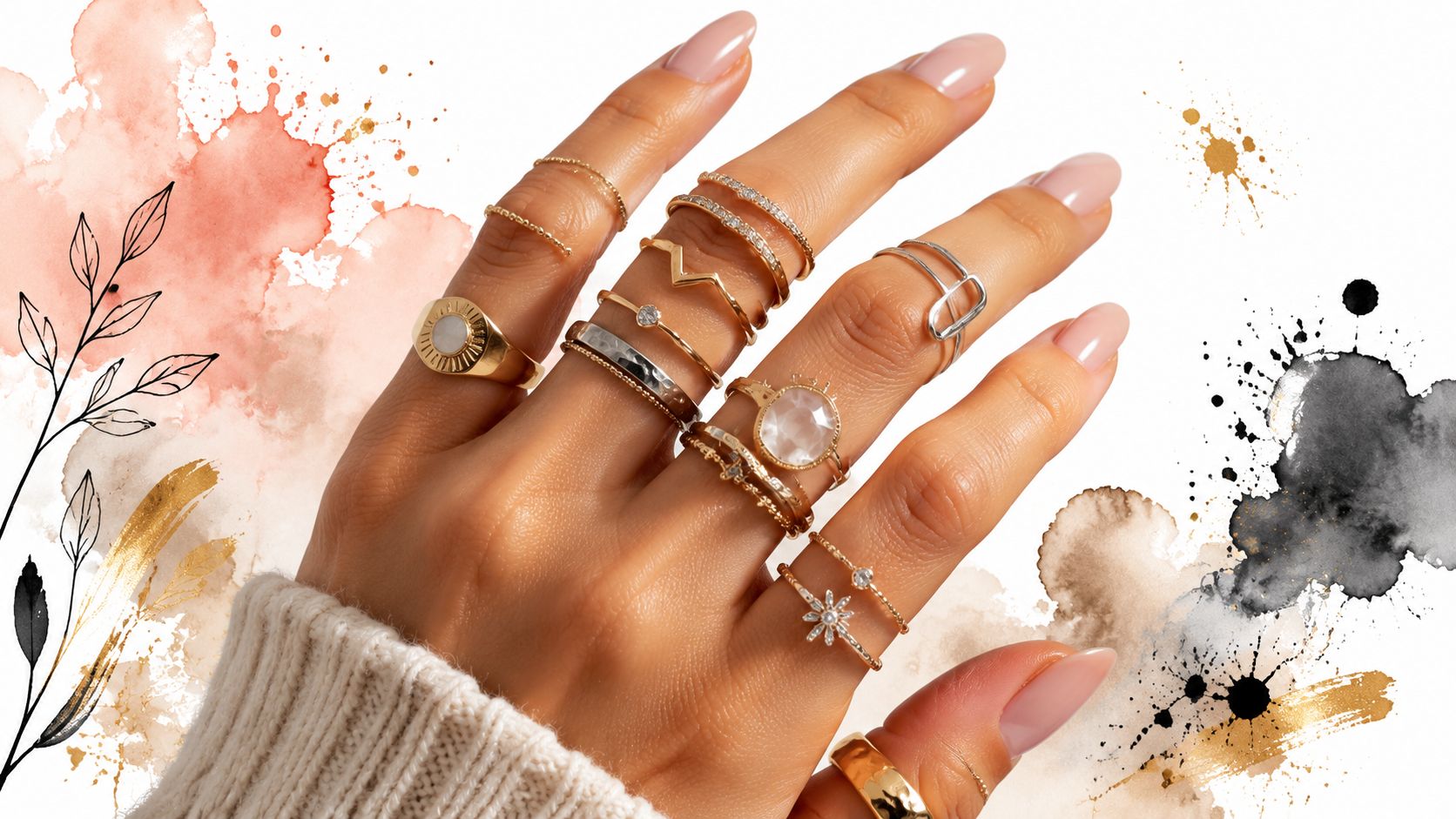
A good stack usually combines one anchor ring with a few lighter companions. That anchor might be a signet, a stone ring, or a thicker band. Then you support it with slimmer bands on nearby fingers.
Spread the visual weight
Don't pile everything onto one finger unless the rings are designed to nest. Use your whole hand.
A few better combinations:
- Index finger: one statement ring
- Ring finger: two slim stackers
- Pinky: one tiny band
Or:
- Middle finger: one thicker band
- Ring finger: one stone ring
- Index finger: one slim midi ring
Smaller hands usually look better with finer bands and more negative space. Larger hands can carry thicker stacks with ease. What matters is rhythm. Repeating the same metal or shape keeps the stack connected.
Photograph your hand or preview ring-heavy styling with your outfit before you go out. Rings don't exist in isolation. They read differently with a blazer cuff, a knit sleeve, or a sleeveless top.
9. Proportion and Scale
You can put on beautiful jewelry and still have the outfit feel off. The usual problem is scale. A tiny pendant gets lost against a thick sweater, while oversized earrings can overpower a light summer dress.
Treat your outfit's visual weight as the starting point. Big shapes, heavy fabrics, and roomy silhouettes need jewelry with enough presence to hold its own. Sleek fabrics, bare skin, and cleaner lines look better with pieces that stay lighter and sharper.
Match the jewelry to the outfit's visual weight
Use your clothes to set the size range.
- Oversized blazer: medium or bold hoops, a solid cuff, a thicker chain
- Slim satin dress: a fine pendant, clean studs, one refined ring
- Heavy knit sweater: stronger earrings, a wider bracelet, or a necklace with real presence
- Fitted tee and jeans: choose one direction and commit, either delicate pieces throughout or one bolder focal piece
Body scale matters too, but outfit scale matters just as much. A petite frame can still wear substantial jewelry if the clothing has structure. A taller frame can still wear fine pieces if the outfit is clean and close to the body. The goal is balance you can see instantly.
If you want to train your eye across the full outfit, this guide on how to match clothes with the right overall balance makes that easier.
Use a virtual try-on preview to compare the same look with two different sizes of jewelry. Test a whisper-thin chain against a chunky one, or small studs against wider hoops. Side by side, the right proportion becomes obvious fast.
10. Occasion Appropriateness
You get dressed, add your favorite pieces, then realize the look is wrong for the room. The necklace feels too flashy for a client meeting. The tiny studs disappear on a video call. Good styling depends on context.
Use jewelry to match the setting, not just the outfit. A creative office can handle bold shapes and a little personality. An interview, formal meeting, or conservative workplace calls for cleaner choices that look polished fast. Social events give you more range, but even then, one clear focal point usually looks stronger than wearing every idea at once.
As Angara's discussion of jewelry styling gaps points out, styling advice often skips practical details. Work dress codes, comfort, glare, and how pieces read on camera all change what works. That is exactly why virtual try-on is so useful here. You can preview the same earrings for the office, a dinner reservation, and a wedding guest outfit before you commit.
Match the jewelry to the setting
Start with the occasion, then choose the level of visibility.
- Office or interview: studs, a slim pendant, a watch, or one simple ring
- Video call: defined earrings, a shorter necklace, or a piece with shape that still reads in a small frame
- Date night: statement earrings, stacked rings, or one sharper metal accent with a clean outfit
- Wedding guest look: one focal piece, then quieter supporting pieces
- Weekend casual: color, texture, layered chains, or a more playful mix
Test your outfit in a virtual try-on view the same way you would test shoes with a dress. Check whether the jewelry disappears, distracts, or hits the right note for the event. That quick preview makes styling more creative and far more practical.
10-Point Jewelry Styling Comparison
| Technique | Implementation Complexity 🔄 | Resource Requirements ⚡ | Expected Outcomes 📊 | Ideal Use Cases ⭐ | Key Tips 💡 |
|---|---|---|---|---|---|
| The Rule of Balance: Mixing Delicate and Bold Pieces | Medium, requires judgment and experimentation | Low, uses existing pieces; virtual try-on helpful | Polished, layered looks that avoid visual overload | Everyday, business, and formal outfits that need cohesion | Start with ONE bold focal piece; keep others minimal; preview combinations |
| Neckline Coordination: Matching Jewelry to Clothing Necklines | Medium–High, requires matching shapes and lengths | Moderate, varied necklace/earring lengths preferred | Harmonious proportions; jewelry complements clothing structure | Tops with distinct necklines (crew, V, turtleneck, off-shoulder) | If neckline is bold, simplify jewelry; test lengths against garments |
| The 3-Piece Rule: Limiting Jewelry for Sophisticated Styling | Low, simple constraint to follow | Low, pick up to three items; minimal wardrobe changes | Clean, intentional appearance; reduced clutter | Professional settings, quick styling, minimalist wardrobes | Choose statement piece first; keep others noticeably simpler |
| Metal Mixing: Combining Gold, Silver, Rose Gold, and Copper | High, needs intentional proportion and placement | Moderate, diverse metal finishes in collection | Modern, versatile looks; greater outfit flexibility | Fashion-forward styling and mixing existing collections | Let one metal dominate (≈60%); group same metals spatially |
| Layering Necklaces: Creating Depth and Visual Interest | High, technical (lengths, spacing, tangling) | Moderate, multiple necklaces and spacers help | Vertical depth and curated, upscale appearance | Solid tops, turtlenecks, and outfits needing neckline interest | Start with 2–3 layers; vary lengths by ≥2" and use thin chains |
| Statement Earrings with Minimalist Outfits | Low–Medium, selection focused on focal piece | Low, single bold pair transforms look | Strong facial focal point; elevates simple outfits | Minimalist outfits, casual looks, events needing impact | Choose earrings first; keep other jewelry minimal; test comfort |
| The Pop of Color: Using Gemstones and Colorful Metals | Medium, color choice must suit skin and wardrobe | Low–Moderate, select gemstone/enamel pieces | Intentional focal points; refreshes neutral wardrobes | Professional settings, seasonal updates, neutral wardrobes | Favor jewel tones; consider undertones; let color be the statement |
| Ring Stacking: Creating Intentional Combinations on Multiple Fingers | Medium, requires coordination of widths and placement | Moderate, several rings and possibly mixed metals | Curated hand aesthetic; expressive, designer-inspired look | Casual and formal settings where hands are visible | Start with 2–3 rings; vary widths; match or intentionally mix metals |
| Proportion and Scale: Matching Jewelry Size to Body Frame and Clothing Volume | Medium–High, requires self-awareness of proportions | Low, mostly awareness; selective pieces of differing scale | Flattering, intentional jewelry that complements frame | Any outfit, especially oversized or very fitted garments | Compare pieces to collarbone/wrist; photograph to assess scale |
| Occasion Appropriateness: Adapting Jewelry to Setting and Formality | Medium, assess context and dress code nuances | Moderate, build versatile basics for varied settings | Appropriate impressions; avoids mismatches with setting | Interviews, meetings, formal events, casual social occasions | Build core classics (studs, simple necklace); preview with outfit/context |
Start Styling with Confidence Today
You put on the outfit, check the mirror, and the clothes are doing their job. The look still feels flat. Jewelry fixes that fast, because it adds contrast, focus, and character in a way a bag or shoe usually cannot.
Keep your collection tight and useful. Start with everyday studs, a simple pendant, one ring with presence, a bracelet or cuff, and statement earrings that wake up a plain outfit. That small lineup gives you enough range to dress with intention instead of buying full sets that sit in a drawer.
Use each piece with a purpose. A pendant should frame the neckline. Earrings should brighten the face. Rings should add detail without crowding your hands. If a piece does not improve the outfit in one clear way, skip it.
The smartest habit from this entire list is simple. Preview the full look before you wear it or buy it.
A virtual try-on view turns jewelry styling into something concrete. You can see whether layered chains disappear against a busy blouse, whether a bold cuff looks sharp or heavy, and whether mixed metals feel modern or messy with your outfit. That instant visual feedback helps you edit faster and trust your taste more.
As noted earlier, use the tool to compare options side by side. Test the same earrings with a crew neck and a deep V-neck. Try a colorful stone against black, cream, and denim. Save the combinations that look strongest on you, then repeat the patterns that keep working.
Style gets clearer when you can see it.
Experiment often. Keep the winners. Wear jewelry like the finishing move, not an afterthought.
Try Virtual Try-On Now
See how clothes look on you before you buy - works with any online store
Get Started Free