Korean Culture Clothes: A Modern Style Guide
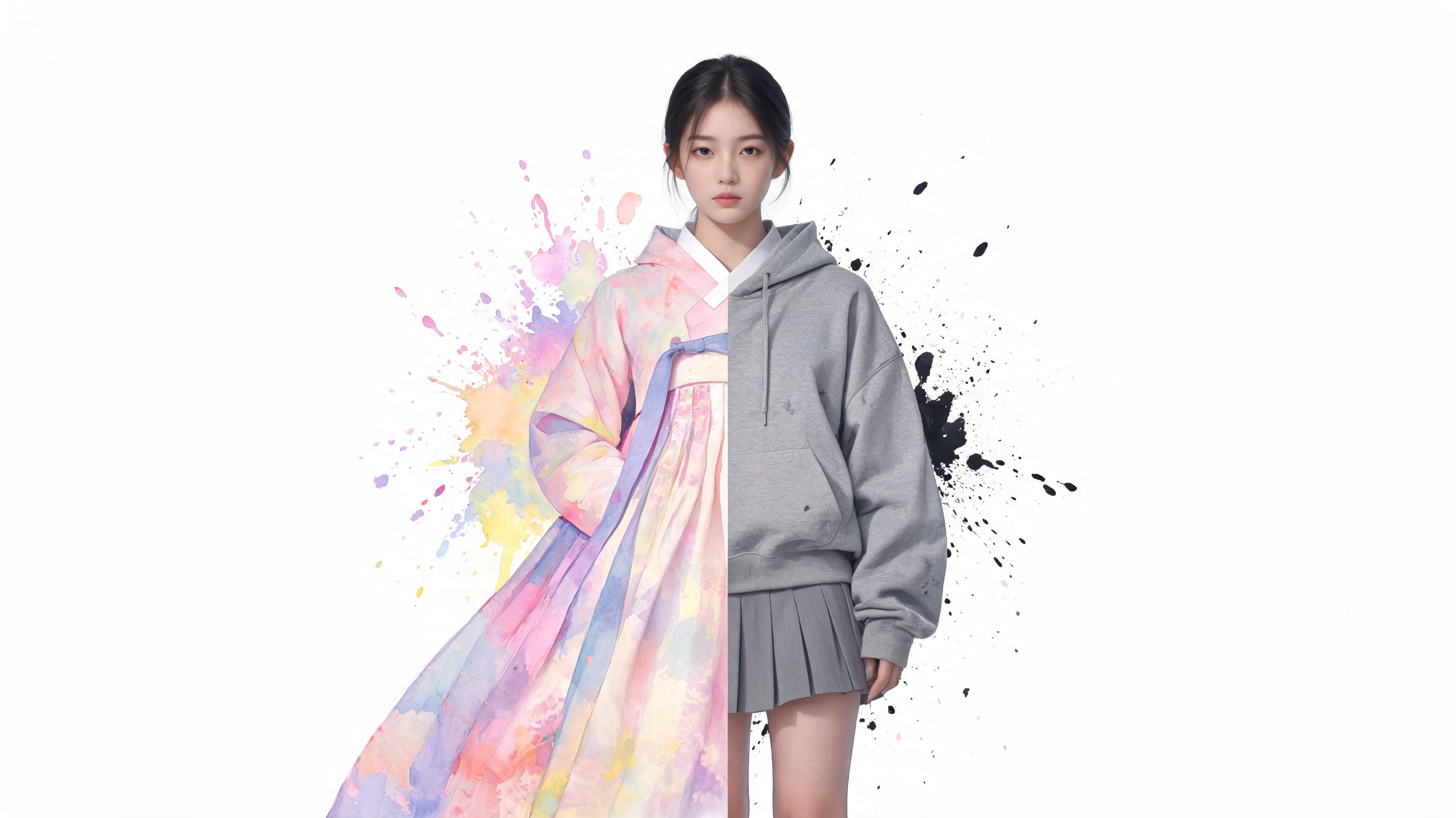
You've probably had this moment already. A K-drama wedding scene appears on screen, or a music video shifts from sleek streetwear to a dramatic traditional look, and suddenly you're searching for korean culture clothes because you want to understand what you're seeing, not just admire it.
That curiosity makes sense. Korean clothing has a rare range. It includes hanbok, Korea's traditional dress with deep historical roots, and it also includes modern Seoul street style that feels polished, layered, playful, and easy to recognize once you know what to look for.
The hard part starts when inspiration turns into shopping. Korean silhouettes can be very different from standard Western basics, and online photos often don't tell you enough about shape, layering, or overall appearance. If you've ever saved screenshots from a drama, browsed resale listings late at night, or tried to decode an idol airport outfit, you're in exactly the right place.
From Screen Envy to Personal Style
A lot of people first fall for Korean fashion through media. One scene gives you romantic, flowing sleeves and soft color harmony. The next gives you a boxy blazer, loose trousers, sneakers, and a hairstyle that somehow makes the whole outfit feel effortless.
That's why “korean culture clothes” can feel confusing at first. The phrase covers both heritage clothing and contemporary fashion. It can mean a ceremonial hanbok for a holiday, or it can mean the clean, layered everyday looks you see in Seoul street snaps and K-pop styling.
Readers often get stuck at the same point. They know what they like on screen, but they can't tell which parts are specifically Korean, which parts are global fashion trends, and which pieces would suit their own style. If you're also exploring beauty alongside fashion, Mirai Skin's K-Beauty guide is a useful companion because it shows how the clothing and beauty sides of the look often support each other.
There's also a practical problem. Korean fashion relies heavily on silhouette. A cropped jacket with a full skirt, an oversized knit over a narrow mini, or a layered neutral outfit can look stunning in motion but much harder to judge from a static product page.
Korean style often isn't about one statement item. It's about proportion, texture, and how the whole outfit reads at a glance.
That's why so many shoppers collect inspiration before they buy. They save drama stills, idol photos, and lookbooks, then compare them to online listings that rarely show enough context. If that sounds familiar, this visual look inspiration page is a fun place to study how signature outfits translate into everyday styling.
The Soul of Korean Fashion Understanding Hanbok
You spot a hanbok in a drama scene and instantly know it is Korean, even before you know the vocabulary. That reaction comes from silhouette. Hanbok communicates through line, volume, and movement in a way that feels very different from Western tailoring or body-focused fashion.
Earlier, the official Korean cultural overview cited hanbok as a long-standing national dress with a recognizable core structure. For a newcomer, the easiest way to read that structure is to look at how the outfit is built rather than memorizing history first.
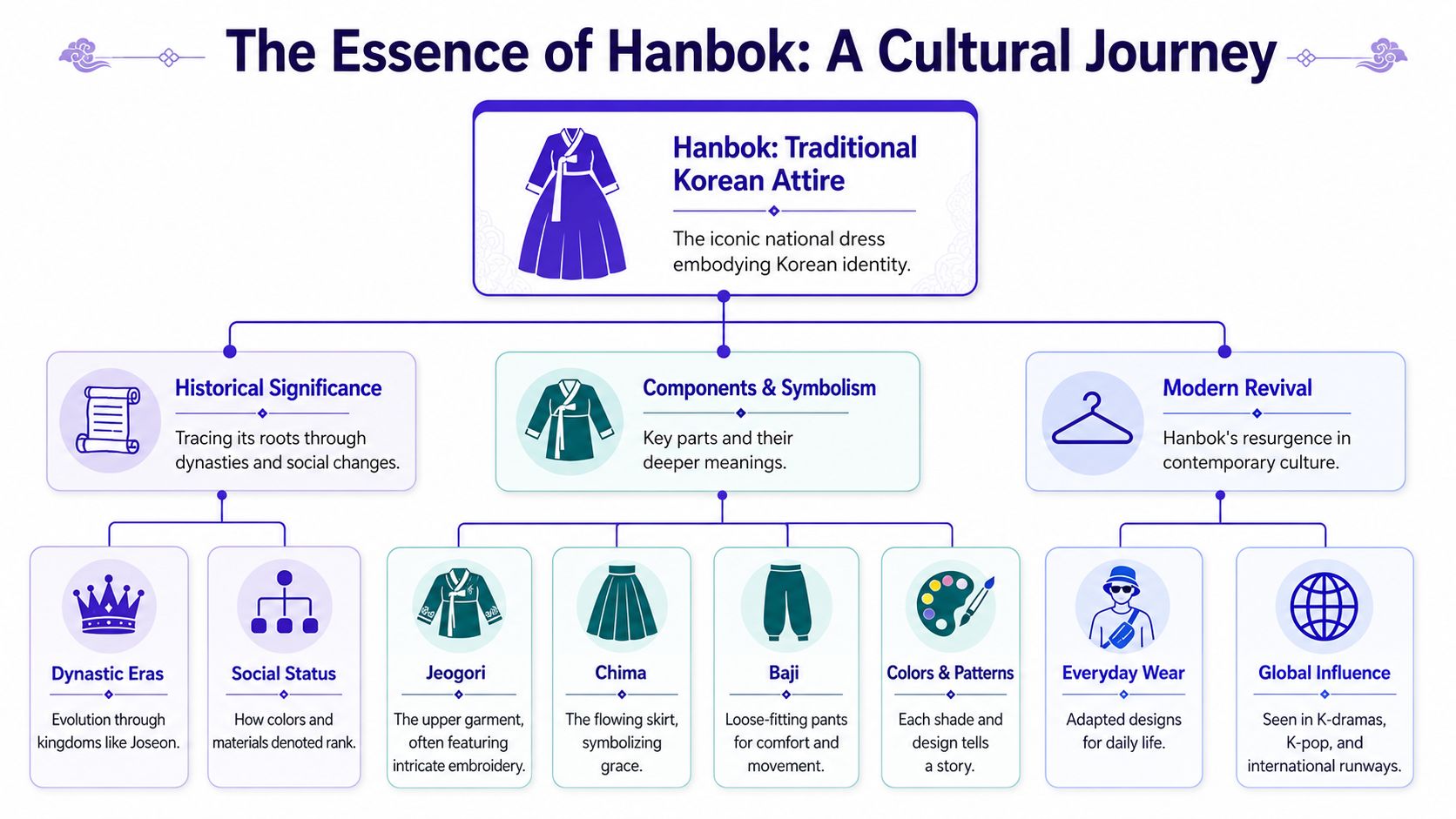
The main parts you should know
Hanbok names can seem unfamiliar at first, but the system is quite readable once you break it into pieces.
- Jeogori is the short upper garment or jacket. It sets the top line of the outfit and often gives hanbok its neat, compact upper shape.
- Chima is the full skirt traditionally worn by women. It creates volume below the chest and lets the fabric move freely.
- Baji are loose trousers traditionally worn by men. They prioritize comfort and range of motion over a close fit.
- Goreum are the ribbon ties on the jeogori. They are small, but they matter because they help define balance at the center of the outfit.
A helpful comparison is this. Many modern garments trace the body closely, while hanbok builds a composed outline around it. The eye reads the whole form first.
Why the silhouette feels so different
Many online shoppers get confused. On a product page, a hanbok can look simple or even oversized. In motion, it reads completely differently.
The jacket length, the spacing between garment layers, and the fullness of the skirt or trousers work together like proportions in architecture. If one part changes, the whole impression changes. That is why hanbok looks so memorable on screen and so hard to judge from a flat listing photo.
For anyone buying Korean fashion online, this is an important lesson. Korean style often depends on overall shape, not just individual pieces. Hanbok makes that principle easy to see.
Practical rule: Judge hanbok as a full silhouette, not by the fit expectations you would use for jeans, bodycon dresses, or sharply tailored suiting.
What hanbok is made from
Fabric also changes the message of the outfit. Traditional hanbok has been made with materials such as silk, hemp, ramie, and cotton, each giving the same basic form a different mood.
| Fabric | What a newcomer might notice |
|---|---|
| Silk | Smoothness and a soft sheen |
| Hemp | A natural, grounded texture |
| Ramie | Crispness that helps the shape stay clear |
| Cotton | A softer, more familiar everyday feel |
This matters more than many first-time shoppers expect. If silhouette is the outline, fabric is the atmosphere. It affects whether hanbok feels airy, ceremonial, understated, or structured.
Why hanbok still matters now
Hanbok is still worn for occasions tied to family and tradition, such as weddings, first-birthday celebrations, funerals, and major holidays. That continued use gives it cultural weight beyond fashion history.
It also helps explain why modern Korean fashion still feels connected to older design ideas. Even when a contemporary outfit is not hanbok, Korean clothing often keeps a strong awareness of proportion, layering, and visual balance.
If you enjoy comparing how traditional dress expresses identity across cultures, this guide to traditional Japanese clothing offers a useful contrast. It helps train your eye to see how East Asian garments can share regional history while using very different shapes and symbols.
And for shopping, hanbok teaches a practical digital lesson. Some clothes need to be seen on a body to make sense. That is exactly why virtual try-on tools such as TryThisFit are so useful when you want to explore Korean styles online without guessing how those distinctive proportions will look on you.
From Palace Halls to Pop Stages The Evolution
Traditional dress never stays completely still. Korean clothing changed as Korean society changed, and that's part of what makes its fashion story so compelling.
During Korea's enlightenment period from 1876 to 1945, traditional Korean dress and Western clothing existed side by side, reshaping older dress habits and loosening the rigid social dress code that had separated classes so clearly, according to the Academy of Korean Studies feature on fashion change and revival. Later, youth fashion in the 1970s and 1980s absorbed global influences such as bell-bottoms, hoop earrings, punk style, and branded sportswear.
Tradition didn't disappear
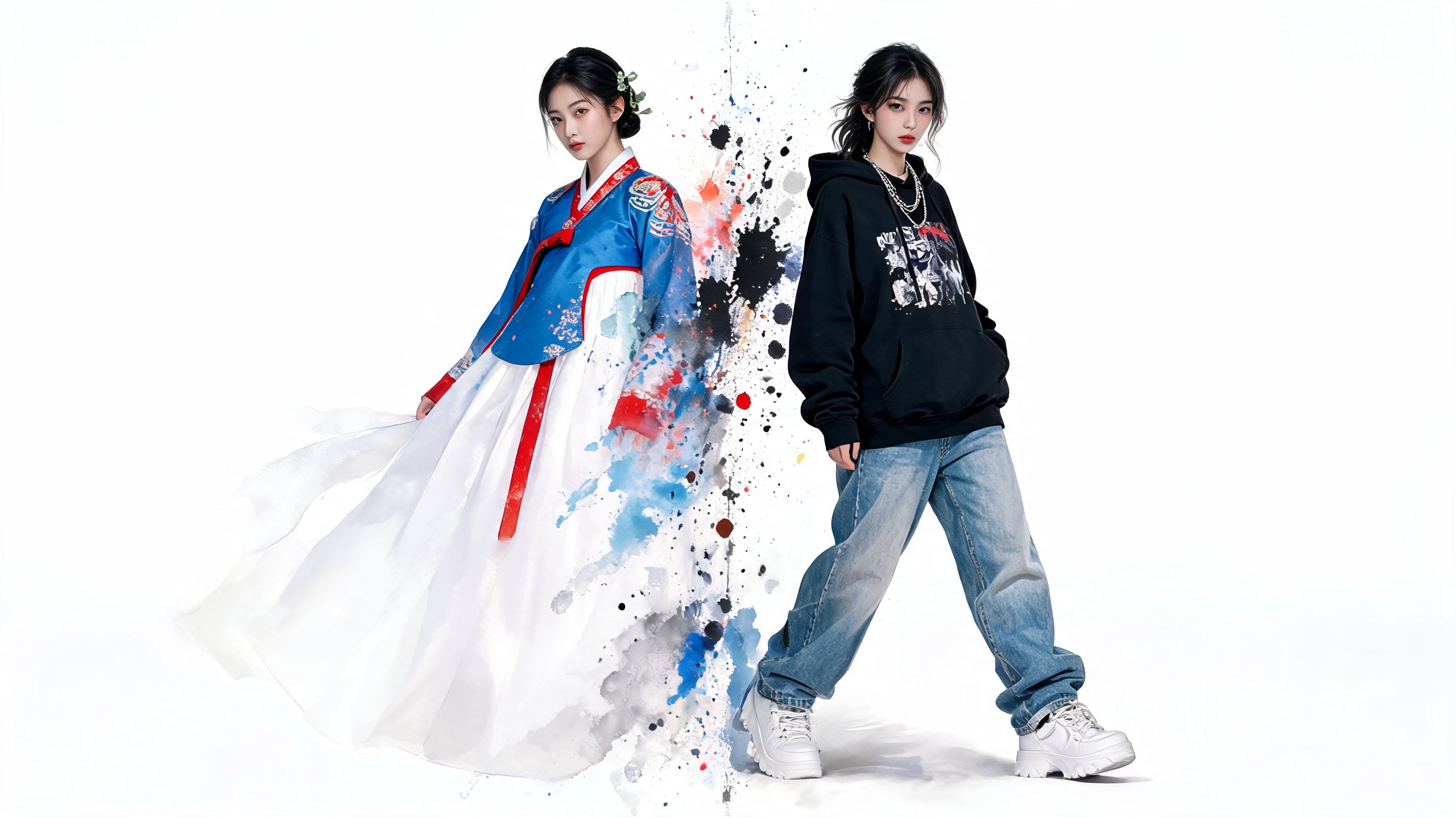
A common misconception is that Western influence replaced traditional Korean clothing. That's not what happened. Korean fashion became a conversation between inherited forms and imported ideas.
You can still feel that conversation today. A modern outfit might not look like formal hanbok at all, yet it may still echo older Korean preferences for line, balance, layering, and visual contrast.
Why K-pop changed global awareness
The same Academy of Korean Studies piece notes that hanbok experienced a modern revival, with contemporary designers combining modern techniques with original designs. Those updated versions appeared in music videos by BLACKPINK and BTS, helping international audiences learn about hanbok's origins and cultural significance.
That matters because pop culture doesn't just spread trends. It changes who pays attention. A viewer who first notices a dramatic stage costume may end up learning the names of traditional garments, recognizing historic silhouettes, or seeking out modern hanbok brands.
Some of the most memorable contemporary Korean looks work because they don't choose between old and new. They let both speak at once.
What modern reinterpretation looks like
Designers often modernize hanbok in a few recognizable ways:
- Shorter, simpler lines that feel easier to style for events or fashion editorials
- Contemporary fabrics or finishes that shift the mood without erasing the original form
- Hybrid styling where hanbok-inspired pieces appear with boots, sneakers, or structured outerwear
That blend explains why Korean culture clothes can feel both rooted and fresh. The garment language carries history, but the styling keeps moving.
Key Elements of Modern Korean Street Style
If hanbok is the historical soul of Korean fashion, Seoul street style is where many newcomers first find something they can wear tomorrow. It's less about copying a celebrity outfit item for item and more about learning the visual rules that make the outfit click.
Proportion leads the outfit
One of the clearest signatures is proportion play. You'll often see oversized tops paired with slimmer bottoms, or compact tops balanced by wide trousers or a fuller skirt.
This approach works because the outfit feels intentional from a distance. The eye sees shape before it sees details. That's a big reason Korean streetwear photographs so well.
A few easy examples help:
- Loose sweatshirt plus mini skirt creates a playful contrast
- Boxy blazer plus straight trousers feels clean and smart
- Cropped cardigan plus wide jeans gives a balanced, modern line
Layering does more than add warmth
Layering in Korean fashion often creates identity, not just comfort. A shirt under a knit vest, a long coat over shorts, or a hoodie under a well-fitted jacket can make a simple outfit feel much more styled.
Readers sometimes think they need a huge wardrobe to get this look. Usually, they don't. They need a few pieces with different lengths, textures, and moods.
If an outfit feels flat, Korean styling often fixes it with another layer, not a louder color.
Color usually stays controlled
A lot of Korean street style uses restrained color palettes. Neutrals, soft tones, denim, black, white, and muted earth shades appear often because they make mixing easy.
Then the outfit gets one sharper accent. It might be a bright bag, glossy shoes, a patterned scarf, or one vivid knit. That contrast keeps the look polished instead of chaotic.
The finishing details matter
Modern Korean looks often feel complete because of the smaller choices:
| Element | What it adds |
|---|---|
| Shoes | Changes the mood fast, from sweet to sharp |
| Bag | Can make a casual look feel refined |
| Hair | Often supports the softness or structure of the outfit |
| Socks and jewelry | Add personality without overwhelming the silhouette |
That's useful if you're building your own version of korean culture clothes rather than buying a full themed wardrobe. Start with shape. Then layer. Then adjust the details.
How to Shop for Korean Clothes Online
Shopping for Korean fashion online sounds easy until you start. The photos look great, the styling is persuasive, and then you realize you're trying to judge fabric, layering, and overall appearance from a few flat images.
That challenge gets even sharper in secondhand marketplaces. The broad secondhand fashion world now includes platforms like Vinted and Depop, and hanbok buyers face a special difficulty there because they may need to assess complex components and fabric quality such as silk, ramie, or cotton from online photos alone, which makes it hard to visualize how the piece will look without seeing it in person, as summarized in this background discussion of hanbok and secondhand shopping challenges.
Where people usually shop
The search usually spreads across different types of stores, each with its own strengths.
- Major marketplaces like Amazon fashion listings are convenient when you want fast browsing and broad selection.
- Fast fashion retailers such as Zara, H&M, Shein, and similar sites are useful for finding Korean-inspired silhouettes rather than heritage garments.
- Resale apps like Vinted and Depop can be great for unique pieces, older styles, or experimental shopping on a budget.
- Specialty Korean shops often offer the most focused aesthetic, though product photography and sizing language can vary a lot.
The most common mistakes
People often assume the main question is “Is this authentic?” Sometimes that matters, especially with hanbok. But for most shoppers, the earlier question is simpler and more practical: What am I buying visually?
A few things regularly cause confusion:
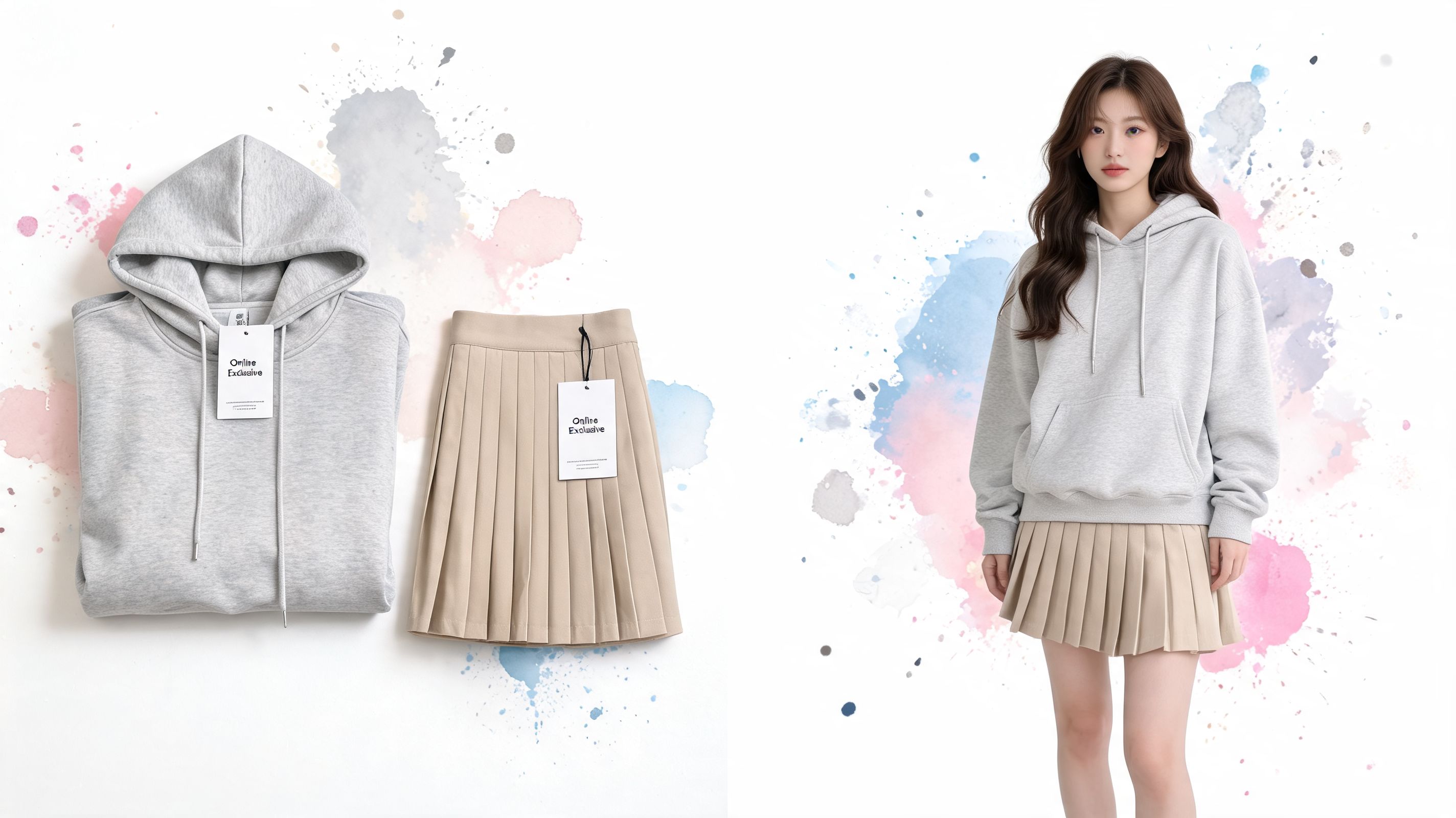
- Flat-lay photos hide shape in motion. A skirt can look plain folded on a page and dramatic when worn.
- Layered outfits are split across multiple listings. You may love the full look but accidentally buy only the base piece.
- Fabric names don't tell beginners enough. Silk, ramie, and cotton each create very different impressions.
- Styling can mislead expectations. Professional photos may rely heavily on hair, pose, and accessories.
A quick visual explainer can help if you're new to shopping this way:
<iframe width="100%" style="aspect-ratio: 16 / 9;" src="https://www.youtube.com/embed/tPKsdzneDkw" frameborder="0" allow="autoplay; encrypted-media" allowfullscreen></iframe>A smarter way to evaluate listings
Before buying, try reading the listing like a stylist instead of a collector.
Shopping shortcut: Ask three questions. What is the silhouette? What are the layers? What is the fabric likely to communicate visually?
That small shift helps on every type of site. It also helps you separate “I love this photo” from “I'd personally wear this look.”
Visualize Your Look Trying Korean Fashion Virtually
You find a hanbok-inspired skirt online at midnight. The color is perfect, the listing photos are beautiful, and the shape still feels hard to read. That last part represents the digital gap with korean culture clothes. Global interest is high, but buying with confidence online is much harder than admiring a look on screen.
Hanbok helps explain why. The Victoria and Albert Museum's hanbok feature notes its flat-cut construction and clear geometric structure. For online shopping, that matters because garments built around stable lines and volume are often easier to preview from flat images than beginners expect. It works a bit like reading a floor plan. Once you understand the basic shape, the finished space becomes much easier to picture.
That same idea carries into modern Korean fashion. Many popular pieces rely less on body-hugging stretch and more on silhouette: pleated skirts, cropped jackets, wide trousers, boxy shirts, and layered basics. If the outline of the outfit is doing most of the visual work, a preview tool can answer the question shoppers actually have. Not “Is this photo pretty?” but “Will this shape feel like me?”
Why virtual preview matters here
Korean fashion often asks you to notice proportion before detail. A short jacket changes the whole balance of a long skirt. A roomy shirt can read polished or relaxed depending on the trousers under it. Traditional hanbok and contemporary Seoul street style are different categories, but both teach the same lesson. Shape comes first.
That is why virtual try-on is so useful for this category. It helps close the gap between cultural appreciation and personal styling. You stop treating the listing as a static image and start reading it as a wearable outfit.
What makes a tool practical
A useful tool for this kind of shopping should do a few simple things well:
- Work directly from product pages, so comparison stays quick
- Read flat-lay or front-facing images clearly
- Show visual appearance instead of pretending to solve exact fit
- Let you test several silhouettes in a short session
If you want more background on why these tools matter for e-commerce, discover AR's impact on online retail.
A simple way to use it while shopping
The easiest routine is close to what a stylist would do.
- Start with a listing that shows the garment clearly from the front or in a flat lay.
- Identify the main silhouette first: cropped, long, full, straight, or oversized.
- Preview the piece on yourself before comparing colors or minor details.
- Test a few related options so you can judge shape, not just styling photography.
- Save the looks that match your taste and your wardrobe.
For that step, virtual try-on for Korean fashion shopping can make the process much more concrete. It is especially helpful when a garment has an unfamiliar structure, or when the full outfit in the listing is split across separate products. You can also review saved previews through try-on history and compare what suits your style.
One clear preview can save more confusion than ten extra minutes staring at product photos.
Try Virtual Try-On Now
See how clothes look on you before you buy - works with any online store
Get Started Free