Mens Dresser Top Organizer
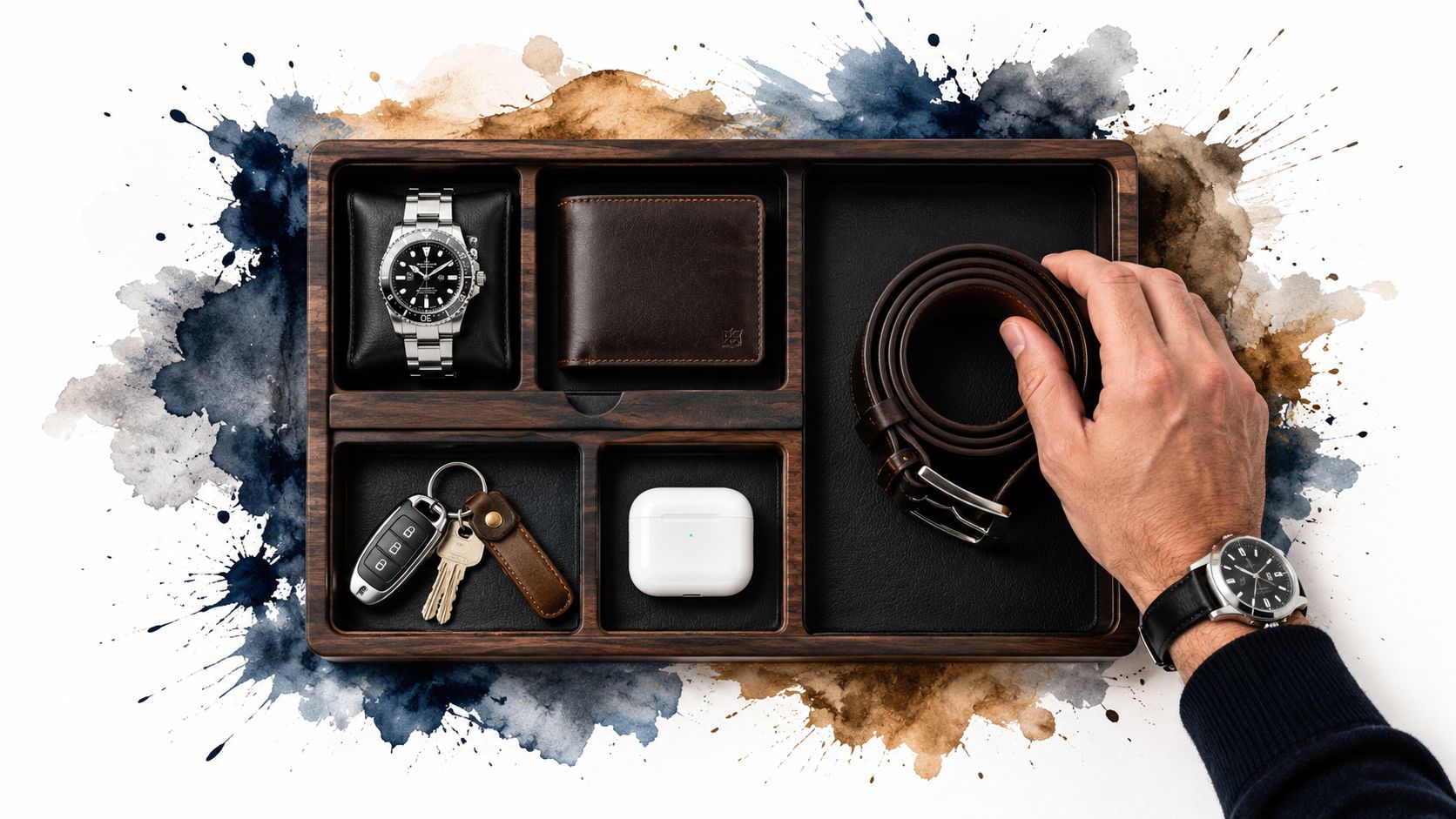
Mornings go sideways fast when the dresser top turns into a spill zone. Keys slide under a cufflink box, your watch ends up beside loose receipts, and the belt you wanted is somehow in the closet instead of where you dropped it last night.
That mess doesn't just look bad. It creates friction at the exact moment you want a clean start.
A good mens dresser top organizer fixes more than surface clutter. It gives your daily essentials a defined landing spot, cuts down on item hunting, and makes the first few minutes of the day feel controlled instead of reactive. The best setups also support style, because when your watch, wallet, ring, and belt are already in order, choosing the rest of the outfit gets easier too.
From Morning Chaos to Effortless Control
Most men don't need more storage. They need better access.
The typical problem isn't that there's nowhere to put a wallet or keys. It's that everything lands in random places. One night the watch goes on the nightstand, the next night it lands on the dresser, and by Friday the ring is sitting beside a charging cable under a stack of mail.
That's why a mens dresser top organizer works so well as a daily tool. It creates a repeatable drop zone for the exact items you empty from your pockets and wrists every day. Instead of one vague catchall area, you get a clear home base.
Why aesthetics alone miss the point
A lot of advice treats dresser organization like a styling exercise. Nice tray. Clean lines. Good material. That matters, but it misses the fundamental benefit.
A key gap in existing coverage is security and anti-loss design, not just looks. Much of the visible advice around valet trays and minimalist dresser setups doesn't really address how well these organizers handle practical items like wallets, watches, keys, AirPods, rings, or passports, or whether they reduce daily misplacement, as noted in this discussion of the category's underserved angle on security and anti-loss design.
A dresser-top organizer should reduce the chance that your essentials go missing between tonight and tomorrow morning.
That changes how you evaluate one. You stop asking, “Does this look clean on my dresser?” and start asking, “Will this keep my daily carry visible, separated, and hard to misplace?”
The dresser top as a command center
The best setups feel almost boring in use. That's a compliment.
Your keys land in the same spot. Your watch comes off into the same compartment. Your ring doesn't roam. Your wallet stays flat instead of drifting under paper clutter. A mens dresser top organizer becomes a small command center for the transition between dressed and undressed, leaving and returning.
When that physical routine gets cleaner, the rest of the morning usually follows. You're not only finding your essentials faster. You're starting the day with less visual noise, fewer forgotten items, and a much better base for getting dressed with intention.
Choosing Your Perfect Mens Dresser Top Organizer
The category has grown up. What started as the simple valet tray has evolved into a more polished accessory class, with brands marketing compartmented trays specifically for watches, wallets, and keys. Today, the space includes premium wood and leather versions, and Walmart listings include products priced at $80.35, which shows how far the mens dresser top organizer has moved from novelty into lifestyle and décor, as seen in Walmart's mens dresser valet retail listings.
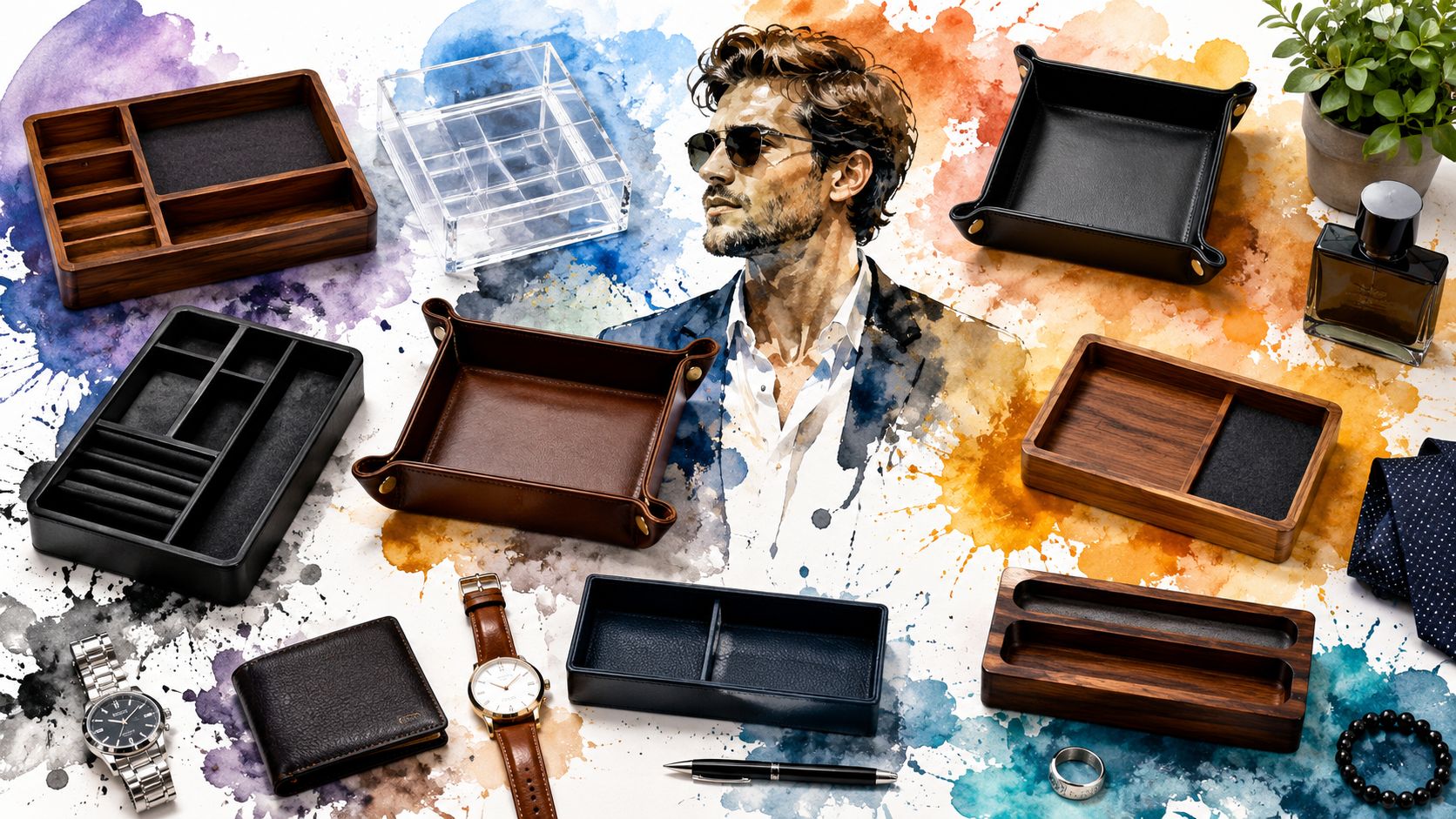
Pick the material for the room you actually have
Material is the first major choice because it determines both appearance and upkeep.
Leather looks polished and slightly dressier. It works especially well if your room already has darker woods, black hardware, or a neat aesthetic. It also tends to make small accessories look intentional rather than scattered.
Wood feels more architectural. It suits mid-century, classic, or warmer interiors, and it ages well visually if the craftsmanship is solid.
Composite or mixed-material designs can work if your room is modern and minimal, but they're the easiest to get wrong. Cheap finishes make the organizer look temporary, which defeats the point of using it as a stable part of your routine.
Size matters more than most buyers think
A common mistake is choosing based on product photos instead of dresser scale.
An organizer should feel proportional to the top surface, not like a second piece of furniture sitting on it. If it dominates the dresser, you'll start stacking things around it. That's how even a nice tray turns into visual clutter.
Use this quick comparison when you narrow options:
| Organizer style | Best for | Main trade-off |
|---|---|---|
| Slim tray | Minimal carry and smaller dressers | Limited flexibility |
| Medium compartment organizer | Most daily routines | Needs disciplined zoning |
| Large valet box | Broader accessory rotation | Can overwhelm the surface |
If you're also evaluating the dresser itself, these tips for selecting quality furniture are useful. A better organizer won't save a setup if the furniture top is already too shallow, unstable, or visually overcrowded.
Match the organizer to your style language
A mens dresser top organizer should look like it belongs with the rest of your space and wardrobe.
- Refined wardrobe: choose leather, darker finishes, cleaner compartment lines.
- Relaxed casual style: natural wood, softer edges, less formal hardware.
- Mid-century room: walnut tones and low-profile rectangular forms usually fit best.
- Minimal tech-forward setup: matte surfaces and simple geometry keep it clean.
Buying rule: Choose the organizer the way you'd choose a watch strap or shoe leather. Function comes first, but finish still signals taste.
The right one doesn't scream for attention. It subtly makes the whole dresser look more deliberate.
Map Your Everyday Carry Before You Buy
Often, shopping occurs backward. Shoppers acquire a tray because it looks sharp, then hope their routine will adapt to it.
That usually fails.
The most effective way to choose a mens dresser top organizer is to map the items you empty every day, then match compartment size and depth to those objects. The major pitfall is oversizing the tray, because a too-large organizer wastes space and starts behaving like a catch-all instead of a working tool, as reflected in Etsy's men dresser top organizer marketplace patterns.
Start with the items, not the product
For a few days, pay attention to what leaves your body at night. Not what you think you carry. What you really remove.
A typical mix might include:
- Pocket essentials like keys, wallet, earbuds, and coins
- Wearables such as a watch, ring, bracelet, or chain
- Clothing accessories like a belt or collar stays
- Occasional carry such as a passport, transit card holder, or spare charger
That list tells you whether you need open compartments, deeper wells, a flat slot, or a second concealed zone.
Match depth and shape to the object
Thin items need structure. Bulkier items need room. If every compartment is deep and open, small accessories disappear into each other.
That's why the best organizers feel a little specific. They aren't trying to hold everything. They're trying to hold your things, in the right way.
If the tray can swallow random receipts, loose cables, and change without resistance, it's probably too big.
If you want to connect that physical mapping process to the clothing side of your routine, a tool like wardrobe planning can help you think in systems instead of one-off purchases. Your dresser top should work the same way your closet should. Around repeat habits, not idealized ones.
The goal isn't perfection. It's friction reduction.
The Art of a Well-Organized Dresser Top
Most organizers work best when you treat them like a set of zones, not a decorative tray. The design logic behind many products reflects the fact that men tend to organize the same small daily items, and many are built with around 5 compartments to separate a watch, wallet, keys, belt, and jewelry for a faster, less cluttered routine, as shown in Glenor Co's valets and dresser organizers collection.
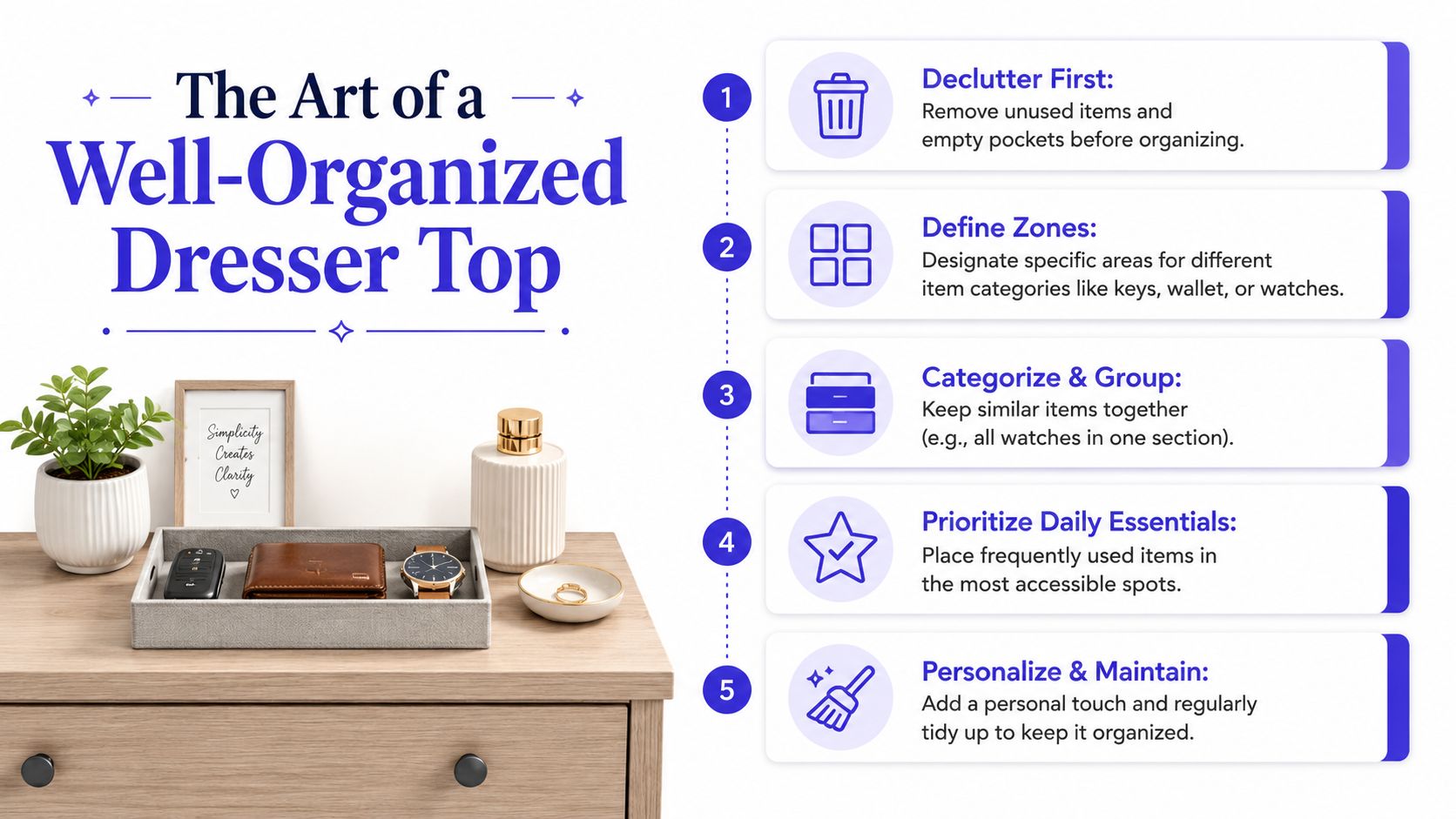
Build zones that match your hand movements
Think about the order in which you unload and reload.
Your watch usually comes off first. Keys and wallet follow. Rings and earbuds tend to be the smallest, so they need the most deliberate placement. A belt often needs either a dedicated edge zone or a nearby hook, not a cramped compartment.
A simple setup works well:
- Front-access spot for keys, because they need the fastest grab in the morning.
- Flat open bay for wallet and phone.
- Protected corner for watch and ring.
- Small contained nook for earbuds or cuff links.
- Adjacent placement for belt, rather than forcing it into the tray.
Keep the surface as edited as possible
The organizer should reduce what's on the dresser top, not give extra clutter a nicer place to sit.
That means receipts, random chargers, unopened mail, and spare grooming products need another home. If they stay around the organizer, the visual system breaks. If you need help beyond the tray itself, these conquer dresser clutter tips are useful for handling the overflow that usually spreads into drawers and nearby surfaces.
Practical rule: Every item on the dresser should answer one of two questions. Did I remove this today, or will I use this tomorrow morning?
A lot of people also benefit from pairing the organizer with a broader digital system for clothing and storage decisions. A good closet organizing app can help you keep the same logic across accessories, clothes, and dressing routines.
A quick visual demonstration can help if you want to see organizing principles in motion.
<iframe width="100%" style="aspect-ratio: 16 / 9;" src="https://www.youtube.com/embed/XYV8Xyksq_c" frameborder="0" allow="autoplay; encrypted-media" allowfullscreen></iframe>What works and what doesn't
Here's the trade-off in real use:
| What works | What usually fails |
|---|---|
| Visible compartments | One deep undivided bowl |
| Fixed landing spots | Constantly shifting item placement |
| Space around the tray | Filling every inch of the dresser |
| Separate area for delicate items | Tossing watch, keys, and ring together |
The best dresser tops look calm because the routine behind them is calm. That order isn't decorative. It's operational.
Visualize Your Full Outfit in Seconds
The organizer handles the first five minutes of your morning. The next bottleneck is the outfit.
Once your watch, wallet, ring, and belt already have fixed positions, clothing decisions get easier because you can judge the whole look at once. That matters even more when you shop online. A shirt may look good on its own and still fail once you factor in the accessories you typically wear.

Use visual planning to cut weak outfit decisions
A common problem shows up after a man gets his dresser top under control. The accessories are organized, but the clothing choice is still made half-distracted, usually with too much confidence in a product photo.
A visual planning tool fixes that gap. It lets you check proportion, color balance, and overall mood before you buy something or set aside tomorrow's clothes. That is useful with menswear basics, where small shifts in fit, hem length, collar shape, or fabric texture can change the result more than people expect.
Flat-lay product photos usually give the cleanest previews. That makes retailer listings, marketplace posts, and secondhand finds much easier to judge without building a messy screenshot folder.
Build the outfit from the dresser up
Start with what is already sitting in front of you. If the organizer is holding a black strap watch, brown belt, silver ring, and slim cardholder, those details narrow the field fast. You can rule out the wrong shoe color, skip jackets that clash with the hardware tone, and stop buying shirts that only work in isolation.
That is the essential connection between physical organization and digital styling. The tray gives you the constants. The digital preview helps you test the variables.
If you want to assemble combinations instead of judging one item at a time, the outfit maker for men is a practical way to compare pieces before they reach your chair, your bed, or your return pile.
Here's what that changes in practice:
- You make faster decisions because the accessories and clothing are working from the same visual reference point.
- You catch mismatches earlier instead of realizing them after the item arrives.
- You shop with more discipline because every new piece has to fit the system you already use.
- You reduce duplicate purchases by seeing whether a new item adds a new look.
I use this approach most with workwear, travel packing, and secondhand shopping. Those are the situations where bad assumptions cost the most time. When the dresser top is organized and the outfit is previewed before purchase, the morning routine stops being a string of small corrections and starts feeling controlled.
You can also revisit saved looks later through try-on history. That helps when you are comparing a few versions of the same idea and want to choose the one that fits your actual routine best.
Styling, Maintenance, and Your Final Checklist
A mens dresser top organizer should look like part of the room and part of your routine. The best setups do both. They hold daily essentials in fixed positions, and they support faster outfit decisions because the visual cues on your dresser stay consistent from one morning to the next.
Material and placement shape that effect more than people expect. Warm wood dressers usually pair well with walnut, saddle leather, or matte metal accents. Dark, minimal bedrooms tend to look cleaner with black leather, smoked acrylic, or a low-profile valet tray. Position matters too. Centered under a mirror feels ordered and dress-focused. Set to one side near a lamp feels more casual and works better if the dresser also handles charging, grooming, or a catchall pocket dump at night.
Keep the organizer looking sharp
Good organizers age well when the upkeep matches the material.
- Leather surfaces need a quick wipe to keep dust out of seams and prevent a dull, tired look.
- Wood finishes should stay away from wet glasses, damp watches, and anything that can leave a ring.
- Compartments need regular resets so receipts, coins, collar stays, and loose change do not take over.
- Soft-lined sections should be checked for grit before you drop in a watch, ring, or sunglasses.
Do a two-minute reset once a week. That is usually enough to keep the system useful instead of decorative.
Final buying checklist
Use this before you buy:
- Map your daily carry before choosing size, depth, or compartment count.
- Measure the dresser top so the organizer fits the furniture and leaves open surface around it.
- Match the material to your room and to the accessories you typically wear.
- Choose clear zones for watch, wallet, keys, phone, and small metal items.
- Keep daily items visible and move occasional items to secondary spots.
- Avoid oversized trays unless you have a large dresser and a short list of items.
- Maintain it weekly so the layout stays consistent and useful.
The right organizer improves more than storage. It gives your morning a reliable starting point.
If you already have the physical side handled, apply the same discipline to clothing. Use the organizer to anchor your constants, then preview shirts, pants, jackets, and shoes against that baseline before you buy or get dressed. That combination is what turns a tidy dresser top into a complete style system. As noted earlier, the digital tool mentioned in this article is most useful when you treat it as an extension of the tray, not a separate habit.
Try Virtual Try-On Now
See how clothes look on you before you buy - works with any online store
Get Started Free