A Smarter Wardrobe Planning Guide for the Digital Age
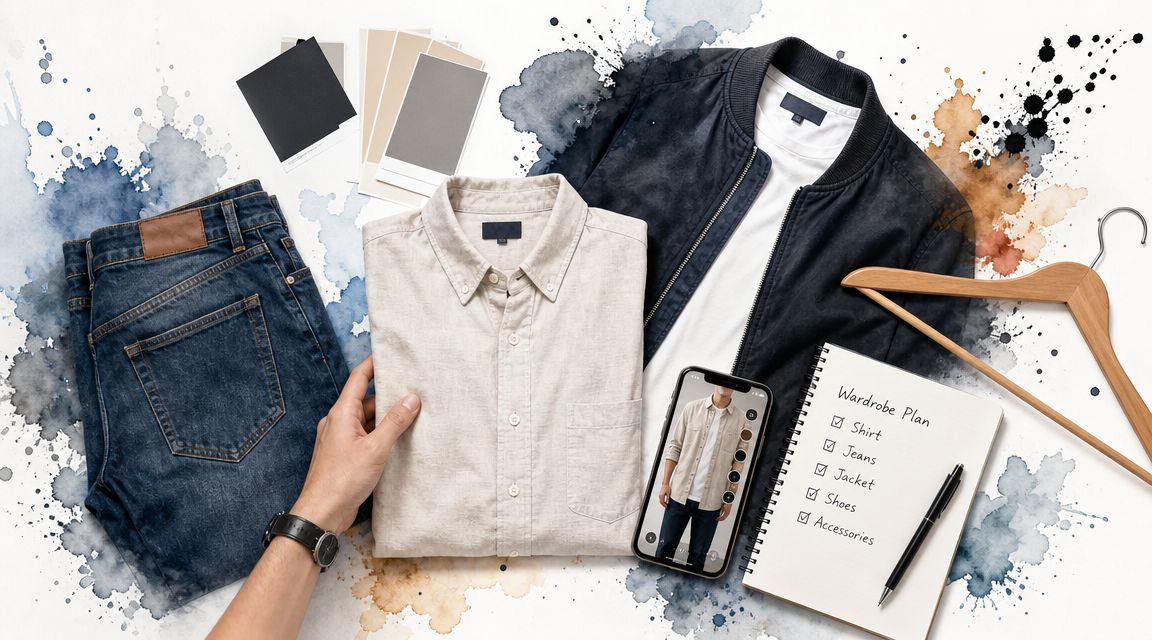
You open the closet, stare at a rail packed with clothes, and still reach for the same two outfits. Then you open Zara, H&M, Amazon, Vinted, or Depop and start browsing for “something new” because the problem feels like a lack of options.
Most of the time, it isn't.
Wardrobe planning works when it shifts your attention from owning more to using better. It gives you a way to edit what you already have, define what suits your life, and buy with enough clarity that each new piece has a job. That's where style gets easier, mornings get faster, and your shopping starts feeling much smarter.
From Closet Chaos to Wardrobe Clarity
A packed closet can hide a very small real wardrobe. I see this all the time. Plenty of people own lots of clothing, but only trust a narrow group of pieces that feel easy, flattering, and useful.
That gap creates the daily spiral. You try on three tops, reject two pairs of trousers, decide none of your jackets work, then leave the house wearing the same safe formula again. Later that night, online shopping starts to look like the fix.
It usually isn't the fix if the wardrobe underneath is still unclear.
Wardrobe planning is less about restriction and more about visibility. When you know what you wear, what feels like you, and what your week demands, getting dressed becomes creative instead of annoying.
A strong wardrobe doesn't begin with shopping. It begins with seeing your clothes honestly.
There's also a physical side to this. If shelves are stuffed and categories are mixed together, good items disappear into visual noise. If you want practical setup ideas while you refine your wardrobe, this guide on how to maximize your closet space is useful because storage and planning work better together.
The exciting part is that wardrobe planning doesn't ask for perfection. It asks for decisions. Keep what supports your style. Remove what keeps distracting you. Buy with a reason. Repeat.
The Great Closet Audit A Ruthless but Rewarding Start
The audit is often postponed, and it's also the part that makes everything else easier. A practical expert workflow for wardrobe planning starts by emptying the wardrobe, trying on items, and sorting them into three bins: pieces you love and wear often, pieces you like but rarely wear, and items you do not like or that no longer fit, as outlined in this closet-audit workflow.
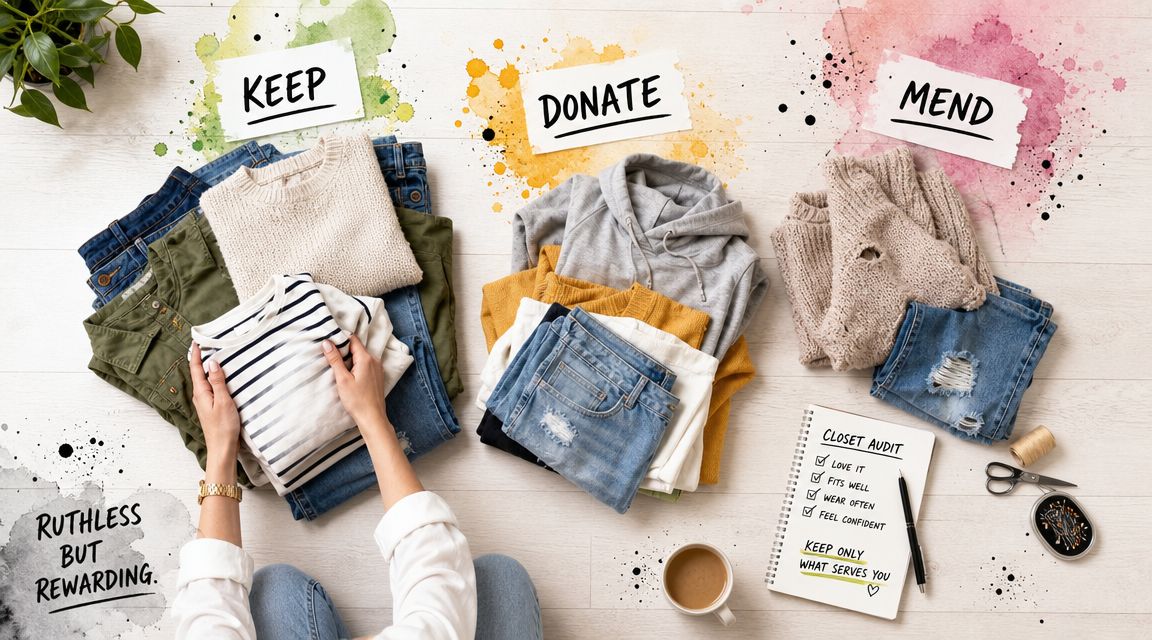
Pull out everything
Don't audit by peeking into corners of the closet. Put everything on the bed, chair, floor, or a clean open area. You need frictionless comparison.
That means jeans next to jeans, knitwear next to knitwear, and jackets where you can judge them in one glance. Hidden duplicates become obvious fast.
Use the three-bin method properly
The bins only work if you're strict.
- Love and wear often includes the pieces you reach for without negotiating with yourself.
- Like but rarely wear is the danger zone. These items often create clutter because they look promising but don't perform in real life.
- Do not like or no longer works should leave your active wardrobe.
If you blur the categories, the audit turns into a sentimental exercise instead of a planning tool.
Practical rule: If an item only works with one very specific bra, shoe, weather condition, or mood, it may not be carrying its weight.
Read the data hiding in your clothes
The point isn't only to declutter. It's to identify patterns.
Look at the keep pile and ask:
- Which colors show up repeatedly?
- Which necklines, rises, lengths, and silhouettes feel easiest?
- Which fabrics do you enjoy wearing for long days?
- Which categories are overrepresented?
- Which categories are weak or worn out?
Wardrobe planning becomes useful. You're no longer saying, “I need more clothes.” You're saying, “I rely on dark trousers, soft knit layers, and clean sneakers, but my outerwear is weak and my event options are thin.”
Treat the maybe pile like a lab
The middle category deserves close attention because it often reveals why shopping goes wrong.
Some maybe items are telling you the color is wrong. Others reveal that the cut is awkward, the care is too high-maintenance, or the styling burden is too heavy. Keep notes. Those notes become shopping filters later.
A digital closet tool can help here too. If you want a way to review combinations from the clothes you already own, shop your closet visually before adding anything new.
Here's the standard I use:
| Category | Keep active | Review later | Remove |
|---|---|---|---|
| You wear it often | Yes | ||
| You like it but avoid it | Yes | ||
| It no longer suits your life | Yes | ||
| It needs replacement soon | Yes | Yes |
A good audit feels slightly uncomfortable. That's how you know you're being honest.
Creating Your Personal Style and Lifestyle Blueprint
A good wardrobe plan starts at 7:30 on a Tuesday, when you need to get dressed quickly and still look like yourself. If the outfit works for your schedule, your comfort, and your budget, your style is doing its job.
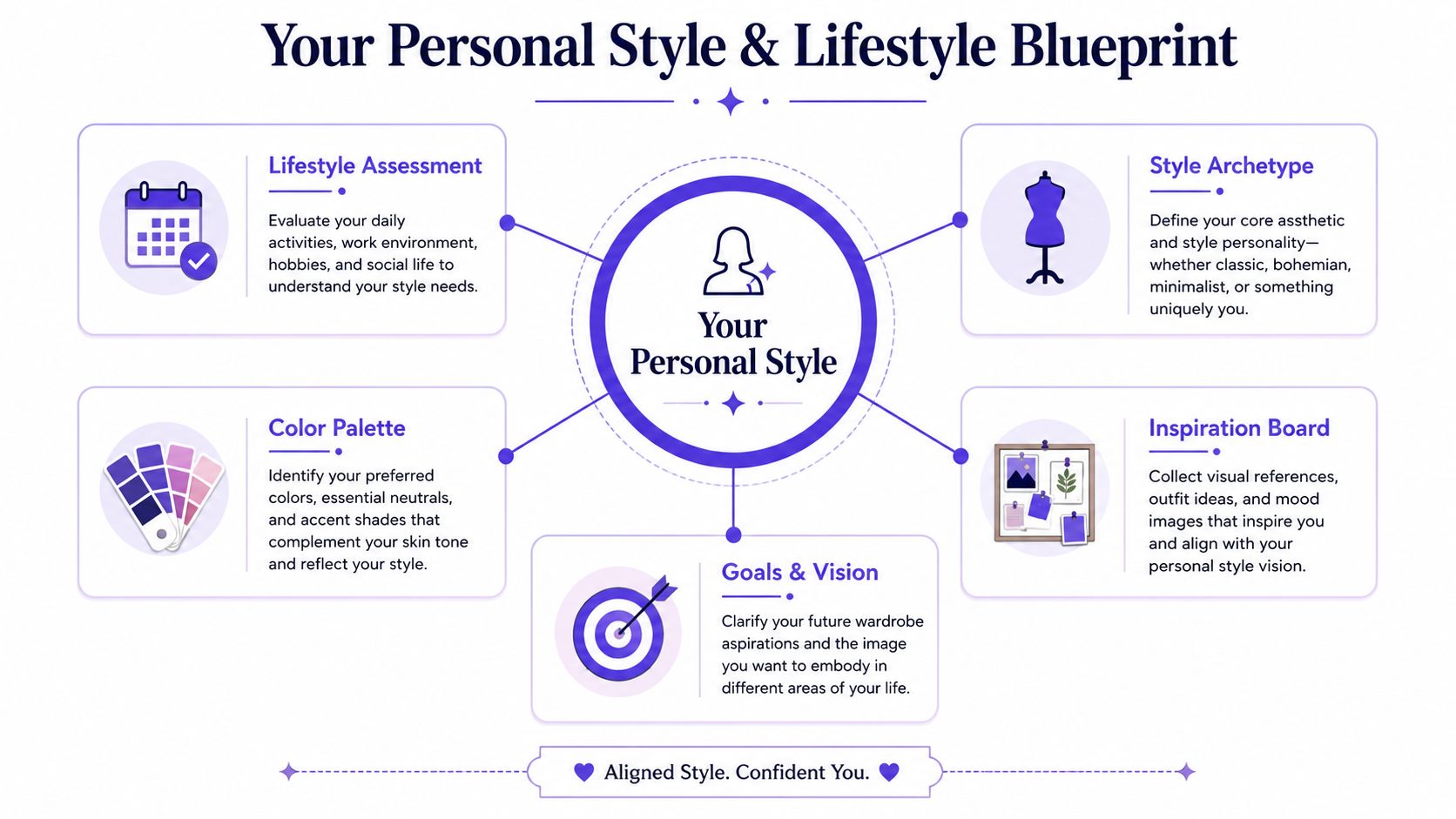
Start with your actual life
Mood boards are useful later. First, map the life your clothes need to support.
Write out a normal month, not an ideal one. Include office days, work-from-home days, school drop-offs, errands, dinners out, travel, weather swings, and anything that creates a dress-code shift. Many wardrobes feel disjointed because they were bought for isolated moments, while daily life asks for repeatable outfits that can handle movement, layering, and long wear.
A clear blueprint usually covers four areas:
- Work demands Meetings, commuting, desk time, client-facing days, and how polished you need to look
- Personal time Weekends, exercise-adjacent errands, casual social plans, and downtime
- Event frequency Weddings, date nights, networking events, religious gatherings, or formal obligations
- Climate reality Heat, rain, cold, indoor air conditioning, and how often you need outer layers
This step saves money. It also makes shopping calmer, because you stop chasing pieces for a version of life that barely shows up.
Build a color system that makes outfit-building easier
A workable palette reduces friction. It also makes online shopping less risky, because you can tell faster whether a new item will connect with what you already own.
Many capsule methods use a tight range of core colors and keep the total wardrobe edited, with some approaches organizing a season around about 30 pieces, according to this capsule wardrobe planning guide. The point is not the exact number. The point is visual consistency and easier mixing.
Use a structure you can repeat:
- Base colors Two to four shades that carry most of your wardrobe, such as navy, black, cream, olive, grey, or brown
- Light neutral One shade that opens up combinations and softens heavier looks
- Accent colors A small set of tones that add personality without making everything harder to pair
- Finish direction Decide whether your wardrobe reads clean, relaxed, sharp, soft, warm, or cool, then keep accessories in line with that choice
If you want a practical framework, this guide on how to build a capsule wardrobe is a useful reference point.
Define style through shape, not labels
Style becomes easier to repeat when you describe it in cuts and proportions. “Minimal,” “classic,” or “edgy” can be too vague to shop from. Straight trousers, cropped jackets, open necklines, soft knits, and low-contrast sneakers are specific. Specific gets results.
Pay attention to the shapes that earn wear without effort. Those are usually your real signatures. A silhouette that works three times a week is more valuable than a striking piece that needs special styling, special weather, and a special mood.
I also look at styling burden here. Some pieces are attractive in theory but expensive in practice because they need the right bra, the right shoe height, dry cleaning, or a level of confidence you do not want to manufacture on a Wednesday morning.
Turn the blueprint into a buying filter
Wardrobe planning now incorporates a modern approach. The blueprint is not only for organizing what you own. It should guide what you buy next, especially online.
Before adding something to cart, check it against three questions:
- Does it fit one of your real-life categories?
- Does it match your color and silhouette system?
- Can you picture at least three outfits with pieces you already own?
That last question matters. It is also where visual tools help. TryThisFit can be useful here because it lets you test how a new item might sit inside your existing wardrobe before you commit, which solves a big part of the online shopping dilemma.
If you want to go deeper on intention before you buy, create your purpose-driven wardrobe.
Add one simple tracking habit
Use the backwards-hanger method for a season, or keep a note on your phone with your most-worn formulas. Both work.
The goal is to spot repeat behavior early. If you keep wearing the same trouser shape, the same shoe profile, and the same three layering pieces, your blueprint is getting clearer. If you keep buying romantic tops but reaching for simple knits, that gap matters more than any trend report.
Building Your Capsule and Prioritizing Your Shopping List
A workable capsule is usually already hiding in your closet. After the audit, the pattern becomes obvious. You have a small set of pieces that earn their place because they fit, coordinate, and show up in real life.
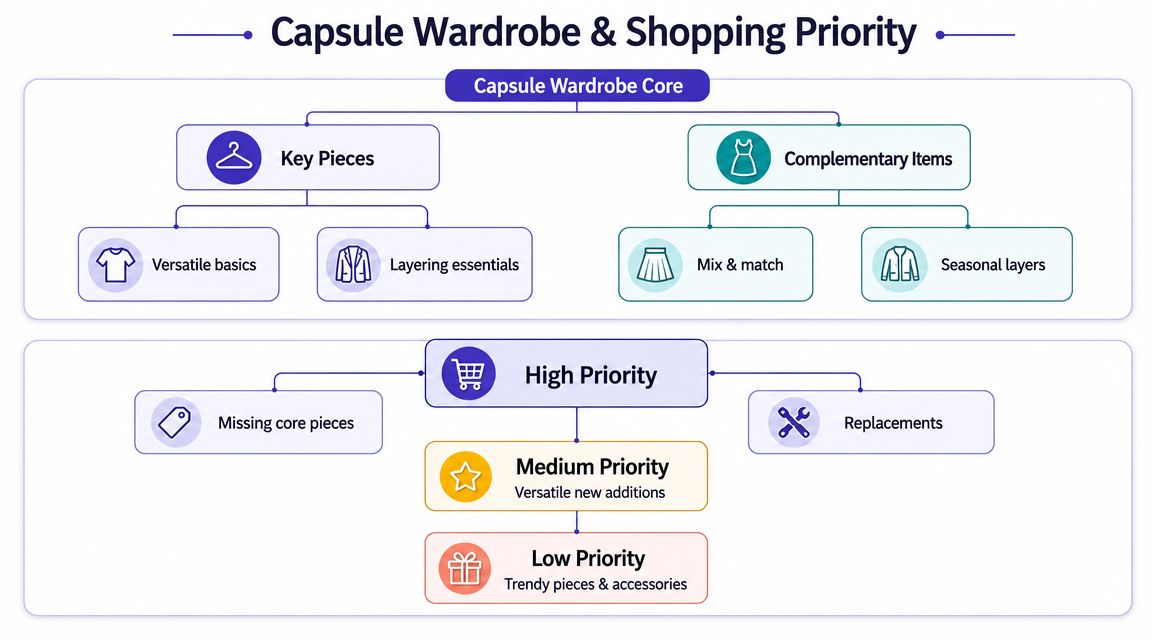
Pull your capsule from the keep pile
Start with the clothes that carry your week with the least effort. A good capsule is built on repeat wear, comfort, and range. It should handle school runs, client calls, dinner plans, weather changes, and laundry timing without forcing you into outfit gymnastics.
Pull out the pieces you reach for on ordinary days and sort them into a few practical groups:
- Reliable tops Shirts, tees, knits, or blouses that layer well and do not need special styling to work
- Anchor bottoms Trousers, jeans, or skirts that support multiple shoes and tops
- Outer layers Blazers, jackets, cardigans, or coats that finish an outfit and extend its use
- Shoes with mileage Pairs that already prove their value across your schedule
- One-step pieces Dresses or jumpsuits that save time and still feel like you
Then test the capsule the way a stylist would. Build quick combinations. If a piece only works with one exact top, one exact bra, or one exact shoe, it is a specialist item, not part of your core.
That distinction saves money.
Write a shopping list in priority order
Once the core is visible, the shopping list gets sharper. Skip vague categories like "spring refresh" or "better basics." Write down the exact item, the job it needs to do, and the reason it belongs in your wardrobe.
| Priority | What to buy | Why it matters |
|---|---|---|
| High | Replacement black ankle trousers | Existing pair is worn and heavily used |
| High | Neutral layering knit | Supports work and weekend outfits |
| Medium | Smart flat shoe | Bridges casual and polished outfits |
| Low | Trend-led printed skirt | Nice addition, not a core gap |
This is also where shopping gets more strategic than traditional wardrobe advice allows. Instead of building a list from inspiration photos alone, use your actual capsule as the filter and your visual tools as a check before you buy. If you want a more detailed process for assembling the foundation first, this capsule wardrobe guide is a useful reference.
Consumer interest in this approach is growing. One market report estimated the capsule wardrobe market at USD 1.3 billion in 2023 and projected it to reach USD 2.6 billion by 2030, reflecting stronger demand for multifunctional pieces and more intentional buying, according to this capsule wardrobe market report.
Separate needs from temptations
Every polished wardrobe includes some personality pieces, but they need support. A satin bias skirt is hard to justify if you do not own the right tops, layers, or shoes to wear it three different ways. A replacement boot, on the other hand, may look less exciting and improve twenty outfits at once.
Use a simple three-part filter:
- Need Replaces a worn workhorse or fills a repeated gap
- Useful want Adds range to the wardrobe without creating new problems
- Pure temptation Beautiful on the product page, weak in your actual outfit rotation
I use this test with clients constantly because it cuts through fantasy shopping fast. It also makes room for joy. Once the needs are covered, your wants become easier to choose well because they have a system to land in.
If you want another perspective on buying with intention, this piece on how to create your purpose-driven wardrobe is worth reading.
Shop Smarter How to Visualize Outfits Before You Buy
You find a jacket at 11:30 p.m. The price is good, the model styling is convincing, and the product page makes it feel like an easy yes. Then the package arrives, and the problem shows up fast. The cut is fine, but it does nothing with the trousers, shoes, and layers you wear.
That is the buying problem wardrobe planning needs to solve. The issue is rarely whether a piece is attractive on its own. The real question is whether it earns its place in your outfit rotation before you spend the money.
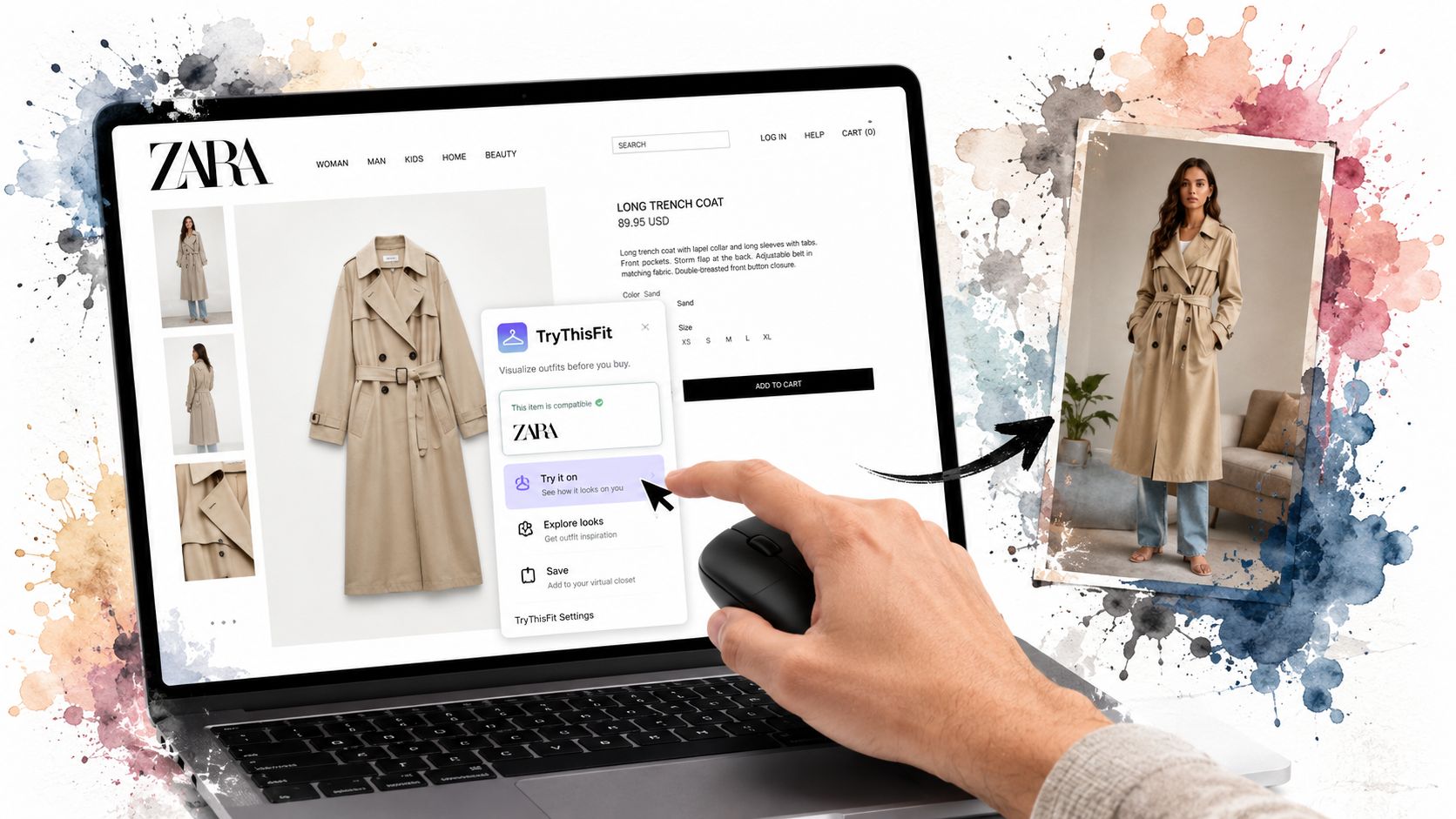
A useful gap in most wardrobe advice is outfit testing before purchase. Existing guidance often tells shoppers to try combinations or focus on fit, but it rarely gives a practical workflow for checking how a new item works with clothes you already own, especially online shopping, as noted in this style-planning article on outfit testing.
That gap matters because shopping now happens across product pages, resale apps, saved tabs, and carts built on impulse. Good wardrobe planning is not only about editing. It is also about acquiring with accuracy.
Use a visual filter before checkout
Before adding anything to cart, run it through a short styling test:
- Does this look like my style or the retailer's styling team?
- Can I name three outfits immediately using pieces I already own?
- Does the color work with my actual wardrobe?
- Is this filling a real gap or creating one?
Those questions sound basic. They save a surprising amount of money.
For online shopping, I treat visualization as a screening step. TryThisFit lets you preview how a garment looks on your photo, which is far more useful than guessing from a model shot alone. Flat-lay images usually give the cleanest preview because the shape of the item is easier to read. If you are new to the category, this guide explaining what a virtual try-on app does gives a clear overview. The right-click browser workflow also matters in practice because speed determines whether you will use the tool while browsing Zara, H&M, Shein, Vinted, Depop, or Amazon fashion listings.
The goal is not to confirm sizing. The goal is to judge the look fast enough to make a better buying decision.
Build a purchase workflow that saves time
A strong digital shopping routine is simple:
- Start with your shopping list so browsing stays contained.
- Open only the items that match the list instead of saving ten maybes.
- Preview the appearance before buying.
- Check it against your existing wardrobe or saved outfit references.
- Buy only if it improves your options enough to justify the cost.
I use this process with clients because it exposes weak purchases quickly. A top can be pretty and still be useless. A shoe can feel boring on the product page and become one of the hardest-working items in the closet.
Here's a quick visual walkthrough of what that shopping flow can look like in practice.
<iframe width="100%" style="aspect-ratio: 16 / 9;" src="https://www.youtube.com/embed/XdKi5NGWqHQ" frameborder="0" allow="autoplay; encrypted-media" allowfullscreen></iframe>This matters even more for secondhand and special-event shopping
Secondhand shopping rewards clear judgment. On Vinted or Depop, you often get one seller photo, limited measurements, and no second chance once the item is gone. Event dressing has a similar trap. People buy for a fantasy version of the occasion, then end up with something awkward, overstyled, or impossible to rewear.
A quick visual preview helps you decide whether the style direction works before emotion takes over. That matters most in categories where returns are limited, shipping costs add up, or the item is only available once.
The best wardrobe planners are not the people who buy the least. They are the people who can see, before checkout, whether a piece belongs.
Outfit Batching and Maintenance for Effortless Style
Monday at 7:42 a.m. is a bad time to decide who you want to be in a striped shirt. Wardrobe planning starts paying off when getting dressed feels quick, clear, and repeatable.
That is where outfit batching earns its place. Build several outfits in one focused session each week or month, based on your actual calendar, then photograph them and keep a simple note on what made each one work. You do the thinking once and reuse the result.
That habit matters because wardrobes are often used far less than people assume. Average wardrobe utilization is only about 20 to 30%, according to OpenWardrobe's wardrobe statistics overview. In practice, that means a large share of the closet stays idle unless you make the good combinations visible and easy to repeat.
Batch by context, not by item
Styling by item sounds productive, but it often turns into busywork. Trying to create ten outfits around one skirt can be useful for content. It is less useful for a real Tuesday.
Batch by the situations you dress for:
- Workday set Include an outer layer, shoe option, and bag so the outfit is finished.
- Weekend set Build around comfort first, then add one detail that keeps it polished.
- Social set Prepare one or two evening formulas you know you will reach for.
- Travel or weather set Group practical combinations ahead of time so temperature or transit does not derail the look.
This method reflects how people get dressed. You are not searching for creativity every morning. You are selecting from solutions you already tested.
Save outfits when you feel good in them. Confidence is easier to repeat than invent.
Keep the system usable
A wardrobe stays strong through maintenance, not enthusiasm. Small checks prevent the usual drift back into clutter, duplicates, and last-minute panic buys.
- Use one-in, one-out in categories that fill up fast, especially knits, denim, and shoes.
- Rotate by season so the clothes you need now are visible and the rest stop distracting you.
- Replace tired basics early because a worn tee or dead pair of boots can break five outfits at once.
- Review saved outfit photos before shopping so you buy into a working system instead of reacting to mood.
If you use digital try-ons while planning, saved visuals help here too. I like having a quick archive of outfit ideas because it shows whether a new purchase would create fresh combinations or just repeat what is already hanging in the closet. TryThisFit can support that review process by giving you a visual record to compare against before you add one more maybe.
Your Wardrobe Reimagined
A wardrobe works best when it makes decisions easier. You can see what fits your life, what already earns its place, and what would improve the mix instead of draining your budget.
That shift matters. Wardrobe planning is not only about removing clutter from a rail or drawer. It is about buying with a clearer eye, especially if online shopping has been your weak spot. The main win is fewer regret purchases, more wearable combinations, and a closet that reflects your taste instead of your last impulse buy.
Good style rarely comes from one big reset. It comes from a series of better calls. A sharper audit. A style blueprint that matches your real week. A short shopping list with priorities. A visual check before you click buy. Simple upkeep that keeps the whole system useful.
If your closet feels crowded, random, or oddly incomplete, treat that as information.
TryThisFit can help make the planning process visual. Use it to compare pieces before you buy, test whether a trend works with your proportions, and review saved outfit ideas from your earlier try-ons as noted earlier in the article. That makes wardrobe planning feel less like guesswork and more like editing a collection with purpose.
Your wardrobe does not need more volume. It needs better decisions.
Try Virtual Try-On Now
See how clothes look on you before you buy - works with any online store
Get Started Free