Master Outfit Planning for Vacation: Pack Smart, Travel Chic
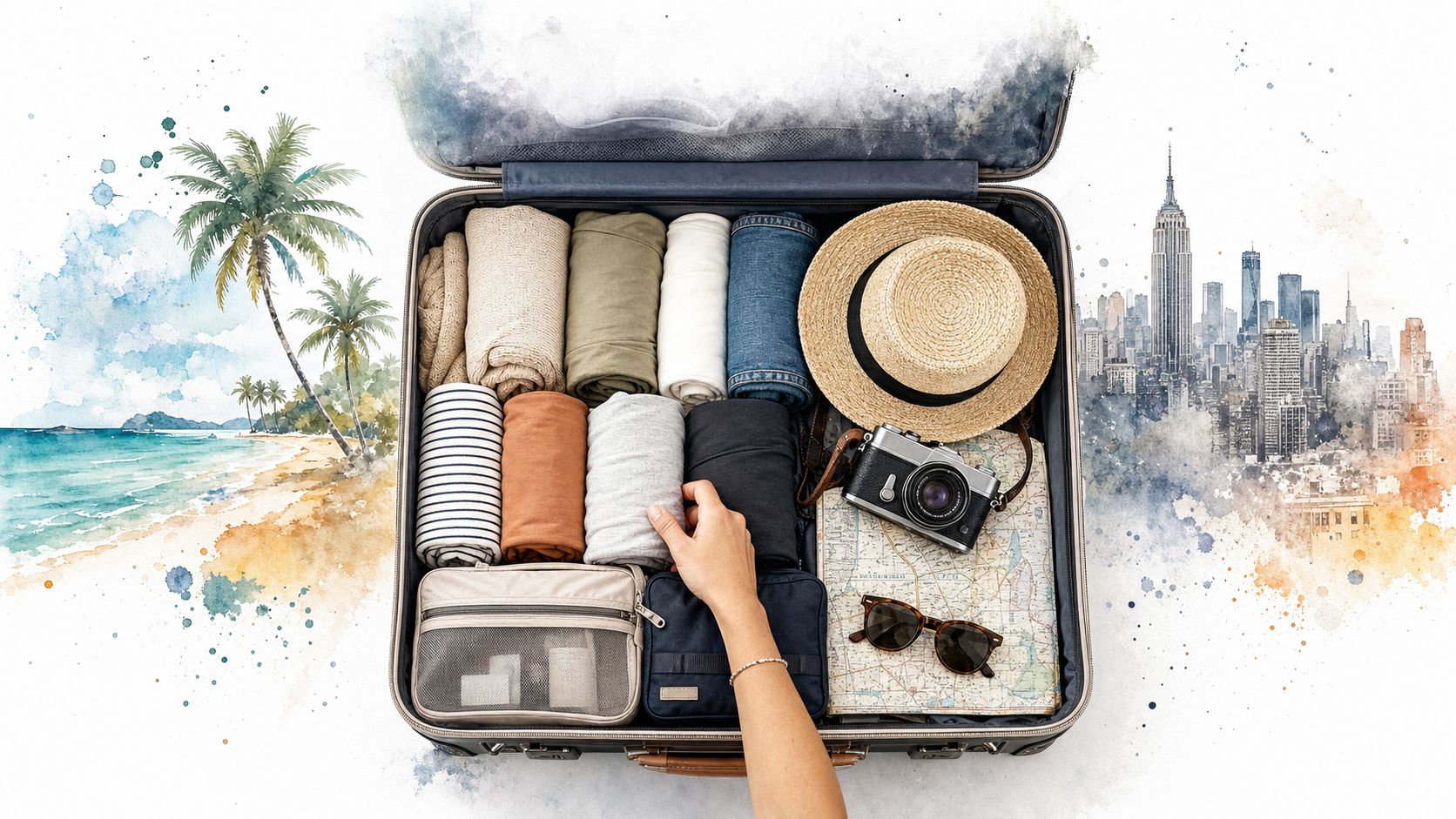
A vacation often starts with a familiar mess. Clothes are draped over the bed, shoes are lined up on the floor, half the closet is suddenly under review, and the suitcase still looks both too small and strangely empty.
That spiral usually has nothing to do with not owning enough. It comes from not knowing which pieces will work once you land. Good outfit planning for vacation fixes that before packing day gets loud.
The End of Pre-Trip Packing Panic
Most overpacking starts as a confidence problem, not a closet problem. A survey of 2,000 women found that 77% pack extra clothing because they're afraid they won't be able to decide what to wear on vacation. That's decision fatigue packed in fabric form.
I see the same pattern all the time. Someone packs three “maybe” dresses, two backup pairs of pants, and a top they don't even like that much, just because it might somehow save the trip. It never does. The result is a heavy suitcase and a hotel-room fashion crisis anyway.
What panic packing looks like
It usually sounds like this:
- Just in case thinking: You pack for a dinner you haven't booked, weather that might not happen, and moods you haven't had yet.
- Single-item decisions: You choose pieces one by one instead of building full looks.
- No preview step: You assume things go together because they technically can, not because you've seen the full outfit.
Practical rule: If an item doesn't already belong to a specific vacation look, it's probably a “just in case” piece.
That's why the smartest shift is simple. Stop asking, “What should I bring?” and start asking, “What will I wear on Tuesday morning, Friday dinner, and the travel day home?”
That one change turns packing into styling. It also makes budget shopping sharper. If you're refreshing a trip wardrobe without overspending, this guide to smart styling on a shoestring budget pairs beautifully with a packing plan because it keeps the focus on polish, not volume.
A better way to plan
A strong vacation wardrobe feels light, intentional, and easy. You open your suitcase and every piece already has a purpose.
That's the whole point of outfit planning for vacation. Less guessing before the trip, less dithering during the trip, and more time enjoying where you are.
Map Your Itinerary and Weather
Don't start in your closet. Start with your calendar.
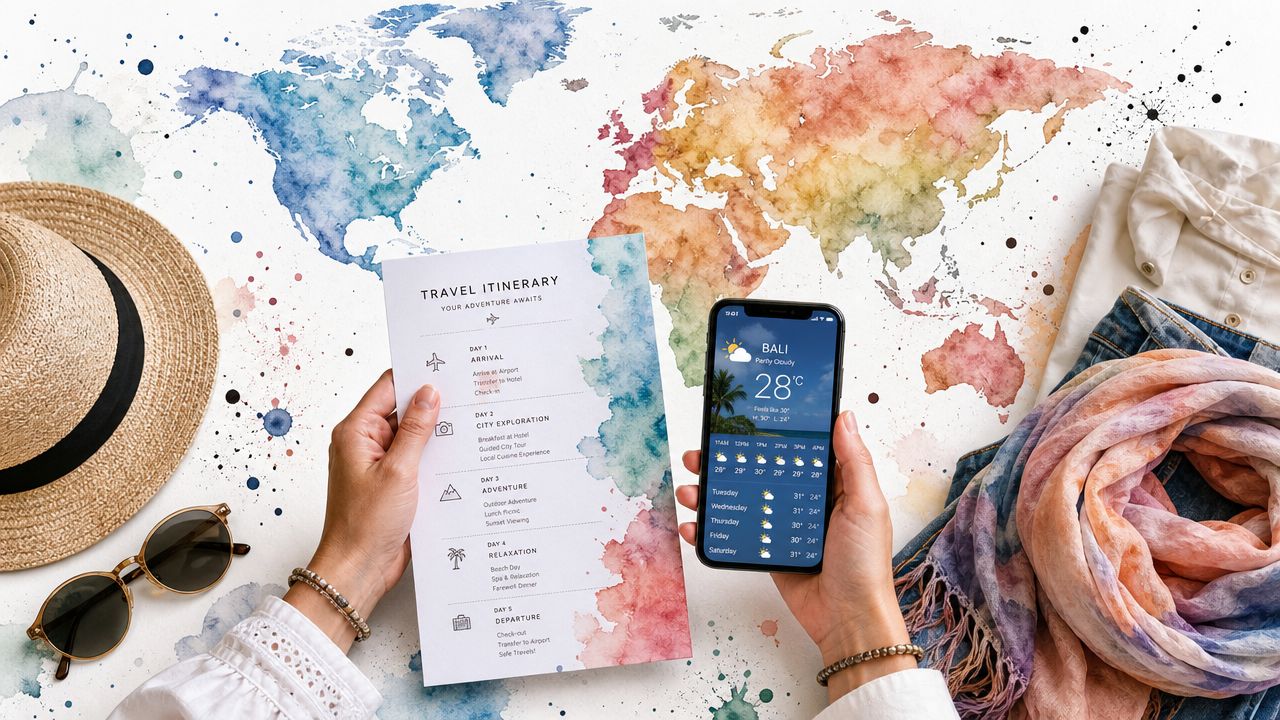
The easiest way to pack well is to break the trip into outfit moments. A museum day needs something different from a pool afternoon. A flight look has different demands than a dinner reservation. Once those moments are visible, the wardrobe becomes much easier to build.
Build the trip on paper first
Make a quick list by day. Nothing fancy. Just capture the core shape of the trip.
-
Travel day
Think comfort, layers, and shoes you can walk in. -
Daytime exploring
Museums, coffee runs, shopping streets, long walks, beach promenades, whatever your actual plan is. -
Evening looks
Dinner, rooftop drinks, concerts, or “nice but not fussy” outfits. -
Activity-specific needs
Swimwear, hiking clothes, workout pieces, or something modest for religious sites.
A one-week trip might include repeat categories, and that's useful. Repetition tells you where rewearing makes sense.
Weather should guide the plan, not hijack it
Long-range forecasts tempt people into packing extremes. That's how a suitcase ends up with a chunky knit, linen shorts, and two emergency jackets for one city break.
According to weather guidance summarized here, forecasts beyond 3 to 5 days have less than 60% reliability, and finalizing your packing list 24 to 48 hours before departure is more effective. That's one of the best reasons to hold off on final outfit counts until the last stretch.
Check weather late, not early. Early forecasts inspire fantasy packing.
Use layers instead of backup outfits
When weather swings, don't build separate wardrobes. Build adaptable looks.
A few pieces do a lot of work:
- A light layer: cardigan, overshirt, denim jacket, or thin knit
- One weather-flex shoe: something that can handle walking and still look presentable at dinner
- A scarf or wrap: useful on planes, cool evenings, and over-air-conditioned interiors
- A compact bag: one that works day and night if you switch the styling
Outfit planning for vacation becomes practical. You're not trying to predict every possible condition. You're matching real activities with flexible pieces.
A fast check before you move on
Ask these questions:
| Question | Why it matters |
|---|---|
| Do I know what I'm doing each day? | It keeps packing tied to reality |
| Which outfits need comfort first? | Walking-heavy days need different priorities |
| Which moments need polish? | This prevents random dressy extras |
| Where can one look stretch across two activities? | That's where suitcase space is saved |
Once that map is done, picking clothes gets much easier because every item has a job.
Build Your Destination Capsule Wardrobe
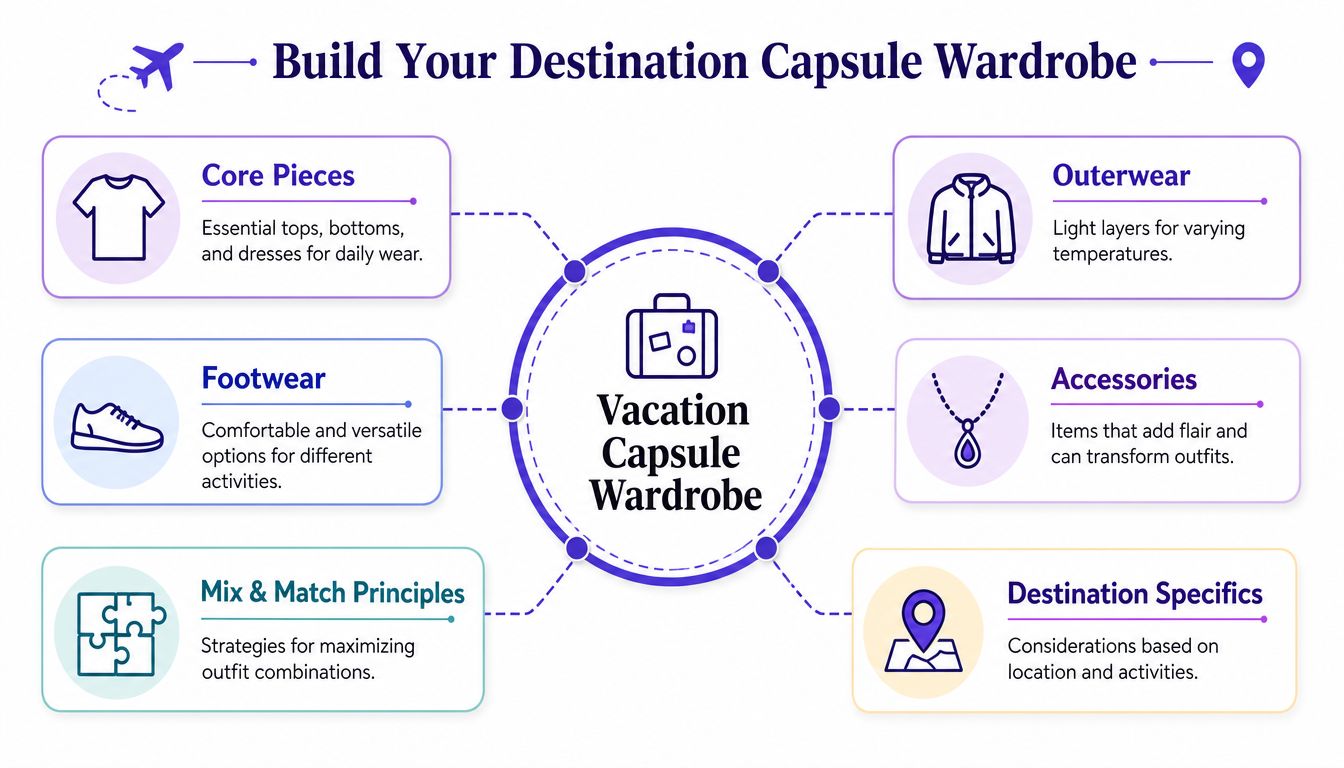
Style meets restraint. You don't need endless options. You need a small set of pieces that cooperate.
Expert stylists use a clear framework for vacation wardrobes: start with 2 to 4 bottoms, lock in a 4 to 5 color palette, and make sure every top works with every bottom. That formula is so effective because it blocks the biggest packing mistake, which is bringing attractive pieces that don't belong to the same wardrobe.
Start with a color story
A tight palette makes a suitcase look edited before you've even zipped it. Neutrals do the heavy lifting, then one accent color adds personality.
A palette might look like this:
- Foundation neutrals: black, cream, denim, tan
- Accent choice: olive, rust, red, cobalt, or soft pink
- Metal direction: gold or silver, but pick one if you want accessories to feel cohesive
If you're planning a European city trip, destination style can help refine the mood. A good Parisian style guide is useful here because it shows how a compact wardrobe can still feel polished and specific to place.
Pick bottoms first
Bottoms create structure. Tops multiply options.
For most trips, I'd rather have fewer bottoms that work hard than a larger mix that fractures the wardrobe. Think straight-leg trousers, denim, a skirt, structured shorts, or relaxed linen pants depending on the destination.
A top can be a mood piece. A bottom has to earn its spot.
Use the all-with-all test
This is the filter that keeps a capsule honest. Lay out your tops and ask if each one works with every bottom you've chosen.
If a top only works with one skirt and one exact bra and one exact pair of shoes, it isn't versatile enough for travel. Beautiful item. Bad suitcase item.
Keep the wardrobe balanced
A practical vacation capsule usually includes a mix of these roles:
-
Reliable basics
These are the pieces you can wear twice without thinking. Tanks, tees, easy shirts. -
Statement helpers
One printed blouse, one fun dress, one top with a little shape or texture. Enough to keep the trip feeling stylish. -
Layering pieces
The item you throw on in the morning chill or in over-air-conditioned restaurants. -
Shoes with range
Walking shoes, a second pair for warmth or polish, and maybe one dressier option if the trip calls for it.
If you want a deeper framework for building this kind of system beyond one trip, the guide on how to build a wardrobe is a smart reference.
What doesn't make the cut
Some items look tempting but rarely survive real travel use:
- High-maintenance fabrics: anything that wrinkles if you breathe near it
- One-outfit shoes: cute, but they take up too much space for too little return
- Pieces that need perfect conditions: weather, undergarments, or confidence levels that may not line up on the trip
A capsule wardrobe shouldn't feel strict. It should feel liberating. You know everything works, so getting dressed becomes fast and fun.
Create and Visualize Your Daily Looks
The old-school method is to spread everything across the bed and hope the combinations feel obvious. Sometimes that works. Often it just creates a bigger mess and leaves you squinting at a pile of tops that all looked more useful on hangers.
A stronger move is to create full looks before packing day and review them visually. That's the difference between owning versatile pieces and using them well.
Do a digital dress rehearsal
The biggest advantage of digital planning is clarity. You're not guessing whether a striped knit and wide-leg pants have the vibe you want for a travel day. You can preview the appearance of the whole look and decide immediately.
This works especially well when the trip includes a few uncertain pieces, like a new dinner dress, a backup sandal, or something secondhand that hasn't arrived yet. Instead of waiting until the night before departure, you can sort it out while the plan is still flexible.
According to TryThisFit's guidance, clean flat-lay clothing photos work best for accurate style previews. That tracks with real use. Flat lays show the shape and details clearly, while photos on models or slouchy, baggy images can muddy the result.
How to make each look easier to evaluate
Use a simple checklist for each outfit:
- Does it match the activity? City walking, dinner, train day, beach lunch
- Would you happily wear it for several hours? Style doesn't help if you're adjusting it all day
- Can you swap one piece and create a second look? That's where real packing efficiency happens
If an outfit only works in theory, it doesn't belong in the suitcase.
One of my favorite ways to plan is to create a mini lineup by day. Travel day, first full day, dressy evening, repeatable daytime formula, and one flexible wildcard look. Once those are visible, the whole trip feels solved.
Shopping gaps before the trip
At this stage, digital try-on becomes especially useful. Sometimes the wardrobe plan reveals an actual gap. Maybe your walking sandal is tired, or your evening option feels too formal, or you need one more top that works with every bottom in the capsule.
Instead of opening ten tabs and mentally assembling outfits, it's easier to preview the style as you shop. If you browse Zara, H&M, Shein, Vinted, Depop, or even Amazon fashion picks, a virtual try-on workflow helps you see how it looks before you commit. That matters even more with secondhand shopping, where styling photos can be inconsistent and you can't try before buying.
A video demo makes the process easier to picture:
<iframe width="100%" style="aspect-ratio: 16 / 9;" src="https://www.youtube.com/embed/hZqwbv8PGr8" frameborder="0" allow="autoplay; encrypted-media" allowfullscreen></iframe>Keep your looks organized
Saving your outfit ideas in one place makes the final edit much calmer. It becomes a compact travel lookbook instead of a memory test.
If you like planning visually, a digital closet app can help you keep track of repeatable looks, color combinations, and shopping options without turning your bedroom into a fitting-room aftermath.
What works better than the bed method
Here's the actual trade-off:
| Planning method | Best for | Limitation |
|---|---|---|
| Bed layout | Quick checks with items you already own | Harder to compare many looks cleanly |
| Mirror try-on | Final comfort check | Takes more time and space |
| Digital visualization | Fast outfit comparison and pre-purchase styling | Best results depend on clear clothing photos |
The point isn't to replace common sense. It's to remove the fuzziness. When you can see how your vacation wardrobe comes together, you stop packing on emotion and start packing on evidence.
Smart Packing for Pristine Arrivals
Once the wardrobe is set, packing becomes a handling job. You're protecting the clothes, preserving the outfit plan, and making sure nothing turns into a wrinkled surprise at the hotel.
The first decision is fabric-based. Soft knits, tees, leggings, and many casual pieces do well rolled. Structured blazers, crisp shirts, and delicate fabrics usually prefer a more careful fold.
Pack by category, not by panic
Packing cubes make this much easier because they separate the wardrobe into usable sections. One cube for tops, one for bottoms, one for underlayers, one for sleepwear. You don't have to excavate the whole suitcase to find one thing.
A small, intentional setup often works better than one giant cube stuffed to capacity. The point is access, not compression at all costs.
A simple suitcase layout
Try this arrangement:
-
Heavier pieces near the wheels
Shoes, toiletry bag, and denser layers sit best there. -
Rolled daily items in the center
Easy to grab, easy to repack. -
Folded delicate items on top
Less pressure, fewer harsh creases. -
One spare bag tucked flat
Useful for laundry, wet swimwear, or the return trip.
Pack so you can open your suitcase and see categories, not chaos.
If you're refining the pieces you travel with most often, this roundup of wardrobe essentials is helpful for identifying the basics that earn repeat use.
What to buy and what to skip
Packing accessories are worth buying when they solve a real problem. Cubes are useful. A slim laundry pouch is useful. Shoe bags can be useful if you like order.
What usually isn't worth it is piling on gadgets that make the suitcase more complicated. If an organizer creates more sorting than convenience, leave it out. Travel style should feel easy once you arrive.
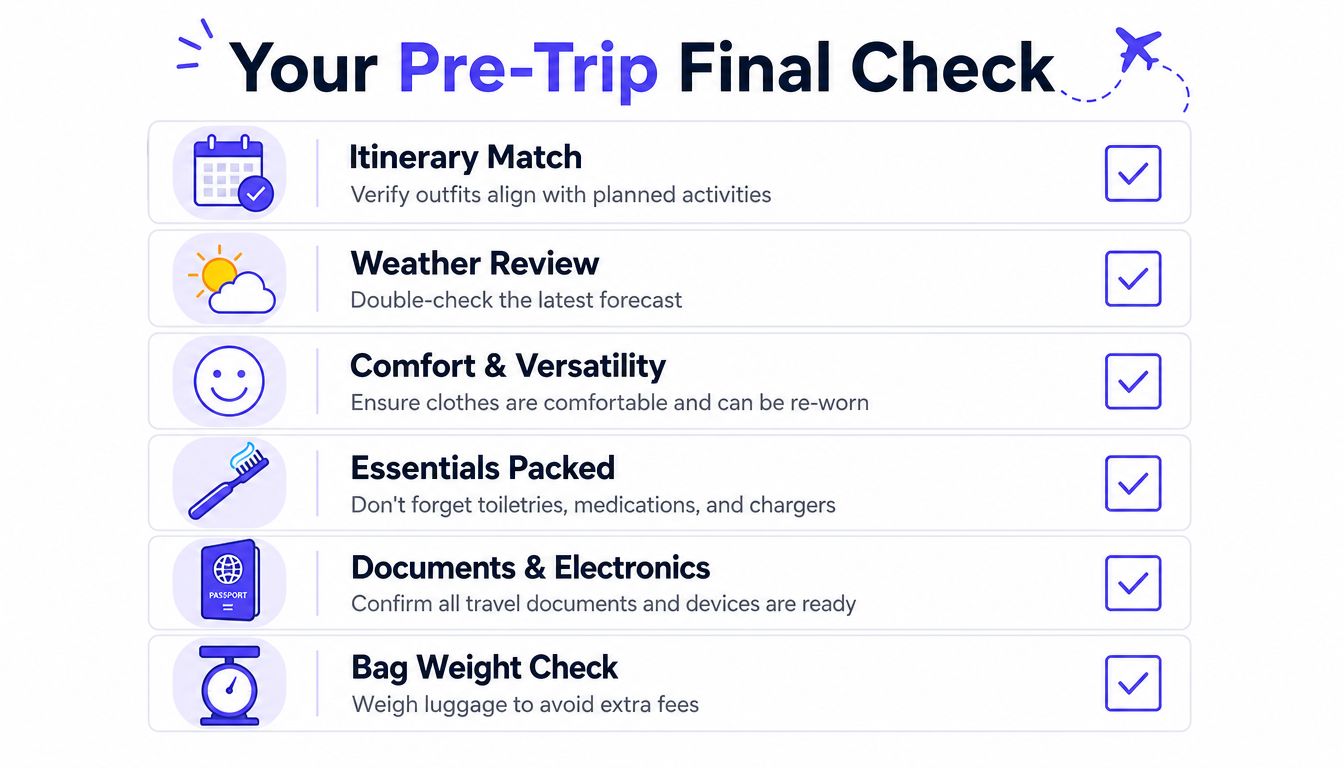
Your Pre-Trip Final Check
The final review is where all the earlier decisions pay off. Instead of staring at a random pile of clothing, you're checking a finished system.
For a typical week-long vacation, women need about 34 clothing items on average but often pack around 60, which means carrying 77% more clothing than necessary. The practical fix is simple: visualize day-by-day needs before packing.
Run a calm final review
Before the suitcase closes, check the wardrobe against the trip itself.
-
Activity match
Every major plan should connect to a real outfit. -
Repeat potential
The best travel pieces can come back in another look without feeling stale. -
Comfort honesty
If something only works on your best day, leave it home.
Look for friction points
The smartest final check isn't about adding more. It's about spotting the one item that could annoy you later.
Ask yourself:
| Question | If the answer is no |
|---|---|
| Do I have enough easy daytime looks? | Add one practical top, not a whole extra outfit |
| Do my shoes support the trip I'm actually taking? | Swap the pretty-but-impractical pair |
| Can I picture getting dressed quickly? | Simplify the options |
The best-packed suitcase feels edited, not heroic.
Keep your style visible
A saved visual lineup helps at this stage because you can scan the whole wardrobe in minutes. You're not trying to remember whether the black tank was meant for the linen pants or the skirt. You already decided.
That's the charm of outfit planning for vacation. It protects your energy. You leave home knowing your clothes work, your options are clear, and your suitcase supports the trip instead of complicating it.
If you want a faster way to preview vacation looks, shop missing pieces, and save your favorites in one place, try TryThisFit. You can test styles on the main app, browse your saved looks in try-on history, or install the free Chrome extension in seconds with the right-click try-on tool for Chrome. It works on any site, including Zara, H&M, Shein, Vinted, Depop, and Amazon, so you can see how it looks, decide what to wear, and pack with a lot more confidence.
Try Virtual Try-On Now
See how clothes look on you before you buy - works with any online store
Get Started Free