Styling Help Fashion: Define Your Look with AI
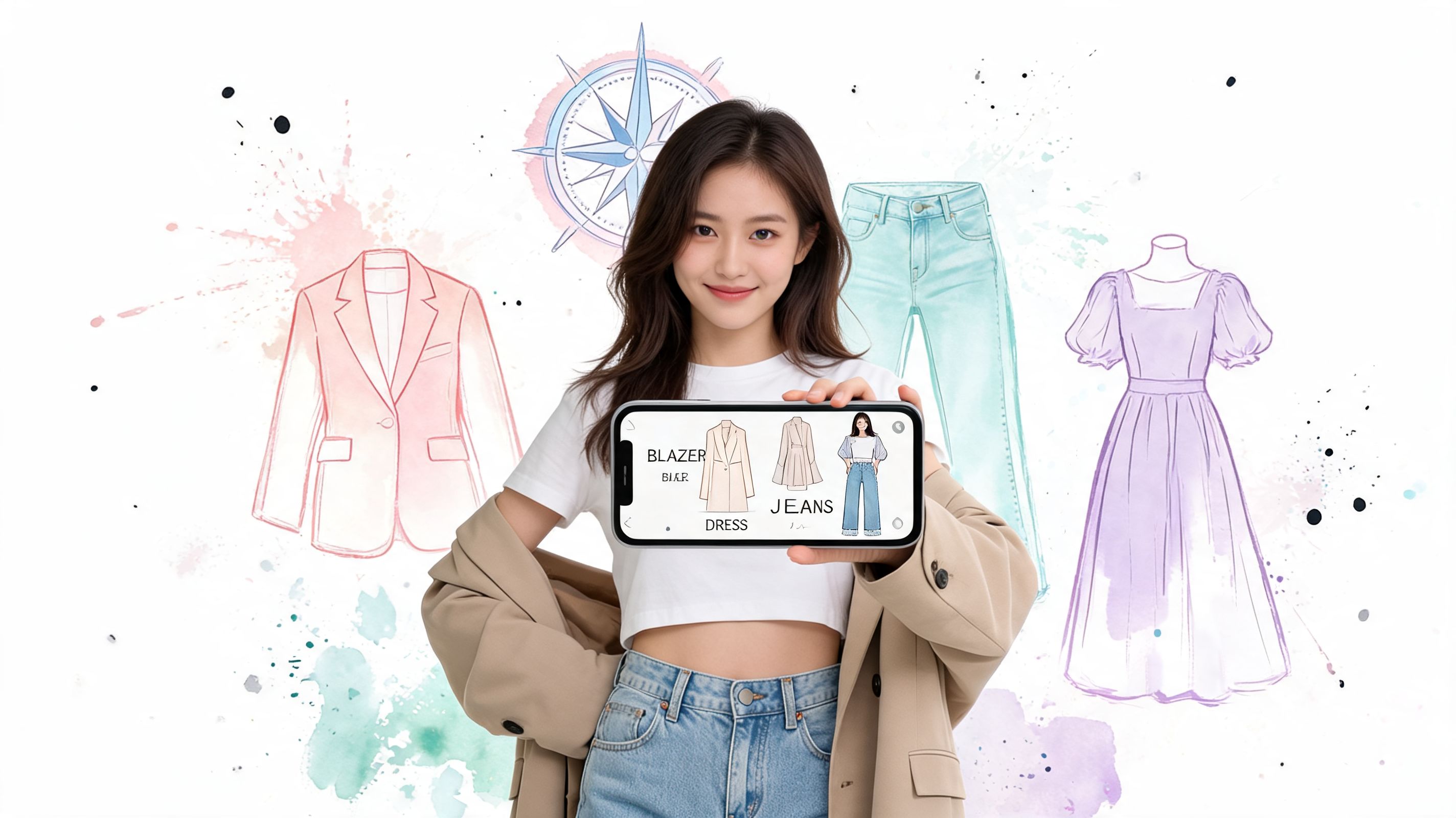
You’re probably in one of two places right now.
Your closet is full, but getting dressed still feels weirdly hard. Or your browser has fifteen tabs open with Zara, H&M, Amazon, Shein, and Vinted, and you keep thinking, “Cute on the model. But would I wear this?”
That’s the core styling problem. Not a lack of clothes. Not a lack of taste. A lack of clarity.
What's often missing isn't more trend reports; instead, the requirement is for styling help fashion advice that turns vague inspiration into outfits they’d wear. And that matters because style is personal. A SmartBuyGlasses survey found that 70% of people feel their fashion choices reflect who they are, while mood and weather influence daily outfits far more than social media trends.
I’m opinionated about this. Stop trying to become “more fashionable” in the abstract. Start building a style system you can use on an ordinary Tuesday, a lazy Saturday, a dinner date, or a last-minute event.
Feeling Lost in Your Own Closet
You know the ritual. You pull out a blazer, put it back. Try jeans, reject them. Hold up a dress that looked great three months ago and suddenly feels like it belongs to someone else.
Then you shop for relief.
You tell yourself a new top, better boots, or one perfect coat will fix everything. A week later, the closet is fuller and the problem is still there. You still don’t know what your style is, only what you briefly liked on a screen.
That’s why random shopping rarely works. Clothes aren’t the issue. Disconnect is.
One of the smartest resets is to stop treating your wardrobe like a storage unit and start treating it like information. Pull out the pieces you reach for. Notice what repeats. Crisp button-downs. Wide-leg trousers. Soft knits. Monochrome looks. Maybe you already have more style direction than you think. I like the simple prompts in Shop Your Closet because they push you to use what’s already there before buying more.
What the frustration is really telling you
Usually, closet confusion means one of these things:
- You bought for fantasy, not real life. That sequined mini dress isn’t wrong. It’s just not helping if your week is coffee runs, office days, school pickup, and dinner out.
- Your pieces don’t talk to each other. A wardrobe full of one-off items creates outfit dead ends.
- You know what you like visually, but not what you like on yourself. Big difference.
Styling gets easier the second you stop asking, “What’s trending?” and start asking, “What feels like me and works with my life?”
That shift is the whole game.
Style is identity, not performance
People often act like getting dressed is superficial. I don’t buy that. What you put on is one of the fastest ways to express mood, energy, and intention without saying a word.
If your current wardrobe feels flat, chaotic, or oddly impersonal, don’t overhaul everything. Edit first. Get honest. Your goal isn’t to impress the internet. Your goal is to open your closet and see options that feel like your life.
First Find Your Fashion Compass
Most styling help fashion content starts too late. It jumps straight to “must-haves” and “top trends,” when what you need first is a fashion compass.
That means a small set of rules for your real life. Not your aspirational vacation self. Not your fantasy minimalist self. Your actual, daily, moving-through-the-world self.

Start with your life, not the clothes
If your days involve commuting, standing, lifting, meetings, kids, or working from home, your wardrobe has to support that rhythm. Otherwise every outfit becomes a tiny fight.
Ask yourself:
- Where do I go in a normal week?
- What do I need to feel like in those places?
- What do I keep wishing I had ready to wear?
Your answers matter more than any trend list.
If you’re trying to simplify from the beginning, I also like guides that help you create an effortless capsule wardrobe because they force you to think in combinations instead of isolated purchases.
Notice your silhouettes
Forget body-shape jargon for a minute. Pay attention to the lines you naturally love.
Maybe you like long over lean. Maybe you want structure on top and softness below. Maybe cropped jackets wake up every outfit you own. Maybe a fluid midi skirt makes you feel polished in seconds.
Use this quick self-check:
| Style clue | What it might mean |
|---|---|
| You always reach for blazers | You probably like structure and definition |
| You live in oversized shirts | Ease and movement matter more than polish |
| You keep buying straight-leg pants | Clean lines feel more natural than drama |
| You save dresses but wear separates | You may want flexibility over one-piece dressing |
This part should be practical, not mystical.
Pick your colors by reaction
The fastest way to refine your style is to notice what colors make you look awake, expensive, relaxed, sharp, or washed out. Don’t overcomplicate it.
Hold a piece near your face. If you instantly look fresher, keep paying attention to that family of color. If it drains you or feels costume-y, move on.
Practical rule: Your best colors don’t need justification. If you put one on and your whole face comes alive, that’s useful data.
Set a shopping filter before you browse
Decision fatigue is real, and a lot of style advice ignores that. One reason this matters so much is that guides often miss how tech can reduce decision fatigue, and one source highlights that instant visualization can help bridge the uncertainty that leaves 40% of secondhand shoppers unsure about purchases.
That’s the gap between “I like this” and “I’d wear this.”
Before you shop, write down your filter in one sentence. Something like this:
- Soft neutrals, polished, easy to layer
- Clean black pieces with one interesting shape
- Relaxed denim, sharp jacket, feminine accessories
- Comfort first, but never sloppy
If you need a place to sharpen that language, how to find your fashion style is a useful prompt because it pushes you toward actual preferences instead of trend mimicry.
Build Your Outfit Formulas Not Just a Wardrobe
A stylish person doesn’t necessarily own more clothes. Usually, they just know their formulas.
That’s the difference between “I have things” and “I can get dressed fast.”
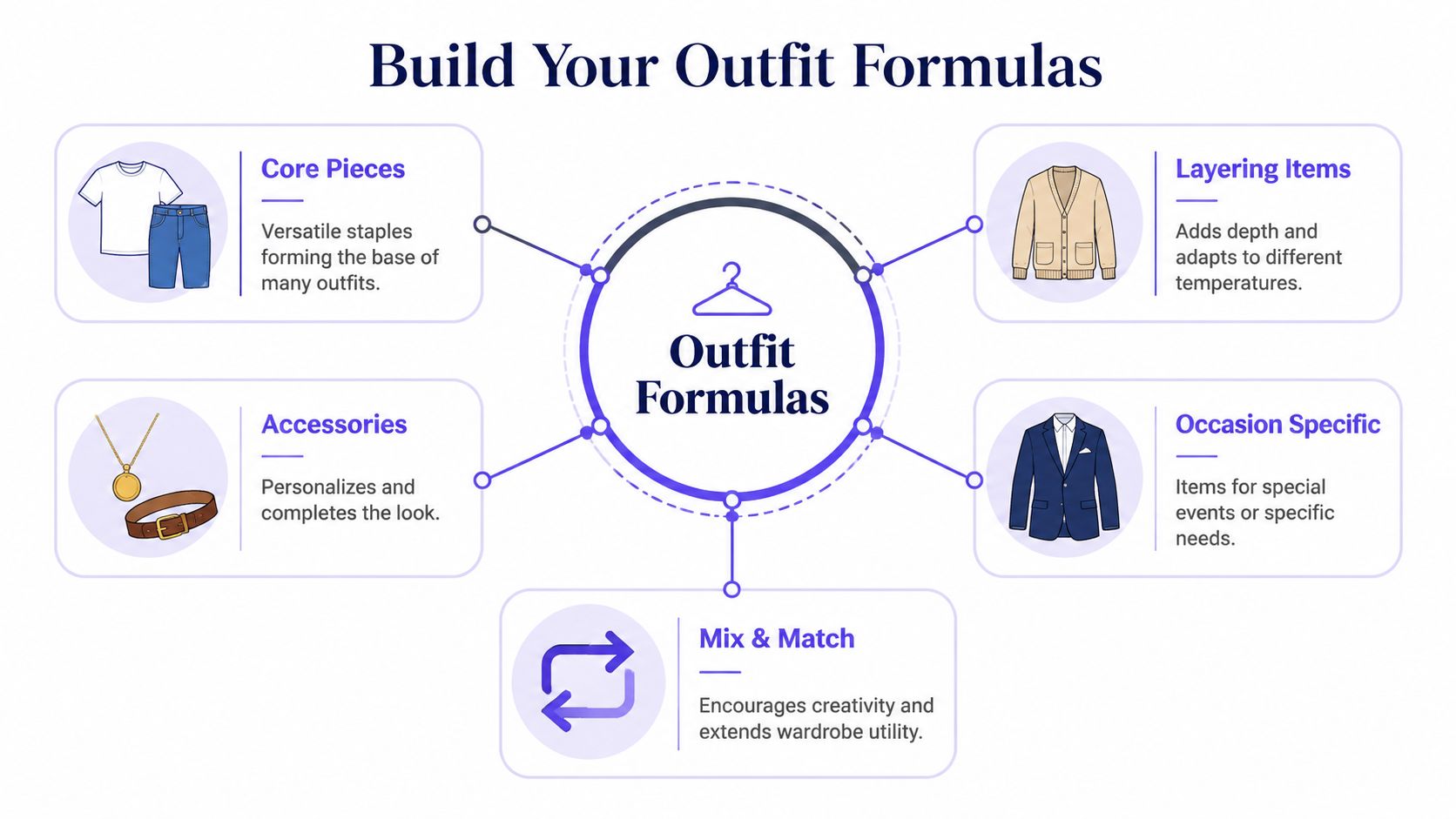
What an outfit formula actually is
An outfit formula is a repeatable combination that works for your shape, your life, and your taste.
Examples:
- Straight-leg jeans + fitted knit + long coat
- Wide-leg trousers + tank + oversized shirt
- Slip skirt + soft sweater + ankle boots
- Black column dress + cropped jacket + bold earrings
These are not boring. They’re efficient.
Once you know your formulas, shopping changes completely. You stop buying random pretty things and start buying pieces that slot into outfits you already know you’ll wear.
Build from anchor pieces
Every good formula has at least one anchor. That’s the item doing the heavy lifting.
Sometimes it’s a blazer with a strong shoulder. Sometimes it’s your perfect jeans. Sometimes it’s a trench that makes a basic outfit look intentional. Sometimes it’s a shoe that changes the energy of everything.
Here’s a simple way to think about your capsule:
-
Foundation pieces
These are the hard workers. Trousers, jeans, simple tees, knit tops, shirts, base dresses. -
Shape creators
Blazers, cropped jackets, long coats, vests, chunky cardigans. These give the outfit structure. -
Finishers
Shoes, belts, bags, jewelry. Small pieces, big effect.
If a new item doesn’t complete at least three outfits in your head, it probably doesn’t belong in your cart.
That one rule will save you from so many “why did I buy this?” moments.
Don’t confuse variety with style
A lot of people chase novelty when what they want is ease. They keep buying different versions of the wrong thing because they haven’t identified the right thing yet.
So go narrower.
If a sharp white shirt always works for you, buy a better one. If a soft black knit makes every outfit click, get the version you’ll want to wear constantly. If you love polished basics, discover timeless fashion essentials instead of chasing chaotic micro-trends.
Your first five to seven pieces
Start with a compact list. Not a dramatic overhaul.
Try something like this:
- One pair of pants you’d happily wear twice a week
- A jacket that sharpens basic outfits
- A top that layers beautifully
- A dress or one-piece look that solves “I need an outfit” days
- Shoes that work with most of your closet
- A bag that matches your real life
- One personality piece that feels very you
For a more structured version of that process, how to build a capsule wardrobe is a practical place to start.
The Smart Shopper's Secret Weapon
You know this moment. You have your style direction, your outfit formulas, and six tabs open with coats that all look perfect on the model. Then the doubt hits. Too stiff. Too trendy. Too costume-y. Suddenly you are guessing again.
A virtual preview cuts through that fast.
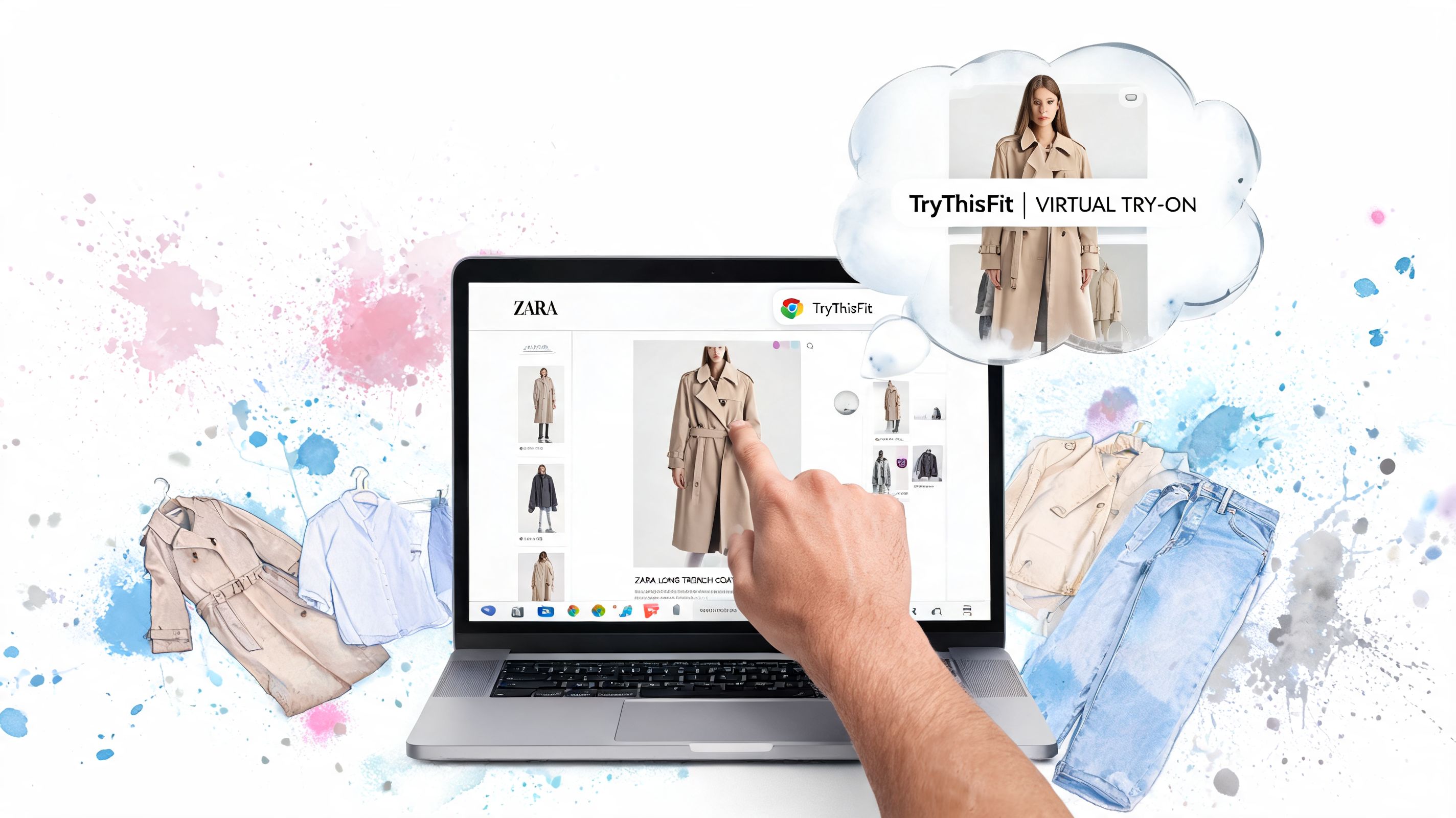
That is the gap classic style advice rarely solves. You can know your colors, shapes, and aesthetic words, then still freeze at checkout because product photos are styled to sell, not to help you decide. A preview tool turns style from theory into a visible yes or no.
I care about that because online shopping rewards speed, not clarity. If I am comparing a sharp camel trench, a slouchy black coat, and a cropped blazer, I do not want more generic tips. I want to see which one looks polished, expensive, relaxed, or dramatic on me.
Models help sell the item. They do not answer the fundamental question. Do I like this silhouette on my body, with my face, in my actual style life?
TryThisFit handles that practical part by letting you preview clothing on your own photo. It is especially useful with flat-lay product shots because the outline reads cleanly and the styling result is easier to judge. That matters even more when you are comparing tricky details like sleeve volume, hem length, neckline shape, or whether a stack of rings pushes a look elegant or excessive. If you are building out your jewelry styling too, this guide to moissanite vs diamond stacking rings is a smart companion read.

Here is how to use visual preview well.
Use it at decision points. Use it when the item could shift the whole mood of your outfit. Use it when the listing photo looks amazing but you cannot tell whether the piece feels sleek, soft, cool, sharp, or just wrong.
The most useful cases are:
-
Retail browsing with close calls
Compare similar pieces and spot which neckline, cut, or proportion actually flatters you. -
Secondhand finds
Listing photos are often awkward, dim, or badly styled. A preview helps you judge the fashion potential instead of the seller’s photography. -
Occasion outfits
Wedding guest dresses, interview blazers, party looks, costume pieces. These are exactly the purchases that deserve a visual check before you spend. -
Style experiments
Test a shape you usually avoid. Wide-leg trousers, puff sleeves, a longline vest, a strong shoulder. You get to explore without committing blindly.
Here’s a quick walkthrough if you want to see the flow in action.
<iframe width="100%" style="aspect-ratio: 16 / 9;" src="https://www.youtube.com/embed/ARN4xSc-4hI" frameborder="0" allow="autoplay; encrypted-media" allowfullscreen></iframe>A preview will not solve sizing or fabric quality. It will help you judge shape, styling, color impact, and overall vibe before you buy. That is the part that saves people from so many almost-right purchases.
My recommendation is simple. Build a short shortlist. Preview the pieces that feel close but uncertain. Then buy the item that clearly fits your formulas and gives you an immediate visual answer. That is how you stop shopping on hope and start shopping with taste plus proof.
Put Your New Style Into Practice
Friday night. You have ten minutes, a chair piled with rejects, and one outfit on your body that is almost right. That is the exact point where personal style stops being theory and starts becoming useful.

Give yourself one assignment this week. Build one outfit for one real event using what you already own. Start with your formula, not your mood. If your best looks are clean and structured, keep the lines sharp and stop tossing in stray pieces that distract. If you look better in soft movement and gentle detail, keep the outfit fluid and polished instead of forcing stiff structure that fights you.
Then get specific about the gap. Do not say, “I need new clothes.” Say, “I need a cropped jacket that finishes high-rise trousers,” or “I need shoes that make this dress look intentional instead of default.” Clear style gets easier the second your shopping list has a job description.
If you do need to buy something, only test pieces that solve that exact problem. That is where the virtual try-on angle changes the whole process. Classic style advice tells you what might suit you. A quick visual preview lets you check the shape on your body before you click buy, which makes online shopping far less random.
Keep a small record of your wins. Save the outfits and previews that get an immediate yes. After a week or two, patterns jump out fast. You will see your repeat favorites clearly. A certain neckline. A cleaner hem. A stronger shoulder. A softer color palette. That is your real style data, and it is far more useful than chasing trend names.
Finish the look on purpose. Shoes, jewelry, and bags decide whether an outfit feels crisp, relaxed, polished, or forgettable. If you want a delicate stacked effect, this guide to moissanite vs diamond stacking rings is a smart reference for choosing details that add shine without taking over.
Pick one outfit. Wear it this week. Change one detail after you see the full look on your body.
That is the full method. Choose with intention. Test visually. Refine quickly. The reason this approach works so well is simple. It bridges the gap between abstract style advice and the moment you have to buy, dress, and walk out the door with confidence.
If you want a faster decision process, use TryThisFit as noted earlier and keep your saved previews as a visual record of what suits you.
Try Virtual Try-On Now
See how clothes look on you before you buy - works with any online store
Get Started Free