A Guide to Traditional Thai Dress for Women: Culture, Styles, and Fabrics
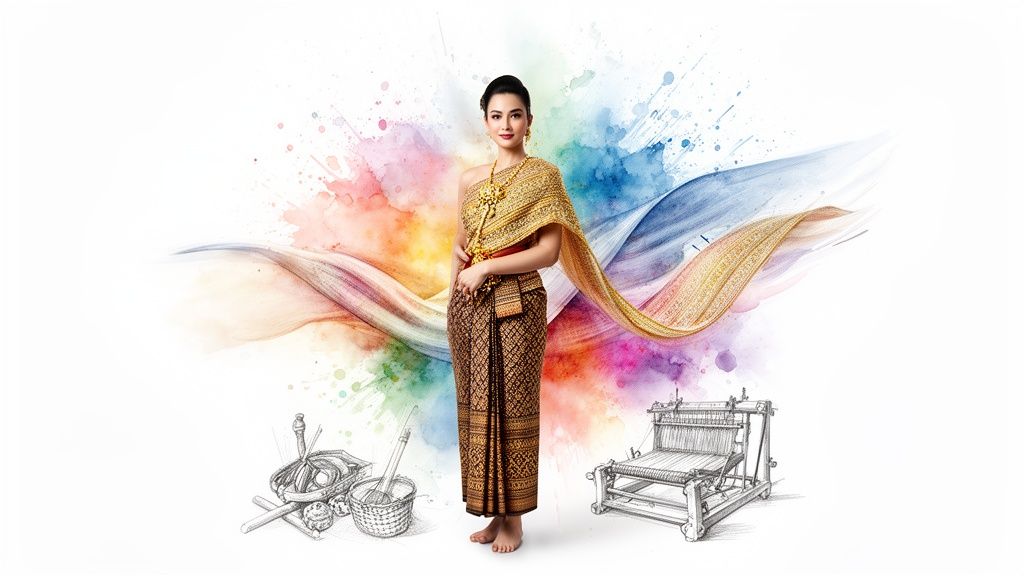
Picture this: the incredible shimmer of pure Thai silk, the glint of intricate gold thread, the elegant silhouette of a traditional Thai dress for women. There's a reason this attire, known as Chut Thai, is considered one of the most beautiful forms of national dress in the world. It’s so much more than just fabric—it's a story woven from centuries of culture, royal history, and breathtaking artistry.
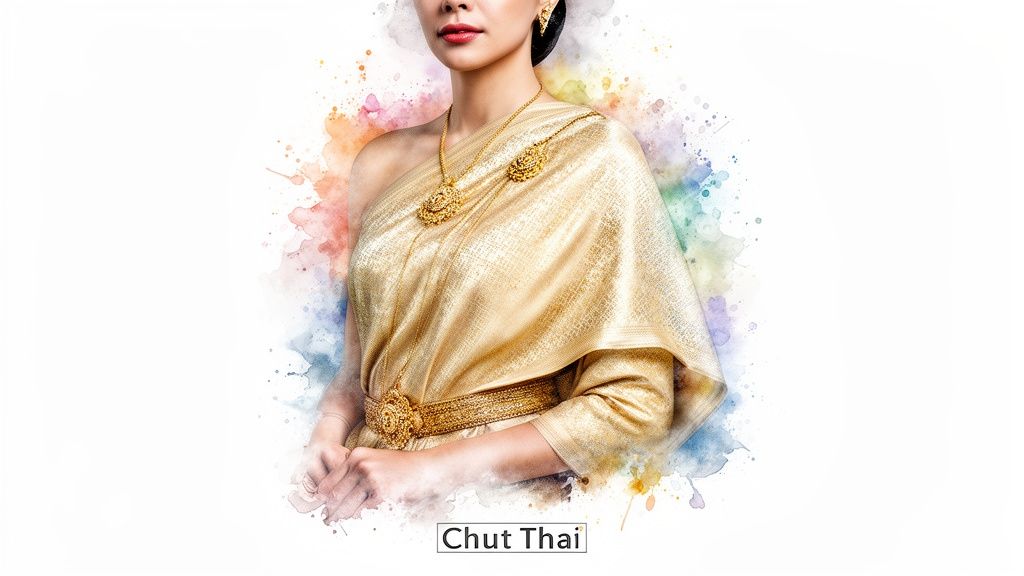
What Is a Traditional Thai Dress?
A traditional Thai dress, or Chut Thai, is a masterclass in elegance. It’s the perfect marriage of delicate, handcrafted detail and a deep, powerful sense of cultural identity. Each garment tells a story, from the simple, flowing wraps once worn in ancient villages to the jaw-dropping, structured gowns you see on fashion runways today.
To truly appreciate the beauty of Thai fashion, you have to understand where it comes from. I'm about to dive deep into its history, decode the different styles, and uncover the secrets of the luxurious fabrics that give these dresses their incredible soul.
The 8 Official Styles of Chut Thai Phra Ratcha Niyom
When people talk about formal Thai dress, they're usually referring to the 8 official styles collectively known as Chut Thai Phra Ratcha Niyom, which translates to "Thai dress of royal endorsement."
These styles were developed and promoted in the 1960s by Her Majesty Queen Sirikit, the Queen Mother. She worked with designers to take historical and regional garments and formalize them, creating a stunning and unified national costume for women to wear on any occasion.
What Makes Them So Special?
The magic of a traditional Thai dress really comes down to a few key ingredients that blend together perfectly:
- Royal Heritage: Many of the most famous styles we see today were championed by Queen Sirikit. She beautifully transformed historical garments into a modern national dress that feels both timeless and relevant.
- Exquisite Fabrics: You can't talk about Chut Thai without talking about world-renowned Thai silk. It’s often hand-woven with breathtakingly intricate brocade or ikat (mudmee) patterns, giving the dresses their signature glow and structure.
- Symbolic Silhouettes: Every element, from the gracefully draped sabai shoulder cloth to the intricately folded pha nung skirt, has a history. The style you choose directly reflects the formality and importance of the event you're attending.
Quick Guide to Popular Traditional Thai Dress Styles
To help you get a feel for the different options, I’ve put together a quick cheat sheet. This table gives you a snapshot of some of the most popular styles, what makes them unique, and where you would typically see them worn.
| Dress Style | Key Features | Best For |
|---|---|---|
| Ruean Ton | Casual, long-sleeved blouse with a striped or plain ankle-length sarong. | Daytime events, religious ceremonies, casual gatherings. |
| Chitralada | More formal than Ruean Ton, with a brocade blouse and five gold buttons. | Official daytime ceremonies, royal functions. |
| Amarin | Elegant evening wear made from brocade, with no belt. | Dinners, evening parties, royal receptions. |
| Chakkri | The most formal and iconic style, with an upper shawl (sabai) wrapped over one shoulder. | Formal evening ceremonies, weddings, galas. |
Of course, this is just the beginning! Each style has its own unique charm and rich history, which I’ll explore in more detail.
Visualize Yourself in These Stunning Styles
Have you ever found yourself gazing at one of these magnificent dresses and wondering, "How would that actually look on me?" It can be tough to visualize the style, color, and drape just from a photo, especially if you're shopping online.
This is where a little bit of modern magic comes in! Using a virtual try-on tool is an incredible way to bridge the gap and see different styles on your own photo.
With the free TryThisFit Chrome extension, you can instantly preview how these dresses look. Find a flat-lay photo of a Chut Thai you love on a site like Amazon or a specialty boutique, right-click, and see it on yourself in seconds. It's a fantastic way to visualize the appearance of a formal Chakkri versus a more casual Ruean Ton without leaving your home.
I’ll walk you through everything, from the history to practical styling tips, and even show you how this tech helps you find your perfect Thai dress style with confidence. Ready to see for yourself? Try it now at trythisfit.com and prepare to fall head over heels for the elegance of Thai fashion.
A Journey Through the History of Thai Attire
When you see the stunning elegance of a traditional Thai dress for women, you're looking at more than just a beautiful outfit. You're seeing centuries of history woven into every thread. The story of Thai attire, or Chut Thai, isn't just about fashion; it's a living record of the nation itself, shaped by everything from the tropical sun to the ambitions of kings.
Let's rewind to ancient Siam. Here, the number one fashion influence wasn't a designer—it was the hot, humid climate. For hundreds of years, daily wear was all about brilliant simplicity. Women would wear a single, cleverly wrapped rectangular cloth called a pha nung (you might also hear it called a chong kraben) that formed a sort of comfortable, airy trouser.
This was often worn with either a bare chest or a simple shoulder cloth known as a sabai. This practical, comfortable style was the bedrock of Thai fashion for generations, mostly crafted from local cotton and perfectly suited for a life lived close to the land.
The Rise of Courtly Elegance
Everything started to change during the Sukhothai (1238–1438) and Ayutthaya (1351–1767) periods. As the kingdom’s power and wealth grew, so did the desire to show it off. Clothing quickly became one of the clearest ways to signal your status, and the royal court was the ultimate trendsetter.
The simple cotton wraps of the past were completely reimagined for the nobility. Suddenly, fashion was all about luxury. Sumptuous silks and dazzling brocades woven with real gold and silver threads became the fabrics of choice. The humble sabai transformed from a utility cloth into a breathtaking decorative shawl, draped artfully over one shoulder.
Key Takeaway: The moment simple cotton gave way to ornate silk brocades in the Ayutthaya period was huge. Clothing went from being purely practical to a powerful statement of social standing and royal identity.
Western Influence and Royal Modernization
Fast forward to the Rattanakosin era, especially during the reign of King Chulalongkorn (Rama V) from 1868 to 1910. The king traveled extensively through Europe, and he brought back a wave of Western tastes that rippled through the Siamese court. This was a time of incredible change, and it dramatically altered how women dressed.
Court ladies began pairing their traditional wrapped pha nung skirts with elegant, high-necked lace blouses featuring puffy, structured shoulders. This new top, the "Suea Phra Ratchathan," created a gorgeous fusion of East and West. The look was sophisticated, modest, and completely new.
But the single most important moment in modern Thai fashion arrived in the mid-20th century, thanks to the visionary Her Majesty Queen Sirikit, the Queen Mother. She felt Thailand needed a formal, national costume that could stand proudly on the world stage.
- A National Identity: In the 1960s, she spearheaded a project to create just that, even collaborating with world-renowned designers like Pierre Balmain.
- Historical Inspiration: The team dove into old photographs and studied surviving royal textiles to understand the roots of Thai style.
- Creating a Wardrobe: From this research, they developed eight official styles of dress, the Chut Thai Phra Rajaniyom. These were based on historical garments but updated with modern tailoring.
The initiative was a phenomenal success. Not only did it give Thailand its iconic formal wear, but it also sparked a nationwide revival of the country's incredible hand-weaving and silk-making traditions. Queen Sirikit's passion is what turned the traditional Thai dress for women into the globally beloved symbol of grace it is today. This incredible history is what gives every fold and every thread its soul.
A Guide to the 8 Royal Styles of Chut Thai
Stepping into the world of traditional Thai dress is like learning a beautiful new language—one spoken through silk, brocade, and timeless elegance. The absolute pinnacle of this art form is the Chut Thai Phra Rajaniyom, a collection of eight royally approved styles for women.
Meaning "Thai dress of royal favor," this isn't just a random assortment of outfits. This entire wardrobe was thoughtfully established in the 1960s under the patronage of H.M. Queen Sirikit. She brilliantly wove together threads of history with a more modern cut, creating a national costume that radiates confidence and grace. From a relaxed daytime gathering to a formal state dinner, there's a perfect Chut Thai for any occasion.
From Casual Days to Early Evenings: Ruean Ton, Chitralada, and Amarin
My journey starts with three wonderfully versatile styles made for daytime affairs and less formal evening events. They're the perfect introduction to the world of Thai textiles, blending comfort with understated elegance.
-
Chut Thai Ruean Ton: This is the most casual of the royal collection. Think of it as your go-to for a non-official function or a temple visit. It features a simple, long-sleeved blouse without a collar, paired with a beautiful ankle-length sarong, or pha sin, often in a striped or single-color silk or cotton. It’s pure, polished grace.
-
Chut Thai Chitralada: Stepping up the formality just a notch, this is a style you’ll often see Thai royalty wearing for official daytime ceremonies. The blouse is made of silk and features a small, standing collar with five gorgeous gold or silver buttons down the front. Paired with a shimmering brocade pha sin, the whole outfit feels instantly more distinguished.
-
Chut Thai Amarin: This stunning style perfectly blurs the line between day and evening. It's an excellent choice for a special dinner or a royal reception. Both the blouse and the pha sin are crafted from luxurious brocade. The blouse has an elegant, round collarless neckline and is designed to be worn without a belt, creating a stately silhouette.
Breathtaking Evening Gowns: Chakkri, Chakkraphat, and Siwalai
When the evening calls for full-on glamour, these three gowns take center stage. This is where the incredible artistry of Thai weavers and the sheer grandeur of royal fashion are on full display.
-
Chut Thai Chakkri: This might be the most famous and recognizable traditional Thai dress for women. It’s the very picture of Thai elegance! The defining feature is the stunning sabai, a shawl-like piece of fabric that drapes exquisitely over one shoulder, leaving the other bare. The skirt itself is made from yok, a special kind of brocade woven with real gold or silver thread. It's the ultimate choice for a formal wedding or gala.
-
Chut Thai Chakkraphat: The name literally means "emperor's dress," which tells you everything you need to know about its formality. It’s even more grand than the Chakkri. While the silhouette is similar, it’s more conservative, with a second, more heavily embroidered shawl worn over the top. The level of detail here is simply breathtaking, reserved for only the most significant royal ceremonies.
-
Chut Thai Siwalai: For a look of complete and regal modesty, the Siwalai is unmatched. It combines elements from other styles, featuring a long-sleeved blouse, a pha sin, and a sabai draped over one shoulder. The full sleeves make it a more conservative option, perfect for cooler climates or the most formal royal events.
This fantastic diagram shows how Thai fashion has progressed over time, from ancient wrapped cloths to the more tailored blouse-and-skirt ensembles that inspired these modern royal styles.
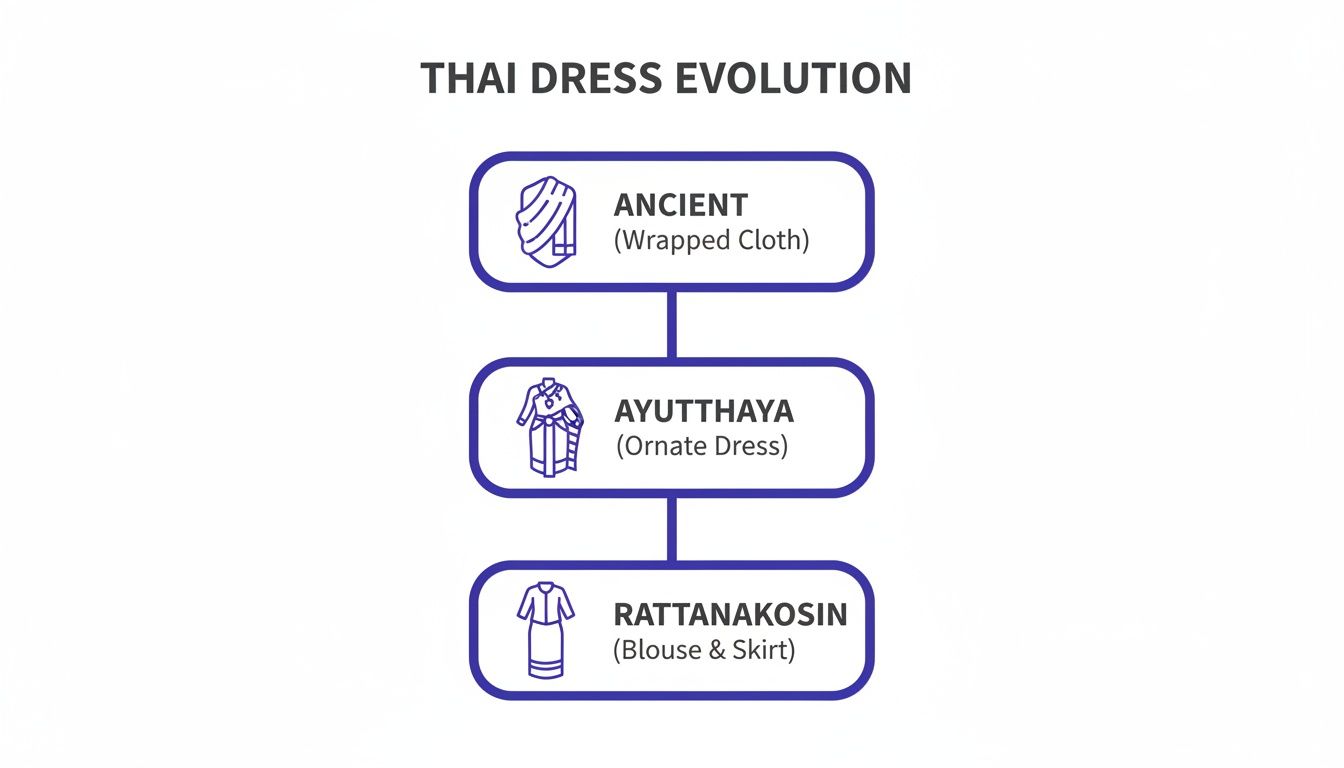
You can really see the shift towards more structured garments, which led directly to the celebrated styles we have today.
The Fusion Styles: Boromphiman and Dusit
To complete the set of eight, we have two unique designs that beautifully blend Thai tradition with Western courtly fashion. They are a gorgeous testament to a meeting of cultures.
-
Chut Thai Boromphiman: This sophisticated evening dress stands out from the rest. It features a long-sleeved, round-necked blouse that is sewn directly to the pha sin, creating one seamless, floor-length gown. Crafted from rich brocade, it's a very popular choice for brides, as well as for attending formal dinners and receptions.
-
Chut Thai Dusit: Here we have a more Westernized take on the evening gown. The top is a sleeveless bodice with a wide, open neckline, typically made from silk or brocade. It’s paired with a traditional pha sin skirt and often accessorized with a belt. This style is perfect for those less formal evening events where you want a touch of modern flair.
These eight styles are so much more than clothing; they're a living, breathing part of Thai heritage. Getting to know them helps you see the deep cultural meaning woven into every single traditional Thai dress for women.
Feeling inspired to see which of these incredible styles would look best on you? With the right tool, you can visualize the appearance of a Chakkri or a Ruean Ton in seconds. Find a flat-lay photo online, and let modern tech help you explore this timeless fashion. Install the free TryThisFit Chrome extension in a couple of seconds and start your style journey!
The Artistry of Thai Silk and Woven Fabrics
So, what truly gives a traditional Thai dress its soul? It’s not just the elegant cut or the specific style—it’s the fabric. A genuine Chut Thai sings with the story of its threads, and no material tells a more captivating tale than world-renowned Thai silk. Honestly, it’s the heart of what makes this clothing so breathtakingly special.
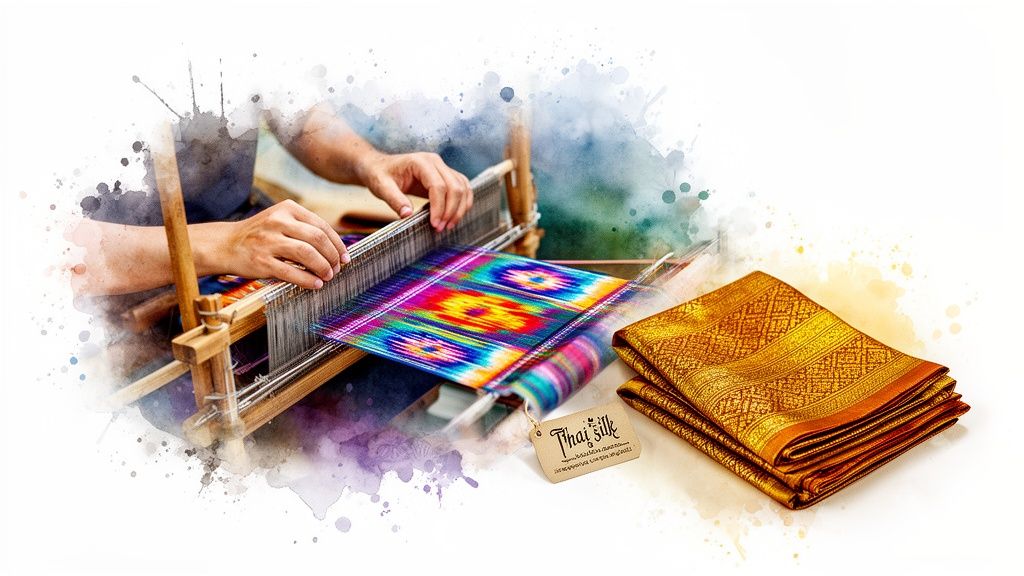
I absolutely can't talk about modern Thai silk without celebrating its greatest champion: Her Majesty Queen Sirikit, The Queen Mother. In the mid-20th century, she noticed that the country's ancient, beautiful hand-weaving traditions were starting to fade away. With incredible passion and foresight, she launched a massive effort to save this priceless art form from disappearing.
Her mission did so much more than just preserve a craft; it revitalized entire communities. By championing hand-woven textiles, especially in rural areas like northeastern Thailand, she created sustainable income for thousands of artisan families. This royal patronage elevated Thai silk from a local craft into a global symbol of Thai luxury and national pride. It’s an amazing early example of cultural preservation and ethical production, and you can see how these ideas connect by reading my guide on what is sustainable fashion.
From Silkworm to Masterpiece
The journey of Thai silk is a stunning display of patience and artistry. It’s a meticulous process, passed down from mother to daughter for generations, that transforms a humble cocoon into a textile fit for a queen.
It all starts with raising special silkworms that feast only on mulberry leaves. Once the cocoons are ready, they're carefully boiled to loosen the precious threads. Then, artisans painstakingly unravel them by hand into one single, continuous filament. This raw silk has a gorgeous natural shimmer but also a slight unevenness, which gives authentic Thai silk its unique, organic texture.
The Magic of Mudmee and Pha Yok
Now for the really exciting part! What truly sets a traditional Thai dress for women apart are the mesmerizing patterns woven right into the fabric itself. Two of the most celebrated techniques are Mudmee (ikat) and Pha Yok (brocade). These aren't just simple patterns; they are unbelievably complex art forms that require immense skill.
-
Mudmee (Ikat): This is a jaw-droppingly intricate resist-dyeing technique. Before the weaving even begins, bundles of thread are tied off in specific patterns and then dyed. As the artisan weaves, these pre-dyed sections come together to form beautiful geometric or figurative designs, often with a signature soft, feathered edge. It's pure magic to watch emerge on the loom!
-
Pha Yok (Brocade): This is the secret behind the glittering, opulent fabrics you see in the most formal Chut Thai styles. It involves weaving in supplementary threads—often made of real gold or silver—to create raised, shimmering patterns. The final result is a heavy, luxurious fabric that drapes like a dream and catches the light with every single movement.
Every single thread tells a story of dedication. When you hold a piece of authentic hand-woven Thai silk, you’re holding a piece of art that represents hundreds of hours of labor, from nurturing silkworms to the final pass of the shuttle on the loom.
This profound connection to craftsmanship is exactly why an authentic silk Thai dress is so much more than just clothing. It’s an heirloom, a work of art, and a vibrant piece of cultural history all rolled into one. It’s truly a legacy you can wear.
See Yourself in a Stunning Thai Dress—Instantly!
Feeling totally inspired by the breathtaking beauty of traditional Thai dresses? I know the feeling! Now for the really fun part—finding one for yourself. But let's be honest, shopping online can be a gamble. It's so hard to know how that shimmering silk or intricate pattern will actually look on you from a flat product photo.
<iframe width="100%" style="aspect-ratio: 16 / 9;" src="https://www.youtube.com/embed/swSp8ksR2Q0" frameborder="0" allow="autoplay; encrypted-media" allowfullscreen></iframe>I ran into this exact problem so many times that I decided to build the solution myself: the TryThisFit app and extension. I created it to close that frustrating gap between seeing a dress online and knowing, with confidence, if the style is truly you.
How It Works: Your Personal Style Visualizer
Picture this: you're browsing for a gorgeous Chut Thai on a site like Amazon, a small online boutique, or even a pre-loved fashion marketplace. You spot a stunning silk dress, but it’s just shown on a mannequin. Is the cut right for your frame? Will that color wash you out?
That's where the free TryThisFit Chrome extension comes in. It installs in a couple of seconds, and then the magic happens. Just find a dress you love (flat-lay photos work best!), right-click on the image, and the extension instantly shows you how the style looks on your own body. It’s the perfect way to see how that elegant Chakkri drape falls or if the silhouette of a formal Boromphiman gown is the one.
A Fun, Fast Way to Discover Your Style
I wanted this tool to be your go-to style assistant—something incredibly fast, easy, and genuinely helpful. There are no accounts to create and no hoops to jump through. The extension works on just about any shopping site you can think of, like Zara, H&M, Shein, Vinted and more. It’s all about letting you explore with total freedom and confidence.
Here's how it makes finding your perfect Thai dress style a breeze:
- Visualize It On You: Instantly check how different colors, cuts, and silhouettes complement your look.
- Compare Styles in a Snap: Quickly toggle between different options to see what you love most.
- Shop Smarter: Make better buying decisions from the start. No more guessing games or avoiding returns!
- Find Your Look: Have fun and experiment with different types of traditional Thai dress for women to discover what makes you feel amazing.
If you're curious about the tech that makes this all possible, my article on virtual dress try-on is a great read. It’s a fascinating look at how you can explore fashion right from home.
Ready to see for yourself how these magnificent dresses look on you? Start exploring right now. Try it now at trythisfit.com and bring the timeless elegance of Thai fashion into your world!
How to Style Your Traditional Thai Dress
You've found the perfect traditional Thai dress—the colors are vibrant, the silk is exquisite, and the style feels like a dream. Now for the fun part: making it shine! Styling your Chut Thai is where you bring your personal flair to centuries of tradition, creating a look that’s not just beautiful, but completely and utterly you.
The secret to a show-stopping authentic look? It’s all about the gold. A stunning, ornate gold-plated belt, called a thap thim, is an absolute must-have. This isn’t just an accessory; it’s a piece of art that cinches the waist and becomes an incredible focal point. From there, you can layer on gorgeous gold necklaces, delicate bracelets, and traditional hairpins to complete the regal picture.
Mastering Traditional Accessories
To really nail that authentic, classic look, you'll want to focus on a few key pieces that are steeped in cultural meaning. These are the elements that take a dress from simply pretty to truly breathtaking.
- The Belt (Thap Thim): Think of this as the crown jewel of your outfit. Seek out intricate, handcrafted designs that echo the beautiful brocade of your pha sin. It should feel substantial and look like a treasured heirloom.
- Necklaces and Earrings: Stick with gold pieces that complement the tone of your belt. With a more open neckline, like on a Chakkri style, don't be afraid to layer a few necklaces for a truly dramatic effect.
- Hair and Makeup: A graceful, elegant updo is the timeless choice here. You can make it even more special by weaving in jeweled hairpins or, for a touch of natural beauty, fresh jasmine flowers. Makeup should be polished and refined—a soft, shimmering eye and a classic red or nude lip are always perfect.
Infusing Modern Style
But who says you have to stick to the rulebook? One of the most thrilling things in fashion today is seeing how designers and style-savvy women are weaving these timeless garments into modern life. It’s all about creative expression!
Just imagine pairing a rich silk pha sin with a simple, form-fitting black turtleneck for an incredible fusion look that’s perfect for a chic event. Or what about taking a traditional gold thap thim and using it to cinch a modern, minimalist dress? It’s an instant conversation starter! This is how you honor the artistry of a traditional Thai dress for women while making it entirely your own. For more ideas on mixing and matching, check out my guide on how to style your outfits.
Visualizing Your Complete Look
Let’s be honest, picking the right accessories can feel just as daunting as choosing the dress itself, especially when you’re trying to imagine how everything will look together. This is where seeing a preview before you buy is a total game-changer.
When you're browsing online for your dress on a site like Amazon, it’s tough to guess how it will all come together. I actually built the TryThisFit Chrome extension to solve this very problem! It lets you instantly see how a dress style looks on your own body, making it so much easier to figure out what jewelry or belt will complete your vision. Just find a flat-lay photo, right-click, and you’ll get a virtual preview in seconds.
Thinking about balance, color, and silhouette is key to great style. Beyond Thai-specific looks, diving into a modern style guide can give you a fresh perspective on fashion principles you can apply anywhere.
Whether you're shopping specialty boutiques, hunting for a vintage find on Vinted, or getting ready for a wedding, these tips will help you pull together an outfit that makes you feel absolutely incredible. Don't be afraid to play around and find what you love! Ready to see it for yourself? Install the Chrome extension in 5 seconds and start creating your perfect Thai-inspired look today.
Curious About Chut Thai? Let's Talk!
As you explore the stunning world of traditional Thai dress, you're bound to have questions! That's a great sign—it means you're diving deep into the culture. I've heard just about every question there is, so I’ve gathered the most common ones right here to give you the inside scoop.
What’s the Difference Between a Pha Nung and a Pha Sin?
This is a fantastic question because it gets right to the heart of how these garments are constructed. Think of a pha nung as a single, long rectangular piece of fabric, much like a sarong. It requires skill to artfully wrap, fold, and tuck it around your waist to create a secure and beautiful lower garment.
A pha sin, on the other hand, is a skirt that’s already sewn into a tube or circle. You simply step into it, pull it up, and then fold the excess fabric neatly at your waist before securing it with a belt. Most of the modern formal Chut Thai styles you see today are built around the pha sin for its elegant and consistent drape.
Can Foreigners Wear Traditional Thai Dress?
Yes, a thousand times yes! Thais are incredibly welcoming and generally love seeing visitors embrace their culture. Wearing a traditional Thai dress is seen as a beautiful gesture of respect and admiration, especially if you're attending a festival, a temple ceremony, or a wedding.
The most important thing is to wear it with sincerity and an understanding of the occasion. It's a way of participating, not just observing.
When you choose to wear another culture's traditional attire, you're doing more than just putting on an outfit. You're honoring centuries of history, artistry, and identity. It’s a beautiful bridge between worlds.
Are Authentic Thai Silk Dresses Really Expensive?
They certainly can be, and for good reason! A hand-woven Thai silk dress is a true work of art. The time, skill, and incredible labor that go into creating that shimmering, unique fabric make it a genuine luxury item.
But don't let that discourage you! There are so many gorgeous and affordable options out there. Many dresses are made from high-quality synthetic fabrics or silk blends that look absolutely incredible. I'm also a huge fan of exploring second-hand shops like Vinted or Depop for vintage finds with a story to tell.
How Can I See How a Thai Dress Looks on Me Before Buying?
Okay, this is my favorite part because the solution is just so cool and easy! You can actually see how a dress will look on your own body using a virtual try-on tool.
I always recommend the TryThisFit Chrome extension because it’s incredibly simple. Just find a photo of a Thai dress on a site like Amazon or any online boutique. All you need is a flat-lay image of the garment for the most accurate results.
Right-click the picture, and the extension works its magic, creating a preview of the dress on a photo of you. It's the perfect way to compare styles and see if the color and cut truly suit you before you even think about buying. You don't need an account, and it even saves your previews in your try-on history for later!
Ready to bring the elegance of Thailand into your wardrobe? Find your perfect look with TryThisFit. Try it now at trythisfit.com and start visualizing beautiful traditional styles today
Try Virtual Try-On Now
See how clothes look on you before you buy - works with any online store
Get Started Free