What to Wear to Play Volleyball: A Complete Guide
You've probably had this moment already. A game invite pops up, practice starts tonight, and suddenly your closet looks useless. The big question isn't just what looks athletic. It's what to wear to play volleyball so you can move well, stay comfortable, and avoid showing up in gear that fights you every rally.
Volleyball punishes the wrong clothing fast. Heavy cotton gets sweaty and clingy. Loose shorts ride up or twist. The wrong shoes make every shuffle feel late. Good volleyball gear doesn't need to be fancy, but it does need to match how the sport is played: quick lateral movement, jumping, stopping, landing, and sometimes hitting the floor.
Ready to Hit the Court
If you're packing for your first session, keep it simple. Start with clothes you can move in, then build around the demands of the surface you're playing on. Indoor and beach volleyball overlap in some ways, but they're not the same experience.
The best outfit for volleyball usually has three jobs. It should help you move freely, help you stay dry and focused, and reduce the chance that a small gear mistake turns into a frustrating night. That means breathable clothing, court-appropriate shoes if you're indoors, and protective pieces where they help.
Start with movement, not aesthetics
New players often ask if a regular T-shirt and gym shorts are enough. Sometimes they are for a casual first run, but only if they don't restrict your shoulders, hips, or stride. If you have to tug, adjust, or second-guess your outfit between points, it's the wrong outfit.
A quick pre-game warm-up matters just as much as the clothes. If you want a solid routine before stepping on court, MEDISTIK's pre-workout warm-up routines offer useful ideas for getting your joints and muscles ready.
Practical rule: If you can squat, shuffle sideways, jump, and swing your arms overhead without your clothing pulling or bunching, you're in a good place.
Confidence comes from the right basics
You don't need to dress like a tournament player on day one. You do need gear that lets you play without distraction. That's what makes the difference between feeling self-conscious and feeling ready to chase every ball.
The good news is that most of the essentials are straightforward. Once you get the core pieces right, the rest is just fine-tuning for your comfort, style, and level of play.
The Core Gear You Absolutely Need
The fastest way to feel like you belong on a volleyball court is to wear gear that disappears once play starts. You should be thinking about the ball, your platform, and where the next touch is going. Not your shirt riding up or your shoes sliding on the floor.
Tops and bottoms that let you move cleanly
Start with a light athletic top that handles sweat well. Polyester blends and other moisture-wicking fabrics usually work better than cotton because they stay lighter through a full session and dry faster between rallies.
For bottoms, pick the cut that matches how you like to move. Compression shorts stay put and feel secure during jumps and quick drops. Looser training shorts can feel cooler and less restrictive, especially for players who do not like a tight fit. Both are fine if they give you full range through your hips and thighs.
I always tell new players to test clothing before they buy more of it. Do three things in the fitting room or at home:
- Reach high as if you are blocking
- Drop into a low passing stance
- Shuffle hard to both sides
If the fabric pulls, twists, or needs adjusting, keep looking.
Shoes matter more than any other piece
For indoor volleyball, court shoes deserve the most attention. Running shoes are built mainly for straight-line motion and soft heel-to-toe landings. Volleyball asks for sharp stops, lateral pushes, quick transitions, and repeated jumping on a hard surface. That difference is easy to feel by the second or third rally.
A good indoor shoe should give you reliable grip, side-to-side support, and enough cushioning to take the edge off landings without making you feel slow. Too much foam can make footwork feel late. Too little structure can leave you sliding or fighting the shoe on every cut.
If you are shopping online, use a virtual shoe try-on tool for volleyball-style court shoes before you spend anything. It helps you check shape, color, and how a pair fits the rest of your kit, which is useful if you want performance gear that still feels like your style.
One practical note. Indoor players should avoid treating regular trainers as a long-term substitute for court shoes. Sports medicine research has consistently linked shoe choice and playing surface to lower-limb injury risk in court sports. You do not need to obsess over the perfect pair on day one, but you do want a shoe built for the way volleyball moves.
Socks and the details that save irritation
Good socks make a bigger difference than beginners expect. Look for athletic socks that manage sweat and give a little padding at the heel and forefoot. That setup usually helps with hot spots, slipping inside the shoe, and that worn-out feeling you get late in a session.
Small details count here. As noted earlier in the gear guidance from All Volleyball, jewelry should stay off the court. Rings, necklaces, bracelets, and dangling earrings can catch on clothing, scrape another player, or annoy you every time you jump or sprawl.
Keep the setup simple. A breathable top, movement-friendly bottoms, indoor court shoes, and socks that hold up under constant movement will cover the basics well.
Essential Protection for Peak Performance
Protection in volleyball is personal, but it shouldn't be random. You want enough coverage to play aggressively without feeling armored up.
Knee pads and the real trade-off
Indoor players usually start with knee pads, and that's still the safest default for most beginners. The floor is hard, and if you're learning to dive, sprawl, or drop low for difficult balls, your knees will notice.
At the same time, not every recreational player loves traditional pads. According to this beginner volleyball gear guide, 40% to 60% of recreational players avoid traditional knee pads due to perceived bulkiness and restricted mobility. That's a real trade-off, not just a style preference.
If you hate bulky gear
If standard knee pads make you feel slow or awkward, don't force yourself into a setup you'll resent. Try lighter options that still give you some protection.
A few workable alternatives include:
- Sleeve-style knee protection: Less bulky than thick pads and often easier to forget once the game starts.
- Compression shorts with built-in padding: Helpful if you're more worried about hip and thigh contact than repeated knee drops.
- Targeted elbow or arm sleeves: Worth considering if you tend to absorb contact through your arms on scrappy plays.
Protection only works if you'll actually wear it. The best setup is the one that makes you play freely, not cautiously.
Ankle and arm support
Some players also like ankle braces, especially after previous rolls or awkward landings. Others prefer to skip them unless there's a clear reason. My view is simple: if you feel unstable, support can help, but if a brace makes you stiff or hesitant, reassess.
Arm sleeves are more optional, but many hitters and frequent passers like the feel of light compression. They can also be useful if you prefer a bit of skin coverage without wearing a heavier top.
The goal isn't to wear every protective item available. It's to choose the few pieces that make you feel secure enough to go after the ball without thinking twice.
Dressing for the Game Indoor vs Beach
Indoor volleyball and beach volleyball look related, but they ask for different clothing decisions. One rewards grip and floor protection. The other is all about heat, sand, weather, and freedom of movement.
What changes indoors
Indoors, you're dealing with a hard playing surface, repeated jumps, and a faster need to stop and redirect. That's why court shoes and protective gear make such a difference. Clothing can stay pretty straightforward: breathable tops, flexible shorts or spandex, and layers for warm-up if the gym is cold.
Indoor style usually works best when it's form-fitting. Anything too loose can feel messy once rallies speed up. Anything too heavy traps heat.
What changes on sand
Beach volleyball has a different rhythm. You're often barefoot, the environment matters more, and your clothing needs to handle sun, wind, and temperature changes. Players often choose lighter, minimal pieces that dry fast and won't hold sand.
Official competition rules also reflect that environment. According to the FIVB Beach Volleyball Uniform Guidelines, competitive beach uniforms must be bright and light-colored, and dominant white is recommended against for visibility. The same guidelines say that for cold weather, the uniform must consist of a tight shirt and tight pants for safety and performance.
That tells you something useful even if you never play a sanctioned event. Beach gear should be chosen for visibility, comfort, and conditions, not just aesthetics.
Indoor vs. Beach Volleyball Gear At a Glance
| Gear Item | Indoor Court | Beach/Sand |
|---|---|---|
| Top | Lightweight jersey or athletic tee | Quick-dry top or beach-specific top |
| Bottoms | Shorts, spandex, or compression shorts | Swim-style bottoms, shorts, or sand-friendly fitted options |
| Footwear | Volleyball court shoes | Usually barefoot, sometimes sand socks |
| Protection | Knee pads are common | Less floor-impact gear, more sun and sand considerations |
| Fabric priority | Breathability and unrestricted movement | Quick-dry comfort and weather adaptability |
| Cold conditions | Warm-up layers off court | Tight shirt and tight pants for competition in cold weather |
If you're figuring out which cuts and silhouettes usually flatter your frame before choosing between fitted shorts, liners, or looser options, this guide to clothes for different body types can help you think through the visual side of the outfit.
Beach gear that looks great in a photo can still be annoying in real play if it shifts, twists, or holds sand in the wrong places.
Style still matters
Volleyball gear should perform first, but style matters more than people admit. When you like how your outfit looks, you tend to settle in faster and play with more confidence.
For indoor play, that might mean a clean matching set, longer inseam shorts, or a jersey cut you don't have to think about. For the beach, it often means choosing quick-dry pieces you won't keep adjusting between points.
The best outfit is the one that disappears once the rally starts.
Finding Your Volleyball Style Before You Buy
You find a pair of shorts that looks great online, add a jersey, throw in crew socks, and then pause at checkout because you still cannot tell whether the full outfit will feel like you on court. That hesitation is normal. Volleyball gear is simple until details start mattering, and then small choices can change how comfortable and confident you feel during play.
A lot of bad buys come from that gap between product photos and real life. One cut sits perfectly on one player and feels awkward on another. A top that looks sharp on a model might feel too tight through the shoulders once you start serving and swinging. Color matters too. Indoor players often want a cleaner, more uniform look, while beach players usually care more about how pieces mix, dry fast, and stay put.
Why visualizing the outfit first helps
Before I buy new gear, I want to see the whole setup together. Not just the shorts. Not just the top. The full look.
That matters even more if you are building a kit from different stores or trying to match new pieces with what you already own. Virtual try-on tools help with that early decision stage because you can check proportions, color balance, and whether a fitted or relaxed silhouette matches your comfort level before spending money.

What to look for in a preview
Use the preview to answer practical questions.
Does the inseam look short enough that you will keep tugging at it between points? Does the top look supportive and athletic, or does it read more like casual gym wear? Do the colors work together, or does one piece stand out in a way you will get tired of fast? If you like a little personality in your gear, this is also the easiest time to test bolder colors or a matching set without committing first.
Flat product images usually give the clearest result, especially for shorts, training tops, warm-up layers, and coordinated activewear.
Best uses for volleyball shoppers
Virtual try-on is especially useful if you are:
- buying secondhand pieces where returns are limited
- comparing several short lengths or top cuts
- trying to build one indoor outfit and one beach outfit without wasting money
- mixing performance basics with pieces that still feel like your style
It also helps newer players avoid overbuying. Volleyball is not the most expensive sport to start, but gear costs still add up once you include shoes, protection, and extras. Vanta Sports on costly sports gives useful context if you want to compare that bigger picture.
If you want more accurate previews, start with a body measurement guide for getting accurate numbers. Even when the goal is style, better measurements make it easier to judge whether a look will suit your frame before you place the order.
The best result is simple. You step onto the court in gear that performs well, feels right, and already looks like something you chose on purpose.
The Ultimate Volleyball Bag Checklist
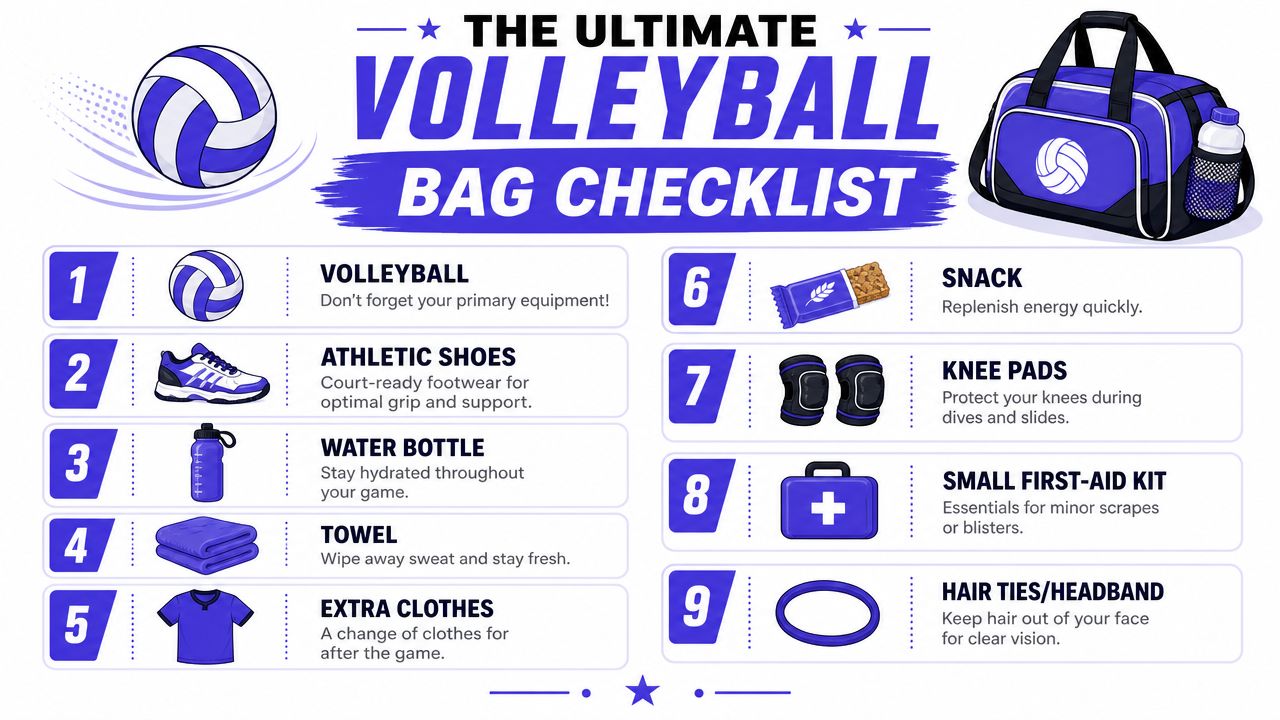
A packed volleyball bag should make game day easy. If you're scrambling for socks, hunting for hair ties, or realizing you left your shoes by the door, you're wasting energy before the first serve.
What should always be in the bag
Use this as your default setup:
- Volleyball shoes: Only for indoor court use, kept clean and ready.
- Game top and bottoms: Lightweight, breathable, and easy to move in.
- Socks: Bring an extra pair if you sweat a lot.
- Knee pads or preferred protective gear: Whatever setup you play well in.
- Water bottle: Non-negotiable for any session.
- Towel: Useful for sweat, sand, or quick cleanup.
- Hair ties or headband: Small item, huge annoyance if forgotten.
- Snack: Helpful after longer sessions or back-to-back matches.
- Change of clothes: Especially nice after beach play or intense indoor runs.
What to leave at home
Some items just create problems.
- Jewelry and watches: Not court-safe.
- Heavy cotton layers: They hold sweat and feel awful fast.
- Clothing with zippers or hard details: Anything that can dig in, snag, or distract should stay out of the rotation.
If you want a better system for organizing everything so shoes, clothes, and extras don't end up jammed together, this guide on how to pack a backpack efficiently has practical ideas you can borrow.
Pack the night before. Volleyball is more fun when your brain is on the game, not on the missing sock.
If you want to preview your volleyball outfit before spending money, try TryThisFit. You can see how tops, shorts, warm-up layers, and even secondhand finds look on you in seconds. For the fastest workflow, install the free Chrome extension, right-click product images on sites like Zara, H&M, Amazon, Shein, Vinted, or Depop, and get an instant preview with no account needed. Flat-lay photos work best. If you're comparing options, check your saved looks in try-on history and decide what to wear with a lot less guesswork.
Try Virtual Try-On Now
See how clothes look on you before you buy - works with any online store
Get Started Free