Bangladesh Traditional Dress: A Complete Style Guide
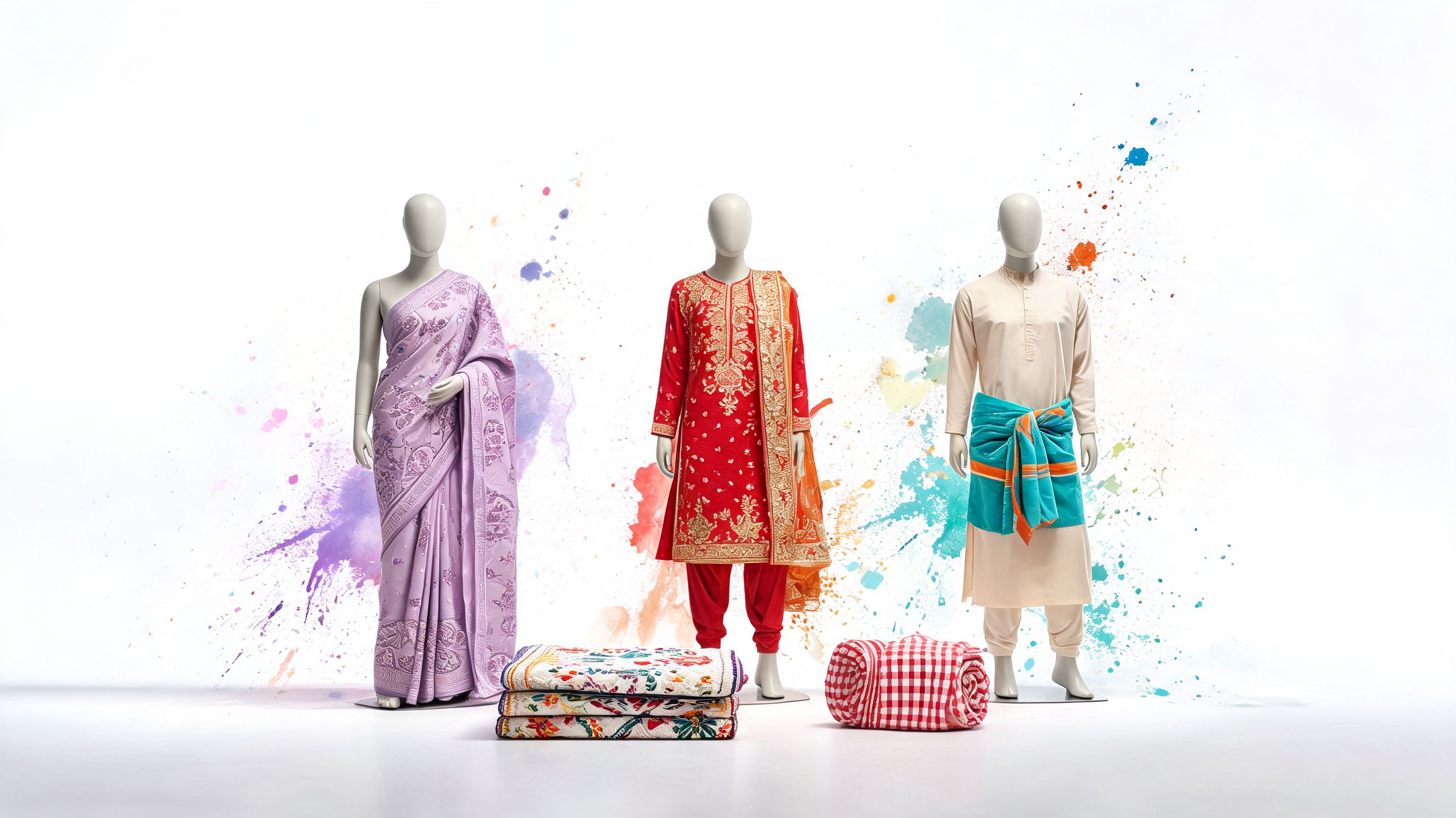
You're probably here because you saw a luminous Bangladeshi saree online, or a wedding photo full of jewel-toned fabric, and thought: what exactly am I looking at? That's a smart question, because bangladesh traditional dress is often described too narrowly.
Most quick guides stop at the saree and move on. But clothing in Bangladesh carries clues about region, community, daily life, ceremony, and the long history of textile making that shaped how garments were worn in the first place.
Introduction Beyond the Iconic Saree
A lot of people picture one outfit when they hear “traditional dress of Bangladesh.” They imagine a woman in a flowing saree, maybe a man in a simple lungi, and they assume the story ends there.
It doesn't.
Bangladesh has iconic garments, yes, but it doesn't have one single costume that covers everyone, everywhere, all the time. As noted in this overview of historical dress in Bangladesh, attire is highly context-dependent. Women may wear sarees or salwar kameez, while communities such as the Meitei have distinct garments including the phanek and innaphi for ceremonies.
Why readers often get confused
Part of the confusion comes from how cultural dress gets simplified online. A search result wants one neat answer. Real life doesn't work that way.
A college student in Dhaka, a woman attending a religious celebration, a rural farmer, and a bride from a specific community may all dress differently while still belonging to the same national culture. That's not inconsistency. That's richness.
Bangladesh traditional dress makes more sense when you ask, “Who is wearing it, where, and for what occasion?”
Dress as daily life, not museum costume
Another common misunderstanding is that “traditional” means old-fashioned or rarely worn. In Bangladesh, traditional garments still live in everyday wardrobes, formal events, family rituals, and regional customs.
That's why this subject is so captivating. You're not looking at relics. You're looking at living fashion, shaped by habit, memory, climate, fabric, and identity.
If you want to understand Bangladeshi style, start with one rule: don't look for a single national uniform. Look for a family of garments, each with its own place in life.
The Heart of the Wardrobe Iconic Garments Explained
Once you move past the idea of one fixed outfit, the main garments become much easier to understand. A few pieces appear again and again in discussions of Bangladesh traditional dress, but each serves a different role.
The saree
The saree is Bangladesh's most recognized traditional women's dress. A cultural overview notes that it is a single unstitched strip of cloth, typically about 4.5 to 9 meters long and 60 to 120 centimeters wide, and that it remains especially prominent during cultural and religious events, while many younger women choose salwar kameez for everyday wear, as described in this account of dress in Bangladesh.
That detail matters. A saree isn't just “formal wear.” It can be ceremonial, elegant, practical, expressive, and profoundly personal depending on the fabric, drape, and occasion.
Many sarees are also vividly decorative. Bright color, embroidery, and patterned borders give them their visual drama.
The salwar kameez
If the saree is the best-known symbol, the salwar kameez helps explain present-day life. It's widely chosen for everyday wear, especially by younger women.
This outfit usually combines a tunic-style top with loose trousers. In practical terms, many people find it easier for work, movement, and routine errands while still feeling culturally rooted.
The lungi
For many readers outside South Asia, the lungi is less familiar. In Bangladesh, it's strongly associated with everyday men's dress, especially in rural settings.
A lungi is wrapped rather than cut and sewn in the Western sense. That wrapped quality links it to older traditions of unstitched or draped clothing in the region.
The panjabi and pajama
For men's more formal traditional dress, the panjabi and pajama are central. The panjabi is a long tunic, often worn for religious gatherings, family occasions, and celebrations.
Together, these garments show something important. Bangladeshi dress includes both wrapped and stitched forms, both everyday and formal styles, and both national icons and region-specific garments.
Key Bangladeshi garments at a glance
| Garment | Worn By | Typical Occasion |
|---|---|---|
| Saree | Women | Cultural events, religious events, formal wear, also everyday use in many settings |
| Salwar kameez | Women | Everyday wear, practical daily use |
| Lungi | Men | Everyday wear, especially in rural settings |
| Panjabi and pajama | Men | Formal occasions, religious gatherings, celebrations |
Practical rule: If you're trying to identify a Bangladeshi garment, don't ask only what it is. Ask when it's worn and by whom.
A simple way to remember the differences
Think of the wardrobe in layers of use.
- Public celebration: saree, panjabi, pajama
- Everyday mobility: salwar kameez, lungi
- Community-specific ceremony: garments that fall outside the basic national shorthand
That last category is where many beginner guides fall short. They give you the headline pieces but skip the garments tied to smaller communities and ritual settings.
Why the “single outfit” answer fails
The question “What is the traditional dress of Bangladesh?” sounds simple, but the best answer is nuanced. Bangladesh has signature garments, not one single all-purpose costume.
That's why a wardrobe-based view works better than a one-line definition. It lets you see tradition as something people wear, adapt, and choose.
Woven with History Legendary Fabrics and Techniques
A garment tells only part of the story. The other part lives in the cloth itself.
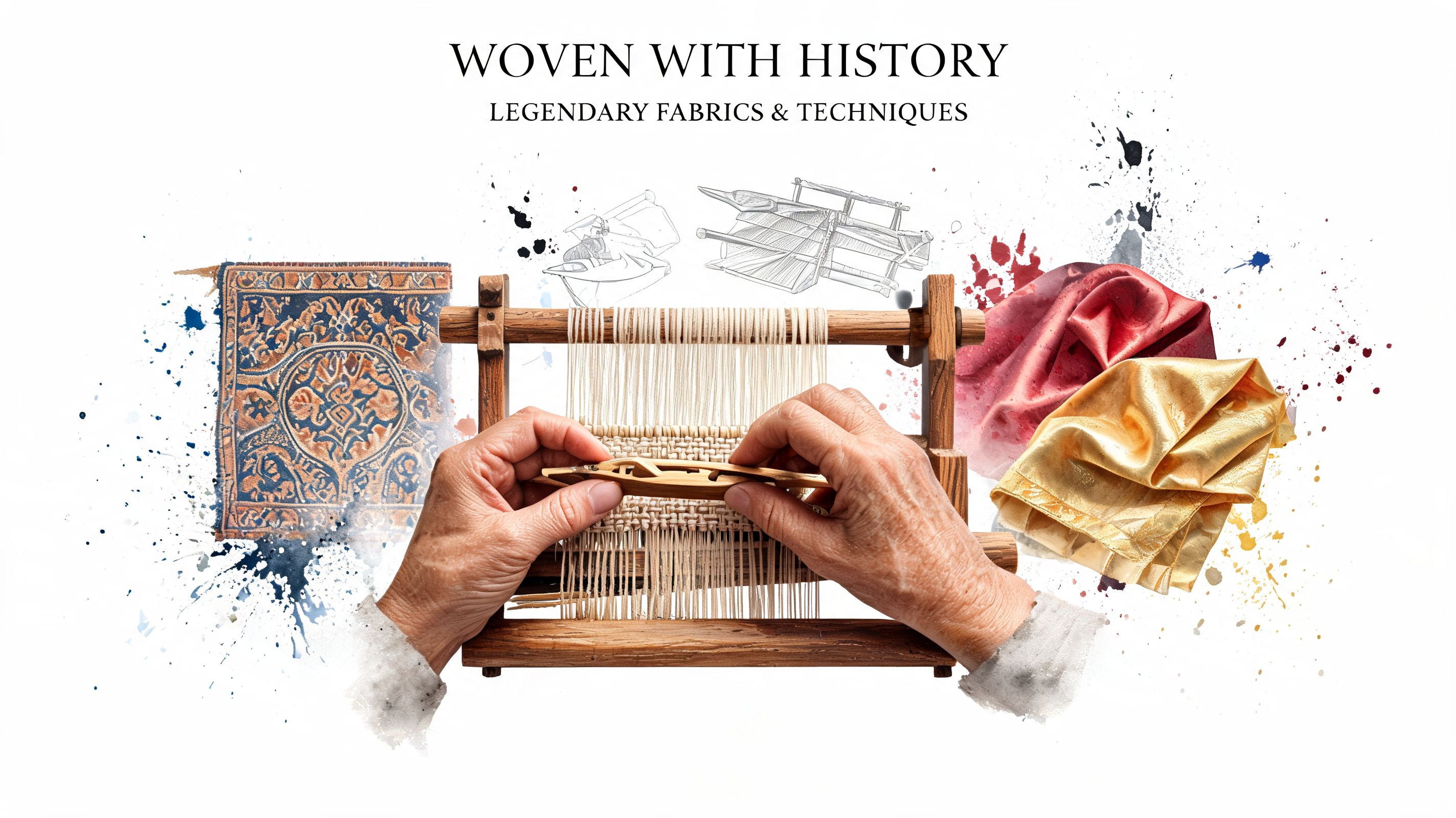
Bangladeshi dress carries meaning through weave, texture, and handwork. Even when two outfits share a similar silhouette, the fabric can completely change how the garment feels, moves, and is valued.
Why weaving matters so much
Traditional dress in Bangladesh is tied not just to fashion but to the technologies and skills of weaving communities. That's one reason broad labels can feel incomplete. They name the outfit, but not the craft behind it.
In the Meitei community in Bangladesh, for example, dress includes garments such as the phanek, innaphi, moirang-phi, and potloi in ceremonial contexts. Historical dress accounts also remind us that older Bengali clothing included unstitched or smoothly draped cloth rather than one fixed national outfit, which is discussed in this related guide to traditional Thai dress for women as a useful comparison in how regional dress traditions resist simplification.
Fabric as identity
A woven textile can signal home, memory, and social meaning before anyone says a word. That's especially true in cultures where drape and cloth structure matter as much as cut.
Readers often focus on color first. Color is powerful, but technique leaves the deeper signature. Handwoven cloth has a rhythm that machine-perfect fabric doesn't quite replicate.
Some of the beauty of bangladesh traditional dress comes from what you can't see in a quick photo. The tension of the weave, the weight of the cloth, and the way the fabric falls all shape the final look.
Meitei weaving as a vivid example
One of the most concrete examples comes from Meitei-style weaving in Bangladesh. The same documented overview of Meitei clothing records that one chadar measures 2.23 meters by 0.83 meters, uses 20 threads in the well and 11 threads in the warp for every 1.3 square centimeters, and that the technique can use up to 1,600 warp yarns.
Those details reveal extraordinary structure. They also remind us that “traditional clothing” is often inseparable from technical knowledge passed through weaving practice.
Why this matters when shopping online
When you browse online, product pages often flatten textiles into a single front-facing image. That's a problem with heritage garments because so much of their character comes from surface detail and drape.
The more handcrafted or region-specific the garment, the more helpful it is to preview the visual effect before buying. A photo on a plain background may show the item. It doesn't always show the style story.
Visualize Your Style Trying Bangladeshi Fashion Online
Online shopping creates a strange gap. You can find beautiful sarees, embroidered sets, vintage-inspired tunics, or secondhand South Asian pieces in a few clicks, yet it's still hard to judge how a style will look on you.
That's especially true with garments that have strong drape, bold color, or unfamiliar silhouettes. A listing can look stunning on a model and still leave you unsure about the overall appearance in your own wardrobe.
Why visual preview matters
With cultural fashion, uncertainty usually isn't about interest. It's about confidence.
You may love the texture, border work, or ceremonial feel of a garment, but still wonder whether the style suits your face, coloring, or the event you have in mind. That's where visual tools are useful. They help you see how it looks, not just admire the product photo.
A practical option for previewing style
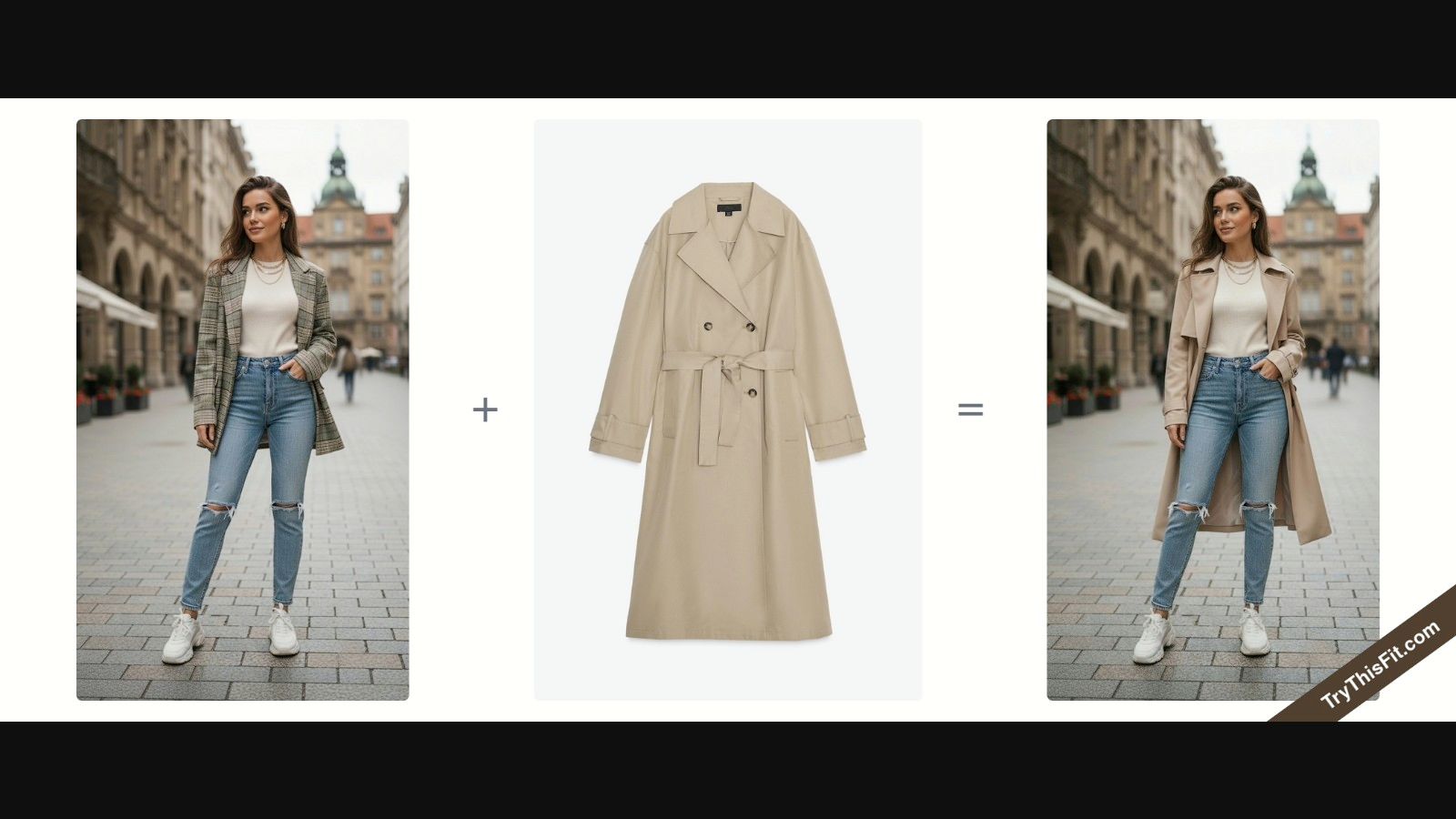
One option is TryThisFit's online outfit try-on tool. The app lets you upload your photo and a clothing image to preview the appearance of an outfit in seconds, with no account needed. Flat-lay clothing photos usually work best when you want the most accurate style preview.
That makes it useful for more than mainstream shopping. If you find a Bangladeshi-inspired piece on Amazon, a boutique site, or a secondhand marketplace, you can get a fast visual sense of the style before deciding.
If a garment has a dramatic silhouette or ornamental detail, a preview helps you judge styling much faster than switching between product tabs.
Where this helps most
A visual preview is especially handy when you're dealing with:
- Decorative fabrics that may feel louder or softer on you than they appear in a catalog shot
- Ceremonial looks where you want to decide whether the outfit feels festive, elegant, or too formal
- Secondhand finds that can't be tried on in person
- Cross-cultural style exploration when you're learning what silhouettes suit your taste
If you shop often through a browser, the Chrome extension is the most convenient version of this idea. It installs in a couple of seconds through the free Chrome extension for right-click try-ons, and it works on any site by letting you right-click a product image to preview the style instantly.
Keep the goal realistic
A visual try-on tool doesn't replace cultural understanding. It complements it.
Use the history and garment knowledge to choose thoughtfully. Then use a preview to decide what you want to wear, compare options, and avoid ordering something that doesn't match the look you had in mind.
Beyond Borders Modern Twists and Regional Styles
Bangladeshi dress isn't frozen in one era. It keeps moving, which is exactly what living tradition should do.
Some changes are subtle, like everyday styling shifts. Others are more striking, where old techniques meet new materials or a regional craft enters wider public attention.
Regional style keeps the picture honest
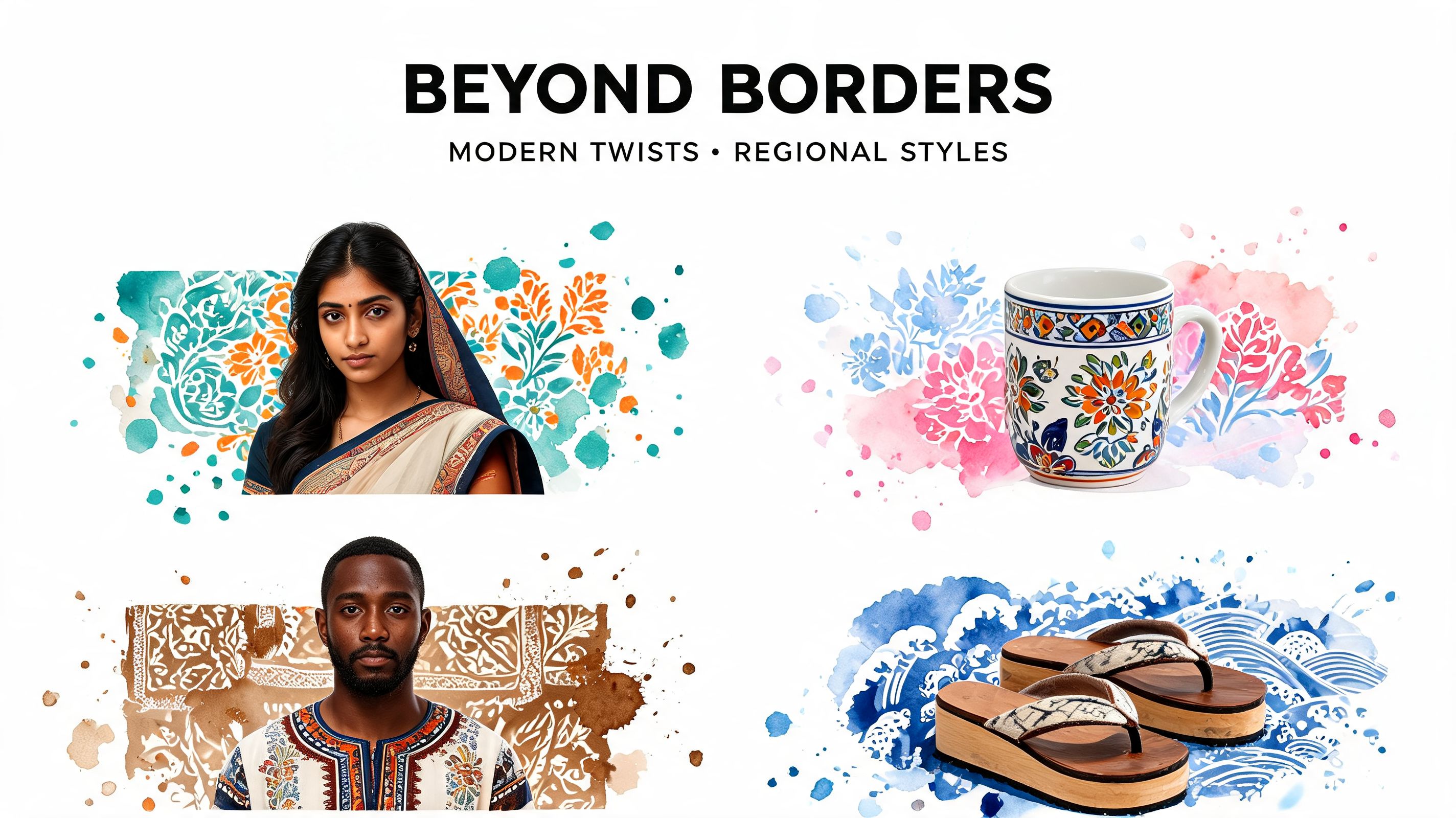
If you only study the best-known garments, Bangladesh can look stylistically uniform from the outside. Regional and community-specific dress corrects that impression.
The Meitei example is especially revealing. Women may wear the phanek at home, and a phanek with innaphi or a saree outside. For village ceremonies, a special embroidered mayek naiba phanek appears in the tradition described in the record of Meitei clothing in Bangladesh.
That layered wardrobe makes a bigger point. Tradition often works by context, not by one permanent outfit.
Innovation inside tradition
Heritage textiles also adapt. A strong recent example came on July 17, 2023, when Bangladesh's Prime Minister was presented with Kalabati sarees, described as the first sarees made in the country from banana plant fibers using traditional Meitei weaving techniques in this documentation of the event.
That moment stands out because it joins craft memory with new material experimentation. It's not a break from tradition. It's tradition continuing.
A culture keeps its dress alive by wearing it, reworking it, and letting artisans respond to the present.
How modern shoppers encounter these styles
Today, people don't discover regional clothing only through family wardrobes or local markets. They find it through boutique stores, resale platforms, social feeds, and diaspora sellers.
That changes how style exploration happens. You might spot a handwoven wrap on a niche shop, a festive set on Amazon fashion finds, or a vintage-style piece on a resale listing before you know its full cultural background.
A few habits help:
- Read garment names carefully: sellers sometimes label everything as a “saree set” even when the piece belongs to a different tradition.
- Look for fabric clues: handloom language, embroidery descriptions, and draped styling often reveal more than the headline title.
- Use image-based browsing thoughtfully: beautiful photos can spark curiosity, but they can also blur regional distinctions.
Tradition with room to breathe
This is what makes bangladesh traditional dress so engaging. It includes everyday garments, ritual garments, region-specific forms, and modern reinterpretations all at once.
The result isn't a static wardrobe. It's a textile conversation still unfolding.
A Practical Guide to Buying and Caring for Your Garments
Once you start shopping for Bangladeshi clothing, the challenge changes. The question is no longer “What is this?” It becomes “How do I choose well?”
That matters even more with handcrafted or decorative garments, because the texture, finish, and care needs can vary a lot from one item to another.

What to check before buying
Don't rush the listing. Slow reading saves disappointment.
- Study the fabric description: If the seller names handloom work, embroidery, or artisanal finishing, treat the garment as something that may need gentler care.
- Inspect the product photos: Front, border, close-up, and drape shots tell you far more than one styled image.
- Prefer flat-lay images when previewing style: They're usually the clearest choice if you want to visualize the appearance of the garment before ordering.
- Check return terms carefully: This is especially important for marketplace and secondhand sellers.
If you shop online often, this guide on how to shop for clothes online with fewer mistakes is a useful companion for comparing listings and spotting weak product pages.
Where to shop
You don't need one perfect source. Different goals call for different places.
A large marketplace may be convenient if you want broad selection, while a boutique seller may offer more context about handwoven pieces. For accessible browsing, many readers start with Bangladeshi and South Asian styles on Amazon, then compare those listings with more specialized shops or resale platforms.
How to care for delicate pieces
Decorative and heritage-inspired garments deserve slower handling. Even if a label looks straightforward, trim, embroidery, and woven detail can change what “easy care” really means.
A simple care approach works well:
- Separate occasionwear from daily laundry.
- Read labels before washing or steaming.
- Store folded items with attention to embellishment and borders.
- Avoid rough handling on heavily embroidered areas.
Buying advice: If you can preview the style before ordering, you're less likely to buy a garment that sits unworn because the look wasn't what you expected.
A smart buyer's mindset
Think like a curator, not a cart-filler. Buy pieces you can imagine styling.
That's particularly true with bangladesh traditional dress. The beauty is often immediate, but the best purchases are the ones that match your occasions, your taste, and the way you want to present yourself.
Conclusion Weaving Your Own Style Story
Bangladesh traditional dress opens up beautifully once you stop looking for a single answer. The saree matters, of course, but so do the salwar kameez, the lungi, the panjabi, and the region-specific garments that reveal how varied the country's clothing traditions really are.
The deeper you go, the more the fabric itself starts speaking. Weaving methods, drape, embroidery, and ceremonial use turn clothing into a record of community knowledge, not just fashion preference.
That's why this topic stays with people. It joins color with memory, technique with identity, and everyday life with celebration.
If you decide to bring one of these garments into your own wardrobe, take your time. Learn the garment name, study the textile, and care for it properly. For delicate pieces or embellished formalwear, professional dry cleaning for specialty garments can be a sensible option when home care feels too risky.
Style becomes more meaningful when you know the story behind what you wear. And when you can preview an outfit's appearance before buying, it gets easier to choose with both curiosity and confidence.
If you want to keep exploring, save the looks you like, compare styles, and revisit them later through your saved try-on history. That kind of visual record can turn a passing interest into a personal style archive.
If you want to explore these looks on your own photo, start at TryThisFit. You can preview the appearance of outfits in seconds, test styles from shopping sites, and narrow down what you want to wear before you buy.
Try Virtual Try-On Now
See how clothes look on you before you buy - works with any online store
Get Started Free