Cheap Online Clothes Shopping NZ: Smart Buys & Virtual
You've got six tabs open. One has a sale dress that looks amazing on the model. Another has a bundle of basics from a bargain site. A third is a secondhand jacket you don't want to miss. The prices look good, but the doubt kicks in fast.
Will that shape suit you? Will the colour work with your wardrobe? Is this a smart cheap buy, or just another parcel that ends in disappointment?
That's the core of cheap online clothes shopping in NZ. Finding low prices isn't the hard part anymore. Choosing pieces you'll wear is.
The Thrill of the Hunt for NZ Fashion Bargains
The appeal is obvious. New Zealand shoppers have fully embraced online fashion, and the bargain hunt now feels like part sport, part styling session. One in four New Zealand adults, 25%, have recently shopped at Temu, according to this Tearfund New Zealand coverage via re:news.
That tracks with what shoppers see every day. Zara, H&M, Shein, Amazon, Depop, Vinted, Trade Me, Onceit, TheMarket. There's always another tab, another deal, another maybe.
Why cheap fashion feels so tempting
The thrill isn't only about paying less. It's about finding something that looks expensive, feels current, and lands at your door without the usual in-store hassle.
A quick look at the NZ online business landscape also makes it clear how broad local ecommerce has become. There are more places to browse, more international options competing for attention, and more pressure to sort the genuinely good buys from the impulse buys.
Cheap online shopping works best when you treat it like editing, not collecting.
The real risk isn't the price
Shoppers don't regret paying less. They regret buying clothing that looked right in the listing but wrong in real life.
That's why I never think of cheap online clothes shopping in NZ as just a store list. It's a filtering skill. You need a way to spot value, catch red flags, and preview the style before the parcel shows up.
When you do that well, bargain shopping gets fun again.
Master Your Budget and Find Hidden Deals
Saving money online usually has less to do with heroic self-control and more to do with setup. If your shopping system is messy, you'll overspend in tiny amounts that don't feel dramatic until your statement arrives.
That smaller-cart pattern is already visible. The average online shopping basket size in New Zealand fell to $95 in 2024, which points to more frequent, lower-cost purchases, according to NZ Post Business IQ.
Build a shopping system, not a wishful budget
A good budget for clothing isn't just a monthly number. It needs rules.
- Set a category split: Keep separate limits for basics, trend buys, and occasion pieces. That stops one “special” order from swallowing your whole month.
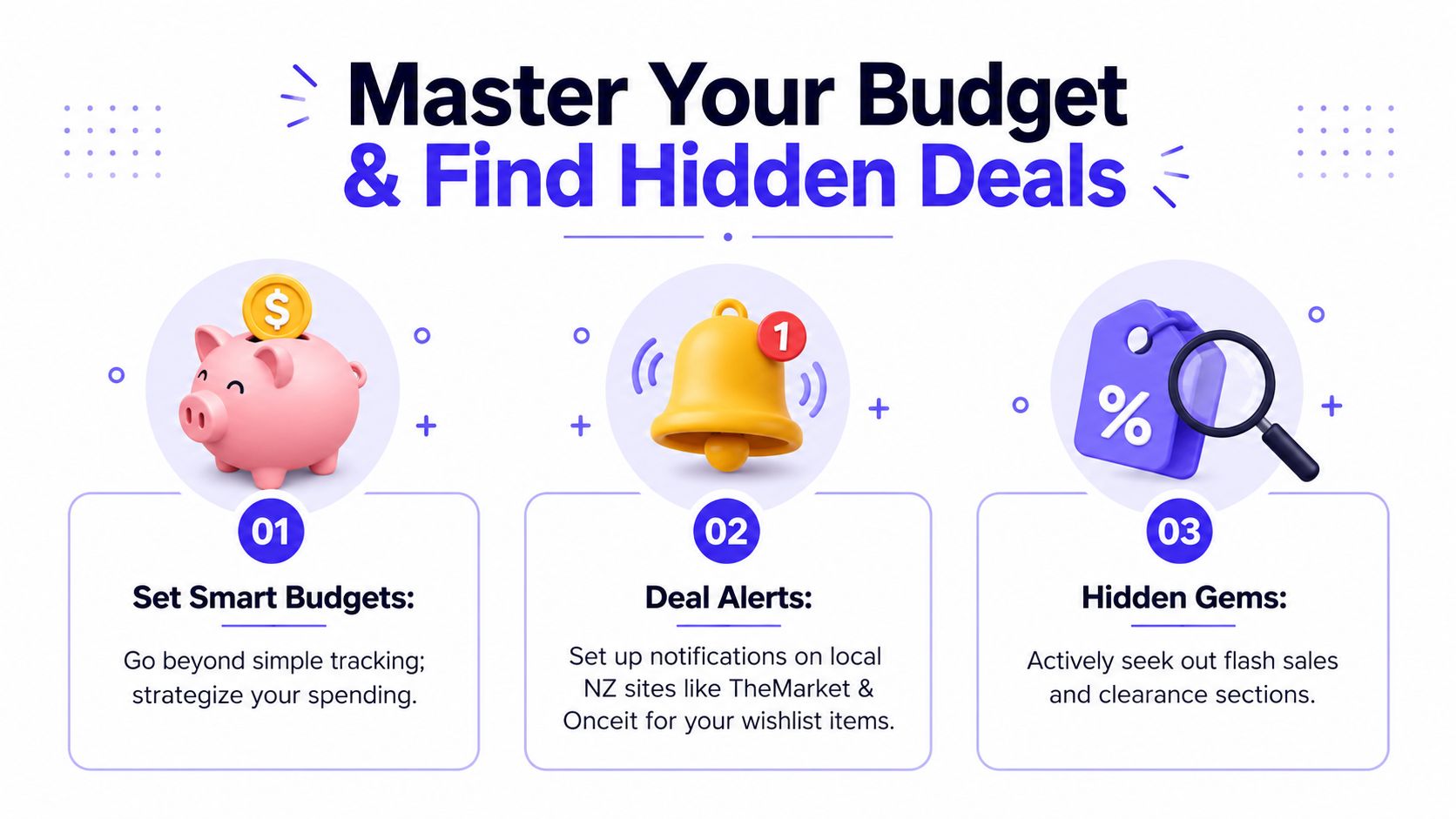
- Use a shopping-only email: Newsletters are useful when they don't flood your personal inbox. A dedicated address keeps sale alerts visible and less annoying.
- Track pending purchases: Don't count money only after checkout. Add cart totals to a note before you buy, especially if you shop across multiple sites.
For more practical habits like this, I like this guide on smart online shopping tips.
Let deals come to you
Manual browsing is where most overspending starts. You go in for one white tee and come out with six unrelated things because the site kept surfacing “you may also like” items.
A better move is to use alerts and shortlists.
| Tactic | Why it works | Good use case |
|---|---|---|
| Wishlist alerts | Stops random browsing | Seasonal staples |
| Newsletter signups | Catches flash sales early | Local stores like Onceit |
| Coupon extensions | Finds codes at checkout | First-time purchases |
| Clearance filters | Surfaces hidden stock | Off-season jackets and denim |
Shop the NZ sale calendar properly
Black Friday gets all the attention, but some of the best bargains come when stores are clearing seasonal stock and trying to move awkward sizes or slow colours.
Practical rule: Buy trend pieces at peak discount. Buy wardrobe basics only when you'd still want them at full price.
That one distinction saves a lot of money. If a bargain item only looks appealing because the percentage off is loud, skip it.
What usually doesn't work
The biggest mistake is chasing every sale equally. Cheap online clothes shopping in NZ gets expensive fast when you keep buying “good deals” that don't match anything you already own.
Another weak move is ignoring final cost. A low item price can still lose its edge once shipping stacks up. If I'm building a cheap order, I want at least one of these to be true: the piece fills a wardrobe gap, layers with what I already own, or is discounted enough to justify the risk.
Navigating Secondhand Marketplaces Like a Pro
Secondhand shopping is where some of the best value lives. You'll often find better fabrics, more interesting brands, and pieces that don't look identical to everything in the current fast-fashion cycle.
But secondhand shopping asks more from you. Search badly and you waste an hour. Search well and you can uncover serious gems.
Search like a buyer, not a browser
On Depop, Vinted, and Trade Me, the quality of your search terms matters more than almost anything else.
Try combining:
- Brand + item type such as “Witchery trench coat”
- Material + shape such as “linen wide leg pants”
- Era or vibe words such as “vintage”, “minimal”, or “boxy”
Broad searches bring noise. Specific searches bring options you can readily compare.
Negotiate without being annoying
Bundling is where polite offers make sense. If one seller has two or three pieces you like, a reasonable message can work well.
Keep it simple. Ask one clear question, confirm condition, then make one fair bundled offer. Don't send lowball messages on items that are already sharply priced.
Secondhand wins when you know exactly what you're hunting for.
The hardest part is visualizing the style
There's one problem secondhand platforms still haven't solved well. A lot of listings show clothes flat on a bed, hanging on a door, or folded in poor lighting.
That creates a real style gap. As noted in this piece on alternative ways to shop, a major pain point for Kiwi shoppers buying pre-owned fashion is verifying the true style of secondhand or flat-lay items because the photos lack body context and shoppers end up guessing.
That's why some listings look promising but still feel impossible to commit to.
What to check before you buy
I use a short screen before buying secondhand:
- Photo quality: Can you clearly see the garment shape?
- Fabric clues: Does it look structured, stretchy, soft, heavy?
- Seller detail: Do they mention wear, pilling, lining, or alterations?
- Styling potential: Can you name two outfits you'd build with it?
If you shop secondhand often, this article on thrift store online shopping is useful for refining that process.
The smartest secondhand shoppers don't just chase rarity. They look for listings that give enough visual information to make a confident style call.
Visualize Your Style Instantly Before You Buy
A product photo can sell a fantasy fast. That doesn't mean it tells you enough to buy calmly.
In New Zealand, 18% of online clothing purchases are returned due to fit or style mismatch, compared with 10% for non-fashion categories, based on reporting from Newstalk ZB. That gap says a lot. Clothing shoppers aren't only price-sensitive. They're dealing with a visual decision problem.
Why store photos leave too much to guess
Retail images are built to sell the garment, not to show how the style will look on you.
A blazer can look sharp on a tall studio model and feel totally different as part of your own wardrobe. A slip dress can read sleek in one listing and underwhelming when you imagine it with your shoes, jacket, and proportions.
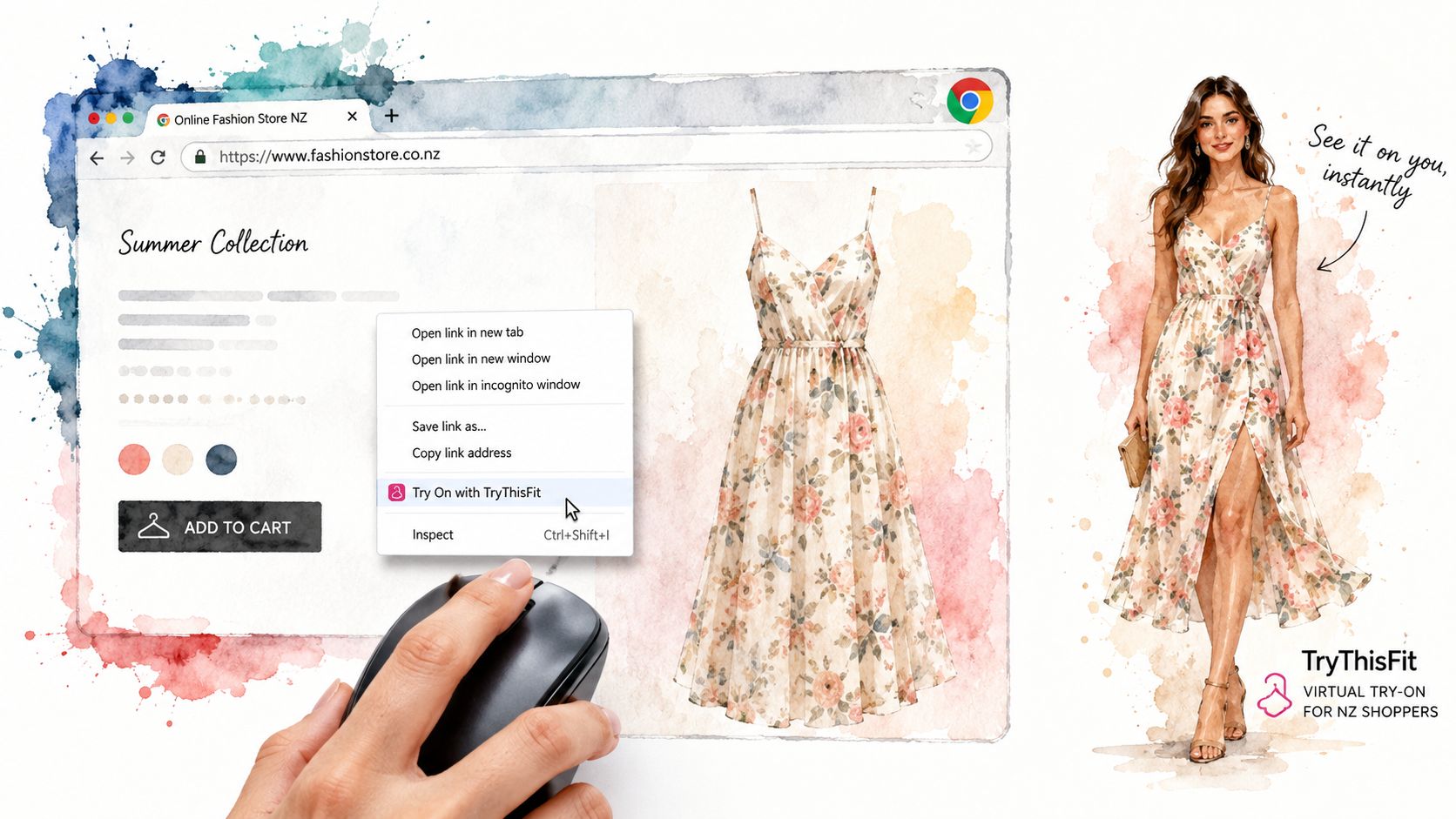
That's where visual preview tools become useful. I use TryThisFit's virtual dressing room free page when I want to see how a piece looks, not just stare at another polished listing photo.
What works best when you preview style
The most accurate results usually come from flat-lay clothing photos. When the item is photographed flat instead of stretched across a model or hanger, the garment shape is clearer and the style preview tends to look more reliable.
That matters a lot for secondhand shopping, but it also helps on regular retail sites when you can find alternate product images.
Here's the kind of visual preview that makes the concept click:

The fast way to do it while browsing
If you shop directly on store sites, the easiest setup is the free Chrome extension at TryThisFit Chrome extension. It installs in a couple of seconds, and the right-click feature lets you preview clothing images from sites like Zara, H&M, Shein, Vinted, Depop, and even fashion items on Amazon.
The convenience matters more than people expect. You don't need to open another app flow, create accounts, or start saving screenshots into a folder just to compare looks.
A product demo makes this easier to picture:
<iframe width="100%" style="aspect-ratio: 16 / 9;" src="https://www.youtube.com/embed/dXbdWNGuapw" frameborder="0" allow="autoplay; encrypted-media" allowfullscreen></iframe>What this changes in real shopping
This kind of preview doesn't tell you whether something will fit by measurement. That's not the point. It helps you visualize the style, preview the appearance, and decide whether a piece matches your taste before you spend money.
That becomes especially useful for:
- Secondhand listings with only flat-lay photos
- Fast-fashion browsing when every item starts to blur together
- Amazon clothing searches where quality and styling can vary wildly
- Halloween costumes when you want to test a look before ordering
The speed is a big part of the appeal. The extension can preview outfits in seconds, with no accounts needed, and it works on any site where you can right-click the image. You can also use the main app at TryThisFit if you want to upload and compare items more directly, then revisit saved looks later in your try-on history.
Seeing how something looks before checkout changes the mood of shopping. You stop guessing and start editing.
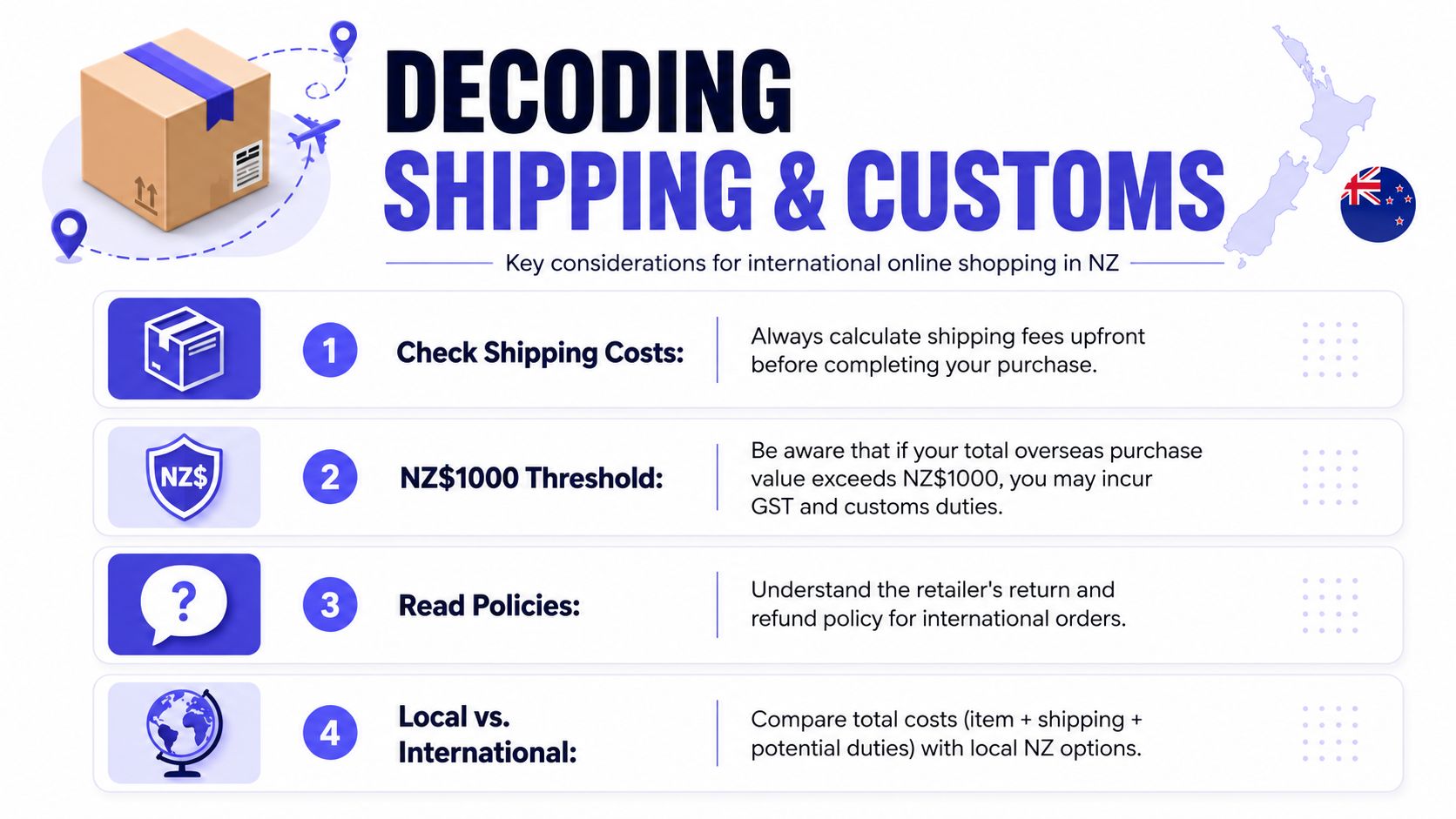
Decoding Shipping Fees and Customs Charges
A cheap item can turn into a mediocre deal the moment shipping gets added. International fashion orders are where that usually happens.
The easiest way to protect your budget is to check the full landed cost before you get emotionally attached to the cart.
What to check before payment
For overseas orders, I run through a short checklist:
- Shipping cost first: Don't assume it's minor. Some low-cost stores recover margin here.
- Currency conversion: Prices that look harmless in another currency can feel different in NZD.
- Return policy: International returns can erase any savings fast.
- Order total: Once a cart gets large, the final bill can stop being a bargain.
If you want a practical calculator for the broader import side, this guide on how AUSFF helps budget imports is a handy reference point.
Keep the bargain honest
The best cheap online clothes shopping in NZ strategy isn't “buy the lowest listed price.” It's “buy the lowest true cost for something you'll wear.”
That usually means comparing:
| Option | Looks cheap at first | Real question |
|---|---|---|
| Overseas fast fashion | Low item price | What happens after shipping and returns? |
| Local sale stock | Slightly higher ticket | Is delivery simpler and faster? |
| Secondhand | Strong value | Is the listing clear enough to trust? |
If the all-in cost feels murky, the deal probably isn't as good as it looks.
Your Smart Shopping Checklist for Fewer Returns
The cheapest wardrobe isn't the one with the lowest order totals. It's the one with the fewest mistakes.
Start with deal discipline. Set alerts, use a dedicated shopping email, and let discounts come to you instead of doom-scrolling your way into random purchases.
Then get sharper with secondhand. Search precisely, ask better questions, and don't buy from listings that leave too much to imagination.
Above all, preview the style before you commit. That one habit changes cheap online clothes shopping in NZ from hopeful clicking into confident buying.
Use this quick checklist every time:
- Pause before checkout: Can you name how you'll wear the item?
- Check the image quality: Flat-lay photos usually give the clearest style view.
- Compare full cost: Include shipping and any return hassle in the decision.
- Preview the appearance: Make sure the style works for you, not just for the listing.
- Save good ideas: When a look works, keep it so you can compare future buys against it.
When you shop that way, you don't just spend less. You build a wardrobe with fewer regrets.
If you want to make online clothing buys feel more visual and less risky, try TryThisFit. It lets you preview how clothes look before you buy, and if you shop in Chrome, the free extension makes that process even faster while you browse.
Try Virtual Try-On Now
See how clothes look on you before you buy - works with any online store
Get Started Free