Thrift Store Online Shopping: A Visual Guide to Finding Gems
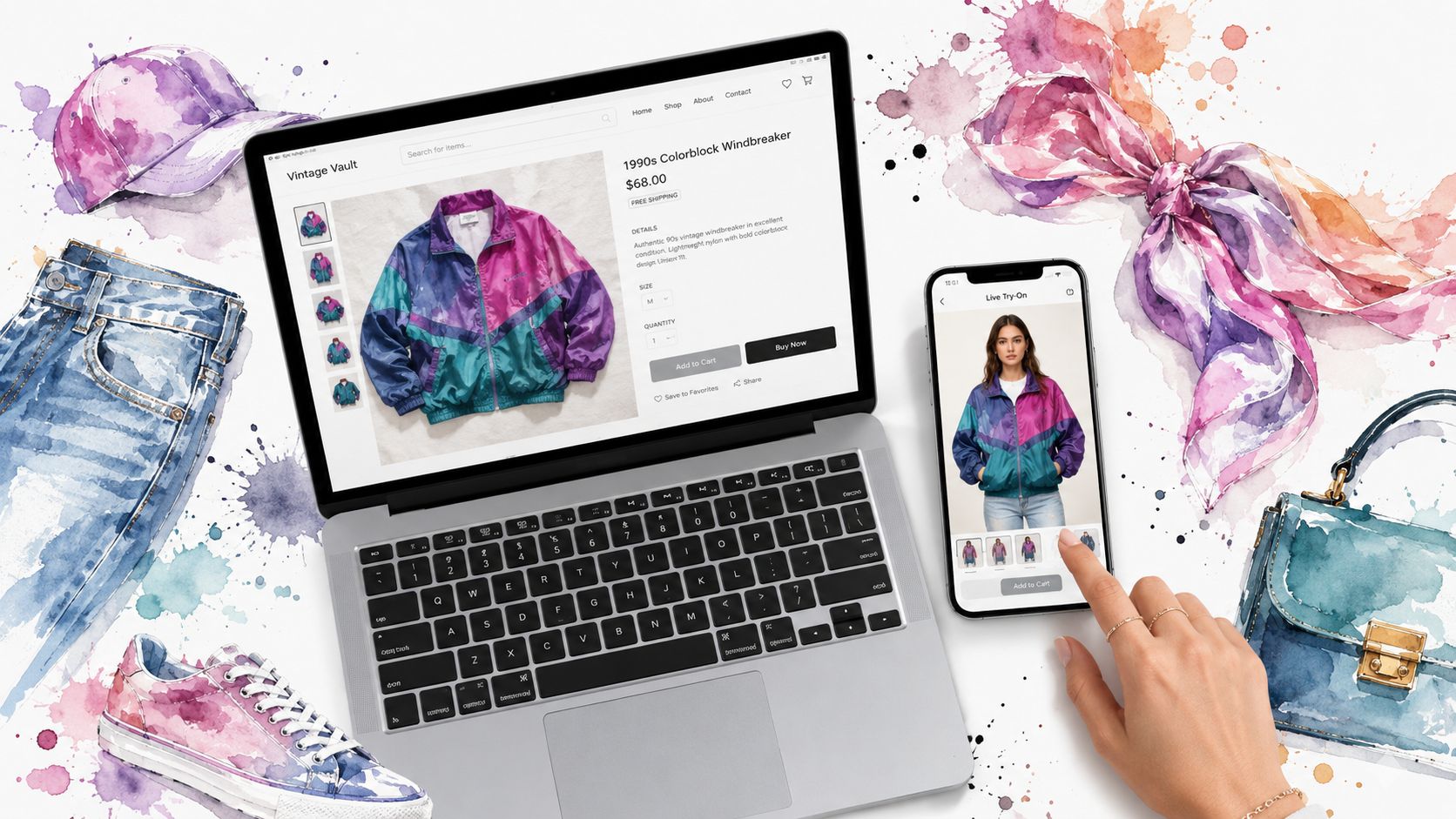
You know the tab spiral. One Depop find turns into twelve. A perfect suede jacket on Vinted leads to a vintage slip dress, then a structured blazer, then a pair of boots you absolutely did not plan to buy.
The rush is real. So is the hesitation.
You can spot a gem in a second, but the hardest part of thrift store online shopping isn't finding something good. It's deciding whether that good find will look right once it leaves the seller's mirror selfie and lands in your closet.
The Thrill of the Digital Secondhand Hunt
The best online thrift finds always arrive with a tiny jolt of adrenaline. A rare print. A beautifully faded denim shirt. A wool coat that looks like it came straight out of an old editorial, except it's sitting in a resale app at midnight while you're scrolling in bed.
That experience isn't niche anymore. Online resale in the U.S. is forecasted to grow another 19 to 21 percent in 2026, and mobile apps account for 67 percent of all online secondhand transactions, according to Forrester figures summarized here. That tracks with how people shop now. The hunt happens on phones, fast, visually, and often impulsively.
Gen Z has pushed that behavior into the center of fashion culture, but the appeal is wider than any one age group. Online secondhand shopping gives you variety that a single local store never can. It also gives you access to pieces that feel personal instead of mass-produced.
Where the excitement turns into doubt
The problem usually appears right after the save button.
A listing can look amazing on a hanger and still feel wrong for your style once you get it. Seller photos help, but they rarely answer the question buyers actually care about. Not “is this trendy?” but “do I like how this looks on me?”
The biggest friction in thrift store online shopping isn't discovery. It's the gap between seeing a listing and picturing it in your own life.
That gap changes how people shop. Some pass on good pieces because they can't visualize them. Others buy optimistically, then regret the choice later. If you've ever stared at a checkout screen wondering whether a dress will feel romantic, awkward, dramatic, or just not you, you already know the issue.
Why this matters now
Digital thrift has become one of the most creative ways to build a wardrobe. It's fast, social, and full of one-off pieces.
But to shop well, you need more than luck. You need a way to search sharply, read listings critically, and get much better at imagining the final look before you commit.
Mastering the Search on Vinted Depop and Beyond
Many users search resale apps too broadly. That's why their feeds fill with noise.
If you type “jacket,” you'll get chaos. If you type “90s leather blazer,” “boxy wool coat,” or “bias-cut black midi dress,” you'll get closer to the pieces you want. Good thrift store online shopping starts with language.
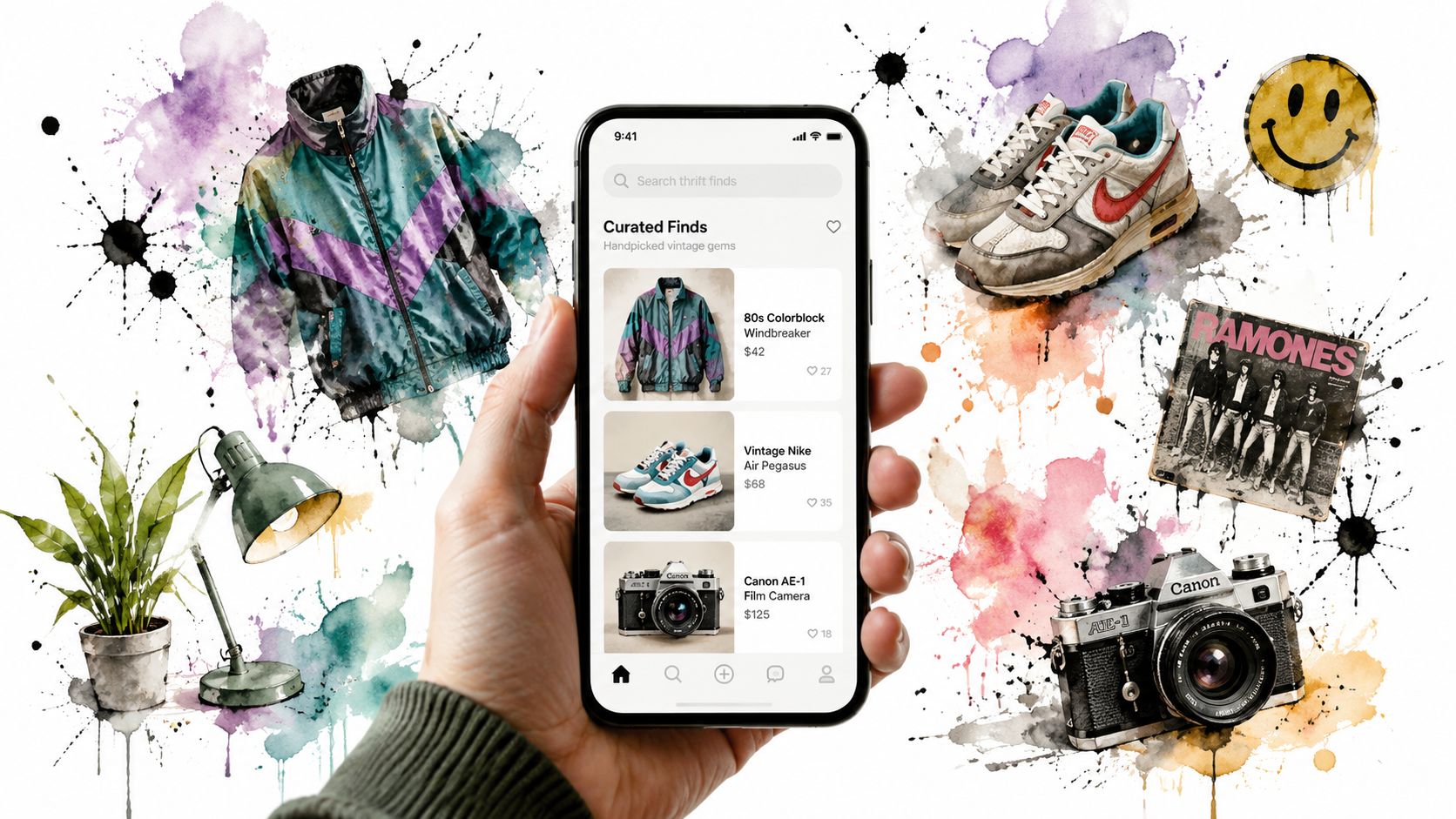
Search like a stylist, not a browser
Use terms that describe silhouette, fabric, era, and mood.
- Silhouette first: Try “cropped cardigan,” “wide-leg trousers,” or “column dress” instead of generic category words.
- Fabric next: Add “linen,” “mohair,” “silk,” or “suede” when texture matters.
- Era cues: “Y2K,” “70s,” “minimalist 90s,” and “vintage prairie” can clean up results fast.
- Detail words: Search for “contrast stitching,” “pearl buttons,” “pleated front,” or “square neck” when a specific detail is the hook.
On Vinted and Depop, this matters even more because sellers describe items inconsistently. One person lists “vintage brown coat.” Another lists “oversized wool trench.” Smart keyword stacking catches both.
If you like browsing highly visual vintage styles, this vintage clothes app guide is useful for seeing how style-focused shopping can feel more curated from the start.
Filters that actually help
Filters are where good searches become great ones. I'd rather narrow hard than scroll forever.
A quick decision table helps:
| Filter | Best use | Why it works |
|---|---|---|
| Brand | When you know cut or quality standards | Helpful for repeat labels you already wear |
| Material | When drape matters | Linen, wool, leather, and silk usually change how a piece feels visually |
| Condition | When you want fewer surprises | Cuts down on listings with hidden wear |
| Color | When building around your wardrobe | Keeps impulse buys from drifting off-theme |
| Price ceiling | When the app starts showing inflated “vintage” | Protects the thrill from becoming overspending |
Don't ignore big marketplaces
Secondhand shopping doesn't stop at resale-first apps. You'll also find resale and vintage-adjacent listings on large marketplaces, and sometimes the search tools are better there.
If you're checking major retailers and marketplaces, browse Amazon fashion listings through this link and search with the same discipline you'd use on Depop. Specific keywords beat broad browsing every time.
Practical rule: Save searches for styles, not just products. “Chocolate brown leather shoulder bag” will serve you better over time than “bag.”
Follow closets, not just items
Great sellers usually have a taste pattern. Once you find one person listing sharp tailoring, good denim, or strong vintage knits, follow their closet.
That turns search from random digging into source building. It also helps you discover pieces you wouldn't have known how to keyword in the first place.
Judging Quality and Authenticity Through a Screen
A good resale buyer learns to slow down at the listing page. Search gets you to the item. Inspection decides whether it deserves your money.
That's where most mistakes happen. Not in taste, but in evaluation.
Product presentation drives trust in online resale. Transparent condition descriptions and detailed photos are essential because trust correlates directly with sales volume, as noted in this CS-Cart guide on starting an online thrift store. Buyers respond to honesty. Sellers who hide flaws usually create problems later.
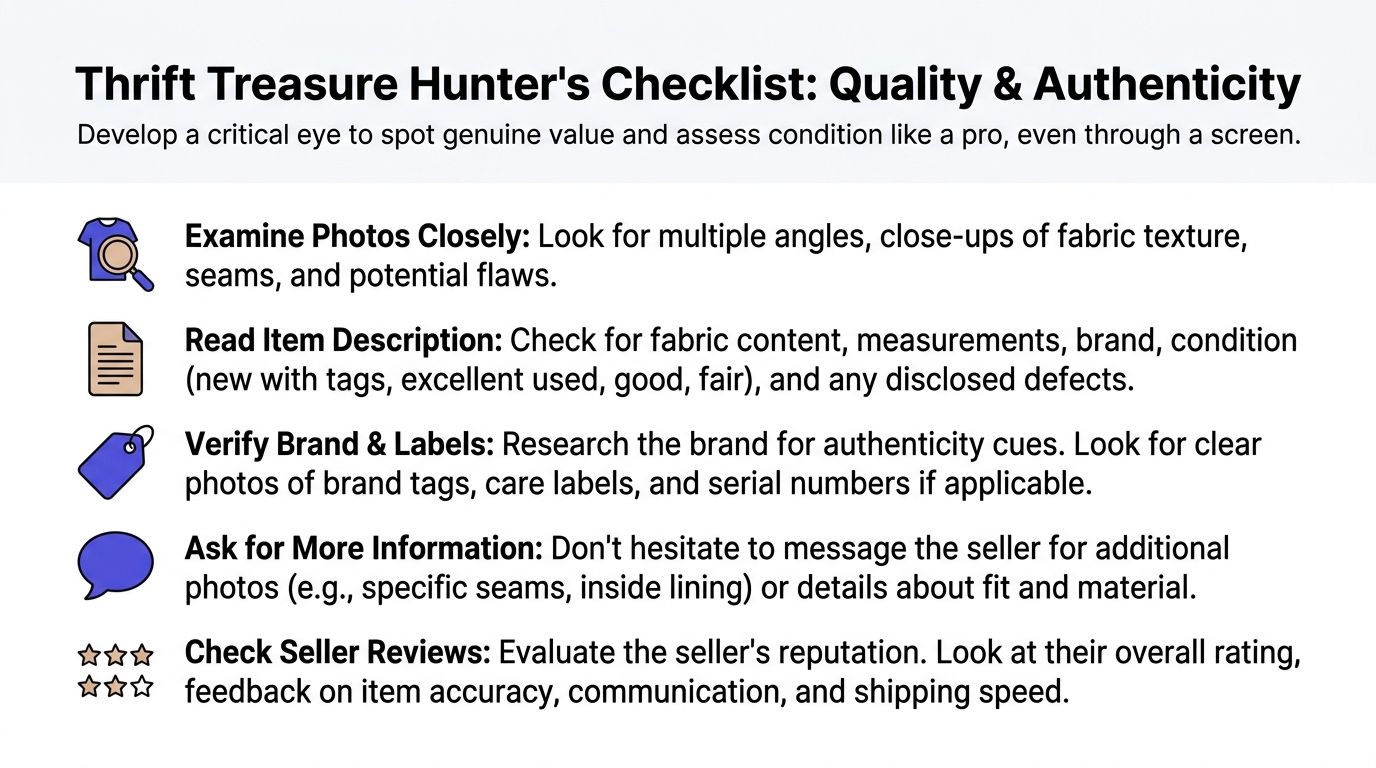
What to inspect first
Start with the photos, not the title.
Zoom all the way in. Look at underarms, hems, cuffs, knee areas, collars, closures, and seams. Those spots tell the truth fast. Pilling, shine on wool, stretched ribbing, tiny holes, and weak stitching all show up there before they appear anywhere else.
Then read the description like a contract.
- Condition language: “Excellent used” means very different things depending on the seller, so look for specifics.
- Material details: A seller who notes fabric content usually paid attention elsewhere too.
- Measurements: Even if they're imperfect, they show effort and reduce ambiguity.
- Defect disclosure: Stains, snags, missing buttons, loose lining, and repairs should be stated plainly.
Authenticity signals worth checking
Branded vintage needs another layer of scrutiny. Logos alone don't help much. Tags, interior labels, hardware, stitching consistency, and care labels are more useful.
If a listing claims designer value but avoids close-ups of brand tags or interior construction, pause. If the photos are blurry where details should be clear, pause harder.
A simple comparison mindset helps:
| Listing detail | Reassuring sign | Red flag |
|---|---|---|
| Brand tags | Clear, readable photos | Cropped or missing entirely |
| Hardware | Matching finish and quality | Cheap-looking replacements |
| Description | Specific and calm | Overhyped and vague |
| Flaws | Openly disclosed | “Perfect” with limited photos |
Ask for one more photo when you're close to buying. Honest sellers usually respond clearly. Evasive sellers save you from a mistake by being evasive.
The best buyers message well
You don't need to interrogate anyone. Just ask targeted questions.
Try messages like:
- “Could you share a close-up of the cuff and underarm area?”
- “Is the fabric soft, crisp, or stretchy in person?”
- “Any wear not visible in the current photos?”
That tone gets better answers than a flood of vague questions. It also shows the seller you know what you're looking at.
Visualize the Style Instantly Before You Buy
There's one problem that generic thrifting advice keeps skimming past. You can measure a garment and still have no idea whether you'll like the overall look.
That matters because 70 percent of online secondhand returns stem from size discrepancies, and 40 percent of online thrift buyers now prioritize fit certainty over price, according to the figures summarized in Green America's online thrifting discussion. Measurement tips help, but they don't solve the style hesitation that stops people at checkout.
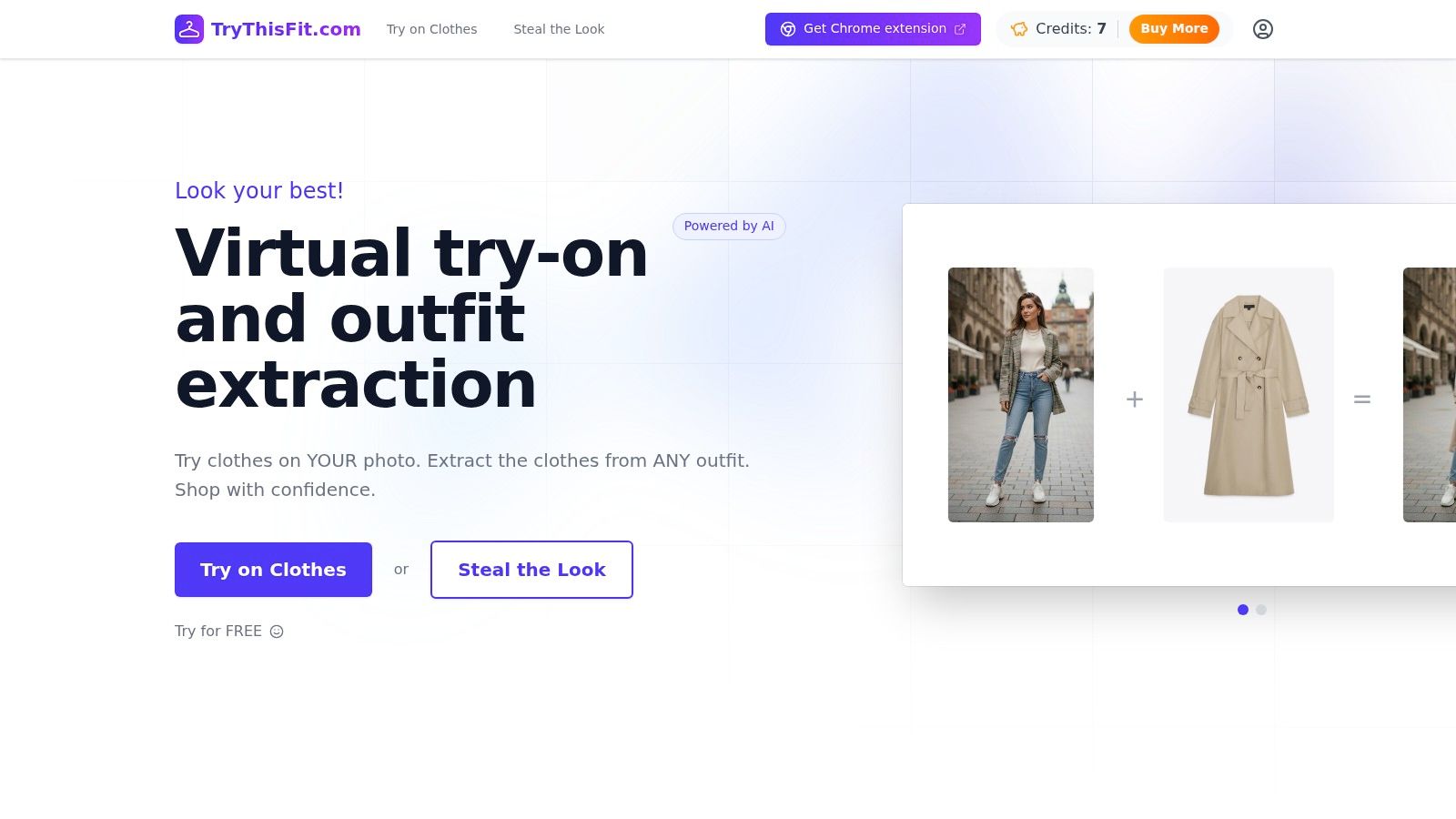
Why visual preview changes secondhand shopping
Secondhand buying has a unique challenge. You usually can't order multiple sizes, and returns are often limited or not worth the trouble.
That's why visualizing the style matters so much. If you can preview the appearance of a coat, dress, or top on your own photo before you buy, the decision gets easier. You're no longer guessing from a hanger shot or trying to mentally translate someone else's mirror selfie.
I've found this especially useful with pieces that are hard to imagine from listings alone:
- Structured outerwear that can feel editorial or overwhelming depending on proportions
- Vintage dresses where color and shape matter as much as the listing details
- Statement items like sequins, faux fur, metallics, or costume pieces
- Secondhand basics that look plain in a flat image but great once styled visually

What works best in practice
Flat-lay clothing photos usually give the cleanest preview. That's useful because many resale listings, retailer listings, and marketplace images already use that format.
There's also a practical reason niche tools work better than generic ones. Feedback around solo-built virtual try-on extensions suggests that focused use cases and image formats matter, especially on stores with standard product photography such as Zara and H&M, as discussed in this Reddit thread on an AI Chrome extension for virtual clothes. In plain terms, clean product photos make style previews more reliable.
The fastest setup I've used is a Chrome extension with a right-click try-on flow. It installs in a couple of seconds, works on any site, and doesn't force a giant workflow before you can preview anything. On sites like Zara, H&M, Amazon, Shein, Vinted, and Depop, that speed matters because shopping is usually happening mid-scroll, not in a lab.
If you want to understand the limitations too, that matters. Google Shopping's official documentation says its try-on tool excludes lingerie, bathing suits, and accessories, which is worth knowing before you expect every category to generate a useful preview. You can check those limits in Google Shopping's try-on help page.
A better way to decide on bold pieces
This gets even more fun with highly styled looks.
If you're shopping for a themed party piece, a retro blazer, or even an authentic 60s flight attendant look, a quick visual preview helps you decide whether the vibe feels chic, costume-y, playful, or just off. That's hard to judge from product photos alone.
For buyers who want more confidence around how visual previews relate to real-world shopping decisions, this page on measurement accuracy and what visual try-on can and can't do is worth reading.
A short demo makes the use case click immediately.
<iframe width="100%" style="aspect-ratio: 16 / 9;" src="https://www.youtube.com/embed/qYPYnFV0G6I" frameborder="0" allow="autoplay; encrypted-media" allowfullscreen></iframe>You're not using a preview to prove exact fit. You're using it to see how the style looks, whether the shape flatters your taste, and whether the item belongs in your wardrobe at all.
For thrift store online shopping, that's the difference between hopeful buying and informed buying.
Smart Checkout Negotiation and Return Strategies
The final stretch is where discipline saves money. You've found the item, checked the listing, and narrowed your choice. Now the job is to close the purchase without creating a future headache.
Buyer regret typically begins with issues like those highlighted in this JETNR paper on online thrift behavior and e-commerce dissatisfaction, which finds that consumer dissatisfaction in online fashion shopping is primarily tied to size inconsistencies, rigid return policies, and poor customer service.
How to negotiate without being annoying
Offers work best when they're calm and realistic.
A lowball message rarely gets a good response from a thoughtful seller with a well-priced item. A better move is bundling. If a seller has multiple pieces you like, ask whether they'd consider a combined price and shared shipping. That feels collaborative instead of confrontational.
Use a simple structure:
- Open politely: Mention the exact item.
- Make one clean offer: Don't send a ladder of tiny increases.
- Be ready to buy: Sellers can tell when you're serious.
Return policy checks that matter
A lot of secondhand purchases are effectively final sale, even when the app offers dispute tools. Read the listing terms carefully and check who pays shipping if something goes wrong.
Look for:
- Whether returns are accepted at all
- Whether misdescription is treated differently from buyer remorse
- How long you have to report an issue
- Whether platform protection applies
If a seller is vague in messages before purchase, expect friction after purchase too.
Don't buy an item with “I'll figure it out later” energy. That's how final-sale mistakes happen.
Trust signals before you pay
Seller reviews help, but so does consistency across the profile. Clear listings, repeat sales, and straightforward communication are good signs.
If you want to verify that a social profile or seller identity matches what's being shared, a tool like this FB ID lookup guide can be useful context when a transaction moves across platforms or messages. It's less about paranoia and more about reducing unnecessary risk.
For a tighter pre-checkout routine, I like this buy with confidence checklist because it frames the purchase as a decision process instead of a leap.
Build Your Sustainable Wardrobe with Confidence
The magic of thrift store online shopping isn't just saving money or finding something unusual. It's building a wardrobe that looks like you chose it piece by piece, not like an algorithm dumped it in your cart.
That gets easier when you stop treating secondhand shopping like a gamble. Search with sharper words. Read listings like a skeptic. Pause for condition details. Then make the final call based on whether the piece suits your style, not just whether it seems like a deal.
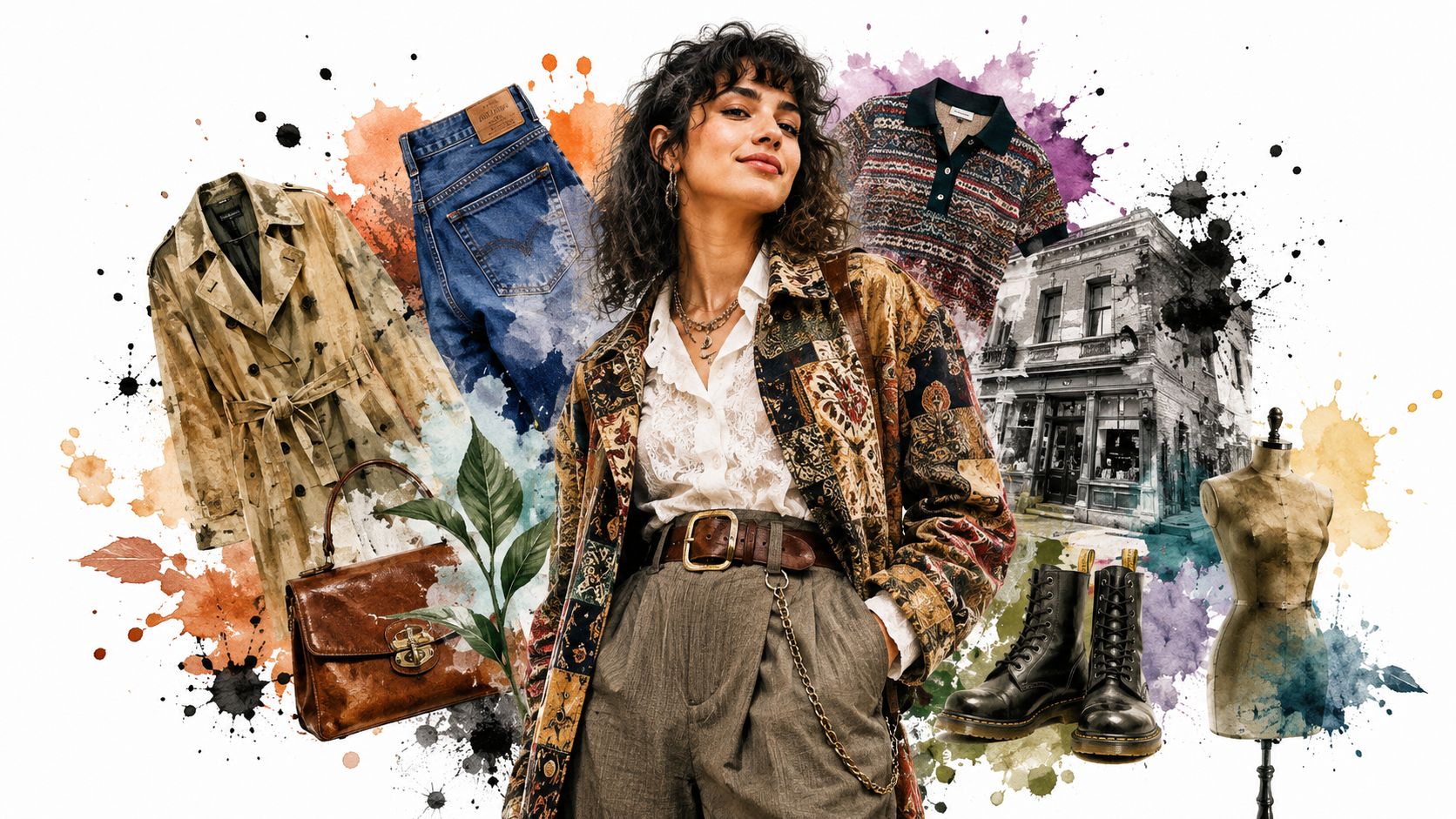
The result is a closet with more character and fewer regret buys. You get the thrill of the hunt, but with a lot more clarity.
And that's the sweet spot. Shopping secondhand should still feel romantic, surprising, and fun. It just doesn't need to feel blind anymore.
Try TryThisFit if you want to see how clothes look on you before you buy. It's especially handy for secondhand finds, Amazon fashion, Zara, H&M, Shein, Vinted, and Depop when you want an instant preview without creating an account. You can start on the main app, install the free Chrome extension in seconds for right-click try-ons on any site, and check your saved looks later in your try-on history.
Try Virtual Try-On Now
See how clothes look on you before you buy - works with any online store
Get Started Free