Clothes of Malaysia: A Guide to Traditional & Modern Styles
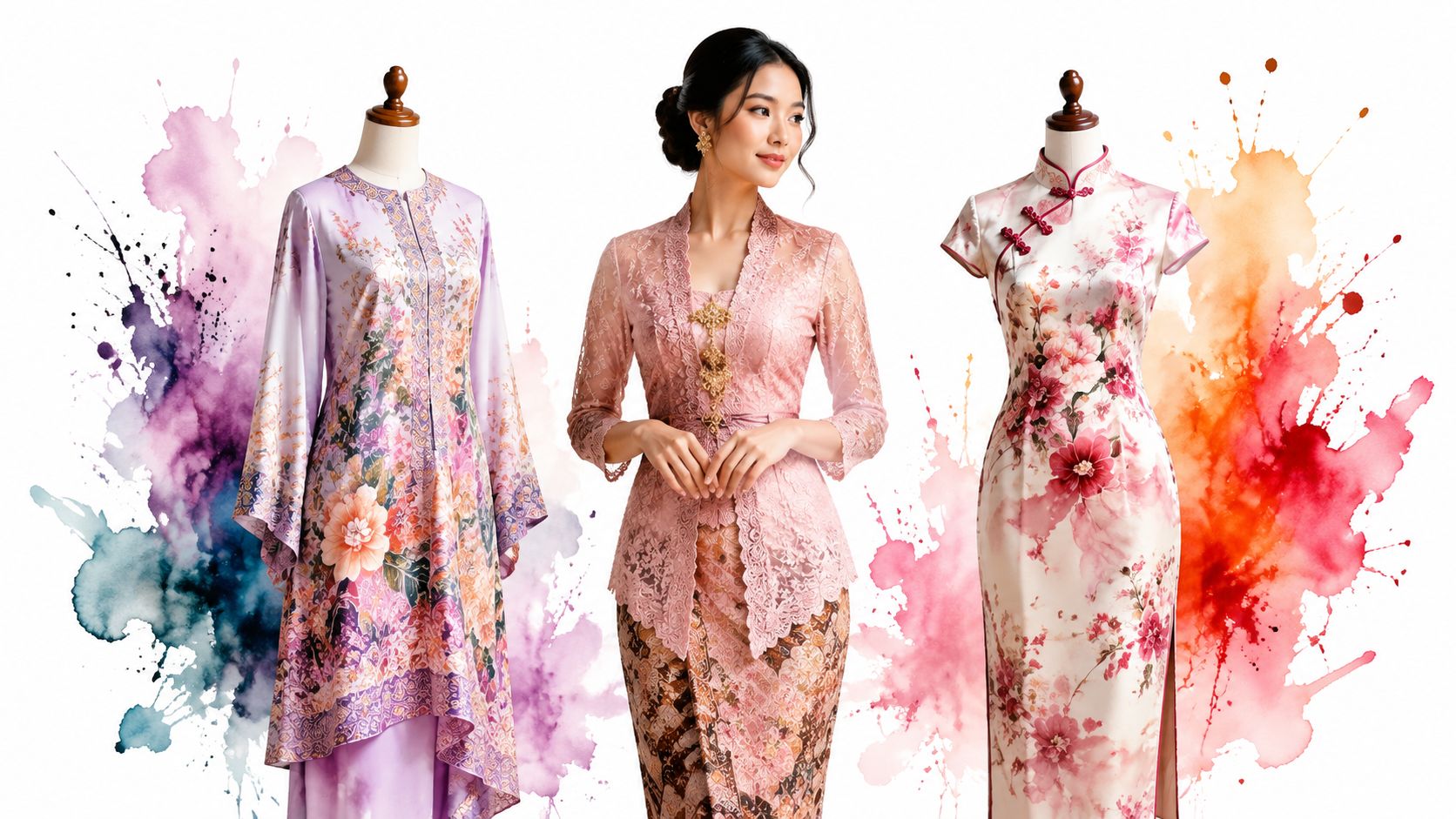
You're probably here because you saw a beautiful Malaysian outfit online, maybe a flowing Baju Kurung, a gleaming songket piece, or a sharp Baju Melayu, and thought: I love this, but what exactly am I looking at?
That curiosity is a great place to start. The clothes of Malaysia are visually striking, but they're also full of meaning. Cut, fabric, fastening, and styling all carry clues about history, community, and occasion.
A Journey into Malaysian Fashion
You spot a beautiful outfit on your phone while scrolling at night. The fabric catches the light, the shape feels elegant, and the product title says something broad like “Malaysian traditional dress.” Then the questions start. Is it formal or everyday wear? Is the name accurate? Will it suit your body the way it suits the model?
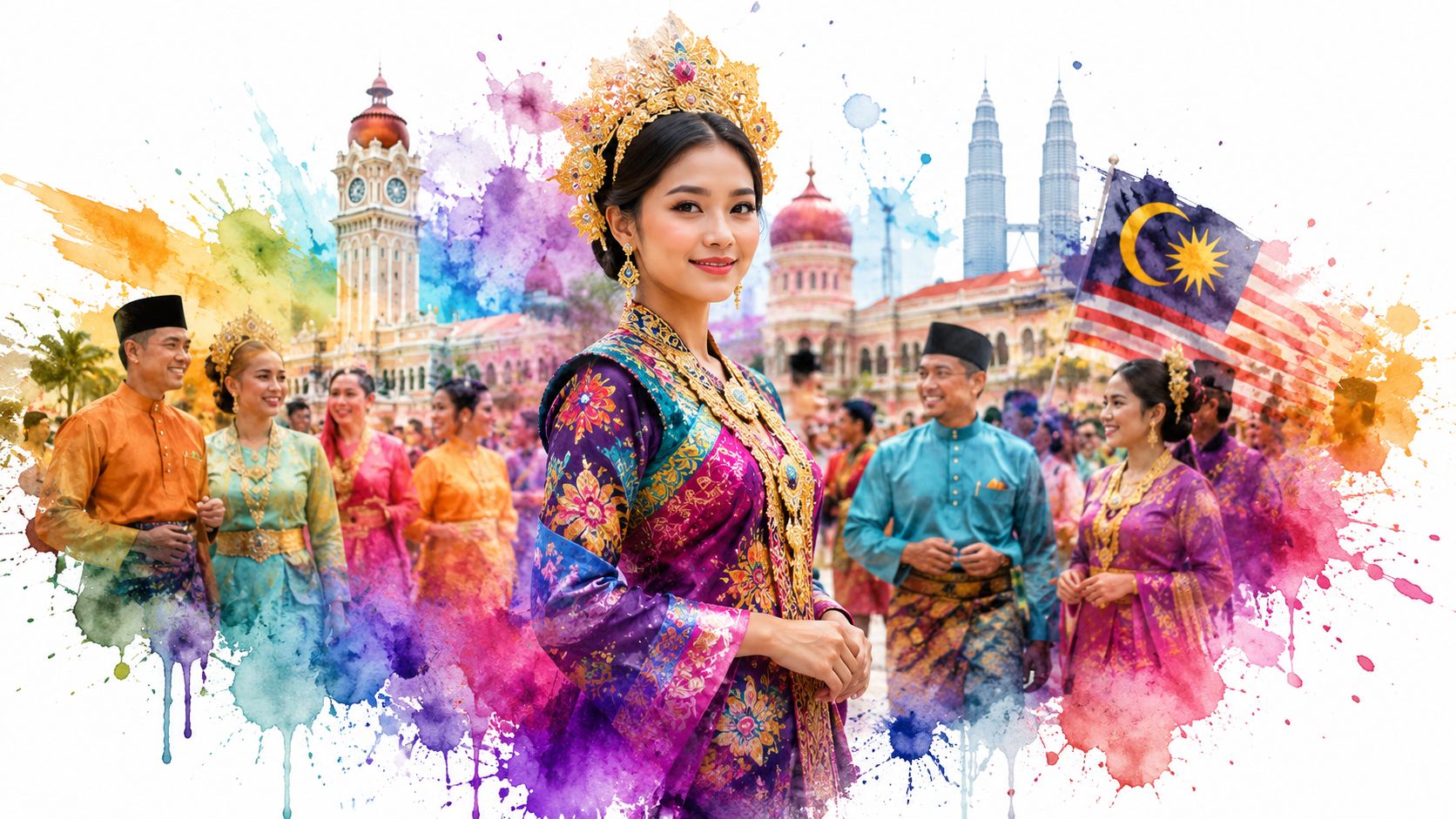
That uncertainty is common, because the clothes of Malaysia are visually rich and culturally layered. You are not looking at one single dress tradition. You are looking at a style world shaped by Malay, Chinese, Indian, and indigenous communities, each with its own silhouettes, fabrics, and ways of dressing for specific moments.
A helpful way to read Malaysian fashion is to separate three things. First, the garment itself. Second, the textile. Third, the occasion. Once you do that, the whole picture becomes much easier to follow.
Why Malaysian clothes feel so distinctive
Malaysian clothing often leaves a strong impression because the design balance is so refined. The shape may be modest and fluid, while the fabric carries the visual drama. Batik brings pattern and rhythm. Songket brings sheen and woven detail. Sarongs add movement and regional character.
It works a bit like architecture. The cut is the structure. The textile is the ornament. Both matter.
That is why two outfits can share a similar silhouette yet feel completely different in mood. One may look soft and understated for a daytime gathering. Another may feel ceremonial because of metallic threads, brooches, or more formal styling.
Malaysian fashion becomes easier to understand when you ask three simple questions. What is the garment called? What fabric is it made from? Where is it meant to be worn?
What often confuses first-time shoppers
Online listings often flatten these distinctions. Sellers may use “Malay dress” as a catch-all label, or describe any patterned cloth as batik. That makes shopping harder, especially if you care about wearing the style respectfully and choosing the right piece for the right event.
Here is the fast version:
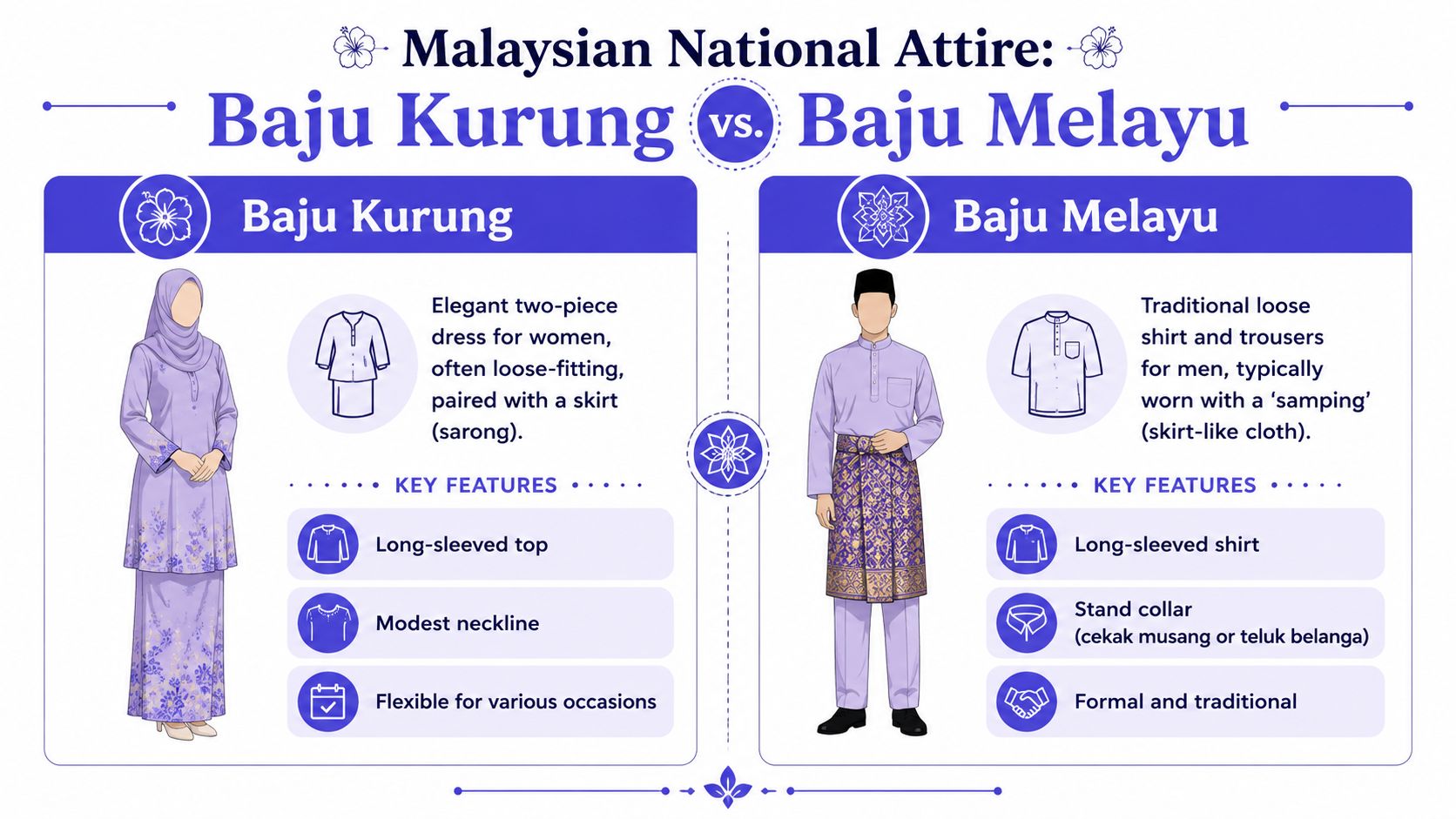
- Baju Kurung is usually a loose-fitting women's outfit with a long top and matching skirt.
- Baju Melayu is a men's traditional set with a shirt, trousers, and a wrapped cloth called a samping.
- Kebaya is more fitted and shaped, often secured at the front with brooches.
- Batik and songket are textile terms first. They describe fabric traditions, not one fixed outfit.
That last point trips up many new shoppers.
If you are browsing online, visualization helps as much as vocabulary. A name on a product page can only tell you so much. You also need to see how a straighter cut, a softer drape, or a more ornate textile will look on you. That is why tools like TryThisFit are so useful. They help bridge the gap between admiring Malaysian fashion as cultural dress and choosing a version you can picture yourself wearing with confidence.
The better you get at spotting cut, fabric, and context, the easier the rest of Malaysian fashion becomes to read.
The National Icons Baju Kurung and Baju Melayu
If you want to understand the clothes of Malaysia, start with the two garments most closely tied to national identity: Baju Kurung for women and Baju Melayu for men.
They're easy to recognize once you know what to look for. They also appear again and again during Hari Raya, weddings, official functions, and cultural celebrations.
How to recognize a Baju Kurung
The Baju Kurung is Malaysia's best-known women's traditional outfit. It's defined by a loose silhouette, and authentic formal versions follow a clear construction rule: the top should extend to at least the knee or mid-thigh, and the sleeves should cover the elbow. Another key feature is the front split opening, where overlapping fabric creates a V-shape secured with a hidden button or decorative pin.
Historically, it reaches far back. The Baju Kurung dates to the 14th-century Malacca Sultanate era, circa 1400 CE, and it was officially designated as Malaysia's national attire in 1957 upon independence, as noted in this JSTOR reference on Malaysian dress history. The same source-backed data also notes that over 85% of Malaysian women wear the Baju Kurung for formal occasions, with annual domestic sales exceeding 2.5 million units valued at USD 180 million.
That helps explain why it's not just ceremonial clothing. It's living fashion.
What to look for in a Baju Kurung
| Detail | What it means |
|---|---|
| Long, loose top | Signals modesty and elegance |
| Elbow-covering sleeves | Important in formal and cultural settings |
| Front split opening | A defining structural element |
| Matching skirt or sarong | Completes the classic silhouette |
Practical rule: If a supposed Baju Kurung has cropped proportions or short sleeves, it may be inspired by the style, but it isn't following the traditional formal construction.
How to recognize a Baju Melayu
The Baju Melayu is the classic men's national attire. It isn't just a shirt and trousers. Traditional definition matters here.
A proper Baju Melayu is a three-piece set: the shirt, the trousers, and the samping, which is a distinct 2-meter long cloth wrapped around the waist over the trousers. That wrapper is essential because it creates the formal line that separates Baju Melayu from a simple long shirt.
Here's the easiest way to read it visually:
- The shirt gives the clean top line and usually looks structured but comfortable.
- The trousers keep the outfit sleek.
- The samping adds status, texture, and ceremonial weight.
Why these garments matter so much
Both garments carry social meaning. They show respect for occasion, family, and tradition. They also adapt beautifully. You'll find classic versions in plain cotton, festive versions in batik, and formal versions enhanced with songket details.
That flexibility is one reason they stay relevant. They aren't frozen in the past. People still wear them because they work, visually and culturally.
A Rainbow of Heritage The Kebaya Cheongsam and More
Malaysia becomes even more fascinating when you look beyond its national dress and into the broader multicultural wardrobe people wear.
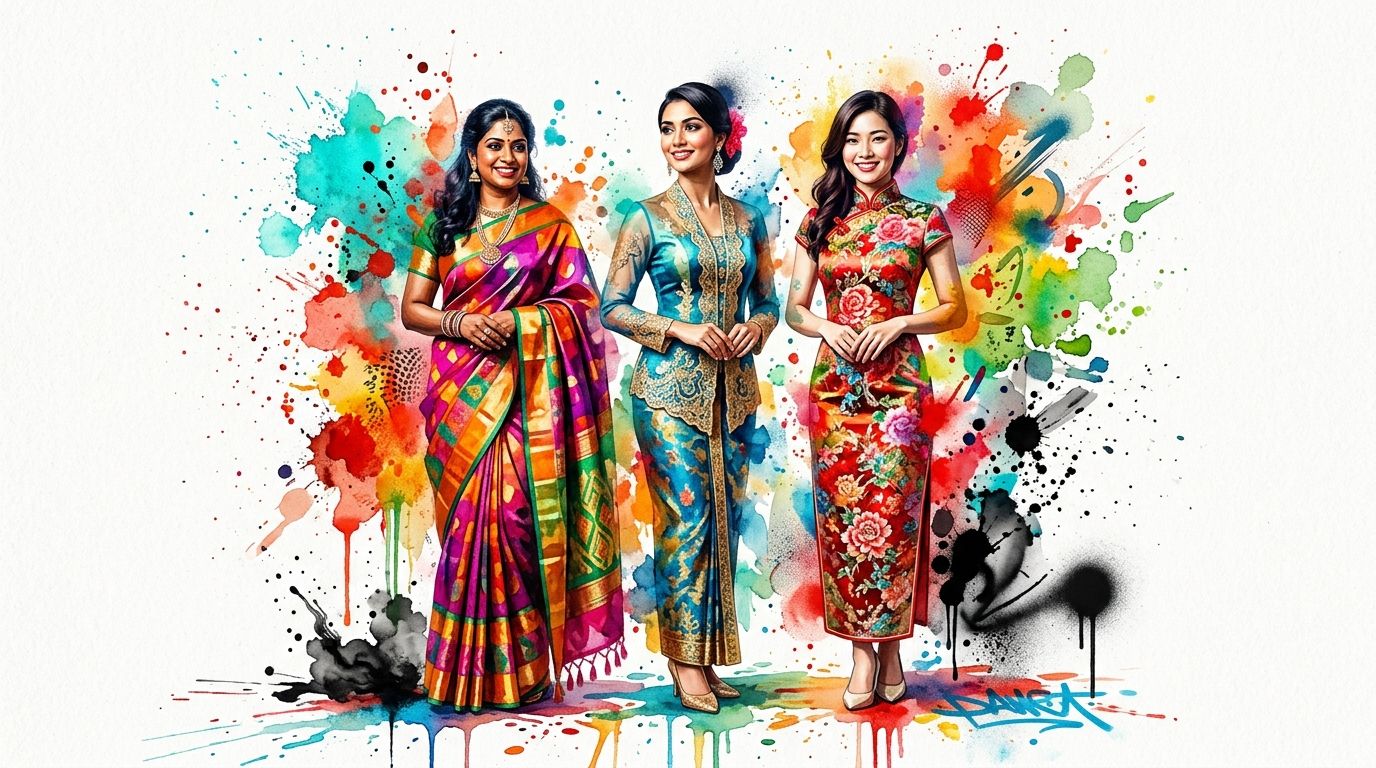
One celebration can feature a Malay Kebaya, a Chinese Cheongsam, and an Indian Sari in the same room. Instead of clashing, these styles create one of the most vivid fashion panoramas in Southeast Asia.
The Kebaya and its signature fastening
The Baju Kebaya is often more shaped than the Baju Kurung. It usually follows the body more closely and brings a dressier, more refined feeling.
One detail matters a lot in the Malaysian version: the kerongsang fastening. The front opening is secured by exactly three metal brooches hooked through fabric loops, which distinguishes it from regional kebaya styles that use buttons or zippers, as described in The Star's piece on Malaysian kebaya design history.
That three-brooch rhythm is both decorative and structural. Once you notice it, you start spotting it immediately in photos.
If you enjoy comparing regional dress traditions, this guide to Indonesia traditional costume makes a helpful companion because it shows how neighboring silhouettes can look related while working quite differently.
Chinese Malaysian elegance in the Cheongsam
The Cheongsam, also known as the Qipao, has a special place in the Malaysian Chinese community. You'll often see it during Chinese New Year, weddings, family portraits, and formal dinners.
Its mood is completely different from the Baju Kurung. Instead of loose structure, it leans sleek. Instead of layered drape, it emphasizes clean vertical lines and a close, polished shape.
That contrast is part of what makes Malaysian fashion so exciting. The national wardrobe contains softness, structure, shimmer, tailoring, and drape all at once.
A short visual helps bring that multicultural mix to life:
<iframe width="100%" style="aspect-ratio: 16 / 9;" src="https://www.youtube.com/embed/gp8uF7k2cRk" frameborder="0" allow="autoplay; encrypted-media" allowfullscreen></iframe>Indian Malaysian dress traditions
Indian Malaysian clothing adds another rich layer. The Sari is known for its long drape and fluid styling possibilities, while the Salwar Kameez offers an easy combination of tunic, trousers, and scarf that can feel both graceful and practical.
A nice thing for newcomers is that these garments teach you to look at clothing differently. You stop thinking only in terms of dresses, tops, and pants. You start noticing wrap methods, textile surface, and front closures.
- Kebaya gives you structure and ornamental fastening.
- Cheongsam emphasizes sleek lines and festive elegance.
- Sari builds beauty through drape and fabric movement.
- Salwar Kameez balances comfort with ornament.
The clothes of Malaysia aren't only a style archive. They're a daily reminder that national identity can hold many visual languages at once.
The Art of Malaysian Textiles Batik and Songket
Some clothes impress you because of silhouette. Malaysian clothes often impress you because of the fabric before anything else.
That's especially true with batik and songket. If you understand these two textiles, you'll understand why even a simple garment can look extraordinary.
How Malaysian batik is made
Malaysian batik follows a strict 7-step wax-resist dyeing protocol, and artisans use canting tools holding 50 to 100 ml of wax to apply patterns before dyeing, according to this overview of Malaysian batik materials and techniques.
The process matters because it changes the final surface. In batik tulis, faint ridges from wax residue are a clue that the design was drawn by hand. A very smooth surface can signal digital printing instead.
What to check when shopping
If you're buying batik online or in a market, slow down and look closely.
- Surface texture: Hand-drawn batik may show faint ridges or tiny irregularities.
- Pattern feel: Handmade work often looks alive rather than perfectly repeated.
- Fabric choice: Cotton is common because it takes dye well, while silk and rayon give a different drape.
Those details aren't flaws. They're often the whole point.
Why songket feels so luxurious
Songket is the textile people often describe as cloth of gold. It uses shimmering supplementary threads that seem to float over the base fabric, creating motifs with depth and shine.
Authentic songket can be checked through physical markers. Handwoven versions show a tight but slightly uneven selvedge with visible weft loops, while machine-made replicas tend to have cleaner, straighter finished edges. Another strong clue is the metallic thread placement. In authentic songket, the gold threads sit on top of the base weave rather than disappearing into it.
There's also a legal and cultural standard around the fabric in Malaysia. Songket is treated as a Heritage Item, and authentic classification requires a minimum threshold of 50% gold thread content. Traditional weaving also inserts the gold thread every 10 to 12 warp threads to create the floating pattern effect.
If batik rewards close looking, songket rewards slow looking. Tilt it, check the edge, study the motif, and the fabric starts revealing how it was made.
Caring for these textiles
Batik and songket don't ask for rough handling. Fold them carefully, keep them clean and dry, and avoid treating them like everyday throw-on fabrics if the piece is handmade or ceremonial.
For many people, these textiles are worth collecting even if they only wear them occasionally. They hold craft in a way mass-market fabric rarely does.
Modern Malaysian Fashion and Where to Shop
You spot a batik co-ord set on one tab, a kebaya-inspired blouse on another, and a sleek modern Baju Kurung in a third cart. All three feel Malaysian. All three mean very different things once they arrive at your door.
That is what makes modern Malaysian fashion so interesting. It carries heritage forward in clothes people wear now, to offices, dinners, weddings, Raya visits, and casual weekends. The result is not one fixed look. It is a living style field where tradition, tailoring, and everyday practicality keep meeting each other.
Heritage in a modern wardrobe
A lot of modern Malaysian dressing comes from remixing familiar elements rather than copying a full ceremonial outfit piece for piece. A designer may keep the modest line of a Baju Kurung but shorten the proportions, soften the sleeves, or switch to a lighter fabric. A kebaya reference may show up in the neckline, front opening, or lacework, while the rest of the garment feels fully contemporary.
Clothing works a bit like language here. Some pieces speak fluent tradition. Others borrow a few words and build a new sentence.
That distinction matters online because product listings often flatten everything into broad tags like "batik dress" or "traditional top." If you are trying to buy with care, it helps to read the garment in layers instead of trusting the title alone.
A quick filter helps:
-
Start with the shape
Does the cut follow a known traditional silhouette, or is it a modern fashion piece with one heritage reference? -
Then check the fabric
Printed batik, hand-finished batik, lace, cotton, satin, and songket trim each change the feel of the piece. -
Then ask where you would wear it
Some clothes are built for festive dressing. Others are designed for repeat everyday use.
Why the industry matters
Modern Malaysian fashion has range because the country's textile and apparel trade is large and active. As noted earlier in the article, the sector accounts for a notable share of manufacturing output and exports, which helps explain why you can find everything from small heritage labels to polished ready-to-wear brands and marketplace sellers.
In practical terms, that means more choice for shoppers. It also means more variation in quality, styling accuracy, and cultural context.
Where to browse and buy
If you want the clearest connection to heritage, start with artisan boutiques and designer labels that explain their fabrics, cuts, and references. These shops usually do a better job showing whether a piece is rooted in tradition, adapted for modern wear, or inspired by Malaysian visual motifs.
Large marketplaces are useful for comparison shopping, especially if you already know what details you want. They let you compare sleeve shapes, hemlines, fabric shine, and price levels side by side. The tradeoff is that the descriptions can be vague.
Resale platforms are another smart option, especially for vintage kebaya, festive sets, and older formalwear with stronger period character. If sustainability matters to you while shopping, this guide to what sustainable fashion means gives helpful context for comparing artisan-made pieces, resale finds, and mass-produced options.
There is also a business lesson hidden inside all this. Malaysian fashion sells well online when the store explains shape, fabric, and occasion clearly, not just color and size. If you are curious about the retail side, this guide on how to build a fashion store with Shopstar is useful because it shows how online presentation affects buying decisions.
For international shoppers, the biggest challenge is rarely lack of options. It is visual uncertainty. A listing can tell you a garment is "modern kebaya inspired," but that phrase does not always tell you how fitted it looks, how formal it feels, or whether it reads elegant, festive, or casual on a real person. That is why Malaysian fashion online often asks for one extra step before buying. You need a way to see the style, not just read about it.
Visualize Malaysian Styles on You Instantly
Shopping for the clothes of Malaysia online can be thrilling right up until the moment you hesitate over the buy button.
The problem usually isn't interest. It's uncertainty. You may love the garment on the listing page but still wonder how that silhouette, neckline, or fabric mood will look on you.
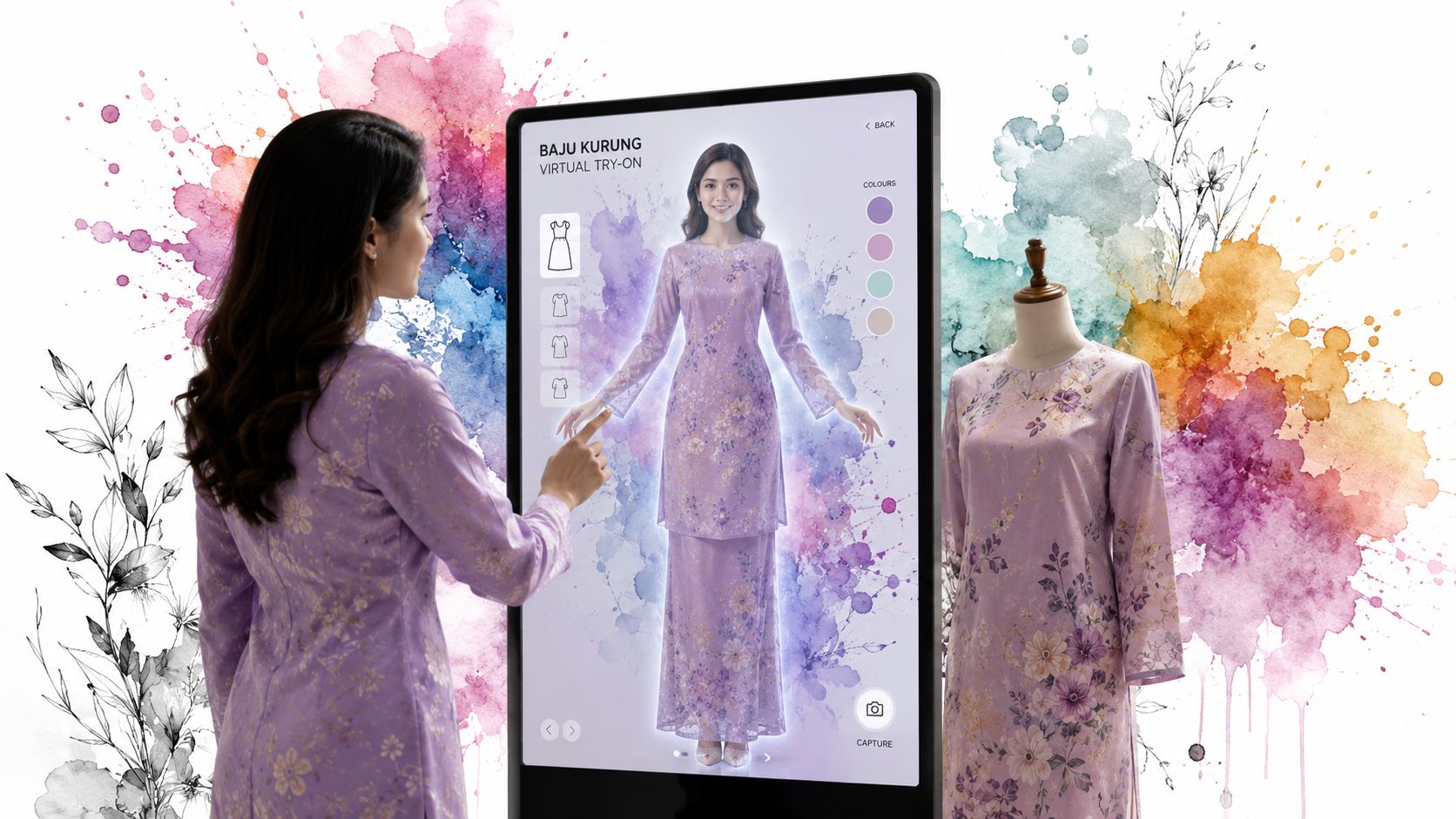
Why online shopping gets tricky with traditional dress
There is a significant lack of data on how modern shoppers handle traditional garments like the Baju Melayu when buying from international e-commerce sites. That creates a practical mismatch for shoppers and points to a need for virtual try-on tools that help people visualize style, as noted in this discussion of traditional clothing context and online shopping gaps.
That challenge becomes sharper with garments unfamiliar to international buyers. A Baju Kurung doesn't hang like a shirt dress. A Kebaya changes your line at the front. A samping changes the whole shape of a men's outfit.
What helps before you buy
A style preview solves a different problem from a size chart. It helps you answer questions like:
- Does this neckline feel elegant on me or too formal?
- Does this batik pattern look lively or overwhelming?
- Do I like the visual effect of a looser silhouette?
- Does this festive piece feel right for my event?
That's why virtual try-on is useful here. It helps you see how it looks, not just stare at a mannequin and guess.
You can explore this more directly through virtual try-on tools for clothing previews, especially when you're comparing styles across unfamiliar categories.
Quick shopping note: Flat-lay clothing photos usually work best when you want the cleanest style preview, because the garment shape is easier to read.
A practical way to use it while browsing
If you're comparing modern batik pieces, festive Kebaya tops, or a Baju Kurung from a marketplace seller, a style preview can save time before checkout. That's especially helpful on large shopping sites where product photography varies a lot.
A smart workflow looks like this:
-
Start with a clear product photo
Flat-lay shots usually give the most accurate appearance preview. -
Compare several silhouettes
Try a looser Baju Kurung, then a more shaped Kebaya-inspired top, then a simpler batik set. -
Use the preview as a style filter
Keep the looks that feel right. Skip the ones that don't.
This is one of those cases where visual tools make cultural exploration easier. You don't need to already know the rules of every garment to start developing an eye for what suits your taste.
Your Guide to Wearing and Styling Malaysian Clothes
You find a beautiful Baju Kurung online, love the color, add it to cart, then pause. Will the cut feel graceful on your frame or too boxy? Will a batik print look refined in person or louder than you expected? That last step, turning admiration into a confident purchase, is where many shoppers get stuck.
The easiest way to style Malaysian clothes is to start with two questions. What is the occasion, and what part of the outfit should lead the eye? Once you answer those, the rest gets simpler.
Malaysian clothing often has its own built-in visual hierarchy. A songket weave already carries richness. A kebaya has shaping and front detail that naturally draws attention. A batik print brings movement and personality. If the garment is doing strong visual work, your job is mostly to support it with quieter choices.
A helpful way to approach this is to style by role, not just by garment name:
- Lead piece: the item that carries the cultural and visual weight, such as a Baju Kurung, kebaya, or batik top
- Support pieces: simpler elements like plain skirts, trousers, shoes, and a modest bag
- Finishers: jewelry, shawls, or formal accessories used lightly, not all at once
That structure works like plating a beautiful meal. If every element shouts, nothing stands out. If one element leads and the rest frame it, the whole look feels intentional.
Fit matters too, especially if you are new to Malaysian silhouettes. A looser shape does not mean sloppy. A more fitted one does not automatically mean formal. The goal is to respect the line of the garment. Let a Baju Kurung fall cleanly. Let a kebaya keep its shape. Let batik remain the pattern focus instead of competing with other prints.
This is also where online shopping gets tricky. Product photos can show color and detail, but they rarely answer the central question for shoppers: How will this style look on me? As noted earlier, a virtual preview helps bridge that gap between appreciating Malaysian fashion and choosing pieces you will really wear. It is especially useful when you are comparing silhouettes that may be unfamiliar at first glance.
If you want a practical rule, use this one. Choose one feature to celebrate.
Maybe it is the sheen of songket. Maybe it is the floral line of a kebaya. Maybe it is the rhythm of a batik print. Build around that feature, and the outfit usually comes together with much less effort.
Curiosity helps here. So does seeing the clothes on yourself before buying. That combination makes Malaysian fashion easier to appreciate, easier to style, and much easier to shop with confidence.
Try Virtual Try-On Now
See how clothes look on you before you buy - works with any online store
Get Started Free