Egyptian Traditional Clothing for Women: A Visual Guide
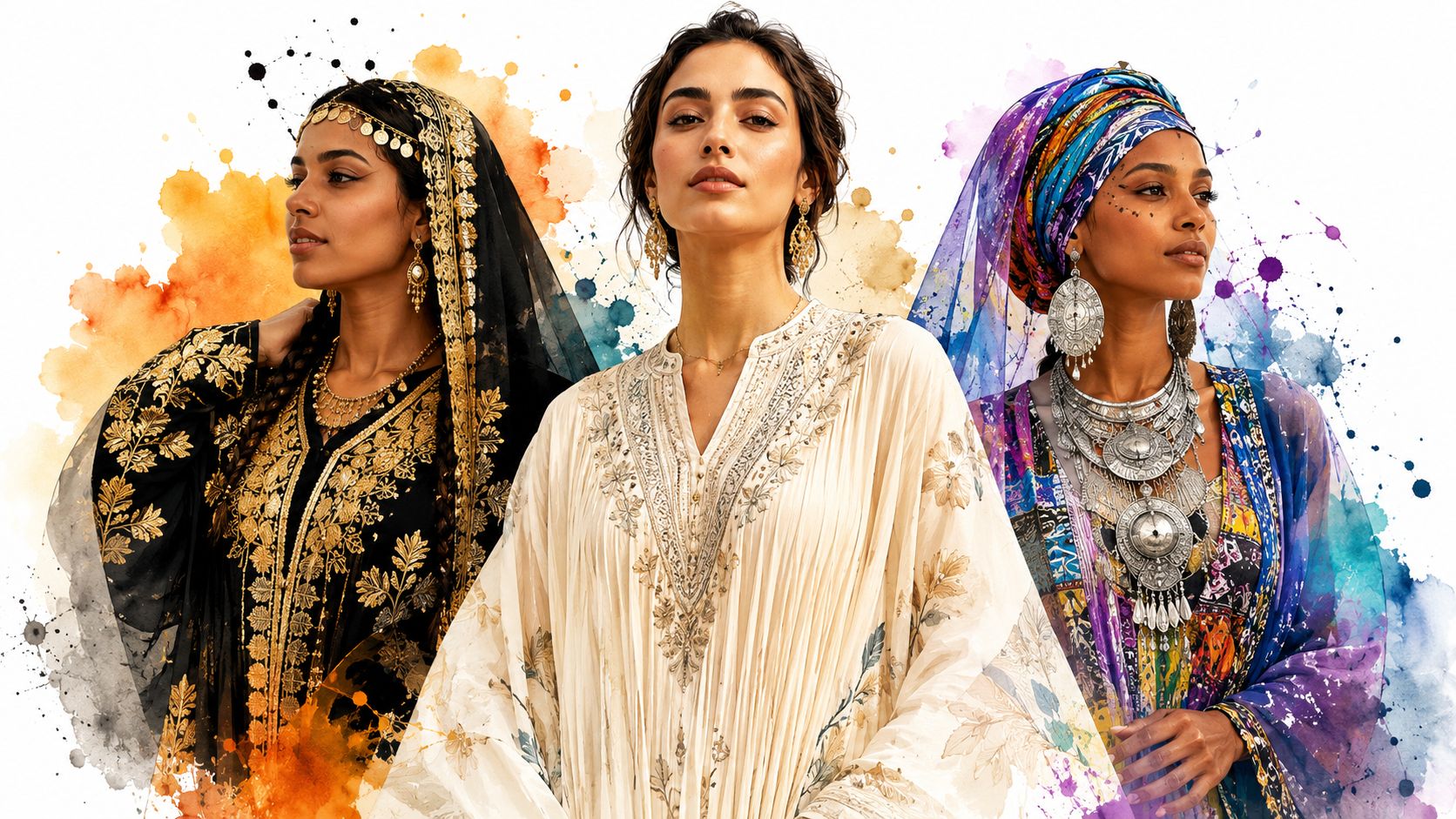
A lot of people land on Egyptian fashion the same way. They see a film costume, a museum image, a market dress, or a travel photo from Cairo, and suddenly they want to know what is traditional, what is ancient, and what people still wear now.
That curiosity is worth slowing down for. Egyptian traditional clothing for women isn't one fixed costume. It's a long story told through linen, cotton, embroidery, color, climate, class, and region.
Some readers get tripped up by the mix of eras. A tight linen sheath from ancient Egypt and a colorful modern jalabiya don't belong to the same moment in history, but they do belong to the same wider visual heritage. Once you separate ancient dress from contemporary traditional dress, the whole picture becomes much easier to read.
An Introduction to Egypts Timeless Style
Egyptian women's clothing carries a rare kind of continuity. You can trace a line from the dry heat of the Nile Valley and the technical skill of early linen makers to the soft, practical, seasonally adapted garments still worn in parts of Egypt today.
What makes this style so compelling is that it never depended only on decoration. Fabric choice mattered because of weather. Shape mattered because of movement and modesty. Surface details mattered because they signaled identity, family tradition, celebration, and sometimes social standing.
Many people also assume "traditional Egyptian clothing" means one national outfit. It doesn't. Egypt contains multiple local dress traditions, and women's clothing changes from region to region. A Bedouin embroidered robe tells a different story from a bright village jalabiya or a sleek ancient kalasiris.
A simple way to understand it is to look at three layers:
- Ancient foundations: linen, fitted sheath dresses, and elite pleating
- Living traditional wear: jalabiya or gallibaya styles adapted by season and place
- Adornment: embroidery, jewelry, head coverings, kohl, and henna
Egyptian dress makes the most sense when you read it as both clothing and cultural language.
That approach helps whether you're studying fashion history, planning respectful travel outfits, building a costume reference, or gathering design ideas for your own wardrobe.
The Ancient Roots of Egyptian Elegance
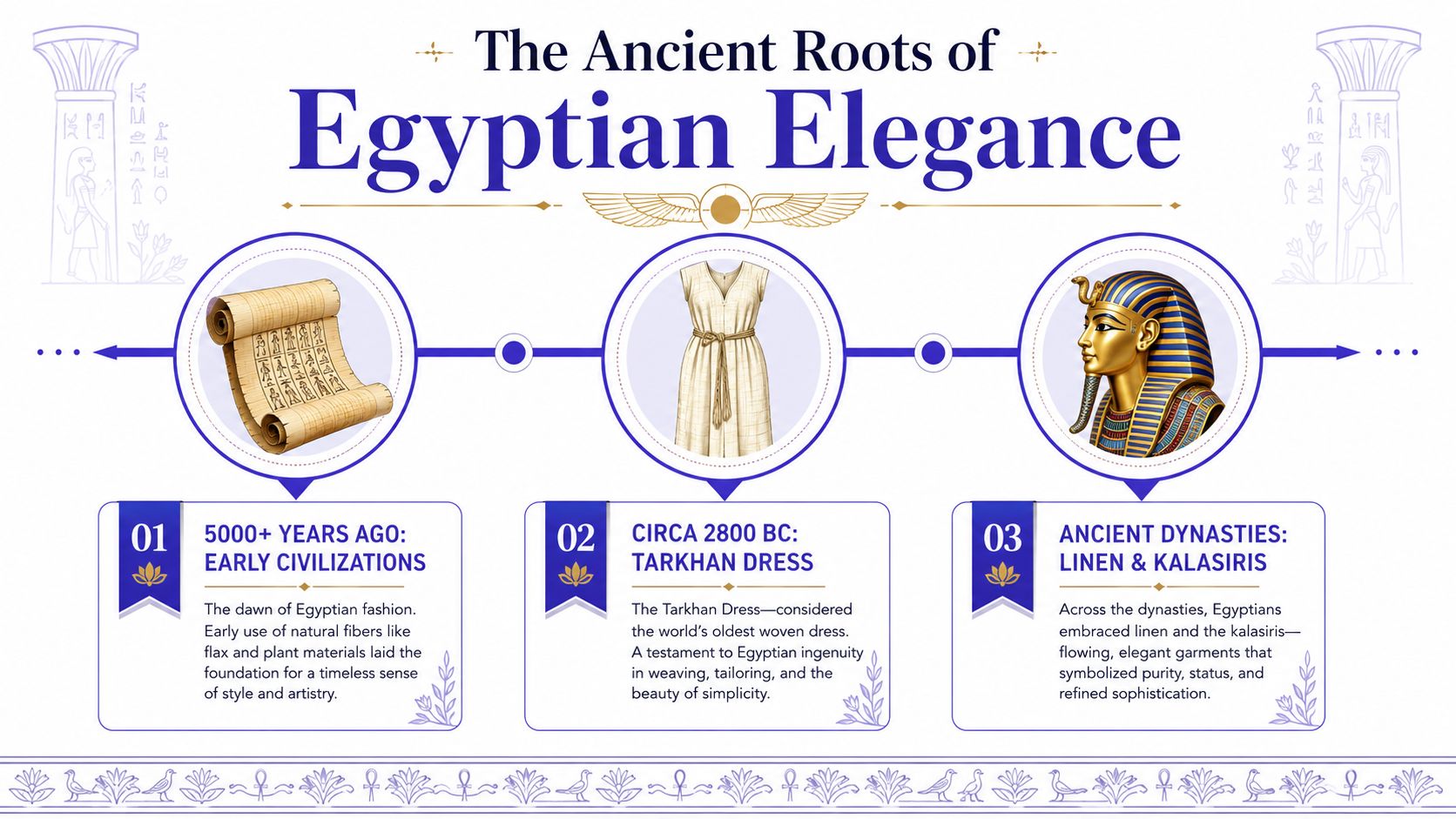
The oldest known chapter of Egyptian women's dress is astonishingly early. The oldest woven garment ever discovered is a linen dress found in Egypt and radiocarbon-dated to between 3482 and 3103 BCE, making it at least 5,100 years old, according to this historical overview of ancient Egyptian fashion.
Why linen mattered so much
Linen became central to women's clothing for practical reasons first. It was light, breathable, and well suited to Egypt's hot, dry climate. That sounds simple, but it helps explain why Egyptian dress developed the way it did. The fabric itself encouraged clean lines and close shapes rather than heavy layered tailoring.
Linen also carried social meaning. Finer linen took more labor and more skill, so cloth quality became a visible sign of status. In other words, two dresses might share a similar basic shape, while the weave, softness, and finish told a very different story about the wearer.
For readers who want a broader visual background, this guide to ancient Egypt fashion and dress silhouettes helps place those forms in context.
The sheath dress and the language of class
Ancient Egyptian women's attire is often described as a long, close-fitting sheath dress held by one or two straps and worn to the ankle. That silhouette stayed recognizable across long stretches of time, even as elite fashion changed details through pleating, transparency, and ornament.
By the Old Kingdom, about 2686 to 2181 BCE, clothing already marked class differences, with upper-class women wearing finer, pleated linen while peasant women wore simpler versions, as described in this account of ancient Egyptian clothing and social distinction.
A short comparison makes that easier to picture:
| Group | Typical fabric impression | Visual effect |
|---|---|---|
| Peasant women | Plain, simpler linen | Practical, direct, everyday |
| Upper-class women | Finer linen, pleats, fringes, sheer layers, decorative details | Refined, labor-intensive, status-conscious |
Practical rule: In ancient Egypt, the cut often stayed relatively simple. The fabric quality and finish did much of the social work.
That matters because Egyptian traditional clothing for women was never only decorative. It reflected climate adaptation, textile innovation, ritual use, and social identity across more than three millennia.
A Wardrobe of Wonders Key Traditional Garments
A traveler in Egypt might spot a long village dress in one street, a gleaming performance costume in a shop window, and an ancient sheath dress in a museum case, then assume they all belong to the same moment in history. They do not. Egyptian clothing is easier to understand once you sort garments by time, purpose, and setting.
The kalasiris
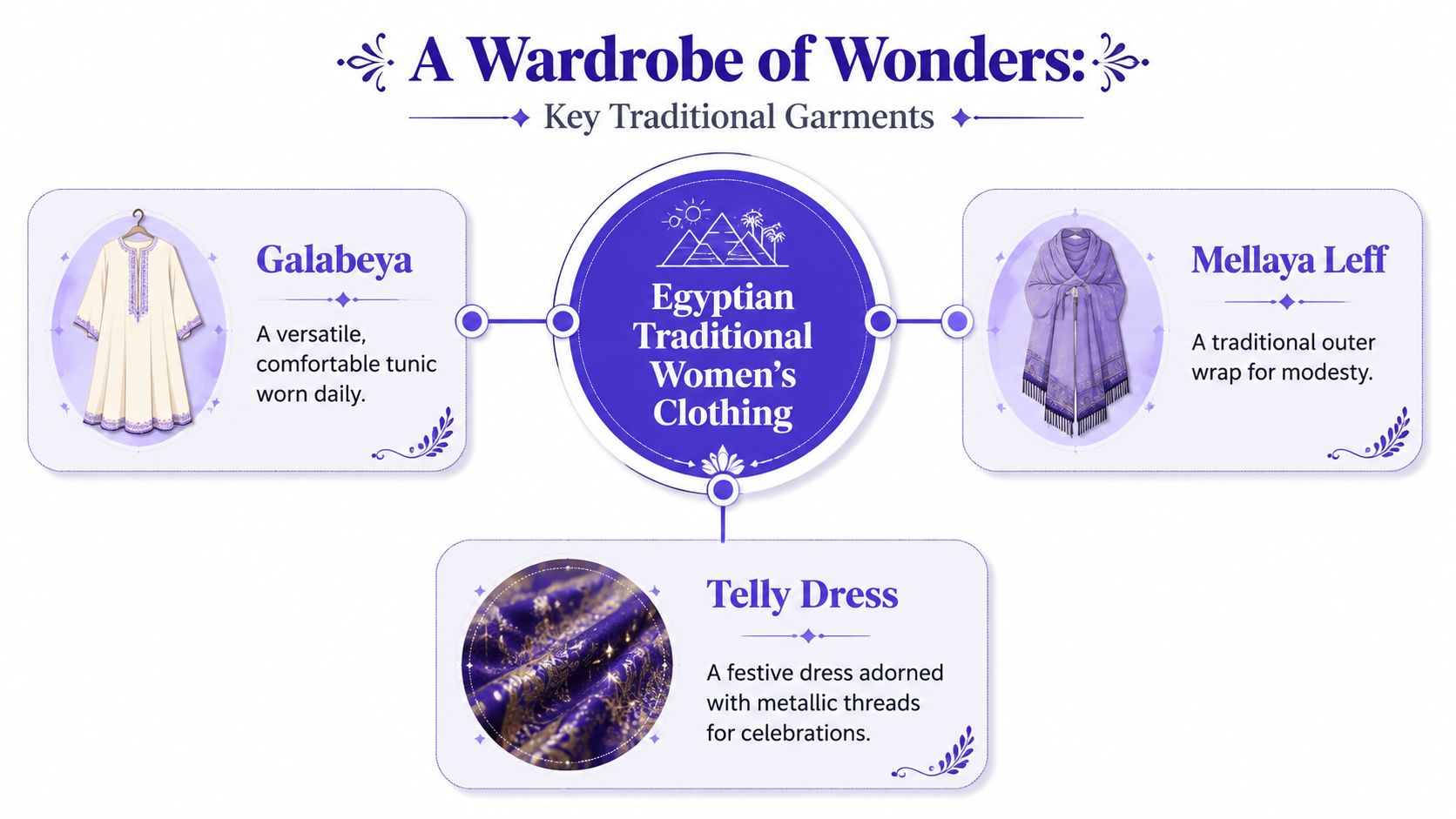
The kalasiris is one of the clearest starting points because it appears so often in discussions of ancient Egyptian women's dress. It is usually described as a close-fitting, ankle-length linen garment, as outlined in this summary of ancient Egyptian female clothing.
The word "close-fitting" can mislead modern readers. Linen in the ancient world did not cling like modern jersey. The effect was more like a clean architectural line, with the body outlined by the cut and the weight of the cloth. On wealthier women, pleats, finer weave, and sheer layers changed the look, much like the same room can feel plain or luxurious depending on light, texture, and finish.
The gallibaya or jalabiya
For living dress traditions, the gallibaya, also spelled jalabiya, matters far more than any museum garment. This long, loose dress or robe appears across everyday life because it suits Egypt's heat, routines, and ideas of comfort and modesty.
Fabric changes with the season, which helps explain why the garment remains so practical. Cotton is common in warm weather, while heavier materials appear in cooler months. Women's versions may include brighter color, printed fabric, or embroidery, a pattern described in this overview of the galabeya in Egyptian dress.
Readers planning outfits often find this garment the easiest entry point because it still feels wearable now. If you want more context on how it appears in daily life, this guide to what people wear in Egypt in different settings helps place it beyond the tourist snapshot.
Outer wraps and festive garments
Egyptian dress also includes pieces that change the meaning of an outfit without changing the base garment. A wrap can add modest coverage. A decorated overlayer can turn a simple dress into occasion wear. A metallic or embroidered festive piece can shift the mood from domestic to celebratory in seconds.
That layering logic is useful. It works like stage lighting in a theater. The structure may stay the same, but one added element changes what the audience notices first.
A few recurring categories make the wardrobe easier to read:
- Everyday dresses: soft, practical garments meant for movement, housework, visiting, or errands
- Outer layers and wraps: pieces that add coverage, privacy, or a more formal public appearance
- Festive garments: dresses with shimmer, embroidery, stronger color, or special fabric for celebrations
How to read the silhouette
Three clues help identify a garment shaped by Egyptian dress traditions.
- Length creates presence. Many classic forms are long and fluid, with the eye traveling vertically rather than stopping at the waist.
- Fabric does much of the design work. Cotton, linen, wool, or netted decorative textiles each create a different drape and social feel.
- Surface detail carries meaning. Embroidery, pleating, metallic thread, and trim often signal region, occasion, or refinement.
This is also where modern tools become surprisingly useful. A virtual try-on can help you test whether a jalabiya-inspired cut feels right for costume planning, editorial styling, or personal inspiration before you buy fabric or assemble accessories. That approach keeps the exploration playful, but it also encourages closer looking. You start noticing sleeve width, hem length, and textile texture instead of reducing Egyptian traditional clothing for women to a single costume idea.
Regional Styles from Nubia to the Sinai
Egyptian dress becomes much more interesting when you stop looking for one national template and start noticing regional voices. Geography changes color choices, embroidery styles, layering, and even the emotional feel of a garment.
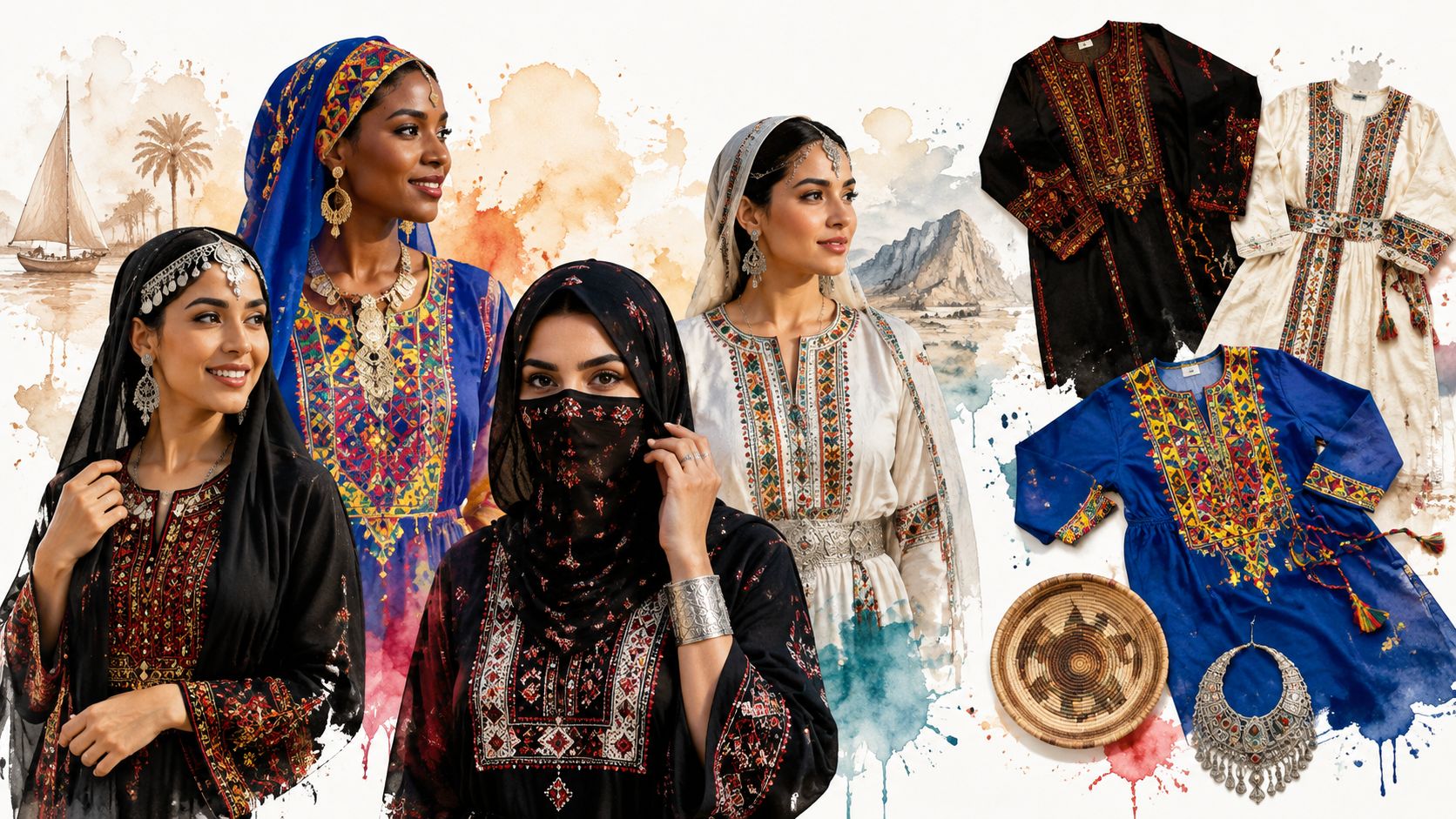
A traveler moving through Egypt would see that contrast quickly. Village dress, desert dress, and festive regional dress don't speak in the same visual voice, even when they share broad ideas about modesty, comfort, and ornament.
For a wider look at everyday dress context, this guide on clothing in Egypt across settings and situations gives useful background.
Bedouin dress in the Sinai
Among the clearest regional markers in the verified material is Bedouin style, which frequently includes black robes with bright cross-stitch embroidery. That combination is striking because the dark base gives the needlework maximum presence.
The effect is both practical and expressive. The robe provides coverage and layering, while the embroidery turns the garment into a statement of identity.
Regional contrast at a glance
A quick side-by-side view helps:
| Region or tradition | Common visual impression | What stands out |
|---|---|---|
| Sinai Bedouin | Dark robe with vivid embroidery | Strong cross-stitch contrast |
| General contemporary jalabiya traditions | Comfortable long dress in seasonal fabric | Color, ease, and adaptation |
| Festive local dress traditions | More embellished surfaces | Ornament and occasion |
Some styles are best understood in motion and context. This video offers a useful visual complement to still images and written descriptions.
<iframe width="100%" style="aspect-ratio: 16 / 9;" src="https://www.youtube.com/embed/cxmoIdJPzUQ" frameborder="0" allow="autoplay; encrypted-media" allowfullscreen></iframe>Why region matters so much
Regional dress isn't just decorative variation. It reflects local history, climate, and community memory. A garment can tell you where someone comes from, what season they're dressing for, or whether the moment is ordinary or ceremonial.
That's why broad labels can flatten the subject too much. "Egyptian traditional clothing for women" is a useful phrase, but inside it are many local aesthetics, each with its own texture and rhythm.
Some of the most memorable Egyptian dress traditions aren't defined by cut alone. They're defined by place.
The Art of Adornment Fabrics Embroidery and Accessories
You step into a market stall in Aswan or Sinai, and the first thing that catches your eye is not the cut of the dress. It is the surface. Threads flash in red, orange, blue, and gold. Coins glint at the neckline. A simple garment begins to read like a story written in texture.
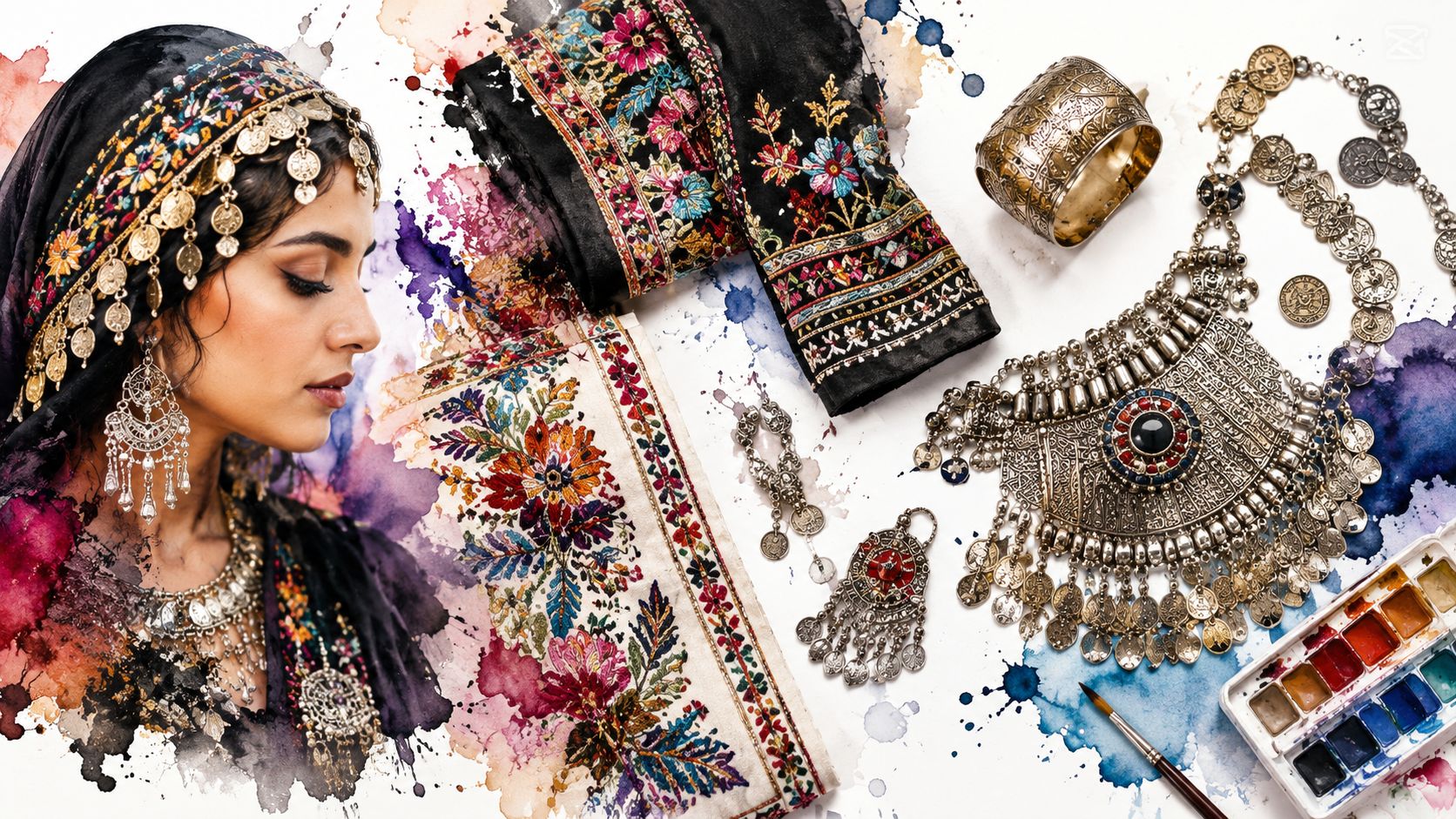
That is one of the clearest lessons in Egyptian dress traditions. Shape matters, but finish carries meaning. Fabric, embroidery, jewelry, and cosmetic details help signal region, celebration, age, memory, and personal taste.
Fabric surface carries identity
Cloth works like a painter's ground. Before a single bracelet is added, the fabric already sets the mood. Soft cotton suggests ease and daily movement. Linen feels crisp and airy in the heat. Darker robes with bright cross-stitch, especially in Bedouin traditions, create a striking contrast that makes the embroidery visible from a distance. The Metropolitan Museum of Art's collection notes how textiles from Egypt often relied on woven pattern, applied decoration, and strong color relationships to create visual richness: Egyptian textiles in the Met collection.
For readers who are new to this topic, it helps to separate three layers. First comes the garment itself. Second comes the surface treatment, such as embroidery, woven bands, or trim. Third comes adornment worn on the body, including jewelry, head coverings, and cosmetics. Once you see those layers, traditional dress becomes much easier to read.
Embroidery deserves special attention. In many communities, stitched motifs are not random decoration. They can reflect local habits, family aesthetics, and the maker's hand. One robe may appear restrained from afar, then reveal dense geometric work up close.
Jewelry, cosmetics, and finishing touches
Adornment has deep roots in Egypt. Ancient visual culture placed real importance on jewelry, eye definition, and carefully styled presentation. Modern dress traditions do not copy ancient fashion directly, but they do share the idea that clothing is completed through detail rather than worn alone.
A traditional-inspired look often comes together through several finishing elements:
- Jewelry: layered necklaces, cuffs, earrings, coin details, or bold silver and gold tones
- Head covering: selected according to region, occasion, family custom, or personal style
- Eye makeup: kohl-inspired definition that frames the face and echoes long-standing beauty references
- Henna: a decorative art especially associated with festive and ceremonial settings
These details change the rhythm of an outfit. A plain dress with no adornment reads one way. The same dress with embroidered cuffs, a scarf, and metalwork jewelry reads entirely differently.
That distinction matters even more if you are exploring Egyptian-inspired style through virtual try-on tools. A digital fitting can show the silhouette quickly, but the look only starts to feel convincing when you test fabric color, embroidery placement, and accessory scale together. For costume planning, editorial mood boards, or personal styling experiments, this approach helps you study the tradition respectfully instead of flattening it into a single stereotype.
If you're assembling a dressier interpretation and want to study accessory pairings, browsing complementary luxury items can help you think about balance, shine, and proportion without reducing the clothing itself to costume.
In Egyptian dress traditions, adornment is part of the garment's meaning, not extra decoration placed on top.
Dressing for the Occasion Bridal Wear and Ceremonial Attire
Ceremonial clothing carries a different weight from daily dress. The fabric becomes more expressive, the embroidery grows denser, and the full look is often built with family memory in mind.
A wedding is one of the clearest examples. Even when modern bridal fashion influences the main gown, traditional elements often remain present through embroidery, jewelry, color choices, beauty rituals, or garments worn during pre-wedding celebrations.
The bridal look as a social event
A bride isn't dressed in isolation. Female relatives, friends, and older family members often shape the look, whether by selecting adornment, arranging head coverings, preparing henna, or helping the outfit reflect local custom.
That communal aspect matters. Ceremonial clothing in Egypt often signals belonging as much as beauty.
Henna night and visual symbolism
One of the most recognizable bridal traditions is Henna night, when the bride's hands and feet are decorated. Even before the wedding itself, the body becomes part of the ceremonial aesthetic.
Readers often ask whether bridal wear is "traditional" only when it looks old-fashioned. Not at all. A garment can be contemporary in shape and still feel rooted in tradition through fabric treatment, color, embroidery, layering, or ritual use.
A ceremonial look often builds through several elements at once:
- A more elaborate base garment
- Heavier embellishment or beadwork
- Jewelry with family or regional significance
- Henna and beauty preparation
- A stronger sense of occasion in the full silhouette
Wedding clothing doesn't just mark a celebration. It marks a transition, and that's why every detail feels more charged.
How to Visualize Your Own Egyptian Inspired Style
Egyptian dress history often sparks a practical question. How would these silhouettes, fabrics, and decorative ideas look when translated into something you could wear for a themed event, a costume plan, a photoshoot, or modern outfit inspiration?
One useful approach is to start with shape, not ornament. Try a long column dress, a loose jalabiya-style silhouette, or a dark robe-inspired layer first. Then add color, trim, jewelry, or embroidery references after the main line of the outfit feels right.
If you're browsing online, flat-lay clothing photos usually work best for a clear style preview. That's especially helpful when you're comparing costume pieces, secondhand finds, or long dresses on marketplaces where the presentation is inconsistent.
For people who want to preview appearance rather than guess from product photos alone, TryThisFit lets you see how clothing looks on you from uploaded images, and the saved looks can be reviewed later in your try-on history. The free Chrome extension installs in a couple of seconds at the Chrome extension page and lets you right-click clothing images on sites like Amazon fashion listings, Zara, H&M, Vinted, Depop, or other stores to visualize the style without leaving the page. If you want inspiration for how historical references show up in current wardrobes, this overview of modern-day Egyptian clothes is a helpful companion.
A simple workflow works well:
- Start broad: choose the silhouette that feels closest to the Egyptian reference
- Refine the surface: add embroidery, sheer layers, or metallic accessories visually
- Check the mood: ask whether the outfit reads as ancient-inspired, regional-inspired, or Egyptian-influenced
That last step matters. Respectful styling usually comes from clarity, not excess.
If you're ready to explore Egyptian-inspired outfits visually, try a few looks at TryThisFit. Use flat-lay images for the clearest preview, test pieces from any shop in seconds, or install the free Chrome extension to right-click clothing photos and see how the style looks before you buy, save, or plan your costume.
Try Virtual Try-On Now
See how clothes look on you before you buy - works with any online store
Get Started Free