Fashion Stylist Assistant Jobs NYC: Your 2026 Career Guide
You're probably searching fashion stylist assistant jobs in NYC with a split-screen life right now. One tab has job boards. Another has Instagram saves from shoots, showroom racks, and editors whose careers you want to reverse-engineer.
That combination is normal. So is the confusion.
New York is still one of the few cities where assistant and junior styling work clusters at real scale, but the role people imagine and the role employers hire for aren't the same thing. If you want to break in, you need more than taste. You need range, stamina, sharp outreach, and the kind of organization that keeps a chaotic day from collapsing.
The Reality of a Fashion Assistant in NYC
The fantasy version of the job is pulling beautiful looks and standing near famous people. The actual version is being the person who makes the whole styling machine move.
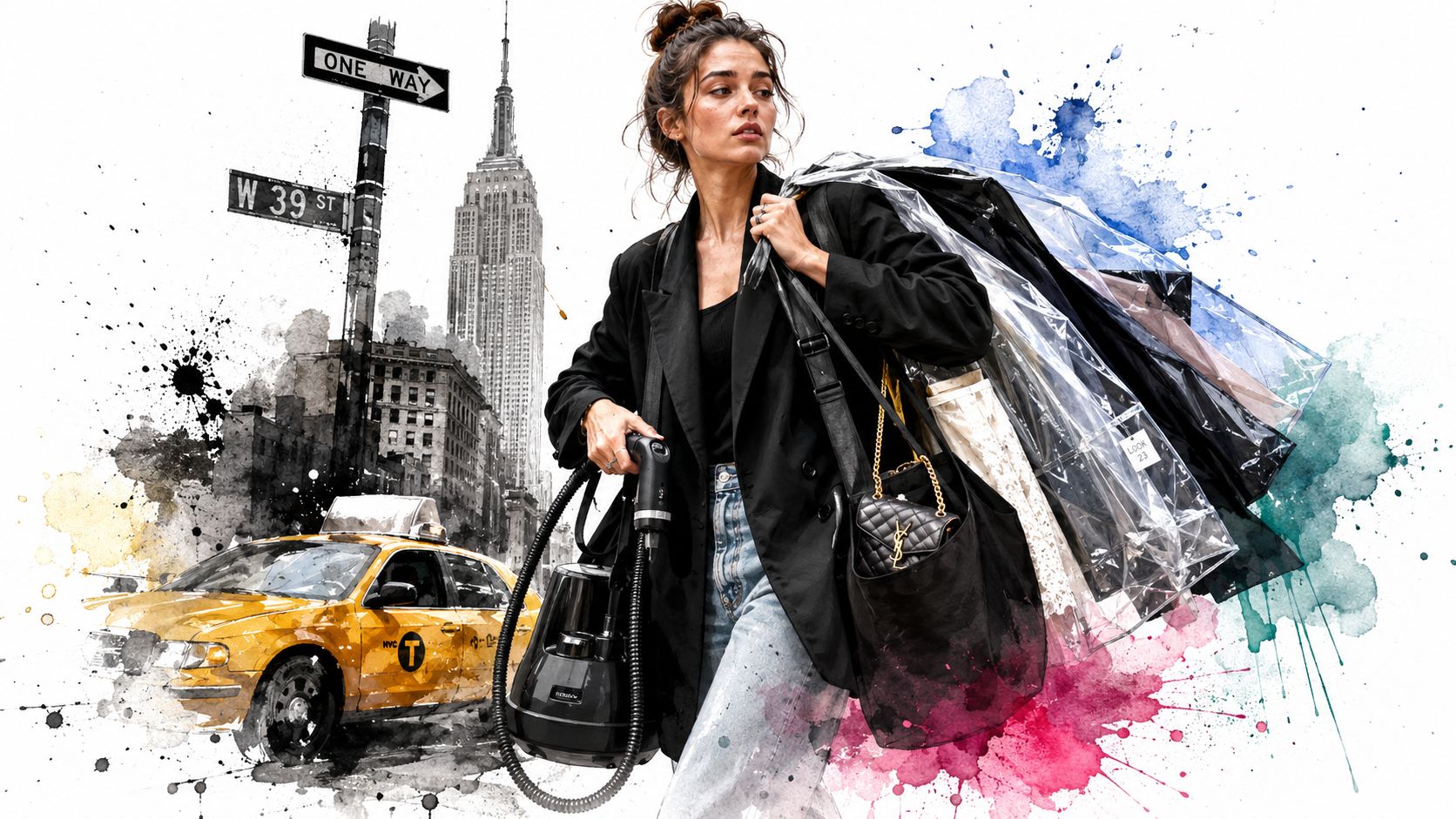
Recent NYC listings put a lot of weight on travel logistics, shoot setup, sample tracking, stock organization, and on-set prep, not just visual taste, as shown in this NYC stylist assistant job example. That's the part many beginners miss. You're often hired first as the calm person who can keep garments, people, calendars, and last-minute changes under control.
What the job usually looks like
On a good day, you might help pull a rail, steam looks, confirm returns, and prep the kit before call time. On a rough day, a courier is late, a sample is missing, someone needs an alternate shoe, and the stylist is answering six client texts while walking into a fitting.
That's why the best assistants don't lead with “I love fashion.” They show that they can support motion.
Practical rule: If you can keep a wardrobe rack, a call sheet, and a sample return schedule clean under pressure, people will trust your eye faster.
The market is big enough to be worth the chase. Joblist shows 2,641 Fashion Stylist opportunities in New York, NY, while Glassdoor shows 278 fashion stylist jobs in New York, NY in June 2026 and Indeed shows 924 fashion stylist jobs in Manhattan alone. That's real concentration, but it's also real competition.
What employers are quietly screening for
A lot of hiring managers are trying to answer three questions fast:
- Can you be useful immediately: Can you prep, organize, track, and move quickly without constant hand-holding?
- Can you read a room: Do you know when to speak, when to observe, and when to solve the problem before anyone asks?
- Can you handle fashion's unglamorous tasks: Returns, garment bags, pickups, call times, weather shifts, and the endless little things that keep a shoot alive.
If you still think the role is mostly about mood boards, you're going to undersell yourself in interviews.
The creative part still matters
It does. A sharp visual point of view helps, especially if you want to grow into editorial, celebrity, retail, or brand-side styling. But in the NYC version of this role, taste gets you noticed and execution gets you rehired.
That's also why digital fluency matters more than it used to. If you want a deeper look at how image tools and workflow are changing the way people work in style and retail, this piece on fashion and AI is worth reading with a practical lens, not a hype lens.
Building Your Standout Portfolio and Resume
A beginner portfolio doesn't need to look expensive. It needs to look clear, intentional, and useful.
If I'm advising someone going after fashion stylist assistant jobs in NYC, I'd rather see six strong concepts with clean logic than a bloated PDF full of random outfit photos. Show that you can build a visual story and support it with production sense.
What to include in a starter portfolio
Keep it compact. A stylist or recruiter should understand your point of view in a few minutes.
A strong starter portfolio usually includes:
-
Three to six edited stories
Each story should have a clear idea. Minimal downtown workwear, bridal after-party looks, soft tailoring for magazine editorial, off-duty model basics, something specific. -
Mood boards that show restraint
Don't throw in everything you like. Show references that connect in silhouette, tone, color, proportion, and casting energy. -
Pulling logic
Add a short line about why each look works. Maybe the outerwear balances the hemline. Maybe the accessories shift the outfit from retail floor to editorial set. -
Execution evidence
Include call sheets you built, line sheets you organized, sample trackers, shoot checklists, or run-of-show notes if you have them. Redact names if needed.
Your resume needs two identities
One side says you have taste. The other says you can operate.
A weak resume for this lane says “passionate about fashion, trends, and styling.” A stronger one names the actual tasks assistants get hired to do.
Try building experience bullets around work like this:
- Supported shoot prep: Managed garment steaming, look organization, and on-set reset during fast wardrobe changes.
- Handled logistics: Coordinated pickups, returns, scheduling details, and day-of communication across moving parts.
- Maintained sample order: Tracked inventory, labeled pieces, and kept stock organized for fittings or content shoots.
- Worked client-facing environments: Used retail, showroom, or event experience to support styling decisions and presentation.
If you've worked retail, events, costume, e-commerce, or showroom support, don't bury it. That experience translates well.
The fastest portfolio upgrade is often better editing, not more content.
Make your portfolio feel current
Most beginner portfolios fail because they look static. They show clothes, but not how the applicant thinks.
Use layout to make your process visible. Pair inspiration, proposed looks, alternates, and a short note on how you'd adapt if a sample fell through or weather changed. That kind of thinking reads as assistant-ready.
Later in the process, some stylists will ask themselves whether you can help shape visuals, not just carry them out. That's where this guide on how to model clothes can spark ideas about presenting garments visually and cleanly, especially if you're building concepts without access to a full team.
A simple demo can also help you rethink how your presentation reads in motion:
<iframe width="100%" style="aspect-ratio: 16 / 9;" src="https://www.youtube.com/embed/R6VovTwiNU0" frameborder="0" allow="autoplay; encrypted-media" allowfullscreen></iframe>Common portfolio mistakes
Here's what usually hurts beginner applications:
| Mistake | Why it backfires | Better move |
|---|---|---|
| Too many pages | Nobody has time to decode your taste | Keep only your strongest concepts |
| No operational proof | You look like inspiration, not support | Add trackers, prep lists, or workflow notes |
| Random aesthetics | It reads unformed | Build each story around one clear point of view |
| Poor image quality | It makes everything feel less serious | Use clean crops, consistent spacing, readable text |
The assistant who books work isn't always the most artistic applicant. It's often the one who looks easiest to trust on a difficult day.
Where to Find Stylist Assistant Openings
Job seekers waste energy by searching too wide and applying too late. New York punishes that fast.
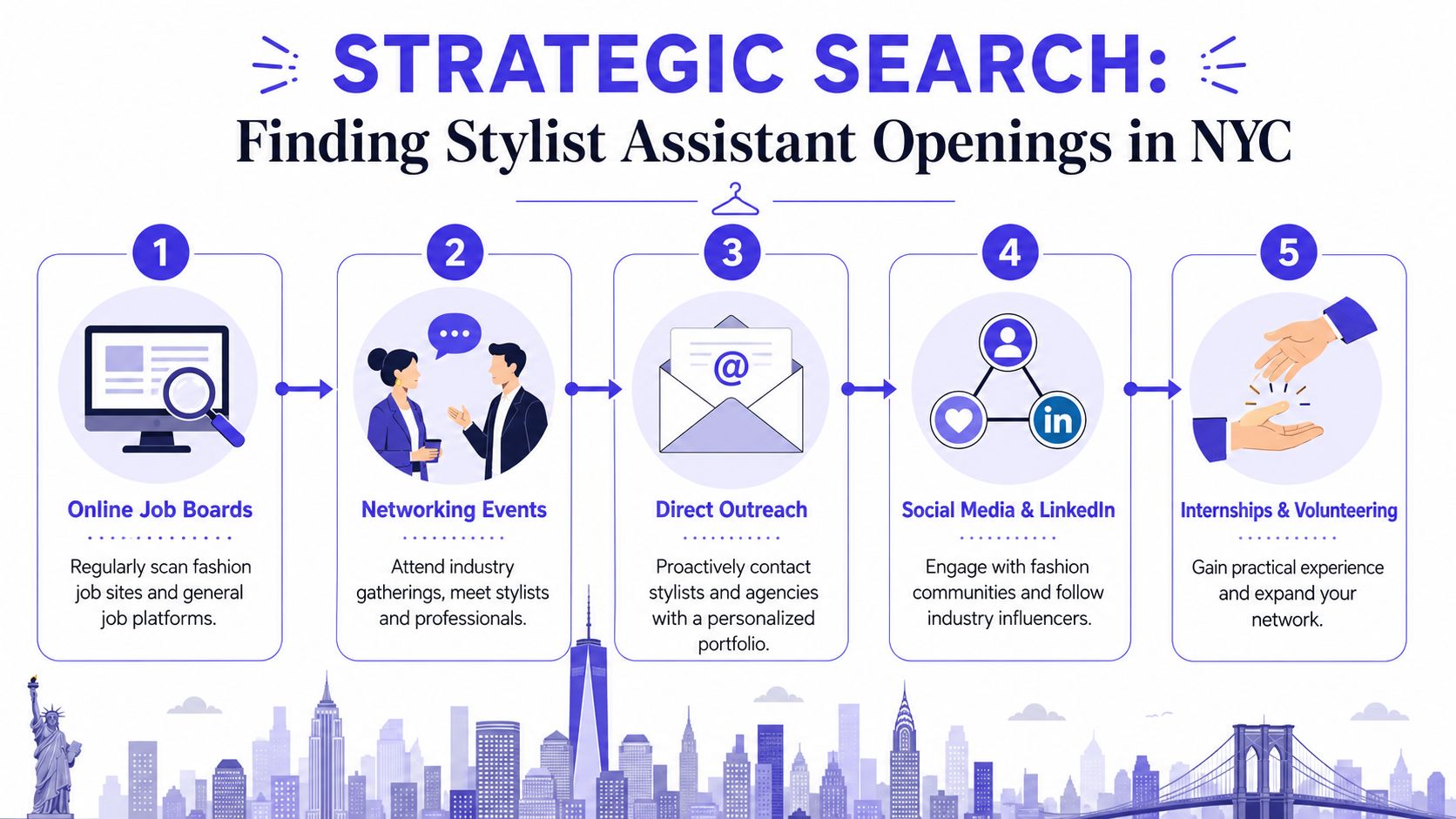
The smarter move is a layered search. Start where volume exists, tighten your filters hard, and then move into more curated channels before the role gets crowded.
Start with volume, then get selective
A practical NYC workflow is to begin on the high-volume boards and then pivot. Indeed lists 525 “Assistant Fashion Stylist” jobs in New York, ZipRecruiter shows 684 “Fashion Styling Assistant” jobs in New York City, and Glassdoor shows 278 “Fashion stylist” jobs in New York as of June 2026. That's enough volume to justify checking daily.
The reason this works isn't complicated. High-volume boards surface the broadest spread of opportunities, including retail styling, showroom support, production-heavy assistant roles, and hybrid jobs that may not be labeled cleanly.
Use search terms like:
- Assistant stylist
- Styling assistant
- Fashion closet assistant
- Showroom assistant
- Editorial assistant fashion
- Wardrobe assistant
- Personal stylist assistant
What to filter for immediately
Don't scroll blind. Tighten the list fast.
Look for:
- Recent posts: Fresh listings matter because assistant roles get saturated quickly.
- Title variations: Good jobs often hide under adjacent labels.
- Task language: Prioritize listings that mention shoots, samples, fittings, calendars, or prep.
- Location details: Manhattan isn't the whole market, but commute reality matters in this job.
Then pivot to curated fashion boards such as BoF Careers for narrower, often more intentional openings. That move usually reduces noise.
If a listing sounds glamorous but says nothing specific about tasks, read it carefully. Vague job ads often hide chaotic expectations.
Beyond the boards
A lot of solid work never reaches a polished listing. It moves through word of mouth, freelancers, temporary support, or quick-turn staffing.
Three channels tend to matter:
-
Creative temp and freelance placement
Short gigs can turn into trusted repeat work if you're organized and easy to place. -
Instagram and stylist websites
Follow active stylists, assistants, photographers, showrooms, and creative producers. People often hint they need support before a formal post goes live. -
Fashion-adjacent employers
Bridal, luxury retail, e-commerce content teams, PR agencies, and showrooms all build styling-adjacent experience that translates.
The search isn't just about finding openings. It's about finding openings that match the kind of assistant you're becoming.
Mastering Outreach and Networking in NYC
Cold outreach still works in New York. Bad cold outreach doesn't.
Stylists are busy, overstimulated, and often hiring in motion. That means your message has to be short, specific, and useful. Not flattering for three paragraphs. Not vague. Not desperate.
What you'd actually send
An email like this gets read more often than the usual “I'm obsessed with fashion and would love to pick your brain.”
Hi [Name], I'm an NYC-based assistant-level styling candidate with experience in retail/showroom/on-set support. I'm reaching out because I like the way your work balances polish with edge, especially in your recent editorial and event styling.
I can help with sample tracking, shoot prep, returns, steaming, fittings support, and day-of logistics. I've attached a short portfolio and resume. If you ever need freelance, overflow, or last-minute support, I'd love to be considered.
Thank you, [Name]
[Phone]
[Portfolio link]
That works because it answers the unspoken question. “How will this person make my week easier?”
The DM version
Instagram outreach should be even shorter.
Try this:
- Keep it direct: “Hi [Name], I'm a junior styling assistant in NYC and really admire your work. I help with shoot prep, sample organization, returns, and fittings support. If you ever need freelance assistant coverage, I'd love to send a compact portfolio.”
- Don't attach your life story: If they're interested, they'll ask.
- Don't send a paragraph at midnight and follow up the next morning: Give people room.
What helps your outreach land
Your online presence has to match your message. If your LinkedIn is empty, inconsistent, or reads like you copied a generic summary, it weakens even a good intro email. This LinkedIn profile optimization guide is useful because it focuses on making your profile easier for hiring managers to scan, which matters in assistant hiring.
Your portfolio link should also open cleanly on a phone. A surprising amount of outreach gets checked between appointments, in cars, outside showrooms, or while someone is waiting for a fitting to start.
Networking without acting weird
The best networking in this field doesn't feel like networking. It feels like good pattern recognition and consistent presence.
A few rules matter:
- Be specific when you compliment work: Mention a shoot, silhouette story, casting choice, or styling tension you noticed.
- Respect assistants too: Senior assistants often know first when extra hands are needed.
- Follow up once, not five times: One thoughtful follow-up is professional. Repeated nudging usually isn't.
- Show you understand the job: If you only talk about trend forecasting and editorials, people may assume you don't understand assistant reality.
People hire the person they can picture next to them on a difficult day.
If you need a clearer sense of how clients think when they look for styling support, this piece on how to find a personal stylist is helpful to read from the other side of the table. It sharpens your instinct for what busy people value when they're choosing who to trust.
Acing the Interview and Understanding NYC Pay
The interview usually turns on one thing. Can they trust you around pressure, people, clothes, and time?
Taste matters, but the interview is where employers test your judgment. They want to know if you can stay useful when the day stops going according to plan.
The questions behind the questions
You might get direct prompts about your portfolio, previous experience, or favorite stylists. The actual screening often sits underneath.
If someone asks how you'd handle a missing sample, they're checking whether you panic, blame, or problem-solve. If they ask about your last fast-paced role, they're testing whether you can keep your tone steady under stress.
Use answers that show sequence. What happened, what you noticed first, what you prioritized, and how you closed the loop.
A strong answer sounds like this in practice:
- You identify the issue quickly
- You communicate only what matters
- You offer an immediate backup
- You keep the wider workflow moving
That rhythm reads as professional.
How to talk about your portfolio in the room
Don't narrate every page. Edit yourself.
Walk them through two or three projects that show range. One should highlight visual taste. Another should show execution, such as planning a shoot rail, organizing alternates, or adapting under a constraint.
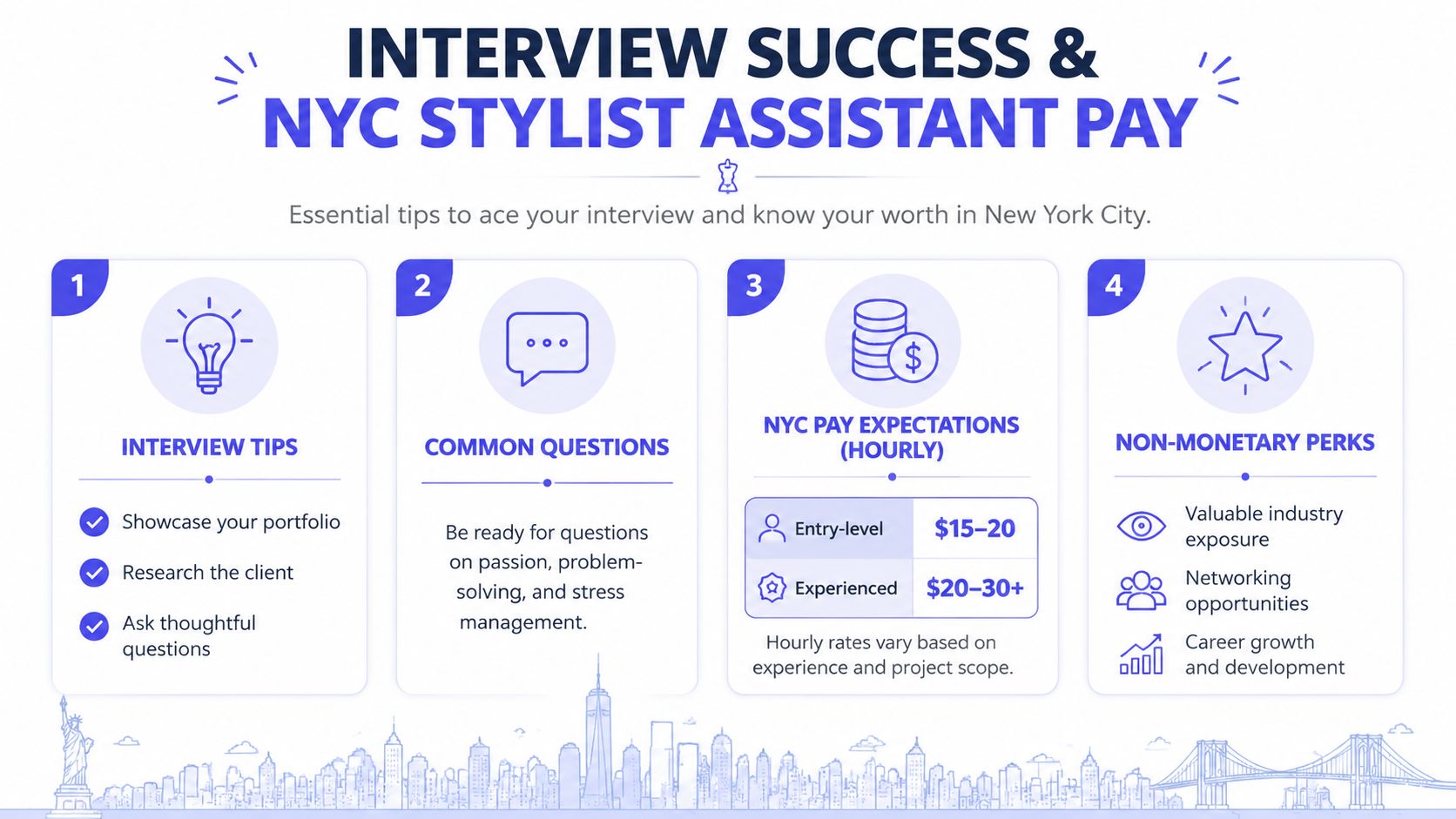
A simple interview framework helps:
| What to show | What it signals |
|---|---|
| Edited visual point of view | You have taste and restraint |
| Operational examples | You understand assistant work |
| Calm problem-solving stories | You can handle pressure |
| Good questions at the end | You're thinking like a professional |
Ask questions that reveal the actual shape of the role. For example, what does a typical shoot week look like, what support is needed most urgently, and how often the role involves fittings, sample management, or travel coordination.
Ask about workflow, not just perks. Smart questions make you sound ready, not just eager.
What NYC pay actually looks like
Compensation in this lane is wide because job titles are messy. “Fashion stylist assistant” can mean very different things depending on whether the work is retail-facing, editorial, personal-assistant-adjacent, union-connected, or tied to licensed beauty services.
In New York, ZipRecruiter reports that fashion styling assistant pay averages $23.71 per hour, with a median wage of $21.55 per hour and most workers earning between $17.36 and $26.30 per hour, which implies a typical annualized full-time range of roughly $36,000 to $55,000 before overtime or bonuses, according to ZipRecruiter's New York fashion styling assistant pay data.
That's the useful baseline. It tells you the role sits in a mid-entry zone, not at the very bottom of the labor market.
The upper end gets complicated. Indeed's fashion stylist assistant listings note examples including a $63,000 to $70,000 opening with a New York State cosmetology license requirement, while Joblist's NYC fashion-stylist aggregation spans roughly $46K to $194K and ZipRecruiter's NYC personal-stylist-assistant board shows $17 to $60 per hour across more than 1,000 openings. Those numbers don't all describe the same path. That's why people get confused.
How to negotiate without sounding green
Don't negotiate from title alone. Negotiate from scope.
If the role includes intensive schedule management, travel coordination, extensive on-set support, client interfacing, or responsibilities outside pure styling support, say that directly. If they want celebrity-adjacent availability or personal-assistant crossover, that should show up in compensation.
A clean way to say it is:
Based on the scope you described, especially the logistics and day-of support, I'd love to discuss a rate that reflects both the styling support and operational demands of the role.
That lands better than trying to bluff with market jargon.
Your First 90 Days and Building Your Career
Your first job won't crown you a stylist. It will show people whether you're promotable.
In the beginning, the fastest way to grow is to become known for removing friction. That means being on time, packing correctly, tracking details, protecting samples, and keeping your energy steady when everyone else is spinning.
The habits that make you indispensable
The assistants who last in New York usually do a few things better than everyone else.
-
They prep the night before
They don't assume tomorrow will be calm. They check the rack, the accessories, the backup options, the route, the names, and the timing. -
They keep notes on everything
Not messy notes. Usable notes. Preferred brands, recurring fit issues, pickup routines, garment bag labels, client quirks, call-time patterns. -
They learn the stylist's rhythm
Some want constant updates. Some only want to hear problems with a proposed solution attached. Learning that rhythm saves everyone time. -
They protect trust
They don't gossip, overshare, post carelessly, or treat proximity to fashion as status.
What not to do
A lot of new assistants hurt themselves by trying to perform coolness. That doesn't help on a hard day.
Avoid these mistakes:
- Acting above support work: Steaming, organizing, and returns are part of the craft at this stage.
- Talking too much on set: Pay attention first.
- Waiting to be told every small task: Anticipation is part of the job.
- Styling over the brief: Your taste matters, but the assignment matters more.
Reliability compounds. People remember who made the day smoother.
Building toward the next level
Career growth in styling often comes from trust before title. A senior stylist sees that you can handle prep. Then fittings. Then client-facing moments. Then your own smaller pulls or supervised styling tasks.
Think of the path less as a grand leap and more as a widening circle of responsibility. Once people trust your execution, they start trusting your eye.
That's also when personal style discipline matters. You don't need to dress loudly, but you should look like someone who understands context. Interviews, castings, retail floors, showrooms, and set days all ask for different versions of polish.
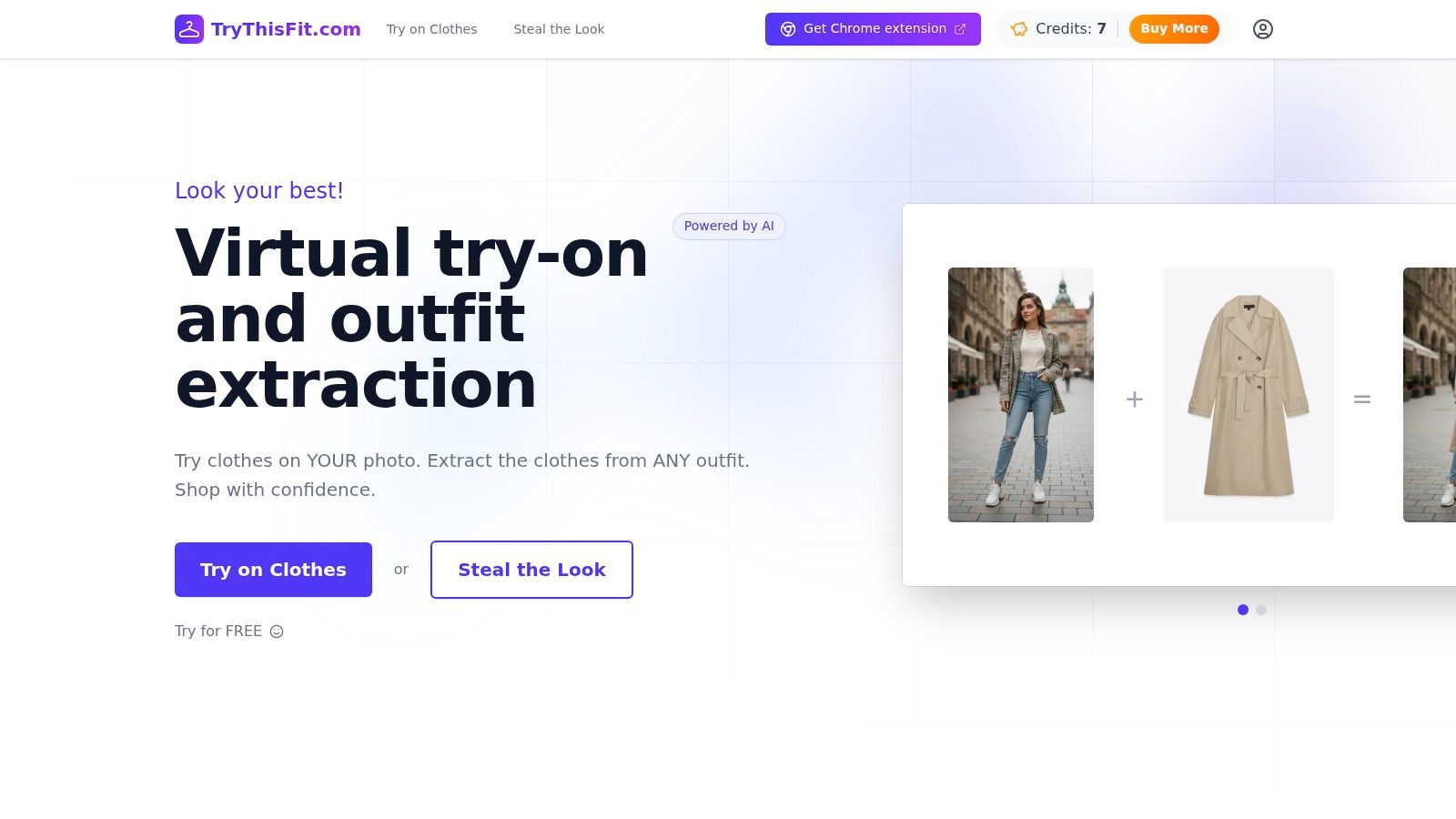
When you're planning looks for those moments, TryThisFit is useful because you can see how it looks, preview outfit combinations quickly, and save options in your try-on history. Flat-lay clothing photos work best for the most accurate style previews.
If you shop across Zara, H&M, Shein, Vinted, Depop, or even Amazon fashion, the free Chrome extension lets you right-click product images and preview the appearance in seconds on almost any site. It installs fast through the Chrome extension page, and you don't need an account to start.
The point isn't to look perfect. It's to move faster, test more ideas, and make better styling decisions before you spend money. You can try it now on the main app.
Try Virtual Try-On Now
See how clothes look on you before you buy - works with any online store
Get Started Free