H&M Dressing Room Guide: Try On In-Store & Online
You’re standing in H&M with a mini armful of possibilities. A blazer that looked sharp on the hanger. A knit dress that could go either way. Two tops in different colors because you already know one of them will surprise you.
Then the energy shifts. The dressing room line is long, the lighting feels suspicious, and suddenly your quick browse turns into a small logistical event.
That defines the h&m dressing room experience for a lot of shoppers. It can be fun, but it can also feel like a time trial with mirrors.
Some shoppers love the ritual of trying things on in store. Others just want a faster way to see how a style looks before committing. If you’ve ever bounced between racks, swapped sizes, or questioned whether a mirror was doing you dirty, this guide is for you.
I’m going to walk through the in-store process first, then show you an easier way to preview H&M styles from home. If you’ve ever wondered where the line is between normal fitting room awkwardness and a frustrating setup, this piece on the camera in fitting room question is also worth a read.
The H&M Dressing Room Dilemma
You spot a blazer that looks expensive for the price, a knit dress with promise, and jeans that might finally get the rise right. Five minutes later, you are outside a fitting room holding hangers, second-guessing sizes, and wondering whether the mirror is about to help you or betray you.
This tension highlights the h&m dressing room dilemma. The clothes are only part of the decision. The room itself acts like a filter. It affects how color reads, how proportions look, how rushed you feel, and whether you trust your own judgment.
Why the room matters so much
For fashion shoppers, the fitting room is the checkpoint where interest turns into either confidence or hesitation. Analysts cited in H&M’s Barcelona fitting room case study found that 58% of shoppers visit stores specifically to try on clothes, 23% report frustration with fitting rooms, and 19% with unflattering mirrors. Those numbers help explain why a good item can still lose its appeal once it reaches the mirror.
A fitting room works a bit like a test drive. The product may be solid, but the test conditions shape the verdict.
That is also why privacy matters. If you have ever wondered what is normal, what feels off, and what shoppers should watch for, this guide to the camera in fitting room question clears up the common concerns.
The usual frustration loop
At H&M, the friction often comes in layers instead of one big problem.
You pull items from the rack or from your online wish list in your head. Then you realize one piece probably needs another size, one top needs a better bra than the one you wore that day, and one dress looked softer under the sales floor lights than it does in the stall. Add a line, limited time, and a mirror that can flatten your enthusiasm, and the decision gets cloudy fast.
That is why shoppers often leave with one of two outcomes. They buy too quickly because the process feels annoying, or they leave empty-handed because they never got a clear read on the clothes.
A dressing room does more than show fit. It shapes confidence, mood, and the speed of your decision.
The traditional H&M fitting room still works for shoppers who want the in-store ritual. It also carries familiar flaws. Waiting, lighting, privacy concerns, mirror weirdness, and size guesswork all push you to decide under pressure. A modern virtual try-on solves those same pain points in a calmer setting, with better control, before you ever step into a store.
Your Guide to the In-Store H&M Fitting Room Process
Most H&M stores keep the process simple, but simple does not always mean obvious when the store is busy.
The easiest way to avoid confusion is to treat the fitting room like a quick system. Know the entrance, know the item limit posted at your location, and know what you’ll ask for before you get in line.
What usually happens when you arrive
At many H&M stores, you’ll find the fitting room near the women’s, men’s, or divided collection areas. Some stores have one central fitting room bank. Others split them by department.
The routine is usually close to this:
- Choose your items first. Try to commit before joining the line.
- Check the posted rules. Stores often display the item limit at the entrance.
- Wait for a room assignment. A staff member may count garments or hand you a tag.
- Try on quickly and keep your keepers separate. This makes checkout easier.
- Return unwanted items as directed. Some stores want them handed back. Others have a rack or return point.
What shoppers often miss
Many people enter the line without a plan for alternates. That’s where the trip starts dragging.
If you know a trouser might run slim or a knit might need a second size, hold that thought before you enter. Ask staff early if another size is available, or check whether someone can help while you keep your place.
Hygiene and comfort still matter
Store fitting rooms reopened after pandemic closures with updated safety guidance, but shopper comfort did not instantly reset. H&M’s customer information confirms the company reopened fitting rooms with new safety guidelines, and many shoppers still weigh convenience against comfort in shared spaces, which is why an option that reduces exposure can feel especially appealing for some people according to H&M’s coronavirus information page.
That hesitation is real, even if people do not always say it out loud. Some shoppers are fine with shared spaces again. Others still feel a little guarded.
If you already dislike crowds, a busy fitting room can make even a good shopping trip feel draining.
A smoother visit starts before the line
Use this quick mental checklist:
- Easy layers: Wear clothing that changes on and off fast.
- Simple shoes: Slip-ons save time.
- Crossbody bag: Much easier than juggling a tote inside a small room.
- Phone ready: One mirror angle rarely tells the full story.
The h&m dressing room works best when you treat it like a short decision point, not a place to start figuring everything out from scratch.
Pro Tips for a Flawless In-Store Try-On Session
The smartest shoppers do not necessarily spend more time in the fitting room. They use the room better.
That means editing your picks, dressing for speed, and judging the outfit instead of getting distracted by the room itself.
Dress for the try-on, not just the day
If you know you’re going to H&M, wear pieces that make outfit testing easier.
A fitted tank, leggings, and slip-on shoes are ideal. You can pull dresses, trousers, and tops on quickly without turning every item into a production.
Jewelry matters too. Big earrings and layered necklaces can snag knits or change how necklines look.
Build a better item mix
Do not bring random pieces. Build mini outfit stories.
A smart batch looks like this:
- One anchor piece: A blazer, coat, dress, or trouser you care about most.
- One support item: A top or knit that helps you see styling potential.
- A wild card: Something trendy that may surprise you.
- A color test: If you are undecided between shades, compare them while your eye is fresh.
This approach helps you judge style, not just isolated garments.
Why item limits hit some shoppers harder
The item cap becomes more annoying when you sit between common size breaks. Research highlighted in the Journal of Consumer Affairs notes that women’s sizes 12 and 14 are often the most underserved, and the common four-item dressing room limit can create frustrating extra trips for shoppers who need multiple sizes to land on a look that feels right, as discussed in this size inclusivity research.
That is one reason the h&m dressing room can feel uneven depending on your size range. If you often need to compare nearby sizes, plan fewer styles and more size options.
Use your phone like a second mirror
Store mirrors can distort your read on a look. The fastest fix is your phone camera.
Try these checks:
- Front photo: Better for seeing proportion than staring in the mirror.
- Side angle: Helps with jacket length, sleeve balance, and drape.
- Walking video: Useful for skirts, dresses, and wide-leg trousers.
If an outfit only works in one exact mirror pose, it probably is not giving what you want in real life.
Test the room before judging the clothes
Step back. Turn slightly. Move closer to the door and then back to the mirror.
Some fitting rooms have harsher spots than others. If the lighting is strange, focus on shape, color, and outfit potential instead of obsessing over one weird reflection.
A flawless try-on session is rarely about the perfect room. It’s about making fast, clear style decisions even when the room is imperfect.
H&M's High-Tech Fitting Rooms From Social Hubs to Smart Mirrors
You step into an H&M fitting room with three versions of the same blazer. One mirror makes the color look flat. Another room feels better, but you still have to get dressed again just to hunt down a different size. That headache helps explain why H&M kept experimenting with the fitting room itself.
The brand treated the space like part of the shopping experience, not just the final checkpoint before purchase.
The Barcelona turning point
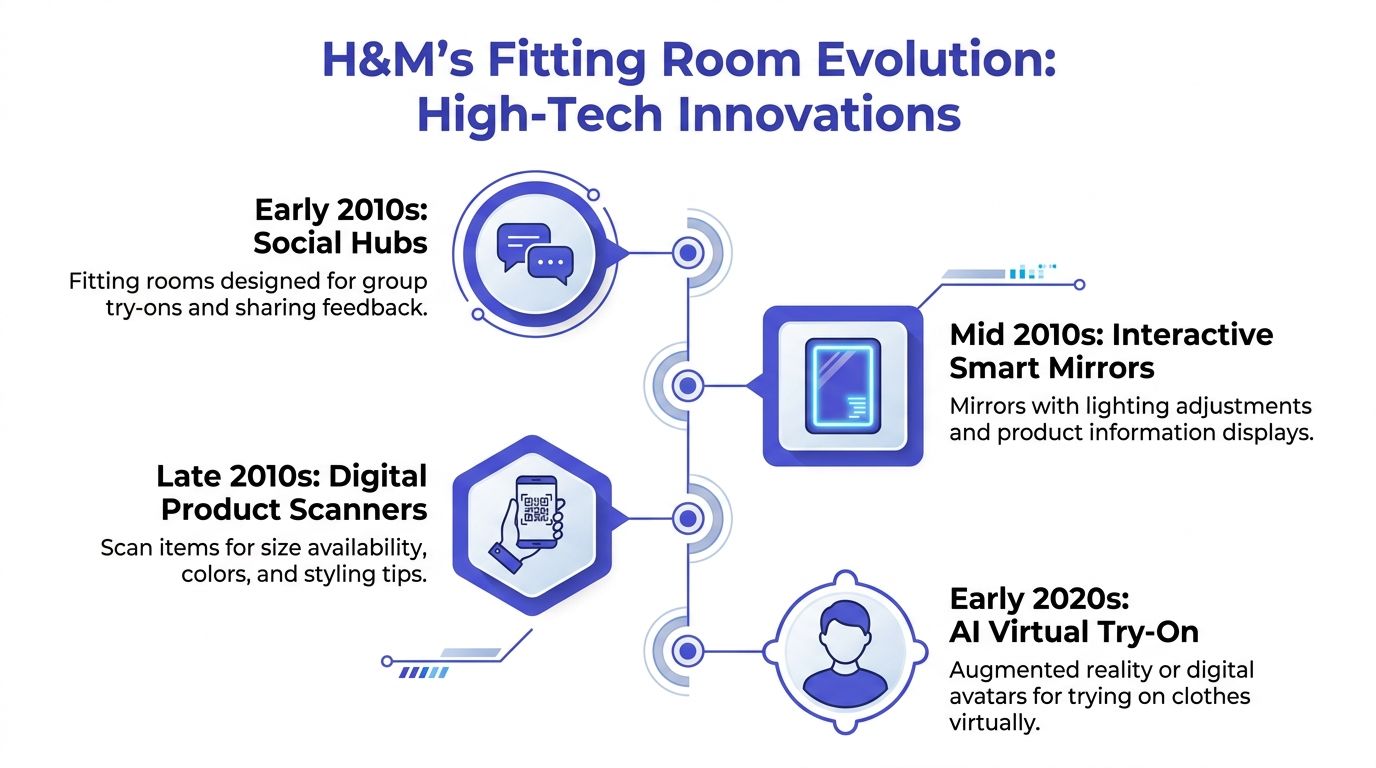
One of H&M’s more memorable ideas was the Social Fitting Room in Barcelona. The setup used 360° mirrors, touch controls, adjustable LED lighting, and music choices to make the room feel more personal, as noted earlier.
That matters more than it may seem. A fitting room works a bit like a stage set. Change the lighting and mood, and the exact same outfit can feel sharper, softer, warmer, or less convincing. H&M was responding to a real shopper problem. People were not only judging clothes. They were also reacting to the room.
Where the tech went next
Later experiments pushed beyond ambience and into decision support.
Silkke’s overview of virtual fitting to boost sustainability describes H&M pilot projects that explored 3D body scanning and AI avatars. The broader point is clear even without getting lost in the tech language. Brands want tools that help shoppers picture fit and style earlier, with less guessing and fewer unwanted purchases.
That shift changes the job of the fitting room. Instead of being a small box where you make a rushed yes-or-no call, it starts acting more like a styling interface.
Smart mirrors and store theater
Some H&M store concepts also tested mirrors that could recognize garments and connect shoppers to product information, including alternate sizes or colors, without sending them back onto the sales floor. It is a smart fix for a very old problem: the room breaks your momentum right when you are closest to deciding.
There is also a branding layer here. Retailers increasingly design fitting spaces to feel interactive and memorable, closer to an experience than a plain utility zone. If you want a sense of how that kind of environment gets built, Smartpicsuk® shares examples of photo and video experiences that show how physical spaces can invite participation instead of passive browsing.
H&M’s experiments are interesting, but they also reveal the limit of the traditional model. Even a smarter fitting room still depends on store lighting, store inventory, store traffic, and a trip to the store in the first place. That is why the next step for many shoppers is even more appealing. Skip the cubicle entirely and preview the style digitally from home.
Why the Best Dressing Room Might Be Your Own Home
The standard idea is that a physical try-on has to happen in store. That assumption feels normal because it’s familiar, not because it’s always efficient.
For a lot of shoppers, home is the easier place to judge style. You know your lighting. You know your wardrobe. You know whether a look feels like you or just looked decent under store pressure.
What home gets right
At home, there is no line behind you. No rushed decision. No tiny cubicle energy.
You can compare a new top against your actual jeans, your actual shoes, and your actual jacket. That context matters more than people think.
In-Store vs. At-Home Try-On A Quick Comparison
| Feature | In-Store Dressing Room | Virtual Try-On (with AI) |
|---|---|---|
| Privacy | Limited, shared retail setting | Private, done at home |
| Time pressure | Often rushed | Go at your own pace |
| Item handling | Must carry items and re-rack or return them | Preview styles digitally |
| Lighting | Store-dependent | Your own environment |
| Decision style | Fast judgment in a small room | Easier side-by-side style comparison |
| Convenience | Requires travel and waiting | Can be done from any device |
| Browsing flow | Stop shopping to try on | Keep browsing while previewing looks |
The bigger style advantage
Physical dressing rooms are useful, but they come with baked-in pressure. Home gives you room to think.
That matters if you shop H&M for trend pieces, workwear, occasion outfits, or quick seasonal updates. A style that feels uncertain in a cramped fitting room can make more sense when you preview it in a calmer setting.
The question is no longer “Can I get to a dressing room?” It’s “What helps me see the style most clearly?”
Visualize Any H&M Style on Yourself in Seconds with AI
If you browse H&M online, the hardest part is often translating a product photo into real-life style. You can like the item and still not know whether the overall look matches your taste.
AI try-on tools become useful here. They help you see how it looks, not guess from a hanger shot or model photo.
What this kind of tool does
A virtual try-on app takes your photo and a clothing image, then creates a visual preview of the style on you. It does not need to promise sizing certainty to be useful.
That distinction matters. You’re using it to preview the appearance, check color vibes, and explore outfit direction.
If you want to test this approach directly, I built this AI clothing try-on tool for exactly that kind of style preview. It works without an account, gives a result in seconds, and is especially strong when you use flat-lay clothing photos, which usually give the cleanest visual result.
Why it works well for H&M shoppers
H&M is full of pieces that benefit from a quick preview:
- Trend-led tops where the cut looks different on different people
- Outerwear where color and shape matter more than product copy
- Dresses that need context with your own look
- Second-buy options like “should I get the black one too?”
This is also useful beyond H&M. The same browsing habit applies to Zara, Shein, Vinted, Depop, and even Amazon, especially if you use the affiliate-friendly shopping path through Amazon fashion browsing.
Another tool worth knowing
If you like exploring this category more broadly, WearView AI is another example of how fashion preview tools are moving closer to instant visual styling support.
The win is speed. You stop guessing and start filtering styles by how they look on you.
That changes shopping behavior. You can dismiss weak options faster, save promising ones, and spend more attention on looks that feel aligned with your style.
Your Step-by-Step Guide to Virtual Shopping on H&M
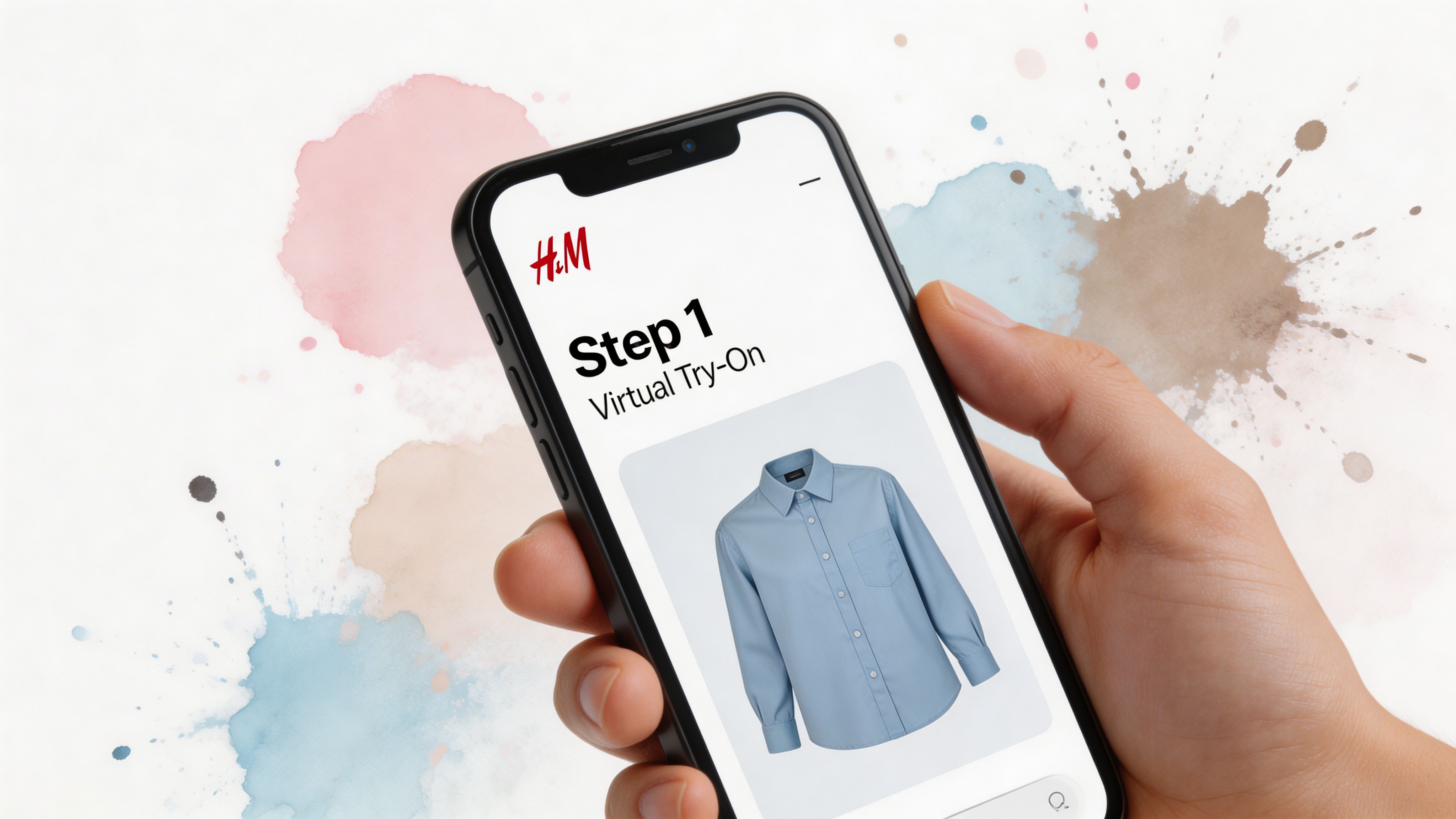
You spot a blazer on H&M during a quick scroll, like the cut, then hesitate. The usual question shows up fast: would this look polished on you, or just look good on the model? Virtual shopping works best when answering that question takes less effort than waiting for a fitting room.
That is why a simple browser-based flow is so useful. It fits into the way you already shop online, instead of asking you to build a whole new routine around one item.
The fast workflow
Use this process like a digital version of pulling pieces off the rack, except you can do it from your sofa.
-
Install the Chrome extension Start with the free Chrome extension. Setup is quick, and you only do it once.
-
Browse H&M as usual Search the way you normally would. Maybe you are comparing work trousers, knitwear, or a last-minute dinner outfit.
-
Right-click the product image On H&M and other shopping sites, you can right-click the clothing photo and choose the try-on option. That keeps the process close to the product page, which matters when you are comparing several similar pieces.
-
Pick the cleanest image available Flat-lay photos usually give the clearest preview. Front-facing product shots also help. If the image is cluttered, the result can feel a bit like trying to judge a top under bad dressing room lighting. You get the general idea, but the cleaner input gives a clearer answer.
-
Check the preview and decide quickly Once the look appears, ask a few practical questions. Does the shape suit your style? Does the color work with your skin tone and wardrobe? Would you still want it if you saw it on yourself instead of on a styled product page?
Why this works better than the old fitting-room routine for many shoppers
Physical fitting rooms still serve a purpose, but they come with friction. You have to travel, find your size, wait for a room, and test items under store lighting that is not always flattering or accurate.
A virtual preview removes those pain points. You can compare colors in seconds, revisit options later, and test more than one store without carrying an armful of hangers around. H&M's in-store tech experiments pointed in that direction earlier. The larger idea is simple: shoppers want faster visual feedback. At home, that feedback is often easier to get.
Keep your previews organized
One of the biggest advantages of virtual shopping is memory. In a store, you rely on quick impressions. Online, you can save and compare.
If you want to review options later, your try-on history gallery makes that easier. It helps when you are choosing between two colors, narrowing down holiday outfits, or deciding whether a trend still feels right the next day.
You can also begin from the main virtual dressing room to try clothes on online if you already have a product image ready.
A few strong use cases:
- Online shopping: Preview H&M pieces before you add them to cart.
- Secondhand browsing: Check how a Vinted or Depop find might look on you.
- Event dressing: Test party, wedding-guest, or themed outfits before buying.
- Wardrobe planning: Save several options, then compare them side by side later.
The h&m dressing room is the traditional route. Virtual previewing is the modern one. If your goal is to see style, shape, and color on yourself with less guesswork, home often wins.
If you want a faster way to preview H&M styles, compare outfits, and save your favorite looks without leaving home, try TryThisFit. You can start in seconds, use the free Chrome extension on almost any shopping site, and browse your saved previews anytime.
Try Virtual Try-On Now
See how clothes look on you before you buy - works with any online store
Get Started Free