Media Lab AI: The Future of Style and E-Commerce
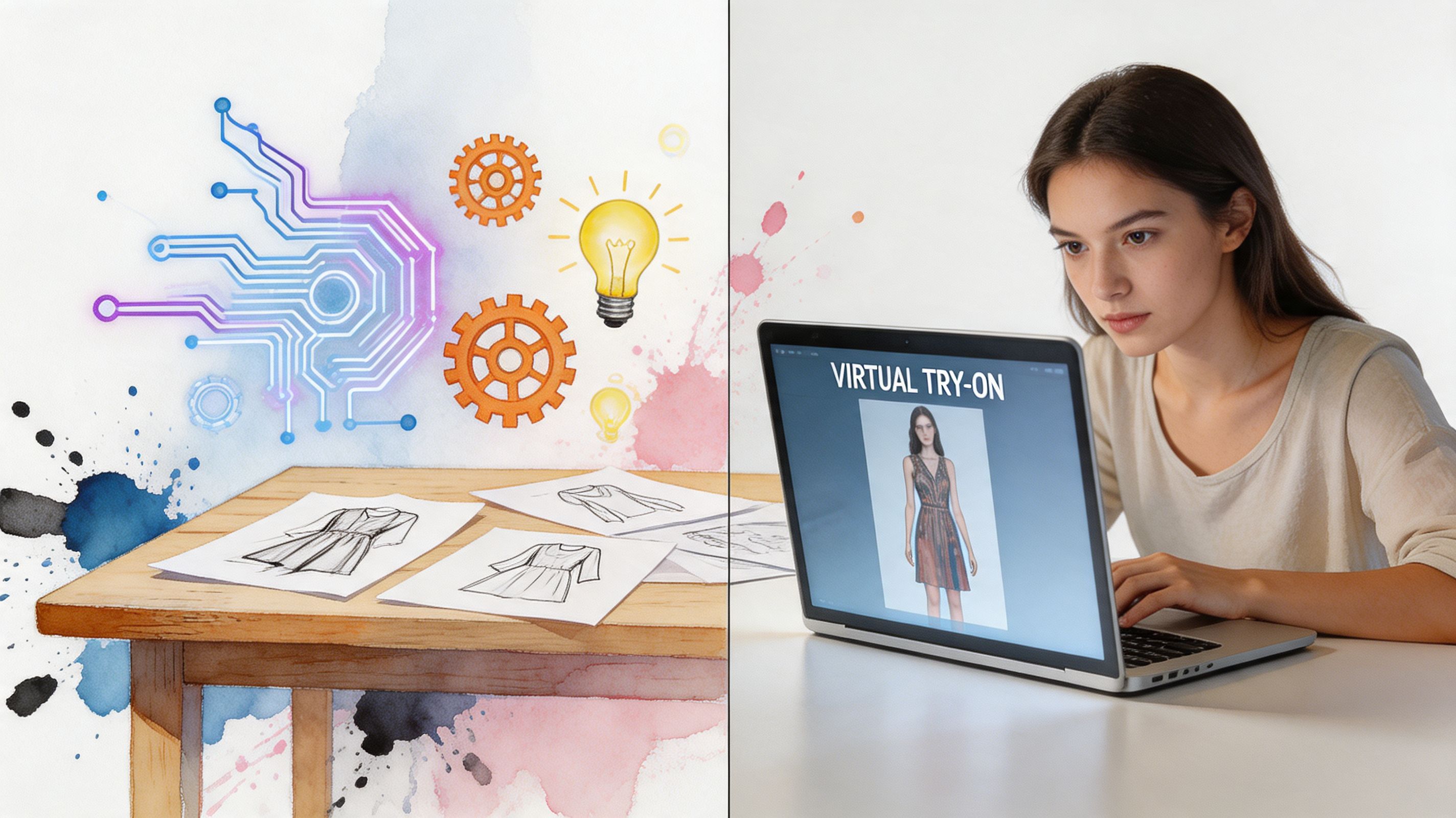
You’re probably here because you’ve had that familiar online shopping moment. The item looks amazing on the model, the product photo seems promising, and then the main question hits: how would this look on me?
That question sits right at the intersection of media lab ai and everyday life. What starts as research in AI, media, design, and human behavior ends up shaping tools that help people preview outfits, compare styles, and shop with a little more confidence and a lot less guesswork.
Decoding the World of Media Lab AI
The phrase media lab ai sounds like one thing, but it isn’t. It’s better to think of it as a category of work where people combine artificial intelligence, communication, design, and digital experiences to build new ways for humans to interact with information.
Some labs are academic. Some are corporate. Some focus on ethics and public debate, while others build products and scale businesses. The common thread is that they all treat media as something active, not passive. Media isn’t just content on a screen anymore. It responds, adapts, recommends, generates, and helps people make decisions.
Why the term feels confusing
A lot of readers assume “media lab ai” refers to a single company or a single famous institution. In practice, it’s more like saying “fashion studio” or “design lab.” The label describes a type of environment where experimentation happens.
That matters because AI in media doesn’t only mean chatbots writing headlines or image generators making surreal artwork. It also includes practical systems that shape what people see, how they discover products, and how they test ideas before committing to them.
Practical rule: If a tool helps people create, interpret, personalize, or visualize digital content, it’s operating in territory that media lab ai research cares about.
A simple analogy helps. Think of a kitchen test lab in fashion publishing. One station experiments with fabrics, another with photography lighting, another with styling, and another with audience reaction. A media lab ai environment works similarly, except the materials are data, interfaces, recommendation systems, generative models, and human behavior.
Where creativity and computation meet
The most exciting thing about media lab ai is that it doesn’t force a choice between art and engineering. It asks a richer question: what happens when machine intelligence supports human taste, judgment, and expression?
That’s why this field keeps popping up in places people don’t always expect. Newsrooms use AI to organize and generate content. research groups study bias in generated media. consumer tools use image analysis to help people preview products. Even visual shopping experiences sit in this same orbit.
If you’ve ever wanted to understand the design side of AI image workflows, image lab software concepts make this overlap easier to picture. The point isn’t just that AI can create images. It’s that AI changes how people explore options, compare looks, and make visual decisions.
The real mission behind the label
At its heart, media lab ai is about building the future of mediated experience. That sounds lofty, but the everyday version is simple. How do people discover things, trust what they see, and act on it?
That question applies to film recommendations, social feeds, digital art tools, and shopping interfaces. It also applies to fashion, which is one of the most visual and emotionally immediate categories online.
When people hear “lab,” they often imagine white coats and abstract experiments. In this world, a lab can also mean a place where someone asks a very human question like, “Can I preview this coat on myself before I buy it?” That’s not trivial. It’s a design problem, a computer vision problem, and a media problem all at once.
The Pioneers Shaping Our Digital Future
A useful way to understand media lab ai is to look at who is building it. One group works like a research studio. The other works like an operating company. Both shape the digital experiences people use every day, including the kind that let you see a jacket on your own body before you click buy.

Academic labs ask harder questions
The AI Media Lab at the University of Innsbruck studies how AI changes media and public life. Its framing matters because it treats AI outputs as designed representations, not neutral mirrors of reality. According to the University of Innsbruck AI Media Lab concept, training data imbalances can produce 25 to 35% accuracy drops in diverse user representations, and the lab highlights human-AI validation loops as part of responsible system design.
That idea reaches far beyond academic theory. If an image system represents some faces, bodies, or clothing styles less accurately than others, the problem shows up in ordinary consumer tools too. A virtual try-on feature only feels helpful if the visual preview respects the person using it.
Academic labs often play three roles at once. They test whether a model works, examine who it works for, and question what happens when people trust its output. In fashion terms, that is the difference between a preview that feels useful and one that feels uncanny, flattering in the wrong way, or plain wrong.
Corporate groups turn ideas into products
Corporate teams usually start with a different question. They ask how AI can support distribution, product design, advertising, and audience growth at scale.
MediaLab AI Inc., based in Santa Monica, offers a clear example. According to ZoomInfo’s company profile for MediaLab AI Inc., the company reports $15.3 million in revenue and falls in the 250 to 499 employee range. It operates as a holding company for digital media brands and supports monetization through premium media and programmatic advertising infrastructure.
That may sound far removed from the closet mirror problem. It is not. Companies that manage media, audiences, and ad systems help shape the visual internet people move through every day. The same broad AI stack that improves targeting, personalization, and content delivery also influences how product imagery is generated, ranked, and presented to shoppers.
For a wider sense of the commercial creative ecosystem around these tools, it helps to explore AI tools on AgentPulse.
Two kinds of pioneers, one shared effect
The contrast is straightforward.
| Type | Main focus | Typical question |
|---|---|---|
| Academic media lab | Ethics, public impact, research | Is this system fair, understandable, and socially responsible? |
| Corporate media lab model | Growth, scale, distribution | Can this system support audience reach, product strategy, and revenue? |
One side pressures AI systems to become more accurate, interpretable, and responsible. The other turns those ideas into products people can use.
That combination matters. A shopper using a virtual try-on tool does not see the research paper, the training pipeline, or the ad-tech layer behind the screen. They see a simple result. "Does this dress look right on me?" Good media lab ai work makes that answer more believable.
A company snapshot helps show the scale of this work. MediaLab AI has grown into a sizeable organization with active hiring and multi-year employee tenure, as noted earlier. Those signals point to a field with real budgets, real teams, and long-term product plans, not a small experimental corner of tech.
The bigger point is easy to miss if you only look at AI from far away. Academic labs shape the standards. Corporate groups shape the reach. Consumers feel both influences in very personal moments, especially when a screen stops being a catalog and starts acting more like a fitting room.
Core Research Themes in Media and AI
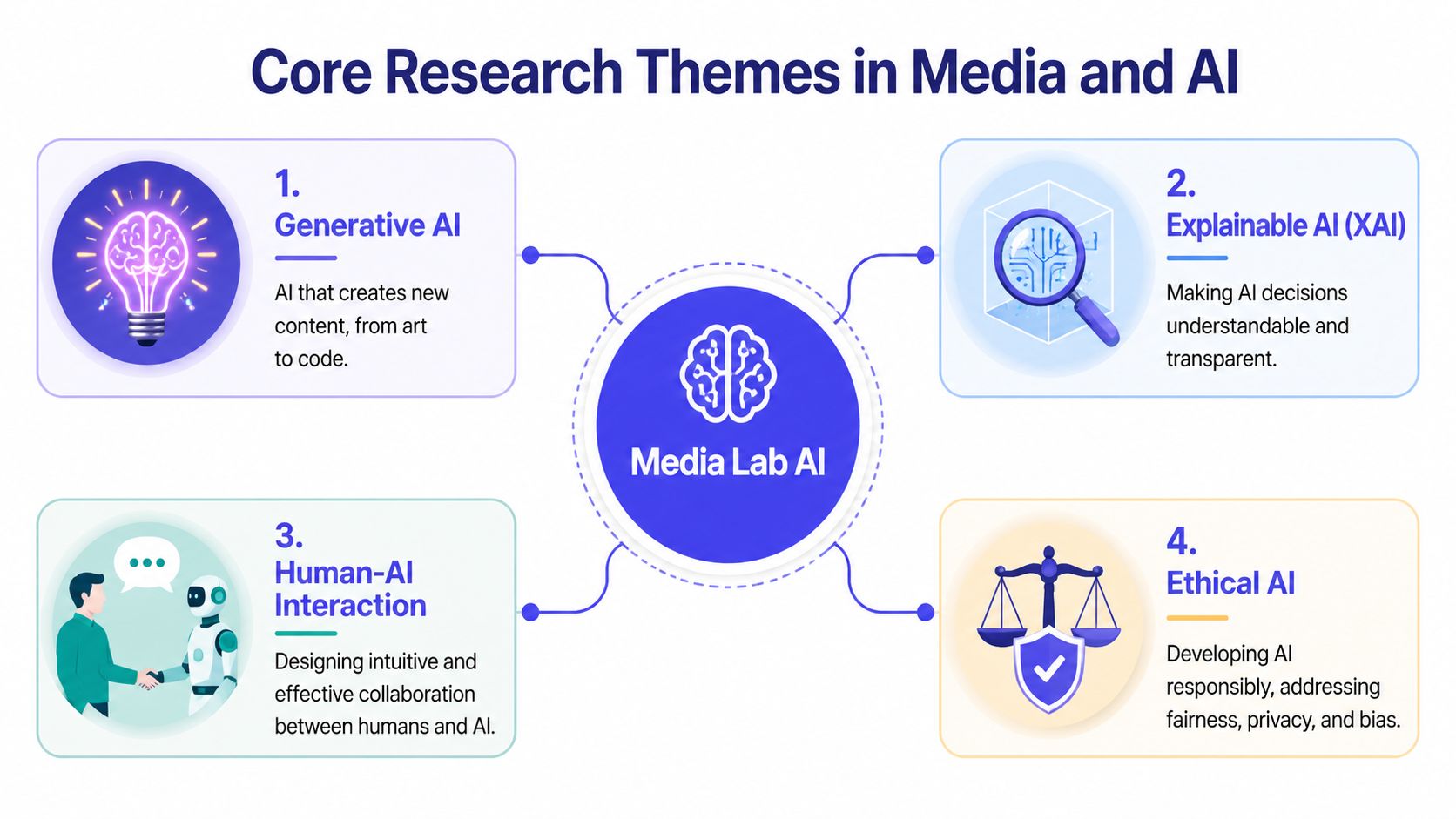
Media lab ai gets easier to understand when you break it into a few recurring themes. Most projects in this space blend four ingredients: generation, explanation, interaction, and ethics.
That sounds technical, but the practical version is familiar. One system creates content. Another tries to explain why it produced that result. Another shapes how a person interacts with it. And all of it raises questions about fairness, access, and trust.
Generative systems do the visible magic
Generative AI gets the spotlight because it creates things people can see and react to right away. Images, text, audio, and synthetic visuals all live here.
In fashion terms, generative systems matter because they can help people preview appearance, remix ideas, and experiment with style before buying or wearing anything. That doesn’t mean the machine “understands fashion” the way a stylist does. It means the system can produce a visual approximation that helps a human make a better judgment.
If you want a broader sense of the creative tool ecosystem around this shift, it’s useful to explore AI tools on AgentPulse, especially for seeing how generation is moving from specialist workflows into everyday media creation.
Explainable AI keeps the black box from taking over
A lot of AI tools can produce an answer without showing their reasoning. That becomes a problem fast in media contexts, because people need to know why a recommendation appeared, why an image looks a certain way, or why a model struggles with some inputs.
Explainable AI tries to make those decisions more understandable. Not perfectly transparent, but clearer. In media lab ai, that matters because opaque systems can reinforce stereotypes, flatten nuance, or produce outputs that look polished while hiding weak logic.
For everyday users, explanation can be as simple as knowing what kind of image works best, what conditions improve results, and what the tool is trying to do.
Human-AI interaction decides whether the tool feels helpful
The smartest model in the world still fails if the experience feels awkward. That’s where human-AI interaction comes in.
This research theme studies how interfaces guide people, what kinds of controls reduce confusion, and how AI should collaborate with humans instead of overwhelming them. In plain terms, it’s the difference between a tool that feels intuitive and one that feels like homework.
A good media lab ai product doesn’t ask people to think like engineers. It translates complex processes into a few simple actions. Upload. click. preview. compare. decide.
The best AI experiences usually feel less like operating a machine and more like having a useful visual assistant.
Ethics and accessibility shape who gets included
The conversation gets more serious, and more necessary. AI systems don’t reach everyone equally, and they don’t serve everyone equally either.
Stanford research highlights an accessibility gap in popular AI communication tools, showing that these tools are used predominantly by wealthier, more educated users, which points to failures in inclusive design for diverse needs and non-standard interactions, as described by the Stanford HAI report on whether popular AI communication tools favor the privileged.
That idea belongs at the center of media lab ai. If a tool only works for polished photos, standard speech patterns, ideal lighting, or a narrow cultural default, it isn’t just inconvenient. It’s excluding people.
A useful way to think about the field is this short map:
- Generative AI produces media.
- Explainable AI helps people understand outputs.
- Human-AI interaction makes the experience usable.
- Ethical AI asks who benefits, who’s harmed, and who gets ignored.
These aren’t separate silos. They collide constantly. A stylish visual tool can still fail ethically. A fair system can still be unusable. A brilliant generator can still confuse people.
That’s why media lab ai remains such a lively field. The challenge isn’t just building smarter outputs. It’s building media systems that people can trust, interact with, and enjoy.
From the Lab to Your Closet with AI Fashion
Fashion is one of the clearest examples of media lab ai becoming tangible. Research starts with image generation, visual interpretation, and human-centered design. Then it lands in a very ordinary shopping decision: should I even bother ordering this?
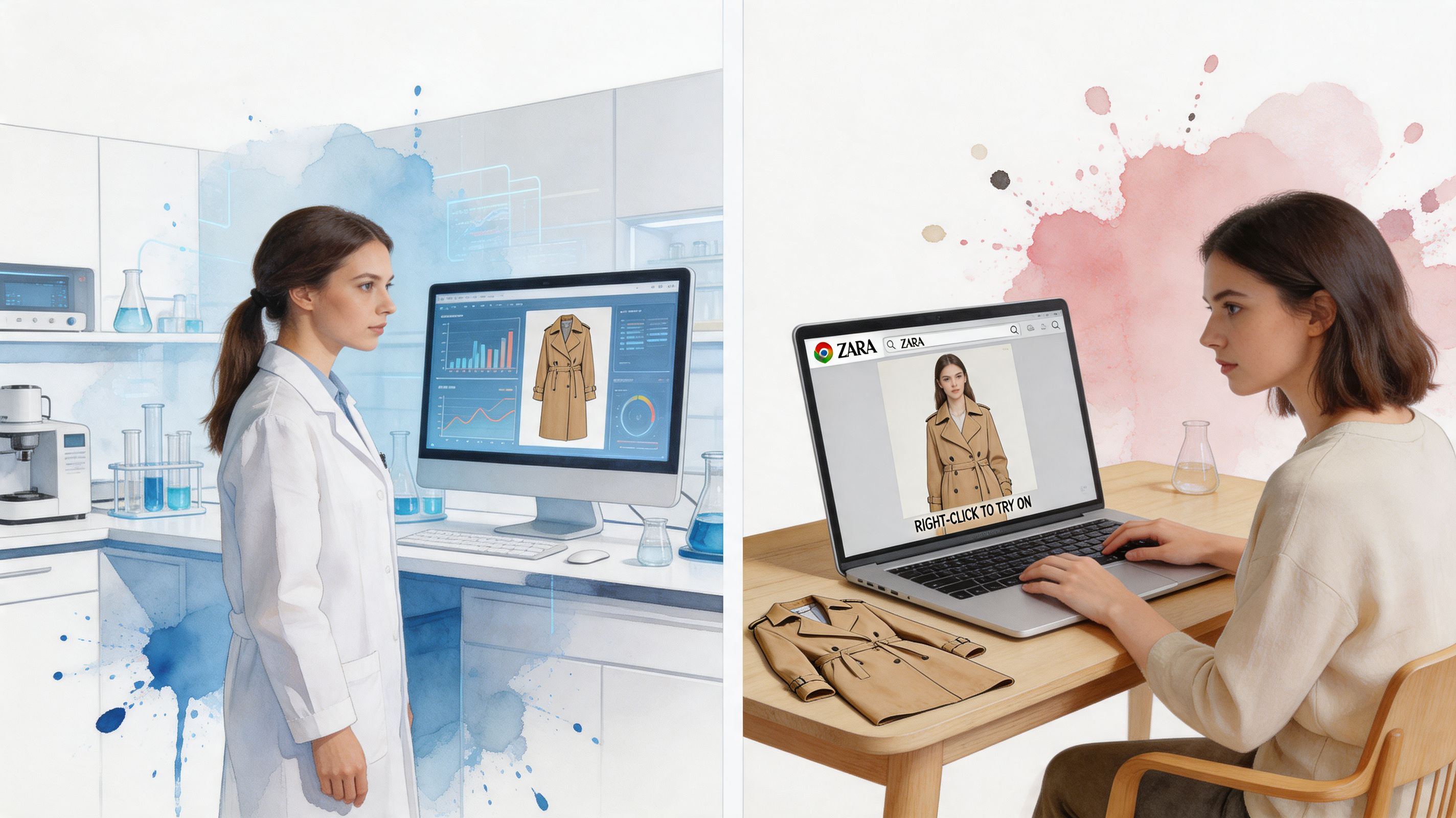
The leap from lab theory to closet reality happens through computer vision. That’s the branch of AI that helps systems interpret images. In a shopping context, it allows software to look at a garment photo and create a visual preview of how the style might appear on a person.
Where computer vision shines and where it stumbles
AI image systems can look impressive, but they still have blind spots. That matters even more in fashion, where angle, drape, wrinkles, and image quality change the result.
Harvard Medical School highlighted a striking example of this limitation. In testing, an AI misinterpreted a giant chair as a guillotine. The Harvard article on the limits of computer vision captures the broader lesson clearly: when objects appear in unfamiliar contexts or angles, models can make very odd mistakes.
That finding has a direct fashion translation. If a clothing photo is messy, folded strangely, modeled at a difficult angle, or cluttered with background noise, the system has a harder time producing a clean visual preview.
Why flat-lay photos work better
Many shoppers often become confused. They assume a dramatic campaign image should give the best result. Often, it’s the opposite.
A flat-lay clothing photo usually works best because it gives the AI a clearer, more readable view of the garment’s outline, color, and visible structure. There’s less interference from body pose, extreme lighting, or background details. In other words, the input is simpler, so the output usually looks cleaner.
That principle reflects the practical side of media lab ai. The goal isn’t to chase flashy complexity. It’s to choose the input conditions that help the system do its job well.
Field note: For fashion visualization, cleaner source images usually beat more glamorous ones.
The product bridge from research to everyday use
Here, abstract AI concepts become useful instead of merely impressive. A strong fashion visualization tool takes the lessons from media research and hides the complexity behind a smooth experience.
A good example of that broader category is the rise of tools discussed in AI for fashion applications, where the emphasis is on helping shoppers preview appearance and compare styles quickly. The appeal isn’t technical novelty by itself. It’s speed, convenience, and the simple pleasure of seeing a look before making a decision.
There’s also a wider retail context around AI-guided shopping and merchandising. If you want to see how this thinking extends beyond try-on visuals into customer conversations and sales workflows, Marvyn AI sales automation offers a useful adjacent view.
After the theory, it helps to watch the interaction style in action:
<iframe width="100%" style="aspect-ratio: 16 / 9;" src="https://www.youtube.com/embed/g9ICLvwyGgk" frameborder="0" allow="autoplay; encrypted-media" allowfullscreen></iframe>What makes this exciting for regular shoppers
You don’t need to care about model architectures to feel the benefit. The value shows up when you’re browsing a trench coat, a vintage blazer, a party dress, or a Halloween outfit and want a fast visual answer.
Media lab ai matters here because it changes shopping from passive scrolling into active experimentation. Instead of wondering, you can preview. Instead of opening a dozen tabs and trying to imagine the result, you can compare looks more directly.
That doesn’t make fashion purely rational. It makes it more visual, more playful, and more informed. Which is a much better fit for how people shop for style.
A Visual Revolution in Online Shopping
You open a product page for a jacket that looked perfect in the thumbnail. Then the familiar gap appears. The color is clear. The price is clear. Your own appearance in it is still a guess.
That gap is exactly where years of media lab AI research start to feel personal. Work that began with image analysis, human-computer interaction, and visual modeling now shows up in a simple shopper question: can I see this on myself before I buy it?
What this looks like in real shopping behavior
The shift is subtle, but important. Online shopping used to rely on imagination plus a return policy. AI adds a visual layer between browsing and buying.
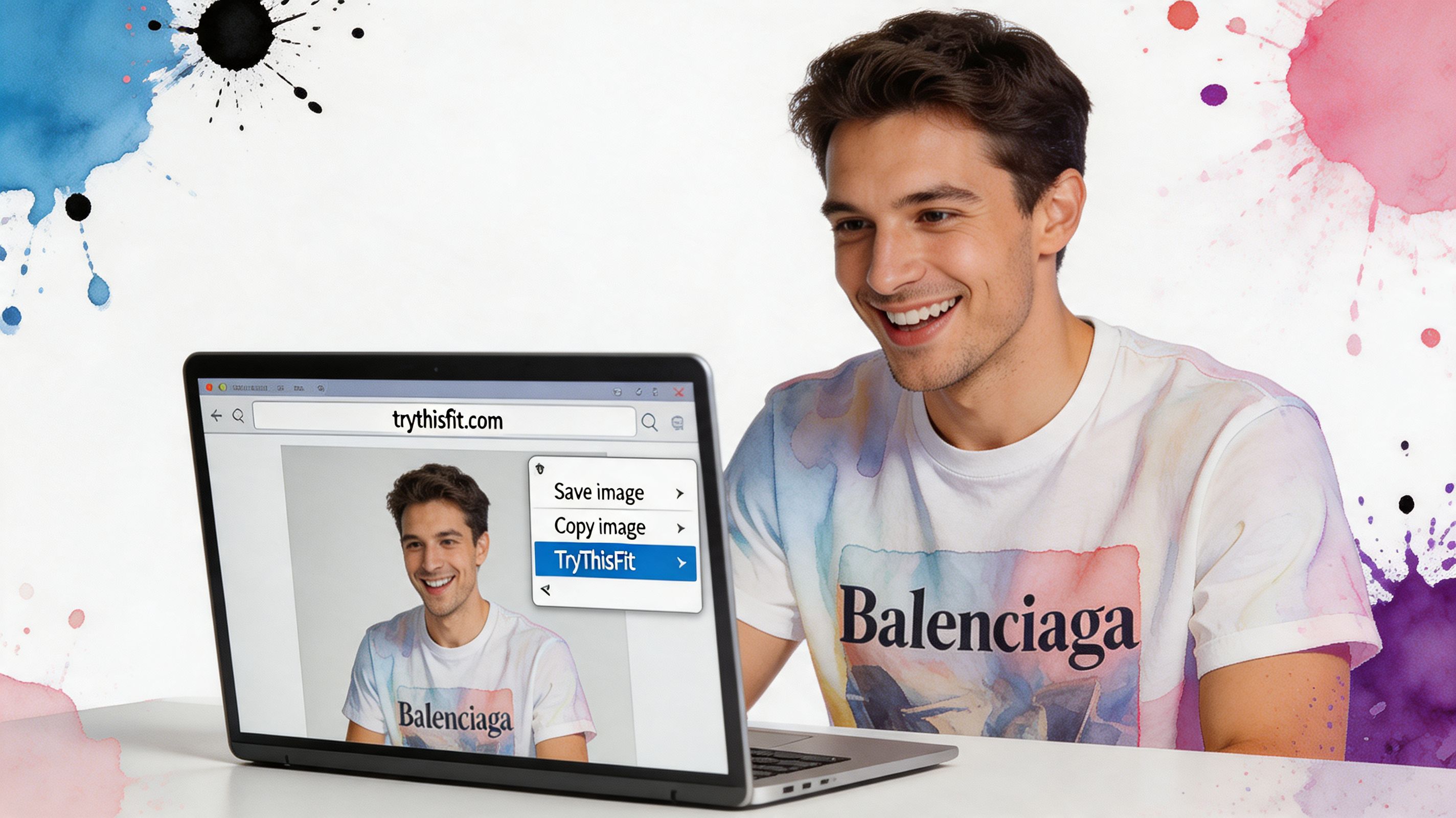
A virtual try-on system reads a clothing image, maps it to a body image, and produces a preview that is much closer to the question shoppers care about. The research side can sound abstract. In practice, it means less guesswork about shape, mood, and styling.
If you want to see that consumer-facing idea in one place, these AI clothing try-on tools show how a research concept turns into an everyday shopping habit.
Why convenience matters as much as intelligence
A smart system only helps if it fits the pace of real browsing. Shoppers do not want to stop, study a manual, and rebuild their routine just to test one blouse or coat. They want a quick visual check while moving from tab to tab.
That is why the interface matters so much. Good AI shopping tools feel less like a separate app and more like an extra sense. You spot an item, trigger a preview, compare the result, and keep going.
The design challenge is the same one many labs study more broadly. How do you make advanced computation feel clear, intuitive, and pleasant to use? If you are curious about that design side of AI products, this roundup of best AI design tools is a helpful companion read.
Where visual previews help most
Some shopping moments create more uncertainty than others. Virtual try-on is especially useful when the item is expressive, hard to picture, or hard to return.
- Secondhand finds: Pieces on Vinted or Depop often have personality, but limited sizing context and no fitting room.
- Cross-site comparison: A blazer on one store and a dress on another can look equally appealing until you see how each style reads on you.
- Costumes and occasionwear: Bold looks are fun to explore, and a preview helps you test ideas before committing.
- Trend testing: Some items look great on a model but feel off for your own style. A visual check saves time.
Why this feels bigger than shopping
Fashion is one of the clearest examples of AI becoming visible in daily life. Media lab research often starts with broad questions about perception, interaction, and digital representation. Virtual try-on answers those questions in a form people can use on a Tuesday night while deciding whether to buy a trench coat.
That is what makes this shift so interesting. The technology does more than improve product discovery. It gives people a better bridge between intention and self-expression.
You are still making the style decision. AI gives your judgment a clearer mirror.
If you try these tools often, keeping a record in your saved try-on history can make comparisons easier and help you notice patterns in what you like.
How to Get Involved and Learn More
You don’t need a research title or coding background to engage with media lab ai. Curiosity is enough.
One path is to follow the public-facing work of academic labs that study ethics, media systems, and human-AI interaction. Another is to pay attention to consumer tools that turn those ideas into everyday experiences. Both teach you something different. One sharpens your judgment. The other sharpens your intuition.
A practical way to learn without getting buried
If you want to understand this world better, look for resources that connect design, behavior, and AI rather than treating them as separate topics. For example, readers interested in the visual design side of AI interfaces may enjoy this roundup of best AI design tools, which gives a wider sense of how creative workflows are changing.
A simple learning loop works well:
- Observe a real tool: Notice how it guides you, what it asks for, and what results it returns.
- Question the output: Ask what assumptions the tool may be making about images, people, or context.
- Compare experiences: Use more than one AI-driven product and notice which one feels clear, respectful, and useful.
- Stay playful: Some of the best understanding comes from trying things, not just reading about them.
The future of AI becomes easier to grasp when you stop treating it as distant infrastructure and start treating it as something you can test with your own eyes.
Hands-on experimentation counts as learning. If you use a visual fashion preview tool, you’re interacting with human-AI design in a direct way. You’re seeing how interface choices, image quality, and model behavior shape the result.
That’s one reason this field is so compelling. Media lab ai isn’t locked inside institutions. It’s moving into browsers, shopping flows, creative apps, and daily decisions.
Frequently Asked Questions About Media Lab AI
You finish reading about AI labs that study images, interfaces, and human behavior. A few minutes later, you are staring at a product page, wondering whether a jacket will suit you. That jump from research to retail is smaller than it looks. The same ideas tested in media lab settings often reappear in everyday tools, especially virtual try-on systems that let you preview clothing on your own image before you buy.
Quick Answers to Your Questions
| Question | Answer |
|---|---|
| Is media lab ai a single company? | Usually, no. The phrase often describes a broad area of work where AI, media, design, and human interaction meet. That can include university labs, startup research teams, and product groups inside larger companies. |
| Why do people use the term so loosely? | Because it refers to a style of research and product building more than one fixed label. People may be talking about systems that read images, shape digital experiences, or study how humans respond to machine-generated media. |
| Why do AI fashion previews work better with some images than others? | Image quality matters. Clothing photos with a clear outline, visible sleeves, and limited background clutter give the model a better chance of producing a useful preview. |
| Can virtual try-on tell me whether clothes will fit? | It works best as a style preview. It can help you judge color, silhouette, and overall look, but sizing, fabric feel, and comfort still depend on measurements and real-world wear. |
| Do I need an account to try this kind of tool? | That depends on the product. Some tools ask for sign-up first. Others let you test a look right away, which makes the experience feel lighter and easier to explore. |
| Why does bias matter in media lab ai? | These systems reflect the data they were trained on and the choices made by the teams who built them. If those inputs are too narrow, the results may be less accurate or less useful for some people. |
A few final clarifications
A common point of confusion is what these systems are good at. Media lab ai often produces tools for perception and visualization. In fashion, that means helping you see how a garment may look on your body, much like a digital fitting-room mirror built from image models instead of glass.
That distinction matters.
A strong preview can save time, cut down on disappointing purchases, and make online shopping feel more informed. It cannot tell you how stiff a fabric feels, whether a waistband will stay comfortable through the day, or how a hem moves when you walk. The clearest way to use it is as visual guidance.
Trust matters just as much as image quality. People are more likely to try AI products when the interface feels clear, the process feels lightweight, and the data handling feels respectful. In other words, good research alone is not enough. Good product design turns the research into something people will use.
The short version is simple: media lab ai turns ideas about seeing, interpreting, and presenting digital information into practical tools. One of the easiest places to notice that shift is fashion. A concept that starts in research can end with a very ordinary, very useful moment. You check a look on yourself before you click buy.
Try Virtual Try-On Now
See how clothes look on you before you buy - works with any online store
Get Started Free