Online Retail Trends 2026: What's Shaping Shopping Now
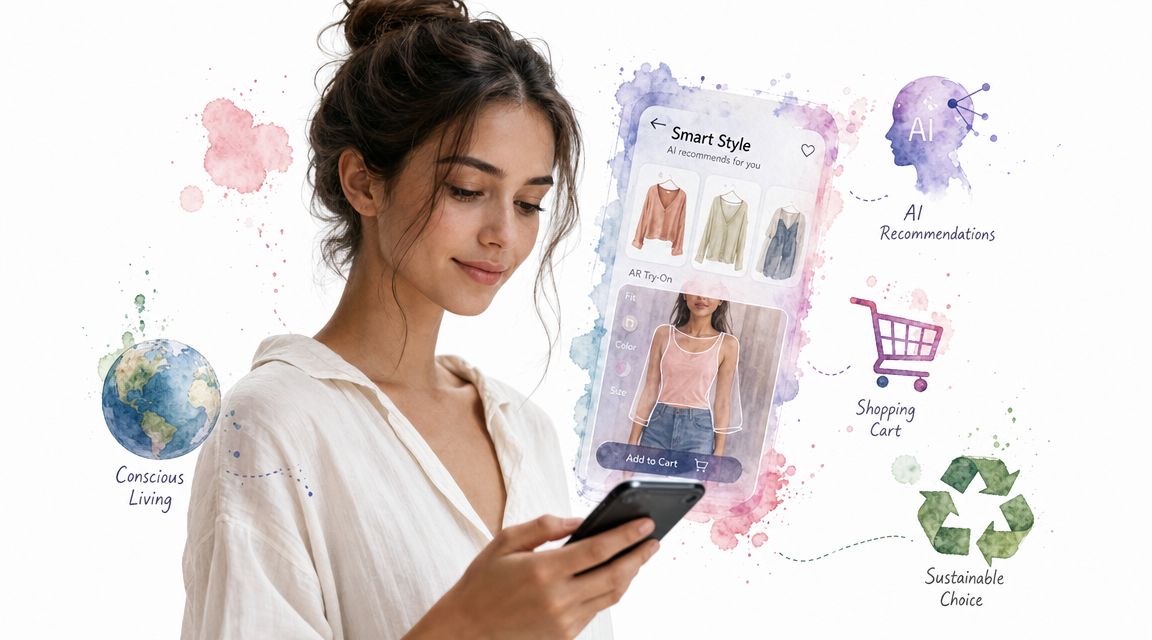
By 2025, an estimated 2.77 billion people were shopping online. That scale matters because online retail no longer changes only how stores sell. It changes how you decide what feels worth buying, what fits your style, and how much confidence you have before you tap “place order.”
For shoppers, online retail trends are practical, not abstract. They shape the clothes you discover on social apps, the product pages that load on your phone, the sizing tools that reduce guesswork, and the resale options that make fashion feel less wasteful and more flexible.
A helpful way to read these shifts is to stop viewing them like industry jargon and start viewing them like upgrades to your fitting room. AI works like a stylist that learns your taste over time. AR works like a mirror that follows you onto your phone screen. Mobile commerce turns your commute, couch time, or lunch break into a chance to compare, save, and buy with less friction.
That shopper-first view is missing from a lot of trend coverage, which often focuses on what retailers should build. This guide focuses on what those changes mean for you, including how tools such as retail technology for shoppers and style matching can help you make smarter choices right now.
If you want a brand-side snapshot too, these future Shopify ecommerce trends show why stores are changing so quickly. What matters here is the shopper payoff. Better discovery, better fit confidence, and a shopping experience that feels more like getting dressed with good guidance than scrolling through a warehouse aisle.
The New Reality of Online Shopping in 2026
Online shopping now accounts for a large and growing share of how people buy, and that scale changes the experience for shoppers in practical ways.
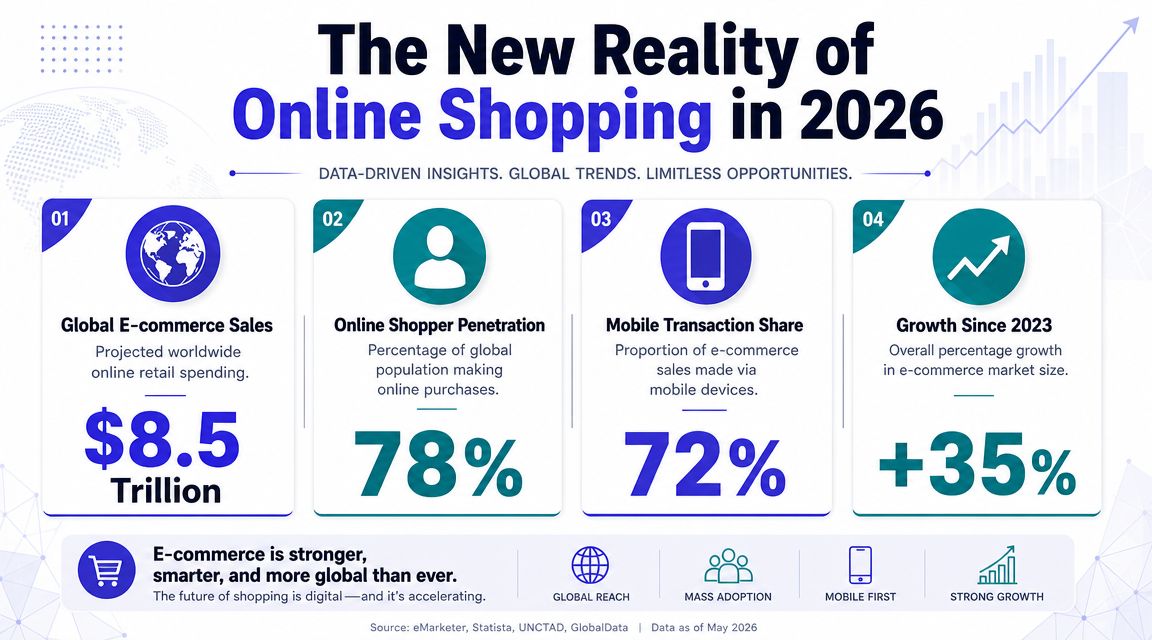
A few years ago, buying online could still feel like the backup plan. You went to a store first, then checked the website if your size was gone. In 2026, the order often flips. Shoppers discover a look on social media, open product pages on their phones, compare reviews across apps, and decide where to buy based on convenience, price, delivery, and fit confidence.
That shift matters because stores now design for digital-first behavior. The online shop is no longer a catalog sitting next to the core business. It is the fitting room, storefront, sales associate, and checkout counter, all compressed into one screen.
What shoppers notice first
Shoppers usually do not describe this as a retail shift. They feel it in smaller moments. A product page shows styled outfits instead of one flat image. Search starts recognizing a vibe instead of only exact keywords. A saved cart follows you from phone to laptop. Buying starts to feel less like walking down a warehouse aisle and more like getting guided through options that fit your taste.
In practice, shopping is becoming:
- More visual: photos, short videos, and fit previews often answer questions faster than long product copy.
- More personal: stores increasingly sort what you see based on your clicks, size interest, and style preferences.
- More connected: you might spot an item on social, check reviews on a marketplace, and buy from the brand or in-store pickup.
- More flexible: resale, creator links, try-on tools, and mobile checkout all sit inside the same shopping journey.
What this shows is that shopping no longer happens in one place or one straight line. It moves across screens, platforms, and spare moments throughout the day.
That shopper-first perspective often gets missed in trend roundups written for operators. Reports on future Shopify ecommerce trends help explain why brands are changing their stores so quickly. For everyday shoppers, the key takeaway is simpler. You now have more ways to compare, test, save, and buy with less guesswork.
If you want a practical way to read these changes through the lens of fit and style confidence, shopper-focused retail technology guides from TryThisFit show how these tools can help you make better decisions right now.
AI Beyond Recommendations How It Shapes Your Style
Upon hearing “AI in shopping,” one often thinks of a little row that says “You might also like.” That's only the beginner version.
The bigger shift is that AI is changing how you discover style, not just which extra item gets suggested underneath the one you already clicked. Instead of pushing more products at you, newer tools can help you explore a vibe, a silhouette, or a look you don't quite know how to describe yet.
From product matching to style discovery
Basic recommendation systems work like a sales associate who keeps handing you similar black sweaters.
Modern AI shopping tools aim for something more useful. They can help with:
- Visual exploration: finding items that match the mood of a look, not just the exact category.
- Pattern recognition: surfacing shapes, colors, and styling details you tend to click on.
- Decision support: helping you narrow options when ten items feel almost the same.
- Inspiration: showing possibilities you wouldn't have found through keyword search alone.
This matters a lot in fashion because people don't shop by spreadsheet. You might know you want something polished but relaxed, minimal but not boring, structured but still soft. Search bars aren't great at that kind of nuance. AI can get closer.
Why shoppers still get confused
A lot of readers mix up three different ideas:
| Shopping feature | What it does | Where it falls short |
|---|---|---|
| Recommended products | Shows related items | Often feels repetitive |
| Visual search | Helps you find similar looks | Doesn't always help you decide |
| Style visualization | Lets you preview the appearance of a garment on your own photo | Depends on good product images |
That third category is where things get more interesting. You're no longer asking, “What else is like this?” You're asking, “How would this style look on me?”
One practical example is fashion and AI tools like TryThisFit, which let you upload a photo and preview how clothing styles look on you. The focus isn't on promising sizing certainty. It's on helping you see how it looks, compare aesthetics quickly, and make better style calls without creating an account first.
Practical rule: AI is most helpful when it reduces guesswork. If a tool helps you visualize the style, compare options faster, or rule out a bad purchase, it's doing real work.
For shoppers, that's the exciting part of AI. It's becoming less like a pushy recommendation engine and more like a creative assistant that helps you refine your taste.
Immersive Commerce and The Magic of Virtual Try-On
Shoppers are far more likely to buy when they can see a product in context, not just on a flat page. Analysts at Shopify's retail technology trend roundup found that products with AR and 3D content can convert much better than similar listings without those features.
For everyday shoppers, that matters for a simple reason. Online fashion usually asks you to make a visual decision with limited visual information. One studio photo has to stand in for real life, your taste, and your body. That is a lot to ask from a product page.
Why virtual try-on feels useful, not gimmicky
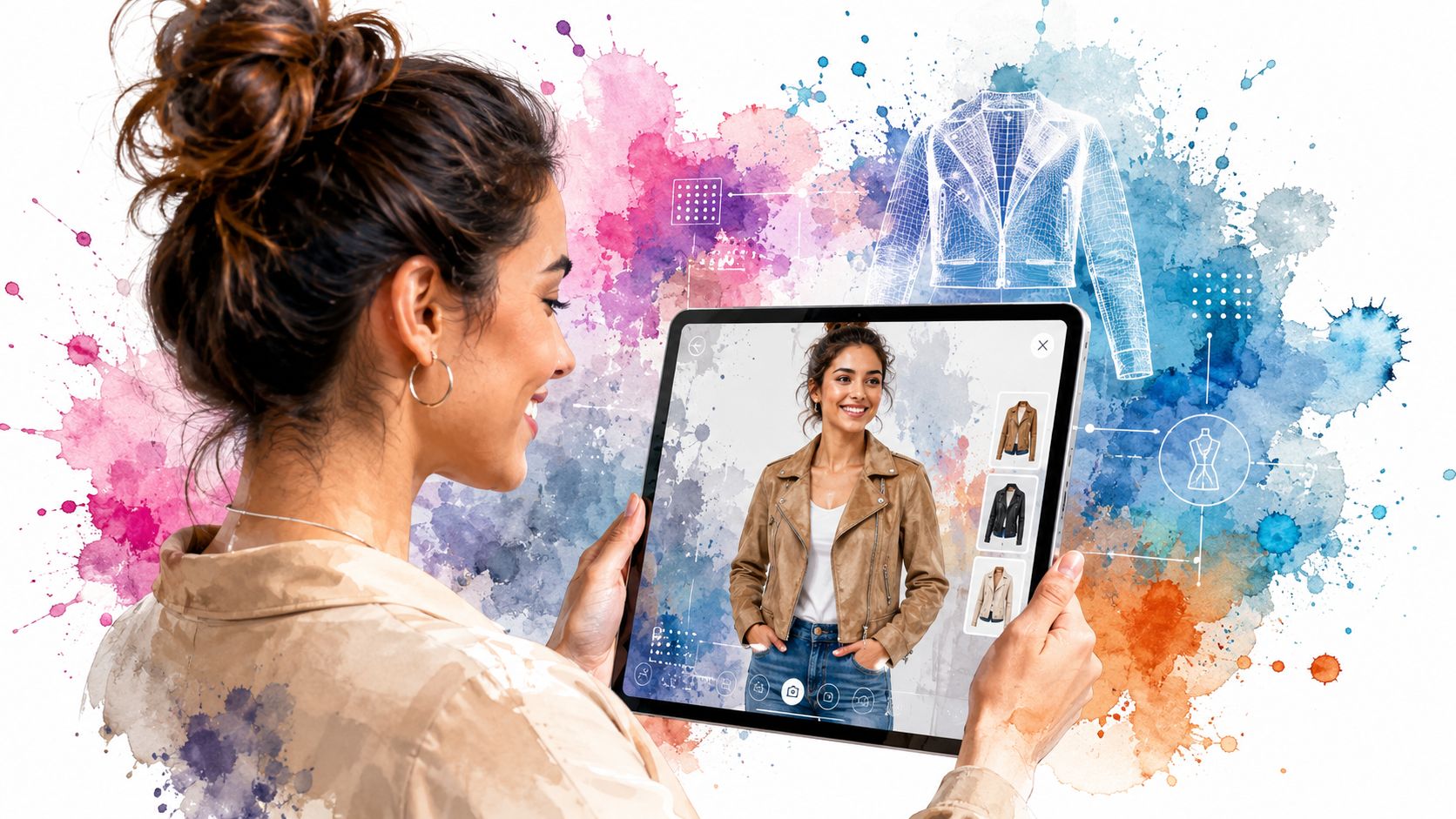
Virtual try-on helps answer the question shoppers care about. Does this style feel right on me?
A fitting room comparison helps here. A normal product page is like holding a hanger at arm's length and guessing. Virtual try-on gets you closer to the mirror. It does not solve everything, but it gives you more signal before you spend money.
That is especially helpful in categories where styling changes the whole impression:
- Outerwear: a trench can read sharp, dramatic, or too heavy depending on the proportions.
- Dresses: color and silhouette often look very different on a person than they do in isolated product photography.
- Costumes: visual confidence matters more than technical specs.
- Secondhand pieces: one-off items often come with inconsistent photos and limited return options.
The practical value is clarity. Good virtual try-on tools are not promising sizing certainty. They help you preview the appearance of a look, compare options faster, and reject styles that do not match your taste.
A practical way to use it while you shop
This trend becomes useful when it fits into normal shopping behavior. If you are browsing Zara, H&M, Amazon, Shein, Vinted, or Depop, you probably do not want to stop, create a new account, and learn a new system just to test one jacket.
That is why tools built for speed matter. TryThisFit offers a virtual try-on tool for previewing clothing styles on your photo, which makes more sense for shoppers than abstract trend talk ever will. The point is immediate action. You see an item, check how the style reads on you, and decide whether it deserves more attention. Flat-lay clothing photos usually give the clearest style previews.
Here's a visual example of the kind of experience shoppers are starting to expect from fashion retail:
<iframe width="100%" style="aspect-ratio: 16 / 9;" src="https://www.youtube.com/embed/7GRwQt3usgg" frameborder="0" allow="autoplay; encrypted-media" allowfullscreen></iframe>If you want to understand the broader creative side of AR in shopping, examples of effective AR filter campaigns show how brands are training shoppers to interact with visual tools in a more natural way.
Shoppers want faster confidence. Virtual try-on succeeds when it helps someone confirm a style they love, or skip one that only looked good on the product page.
That is why immersive commerce matters beyond the buzzword. For shoppers, it turns "maybe" into a quicker, smarter decision.
The Rise of Mobile and Social Commerce
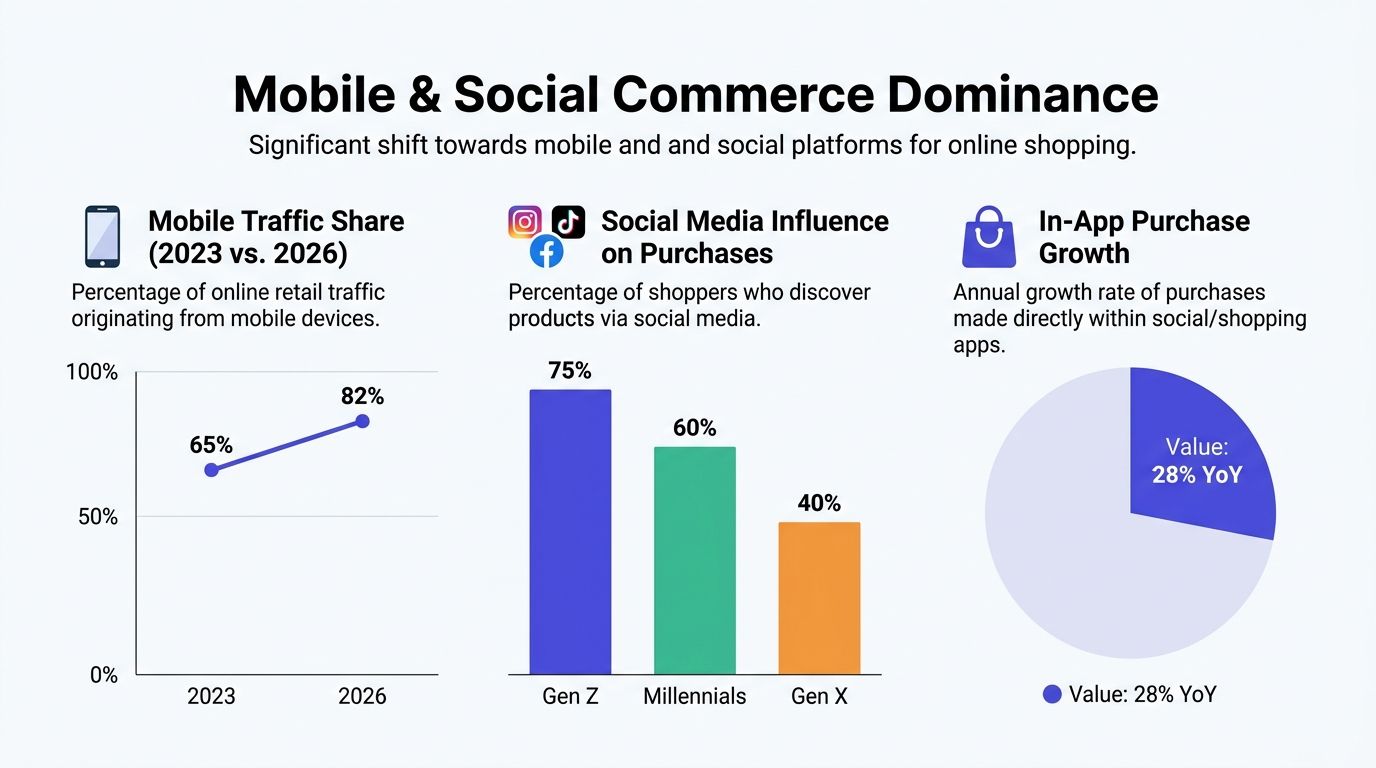
Shopping now happens at thumb speed. In 2024, smartphones accounted for nearly 80% of all retail website visits worldwide and generated the majority of online orders, according to Statista's overview of online shopping trends.
That one fact explains a lot. Retail experiences are being shaped for quick taps, short attention spans, vertical images, and fast visual judgment. If a page is clunky on a phone, the shopper often disappears before the product has a chance.
Why social shopping feels different
Traditional e-commerce starts with intent. You search for boots, then compare boots.
Social commerce often starts with attraction. You see a jacket in motion, a creator styles a skirt three ways, or a product appears in a short video between unrelated clips. Discovery comes first. Research happens later, if at all.
That creates a new kind of shopper behavior:
- Scroll first, evaluate second
- Save now, compare later
- React to visuals before reading details
- Jump across apps, browsers, and tabs constantly
What this changes for everyday shoppers
The practical result is that convenience matters more than polished funnels. If you have to stop, download images, open extra tabs, and rebuild your search somewhere else, most of the momentum is gone.
That's why shopping tools that work inside your browsing flow matter. A lightweight extension that lets you act on a style instantly fits the way people already shop online. You spot something interesting, check how it looks, and keep moving.
If you're trying to understand how retailers are adapting content for this style of discovery, guides on optimizing short video commerce are worth reading. They show why visual hooks and speed now do so much of the selling work that product copy used to handle.
Mobile commerce rewards tools that remove friction. The less your shopping flow gets interrupted, the more likely you are to compare thoughtfully instead of impulse-buying blindly.
How Sustainability Is Fueling the Resale Revolution
One of the most interesting online retail trends isn't about brand-new products at all. It's about shoppers getting more comfortable with secondhand fashion, resale platforms, and one-of-a-kind finds.
That shift is partly about values and partly about style. Resale shopping lets people hunt for better quality, more distinctive pieces, and looks that don't feel copied from the same homepage everyone else saw that morning.
Why secondhand shopping is exciting and stressful
Shopping on Vinted or Depop can feel like treasure hunting. You find a vintage leather jacket, a discontinued Zara dress, or a Halloween costume that's way more original than what's sitting in a seasonal aisle.
The problem is confidence.
Secondhand listings often come with:
- Limited photos: maybe a flat-lay image and one dim mirror shot.
- No easy returns: if it disappoints, you may be stuck with it.
- Unique inventory: you can't just order another size or color.
- Mixed quality of listings: seller photos vary a lot.
That makes visual preview tools especially useful in resale. A flat-lay product image can give you a much clearer sense of how the style might look in context than the listing alone.
A simple secondhand shopping workflow
Here's a practical way shoppers can reduce the guesswork on resale sites:
- Start with the clearest listing photo. Flat-lay clothing photos usually give the cleanest visual result.
- Focus on appearance, not promises about fit. Ask whether the piece matches your style, not whether a tool can guarantee sizing.
- Compare before buying. If you're torn between a vintage blazer and a newer option, preview both looks before committing.
- Use the same method for costumes and occasionwear. That's where visual uncertainty is often highest.
This trend matters because sustainable shopping only feels good when it also feels manageable. If shoppers can preview the appearance of a pre-loved item before buying, resale becomes less intimidating and a lot more fun.
A secondhand piece often has more personality than a new one. The hard part isn't finding it. The hard part is feeling confident enough to click buy when there's no dressing room and no do-over.
Navigating Marketplaces and Omnichannel Shopping
U.S. shoppers spent $326.7 billion on retail e-commerce in Q1 2026, with online sales up 9.7% from the same quarter a year earlier, according to the Census Bureau's retail e-commerce release. For shoppers, that growth shows up as one simple reality. Your buying journey rarely happens in one place anymore.
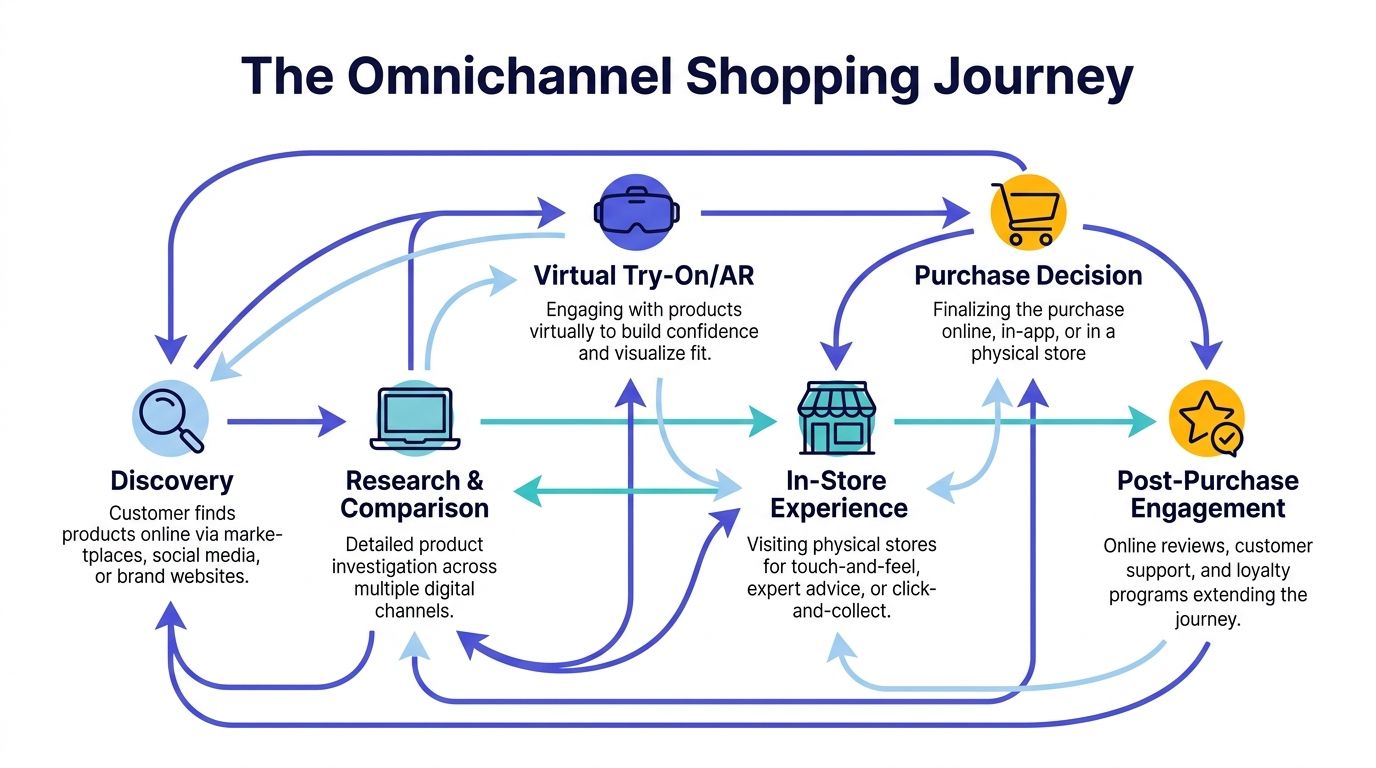
You might spot a blazer in a TikTok video, open Amazon to check reviews, visit the brand site for fabric details, and then buy it in store because you want to see the color in real light. Shopping now works more like planning a trip with several tabs open than walking into one boutique and deciding on the spot.
Big marketplaces shape how shoppers compare
Marketplaces matter because they compress the research phase. One search can show price ranges, delivery speeds, customer photos, dupe options, and review patterns side by side. That saves time, but it also creates a new problem. You still have to decide what is right for your style.
For fashion shoppers, that difference matters a lot. A product page can answer, "Is this available?" It usually does a weaker job answering, "Will this feel like me?"
Why a single store no longer defines the full shopping journey
Fashion choices now happen across channels, not in a neat line from discovery to checkout. A typical search often looks like this:
| Stage | Common place it happens | What the shopper wants |
|---|---|---|
| Discovery | Social feeds, creators, ads | Inspiration |
| Comparison | Amazon, brand sites, secondhand apps | Options |
| Evaluation | Product pages, reviews, saved screenshots | Confidence |
| Purchase | App, website, or physical store | Convenience |
That pattern helps explain why store-specific tools can feel limiting. If you compare a Zara dress, an Amazon alternative, and a vintage version on Depop, your decision is happening across several environments at once.
A practical tool has to fit that behavior. TryThisFit is useful here because it helps shoppers preview the appearance of pieces they find across different sites, instead of treating each retailer like a separate style universe. That makes the trend more concrete. You are not just hearing that retail is becoming omnichannel. You are getting a way to shop that way now.
For everyday shoppers, omnichannel is just a plain-English idea. You browse in one place, verify in another, and buy wherever the choice feels easiest and most confident.
Take Control of Your Style in the New Retail World
Online retail in 2026 gives shoppers more influence over the process than ever before. That is the big shift behind all these trends. Stores still sell the clothes, but shoppers now have better tools for deciding what is worth buying.
A helpful way to frame it is this. Shopping used to work like guessing from a mannequin in a store window. Now it works more like using a fitting room, a style assistant, and a price comparison tab at the same time. AI can surface styles that match your taste. Virtual try-on can help you check appearance before you buy. Mobile and social shopping let you act on inspiration the moment you find it.
For shoppers, the practical benefit is simple. You can make style decisions with more context and less guesswork.
What smart shoppers can do now
You do not need to wait for some future version of retail. A better shopping routine is already possible if you build a few habits early:
- Use visual tools before checkout: check whether a piece works for your look before you get attached to the product page.
- Choose clear images: front-facing, well-lit photos usually give you a more useful preview than heavily styled campaign shots.
- Compare the same item type across different places: a brand site, marketplace listing, and resale app can each reveal something different about fit, styling, or value.
- Pay attention to patterns in your choices: if you keep saving similar silhouettes, colors, or cuts, that is a clue about your real style, not just your impulse clicks.
TryThisFit is useful here because it turns a broad trend into a practical action. Instead of reading about AI styling or virtual try-on as abstract ideas, you can use a tool that helps you preview clothing on your own photo while you browse. If you already saw it mentioned earlier in the article, that is the point. It fits the way shopping now happens across tabs, apps, and stores, not in one tidy path.
The new retail world does not ask shoppers to become tech experts. It asks them to shop a little more intentionally. Use the tools that save time, filter out weak options faster, and help you buy pieces that feel right for your actual wardrobe, not just for a product grid.
Try Virtual Try-On Now
See how clothes look on you before you buy - works with any online store
Get Started Free