Traditional Filipino Clothing: Barong, Terno & More
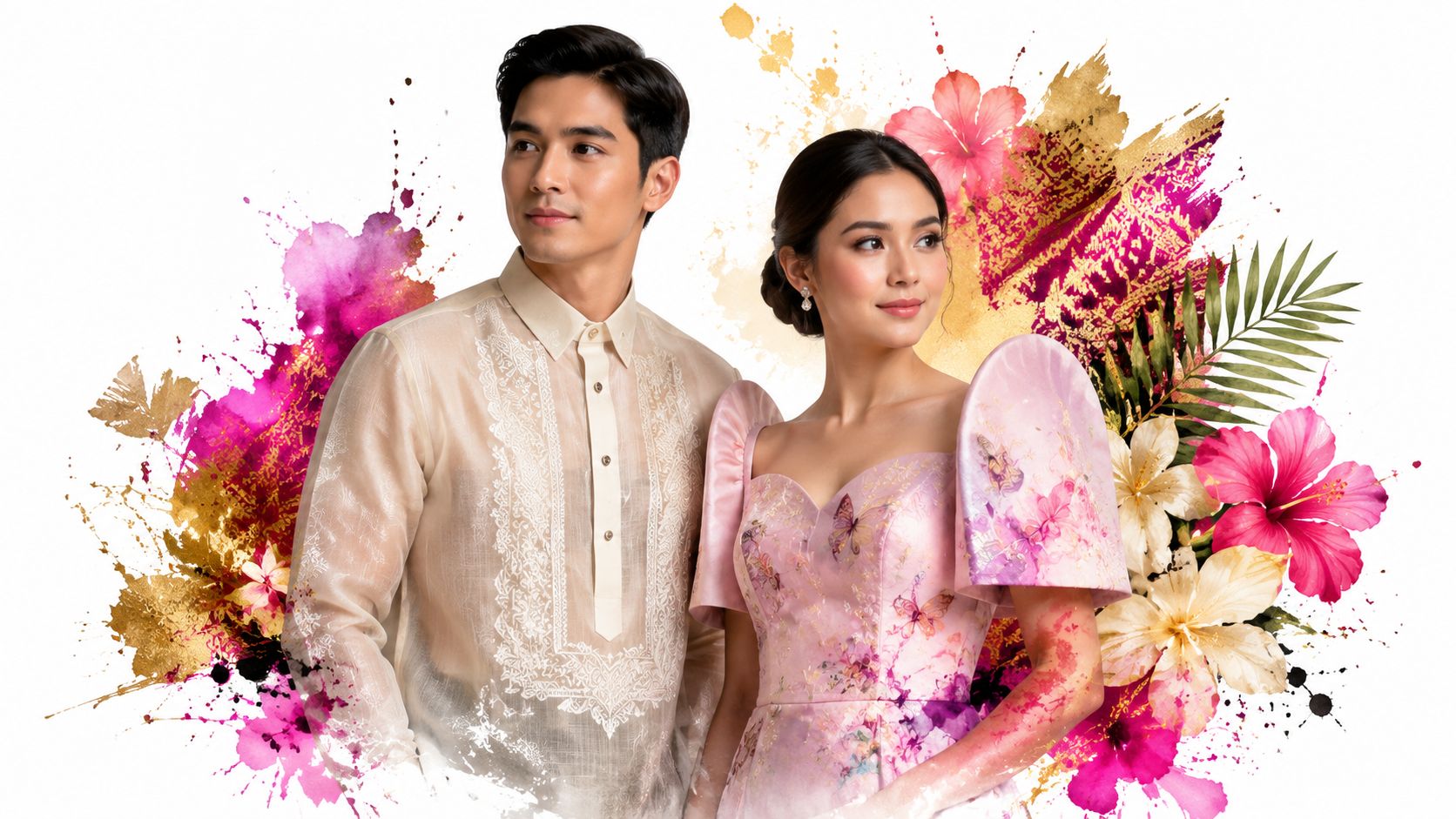
You might be here because you saw a barong at a wedding, a terno on a stage, or a Filipiniana dress in a family photo and thought, I love this, but I don't fully understand what I'm looking at.
That reaction makes sense. Traditional filipino clothing is visually unforgettable, but many people only encounter it in fragments. A translucent embroidered shirt. Butterfly sleeves. A long skirt with a soft shoulder drape. A bright woven tube of fabric worn in several different ways.
These garments carry history, climate knowledge, craft, and social meaning all at once. They also continue to inspire modern fashion, which makes them easier to encounter online, but sometimes harder to picture on yourself.
The Woven Soul of the Philippines
At a formal Filipino gathering, clothing often tells you something before anyone speaks. A groom in a barong Tagalog can look polished without looking stiff. A woman in Filipiniana can appear regal, but still dressed for heat and movement.
That balance is part of what makes these clothes so compelling. They don't feel random or decorative for decoration's sake. They feel lived in, ceremonial, and intrinsically linked to identity.
Clothing that carries memory
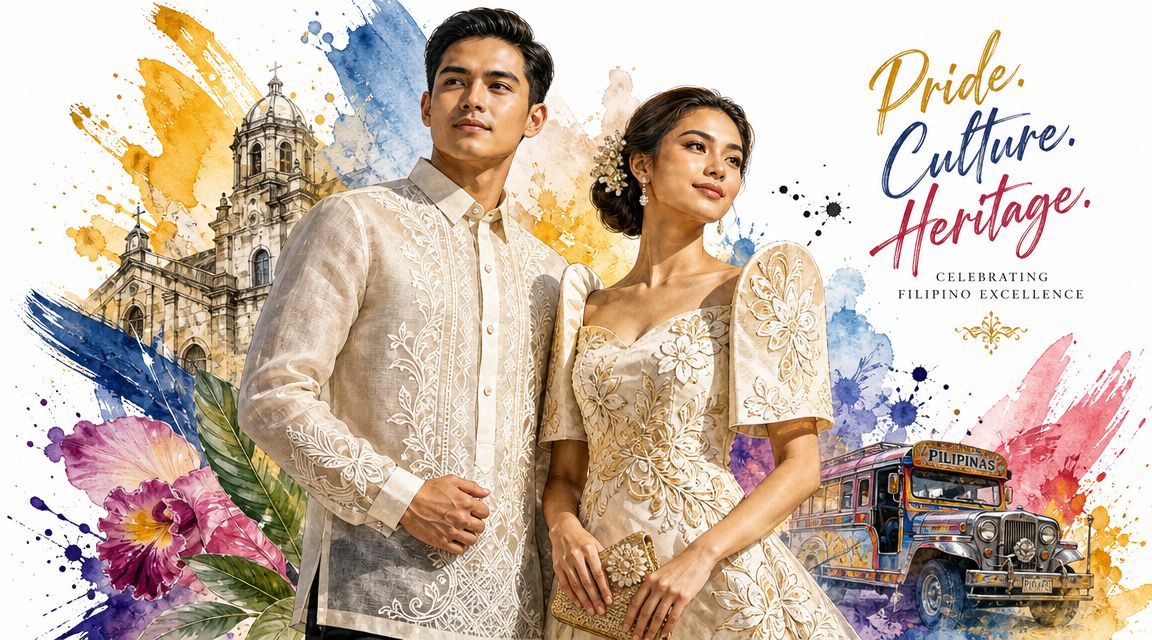
Traditional Filipino dress often shows up at life's most meaningful moments. Weddings, official ceremonies, school events, heritage celebrations, and family portraits all give these garments a visible place in public life.
That matters because readers sometimes assume traditional dress belongs only to the past. In the Philippines, that isn't quite true. These clothes remain part of formal culture, and that ongoing use gives them a special energy. They aren't frozen behind glass.
Traditional dress feels most alive when people still wear it for real occasions, not just as historical display.
Why people get confused
A common point of confusion is the idea that Filipino traditional wear is one single look. It isn't. Men's and women's garments developed differently, regions contributed distinct textile traditions, and modern designers continue to reinterpret older forms.
Another confusion comes from labels. People may use Filipiniana, baro't saya, terno, and Maria Clara as if they all mean exactly the same thing. They overlap, but they don't point to one identical outfit.
A simple way to think about it is this:
- Barong Tagalog usually refers to the iconic formal garment for men.
- Baro't saya refers to a classic women's ensemble built from separate pieces.
- Filipiniana is a broader style category often used for traditional or tradition-inspired women's formalwear.
- Terno is especially associated with the dramatic butterfly sleeve silhouette many people recognize instantly.
Why this still matters now
Traditional filipino clothing isn't only relevant if you're studying history or attending a formal event. It's also relevant if you're shopping online and noticing how many modern brands borrow embroidered fronts, sheer overlays, tropical natural fibers, and sculptural sleeves from older dress traditions.
Once you understand the roots, you start seeing those details differently. They stop looking like vague "ethnic" styling and start reading as design choices with cultural meaning.
A Rich History Woven into Every Thread
Clothing in the Philippines carries history the way a textile carries pattern. The surface is what we notice first, but the complete story sits in the layers of fiber, trade, climate, and changing ideas of status and beauty. For the historical background in this section, we are drawing from Wikipedia's overview of fashion and clothing in the Philippines.
Before colonial rule
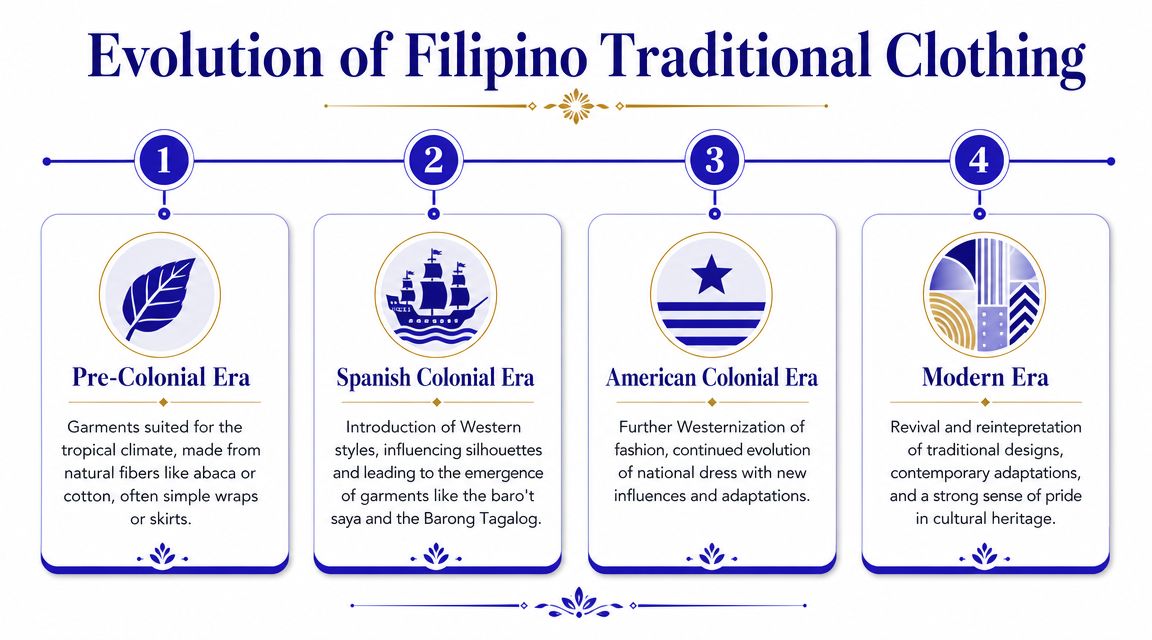
The earliest garments were shaped by daily life in a warm, humid environment. Breathability mattered. Ease of movement mattered. Locally available fibers mattered.
The early baro, or upper garment, grew within a wider Asian network of exchange. That overview connects it to neighboring influences such as the Malay and Javanese baju and the South Asian kurta. That point helps correct a common misunderstanding. Precolonial Filipino dress was not isolated or frozen in one pure form. It was already part of a lively regional conversation.
You can read that history almost like reading fabric structure. One thread comes from local practice, another from trade, and the finished cloth only makes sense when you see them woven together.
Spanish influence and changing silhouettes
Spanish colonial rule introduced new expectations around dress, including Western stylistic details such as geometric embroidery. Local clothing changed, but it did not directly switch from Filipino to Spanish. What happened was slower and more interesting. Existing garments absorbed outside elements, then adjusted them to local weather, local bodies, and local taste.
That process matters because it explains why traditional Filipino clothing often feels both familiar and distinct. A reader may spot a collar, embroidery, or layered modesty rules that resemble European influence, yet the overall silhouette and fabric logic remain rooted in the Philippines.
Craft traditions in many places evolve this way. Ecuadane's Saint Andrew's partnership offers a useful example of how heritage techniques can be carried into a new context without stripping away identity.
Materials that became signatures
Fabric tells this history just as clearly as shape does. Traditional barongs are often associated with jusi, a banana silk fabric, and piña, made from pineapple fiber. Those materials help create the light, refined, slightly sheer look many people now read as unmistakably Filipino formalwear.
History offers practical application for a modern reader. If you are browsing online or using AI tools to preview Filipino-inspired outfits on your own photo, material choice changes the result dramatically. A stiffer, opaque fabric can read more casual or contemporary. A translucent fabric with fine embroidery can immediately suggest ceremony, heritage, and formality. The silhouette may stay similar, but the visual message shifts.
That is one reason learning the history pays off before you buy. You are not only recognizing a garment. You are learning how cloth, construction, and cultural memory work together.
For a useful cross-cultural comparison, this guide to traditional dress in Bangladesh shows how climate, textile traditions, and social meaning can shape clothing systems in very different but equally layered ways.
Iconic Garments for Men The Barong Tagalog
If one garment serves as the visual shorthand for Filipino men's formalwear, it's the barong Tagalog. It is now regarded as the formal men's garment in the Philippines and is commonly worn for weddings and ceremonial events, as described in the earlier historical source.
How to recognize a barong
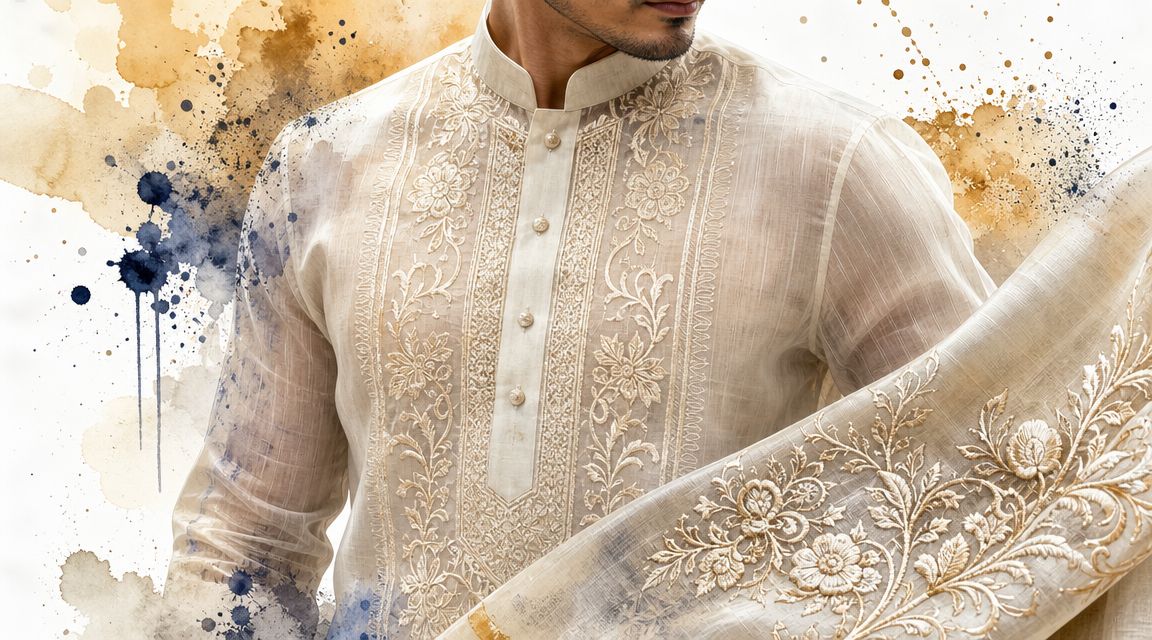
A barong is recognized by a few features working together. The fabric often looks light and airy. The front usually carries embroidery or decorative detail. The garment is typically worn untucked over an undershirt.
That last part can surprise readers who are used to Western dress shirts. The untucked look isn't sloppy. It's part of the garment's identity and silhouette.
What the fabric changes
A barong's personality shifts with its fabric. In classic forms, people often talk about jusi and pinya because those materials contribute to the elegant, slightly sheer effect many associate with formal barongs.
If you're shopping or browsing photos, think about fabric in visual terms:
- Sheer and delicate appearance often creates a ceremonial, heightened mood.
- Slightly sturdier fabric can make embroidery stand out more clearly.
- A softer drape changes how formal or relaxed the overall style feels.
Readers often ask whether the barong is supposed to be transparent. The better answer is that translucency can be part of the look, but the garment isn't meant to feel revealing. It usually works with an undershirt so the outer layer remains the focus.
Why the embroidery matters
Embroidery on a barong isn't just ornament. It directs the eye, frames the torso, and gives the garment its formal rhythm. Even when the motifs are subtle, the stitched front panel creates structure on a fabric that might otherwise look too airy to feel ceremonial.
This short video gives useful visual context for the garment in motion.
<iframe width="100%" style="aspect-ratio: 16 / 9;" src="https://www.youtube.com/embed/j3v-Dr7H6Eo" frameborder="0" allow="autoplay; encrypted-media" allowfullscreen></iframe>When people wear it
The barong belongs most naturally in settings where respect, celebration, and public presentation matter. Weddings are a common example. State and ceremonial use also keep the garment visible as a national symbol.
A simple way to approach barong etiquette is this:
- Match the occasion. Formal embroidery and refined fabric suit ceremonies and milestone events.
- Let the garment lead. Keep the rest of the outfit restrained so the textile and embroidery remain central.
- Respect the silhouette. Don't force it to behave like a standard office shirt.
A barong works best when it's worn as itself, not when it's styled to imitate Western tailoring.
Grace and Elegance in Womens Attire
A visitor at a heritage wedding often notices the sleeves first. They rise from the shoulder like careful architecture, then the eye moves down to sheer fabric, a folded neck scarf, and a skirt that holds its shape with quiet authority. Traditional Filipino women's attire works the same way a well-planned building does. Each part supports the next, and the full effect depends on proportion, airflow, and balance.
Traditional Filipino women's dress is easiest to understand as a coordinated system of pieces rather than a single garment. The classic Filipiniana, often called the baro't saya, usually includes a sheer blouse called the baro or camisa, a shoulder covering called the pañuelo, a long skirt called the saya, and, in many formal versions, an overskirt called the sobrefalda, according to Arts of Asia's discussion of the Philippine dress.
Why layering matters
Layering in Filipiniana is practical and visual at the same time. Upper garments were often made from light translucent nipis fabrics such as piña, abacá, or fine cotton, while the lower layers provided opacity and structure. The result suits a humid climate and creates that distinctive rhythm of softness above and grounded volume below.
The same Arts of Asia article explains this clearly. Air moves through the upper layers, while the skirt and overskirt give the outfit stability and modesty. That contrast is part of the beauty.
It also helps explain why these garments photograph so well. Light passes through one layer, stops at another, and outlines the body without reducing the outfit to simple decoration.
The baro't saya in parts
Once you separate the ensemble into pieces, the silhouette becomes much easier to read.
| Garment | Key Components | Occasion/Use |
|---|---|---|
| Baro't saya | Baro or camisa, pañuelo, saya, often sobrefalda | Formal traditional wear, heritage events, ceremonies |
| Maria Clara | A more aristocratic interpretation of the layered Filipiniana ensemble | Formal, elegant, heritage-centered occasions |
| Terno | Dress form associated with dramatic butterfly sleeves | Gala dressing, formal appearances, symbolic national style |
| Malong | Tubular cloth worn in multiple ways | Daily use, ceremonial use, regional and cultural versatility |
Maria Clara and the language of refinement
The Maria Clara style is one of the clearest expressions of upper-class Filipiniana dress during the colonial period. Its elegance comes from control. The blouse, neck scarf, and skirt do not compete with one another. They frame the body in stages.
The pañuelo deserves special attention here. It works like a visual bridge between the blouse and the skirt, softening the chest and shoulder line while adding dignity to the posture. Readers sometimes treat it as an accessory, but the outfit looks incomplete without it.
The terno and butterfly sleeves
The terno is often the garment people remember after a single glance. Its butterfly sleeves give the dress a sculpted profile that feels ceremonial and unmistakably Filipino.
Those sleeves change how the whole body reads. Shoulders become broader, the waist appears more defined, and the wearer carries a stronger vertical presence. In fashion terms, the sleeve is doing the work that tailoring or padding might do elsewhere.
That is why the terno still inspires modern designers. If you are curious about building a small fashion line around heritage silhouettes, Raccoon Transfers' resource for startups offers practical guidance on getting a clothing concept off the ground.
For readers who want to connect with this style personally, not just historically, there is now a useful next step. AI outfit visualization tools can help you preview how butterfly sleeves, a pañuelo-inspired neckline, or a softer Filipiniana silhouette might look on your own body before you commit to a custom piece or formal purchase. That makes traditional inspiration feel more approachable, especially for first-time wearers.
The malong and regional diversity
Traditional filipino clothing also includes garments shaped by regional life outside elite formalwear. The malong, associated with Muslim and Indigenous communities in the southern Philippines, shows a different textile logic.
It is a tubular cloth with remarkable flexibility. Depending on the wearer and the situation, it can become a skirt, dress, wrap, blanket, or carrying cloth. That versatility reveals a broader truth about clothing in the Philippines. Beauty, identity, and daily function often exist in the same piece.
Modern Interpretations and Everyday Styling
Traditional forms haven't disappeared. Designers keep revisiting them because the visual language is strong: sheer layers, embroidery, natural fibers, clean front panels, draped elements, and sculptural sleeves all translate well into modern wardrobes.
You can see this most clearly in contemporary pieces that don't try to reproduce historical dress exactly. Instead, they borrow one or two features and place them in everyday silhouettes.
What modern Filipino-inspired fashion looks like
A shirt can nod to the barong through front embroidery and a light translucent fabric. A blouse can echo Filipiniana through volume at the shoulder. A formal dress can reference the terno with sleeves that feel architectural without becoming costume-like.
That last point matters. A modern interpretation succeeds when it respects the source but still functions in present-day settings like offices, dinners, creative work events, or weddings with a less rigid dress code.
Easy ways to wear the influence
If you're curious but cautious, start with one element at a time.
- An embroidered shirt with dark trousers gives a quiet reference to barong styling without becoming full ceremonial dress.
- A blouse with soft butterfly-inspired sleeves brings Filipino elegance into a normal work wardrobe.
- A dress with sheer layered panels can echo Filipiniana's balance of lightness and coverage.
- A woven wrap or tubular skirt silhouette can hint at regional textile traditions in a more casual way.
Where online shopping gets tricky
Filipino-inspired design often relies on silhouette. That makes online shopping harder. A sleeve can look regal in one product photo and overwhelming in another. Sheerness can look elegant on a mannequin but feel very different when you picture it with your own styling.
This challenge shows up especially when people buy from mixed sources: large retailers, secondhand listings, handmade boutiques, or small labels launching culturally influenced collections. If you're exploring that side of fashion entrepreneurship too, Raccoon Transfers' resource for startups is a practical read on how emerging clothing brands begin shaping a product line.
The key isn't forcing traditional dress into daily life unchanged. It's learning how to recognize the design DNA and wear it with intention.
Visualize Your Filipino-Inspired Style Online
You spot a barong-inspired shirt late at night while scrolling. The embroidery looks refined. The collar feels right. Then the doubt starts. Will it read elegant on you, or costume-like? Will those sleeves feel architectural and graceful, or too much for your frame?
That uncertainty is common with Filipino-inspired clothing because so much of its character lives in shape, texture, and proportion. Product photos can show the garment, but they cannot fully show the relationship between the garment and your own body, coloring, and styling choices.
A virtual try-on app can help solve that problem.
A tool like TryThisFit lets you upload your photo and preview how a piece may look on you before you buy. It does not measure tailoring or guarantee fit. It helps with the visual question. How the silhouette sits, how the front detail draws the eye, and whether the overall mood feels formal, modern, soft, or dramatic. If you want a clearer sense of the concept, this guide explains what a virtual try-on app does.

That matters especially with Filipino design references. A sheer overlay can feel airy and poised in one interpretation, then look flat in another. A butterfly sleeve works like architecture for the shoulders. Small changes in volume can completely change the impression.
Flat-lay photos usually give the clearest preview because the app can read the garment shape more cleanly. That makes it easier to compare pieces from many corners of the internet, including large retailers, resale platforms, handmade shops, and small labels testing culturally influenced collections.
How to use it while browsing
A simple routine works well:
- Open a product page on a store, marketplace, or resale listing.
- Choose a clear clothing image, ideally one that shows the front shape well.
- Run a preview on your photo to check silhouette, sleeve volume, and visual balance.
- Compare several options side by side before spending money.
- Save your strongest looks so you can return with a calmer eye later.
This process is especially helpful for occasionwear, content creation, and experimental personal style. If you are part of a small fashion label, styling project, or creator campaign around heritage-inspired clothing, it also helps to find influencer gifting platforms that show how garments reach audiences through trusted creators.
If you want to test a look, try the main app. If you shop across stores, install the free Chrome extension. If you like to compare ideas over time, review your saved try-on history.
Caring For and Sourcing Your Garments
Traditional garments deserve careful handling because many of them rely on delicate fibers, embroidery, or layered construction. Even modern interpretations can borrow those fragile qualities, especially if they use sheer cloth or decorative needlework.
When you're buying, it helps to think in two tracks at once. First, ask whether the piece is historically rooted, modern-inspired, or a ceremonial garment. Second, ask whether you have the patience and storage habits to care for it properly.
Care with a light hand
For delicate formalwear, the safest mindset is gentle handling. Avoid treating embroidered or translucent garments like everyday basics.
A good routine includes:
- Read fiber details carefully if the seller provides them, especially for handcrafted or imported pieces.
- Use cautious cleaning methods and consider professional care for garments with fragile embroidery or very fine cloth.
- Store pieces with space so sleeves, drapes, and front panels don't get crushed.
- Keep accessories separate to avoid snagging sheer fabric.
How to source thoughtfully
If you're seeking authenticity, start with artisans, specialty sellers, or boutiques that clearly explain the garment tradition they reference. Good listings usually help you understand whether you're buying a barong, a terno-inspired dress, or a general Filipiniana piece rather than using all terms interchangeably.
If sustainability matters to you, this guide on what sustainable fashion means is a useful companion while you compare handmade garments, secondhand options, and modern reinterpretations. That lens can be especially helpful when you're deciding between a new trend piece and something you'll keep for years.
For expensive or non-returnable purchases, a style preview can help narrow your choices before you commit. That's often enough to tell whether a sleeve shape, embroidery placement, or sheer overlay feels like you.
If you're exploring traditional Filipino style online and want a quick visual check before buying, try TryThisFit. You can preview how a garment looks, compare styles, and revisit saved looks later without creating an account.
Try Virtual Try-On Now
See how clothes look on you before you buy - works with any online store
Get Started Free