Conscious Consumption: Smart Guide to Sustainable Shopping
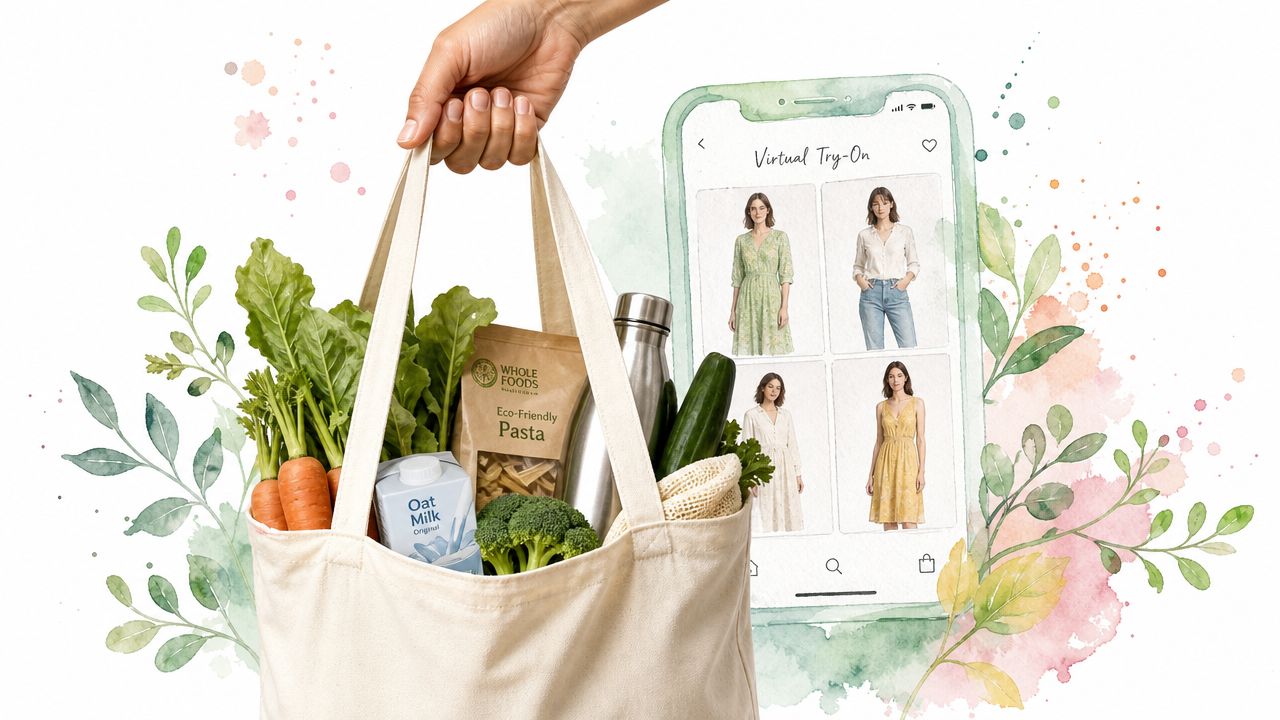
The idea of conscious consumption can sound niche or idealistic until you look at the scale. The global conscious consumer market is valued at $216.2 billion in 2026 and is projected to reach $450.1 billion by 2034, according to global conscious consumer market forecasts.
That shift matters because it changes the question from “Do a few people care?” to “How do ordinary shoppers make better choices in a messy, modern marketplace?”
A lot of people want to buy in a way that matches their values. Then reality shows up. Product pages are vague, labels are confusing, secondhand listings are inconsistent, and “sustainable” can mean almost anything if a brand says it loosely enough.
That's why conscious consumption works best when you treat it as a practical skill, not a purity test. You do not need a perfect shopping record. You need a better process.
Your Guide to Conscious Consumption
Conscious consumption starts with paying attention to what a purchase does before, during, and after it enters your life. It asks simple but powerful questions. Do I need this? Will I use it often? Who made it? What happens if it breaks, disappoints, or gets returned?
For many shoppers, the hardest part isn't caring. It's sorting through too many competing signals at once. A shirt might be made from better materials but come with poor product photos. A secondhand item might reduce waste but leave you guessing about how the style will look on you. A cheap item might seem like the “wrong” choice, yet become the smarter one if you wear it constantly.
Why this matters now
Conscious consumption has moved far beyond a small corner of sustainable living. It now shapes mainstream buying behavior, everyday retail decisions, and the way people judge value.
That change gives shoppers more influence, but it also creates new pressure. People often feel they must know everything about labor, sourcing, materials, packaging, and shipping before checking out.
Conscious consumption works better when you replace guilt with curiosity.
What usually confuses people
A few sticking points come up again and again:
- Too many labels: “Green,” “ethical,” “clean,” and “responsible” aren't always specific enough to help you decide.
- Too little transparency: Many listings tell you almost nothing about origin or working conditions.
- Budget tension: People want to make thoughtful choices without pretending money doesn't matter.
- Online uncertainty: You can't touch the fabric, try the garment, or easily preview the appearance before buying.
That's why the most useful approach is often the least glamorous one. Buy less impulsively. Keep what you love and use. Repair what you can. And when information is incomplete, choose the option most likely to become a lasting part of your life.
Understanding the Core of Conscious Consumption
Conscious consumption is not a rulebook. It's a mindset.
A helpful way to think about it is mindful eating. You don't just ask whether food tastes good. You also notice where it came from, how it makes you feel, and whether it supports your long-term health. Conscious consumption applies that same awareness to clothes, groceries, furniture, beauty products, and even small daily purchases.
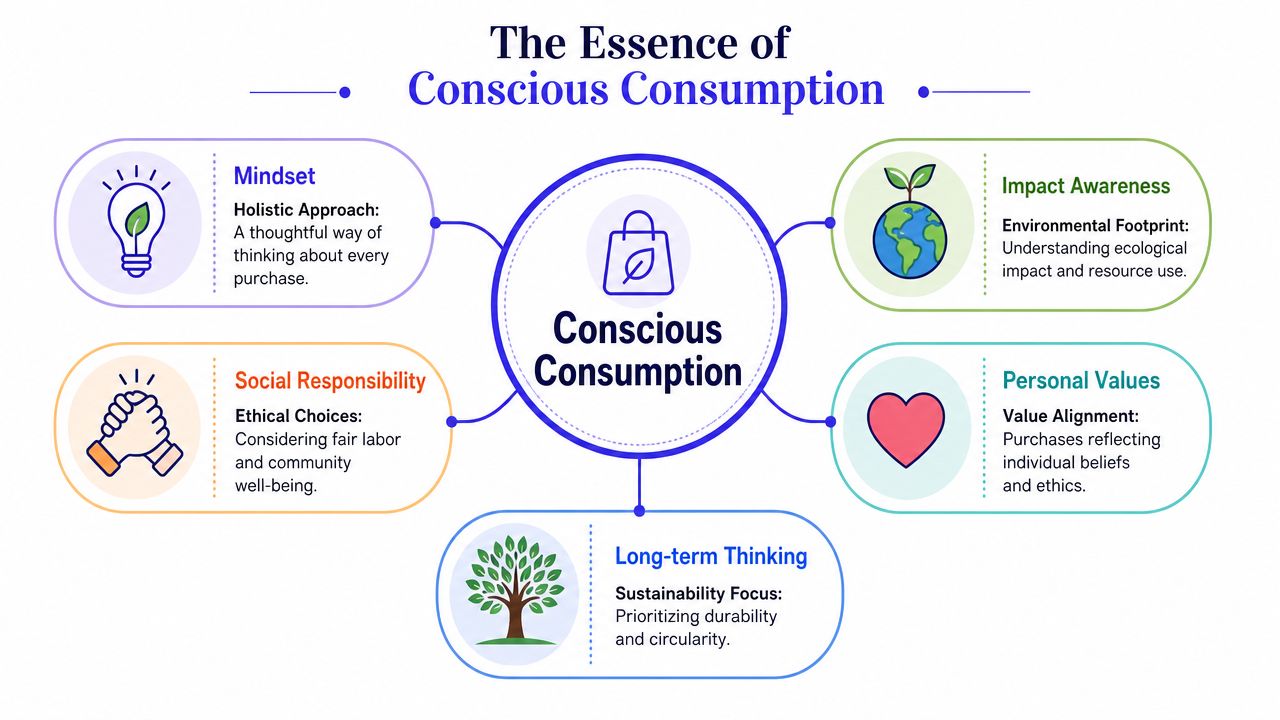
The five questions behind a better purchase
Instead of asking only “Can I afford this today?”, try asking:
| Question | What it helps you notice |
|---|---|
| Origin | Where the item came from and what information the seller shares |
| Labor | Whether the brand shows signs of respecting workers and communities |
| Impact | Materials, packaging, transport, and likely waste |
| Usefulness | Whether the item solves a real need in your life |
| Afterlife | Can it be repaired, reused, resold, donated, or recycled? |
Those questions don't require perfection. They build awareness.
Long-term thinking beats impulse thinking
A conscious purchase is often less about the label on the item and more about the relationship you'll have with it. If something sits unused, gets returned, or falls apart quickly, it usually wasn't a strong choice for your life, even if the marketing sounded excellent.
That's why durability matters. So does sourcing. If you want a concrete example of what thoughtful material decisions look like, Ecuadane's guide to sourcing heirloom-quality textiles sustainably gives useful context on how sourcing choices shape both quality and impact.
For fashion specifically, it helps to understand the broader framework behind the term. This guide to what sustainable fashion means in practice is a good starting point if you want to connect style decisions with sourcing, longevity, and waste.
Practical rule: If you'd only buy it because it's trending, on sale, or hard to resist right now, pause. If you'd still want it next month and expect to use it often, that's a stronger signal.
The Environmental Social and Financial Benefits
Conscious consumption pays off in three directions at once. It can reduce waste, support better business behavior, and help you spend with more intention instead of constant replacement.
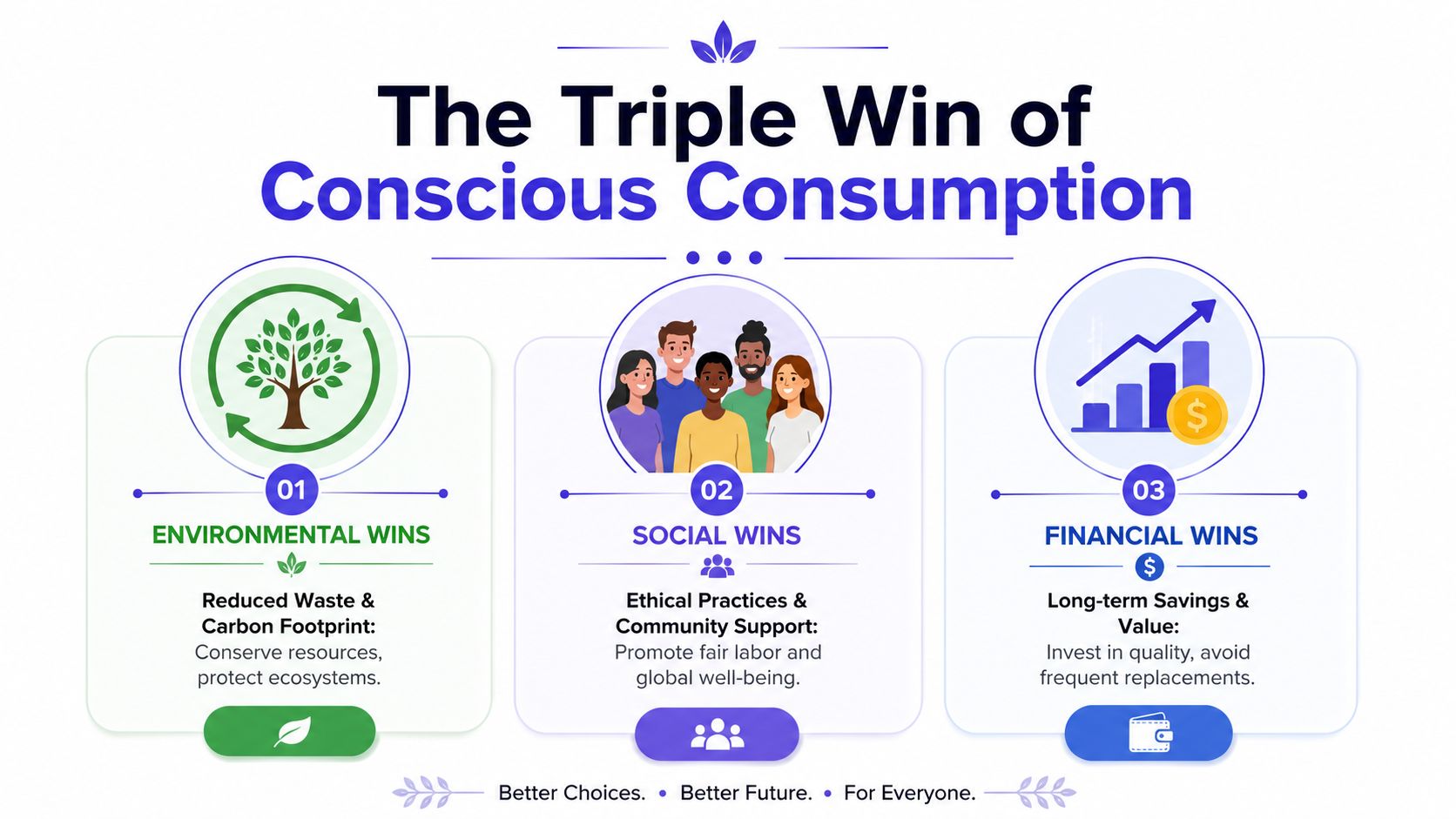
Environmental benefits
The most visible gain is waste reduction. When you buy fewer items that stay in use, fewer products end up forgotten, discarded, or shipped back and forth.
That matters in fashion, but also in home goods, beauty, and packaged food. Choosing items you'll use lowers the churn that drives unnecessary production, packaging, and disposal.
A useful lens here is product lifespan. An item that remains useful to you for a long time usually creates less waste than one that enters your home quickly and exits just as fast.
Social benefits
Conscious consumption also pushes attention toward people, not just products. It encourages shoppers to look for signs of fair treatment, transparency, and responsible sourcing.
That doesn't mean every purchase becomes an investigation. It means you notice which brands make an effort to explain how they operate and which ones hide behind vague language.
Social impact also includes the communities around a purchase. Local repair shops, resale platforms, makers, and smaller businesses often extend the life of products and keep value circulating longer instead of feeding a fast-disposal cycle.
Financial benefits
A lot of people assume conscious choices always cost more. The better way to view it is through value over time. A product that earns repeated use often becomes cheaper in practice than a “deal” that disappoints after one or two wears.
Consumer behavior supports that value shift. 66% of global consumers say they're willing to pay more for sustainable goods, up from 55% in 2014, and 73% of Millennials say the same, according to consumer sustainability data for 2025.
That doesn't mean everyone should spend more. It means many shoppers increasingly judge value by durability, trust, and alignment with their priorities, not by sticker price alone.
A simple way to evaluate value
When you're deciding between two options, compare them like this:
- Use frequency: Will you reach for it often?
- Replacement risk: Is it likely to break, date quickly, or disappoint?
- Care burden: Is upkeep realistic for your routine?
- Resale or reuse: Can it have a second life if your needs change?
If you want a deeper look at how fast-moving clothing cycles create waste in the first place, this article on fast fashion and environmental impact connects the dots clearly.
The best “value” purchase is often the one that stays useful longest.
Debunking Common Consumption Myths
A lot of people reject conscious consumption before they even try it because they're working from the wrong assumptions. The myths sound reasonable. They just don't hold up well in real life.
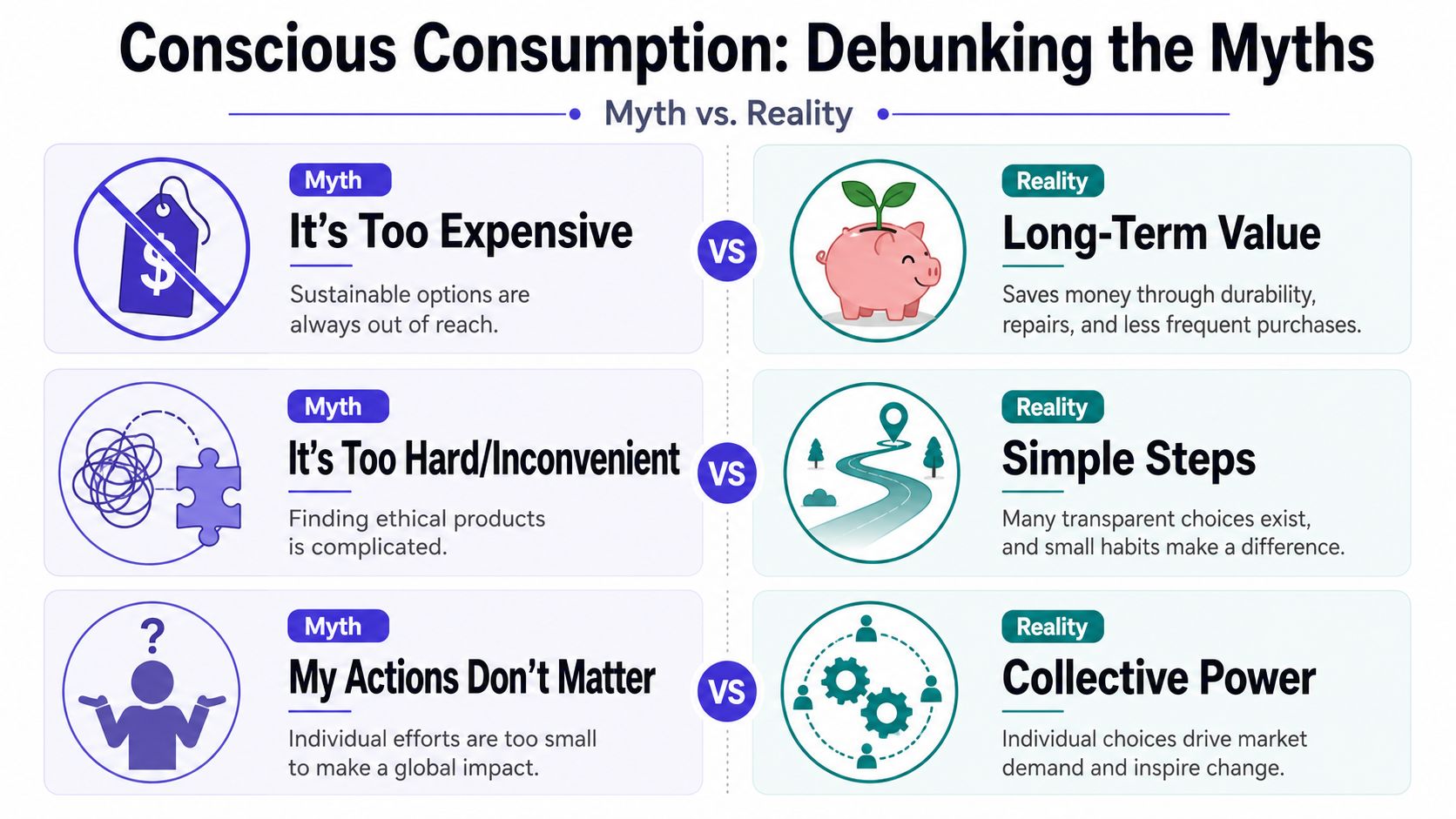
Myth one, it's only for people with bigger budgets
This belief comes from confusing conscious consumption with expensive consumption. They're not the same thing.
A conscious shopper might borrow, repair, buy secondhand, skip the purchase, or choose one versatile item instead of three impulse buys. Cost matters. So does actual use.
Myth two, you have to get every choice right
You don't. Many individuals are navigating imperfect information, limited time, and real financial constraints.
Trying to be flawless usually leads to burnout or all-or-nothing thinking. Practical consistency works better than occasional perfection.
Myth three, fast fashion is always the least conscious option
The conversation becomes more candid. On paper, a pricier “sustainable” item may sound better. In practice, the better outcome can depend on whether the item becomes a loved, repeatedly worn part of your life.
The most useful version of this argument is the conscious fast fashion paradox. The idea is that the most “conscious” act for a budget-conscious shopper may be buying a cheaper item that they can visualize perfectly and will wear 50+ times, versus a “sustainable” expensive item returned due to poor style, which generates double the carbon footprint from shipping and waste, as discussed in research on conscious consumption challenges.
That reframes the goal. The goal isn't moral purity. The goal is reducing waste and increasing meaningful use.
What reality looks like
- A secondhand coat is not automatically a great choice if it hangs unworn because the style never felt right.
- A lower-cost item can be a better choice if you wear it constantly and keep it for a long time.
- A “sustainable” label doesn't rescue a purchase that gets returned, ignored, or replaced quickly.
Better choices come from honest use, not perfect branding.
When people let go of the idea that conscious consumption must look virtuous from the outside, they usually make stronger decisions.
Actionable Strategies for Everyday Conscious Living
The easiest way to practice conscious consumption is to stop treating it like a dramatic lifestyle overhaul. It works better as a set of small habits that make daily decisions clearer.
In the grocery aisle
Food is one of the best places to start because the feedback is immediate. You buy it, use it quickly, and notice what aligns with your values.
Conscious consumption drives $350 billion in annual US sales in the food and beverage sector, and nearly one in two consumers actively monitor sustainability claims on packaging, according to SPINS research on values and the American basket.
That doesn't mean reading every label in the store. It means building a few repeat habits.
- Buy what you'll finish: Reducing food waste can be more meaningful than buying an idealized pantry full of good intentions.
- Favor clear claims over vague language: If packaging explains sourcing or materials plainly, it's easier to evaluate.
- Repeat what works: Keep a short list of brands and staples that meet your standards and fit your routine.
At home
Conscious living isn't only about what you buy. It's also about how long you keep useful things working.
If a sofa is sagging, replacing it immediately isn't your only option. Practical repair guidance like The Sofa Cover Crafter's cushion tips can help you extend the life of what you already own.
That same mindset applies to lamps, storage baskets, cookware, and clothing. Maintenance is part of conscious consumption.
The five R approach
You don't need a complicated system. These five actions cover most everyday choices:
- Refuse: Skip purchases that solve no real problem.
- Reduce: Narrow duplicates and impulse buys.
- Reuse: Choose refillable, multipurpose, or secondhand options when practical.
- Repair: Mend, patch, tighten, wash, sharpen, or re-stuff before replacing.
- Recycle: Use it as the last step, not the first solution.
For fashion and resale
Online thrift and resale can be fantastic for conscious shoppers, but only if you stay intentional. Save searches, compare listings carefully, and focus on pieces that match your existing wardrobe rather than chasing novelty.
If that's your main shopping lane, this guide to online thrift store shopping habits can help you think more strategically about browsing, selecting, and keeping what you buy.
A short reset for any purchase
Before clicking buy, ask yourself:
- Do I need it, or do I only want the rush of getting it?
- Can I imagine using it often in real life?
- Is there a version I can borrow, repair, or buy secondhand?
- If I bring it home, what's the realistic end of its story?
That quick pause doesn't make shopping joyless. It makes it more satisfying.
Mastering Mindful Online Fashion Shopping
Online fashion returns are common, and a large share happen for a simple reason: the item looked different or fit differently than the shopper expected. That gap between what we mean to buy and what arrives is one of the biggest obstacles to conscious consumption online.
Mindful shopping on the internet is harder than mindful shopping in a store. In person, you can check the fabric, hold two sizes side by side, and get a quick sense of whether something feels like you. Online, you are often making the same decision through styled photos, inconsistent size charts, and a few customer reviews. Good intentions can fall apart fast under that kind of uncertainty.
Why return culture gets in the way
Returns can seem harmless because they are built into the shopping experience. Order three. Keep one. Send two back. The process feels normal, so it rarely feels wasteful.
But conscious consumption is not only about what you buy. It is also about how often a purchase goes wrong. A returned item may go through extra shipping, extra packaging, extra handling, and sometimes markdowns or disposal. Even when the store makes returns easy, the outcome is not cost-free for the environment, for workers, or for your own budget if return habits encourage more impulse orders.
That is why practical progress matters here more than moral purity. You do not need to shop perfectly. You need ways to make fewer low-confidence purchases.
Use tools that reduce guesswork
A helpful rule is simple: increase confidence before you click buy.
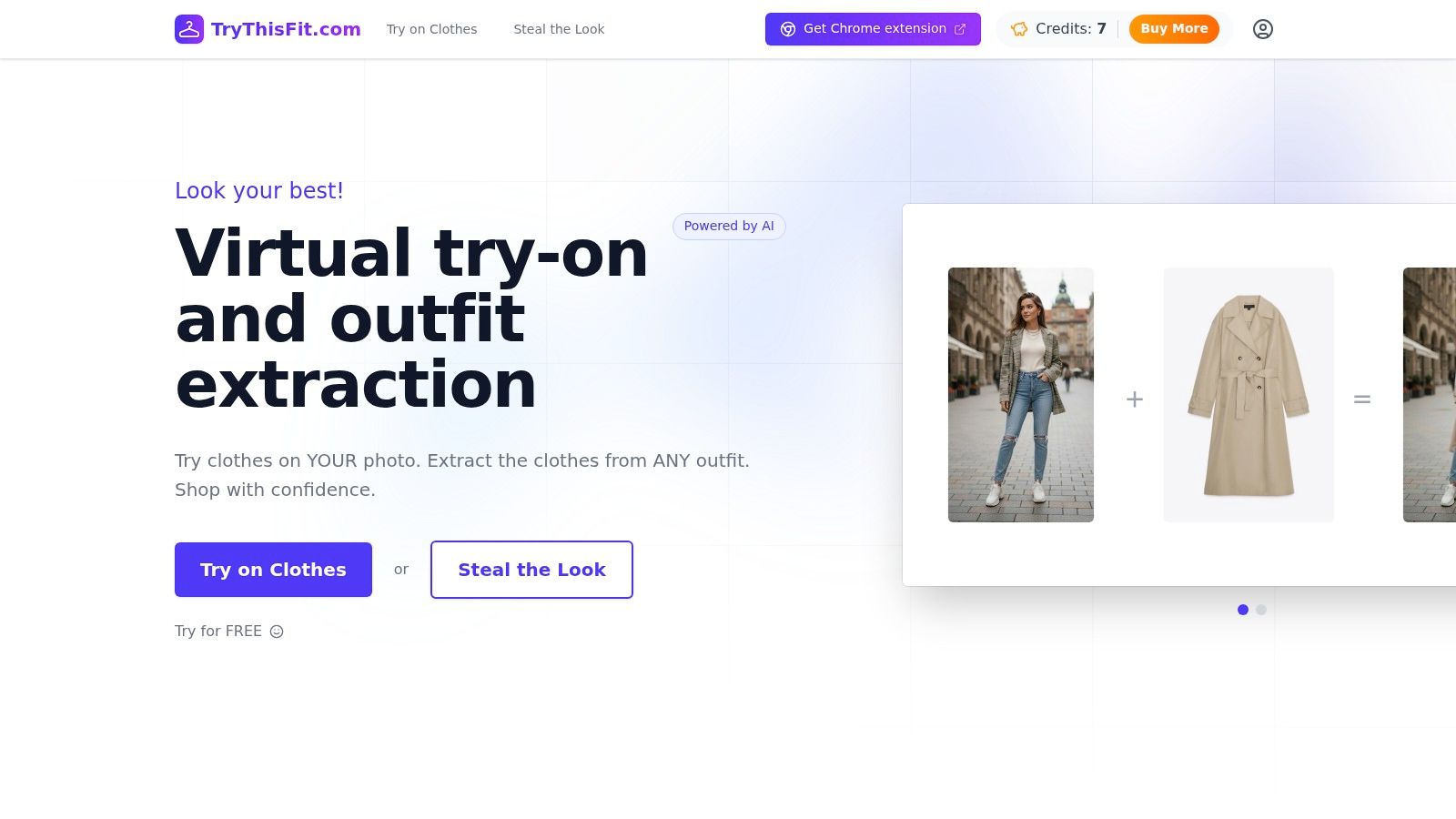
That can mean checking garment measurements, comparing with something you already own, or reading reviews from people with a similar body type. It can also mean using visual tools to test whether an item suits your proportions and style before it reaches your door.
TryThisFit helps with that specific problem by letting you preview clothing on your own photo. It addresses a modern version of conscious consumption that many people struggle with. You want to shop with care, but online stores make careful choices harder than they should be.
Where visual previews help most
Some shopping situations create more uncertainty than others. A preview tool is especially useful when you have limited information, inconsistent photos, or little room for error:
- Fast fashion sites: Trend-heavy product pages can make almost everything look appealing for a moment, even if it does not fit your real wardrobe.
- Large marketplaces: On Amazon fashion listings, photography and sizing information can vary widely between sellers.
- Secondhand apps: Vinted and Depop often give you one shot to decide, and returns are limited or unavailable.
- Occasionwear and costumes: Event outfits can look fun on a model and completely different in your actual life.
The point is not to remove all uncertainty. The point is to shrink it enough that your decision becomes more thoughtful.
Small checks that lead to better online purchases
Visual previews work best as one part of a simple decision system. Before placing an order, pause for a minute and check four things:
- Shape: Does the cut look like something you already enjoy wearing?
- Styling reality: Can you pair it with items you already own, or does it only work in the product photo?
- Photo quality: Flat-lay images usually give a clearer preview because the garment shape is easier to read.
- Return stakes: If returning will be difficult, expensive, or impossible, slow down and review the listing again.
That process works like using a map before a drive. It does not guarantee a perfect trip, but it lowers the chances of ending up somewhere you never meant to go.

Better brand choices still matter
Visual confidence is only one part of conscious fashion shopping. It helps you keep what you buy, which is a meaningful improvement. Brand practices still matter too, especially if you are deciding between similar items.
If you want to get better at that side of the decision, it helps to learn how to identify responsible fashion brands. The strongest choice is often a mix of both skills: choosing a brand you feel good about and choosing a piece you are likely to wear.
Progress beats perfection online
A lot of sustainable fashion advice can sound like every purchase carries a moral test. That framing pushes people toward guilt, then burnout. A more useful approach is practical and repeatable.
If a tool helps you picture the item more clearly, avoid a return, and keep one more purchase from becoming clutter, that counts. Conscious consumption online is often less about flawless ideals and more about building a better filter between browsing and buying.
Your Conscious Consumption Journey Begins Now
A sustainable life rarely changes through one perfect purchase. It changes through dozens of smaller decisions that get a little wiser over time.
Conscious consumption works best as a habit of noticing. You notice what you buy, how often you use it, what problem it solves, and what happens if it turns into clutter, waste, or a return. That shift matters because good intentions often break down at the moment of purchase, especially online, where convenience can outrun judgment.
Progress matters because real life is messy. A repaired lamp still counts. Cooking what you already have still counts. Buying one shirt you wear fifty times counts. Using a tool that helps you avoid a return counts too.
That practical mindset is especially helpful with fashion. Many shoppers want to buy less and choose better, but product photos, styling tricks, and inconsistent sizing make that hard. TryThisFit helps close that gap by letting you preview how a piece may look before you order, which makes conscious shopping easier to put into practice, not just in theory.
Brand values still matter. If you want to get better at that part of the decision, learn how to identify responsible fashion brands. The stronger choice usually comes from combining both skills: picking a brand you respect and choosing an item you are likely to keep and wear.
Start with one category this week. Clothes, food, beauty, or home goods. Use a simple filter: Do I need it, will I use it often, and do I have enough information to feel confident buying it?
Small actions add up. Conscious consumption is not about moral purity. It is about building a buying process that fits your budget, your values, and your everyday life.
Try Virtual Try-On Now
See how clothes look on you before you buy - works with any online store
Get Started Free