Frictionless Shopping: A Guide to a Smarter Way to Shop
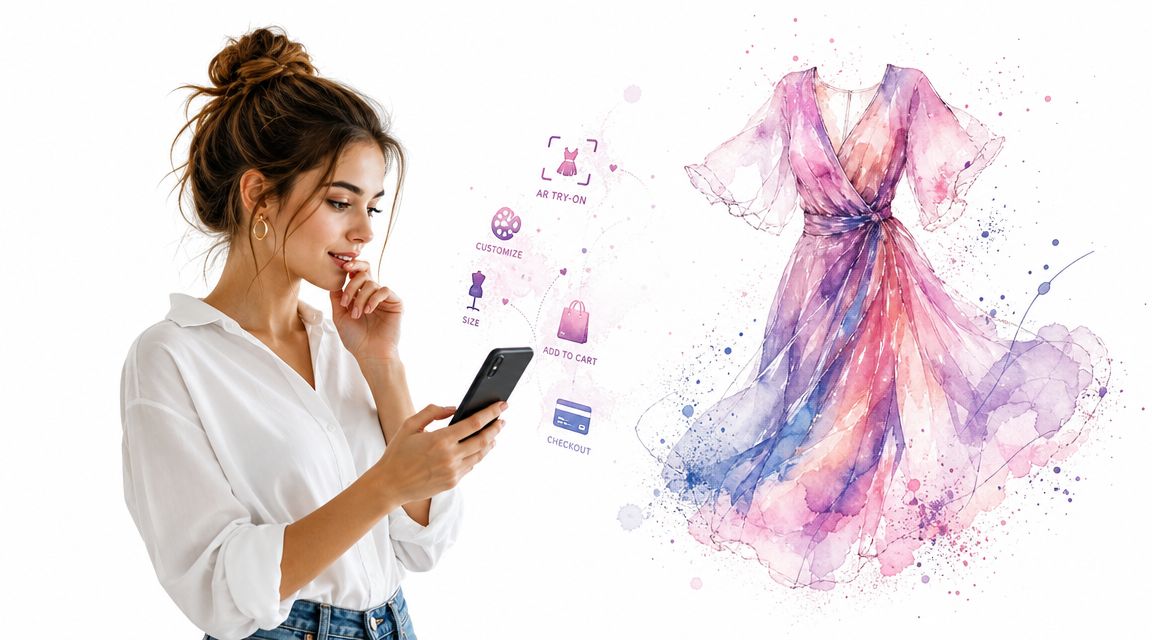
You open a tab for Zara, then another for H&M, then one more for a secondhand listing that feels like a lucky find. Your cart starts filling up with pieces that seem promising, but then the hesitation hits. The dress looks great on the model, but will the style look right on you?
That pause is shopping friction.
A lot of people hear frictionless shopping and think about faster checkout. That matters. But in fashion, the bigger problem usually shows up earlier, right at the moment you're deciding whether an item belongs in your wardrobe at all.
The End of Shopping Cart Doubt
You've probably felt this exact pattern before. Browsing is fun, saving items is easy, and then the doubt creeps in when it's time to commit. Not because payment is hard, but because the item still feels abstract.
Fashion shopping creates a very specific kind of drag. You're not just buying an object. You're trying to picture color, shape, mood, and whether a piece matches the version of yourself you want to show up as that day.
A lot of checkout advice focuses on reducing steps at the very end of the purchase, and that's useful. If you want a clean breakdown of how fewer checkout steps can help stores remove purchase friction, Cart Whisper's Shopify checkout insights give a practical look at that side of the equation.
But fashion doubt usually starts before the payment page ever loads.
Where shoppers actually stall
The moment of hesitation often sounds like this:
- Color doubt: “I like this in theory, but is this shade going to wash me out?”
- Silhouette doubt: “The cut looks cool on the model, but will I like the overall look on me?”
- Styling doubt: “Can I wear this with what's already in my closet?”
- Purchase doubt: “Do I really want to order this just to find out?”
That's why cart abandonment in fashion can feel emotional, not just technical. A smoother button flow helps, but it doesn't solve uncertainty about appearance.
The real shopping barrier isn't always checkout speed. Sometimes it's the gap between “I like this item” and “I can see myself wearing it.”
If you want more ideas on that exact problem, this guide on how to reduce shopping cart abandonment looks at the confidence side of the decision, not just the payment side.
What Is Frictionless Shopping Anyway
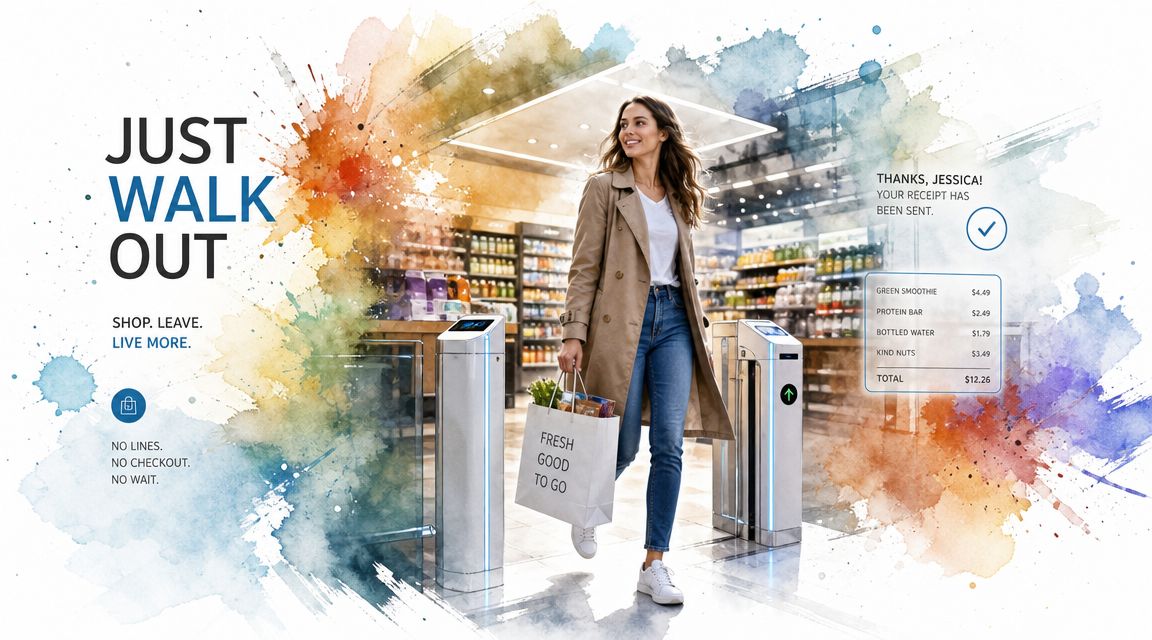
At its simplest, frictionless shopping means removing the steps that slow a purchase down or make it feel annoying. In physical retail, the classic example is the checkout-free store where you walk in, grab what you need, and leave without stopping at a register.
It feels a little like borrowing snacks from an ultra-smart pantry. The store keeps track of what you picked up, and payment happens automatically.
How the store knows what you took
PwC explains that frictionless stores typically use computer vision, smart shelves, sensors, and automated identity or payment to maintain a real-time virtual basket as you move through the store, so billing can happen automatically when you exit. PwC also notes that this setup gives retailers accurate, real-time data on product performance and supply, not just faster checkout in its overview of frictionless retail systems.
That's the classic version of the idea. Remove scanning. Remove queues. Remove handoff moments that interrupt the trip.
Why people get confused by the term
Part of the confusion is language. In e-commerce, people often use terms like frictionless checkout, accelerated checkout, guest checkout, and one-click payment almost interchangeably. If you want a clean vocabulary refresher, this glossary on e-commerce checkout terminology is a handy reference.
Here's the key distinction:
| Shopping stage | Old friction | Frictionless version |
|---|---|---|
| In-store pickup | Scanning items and waiting in line | Automatic item detection and auto billing |
| Online payment | Typing shipping and card details repeatedly | Saved payment methods or guest checkout |
| Fashion decision | Guessing from a product photo | Tools that help you preview appearance before buying |
That last row is where fashion changes the conversation.
A purchase can be technically seamless and still feel mentally difficult if the shopper can't picture the result.
So yes, frictionless shopping started as a story about automation and speed. In apparel, though, that definition is too narrow.
The Hidden Friction in Fashion Shopping
Paying for clothes online is often easy. Deciding on them is the hard part.
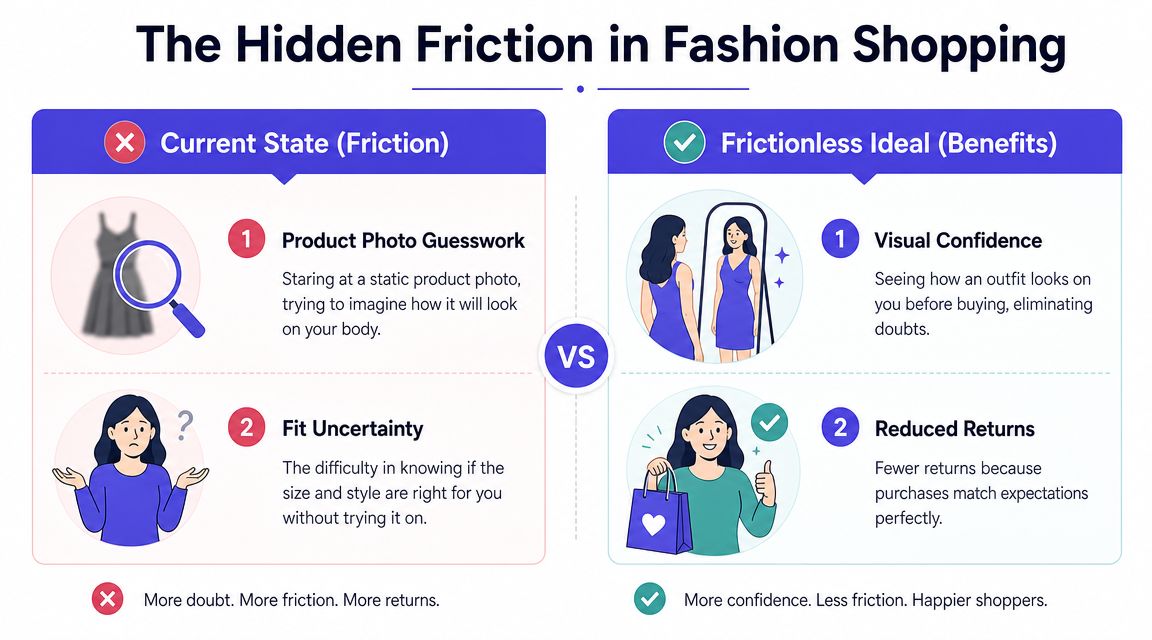
Most fashion purchases don't stall because entering a card is exhausting. They stall because a product page asks you to do a lot of visual imagination with very little information. You get a polished studio photo, a few angles, maybe a video if you're lucky, and then you're supposed to decide whether that style will suit you.
That's where visual friction shows up.
Faster buying doesn't solve uncertain choosing
Industry analysis highlighted by Retail Dive points out that a lot of frictionless retail technology focuses on speeding up checkout, while the bigger shopper problem is often decision uncertainty. The same analysis notes that apparel has especially high return pressure and argues that the stronger frictionless use case is pre-purchase visualization, helping shoppers decide better rather than make rapid purchases in this discussion of frictionless shopping and customer experience.
That idea lands hard in fashion because clothes are expressive. A shampoo bottle doesn't ask you to imagine a whole identity shift. A coat absolutely does.
What visual friction looks like in real life
Here's how it usually plays out:
- The model mismatch: The item looks amazing on the store model, but you still can't translate that look to yourself.
- The maybe purchase: You order with crossed fingers because returning it feels easier than making the decision now.
- The temporary fitting room: Your bedroom becomes the place where the decision finally happens.
- The return spiral: Packaging, printing labels, waiting for refunds, and feeling slightly annoyed at the whole process.
This is why “smooth shopping” in fashion can't stop at payment design. It has to reduce the uncertainty that happens before the buy button.
The question shoppers actually want answered
For fashion, the most useful question isn't “How can I check out faster?”
It's “How can I see how it looks before I commit?”
If a shopper still has to guess, the experience isn't really frictionless. It's just faster at the end.
That shift matters for everyday basics, statement pieces, secondhand finds, and costume shopping too. Any time you can't physically try something on, the biggest barrier is often your own uncertainty about the final look.
Technologies That Remove Shopping Friction
Real shopping friction shows up in layers. One layer is mechanical. It is the extra typing, account creation, and payment steps that slow you down. Another layer is emotional. It is the hesitation that creeps in when you still cannot picture the outfit on yourself.
Fashion needs both layers handled well.
The transaction layer
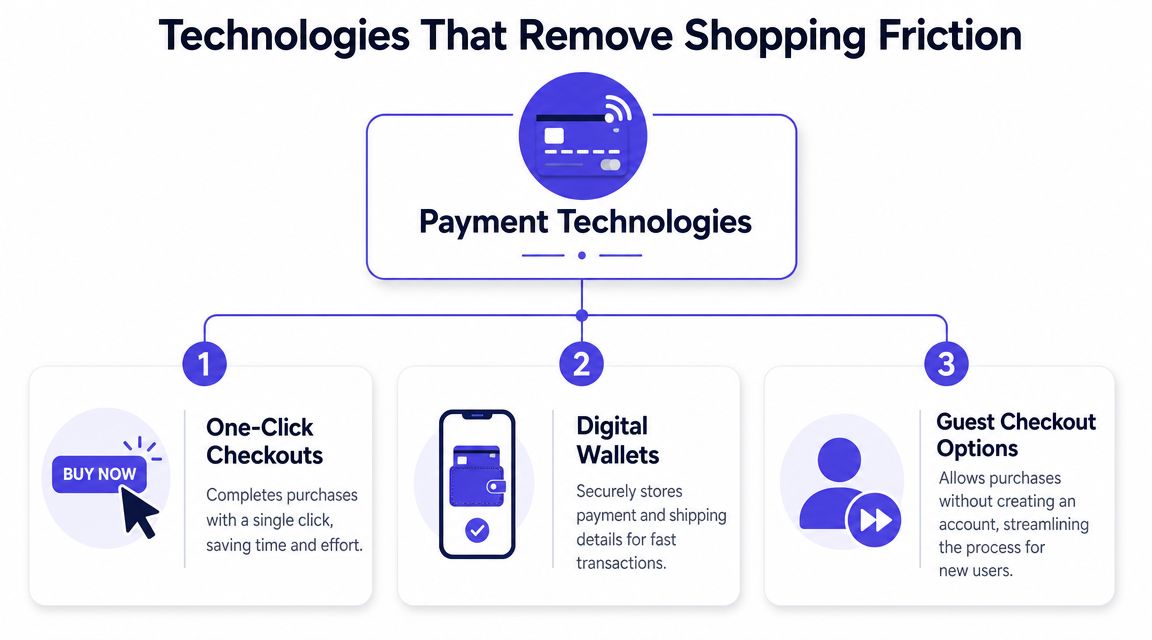
Some tools remove friction at the finish line:
- One-click checkout: Speeds up the final step when you already know you want the item.
- Digital wallets: Cut down on form-filling and make payment feel lighter.
- Guest checkout: Removes the pause that happens when a store asks for account setup before purchase.
These features are useful. They trim checkout effort and help prevent drop-off right before payment.
But in fashion, a fast checkout only helps after the shopper feels sure.
The decision layer
The bigger challenge often happens earlier. A site can recommend the right category, surface products based on your browsing, and answer sizing questions in chat. That still leaves the hardest fashion question open: how will this look on me?
That is why friction-reducing technology in apparel has to include visual decision tools, not just payment and service tools. Product recommendations act like a good sales associate pulling options off a rack. Visual preview tools act more like the fitting room mirror. You usually need both before you feel ready to buy.
Useful examples in this layer include:
- Personalized product discovery: Helps narrow a huge catalog to styles that match your taste.
- Chat and guided assistance: Clears up practical questions quickly, like sizing, fabric, or delivery.
- Visual try-on and outfit preview tools: Reduce the guesswork that causes abandoned carts and return-first buying habits.
That broader shift is part of the current wave of retail technology, where stores are trying to remove friction across browsing, support, and checkout instead of treating payment speed as the whole story.
A smoother journey needs all three
For fashion, frictionless shopping works best as a system:
| Layer | What it removes | Example |
|---|---|---|
| Payment | Repetitive checkout effort | Wallets, guest checkout, one-click purchase |
| Service | Delay in getting help | Chat prompts, assistants, timely nudges |
| Visualization | Uncertainty about appearance | Virtual try-on and style preview tools |
The third layer changes the experience most in apparel because it answers the question shoppers care about before they spend money. Confidence is the shortcut.
Usability matters too. A feature that is hard to click through, read, or understand adds friction back into the journey. Teams reviewing that side of the experience can use WebAbility.io's free accessibility checker to spot barriers that make shopping feel harder than it should.
Instantly Visualize Your Style on Any Site
You open six tabs looking for one outfit. The black dress looks sharp on Zara, washed out on a resale listing, and oddly stiff on a marketplace model. The main question is not, "Can I check out fast?" It is, "Can I tell if this will genuinely feel like me?"
That is the fashion version of frictionless shopping. Decision confidence matters more than shaving a few seconds off payment.
A visual try-on tool helps close that gap. Instead of guessing from model photos, flat lays, and product shots with inconsistent lighting, you can preview the item on your own photo and make a clearer call before it reaches your cart.
TryThisFit lets you upload a photo of yourself and a clothing image to see how a piece may look on you. It is especially helpful when store photography changes from site to site, or when a secondhand listing gives you very little to work with. Flat-lay clothing photos usually give the clearest results because the shape of the item is easier to read.
The appeal is simple. You keep browsing where you already shop, but you add a quick mirror check to the process.
Where this helps most
A style preview is useful in a few very specific moments:
- Secondhand shopping: Vinted and Depop listings often show only a handful of photos. A preview makes the choice feel more informed and less like a coin flip.
- Tab-heavy comparison: If you are choosing between a blazer on one site and a dress on another, seeing both on your own image is easier than trying to remember how each looked on different models.
- Occasion outfits: Party looks, costume pieces, and trend items can be exciting in product photos and disappointing in real life. A preview helps you spot that earlier.
- Impulse checks: Sometimes the smartest shopping move is a 10-second pause to ask, "Will I wear this?"
A style preview does not answer sizing or fabric questions. It answers the visual one. That makes it valuable because visual uncertainty is often the point where fashion shopping stalls.
If you want a fuller walkthrough of that idea, this guide on trying clothes online before you buy explains how visual previews help you decide with more confidence.
You can also revisit saved experiments later through your try-on history, which helps when several outfit ideas start blending together.
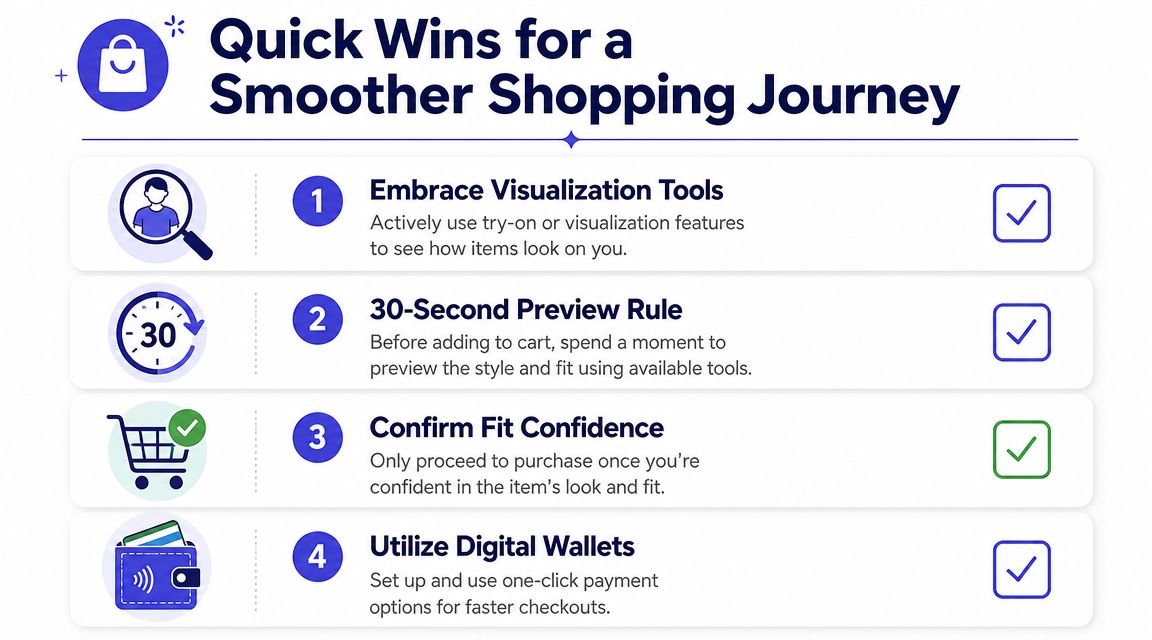
Quick Wins for a Smoother Shopping Journey
You do not need a new shopping personality to make online fashion feel easier. A few small habits can cut down the hesitation that shows up between “cute on the model” and “would I wear this?”
That matters for shoppers. It matters for retailers too.
For shoppers
Start with the moment that usually creates the most drag. It is rarely typing your card details. It is the pause before that, when you are not fully sure the piece fits your style, your shape, or the version of yourself you had in mind.
A smoother routine looks more like getting dressed in a good fitting room. You check the look, make a quick call, and keep going.
- Preview before carting: Do a fast visual check before you commit. Ten seconds of clarity now can prevent a return, a refund wait, and a package of regret later.
- Keep one browsing routine across sites: If you jump between Zara, H&M, Vinted, Depop, and marketplace listings, use the same decision process everywhere. Consistency reduces mental clutter.
- Save payment speed for the end: Guest checkout and digital wallets help once you already feel good about the item. They finish the job. They do not solve outfit doubt.
- Review what you almost bought: Looking back at past try-ons or saved ideas can reveal patterns. Maybe you keep loving structured jackets and skipping puff sleeves. That makes the next decision faster.
A quick demo makes that easier to picture:
<iframe width="100%" style="aspect-ratio: 16 / 9;" src="https://www.youtube.com/embed/Rw9vjLEvtDQ" frameborder="0" allow="autoplay; encrypted-media" allowfullscreen></iframe>If you want a lighter workflow, a browser-based try-on tool can turn that visual check into a normal part of browsing instead of a separate task.
For retailers
Retail teams have spent years smoothing checkout, and that still matters. But fashion has a different choke point. Shoppers stall earlier, at the decision stage, because the product page answers “how do I buy this?” before it answers “can I see myself in this?”
Retail operations research often frames frictionless commerce around efficiency, lower transaction effort, and better visibility into customer behavior. For apparel sellers, that idea works best when it covers decision confidence too. A polished payment page helps people finish a purchase. Clearer style visualization helps them feel ready to begin one.
That leads to two practical priorities:
- Clean up checkout friction.
- Reduce visual uncertainty before the cart.
Brands that do both create a better shopping rhythm. The shopper spends less energy guessing, and more energy choosing.
Practical rule: If a shopper still has to mentally audition the outfit, friction is still part of the journey.
The Future of Your Wardrobe Is Confidence
Frictionless shopping started as a convenience story. No lines. Fewer taps. Less waiting.
In fashion, it's turning into a confidence story.
The most valuable improvement isn't always shaving seconds off payment. It's closing the gap between a product photo and your own sense of style. When that gap gets smaller, shopping feels less like gambling and more like curating.
That shift changes the whole mood of buying clothes online. You spend less time bouncing between tabs, less time second-guessing, and less time dealing with purchases that looked better in theory than they did in real life.
A smoother wardrobe-building process looks like this:
- You browse with curiosity, not pressure
- You preview the appearance before committing
- You choose pieces that feel more intentional
- You end up with fewer regret purchases
That's the version of frictionless shopping worth caring about. Not just “buy now faster,” but “choose with more certainty.”
The next time you're filling a cart and that familiar uncertainty shows up, treat it as a signal. You probably don't need a quicker checkout button. You need a better way to visualize the style first.
If you want to make online fashion shopping feel lighter, more visual, and more certain, try TryThisFit. You can preview how clothing looks on you in seconds, use the site without creating an account, and add the free Chrome extension for right-click try-ons while browsing your favorite stores.
Try Virtual Try-On Now
See how clothes look on you before you buy - works with any online store
Get Started Free