H and M Online Shopping: Your Ultimate Guide to 2026
You find a dress on H&M, love it on the model, order it, then open the package and realize the vibe is completely off on you. That's the part of H and M online shopping nobody enjoys. The item might be cute, but the guesswork is exhausting.
That frustration isn't rare. The return rate for online fashion can be as high as 40%, often because what looked good on the product page doesn't translate the same way on the shopper, as noted in TryThisFit's guide to virtual try-on shopping. If you want a smarter way to shop H&M, the goal isn't buying more. It's buying with better judgment.
Your Guide to Smarter H&M Shopping

A lot of H&M orders go wrong for one simple reason. The product page sells a fantasy, but your closet needs reality.
The model styling is polished, the lighting is perfect, and the product shot doesn't tell you enough about how the piece will look in your life. That's why smart H and M online shopping starts before checkout. You need a better way to filter what deserves your money.
What smart shopping actually looks like
I shop H&M with a short checklist in mind:
- Search with intent instead of browsing endlessly.
- Check reviews early so I don't get attached too fast.
- Look at fabric and cut together because one without the other is useless.
- Preview the style visually before buying if the item feels risky.
Practical rule: If I can't explain why I'm buying the item in one sentence, I leave it in the cart.
That shift matters. Shopping gets easier when you stop treating every decent-looking piece as a possibility and start treating each one like it has to earn its spot.
Build a routine you'll actually use
H&M has a huge assortment, and that's both the fun part and the trap. If you open ten tabs and add five “maybes,” your cart turns into chaos fast.
A better approach is to create a repeatable system. Use a short routine, keep notes on cuts you like, and save any useful ideas from practical guides like these smart online shopping tips when you want fewer regret purchases and a cleaner closet.
Finding Your Perfect Items on H&M
H&M gets much easier once you stop browsing like you're window-shopping at the mall. Go in with a target. Search “ribbed black tank,” “wide-leg linen trousers,” or “cropped beige cardigan,” and the site starts working for you instead of wasting your time.
That's the habit I'd steal first. Specific searches cut out filler fast and push you toward pieces you'll wear.
Use filters like a stylist, not a browser
The filters are where the important work happens. Shoppers who skip them usually end up blaming H&M for showing too much, when the problem is a lazy search setup.
Use this order:
- Start with category and color. If you already know the shades that suit your wardrobe, cut everything else immediately.
- Filter your size early. Don't build outfits in your head around pieces you can't even buy.
- Set a price ceiling. H&M is full of cheap add-ons that bloat a cart.
- Check the concept filters. They're useful for narrowing in on basics, trend-led pieces, or more material-conscious options.
One more smart move. If an item looks promising but hard to judge from product photos, preview it with a visual tool before you commit. TryThisFit's Chrome extension setup guide for online outfit previews shows how to add that extra check without slowing down your shopping routine.
Sort for what you actually want
Sorting changes the kind of results you see, so use it on purpose. “Newest” works best when you want first pick on fresh drops. “Price low to high” is better for socks, tanks, layering tops, and other practical basics where you care more about value than hype.
I never use one sort setting for everything.
Trend piece? Sort by newness. Wardrobe gap? Sort by price or relevance. That small choice keeps your search focused and stops you from scrolling through pages of things that are technically cute but wrong for the job.
Be extra careful with Conscious items
H&M highlights Conscious and other sustainability-related labels, but that label alone should never close the sale. What matters is still the same stuff that matters with any other item: fabric blend, cut, opacity, texture, and whether the piece looks like it belongs with what you already own.
That's where shoppers get tripped up. A product can sound good on the page and still feel flat, thin, or awkward in real life.
My rule is simple. Never buy based on branding language. Read reviews for texture comments, check the composition, zoom in on the fabric, and treat the styling photos as inspiration instead of evidence.
A quick screen helps:
| What to check | Why it matters |
|---|---|
| Fabric blend | It hints at drape, softness, and structure |
| Review language | Shoppers often reveal whether a piece feels flimsy or polished |
| Product photos | They show silhouette, but not the whole story |
| Styling versatility | If you can't imagine three outfits, skip it |
Visualize Your Style Before You Buy
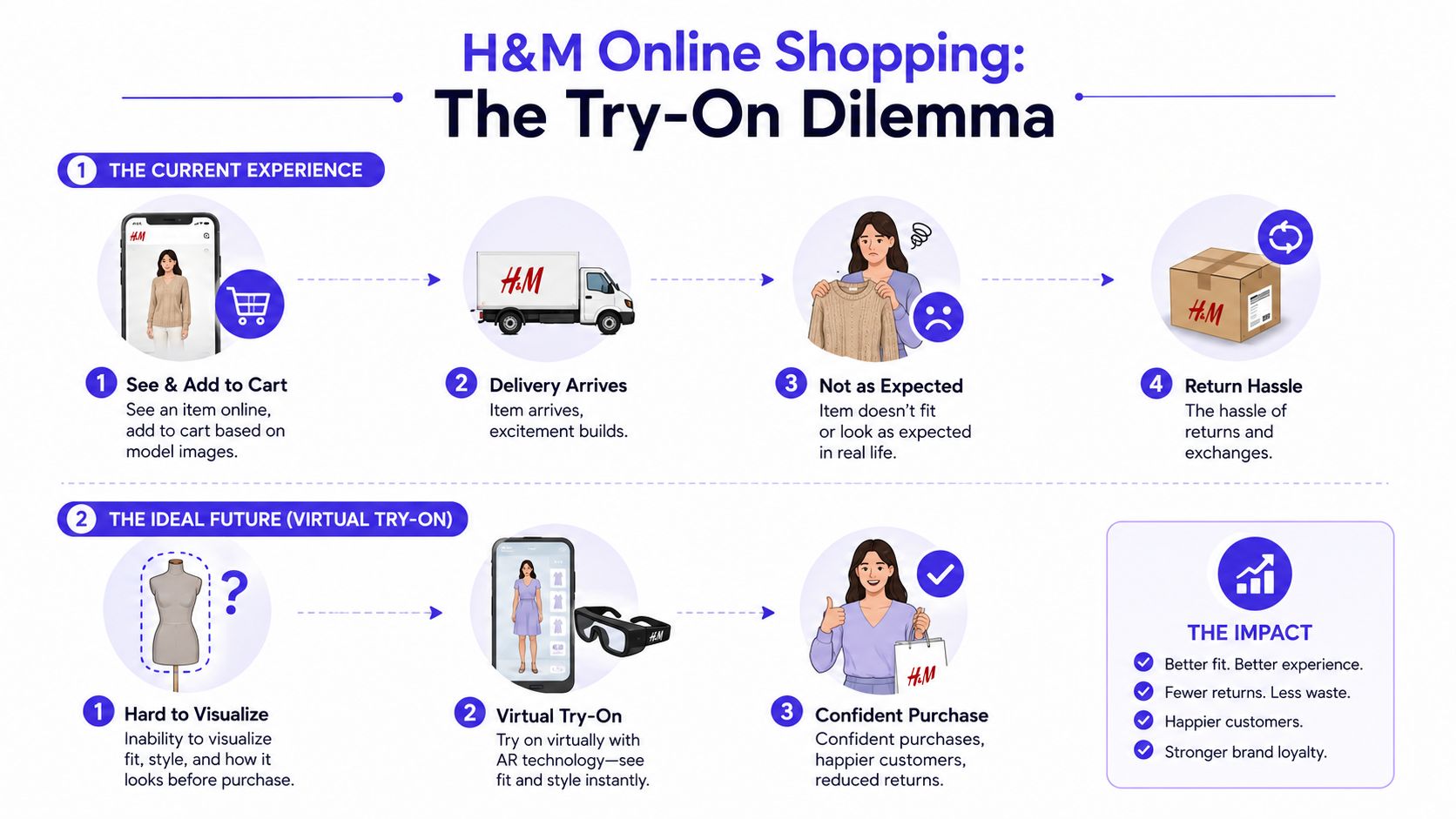
You find a dress on H&M at 11 p.m. The color is right, the styling is convincing, and the product page makes it look like an easy yes. Then the doubt kicks in. Will the neckline suit you? Will the shape feel polished on your frame or just sit there like another return waiting to happen?
That gap is still the weak spot in H and M online shopping. H&M lets shoppers search and browse well, but it still does not offer a built-in virtual try-on tool for online purchases, as noted in Diginomica's reporting on H&M's omnichannel gaps. You are still making a style decision from product photos that were never designed around your body, proportions, or usual outfits.
Static images are the main problem
Model shots are useful for mood. They are weak for decision-making.
They show how H&M styled the item for a campaign, not how it reads on you in normal life. That is why shoppers end up with pieces that are fine on paper but wrong in personality, balance, or silhouette. The issue is not always quality. It is poor visualization.
Product pages can show fabric and details. They cannot tell you whether a style feels like you.
Use a visual preview tool before you buy if you want fewer guessy purchases and fewer “maybe it'll work” orders.
The tool I'd use first
TryThisFit lets you preview how clothing looks on your own photo, which is the missing layer most H&M guides skip. That matters because the biggest online shopping mistake is not finding items. It is misreading how a cut, print, or neckline will land on your body.
It also offers a free Chrome extension that works on H&M and other shopping sites through a right-click action. Open the product image, run the preview, and judge the style before you pay. If you want the setup steps, this TryThisFit Chrome extension walkthrough shows the process clearly.
For H&M shopping, I would use it on categories where styling can mislead you fast. Printed dresses, puff-sleeve tops, wide-leg trousers, party pieces, and coats all look different once they are placed on a body that is not the model's.
Use better source images for better previews
Your preview is only as good as the image you choose.
Flat-lay photos usually work best because they show the garment's outline without a pose twisting the shape or a model's stance changing the proportions. If the H&M product page includes a flat-lay shot, start there. If not, use the cleanest front-facing image with the least visual distortion.
Here's my rule for getting useful previews:
- Pick flat-lay images first for the clearest silhouette
- Test statement pieces before basics because fit and vibe matter more there
- Compare two or three options side by side instead of judging one item in isolation
- Save the strongest previews so you can build outfits before checking out
This is the shift that makes H&M online shopping smarter. You stop buying from hope and start buying from evidence.
Decoding Sizes and Securing Your Purchase
Once you've decided you like the style, switch gears. This is the practical part, and it matters just as much as the fun part.
Don't buy H&M by habit size alone. Open the size guide every time, especially for trousers, denim, fitted dresses, and anything from a collection you haven't tried before.
Read the chart, then read the reviews
I always pair the official size chart with customer reviews. One tells you the brand's intended measurements. The other tells you how real shoppers experienced the item.
Look for patterns in the review comments. If several people say the fabric feels stiff, the cut sits oddly at the waist, or the sleeves look different in person, pay attention.
Here's the order I'd use:
- Check your measurements first so you're choosing from actual data instead of habit.
- Scan reviews for shape comments because “runs small” isn't as useful as “tight in the shoulders.”
- Revisit the product photos after reading reviews. You'll notice more once you know what to look for.
Make checkout easier on yourself
Guest checkout is fine if you're in a rush, but an account is usually the cleaner option. It makes tracking easier, keeps your order history together, and simplifies reordering basics.
Promo codes are worth checking before you pay. I'd look on the homepage, in member emails, or inside any active promotional banner before finishing the order.
Buy when the item clears three tests. You like the style, the reviews don't raise a red flag, and you can already picture where you'll wear it.
One more practical note if you're using appearance previews before purchase. Flat-lay photos give the most realistic result because they show the garment without distortion from poses or mannequins. If you want to compare your own proportions with a product page more confidently, this body measurement guide is a useful companion.
Managing Your Order After Checkout
You click buy, then the second-guessing starts. That's exactly why I like to treat post-checkout as part of the shopping process, not an afterthought. If you already used TryThisFit to preview the piece on your body before ordering, you've cut down the biggest risk. Now the goal is simple. Stay on top of delivery, try everything on fast, and return misses before they drain your time.
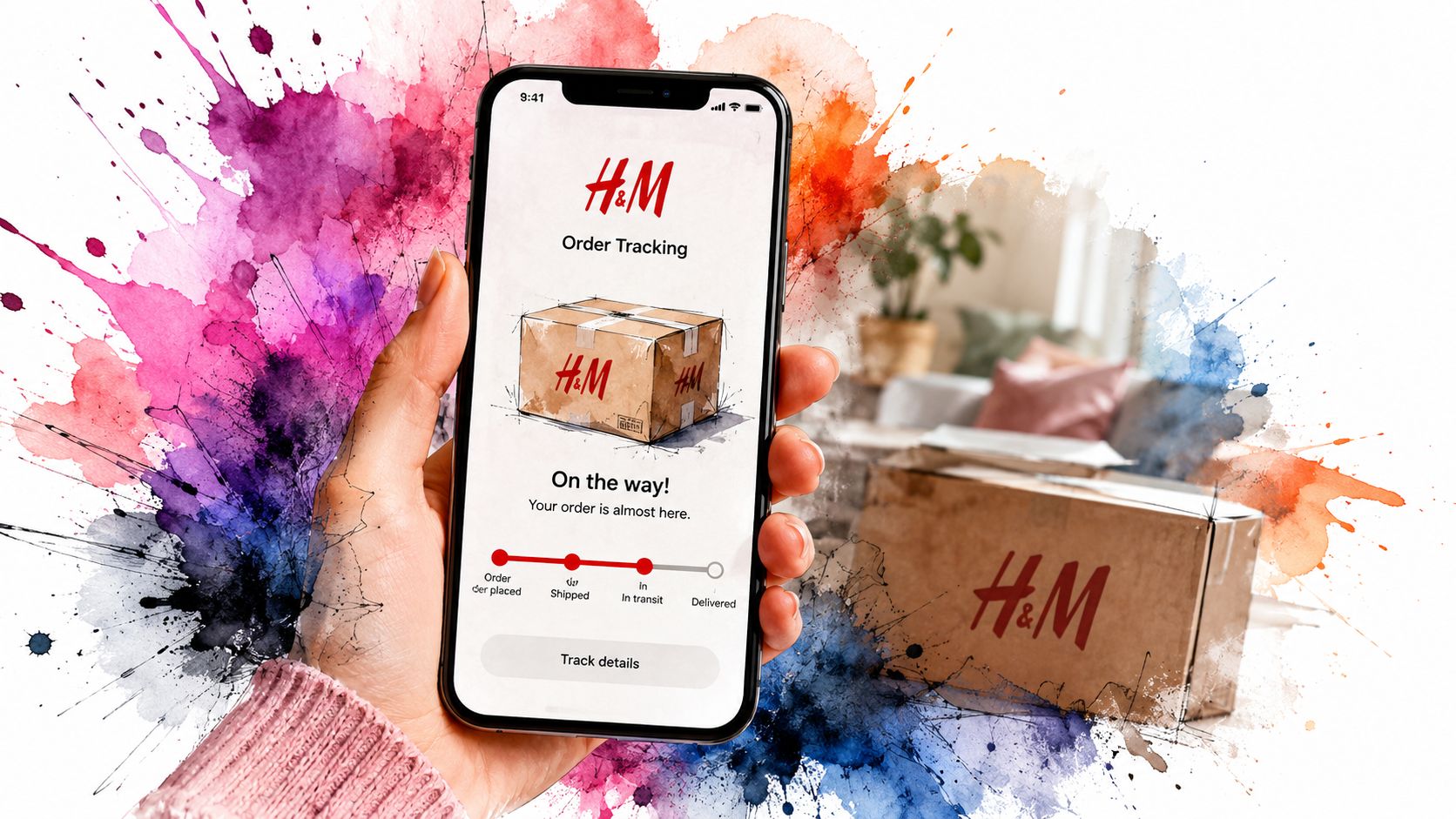
Your confirmation email is usually the fastest place to check status. Your H&M account is better for keeping the full picture in one place, especially if you order often or split purchases across basics, trend pieces, and returns.
Check tracking early.
I do it the same day or the next morning, especially for time-sensitive orders or store pickup. That gives you a clearer sense of timing and helps you avoid the annoying routine of wondering whether a parcel is arriving today or three days from now.
The smarter move is to decide on returns quickly too. Open the package as soon as it arrives, try everything on in good lighting, and keep the tags and packaging intact until you're sure. The longer an item sits on a chair, the more likely it becomes a forgotten bad buy.
Why Click and Collect is worth using
Click & Collect is the practical choice when you don't want a package left outside, you're buying a gift, or you know your building makes deliveries messy. It gives you more control and usually makes the handoff easier than waiting around for a driver.
That matters even more with fashion orders, because speed changes your odds of making a clean return. If something looks great on the product page but feels off in person, you want the item in your hands soon so you can make a decision while it's still fresh.
If you work in ecommerce or just appreciate good shipping communication, this article on optimizing Shopify order tracking is worth reading. It explains why clear updates, realistic delivery timing, and simple status checks make people far more confident about buying online in the first place.
A quick visual refresher helps if you're new to H&M order management:
<iframe width="100%" style="aspect-ratio: 16 / 9;" src="https://www.youtube.com/embed/yv603gC14bc" frameborder="0" allow="autoplay; encrypted-media" allowfullscreen></iframe>FAQs for Smart H&M Online Shopping
Can I use the same try-on approach on other shopping sites
Yes. The same Chrome right click workflow works across big retailers and resale apps, including Zara, Shein, Vinted, Depop, and Amazon. That matters because smart shopping rarely happens on one tab. You compare cuts, colors, prices, and fabric photos across stores, then pick the version that suits you.
If you browse Amazon too, keep your comparisons tidy with this affiliate link for Amazon fashion finds.
What's the smartest way to find hidden H&M deals
Start in Sale. Filter by your size first.
That one habit cuts out the fake excitement of spotting a great piece that was never available to you in the first place. Then sort by low price for basics, or newest if you want the markdowns that still feel current instead of picked over.
How do I save looks and compare them later
Save the outfits that are close calls. Then compare them side by side when you are not in a rush.
That's a key advantage of a visual try on tool. H&M's product photos can tell you what the item is. They cannot tell you whether that boxy blazer sharpens your shape or makes your shoulders look too wide. A saved preview answers that faster, and with a lot less guesswork.
If you want to review earlier outfit tests, open your saved try-on history. If you want to test a new item, return to the main try-on page.
Is this only useful for H&M
No. It is useful anywhere product photos leave too much to the imagination.
Use it for secondhand listings, event outfits, costume ideas, and those risky trend pieces that look incredible on a model but questionable in real life. That is the bigger point of this article. H&M online shopping gets much easier once you stop relying on polished model shots and start checking how a piece reads on your own body. TryThisFit helps you do that quickly, which is exactly why it turns random browsing into confident buying.
Try Virtual Try-On Now
See how clothes look on you before you buy - works with any online store
Get Started Free