Traditional Egyptian Dresses: Origins, Styles & Modern Wear
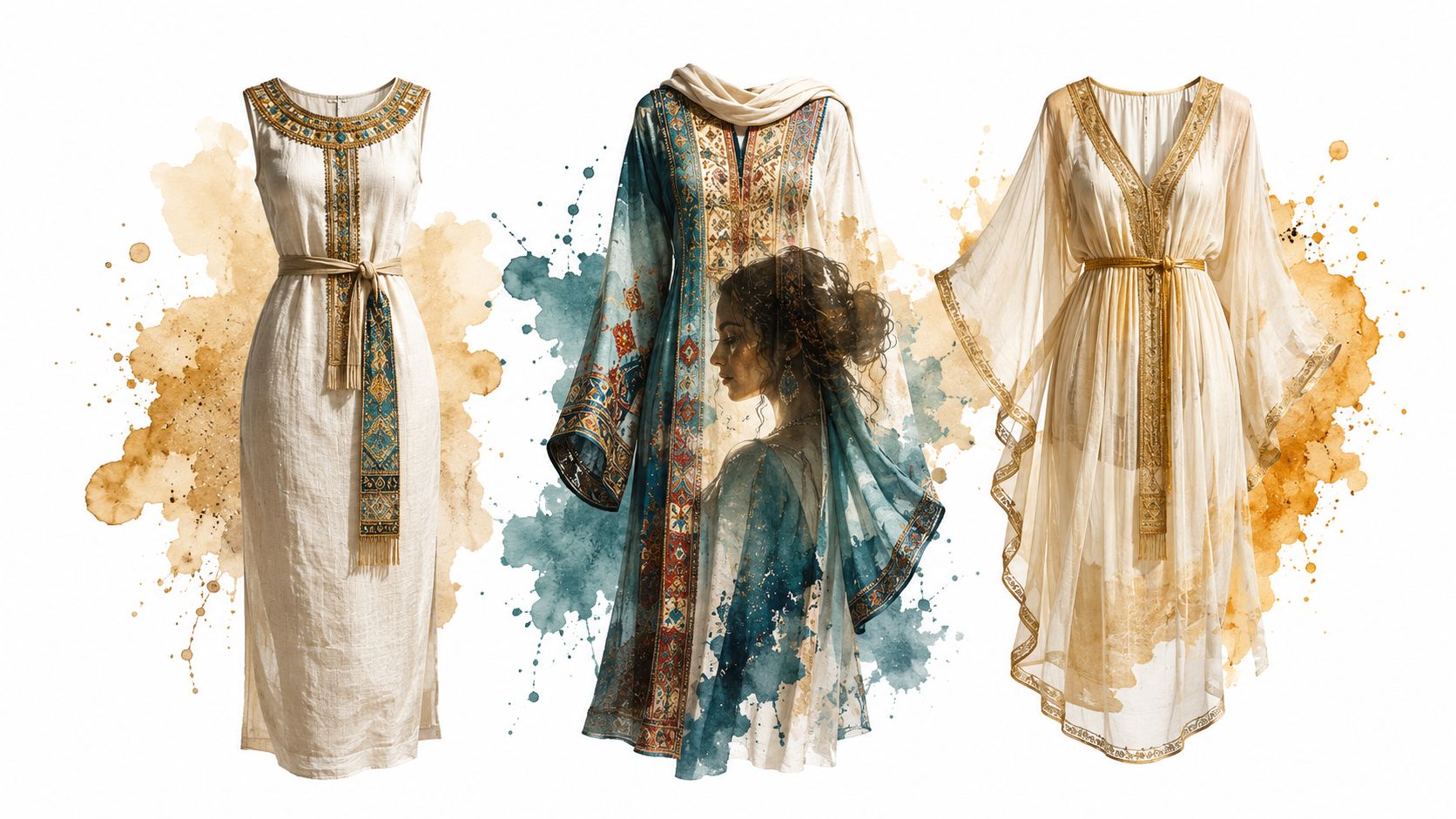
You click through a few search results, and suddenly traditional Egyptian dresses means three different things at once, a linen sheath that belongs to the ancient world, a modern galabeya worn in everyday life, and a costume piece that only borrows the mood of Egypt. That confusion is normal. The phrase covers garments that look related at first glance, but they come from different eras, different regions, and very different reasons for dressing.
If you want the historical look, the cultural look, or just a style that borrows Egyptian shape and ornament, the easiest first step is to separate ancient from modern. Once you do that, the silhouettes become much easier to read. And because these outfits are so visual, a flat-lay photo preview can help you see how it looks on you before you buy, whether you're browsing a shop site or testing a look in a browser.
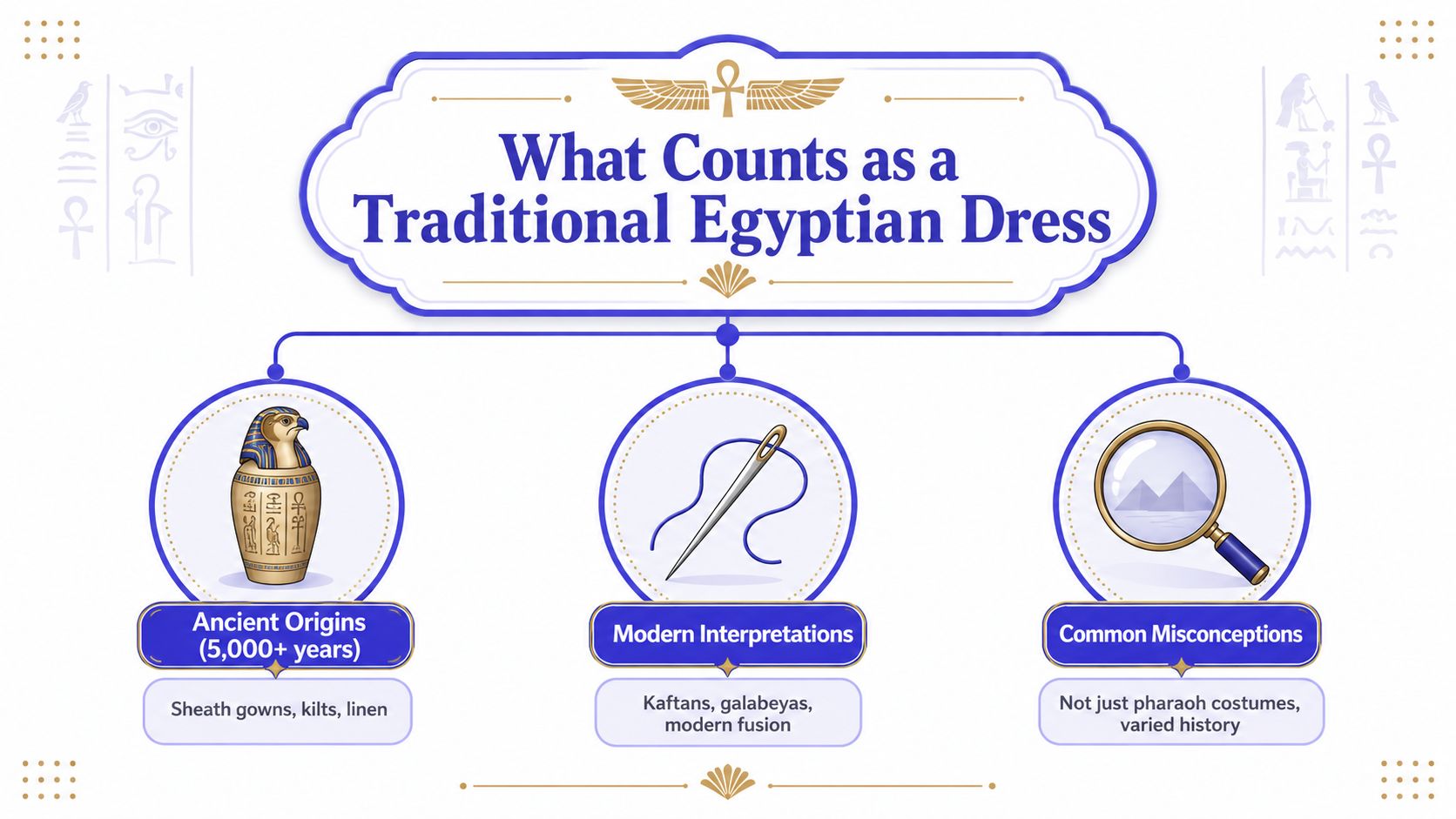
What Counts as a Traditional Egyptian Dress
A shopper looking for traditional Egyptian dresses often lands in a visual mash-up. One tab shows a pharaonic-inspired sheath gown, another shows a loose modern robe, and a third shows a costume listing with gold trim and a headpiece. Those aren't the same category, even if they all read as “Egyptian” at a glance.
Two dress worlds sit under one phrase
The ancient world goes back to early Egyptian civilization, with fine linen apparel dated between 3482 and 3103 B.C., and clothing documented from before 3100 BC through 30 BC Egyptian clothing timeline. That long stretch matters because the shapes changed slowly, so linen kilts, sheath dresses, and mantles stayed recognizable across dynasties instead of disappearing every generation.
Modern Egyptian traditional dress belongs to a different conversation. It includes the galabeya, sometimes spelled gallibaya or jalabiya, plus regional layers, modesty garments, and head coverings. If you're shopping online, the question is not just “Is it Egyptian?” but “Which Egyptian look am I trying to wear?”
Practical rule: if the silhouette is a tight linen sheath, you're looking at ancient inspiration. If it's a loose robe with regional styling, you're in modern cultural dress.
For people who already know they love dramatic drape, the comparison can overlap with other Greco-Mediterranean styles too, and a Greek goddess dress guide can be useful for spotting where a flowing shape starts to feel classical rather than Egyptian.
Why the distinction matters when you shop
A costume shopper wants the outfit to read ancient, not just “desert themed.” A person looking for cultural dress wants something that feels contemporary, modest, and regionally recognizable. The same phrase can satisfy both searches, but the styling goal is completely different.
That's where a visual try-on becomes useful. A flat-lay photo of a sheath, a kaftan, or a galabeya can look similar in the listing, but the on-body impression changes fast. If you want to preview the style on yourself before buying, TryThisFit lets you do that from the main app at trythisfit.com, and the ancient Egyptian fashion reference page is a good starting point for the older silhouette.
Ancient Egyptian Dresses and Their Origins
The oldest layer of Egyptian dress is built around linen, heat, and status. Ancient Egyptians didn't dress for ornament alone, they dressed for climate, class, and ritual. That's why the earliest looks still feel so distinct, even now.
The linen sheath was the core silhouette
Women's dress in ancient Egypt is repeatedly described as a long, figure-fitting sheath made from linen, often held by shoulder straps and sometimes layered with a sheer over-tunic Crystalinks on Egyptian clothing. The cut worked with Egypt's arid climate because linen is light and breathable, so the garment could skim the body without trapping as much heat.
Early Dynastic clothing also showed clear social division. Lower-class women wore a plain, knee-length skirt from the waist to the knees, while upper-class women wore a long fitted dress that could run from below the breasts to the ankles, sometimes with sleeves or a sheer tunic over it World History on fashion and dress in ancient Egypt. That's not a small difference. It changes the entire read of the body, from practical wrap to elegant column.
What makes a look feel ancient
A lot of people picture a single “Egyptian dress,” but the historical look is usually built from layers and accessories. Linen, pleating, shawls, beadwork, and belts help create the effect, and religious or funerary contexts often favored white linen for purity and ritual standardization Egypt Tours Portal on ancient Egyptian clothing.
The result is more specific than a generic costume. A sheath with a shoulder strap reads one way. Add a sheer wrap, a broad collar, or a headpiece, and the silhouette becomes immediately more recognizably ancient.
The base dress matters, but the styling tells the story.
If you're shopping for this look, start by asking whether the garment is trying to evoke an actual historical shape or just a “pharaoh” vibe. That single question saves a lot of guesswork.
For a visual reference while browsing, you can also compare how ancient-inspired garments appear on the body through the virtual try-on experience for Egyptian fashion. A flat-lay photo of a simple linen dress may look plain online, but the on-body drape can make it read fully historical.
Modern Egyptian Traditional Dress by Region
Modern Egyptian dress has its own identity, and it doesn't look like a museum label. The most common piece is the galabeya, a loose-fitting garment that is also described as national clothing in Egypt Global Highlights on traditional dress. In daily life, it feels practical, regional, and unmistakably modern.
The galabeya and its layered context
One source notes that the galabeya in its current form dates back to the Islamic era in Lower Egypt, and later spread across the country Global Highlights on traditional dress. Another point that often gets missed is that modern Egyptian women's cultural dress is commonly described in three layers, a base dress, an outer modesty garment, and a head covering Egyptian cultural dress overview. That layered structure matters because it changes the outfit from a single robe into a composed look.
The galabeya can be worn alone, but in many settings it appears with a kaftan or a top layer. That makes the style feel more regionally grounded than costume-like. The visual effect is looser than an ancient sheath, and the mood is often more relaxed and everyday.
Region changes the read
Egyptian women's dress isn't one uniform national uniform. Regional variation is real, especially when you move between Upper Egypt, the Nile Delta, and the Sinai. That's why online searches can feel slippery, one person wants a modest home garment, another wants a festive urban look, and a third wants a heritage outfit that still feels current.
A helpful way to sort it is by intent.
- Everyday wear: choose a loose galabeya or a simple layered set.
- Formal or festive wear: look for richer fabric, embroidery, or a kaftan layer.
- Costume or theme event: go back to ancient-inspired sheath shapes and accessories.
If you're browsing retailers like Zara, H&M, Amazon, Shein, Vinted, or Depop, the Chrome extension can help you preview the look on yourself in seconds with a right-click on any product image. It installs in a couple of seconds at the free Chrome extension, and you can use it on practically any site.
Fabrics, Embellishments, and Craftsmanship
Fabric changes the entire character of Egyptian dress. The same cut can look ceremonial, casual, or costume-like depending on whether it's linen, synthetic shine, embroidery, or beadwork. That's why the material tells you more than the product title does.
Linen is the historical anchor
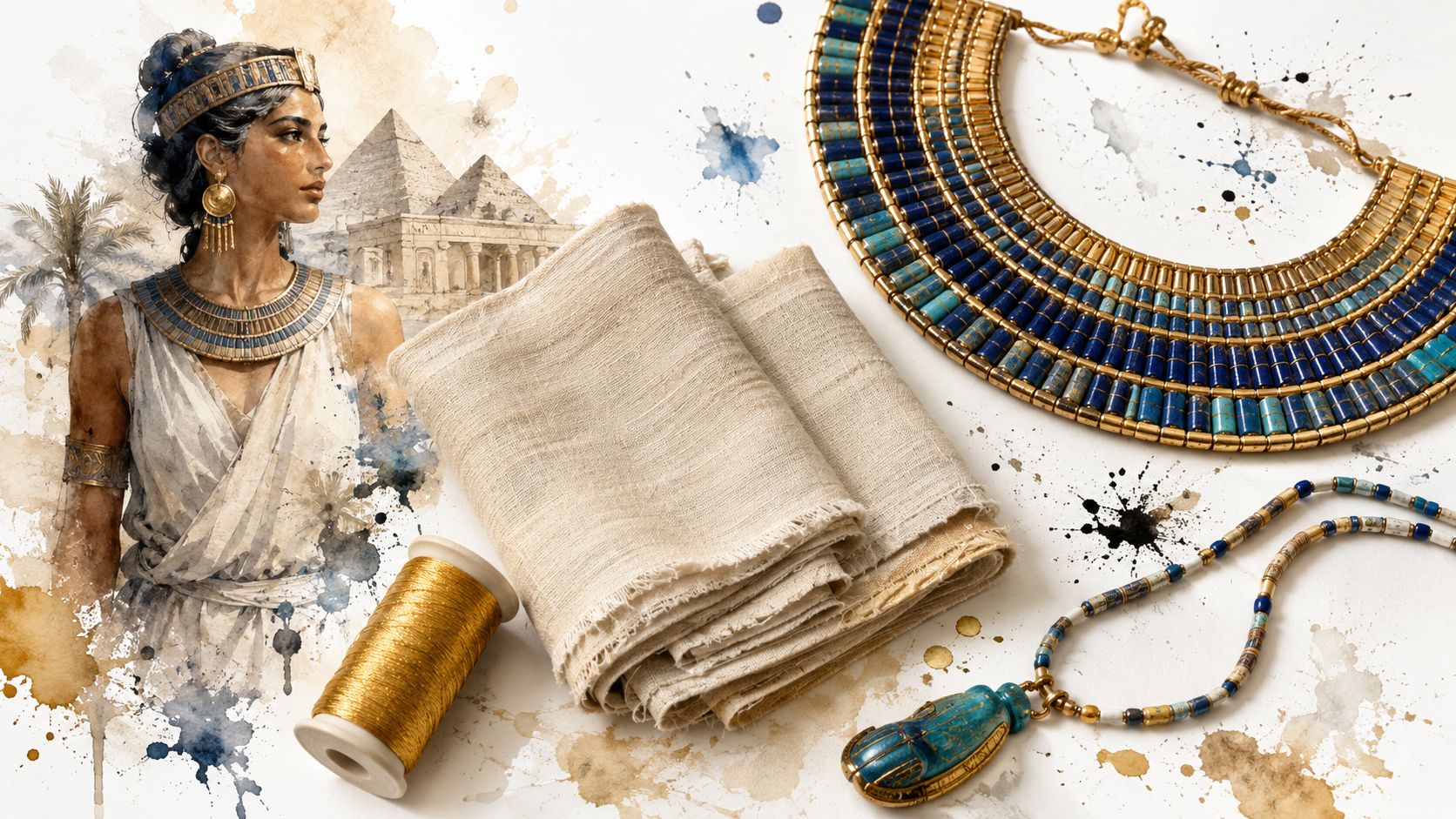
Ancient Egyptian clothing moved from early garments made of papyrus reeds and animal skins to flax-based linen once flax cultivation was established World History on fashion and dress in ancient Egypt. Linen became dominant because it suited Egypt's climate, and that's why the historical silhouette usually feels airy rather than heavy.
Elite garments often added pleating, fine drape, and adornment, while common garments stayed simpler and coarser Egypt Tours Portal on ancient Egyptian clothing. Gold and gemstones signaled status, and white linen carried ritual associations of purity in religious and funerary settings Egypt Tours Portal on ancient Egyptian clothing.
How to read the fabric in a product photo
A good flat-lay preview starts with the textile. If the listing looks stiff and shiny, it often reads less like linen and more like a synthetic imitation. If you can see soft drape and visible slubs, the garment usually feels closer to the historical visual language.
Embroidery, trim, and beadwork matter too, especially in modern regional dress. They act like a visual signature, telling you whether the piece leans festive, modest, or ceremonial. In other words, the details are not decoration only, they're style cues.
Useful shortcut: flat-lay clothing photos work best for accurate visual previews, because the drape and trim are easier to read before you try the outfit on.
If you want a deeper fabric breakdown while shopping, the fabric guide for clothing types helps you spot the difference between a linen-like look and a synthetic one. That makes it easier to decide what's worth previewing before checkout.
Styling an Egyptian-Inspired Look Today
The most recognizably Egyptian look is often created by styling, not by the base dress alone. A plain sheath or robe can move from museum-inspired to party-ready depending on how you layer, belt, and accessorize it.
Build the silhouette in layers
Start with the base. For ancient inspiration, choose a sheath or simple column dress. For modern regional wear, begin with a galabeya or a loose robe.
Then add a layer. A sheer wrap, shawl, capelet, or open kaftan can shift the whole outfit immediately. An under-bust belt reads more ancient, while a waist belt feels more contemporary and everyday.
- Headwear: a circlet, headband, or simple scarf can sharpen the profile.
- Jewelry: broad collar necklaces, cuffs, and earrings add visual weight without needing a busy print.
- Footwear: flat sandals or bare feet keep the silhouette clean and grounded.
One detail changes the outfit faster than people expect, the wrap. A sheer layer over a plain dress can turn a simple garment into something that feels ceremonial, while the same dress without a layer may read as minimal and modern.
There's also a practical side to accessories. If you're adding statement earrings or bold collars, it helps to think about skin comfort, especially for long wear. A guide like find necklaces for sensitive ears can help you shop more thoughtfully when the look depends on jewelry.
Use TryThisFit to preview the styling, not just the dress
The visual try-on becomes useful. You can compare a flat-lay sheath with and without a capelet, or see how a galabeya changes when you add a belt and jewelry, before you commit to buying.
<iframe width="100%" style="aspect-ratio: 16 / 9;" src="https://www.youtube.com/embed/hIyojPXrp-Q" frameborder="0" allow="autoplay; encrypted-media" allowfullscreen></iframe>When and How Egyptians Wear These Dresses
The right Egyptian dress depends on the occasion. A style that feels perfect at a wedding can look wrong at a theme party, and a heritage-inspired costume can feel out of place in everyday life. Matching the outfit to the moment is half the styling work.
Daily, festive, and ceremonial uses
The galabeya shows up in everyday settings, especially at home, in markets, and in rural communities. It's practical, loose, and easy to wear, which is why it remains part of modern life in recognizable form Global Highlights on traditional dress.
For religious or formal occasions, white linen and more refined surfaces carry extra weight because purity and ritual standardization matter in those settings Egypt Tours Portal on ancient Egyptian clothing. Weddings, festive events, and cultural celebrations often introduce richer embroidery, metallic accents, or layered garments that feel more dressed up.
Costume events need a different rulebook
Halloween, ancient-Egyptian parties, and theatrical events usually call for the older silhouette, not the everyday one. In that setting, a sheath dress with jewelry, a headpiece, and a dramatic wrap reads more clearly than a modern galabeya.
That's where confusion usually happens. A modern robe at a pharaonic party can feel too contemporary, while a costume-style sheath at a family gathering can feel overly theatrical. The setting should decide the silhouette.
If you're comparing those looks visually, the Egyptian clothing reference page helps anchor the modern context without mixing it up with ancient dress.
Choose the occasion first. The garment should support the event, not fight it.
Where to Buy Authentic and Inspired Pieces
Shopping for Egyptian-inspired clothing usually means choosing between authenticity, convenience, and visual accuracy. The good news is that you can shop across many channels, then preview the look on yourself before you buy.
Different channels serve different goals
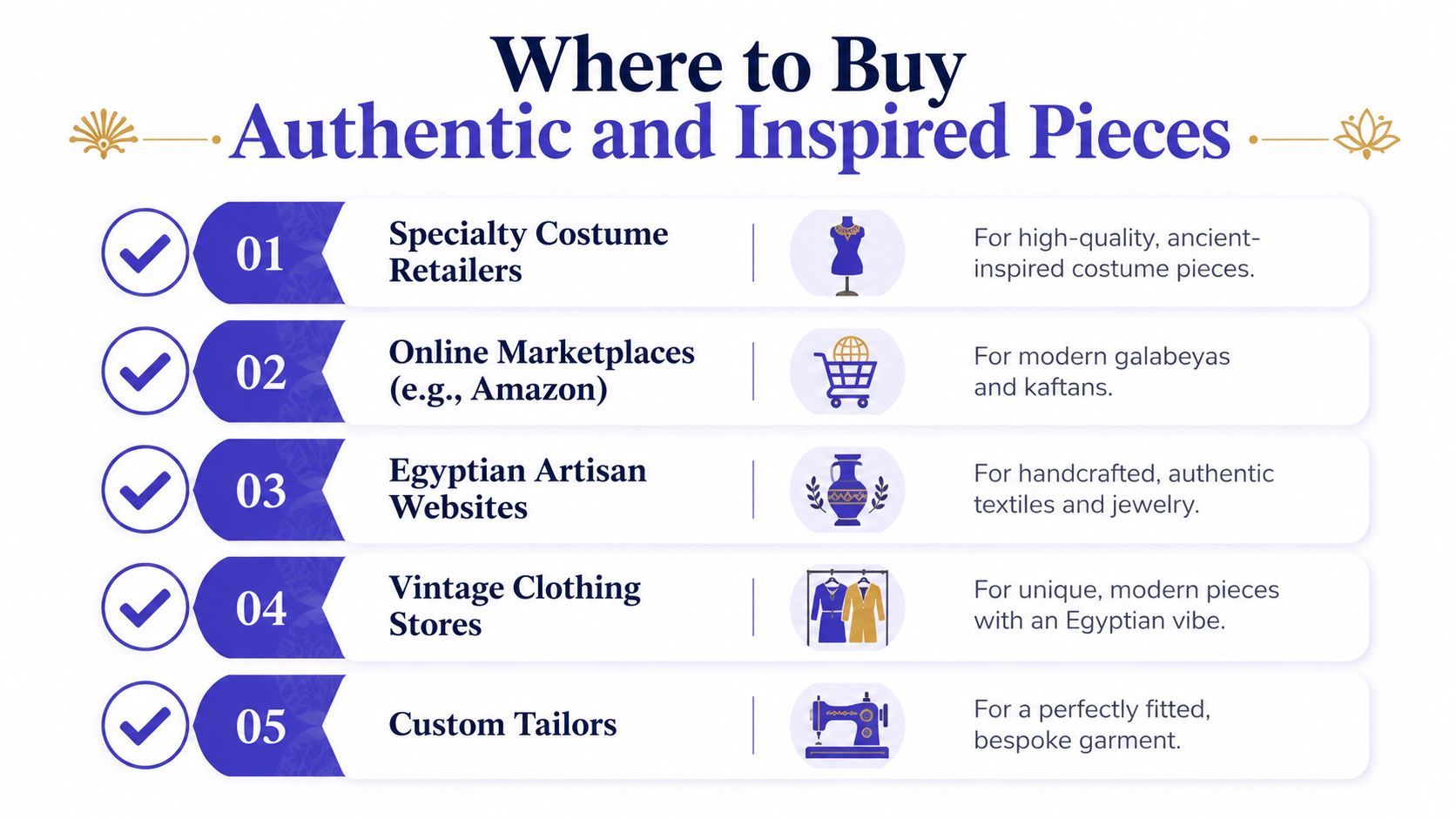
Amazon is useful for modern galabeyas and kaftans, especially when you want breadth and speed, and you can browse it through TryThisFit's Amazon shopping link. The limitation is that listings vary a lot in fabric clarity, so the flat-lay photo matters more than the title.
Vinted and Depop can surface secondhand textiles and vintage pieces with interesting texture. Etsy is a strong place for handmade embroidery and artisan detailing. Specialty costume retailers are the better match if your goal is an ancient-inspired look, while Egyptian artisan websites and custom tailors make sense when you want handcrafted or bespoke work.
Preview before you commit
The Chrome extension is the fastest way to test a garment on Zara, H&M, Amazon, Shein, Vinted, Depop, and similar sites. Right-click any product image, and you can preview the appearance on yourself in seconds, with no account needed, right from the page you're already on.
Try this first when the listing uses flat-lay photography, because the drape and shape usually read more clearly. If you want to start browsing right away, install the extension from TryThisFit's Chrome extension page, then compare different Egyptian-inspired silhouettes before checkout.
Shopping shortcut: flat-lay images plus a right-click try-on save you from guessing how a robe, sheath, or layered kaftan will actually look.
Care, Styling, and Visualizing Your Final Look
Linen likes gentle handling. A cold wash, line dry, and low iron keep the fabric looking clean and crisp, while embroidered pieces usually do better with hand washing or a gentle cycle and drying flat. Beaded or metallic-trimmed garments need the lightest touch, so spot cleaning and flat storage are the safest approach.
Before you buy, open the try-on tool and preview the garment on yourself in seconds. No account is needed, and you can save looks to your try-on history to compare different Egyptian silhouettes side by side later.
The key point is simple. TryThisFit shows how the style looks on you, not whether the garment will fit, so sizing still needs a separate check. That distinction matters when you're choosing between a sheath, a galabeya, or a layered robe with accessories.
If you want to start now, go to TryThisFit and preview the look before you buy. If you shop often on product pages, install the free Chrome extension in seconds at trythisfit.com/go/extension/chrome and right-click any clothing image while you browse.
A CTA for TryThisFit.
Try Virtual Try-On Now
See how clothes look on you before you buy - works with any online store
Get Started Free