Egyptian Cultural Clothing: A Guide to Timeless Styles
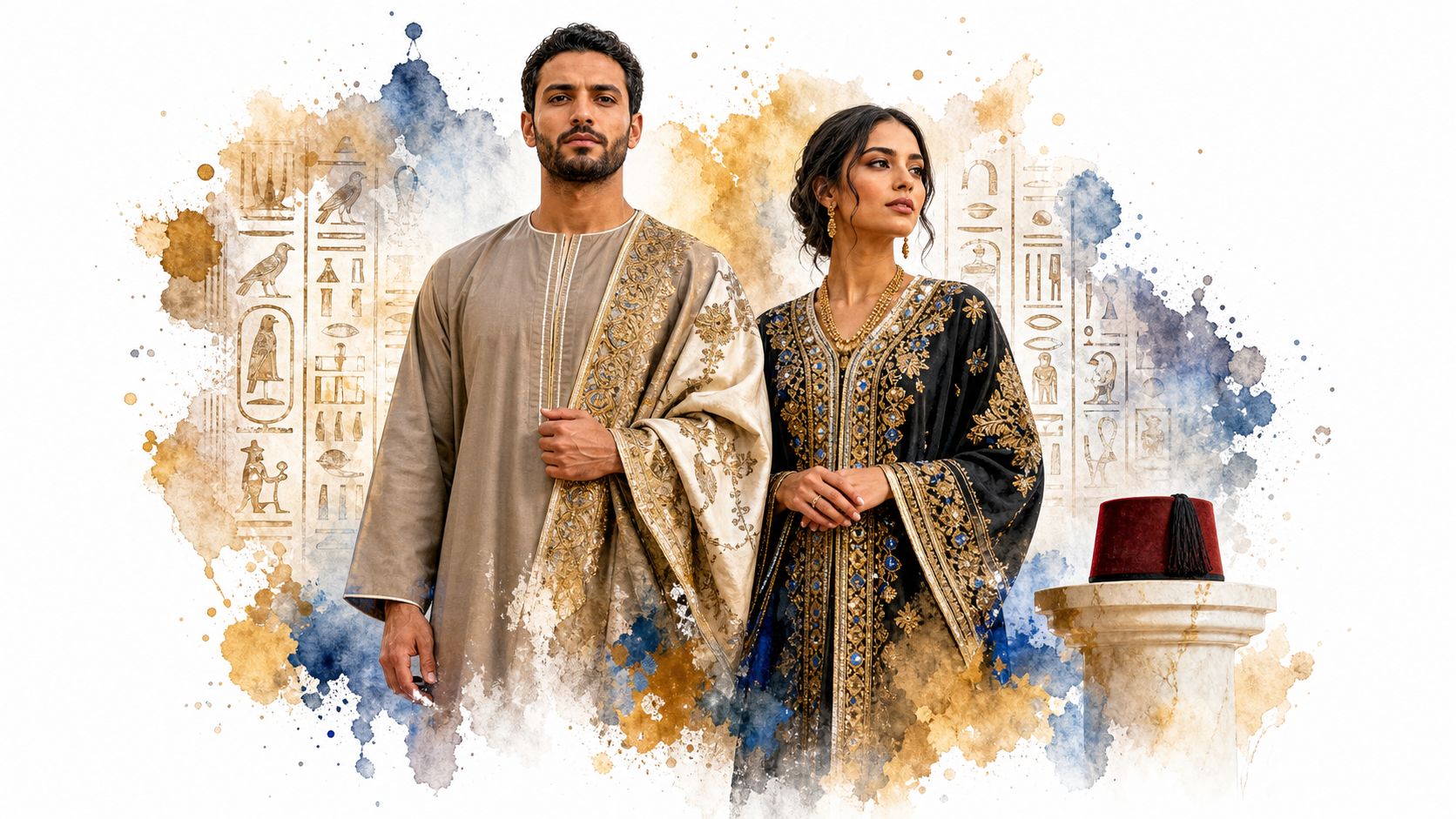
You're scrolling late at night, half shopping and half daydreaming, when a flowing galabia or embroidered Egyptian-style dress stops you cold. It looks elegant on the product page. Then the practical question arrives fast. Would that shape feel graceful on your body, or costume-like, or just not like you at all?
That's the strange tension of shopping for Egyptian cultural clothing online. The garments carry history, climate wisdom, and visual drama, but a flat product photo rarely tells you enough about silhouette, drape, or presence. For anyone browsing Amazon, Shein, Vinted, Depop, or a secondhand marketplace, the challenge isn't just finding something beautiful. It's figuring out how that beauty translates into real life.
Exploring Egyptian Clothing from Your Screen
A lot of people first meet Egyptian clothing through an image, not a museum label. It might be a loose linen tunic on a resale app, a festive embroidered robe on a marketplace listing, or a Halloween costume that borrows from ancient dress. The problem is always the same. The listing shows the garment, but not the full story of how it will read once it's part of your look.
That gap matters more with Egyptian styles because shape does so much of the work. A straight, column-like dress can look stately on one person and spare on another. A roomy galabia can feel beautifully relaxed, or it can look oversized if the fabric is wrong or the neckline sits oddly.
Why online shoppers hesitate
Online clothing photos are designed to attract attention. Brands use styling, lighting, and composition to create mood, much like the visual techniques discussed in these fashion advertising strategies. That's useful when you want inspiration, but less useful when you're trying to decide whether a cultural garment suits your style.
Egyptian cultural clothing also gets grouped into broad labels that blur important differences. A seller may call something a kaftan, galabia, jalabiya, tunic, robe, or “ancient Egyptian” dress, even when the cut and styling suggest very different traditions. If you're new to the category, it's easy to confuse ceremonial looks, everyday garments, and fantasy interpretations.
Egyptian dress often looks simple at first glance. The more closely you look, the more you notice that fabric, drape, and layering carry the meaning.
What makes this category worth exploring
This clothing tradition has unusual staying power. It connects practicality with grace in a way modern shoppers still want. Breathable fabrics, clean lines, ease of movement, and adaptable layering all feel current, even when the roots go back thousands of years.
That's why Egyptian clothing keeps resurfacing in modern wardrobes. Some shoppers want a lightweight robe for hot weather. Others are looking for modest styling ideas, a costume reference, or a secondhand find with cultural depth. The appeal isn't only visual. It's the sense that these garments were shaped by real life, climate, and social meaning.
Once you understand the history behind them, product listings become easier to read. A plain white dress stops looking “basic” and starts looking intentional. A shoulder strap, pleat, or wrapped silhouette starts to signal function as much as decoration.
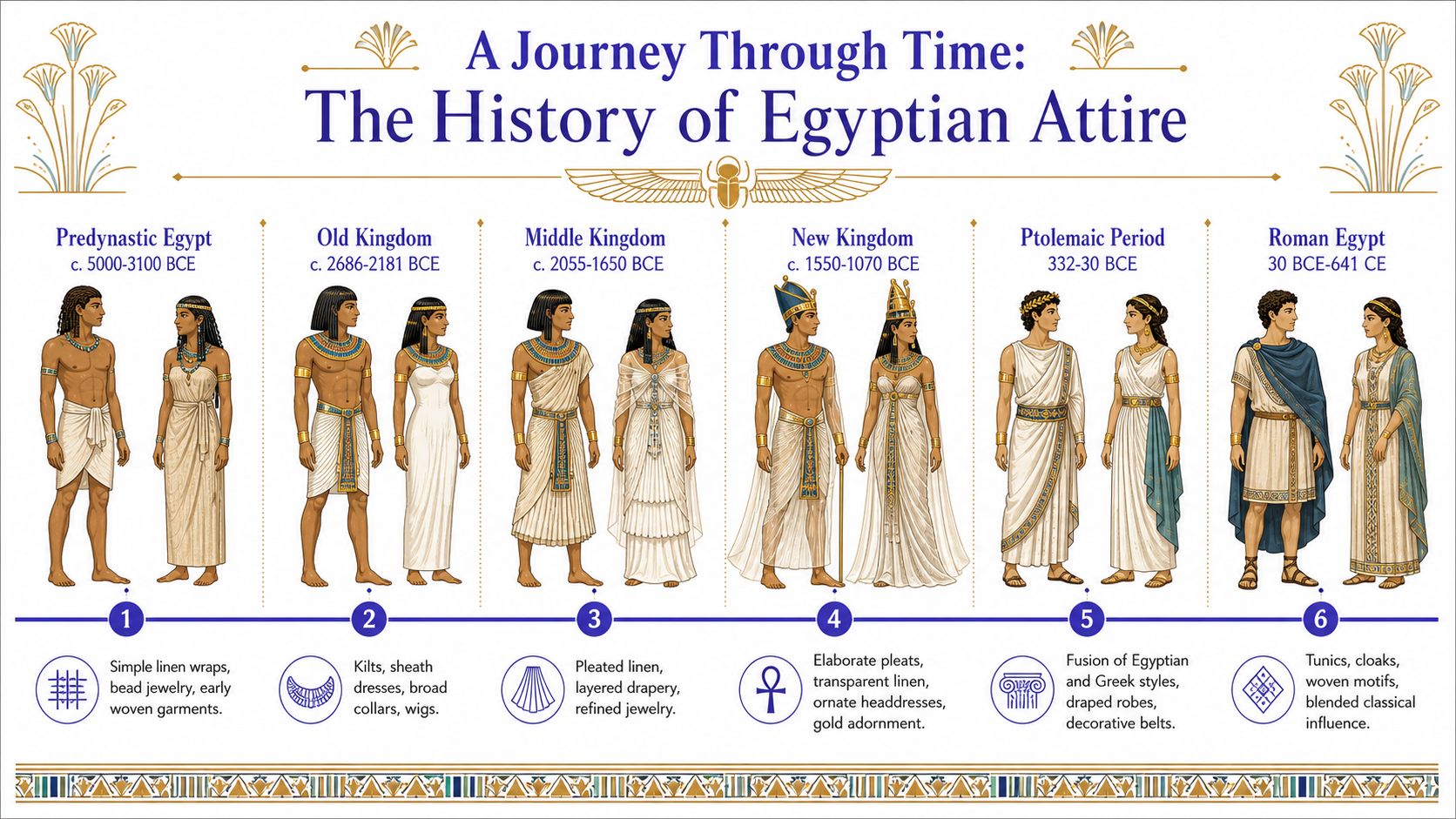
A Journey Through Time The History of Egyptian Attire
Ancient Egyptian clothing is remarkable because it changed so slowly. Egyptian cultural clothing remained remarkably stable for over 3,000 years, with fashion in ancient Egypt epitomizing simplicity and ease of movement. For most of this period, men and women wore the same simple knee-length kilt, called a shenti, with this uniformity only beginning to change in the Middle Kingdom (2040-1782 BCE), as described in this history of dress in ancient Egypt.
That long continuity tells you something important. Clothing in Egypt wasn't driven mainly by novelty. It was tied to environment, labor, comfort, and a very stable visual language.
The logic behind the early silhouette
The shenti was simple for a reason. In a hot climate, a wrapped or tied lower garment gave people freedom to move and kept clothing light. In surviving images from early periods, bare chests and short kilts aren't signs of incomplete dress. They reflect a practical response to heat and daily work.
Many readers often misunderstand, assuming “simple” means “undeveloped.” Ancient Egyptian clothing was the opposite. It reduced clothing to what the climate and culture demanded most.
A few core ideas shaped early attire:
- Ease of movement: Garments had to work for labor, ritual, and ordinary life.
- Clean visual lines: Straight forms and wrapped shapes created a recognizable silhouette.
- Material discipline: The fabric itself did much of the aesthetic work.
Why linen mattered so much
The foundation of ancient Egyptian dress was linen. It wasn't a random preference. It was the fabric that matched the Nile environment and the social values built around cleanliness and refinement.
Because linen was central to clothing and identity, even small differences in quality could signal status. Finer linen suggested access, labor, and polish. Whiter linen suggested care and purity.
Historical clue: When a culture keeps returning to one fabric across centuries, that fabric is usually solving a real problem. In Egypt, linen solved heat, comfort, and social presentation at once.
When change finally appeared
A significant shift came later, not immediately. During the Middle Kingdom, women's dress began to move toward longer gowns and more varied hairstyles. That doesn't mean the older visual language disappeared overnight. It means Egyptian clothing started adding new forms while still preserving the long preference for elegant, uncluttered construction.
One of the most interesting garments associated with this evolution is the fitted sheath dress often called the kalasiris. It's useful to think of it not as a modern dress shaped by numerous cuts and seams, but as a clever fabric structure. Shoulder straps helped hold the garment in place, while the tension and wrap of the linen created a close silhouette.
A good modern overview of these enduring forms appears in this Ancient Egypt fashion guide. It's helpful when you want to connect historical silhouettes with the kinds of Egyptian-inspired garments that appear in online stores today.
The bigger lesson from the timeline
Ancient Egyptian dress teaches a fashion principle that still matters. Clothing doesn't need constant reinvention to remain meaningful. A strong silhouette, the right fabric, and clear social cues can last for centuries.
That's part of why Egyptian cultural clothing still feels readable today. Even when the garment on your screen is modern, the underlying ideas are familiar. Long lines. Airy fabric. Controlled ornament. A look built to move through heat with dignity.
Iconic Garments in Egyptian Culture
Modern Egyptian clothing isn't one single look. It's a family of garments with different histories, uses, and visual signals. If you're shopping online, learning the names helps you avoid buying a piece that looks right in the thumbnail but feels wrong for the occasion.
Some garments are rooted in everyday wear. Others are associated with modest dressing, celebration, or a more formal presentation. The key is to read each piece as part of a full outfit, not as an isolated item.
The garments you'll see most often
The galabia or galabeya is one of the most recognizable garments linked with Egypt. It's typically long, loose, and easy to wear. In shopping terms, this is often the piece that gets mislabeled most. One seller may list it as a robe, another as a kaftan, and another as a house dress.
The kaftan usually signals a more flowing, draped elegance. Depending on styling and region, it can overlap visually with other long robes, but shoppers often use the term for dressier pieces with ornament, richer trims, or a more formal mood.
The abaya is often associated with modest outer dressing and a more enveloping silhouette. In mixed online marketplaces, abayas and Egyptian-style robes can sit side by side, so it helps to focus on cut, sleeve shape, and styling rather than the label alone.
Hijab as part of the outfit, not an afterthought
A detail many generic guides miss is how head covering interacts with the rest of the look. Modern Egyptian women often wear hijabs of "different designs and colors to match outfits," strategically layering them with traditional dresses like the galabia. This practice varies by region and social context, showcasing a nuanced approach to modesty and personal style that isn't just an accessory but an integral part of the overall look, as noted in this overview of Egyptian clothing today.
That matters for styling. A hijab changes balance, color emphasis, and the visual weight of the outfit. A plain linen dress can look understated with one scarf choice and festive with another.
Here's a quick visual glossary for shopping:
| Garment | Primary Wearer | Typical Occasion |
|---|---|---|
| Galabia | Men and women | Daily wear, relaxed social settings |
| Kaftan | Often women, sometimes unisex in broader fashion use | Dressier occasions, hosting, celebrations |
| Abaya | Often women | Modest dressing, layered everyday or formal wear |
| Hijab paired with dress | Women | Varies by region, context, and personal style |
| Egyptian-inspired sheath dress | Women in costume, editorial, or occasion wear contexts | Fashion styling, themed events, costume use |
How to read a listing more intelligently
A product title rarely gives enough information on its own. Photos, sleeves, neckline, and fabric surface tell you more than labels do.
Look for these clues:
- Straight vertical fall: This usually suggests a cleaner, more traditional line.
- Decorative neckline or chest panel: Often a sign that the garment is meant to carry more visual attention near the face.
- Wide sleeves or heavy drape: These can shift the look from everyday practicality toward formality.
- Scarf coordination in photos: This can reveal whether the piece is being styled as modestwear or as a general fashion robe.
If you want a more focused look at women's styles, this guide to Egyptian traditional clothing for women is a useful companion for distinguishing silhouettes and outfit combinations.
A garment name is only the starting point. In Egyptian dress, the full meaning appears when fabric, cut, and styling meet.
Visualize Timeless Styles on Yourself Instantly
You open a product page for a flowing Egyptian-inspired robe. On the model, it reads regal and poised. On your own body, the same neckline might feel softer, the sleeve volume might look fuller, and the overall effect could shift from ceremonial to relaxed. Online shopping asks you to make that translation in your head, and Egyptian clothing makes the challenge sharper because so much depends on drape, line, and proportion.
That is true for galabia-style tunics, long robes, and column-like dresses. These garments do not rely on heavy tailoring alone. They work more like architecture in cloth. A little extra width at the shoulder, a straighter fall through the torso, or a lower neckline can change the whole historical mood of the piece.
Why a listing can be hard to read
Marketplace photos often show styling more clearly than structure. Jewelry, belts, pose, lighting, and camera angle can make one garment seem more dramatic or more refined than it really is. If you are trying to judge the silhouette itself, the most useful image is often the plainest one.
A flat-lay photo helps because it reveals the garment's actual outline with fewer distractions, as explained in this guide to the Chrome extension. For Egyptian-inspired clothing, that matters a lot. Many of these styles communicate through length, fall, and surface detail rather than through complicated construction.

A more practical way to judge style before you buy
TryThisFit lets you place a clothing image onto your own photo so you can judge the visual effect before checkout. It does not calculate size or measurements. Its value is simpler and, for style-heavy garments, very useful. You can see whether a robe looks stately, whether a tunic reads casual, or whether a costume-inspired dress feels wearable for your actual plans.
That kind of preview is especially helpful with Egyptian clothing because historical silhouettes can look deceptively simple in a listing. A straight linen-like shape may appear plain on a hanger but elegant on a person. A heavily decorated neckline may look balanced in one product shot yet feel overpowering once it sits near your own face.
A few moments make this tool especially useful:
- Comparing silhouettes: Test two similar robes and notice which one gives you the cleaner vertical line.
- Checking drama level: See whether an Egyptian-inspired costume piece feels festive, theatrical, or too exaggerated for your event.
- Judging secondhand listings: If a resale page gives you limited photos, a visual preview can still help you assess the overall look.
- Shopping with historical intent: If you want something that echoes Egyptian dress rather than vaguely borrowing the name, previewing the garment on yourself makes the cut and drape easier to evaluate.
Practical rule: The simpler the source image, the easier it is to judge the silhouette instead of the seller's styling choices.
If you have been curious about Egyptian cultural clothing but hesitant to buy without a clearer picture, taking this step is the fastest way to find out how a style reads on you. It turns ancient-looking shapes from abstract inspiration into something much more concrete: a garment you can picture in your own wardrobe, on your own body, before you commit.
Materials Ornamentation and Regional Variations
The beauty of Egyptian clothing lives in the surface. Fabric choice, pleating, embroidery, beadwork, and color all tell you what kind of garment you're looking at. A plain robe in good linen can carry more cultural meaning than a flashy synthetic dress with “Egyptian” printed in the title.
Start with fabric. Authentic ancient Egyptian clothing exclusively used linen from the flax plant, a material chosen for its high tensile strength and low thermal conductivity, which prevents heat retention. Its natural white color also reflected solar radiation, making it an engineered solution for surviving in arid climates, according to this discussion of ancient Egyptian clothing materials.
Why the fabric changes the whole experience
That ancient logic still helps modern shoppers. Linen behaves differently from synthetic blends. It breathes differently, folds differently, and catches light differently. Even when two garments share the same cut, the one made with a linen-rich fabric will usually look less glossy and more alive in motion.
Ancient makers also understood how to let cloth do structural work. Fine linen could be pleated, wrapped, and tensioned into elegant shapes without heavy tailoring. That's why many Egyptian-inspired garments still rely on drape and fall rather than complex seams.
Ornament that adds meaning
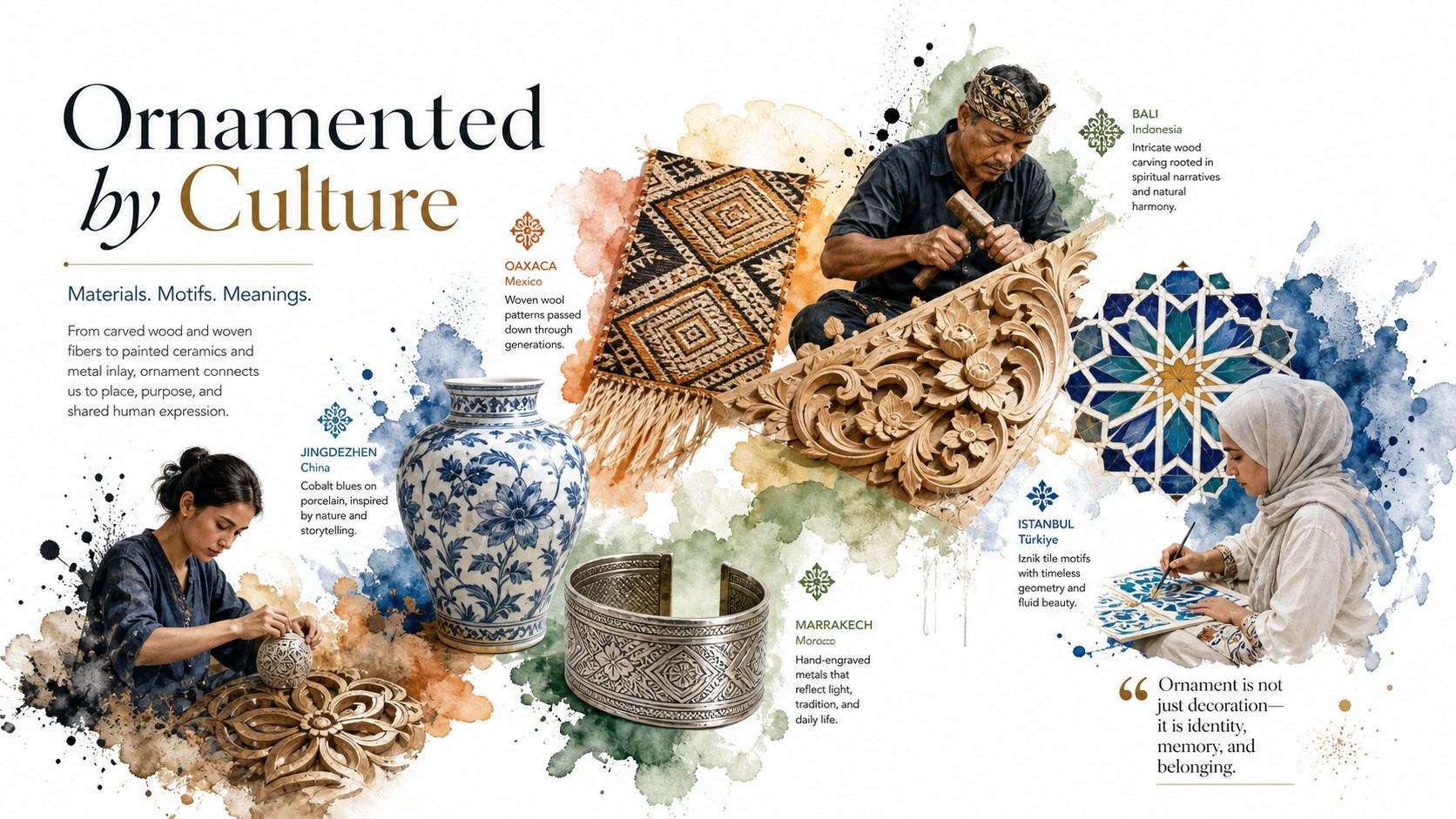
Decoration in Egyptian clothing isn't just extra. It changes how the garment is read. Pleats can create airflow and texture. Beadwork adds weight and movement. Embroidery pulls the eye toward specific zones such as the neckline, hem, or sleeves.
Modern shoppers often misread listings. A heavily decorated robe may look “more authentic” because it appears richer. In reality, ornament can indicate ceremony, status styling, tourist-market aesthetics, or cross-regional influence rather than everyday wear.
Regional variation matters
Egypt isn't visually uniform, and neither is its dress. Urban styling in Cairo may emphasize different cuts and pairings than dress in Upper Egypt or in communities with strong local textile traditions. Color use, embroidery density, and layering all shift by setting and occasion.
A useful way to approach regional variation is to ask three questions when you shop:
- Is this garment being presented as daily wear, festive wear, or costume?
- Does the ornament look structural and textile-based, or added for visual impact?
- Is the styling paired with local cues such as scarf choice, jewelry, or regional embroidery motifs?
Those questions won't make you an instant specialist, but they do slow down the common online-shopping mistake of treating all Egyptian clothing as one interchangeable category.
How to Wear Source and Care for Your Garments
You find a beautiful galabia online at midnight. The color is right, the embroidery looks rich, and the model styling makes it feel unmistakably Egyptian. Then the practical questions begin. Will it hang loosely or cling? Is it meant for daily wear, a celebration, or a costume rack? Can you care for it at home without damaging the fabric or trim?
Those questions are part of dressing respectfully.
Egyptian cultural clothing makes the most sense when you treat each garment as a real piece of dress history, not as a generic “ethnic” look. Learn the garment name before you wear it. Keep the styling coherent. A linen galabia, for example, asks for very different companions than a fantasy Cleopatra accessory set from a party shop.
How to source more thoughtfully
Online shopping flattens clothing. A screen can hide weight, texture, transparency, and construction, which are the very details that tell you how a garment will live on the body. Egyptian dress traditions often depend on drape and airflow, so fabric matters as much as appearance.
Start with the cloth, then move to the decoration.
A useful shopping method is to read a listing the way a textile historian reads a museum label: first the material, then the cut, then the ornament, then the context. If the seller gives you only mood and no specifics, slow down.
Use this checklist when browsing:
- Search by fabric first: Try terms such as linen galabia, jalabiya, Egyptian cotton robe, or embroidered linen dress.
- Read fiber content carefully: Clear fabric naming usually signals a more trustworthy listing.
- Study the photos for texture: Flat images and close-ups often reveal weave, stiffness, and shine better than heavily edited model shots.
- Check neckline, sleeve, and hem details: These small features often tell you whether the piece is casual, festive, or costume-oriented.
- Read the description for use context: Good listings often say whether the garment is intended for lounging, weddings, Ramadan gatherings, folkloric performance, or tourist styling.
For extra context before you buy, this guide to clothing in Egypt today helps connect traditional silhouettes with the kinds of pieces modern shoppers see online.
How to wear the garment well
The easiest way to wear Egyptian clothing well is to respect its proportions. Loose garments need room. Dense embroidery already creates a focal point. A scarf, belt, or jewelry choice should support the line of the outfit rather than compete with it.
A simple linen galabia can stand on its own with understated sandals and minimal accessories. An embroidered dress often works better if you let the needlework do the visual speaking. Too many added references, especially “ancient Egypt” costume pieces mixed into modern regional dress, can blur the meaning of the garment and make the whole outfit feel careless.
Caring for linen and decorated garments
Linen is honest fabric. It wrinkles, softens, breathes well, and shows wear in a way many synthetic textiles do not. That is part of its appeal. Caring for it well is less about perfection and more about preserving shape, strength, and surface detail.
A simple routine goes a long way:
- Wash gently: Use mild detergent and a gentle cycle, or hand wash when the garment has delicate trim.
- Skip high heat: Air drying helps protect fibers, embroidery, and seam structure.
- Store with space: Heavy stacking can crush pleats, flatten texture, and strain beadwork.
- Press while slightly damp: Linen usually responds better then, and you need less force to smooth it.
If a garment has embroidery, sequins, or beadwork, treat it like a decorated textile rather than an everyday T-shirt. Spot clean when possible. Turn it inside out before washing if the construction allows. If the embellishment feels fragile, professional cleaning may be the safer choice.
One good piece can improve with age. Linen often becomes softer and more comfortable after repeated wear, much like a well-used leather sandal molds itself to the foot over time.
If you are buying secondhand and feel uncertain about silhouette, use the visual preview tools mentioned earlier to compare how a shape might read before you commit. That step is especially helpful with garments whose beauty depends on volume, drape, and movement rather than a fitted cut on a hanger.
Conclusion Your Style Journey Awaits
You are scrolling through a product page late at night, looking at a linen robe, a beaded scarf, or a dress with a straight, column-like line, and wondering whether it will feel like costume, occasionwear, or something you could make part of your wardrobe. Egyptian cultural clothing rewards that extra pause. Its forms were shaped over a long span of history, so even simple garments often carry ideas about climate, grace, status, and daily life.
That long continuity is part of what makes these clothes feel current. A galabia still reads as practical because it was built for movement and heat. A sheath-like dress still feels striking because clean vertical lines draw the eye in much the same way today. The details change, but the design logic remains familiar.
Why this history matters to modern shoppers
Historical context improves your eye. Instead of shopping only by color or trend, you start reading proportion, fabric weight, trim, and styling cues together. An Egyptian-inspired listing stops being a vague category and becomes easier to judge. You can ask better questions: Does this piece reflect everyday dress, festive dress, or a fantasy version made for performance?
That shift matters online, where photographs often flatten texture and scale. A soft linen piece, a more ornamented robe, and an event costume can all look similar in a small thumbnail. Once you know what you are looking at, the differences become clearer.
Taste grows through comparison.
Curiosity becomes style when you can see it
Digital try-on tools help turn research into decisions. They shorten the gap between admiring a garment and understanding whether its volume, drape, or line works for you. That is especially useful with Egyptian clothing, because so much of its beauty depends on silhouette rather than tight fit or heavy structure.
Seeing a style on yourself works like holding a textile up to the light before buying it. The surface may attract you first, but shape tells you whether the piece belongs in your closet. A preview can show whether you prefer the simplicity of plain linen, the ceremony of decoration, or a quieter modern look that borrows from Egyptian dress without copying it wholesale.
The invitation is not just to buy a garment, but to engage with a clothing tradition that has depth, intelligence, and beauty. Egyptian dress has long balanced practicality with presence. That balance still speaks clearly to a modern shopper.
If you want to explore Egyptian cultural clothing with less guesswork, start by seeing how the style looks on you. Visit TryThisFit to preview the appearance of garments from your favorite shops, or install the free Chrome extension to right-click product images on sites like Zara, H&M, Amazon, Shein, Vinted, and Depop in seconds.
Try Virtual Try-On Now
See how clothes look on you before you buy - works with any online store
Get Started Free